
Reviewed · MODERN ARCHITECTURE TOURS
Walking Tour about Golden Age Architecture, private local guide
Amsterdam tells its story in brick and stone. This private walking tour uses Golden Age architecture to explain how 17th-century trade shaped the city you see today, with a local guide who can point out details you would miss on your own. The best part for me is how quickly Anna connects design, money, and everyday life into one clear story.
I especially like the stop-by-stop approach, because you get a mix of big landmarks and quieter canal-belt houses. You’ll hear about engineering choices, like building on clay and marshy ground, not just what the facades look like. And because it is private, you can ask questions without feeling rushed, which is exactly what I want from a short city walk.
One heads-up: this is not a slow, sit-and-watch tour. It runs about 1 hour 30 minutes on your feet, and it is not recommended if you use a walker or have trouble walking and standing for that length of time. Also, mobility aids are not available.
In This Review
- Key highlights to look for
- Dam Square to Westerkerk: how the Golden Age shapes every street corner
- Dam Square: the 17th-century trade hub starts here
- Royal Palace Amsterdam: power, design, and clay piles
- Huis Bartolotti and the red-brick merchant look
- Torensluis: baroque facades and the crooked-house quirk
- De Dolphijn: a dolphin symbol and Rembrandt’s Night Watch connection
- Ronde Lutherse Kerk: domes and Renaissance achievement
- Prinsengracht warehouses: gables, windows, and hoisting beams
- Jordaan gevelstenen: the little “story stones” in the facade
- Westerkerk: spire height, Rembrandt’s resting place, and clock chimes
- Price and value for a private 90-minute Golden Age walk
- Timing, footwear, and how to make the most of 1.5 hours
- Who should book this Golden Age architecture tour, and who should skip it
- A quick call: should you book it?
- FAQ
- How long is the Golden Age architecture walking tour?
- Is this tour private or shared?
- Where does the tour start and end?
- Do I need to pay admission for the stops?
- Is bottled water included?
- Is the tour wheelchair-friendly or suitable for someone with limited walking?
Key highlights to look for
- Dam Square to the Royal Palace for the Golden Age power shift in one tight start
- Royal Palace engineering on marshy ground and the Dutch Neoclassical look explained simply
- Canal-belt baroque details at Huis Bartolotti, De Dolphijn, and Torensluis, plus the crooked-houses story
- Prinsengracht warehouses and hoisting beams showing how trade worked in real life
- Jordaan gevelstenen facade stones that turn building fronts into little identity cards
- Westerkerk’s spire, Rembrandt link, and clock chimes that echo through centuries
Dam Square to Westerkerk: how the Golden Age shapes every street corner
This is the kind of Amsterdam walk that makes you see patterns. The city looks “pretty,” sure, but the real magic is that the architecture is tied to how people made money, how they moved goods, and where they could build safely. In 90 minutes, I like that the tour covers the storyline across multiple neighborhoods without turning into a marathon.
You start at the Royal Palace area near Nieuwezijds Voorburgwal and you end near Westerkerk on Prinsengracht, close to the Anne Frank House area. That end point is useful because you can keep exploring right away, instead of getting stuck doing a long detour.
Because the tour is private, you get flexibility for photos and questions, and you are not competing with a larger group for attention. The overall route is also designed so key visual moments happen in a logical order, from civic power, to merchant wealth, to church landmark focus.
More Guided Walking Tours in Amsterdam


Dam Square: the 17th-century trade hub starts here
Dam Square is where Amsterdam’s story feels official, like the city is presenting itself to the world. Your guide sets the scene with what Dam Square meant historically and how the Dutch Golden Age turned Amsterdam into a global trade power in the 17th century.
What I like is the way this stop frames everything that comes next. When you later see warehouses, merchant homes, and canal architecture, it clicks that this was not random style. It was a city built by commerce, and the buildings were part of the message.
This is also a fast orientation stop, so it works well even if you are battling jet lag or want to stay efficient. If you like context, you’ll appreciate the way the guide sets up the “why” before the “what.”
Royal Palace Amsterdam: power, design, and clay piles
Next comes the Royal Palace, and the tour uses it like a textbook page you can stand in front of. You learn that the building began as the city’s town hall during the Dutch Golden Age, designed to signal civic strength and prosperity. Later, it became the royal residence you see today.
The architectural side matters here. You get a clear explanation of the Dutch Neoclassical style, including how the grand look was created through materials and construction choices.
Then comes the part many quick tours skip: engineering on difficult ground. Amsterdam’s clay and marshy conditions were not a small detail, and your guide explains the ingenuity it took to build successfully anyway. I found that especially satisfying, because it turns the palace from “big building” into “solved engineering problem.”
Huis Bartolotti and the red-brick merchant look
At Huis Bartolotti, you shift from the civic scale to the merchant-house scale. This canal house is a standout example of 17th-century Dutch baroque architecture, with a striking red brick facade and ornate details.
The visual cues here are worth slowing down for. Large windows and sculptural elements in sandstone show wealth and status, and the tour connects that to trading ties, including links that reached toward Italy.
If you like architecture that tells you who paid for it, this stop delivers. You don’t just look at decoration, you learn what the decoration was doing socially, like branding before branding existed.
Torensluis: baroque facades and the crooked-house quirk
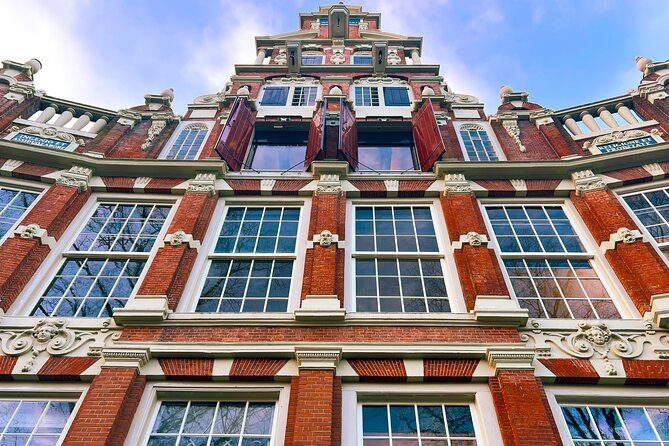
Torensluis is a great “look with structure” stop. From this wide bridge you get views of four distinct facade designs tied to the mercantile class during the Golden Age. The tour explains how baroque style was adapted locally, with dramatic contrasts and intricate detailing.
Then the guide takes you to a very Amsterdam feature: the crooked houses. You learn why buildings lean in often whimsical ways, connected to Amsterdam’s soft, marshy ground. It is one of those quirks that looks like charm until someone explains the physics behind it.
I like this stop because it teaches you to read the city. Instead of chalking the leaning façades up to random oddness, you understand they are part of the same story as the palace’s construction challenges.
More Private Tours in Amsterdam
- Rijksmuseum Amsterdam Small-Group Tour with Private Upgrade
★ 4.5 · 1,547 reviews - Van Gogh Museum Tour Reserved Entry Semi Private
★ 5.0 · 1,437 reviews - Private Amsterdam Red Light District and Coffee Shop Tour
★ 5.0 · 763 reviews - Anne Frank and Jewish Quarter Amsterdam Private Walking Tour
★ 5.0 · 684 reviews
De Dolphijn: a dolphin symbol and Rembrandt’s Night Watch connection
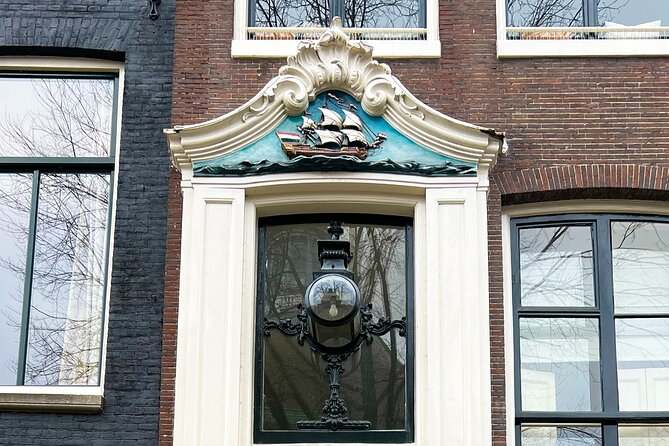
De Dolphijn is where symbolism becomes a shortcut to history. The name references the dolphin symbol of wealth, tied to Amsterdam’s prosperity through maritime trade during the Dutch Golden Age.
The tour also links the house to Frans Banning Cocq, the captain immortalized in Rembrandt’s The Night Watch. If you already know the painting, this makes it feel closer to the ground, not just a museum image.
From a practical standpoint, this is a good photo stop too, because the house’s identity is easy to connect to the guide’s explanation. You walk away knowing what to look for, not just where you stood.
Ronde Lutherse Kerk: domes and Renaissance achievement
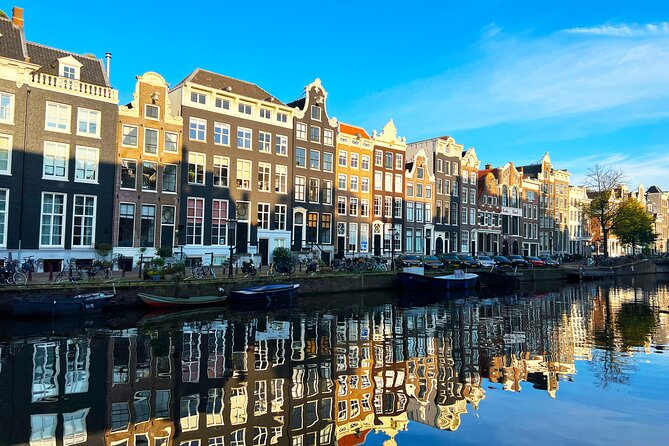
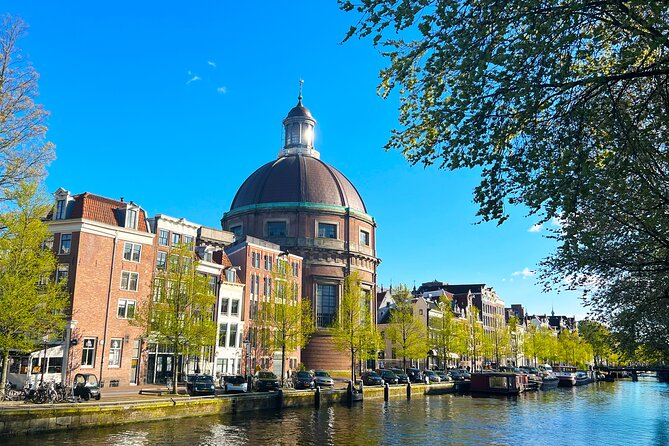
Next is the Ronde Lutherse Kerk, a shorter stop but still meaningful. The focus here is on the domes, described as a high point of architectural achievement during the Renaissance period.
Because it is a quick stop, I treat it like a “mental bookmark.” It helps you recognize that Amsterdam’s Golden Age architecture was not isolated to one style. Even when you are walking in canal-belt merchant neighborhoods, other European design ideas influenced what people built and how they expressed status.
If you are a fan of architectural periods, take a moment here to notice how the dome concept changes your sense of scale compared to the surrounding canal houses.
Prinsengracht warehouses: gables, windows, and hoisting beams
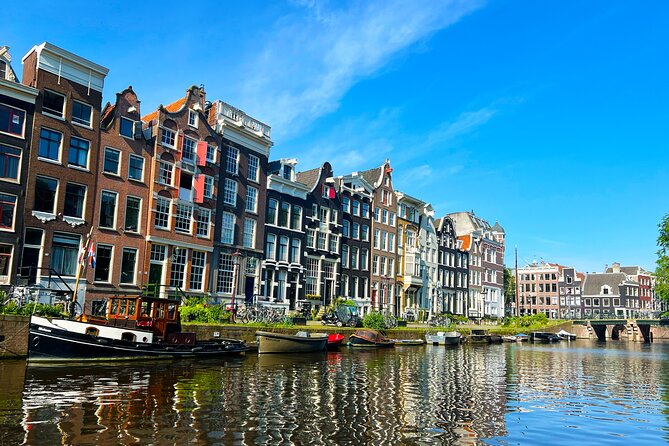
Prinsengracht is where the tour really turns practical. The warehouses lining this canal are iconic examples of Golden Age architecture tied directly to trade and commerce.
The key details you learn to watch for are functional. Tall, steeply pitched gables and large windows helped meet the needs of storage and work. You also get a specific engineering and logistics detail: wooden hoisting beams on the roof used to lift heavy cargo from ships docked along the canal.
What I appreciate is that the tour explains the exterior simplicity too. Clean lines and minimal ornamentation reflected the utilitarian purpose, while the grand scale still signaled merchant wealth and power.
This is one of those stops where you start seeing the city as an operating system. Amsterdam was designed to move goods, and the buildings show how that worked.
Jordaan gevelstenen: the little “story stones” in the facade
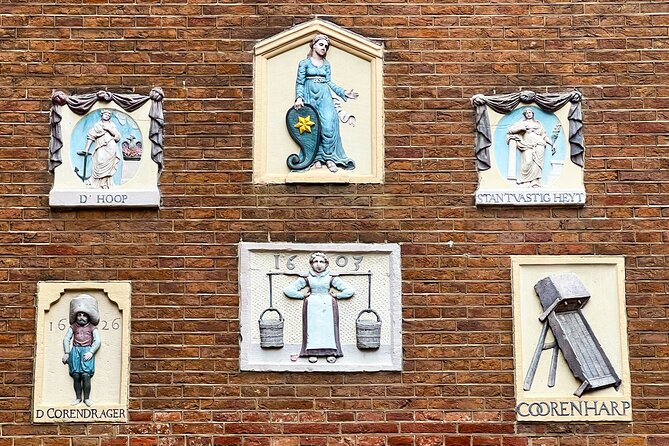
Jordaan is the longest stretch on this walk, and that matters because it gives time to slow down and look up. The neighborhood in the 17th century mixed residential life with commercial life, with craftsmen and laborers living close to work. Narrow canals and tight rows of houses shaped a dense, active daily rhythm.
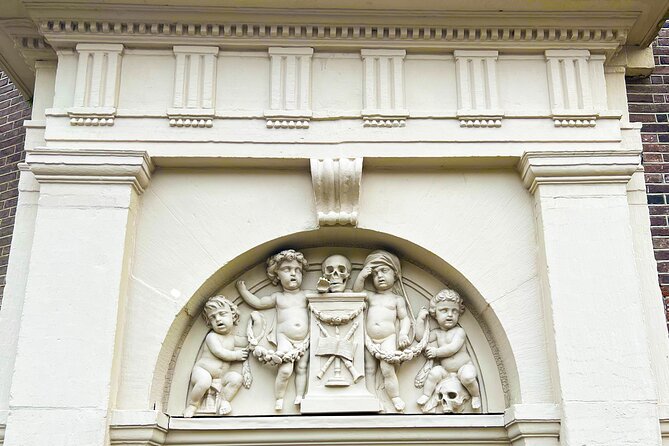
Here the tour focuses on gevelstenen, facade stones embedded in buildings. These small plaques could serve functional and decorative purposes, but the big payoff is the storytelling. They could indicate how the building was used, the profession of the owner, or details about people living and working there.
I love this section because it turns your attention to something most visitors miss. Instead of staring at the whole facade, you learn to search for small carved clues at street level and up along the front. It makes the buildings feel personal, like the city leaves notes for you if you know where to look.
If you want a more human feel to your architecture tour, this is the part that delivers.
Westerkerk: spire height, Rembrandt’s resting place, and clock chimes
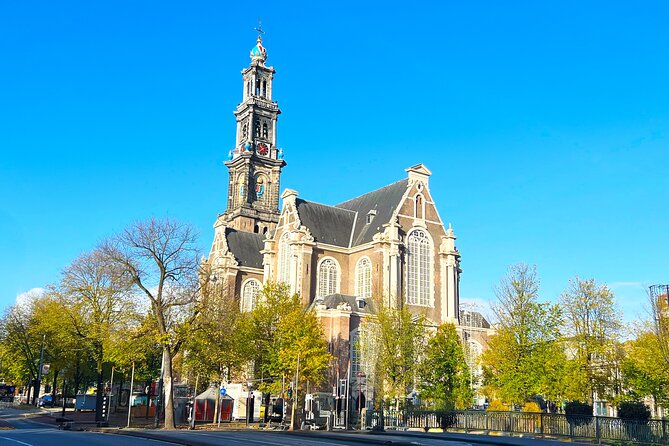
You end at Westerkerk, one of Amsterdam’s most important landmarks. It began as a Calvinist church for a growing population, and the design is described as simple and elegant, with an airy interior typical for Calvinist worship.
The tour also gives you a strong historical anchor: Rembrandt van Rijn’s final resting place is here. Even if you are not deep into art history, that connection tends to make the church feel heavier, in a good way.
The spire is another big visual focus. Completed in 1638, it rises about 85 meters (280 feet) above the Jordaan district and is topped with an imperial crown symbolizing Amsterdam’s status since the 15th century. The clock chimes are also part of the story, and your guide notes that Anne Frank mentioned them in her diary.
Ending here works well because it ties architecture to identity and memory. You go from merchant trade and building details into a landmark that reflects both faith and civic pride.
Price and value for a private 90-minute Golden Age walk
At $73.59 per person for about 1 hour 30 minutes, you are paying for a short, focused route plus private local guidance. That price can feel steep if you imagine a tour as just a walk with generic facts.
But the value shows up in the kind of information you get. This tour is not just pointing out pretty facades. You get engineering context, like building on clay and marshy ground, plus trade and logistics details like hoisting beams, plus the personal storytelling angle at Jordaan’s gevelstenen. Those are exactly the kinds of details that make architecture stop being background noise.
Also, it is English-language and you receive a mobile ticket, so you are not scrambling for paperwork mid-trip. If you like asking questions, the private setup is a big part of why the reviews hit so high marks.
Timing, footwear, and how to make the most of 1.5 hours
This is a walking tour with real time on your feet. The stops are short, but you still cover enough ground that comfortable shoes matter. If you get foot-sore easily, I’d plan for it like you would an evening stroll, not a museum shuffle.
Bring a camera, because there are multiple photo-friendly moments: Torensluis from the bridge, canal houses, and the church exterior and spire. Just remember that some parts are about looking for small details, like facade stones, so you may want to keep your phone handy but not in a constant grip.
Bottled water is not included, so plan to grab water before you start, or bring something you can carry. Small thing, big comfort.
If you want the best experience, show up with a little curiosity. When your guide explains why buildings lean, why domes matter, and how cargo moved along canals, the city clicks faster.
Who should book this Golden Age architecture tour, and who should skip it
This tour is a strong match if you:
- love architecture and want the “why” behind what you see
- want a short route that hits multiple Golden Age building types
- like asking questions and getting answers tailored to you
- appreciate details such as facade stones and construction constraints
Skip it, or choose a different format, if you:
- use a walker
- have trouble walking and standing for about 1.5 hours
- need mobility aids during the tour, since none are available
Also note it is near public transportation and service animals are allowed, which helps with planning.
A quick call: should you book it?
If you want an efficient Amsterdam orientation through Golden Age architecture, this is an easy yes. The route covers big and small, civic and merchant, plus engineering and everyday clues like gevelstenen, so you come away with more than a list of sights.
If mobility is a concern for you, take that seriously and plan around it. Otherwise, book it and pair it with more canal wandering afterward. You’ll know what to look for, and Amsterdam will start talking back through its buildings.
FAQ
How long is the Golden Age architecture walking tour?
It lasts about 1 hour 30 minutes.
Is this tour private or shared?
It is private, so only your group participates.
Where does the tour start and end?
It starts at Royal Palace Amsterdam, Nieuwezijds Voorburgwal 147, 1012 RJ Amsterdam, and ends near Westerkerk at Prinsengracht 279, 1016 DL Amsterdam (near the Anne Frank House).
Do I need to pay admission for the stops?
The stops listed are marked as admission ticket free.
Is bottled water included?
No, bottled water is not included.
Is the tour wheelchair-friendly or suitable for someone with limited walking?
It is not recommended for participants who use a walker or have trouble walking and standing for about 1.5 hours, and mobility aids are not available. Service animals are allowed, and it is near public transportation.
Gables on Foot
- Amsterdam: Anne Frank Guided Walking Tour in DE/EN/IT/ES★ 4.9 · 3,107 reviews
- Amsterdam: Anne Frank Guided Small Group Walking Tour★ 4.8 · 2,722 reviews
- Amsterdam: Cultural Highlights Walking Tour★ 4.9 · 2,629 reviews
- Amsterdam: Ganja Walking Tour★ 4.2 · 2,127 reviews
Concrete Worth Craning At
- Amsterdam: Architektur Er-fahren★ 5.0 · 20 reviews
- Rotterdam: Highlights, Gems, Architecture & History Walk★ 5.0 · 191 reviews
- Rotterdam Walk: Hilights, Gems, Architecture & WWII | 2 or 3hrs★ 5.0 · 149 reviews
- Rotterdam Architecture Highlights Walking Tour★ 5.0 · 66 reviews
Latest to arrive along the quays of Amsterdam




Modern Architecture Tours, compared.
Rotterdam Walk: Hilights, Gems, Architecture & WWII | 2 or 3hrs
Read our review →
Rotterdam Must Do Tour: Highlights, History, WW2 and Architecture
Read our review →
Architecture Highlights Tour including the Depot
Read our review →
Rotterdam Architecture and Highlights Walking Tour (TOP RATED)
Read our review →
Browse the lists this tour appears in