
Reviewed · MODERN ARCHITECTURE TOURS
Amsterdam Walking Tour. All about History, Architecture, Traditions & Anecdotes.
Amsterdam hits different when someone shows you the patterns. This private walking tour strings together the city’s big-name landmarks and the quieter side streets, with stories that link trade, art, religion, and daily life. I love the way you’re taught to look up at the buildings as much as you stare ahead at canals and alleyways, and I also love the photo-friendly stops in atmospheric corners where you naturally slow down.
One thing to consider: the schedule includes a museum stop (Museum Het Rembrandthuis), and its admission is not included, so you may want to plan for that extra cost if you choose to go in.
You’ll cover the core of central Amsterdam in about 3 hours, starting at Loetje on Stationsplein and ending at Dam Square. It’s built for a small group vibe, you get a mobile ticket, and the guide’s job is to keep the history moving without turning it into a lecture.
In This Review
- Key highlights worth booking for
- Why this Amsterdam walk feels local, not like a slideshow
- Your route: from Loetje Stationsplein to Dam Square
- Stop 1: Centraal Station and the Victoria Hotel story
- St Nicholas Basilica: belief, continuity, and what still functions today
- Nieuwmarkt: the medieval meeting point that still shapes the feel
- Trippenhuis and the dancing houses moment
- Museum Het Rembrandthuis: worth considering, ticket not included
- A pause for medical and freethinking botanical philosophers
- The Amstel: river power and World War II context
- Staalmeestersbrug: the quick photo moment that pays off
- Oudemanhuispoort: institutions and the story behind major pillars
- Begijnhof: the courtyard you’ll want to linger in
- Dam Square: finishing at the city’s main meeting point
- Price and value: what $208.23 per group gets you
- Who should book this Amsterdam history-and-architecture walk?
- Should you book it?
- FAQ
- How long is the Amsterdam walking tour?
- Is this tour private?
- Where does the tour start and end?
- What time does the tour begin?
- Is admission included for all stops?
- Is food or coffee included?
- What is the group size limit?
- Can I cancel for a full refund?
Key highlights worth booking for

- A focused, 3-hour loop that connects Centraal Station to Dam Square without long detours
- Architecture and street-level stories that help you read the city as you walk
- Active religion and Dutch belief systems at St. Nicholas Basilica, one of the few still functioning Catholic churches in Amsterdam
- Photo moments on iconic bridges and courtyards like Staalmeestersbrug and Begijnhof
- Trade, education, and institutions explained around Nieuwmarkt and Oudemanhuispoort
- A practical guide for your next meal and bar choices, based on what you like
Why this Amsterdam walk feels local, not like a slideshow
Amsterdam is famous for its landmarks, but the city’s real trick is how they connect. This tour is designed to stitch those connections together for you in a short span, using history and architecture as the thread.
I particularly like how the guide teaches you to notice details instead of just collecting checkmarks. You’re constantly encouraged to look up, which matters because Amsterdam’s most telling clues are often in facades, doorways, rooflines, and the spacing of streets. You get a sense of how the city grew, why particular buildings were built where they are, and what changed over time.
The other thing I like is the practical angle. Along the way, you’re given guidance for what comes next, including where to go for drinks, food, and coffee. That’s the kind of help that pays off immediately, especially if it’s your first day in town.
More Guided Walking Tours in Amsterdam


Your route: from Loetje Stationsplein to Dam Square

The tour starts at Loetje, Stationsplein 10, 1012 AB Amsterdam, with a 2:00 pm start time. You end at Dam Square. That matters because Dam Square is one of the most important meeting points in Amsterdam, and it’s also a natural place to continue exploring on your own afterward.
You’re on foot for about 3 hours with frequent short pauses. Many stops include free admission, so you’re not hit with fees every time the guide stops the group. The walk also stays centered, which helps you learn the layout of the city fast.
If you’re planning the rest of your day, keep the mood in mind. This isn’t a sprint. It’s paced for questions, photos, and quick storytelling stops where you can actually take in what you’re seeing.
Stop 1: Centraal Station and the Victoria Hotel story
You begin at Centraal Station, and the guide brings the station’s story to life, including references to the Victoria Hotel and other local context around the area. This is a smart starting point because the station is not only a transportation hub. It’s part of how Amsterdam presents itself to the world, and the surrounding buildings reflect different eras of ambition.
If you’ve only seen Centraal Station as a place to catch a train, you’ll get a different perspective here. It sets the tone for the rest of the walk: Amsterdam’s history is often layered right where you thought it was modern and straightforward.
St Nicholas Basilica: belief, continuity, and what still functions today
Next comes St. Nicholas Basilica. This stop focuses on a simple but meaningful point: Amsterdam still has active Catholic worship, and this basilica is one of the few that remains in use.
The guide explains Dutch beliefs in a way that helps you understand why religion in Amsterdam can feel different from the way you might expect in other European cities. It’s not just about architecture, it’s about continuity, and about how communities held on to identity as the city changed.
You’ll have about 15 minutes here, which is enough time to see the outside and absorb the story without it turning into a long museum-style stop.
Nieuwmarkt: the medieval meeting point that still shapes the feel
At Nieuwmarkt, the tour shifts toward how Amsterdam worked as a living city. The guide frames it as a key meeting point since the middle ages, and you can feel that historical “staying power” as the streets funnel you through older lanes and viewpoints.
Nieuwmarkt is a useful stop for first-time visitors because it teaches you how neighborhoods form around gathering spaces. This is where the tour starts to connect trade, daily routines, and where people chose to congregate.
You get a shorter pause here, around 10 minutes, but the story gives you something to carry into the next streets.
More concrete and glass worth craning at:
- Amsterdam: Architektur Er-fahren
★ 5.0 · 20 reviews - Walking Tour about Golden Age Architecture, private local guide
★ 5.0 · 15 reviews - Amsterdam Architecture Tour
★ 5.0 · 4 reviews - Amsterdam, Eastern Docklands Architecture: Private Tour
★ 5.0 · 2 reviews
Trippenhuis and the dancing houses moment
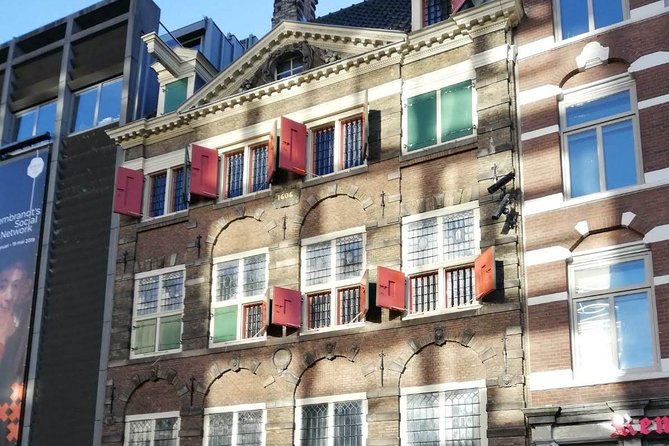
Then comes Trippenhuis, a favorite stop for architecture fans. You’ll hear about the building’s reputation as one of Amsterdam’s famous “dancing houses,” and you’ll also get extra context that helps you understand why the facade looks like it does.
This is exactly the kind of stop that works on both levels. If you love details, you’ll enjoy the visual quirks. If you’re just trying to get the big picture, the explanation helps you see how Amsterdam’s wealth and craftsmanship show up in design.
Time is tight here, about 10 minutes, so you’ll want to be ready with your camera before the group moves on.
Museum Het Rembrandthuis: worth considering, ticket not included
You’ll stop at Museum Het Rembrandthuis, focused on Rembrandt, the most famous Dutch painter. This is the one place where admission isn’t included, so you’re deciding between seeing it from the outside with the story, or budgeting for entry if the museum itself is high on your list.
This stop is also a useful reminder of how Amsterdam’s identity blends art and commerce. Rembrandt’s place in Dutch culture isn’t separate from the city’s broader growth story. It fits the same theme you’re hearing all afternoon.
A pause for medical and freethinking botanical philosophers
At some point, the tour includes a stop devoted to medical and freethinking botanical philosophers and how they fit into a country of contrasts. You don’t just hear “Amsterdam was smart,” you get the idea that scientific thinking and cultural change happened alongside trade wealth and political shifts.
Even without specific names in the stop description, the theme lands clearly: Amsterdam wasn’t only a place for artists and merchants. It was also a place where people argued, experimented, and pushed ideas into everyday life.
If you like walking tours that connect big ideas to real street locations, this is one of those sections that makes the walk feel more than sightseeing.
The Amstel: river power and World War II context
Next is the Amstel. This stop is framed as more than a river. The guide talks about what the Amstel meant for Amsterdam, and then brings in the heavy chapter of how World War II affected the city.
This kind of pause changes the emotional temperature of the walk in a good way. You stop thinking only about building styles and start thinking about survival, rebuilding, and what “power” looks like when it’s tied to both trade and history.
You have around 15 minutes here, enough time to take in the river setting and still hear the story without rushing.
Staalmeestersbrug: the quick photo moment that pays off
Then comes Staalmeestersbrug, a 5-minute stop that’s essentially a photo moment. It’s short on purpose: the guide gets you to the right angle, points out what makes it atmospheric, and then you’re back on the move.
For me, these quick bridge stops are useful because they break the walking rhythm. Even if you don’t take many photos, it gives your brain a reset.
Oudemanhuispoort: institutions and the story behind major pillars
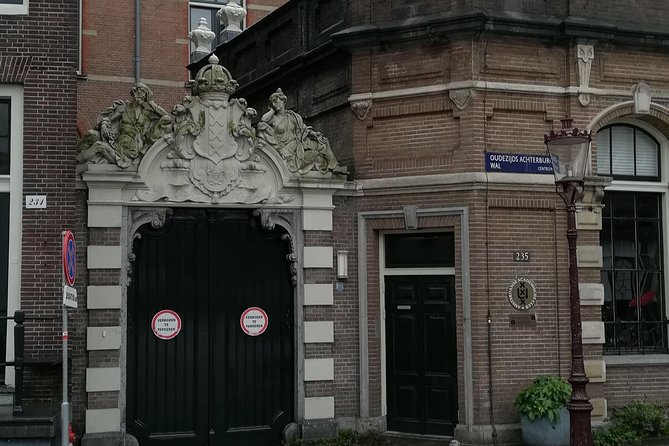
At Oudemanhuispoort, the tour focuses on Amsterdam’s institutions. The stop description points out that you’ll learn about the city’s most important company, besides the Dutch education system.
That phrasing is interesting because it highlights how Amsterdam’s power structure wasn’t only academic or only civic. It was connected to the organizations that shaped livelihoods, learning, and business.
Time here is about 15 minutes, which lets the guide explain the idea without feeling like you’re being rushed through big names and dates.
Begijnhof: the courtyard you’ll want to linger in
After that, you reach Begijnhof, described as one of Amsterdam’s most beautiful hidden places. It’s a courtyard space that creates a break in the street noise, and the tour gives you about 15 minutes to absorb it.
This is where you really feel the difference between “Amsterdam as a map” and “Amsterdam as lived space.” Begijnhof is the kind of place where the architecture and the quiet are part of the story, not just a backdrop.
If you’re the type who likes slowing down mid-tour, this stop is made for you.
Dam Square: finishing at the city’s main meeting point
The final stop is Dam Square, about 15 minutes, and it’s timed perfectly for wrapping up. The guide explains why it matters as the city’s key meeting place, and also frames it as a starting point for understanding Amsterdam’s story.
Ending at Dam Square is practical because it gives you immediate options. You’re in the center of foot traffic, transit access, and the next things you might want to do. And after three hours of history and architecture, it’s satisfying to come full circle to a space that feels like the city’s “front door.”
Price and value: what $208.23 per group gets you
The price is listed as $208.23 per group, up to 15 people, and the tour is private, meaning only your group participates. That can make the cost feel steep if you think in per-person terms.
But if you travel with even a few people, the value shifts quickly. A private walking guide for about 3 hours plus a structured route through major sites is a good deal compared with piecemeal museum visits and random street wandering where you miss the context.
Also, many stops list free admission. So you’re paying for the guide’s explanation and the walking route, not for a chain of paid entries. The one exception to flag is Museum Het Rembrandthuis, where admission is not included.
One more value point: based on the experience itself, this is clearly guided for people across ages. In particular, a guide named Diana stood out for being friendly, flexible, and able to keep an adolescent engaged. That kind of skill matters on a 3-hour walk, because attention can fade fast if the guide is stuck in a script.
Who should book this Amsterdam history-and-architecture walk?
Book it if you want:
- A first-time Amsterdam orientation that still gives you real stories, not just dates
- Architecture and tradition as the theme, with quick but meaningful stops
- A private group pace, with room for questions and photos
- A guide who offers local tips for bars, restaurants, and cafes, which helps you convert the afternoon into real plans
It may not be the best fit if you’re only interested in long museum time. The tour is built around short, purposeful stops, and the one museum stop has extra admission not included.
Also, if you hate walking in general, rethink it. Amsterdam is best on your feet, and even a “short pause” tour still adds up to a real walking workout.
Should you book it?
Yes, if you want a tight, well-structured Amsterdam introduction that blends history, architecture, traditions, and anecdotes. Starting at Centraal Station, moving through Nieuwmarkt and the Amstel, and ending at Dam Square is a smart way to map the city in your head fast.
If the Rembrandt museum matters a lot to you, just budget for the fact that Museum Het Rembrandthuis admission is not included. And since coffee and food are not provided, plan to grab a drink before or after, or bring water so you stay comfortable during the walk.
If you’re traveling with a friend group or family, the private format makes it feel personal, and that is where tours like this usually shine.
FAQ
How long is the Amsterdam walking tour?
It lasts about 3 hours.
Is this tour private?
Yes. It is a private tour, and only your group participates.
Where does the tour start and end?
It starts at Loetje, Stationsplein 10, 1012 AB Amsterdam, and it ends at Dam Square, Dam, 1012 Amsterdam.
What time does the tour begin?
The start time is 2:00 pm.
Is admission included for all stops?
Most stops list free admission, but Museum Het Rembrandthuis admission is not included.
Is food or coffee included?
No. Coffee and/or tea are not included, and the tour does not include food and drinks.
What is the group size limit?
The tour price is per group up to 15 people.
Can I cancel for a full refund?
Yes, you can cancel up to 24 hours in advance for a full refund.
Golden Age Corners
- Amsterdam Food and Cultural Tour with Tastings★ 5.0 · 4,315 reviews
- Amsterdam: Historic City Centre Canal Cruise★ 4.3 · 659 reviews
- Amsterdam: Haunted History and Ghost Walking Tour★ 4.5 · 488 reviews
- Amsterdam High-End Dutch Food & History Tour – Up to 8 guests★ 5.0 · 482 reviews
Gables on Foot
- Amsterdam: Anne Frank Guided Walking Tour in DE/EN/IT/ES★ 4.9 · 3,107 reviews
- Amsterdam: Anne Frank Guided Small Group Walking Tour★ 4.8 · 2,722 reviews
- Amsterdam: Cultural Highlights Walking Tour★ 4.9 · 2,629 reviews
- Amsterdam: Ganja Walking Tour★ 4.2 · 2,127 reviews
Latest to arrive along the quays of Amsterdam





Modern Architecture Tours, compared.
Rotterdam Walk: Hilights, Gems, Architecture & WWII | 2 or 3hrs
Read our review →
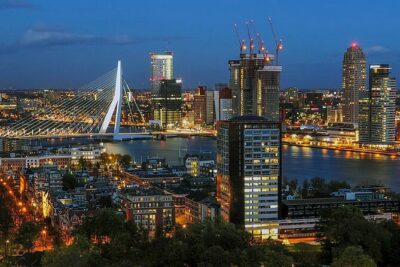
Rotterdam Must Do Tour: Highlights, History, WW2 and Architecture
Read our review →
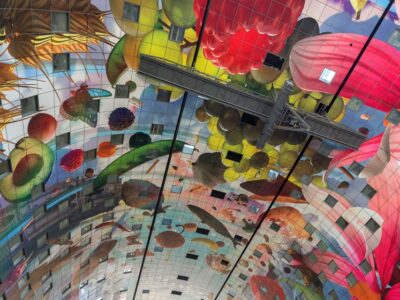
Architecture Highlights Tour including the Depot
Read our review →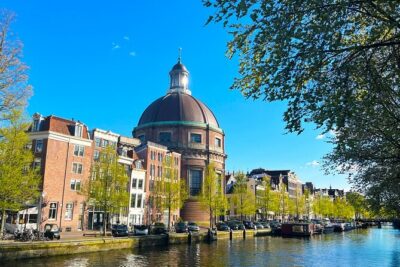
Walking Tour about Golden Age Architecture, private local guide
Read our review →
Rotterdam Architecture and Highlights Walking Tour (TOP RATED)
Read our review →Browse the lists this tour appears in