
Reviewed · MODERN ARCHITECTURE TOURS
Amsterdam, Eastern Docklands Architecture: Private Tour
Modern waterfront planning in Amsterdam.
This private tour through the Eastern Docklands turns new architecture into an easy story you can follow on foot, from harbor roots to today’s neighborhoods.
I love how the walk connects historic industry to what was built afterward, so the area feels more like a living textbook than a set of buildings.
My second big win is the guided comparison of Java and KNSM, two twin islands that share an idea but end up looking very different.
You’ll also get a smart look at how planning choices shaped daily life in places like Borneo, Sporenburg, and Riet Landen.
One consideration: it’s a walking experience and large bags are not allowed, so plan light if you’re coming straight from elsewhere.
In This Review
- Key highlights to look for
- Why Amsterdam’s Eastern Docklands reads like a design lab
- Getting there near Pakhuis De Zwijger and how the walk flows
- Java and KNSM: two islands, one concept, different outcomes
- Borneo and Sporenburg: low-rise homes built at the same density
- Riet Landen’s park and traffic junction, together
- The guide’s academic background and how Q and A makes it better
- Price and value: $235 per group up to 10 for a 2-hour walk
- Who should book this Eastern Docklands architecture tour
- Smart planning tips so the walk feels easy
- Should you book this tour?
- FAQ
- What is the duration of the Amsterdam Eastern Docklands private tour?
- Where does the tour meet?
- How much does it cost?
- What languages are available?
- Is the tour wheelchair accessible?
- Are there restrictions on luggage?
- How does cancellation work?
Key highlights to look for
- Java vs KNSM comparison that shows one concept, two results
- Low-rise, high-density housing thinking in Borneo and Sporenburg
- Riet Landen park and traffic junction blending public space with movement
- Academic-level explanations from guides trained across architecture, sociology, and art history
- A walk built around your group with a private format for up to 10 people
Why Amsterdam’s Eastern Docklands reads like a design lab
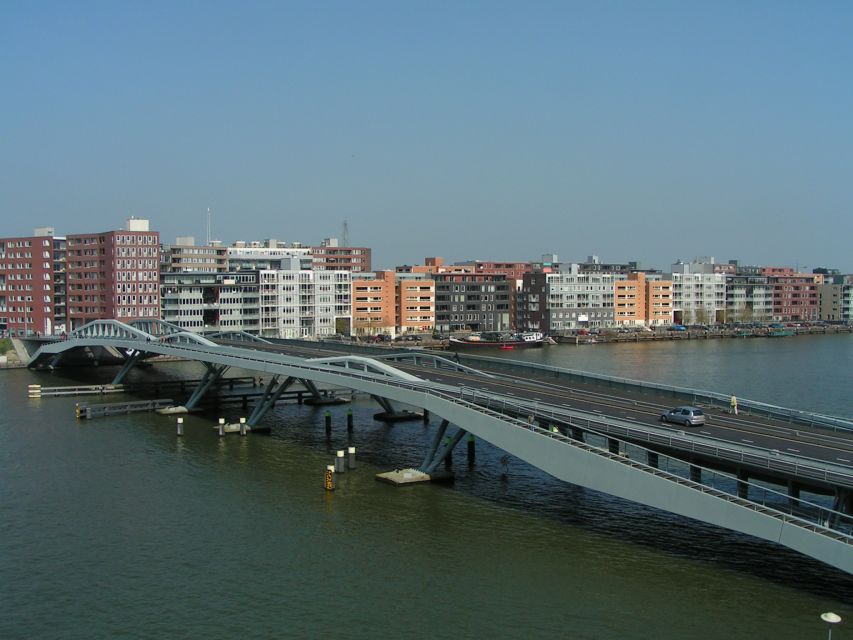
The Eastern Docklands grew out of a working harbor, and you can still feel that industrial past in the setting.
Starting in the 1970s, the area slowly turned into a residential district, with major building waves across the 1980s and 1990s, and then a modern waterfront look that tries to respect what was already there.
What makes this tour genuinely useful is that it treats the neighborhood like an experiment with outcomes.
You’re not just looking at pretty facades. You’re learning what planners were trying to solve: housing, density, street life, and how people move through space.
That’s how Eastern Docklands stops feeling like a place you pass through and starts feeling like a place you understand.
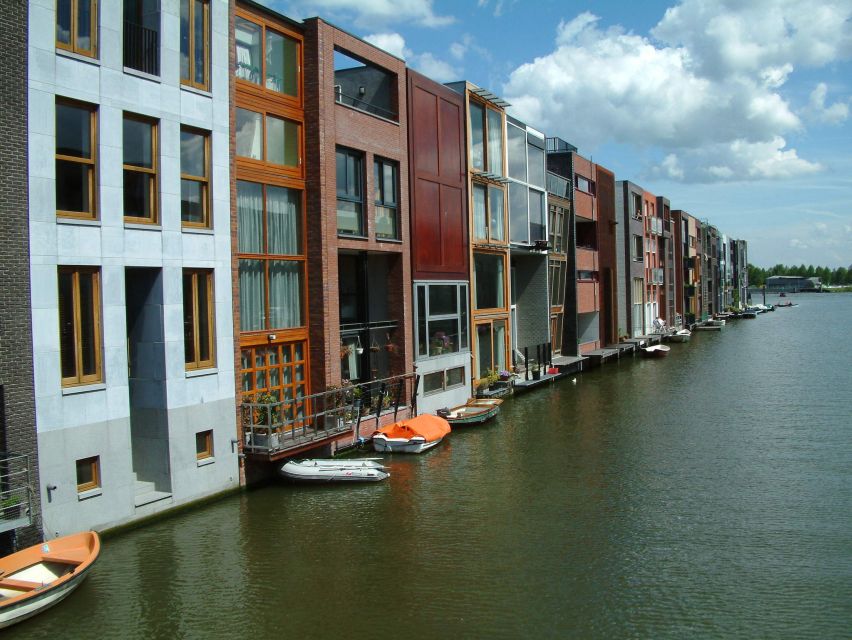
The tour focuses on five districts: Java, KNSM, Borneo, Sporenburg, and Riet Landen.
Each one is a different answer to the same big question, how do you build a waterfront neighborhood that works for real people?
More Private Tours in Amsterdam


Getting there near Pakhuis De Zwijger and how the walk flows
Meet in front of Pakhuis De Zwijger, next to Jan Schaeferbrug.
That puts you right in the right part of Amsterdam for dockland architecture, and it’s also a convenient starting point for a walking loop.
The tour is private and designed for a group of up to 10 people, for a price of $235 per group.
Expect about 2 hours, and the walk can run 2 or 3 hours depending on your needs, with the guide adapting the pace.
Guides speak English, Dutch, or German, so language won’t be a barrier if you pick the right option.
One practical note: luggage or large bags are not allowed.
So if you’re traveling with extra gear, you’ll want a lighter day pack and nothing bulky.
Also plan for the fact it’s outdoors.
Weather can change fast in Amsterdam, so dress like you expect wind and sudden drizzle, and bring what you need to stay comfortable.
Java and KNSM: two islands, one concept, different outcomes
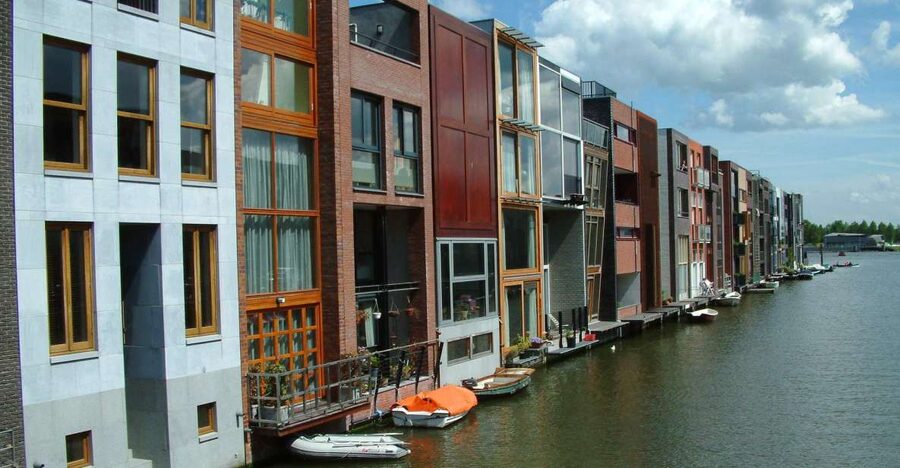
Java and KNSM are often described as twin islands, and the guide work here is all about showing you the same underlying idea at work, then pointing out how the results diverge.
You’ll start to notice that the planning thinking is connected to Amsterdam’s broader identity and historical influences.
But what surprised me in this kind of architecture storytelling is how quickly your eye catches the differences once the guide gives you a framework.
Instead of guessing what you are seeing, you learn what to look for, and the buildings answer back.
Think of it like comparing two neighborhoods built from the same blueprint, then modified by choices about housing, layout, and streetscape.
That’s where the tour becomes more than a photo walk.
You’ll come away with a clearer sense of how small design decisions change the feel of a place.
And because these islands are part of the same larger dockland story, this stop also helps you understand what later districts are doing differently, especially when you get to the low-rise housing experiments.
Borneo and Sporenburg: low-rise homes built at the same density
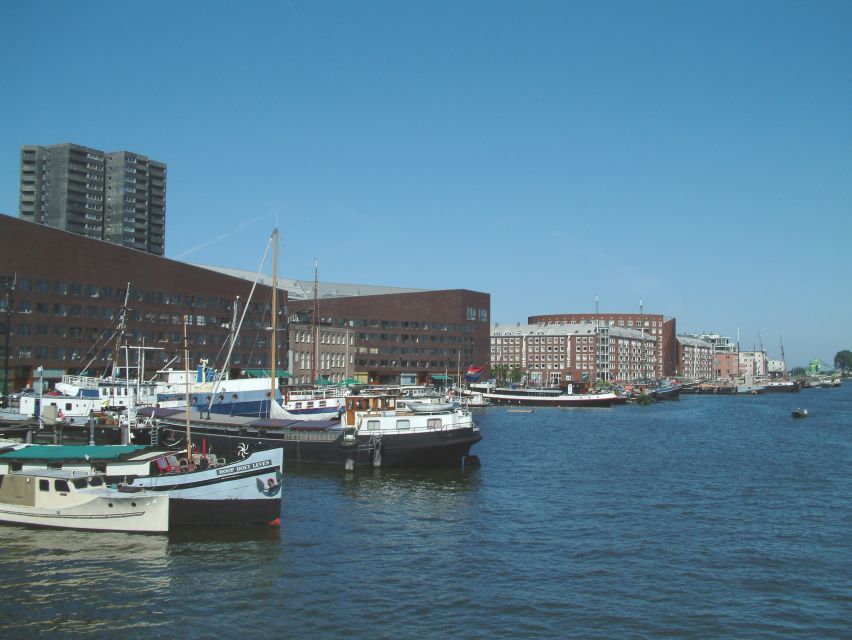
Borneo and Sporenburg are where the tour gets especially interesting for anyone who cares about planning logic, not just aesthetics.
The key idea is low-rise single-family houses built at a density of 100 apartments per acre.
That’s the kind of density you might expect from multi-storey complexes, not detached or low buildings.
So the guide’s job here is to help you see that density is not one-size-fits-all.
You can pack people in without forcing everything into tall towers.
Once you understand that, the streets and building heights make more sense, even if you’re not an architecture specialist.
In this part of the walk, you’ll likely notice how the neighborhood tries to balance privacy and neighborhood life.
Low-rise can mean more street scale and a different rhythm of entrances and windows.
And it can also mean the layout has to do more work, because the design can’t rely on sheer height to carry housing demand.
The practical payoff for you is perspective.
When you look at Borneo and Sporenburg after the tour, you’ll start spotting planning patterns everywhere, not just in Amsterdam.
Riet Landen’s park and traffic junction, together
Riet Landen is the district where the tour shows you a bold mix: a park, a residential area, and a traffic junction all in the same heart.
It’s a great example of how urban design tries to shape movement and daily life at once, instead of treating cars and green space as separate worlds.
What I like about this stop is that it’s the opposite of an abstract lecture.
The design is literally in front of you, so you can see the tradeoffs: where people cross, where the park gives breathing room, and how the neighborhood organizes around flow.
Urban space is always about priorities.
Do you route people quickly through the area, or do you slow them down and encourage lingering?
Riet Landen gives you a visible answer, and the guide helps you interpret it based on the development goals of the docklands project.
If you pay attention here, you’ll also get a better sense of what makes the Eastern Docklands feel different from other parts of Amsterdam.
It’s not just architecture, it’s the choreography of space.
More concrete and glass worth craning at:
- Amsterdam: Architektur Er-fahren
★ 5.0 · 20 reviews - Walking Tour about Golden Age Architecture, private local guide
★ 5.0 · 15 reviews - Amsterdam Architecture Tour
★ 5.0 · 4 reviews - Amsterdam Walking Tour. All about History, Architecture, Traditions & Anecdotes.
★ 5.0 · 2 reviews
The guide’s academic background and how Q and A makes it better
This isn’t a casual chat tour.
Guides from Stadswandelkantoor have an academic background, including studies in architecture, sociology, and art history.
Some have also published a book titled Ontdek het Oostelijk Havengebied, currently being translated into English.
That matters because the tour explains not only what you see, but why people built it this way.
Instead of facts that bounce off your brain, you get a framework that helps you interpret the streetscape in minutes.
The one German review I saw emphasized that explanations were detailed and competent, and that the guide responded to questions and requests.
That aligns with what you should look for in a private format: the guide should adapt to your interests, whether you care more about housing density, waterfront planning, or how neighborhoods form over time.
If you like asking questions, this is a good choice.
You can guide the conversation toward the parts you find hardest to read on your own.
Price and value: $235 per group up to 10 for a 2-hour walk
Let’s talk value in real terms.
The price is $235 per group, up to 10 people, and the duration is around 2 hours, with flexibility to extend based on your needs.
If you’re traveling as two or three people, the cost may feel steep compared with standard group tours.
If you’re traveling with a small group of friends or family, the private format starts to make more sense, because your guide’s attention is not split across strangers.
Where this feels like a good deal is the “per-group” structure.
You get an expert guide plus a walking route designed around five specific districts and their design lessons.
For architecture and planning lovers, that kind of interpretation can be worth more than a generic sightseeing tour.
In short, it’s best when you have enough people to spread the group price and enough curiosity to make the explanations count.
Who should book this Eastern Docklands architecture tour
This tour is a great fit if you enjoy:
- architecture you can actually read, not just admire
- city planning concepts like density, layout, and mixed-purpose space
- neighborhood walks where you learn names and ideas you can remember
It’s also ideal for a private group because the guide can adjust to your pace and interests within the 2 to 3 hour walking window.
And since it’s wheelchair accessible, it can work for people who need mobility support, as long as you’re comfortable with a walking tour format.
If your travel style is mostly museums and short photo stops, you might find this more demanding than you want.
But if you like to understand what you’re looking at, Eastern Docklands delivers.
Smart planning tips so the walk feels easy
A little prep goes a long way.
Wear comfortable shoes, because you’ll be walking through multiple districts and your comfort matters more than the number of minutes.
Bring a light layer, even in warmer months.
Dockland areas can feel cooler near water, and Amsterdam weather can change quickly.
Since luggage or large bags are not allowed, keep your day bag small.
If you bring a camera, consider a strap you can handle easily while walking and crossing streets.
Finally, arrive a few minutes early at Pakhuis De Zwijger by Jan Schaeferbrug.
It helps you settle in, meet your guide, and start on time without rushing.
Should you book this tour?
I think you should book it if you want more than a scenic walk.
This private experience helps you connect the dots between Amsterdam’s waterfront industrial past and the planning ideas that reshaped Eastern Docklands into a place people call home.
The strongest reason to choose it is the guide approach, academic in background and flexible in conversation, so you leave with concepts you can actually use when you look at other cities.
Skip it only if you hate walking, you need room for large luggage, or you’re not interested in architecture and design logic.
For everyone else, Eastern Docklands is a smart, memorable use of a couple hours in Amsterdam.
FAQ
What is the duration of the Amsterdam Eastern Docklands private tour?
The tour runs about 2 hours, and it can be 2 or 3 hours depending on what you need.
Where does the tour meet?
Meet in front of Pakhuis De Zwijger, next to Jan Schaeferbrug.
How much does it cost?
It costs $235 per group, for groups up to 10 people.
What languages are available?
The live guide is available in English, Dutch, and German.
Is the tour wheelchair accessible?
Yes, the tour is wheelchair accessible.
Are there restrictions on luggage?
Luggage or large bags are not allowed.
How does cancellation work?
You can cancel up to 24 hours in advance for a full refund. Reserve now and pay later is also available.
Latest to arrive along the quays of Amsterdam



Modern Architecture Tours, compared.
Rotterdam Walk: Hilights, Gems, Architecture & WWII | 2 or 3hrs
Read our review →
Rotterdam Must Do Tour: Highlights, History, WW2 and Architecture
Read our review →
Architecture Highlights Tour including the Depot
Read our review →
Walking Tour about Golden Age Architecture, private local guide
Read our review →
Rotterdam Architecture and Highlights Walking Tour (TOP RATED)
Read our review →Browse the lists this tour appears in