
Reviewed · MODERN ARCHITECTURE TOURS
Amsterdam: Private Golden Age Architecture Walking Tour
Golden Age Amsterdam hits you on the first corner. This private walk turns Dam Square, the UNESCO canal ring, and the Jordaan into a clear, story-driven lesson on how Amsterdam’s 1600s power shaped the buildings you see today. You also get practical details on construction and upkeep, not just pretty façades.
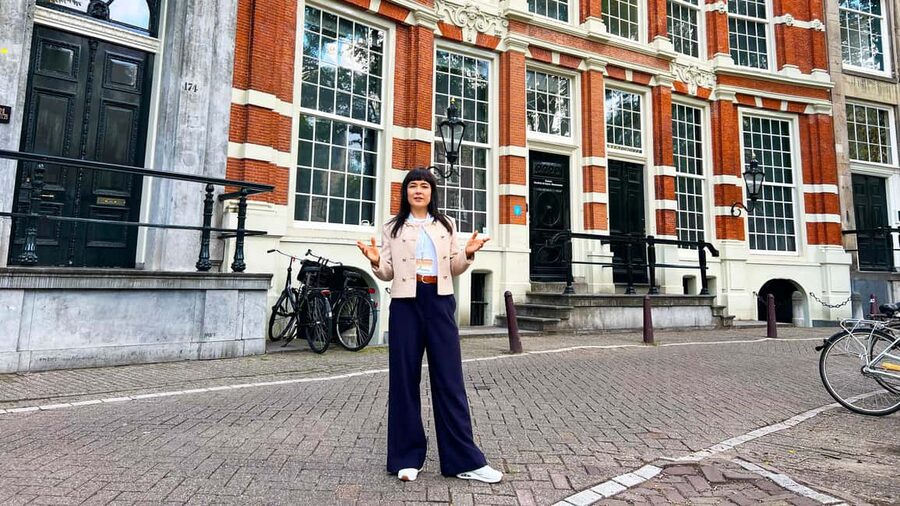
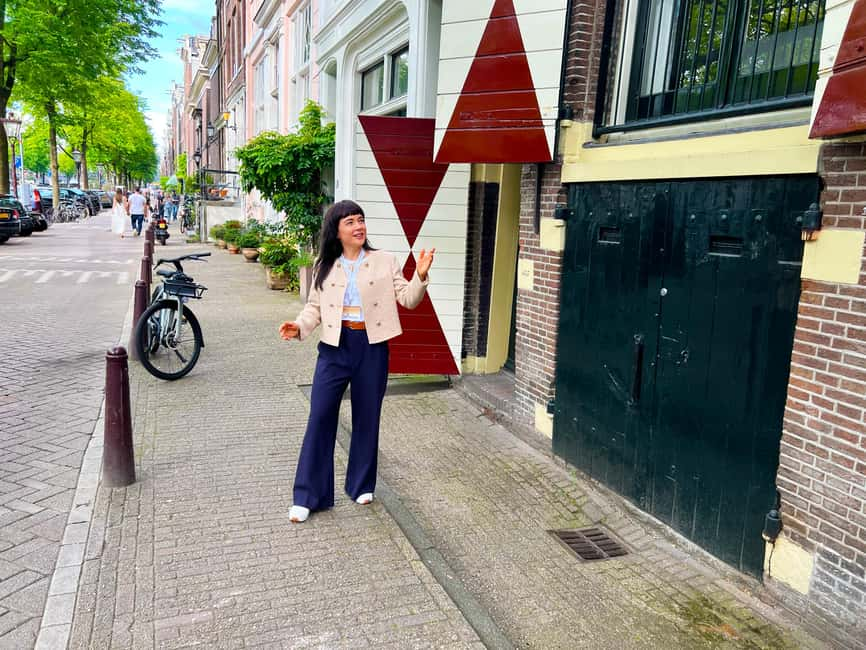
I love the private guiding here, especially the high praise for how the guide Anna is described as engaging, very funny, and fast with answers. I also like that the focus stays on architecture you can actually spot, from the logic of narrow canal plots to why some buildings appear to lean. The one real drawback is timing, it’s only 1.5 hours, but you will stand for much of it, so bring comfortable shoes and don’t plan on sitting breaks.
In This Review
- Quick hits on this Golden Age walking tour
- Dam Square to the Royal Palace: where Amsterdam’s power begins
- The UNESCO canal ring: learning to read Herengracht and Singel like a local
- Why some canal houses look off, and how maintenance keeps them alive
- The short stops that teach you how to spot Golden Age details
- Jordaan: working-class streets where gable stones tell human stories
- Westerkerk finale: Dutch Protestant Baroque and Amsterdam’s skyline cue
- Price and value for a private Golden Age architecture tour
- Practicalities that affect your comfort (more than you think)
- Should you book this tour?
- FAQ
- What is the duration of the Amsterdam private Golden Age architecture walking tour?
- How many people are included in a private group?
- Where does the tour start and where does it end?
- What languages does the guide speak?
- Is transport included to the meeting point or back to your hotel?
- Is bottled water provided?
- What should I bring or wear?
- Is the tour suitable for wheelchair users or mobility impairments?
- Is there free cancellation?
Quick hits on this Golden Age walking tour
- Start at Dam Square, so the Royal Palace context clicks immediately
- UNESCO canal-ring architecture taught as a system, canals plus buildings plus trade
- Construction clues you can read on facades, including why some houses angle forward or sideways
- A built-in contrast between the canal-ring grandeur and the working-class feel of the Jordaan
- Gable stones and doorway carvings that explain who lived where and did what
- Finish at Westerkerk, with a towering skyline moment and a clear architectural style shift
Dam Square to the Royal Palace: where Amsterdam’s power begins
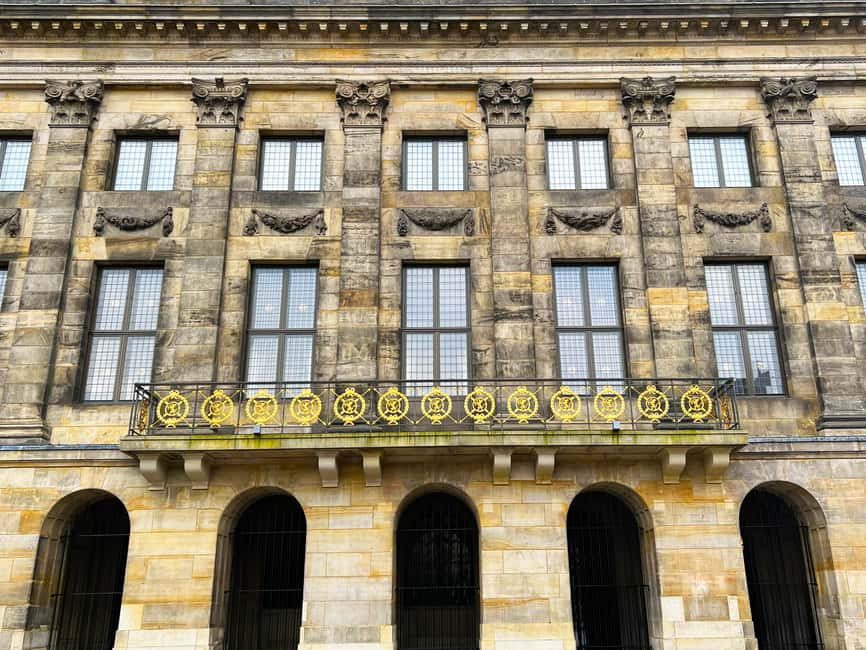
Your tour starts at Dam Square at the golden balcony of the Royal Palace (Koninklijk Paleis op de Dam). This spot matters because Dam Square has been the city’s heart for a long time, used for major events, from royal celebrations to big political moments. Standing here first helps you understand why the Golden Age buildings feel confident, public, and meant to impress.
At the Royal Palace, built as the city’s grand Town Hall during the Golden Age, your guide points out the style and the intent. You’ll hear how Dutch Classicism communicated Amsterdam’s ambition in the 1600s, when global trade helped the city grow rich and powerful. Instead of treating the palace like a single landmark, you learn to read it as a statement of governance and civic pride.
Even if you’ve seen the palace in photos, I find starting at the balcony level changes the way you look at it. You start paying attention to symmetry, scale, and what the building is trying to say from the street.
More Guided Walking Tours in Amsterdam

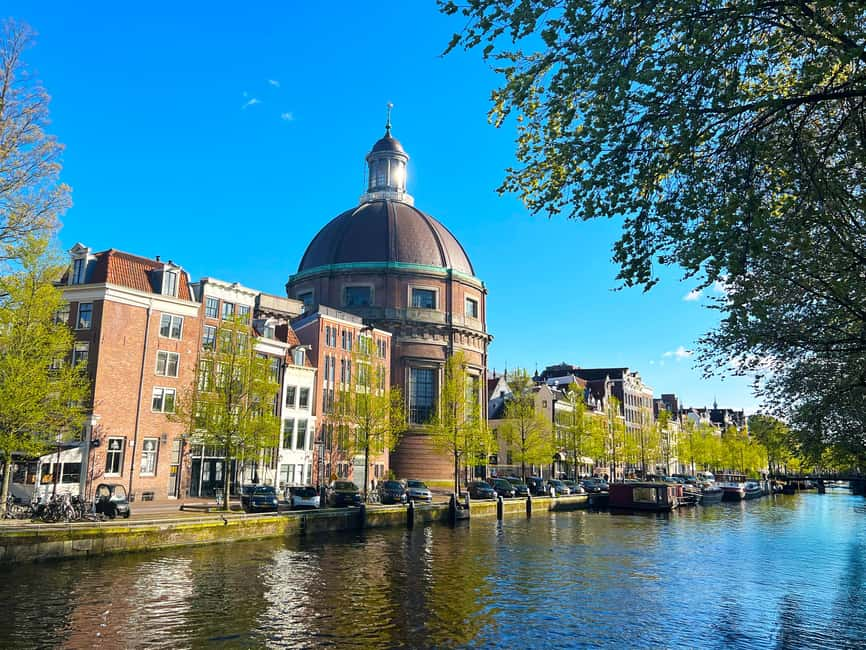
The UNESCO canal ring: learning to read Herengracht and Singel like a local
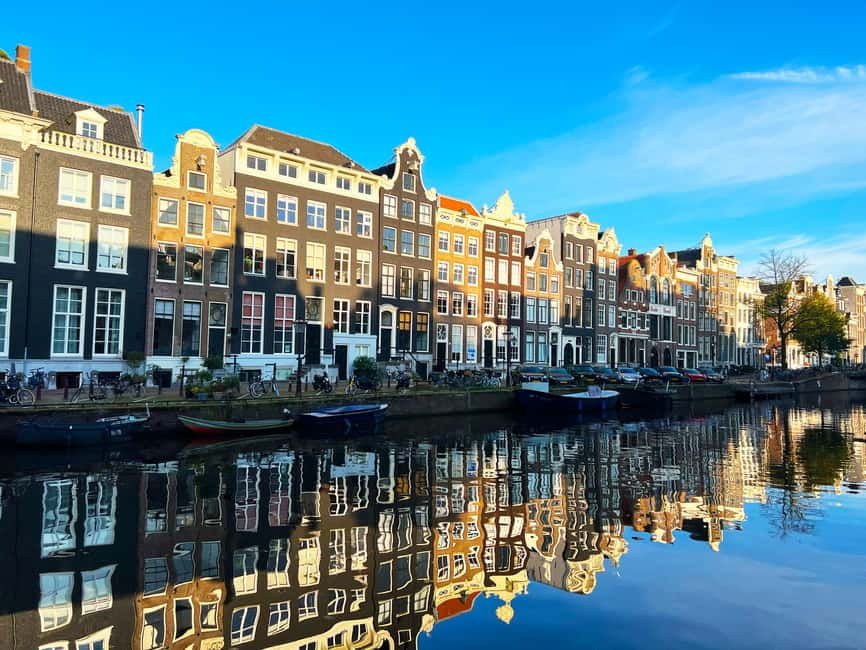
From Dam Square, the walk pushes you into the canal ring, a UNESCO World Heritage area created in the early 17th century to manage Amsterdam’s rapid growth and trade. This is where the tour becomes less about sightseeing and more about pattern recognition.
You’ll pause around key stretches like Herengracht, Singel, and later areas connected to Grachtengordel-West and Prinsengracht. The guide’s job is to help you see how the canals and the buildings are linked, not separate attractions. The canals were a practical solution, but they also became a stage for status.
Here’s what you should expect to learn while you’re walking:
- Canal houses were designed around narrow, deep plots.
- Large windows and distinctive gabled façades balanced function with display.
- Some buildings appear to lean forward or sideways, and the guide explains why that happens and how construction and later maintenance can shape what you see.
You’ll also hear how merchants lived and worked in these buildings, and how warehouses fit into the daily reality of global trading. One of the best parts of this tour is that the guide keeps connecting architecture to workflow, so you understand what these buildings were actually used for, not just what they look like now.
Why some canal houses look off, and how maintenance keeps them alive
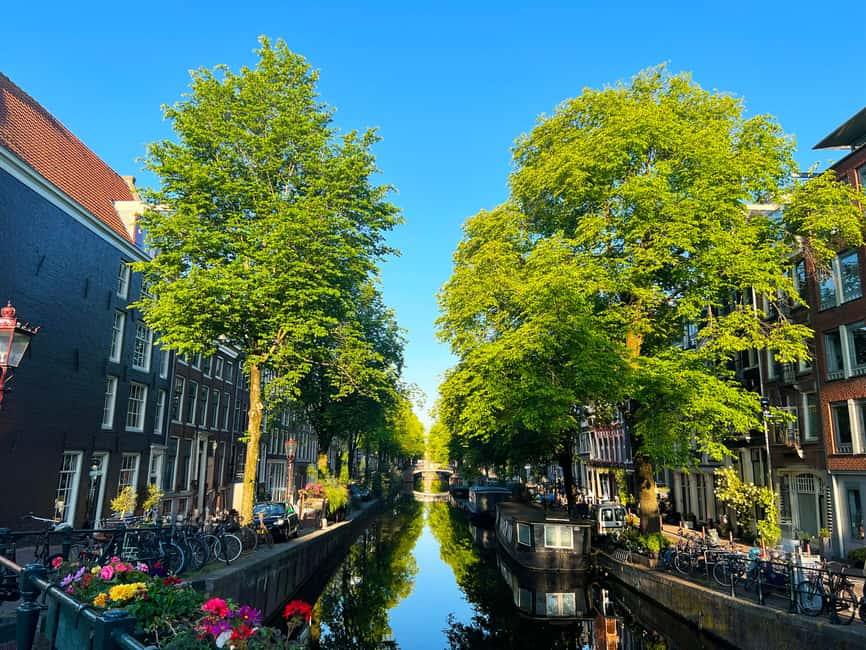
A common reaction when you first start noticing the canal façades is, why do some houses look slightly angled? This tour gives you a grounded explanation. You’re not left with vague “it’s just old” answers. You get construction and maintenance context, including how buildings settle and how the city protects historic structures over time.
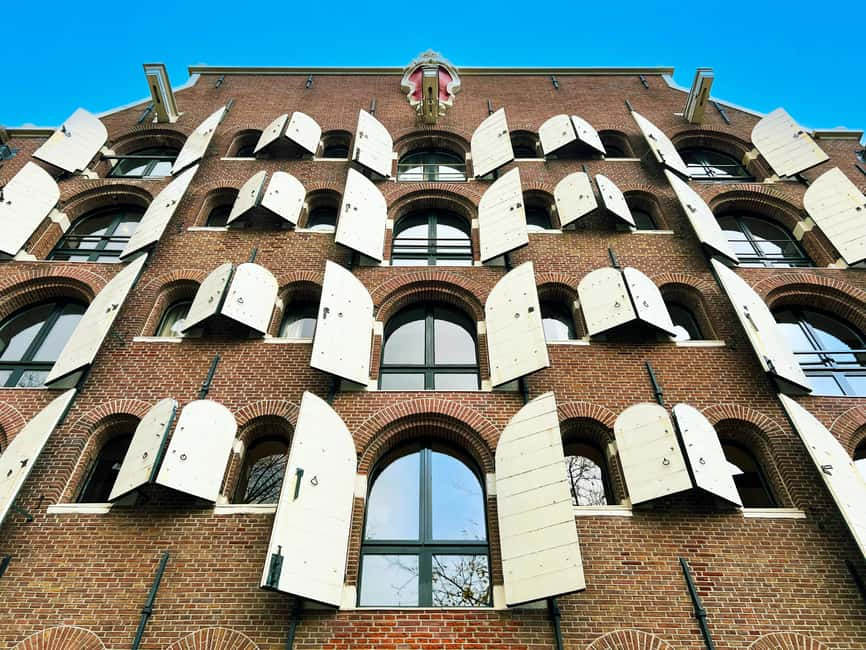
You also learn that the symbolism isn’t only in big monuments. It shows up in details: the rhythm of windows, the design language of gables, and how façade choices communicated prosperity. That matters because Amsterdam’s Golden Age wealth came from trade, and architecture was one of the visible ways the city displayed it.
Then comes the practical side that most architecture tours skip. Your guide highlights ongoing preservation efforts that help protect nationally listed historic buildings. Even on a short 1.5-hour walk, you come away with an understanding that preservation is not just a museum activity. It’s continual maintenance and care, which is why you can still walk past these places and feel like the era hasn’t vanished completely.
The short stops that teach you how to spot Golden Age details
The route is built around frequent, quick pauses, not long monument time. That works well for a walking tour focused on architecture, because it keeps your eyes engaged.
You’ll make brief stops at places such as Museumhuis Bartolotti and then later De Dolphijn. You may not get a long lecture at each one, but those moments help you connect the broad canal-ring ideas to single façades you can study with your own eyes. Think of it as mini visual training, each stop reinforces the same skill: spotting how design choices reflect use, wealth, and neighborhood function.
You also spend time around Singel again and along sections of Grachtengordel-West. The repeat timing is useful, because it gives you a chance to compare what you noticed earlier with what you see a few blocks later. The guide’s explanations land better when you’ve had time to compare.
If you like architecture tours that feel like a guided field exercise, this format is a good match. If you prefer long, sit-down commentary, the pacing might feel brisk.
Jordaan: working-class streets where gable stones tell human stories
After the canal-ring lesson, the tour shifts to the Jordaan, a neighborhood with narrow streets, charming canals, and a lively local feel. Historically, the Jordaan was developed in the 17th century as a working-class area, which gives it a different emotional tone than the grand canal ring.
Your guide uses this contrast on purpose. The canal ring often feels like a showcase of trade wealth, while the Jordaan feels more intimate and street-level, with local shops and cozy café culture, plus an active arts scene. You get the sense of everyday life rather than pure display.
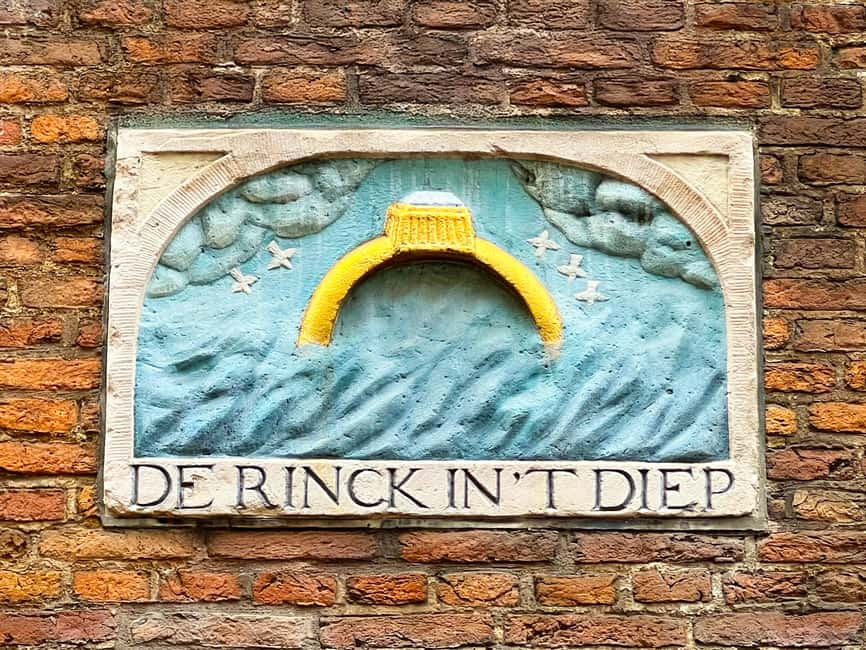
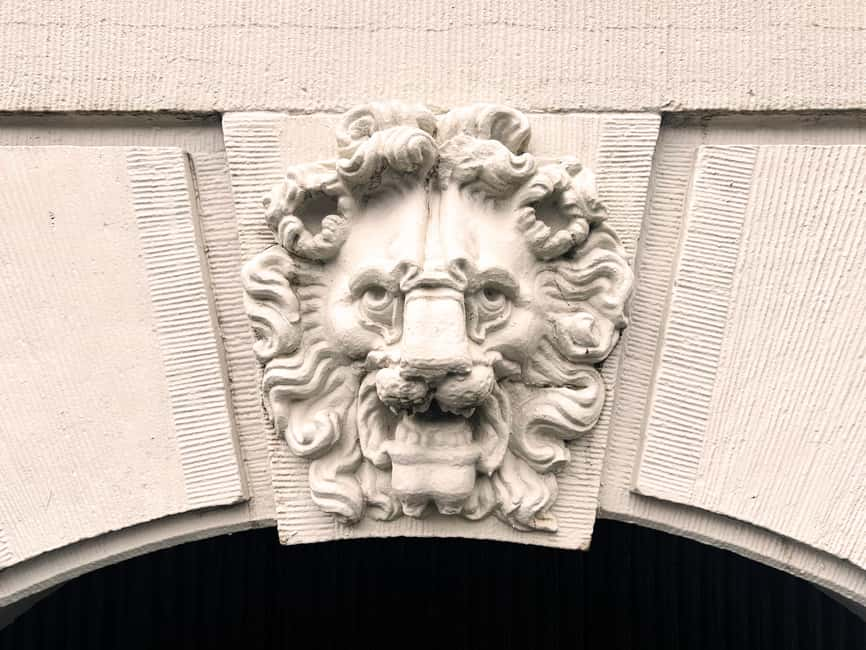
One of the most memorable details you’ll get here is about gable stones. These are small carved reliefs above doorways that can tell stories connected to the artisans and craftsmen who once lived there. It’s a great reminder that the Golden Age wasn’t only merchant palaces and warehouses. It also included the people who built, repaired, and produced the things that kept the city running.
Spend the full time here. The 25 minutes in the Jordaan is where the tour stops feeling like a checklist and starts feeling like you’re walking through real neighborhoods.
And because the tour ends in this area at Westerkerk, you’re well positioned to keep wandering on foot after the guided portion. (Just be ready for normal city walking, your guide only covers a small part of this district.)
More Private Tours in Amsterdam
- Rijksmuseum Amsterdam Small-Group Tour with Private Upgrade
★ 4.5 · 1,547 reviews - Van Gogh Museum Tour Reserved Entry Semi Private
★ 5.0 · 1,437 reviews - Private Amsterdam Red Light District and Coffee Shop Tour
★ 5.0 · 763 reviews - Anne Frank and Jewish Quarter Amsterdam Private Walking Tour
★ 5.0 · 684 reviews
Westerkerk finale: Dutch Protestant Baroque and Amsterdam’s skyline cue
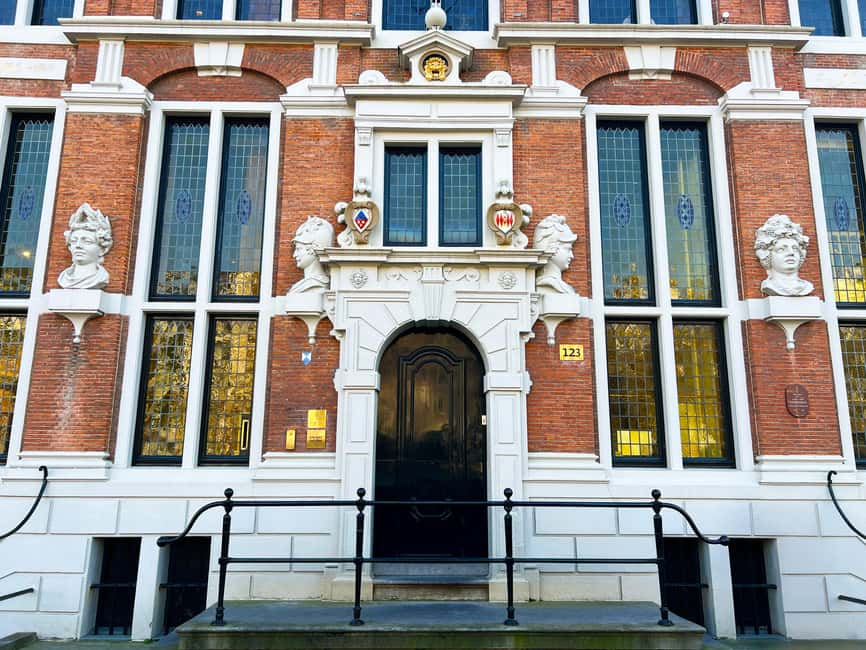
The walk ends at Westerkerk, a major landmark known for Dutch Protestant Baroque design. The big highlight is the tower, with a soaring spire that’s listed as the tallest church spire in Amsterdam. When you finish here, you get a strong visual closure to the tour’s architecture theme, the skyline changes and your eyes know exactly why.
Inside, the church is described as bright but understated. That style difference is part of what makes it a fitting finale. Early in the tour you focused on civic power and trade wealth, then you move to a neighborhood shaped by work and craft, and finally you land in a place that reflects different Golden Age values through religious architecture.
It’s also a practical “last photo” stop without forcing you into museum-type time. You finish with enough time to look up, look around, and orient yourself for what comes next in the city.
Price and value for a private Golden Age architecture tour
The price is $109 per group for up to 4 people, and the tour lasts 1.5 hours. For a private walking experience, that’s a strong value when you fill the group. If you have 4 people, you’re effectively paying about $27.25 per person. If you come as two people, it’s about $54.50 per person, which is still reasonable for a private guide focused on a tight, high-demand area.
What you’re really buying with this price is time with a local guide who can explain construction, maintenance, and symbolism as you walk. At 1.5 hours, you’re not signing up for a half-day commitment, but you still get a structured route that covers Dam Square, major canal stretches, the Jordaan, and Westerkerk.
One more value angle: this is a private group. That matters if you have specific questions about what you’re seeing. The guide’s ability to answer questions quickly is part of the standout feedback (Anna is specifically mentioned for being engaging and funny, and for responding to questions).
Practicalities that affect your comfort (more than you think)
This tour is a leisurely pace, but it includes standing for about 1.5 hours total. That’s the main planning factor. Wear comfortable shoes, and if you know you need frequent sit-down breaks, this may not fit your style.
Also note what is not included:
- Transport to the meeting point on Dam Square is not provided.
- Transport to your hotel or onward destination after the tour ends is not included.
- Bottled water is not included.
So, plan to handle your own transit and bring your own water if you like. The good news is the walk is centered in central Amsterdam, so it’s easy to transition to other nearby plans once you’re done.
The tour starts at Dam Square at the golden balcony of the Royal Palace. Arrive a few minutes early so you can find the right spot without stress.
Should you book this tour?
Book it if you want a short private walk that teaches you how to read Amsterdam’s Golden Age buildings, not just where to take photos. It’s especially worthwhile if you like architecture details, canal planning, and the shift from grand canal-ring wealth to the Jordaan’s working-class atmosphere, then a strong architectural finale at Westerkerk.
Skip it if you can’t stand comfortably for about 1.5 hours total, or if you need wheelchair or stroller access. This one is not set up for mobility impairments, and it’s not suitable for wheelchair users. It also isn’t a match for people who are visually impaired or hearing-impaired, based on the activity’s suitability rules.
FAQ
What is the duration of the Amsterdam private Golden Age architecture walking tour?
The tour lasts 1.5 hours.
How many people are included in a private group?
The price is per group, for up to 4 people.
Where does the tour start and where does it end?
It starts on Dam Square at the golden balcony of the Royal Palace (Koninklijk Paleis op de Dam). It ends at Westerkerk, in the Jordaan area.
What languages does the guide speak?
The guide offers English and Dutch.
Is transport included to the meeting point or back to your hotel?
No. Transport to the meeting point and transport to your hotel or other destination after the tour are not included.
Is bottled water provided?
No, bottled water is not included.
What should I bring or wear?
Bring comfortable shoes for the walking and standing time.
Is the tour suitable for wheelchair users or mobility impairments?
No. It is not suitable for people with mobility impairments or wheelchair users.
Is there free cancellation?
Yes. You can cancel up to 24 hours in advance for a full refund.
Gables on Foot
- Amsterdam: Anne Frank Guided Walking Tour in DE/EN/IT/ES★ 4.9 · 3,107 reviews
- Amsterdam: Anne Frank Guided Small Group Walking Tour★ 4.8 · 2,722 reviews
- Amsterdam: Cultural Highlights Walking Tour★ 4.9 · 2,629 reviews
- Amsterdam: Ganja Walking Tour★ 4.2 · 2,127 reviews
Concrete Worth Craning At
- Amsterdam: Architektur Er-fahren★ 5.0 · 20 reviews
- Walking Tour about Golden Age Architecture, private local guide★ 5.0 · 15 reviews
- Amsterdam Architecture Tour★ 5.0 · 4 reviews
- Amsterdam, Eastern Docklands Architecture: Private Tour★ 5.0 · 2 reviews
Latest to arrive along the quays of Amsterdam




Modern Architecture Tours, compared.
Rotterdam Walk: Hilights, Gems, Architecture & WWII | 2 or 3hrs
Read our review →
Rotterdam Must Do Tour: Highlights, History, WW2 and Architecture
Read our review →
Architecture Highlights Tour including the Depot
Read our review →
Walking Tour about Golden Age Architecture, private local guide
Read our review →
Rotterdam Architecture and Highlights Walking Tour (TOP RATED)
Read our review →Browse the lists this tour appears in