
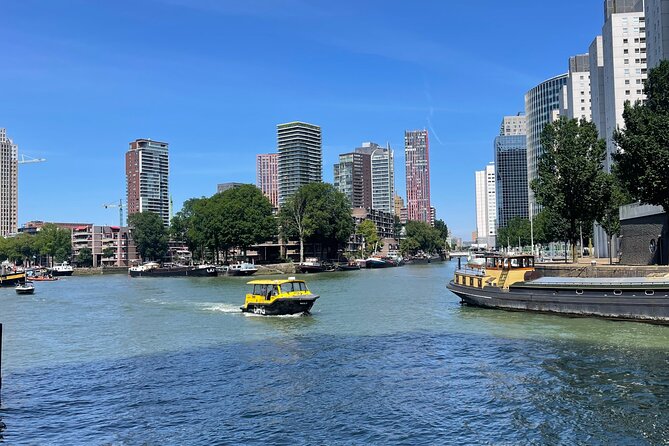
Reviewed · MODERN ARCHITECTURE TOURS
Rotterdam: Art, History and Architecture Self-Guided Audio Tour
Rotterdam tells a story in footsteps. This self-guided audio walk connects the city’s WWII recovery to its fearless modern design, with offline GPS so you can keep moving and learn along the way. I especially like the mix of big-name architecture (hello, Cube Houses) and design-forward surprises (like the iridescent food market in Markthal). One thing to plan for: you’ll need your own smartphone and headphones to listen.
You’ll start at City Hall Rotterdam on Coolsingel, a building that survived the Nazi bombing of 1940, then work your way through landmark contrasts: a lone medieval remnant, the market hall that people compare to Rotterdam’s Sistine Chapel, and the Old Harbor where historic ships still rub shoulders with nightlife. The route runs about 2 to 2.5 hours at a walking pace, including time spent passing by the sights, and it ends at Paul McCarthy’s Santa Claus sculpture on Eendrachtsplein.
Key points I’d use to plan your walk
- City Hall Rotterdam (1940 survival) sets the theme: resilience first, art second.
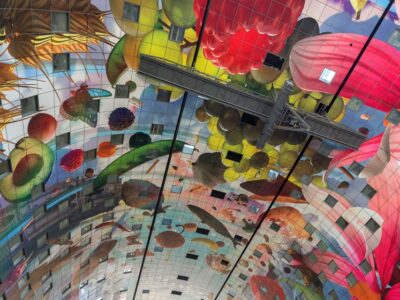
- Markthal is treated like Rotterdam’s Sistine Chapel, plus it’s a culinary hotspot and architectural showpiece.
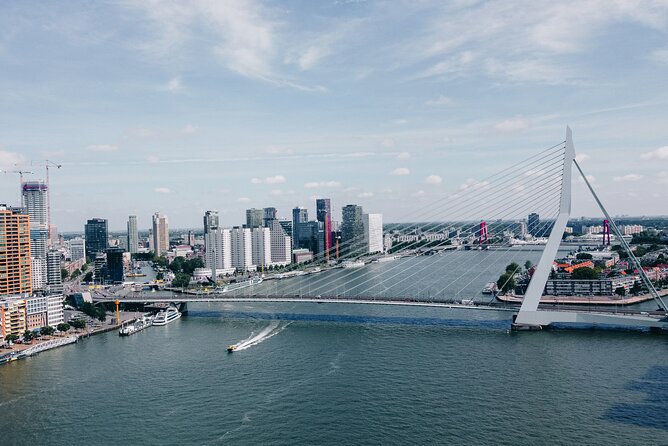
- Erasmus Bridge earns its nickname The Swan, and you’ll get a long, river-view perspective of the city.
- Boijmans Van Beuningen Depot shows how art storage can be public-facing, not hidden away.
- Paul McCarthy’s Santa Claus ends the tour with contemporary art that sparks debate.
- The route is built for clear step-by-step GPS navigation, not guesswork.
In This Review
- Why Rotterdam’s skyline starts with WWII, at City Hall
- The medieval survivor, the Cube Houses, and Markthal’s Sistine Chapel feel
- Old Harbor, St Lawrence Church, and how Rotterdam mixes old ships with new ideas
- The first skyscraper moment, then the Swan bridge over the Maas River
- Witte de Withstraat and the Fleet Street vibe after dark
- The silver Boijmans Van Beuningen Depot and Rotterdam’s art storage twist
- Contemporary shock value at the end: Santa Claus by Paul McCarthy
- How the self-guided GPS audio tour really works for your time
- Price and value: $11.99 for a 2 to 2.5 hour design lesson
- Should you book this Rotterdam art, history, and architecture audio tour?
- FAQ
- Where does the tour start and end?
- How long is the tour?
- What is included with the tour?
- What do I need to bring?
- Is the tour self-guided or guided?
- Can I cancel for free?
Why Rotterdam’s skyline starts with WWII, at City Hall
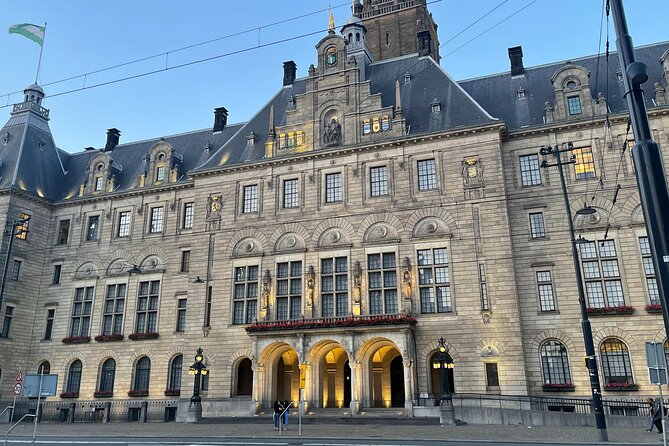
Your walk begins at City Hall Rotterdam, located at Coolsingel 40. This isn’t just a starting point. It’s the emotional first page of Rotterdam’s modern story. The building survived the Nazi bombing in 1940, so even before you move, you’re looking at a reminder that the city chose rebuilding over erasing.
That matters because this tour is less about random photos and more about seeing how Rotterdam’s identity got shaped. You’re not only watching modern architecture appear. You’re learning why it was allowed to look the way it looks. Rotterdam became Europe’s largest port, then rebuilt with bold design when traditional patterns were simply gone.
If you like walking tours that explain the “why” behind what you see, this one makes sense quickly. And if you’re the type who gets distracted by menus and storefronts, you’ll still have an anchor: the tour keeps returning to resilience, design choices, and how the city re-invented itself.
The medieval survivor, the Cube Houses, and Markthal’s Sistine Chapel feel
From City Hall, the route threads into Rotterdam’s older layers and its modern signatures.
You’ll pass by what’s described as the only medieval structure that survived the destruction of Rotterdam in World War II. That stop is brief, but the payoff is mental. When you stand near it, you can better understand how dramatic the change was after 1940. It’s like a single surviving frame from a destroyed film, with everything else replaced by a new plot.
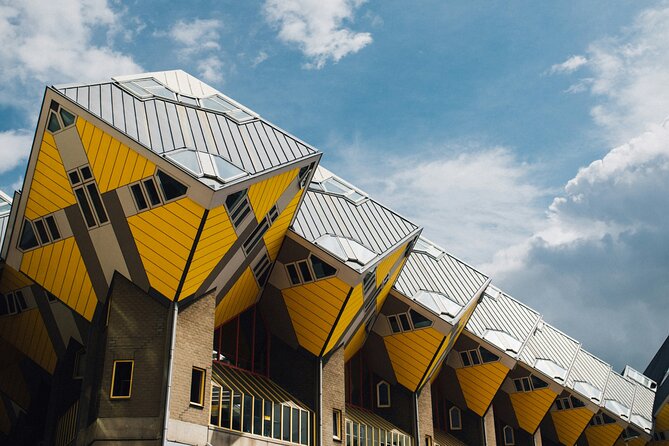
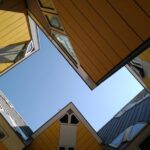
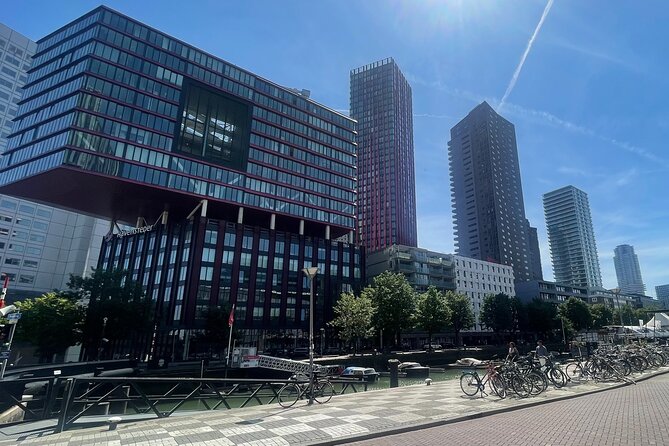
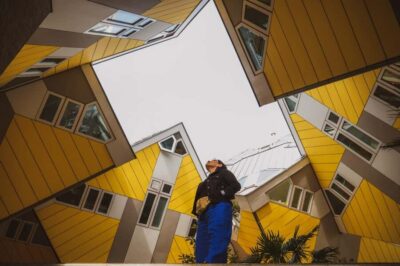
Next comes a cluster of architecture highlights. The tour specifically flags Piet Blom’s Cube Houses, Rotterdam’s most instantly recognizable playful design. These aren’t just “cool buildings.” They’re a statement about how Rotterdam could use form to signal creativity and movement, even when the city itself had been forced into reinvention.
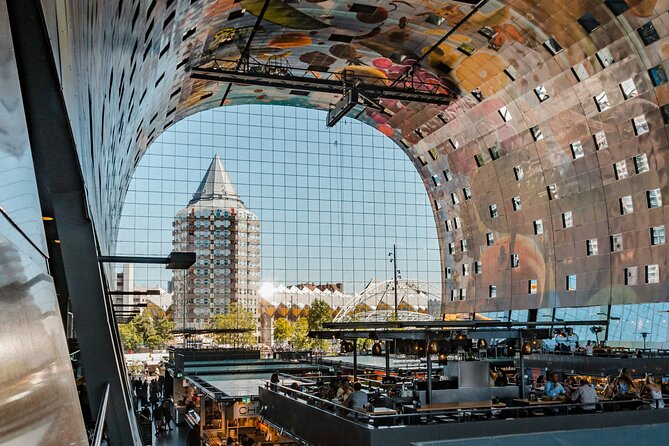
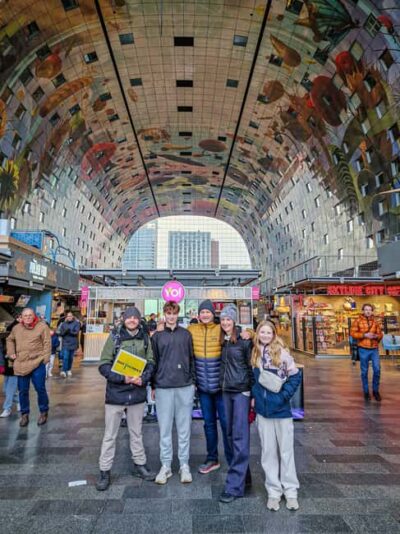
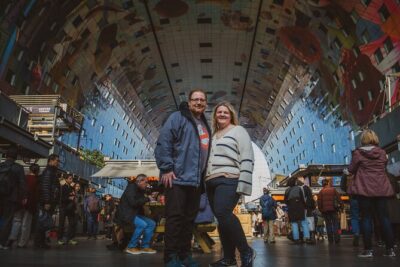
Then you’ll come to Markthal, sometimes described as the Sistine Chapel of Rotterdam. The name fits because the interior design is meant to pull your eyes around and make you feel the space. You’ll also get the practical context: it’s an architectural innovation, a culinary hotspot, and one of the city’s clear symbols. The market is also described as iridescent, so expect that visual wow-factor that makes people slow down even when they’re only passing through.
A small planning tip: because this area is built for food and browsing, it’s easy for the market to steal time. I’d treat Markthal as a “look first, snack second” stop so you stay on schedule for the whole 2 to 2.5 hour walk.
More concrete and glass worth craning at:

Old Harbor, St Lawrence Church, and how Rotterdam mixes old ships with new ideas
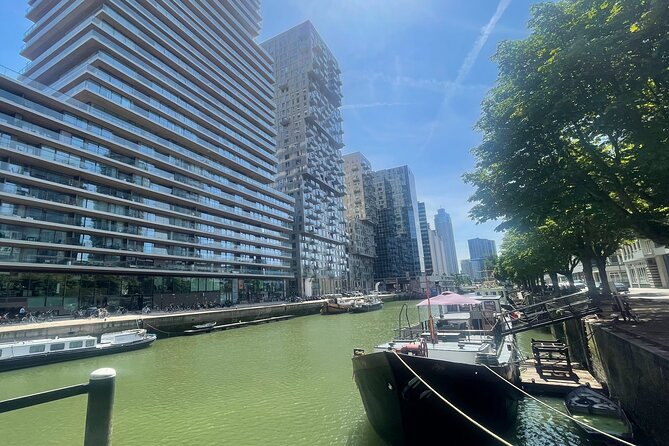
As you keep walking, the tour heads toward one of Rotterdam’s oldest harbors. Today, this same harbor area is also described as one of the city’s most popular bar and restaurant zones. That combination is one of Rotterdam’s most practical surprises: the past is not frozen behind glass. Old Harbor is still used, still lively, and still tied to the working rhythm of a port city.
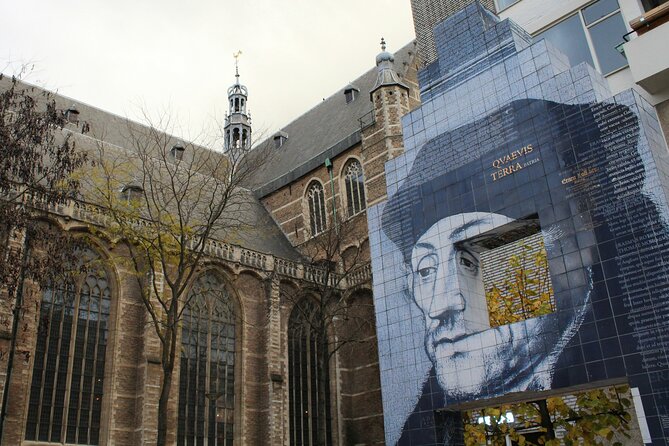
While moving through this section, you’ll also encounter St Lawrence Church, which is called out in the tour overview as part of the route’s main sights. Even if you don’t spend long inside, it’s worth noticing how religious architecture and modern market halls sit in the same city landscape. Rotterdam can be very new-looking, but it doesn’t feel like history was thrown away.
What I like about this portion is the emotional balance. Rotterdam’s story can sound heavy when you start with wartime survival. The Old Harbor section shifts that weight into lived-in city life: ships, waterfront energy, and the kind of places where people actually linger.
The first skyscraper moment, then the Swan bridge over the Maas River
The tour doesn’t let you stay in one visual “style.” It jumps from harbor life to an important skyline marker: a ten-story building completed in 1898, described as Europe’s first skyscraper.
Even if ten stories doesn’t sound huge now, this is one of those moments that helps you understand how modern Rotterdam got its confidence early. When it was completed, it was clearly a break from the expected scale. That kind of early change is part of why Rotterdam could later embrace bolder architecture across the rebuilding period.
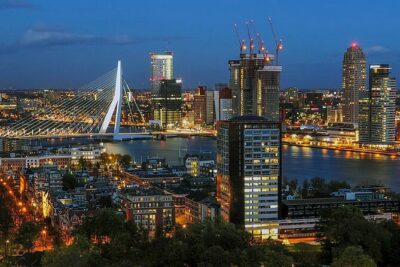
From there, you’ll walk to the Erasmus Bridge, nicknamed The Swan. The tour notes the bridge is 802 meters long, and it’s framed as a symbol of Rotterdam’s rebirth. This section is where the walking becomes more scenic, because you’re not only looking at buildings. You’re getting the city’s river geometry.
If you want a quick strategy for this stop, I’d slow down for just a few minutes. Stand where you can see both the bridge and the shoreline context. Rotterdam tends to look best when you see it as a system: port, water, transit, and design all moving together.
Witte de Withstraat and the Fleet Street vibe after dark
Next, the tour follows a stretch that was in the 1950s nicknamed Fleet Street, after London’s famous newspaper street. Even though Rotterdam isn’t London, the name signals an old identity: a concentration of media, chatter, and street-level culture.
The tour also highlights Witte de Withstraat as a creative area you’ll explore during the walk. Put those together and you get the feeling Rotterdam doesn’t treat art and city life as separate things. The street scene is part of the experience.
This is a good section for people who like to learn how places feel, not only what they look like. The audio helps by connecting the street’s reputation to Rotterdam’s broader design and cultural mindset.
A practical note: if you’re visiting during a busy time, this area can be crowded. That’s not a problem with the tour, just a reason to keep your headphones ready and your walking pace steady, so you don’t get stuck waiting for space to move.
The silver Boijmans Van Beuningen Depot and Rotterdam’s art storage twist
One of the most distinctive stops on the route is the Boijmans Van Beuningen Depot. The tour describes it as Europe’s first city surf pool area and as a silver, design-forward site. It also calls out a big fact: it’s described as the first publicly accessible art storage facility in the world.
That’s a mind shift. Most museums keep storage behind closed doors, so you only see final display pieces. Here, you get to think about art as an ongoing collection, not just a gallery presentation. It also helps you understand why modern cities treat infrastructure and culture together. Even storage can become part of public design.
If you care about how museums work behind the scenes, this is the stop that makes the tour feel different from the typical “see the landmark, move on” route. You’re not only looking at art. You’re looking at the systems that keep art alive and ready.
More Golden Age corners on foot:
- Rotterdam: Kinderdijk UNESCO World Heritage Entry Ticket
★ 4.6 · 1,477 reviews - Rotterdam: Maritime Museum and historic museum harbor ticket
★ 3.9 · 92 reviews - MUST DO: Rotterdam highlights & history with a local guide
★ 4.5 · 57 reviews - Rotterdam Must Do Tour: Highlights, History, WW2 and Architecture
★ 5.0 · 20 reviews
Contemporary shock value at the end: Santa Claus by Paul McCarthy
The tour ends at Paul McCarthy’s Santa Claus sculpture on Eendrachtsplein. This is described as Rotterdam’s most talked-about sculpture, and the tour frames it as an example of how Rotterdam embraces art that sparks conversation, even if it makes people uncomfortable.
That ending is smart. You start with wartime survival, pass through architectural reinvention, and finish with contemporary art that refuses to stay polite. Rotterdam’s modern identity isn’t only glass and steel. It’s also debate, provocation, and the willingness to let art be messy.
This is also a good “wrap” point because you can stop your walk thinking about what you prefer. Do you like the functional, port-city side of Rotterdam, or the design and art-side that pushes boundaries? Either way, you now have examples to compare.
How the self-guided GPS audio tour really works for your time
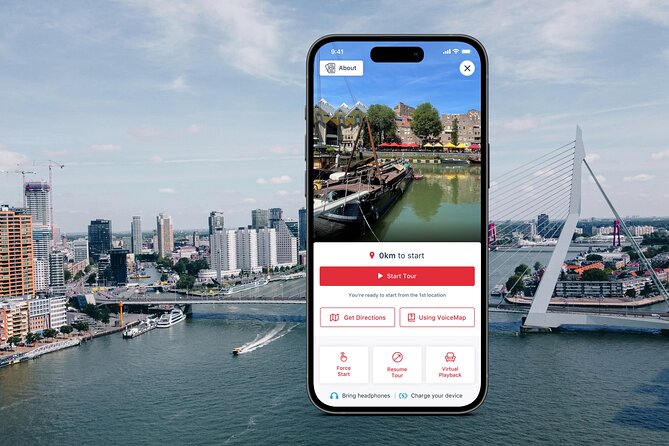
This is a VoiceMap Audio Tours self-guided experience in English. You’ll have lifetime access to the tour in English before your booking date and after it, which is handy if you need to re-check directions or revisit parts later on a future trip.
You get:
- A GPS-based walking route you follow at your pace
- Offline access for audio, maps, and geodata
- Directions to the starting point so you can begin once you’re there
You’ll still need your own smartphone and headphones, since they are not included. That’s the biggest “gear check” before you go.
In real terms, self-guided tours work best when you treat them like a plan, not a prison. The tour duration is listed as about 2 to 2.5 hours, and it includes walking plus passing by attractions. So if you plan to stop for photos at every stop, you’ll want to add a little time.
Also, since it’s a private activity where only your group participates, you won’t have the awkward part of timed group herding. The trade-off is that you control the pace, so you’ll need a bit of attention to follow the GPS.
Price and value: $11.99 for a 2 to 2.5 hour design lesson
At $11.99 per person for roughly a half-day walking window, this is priced like a value-first experience. The cost makes more sense when you look at what you get beyond the audio itself.
You’re paying for:
- Offline audio and maps (useful if mobile signal gets spotty)
- A route that connects multiple themes, WWII survival to modern architecture, rather than listing random stops
- A structure that includes both famous sites and more low-key passes, which helps you feel like you got something from the walk, not just a highlight reel
- Lifetime access so you can reuse it later
One consideration: this is not a guided tour with a live human explaining everything on the spot. If you want Q and A or custom pacing around your personal interests, you’ll need to rely on what the audio provides. For many people, that’s exactly the point. You get a focused, story-driven route, with freedom to wander slightly without paying for a full private guide.
Should you book this Rotterdam art, history, and architecture audio tour?
Book it if you want a walk that links Rotterdam’s identity to what you see, with clear directions and an efficient route that covers the city’s most meaningful modern-and-old mix. This works especially well if you like architecture, public art, and learning how a city rebuilt itself into something distinctly modern.
Skip it or treat it as a supplement if you prefer long museum time, guided conversations, or you’re traveling without headphones and a smartphone. Also, if you’re the type who hates walking in city centers, the waterfront and streets will still require your legs, even with GPS doing the navigation.
My quick verdict: if you’re staying in Rotterdam for a short time and you want a strong, design-heavy overview without hiring a guide, this is a smart buy at $11.99. It’s the kind of self-guided experience that helps you look at Rotterdam twice, first with your eyes, then with context.
FAQ
Where does the tour start and end?
It starts at City Hall Rotterdam, Coolsingel 40, 3011 AD Rotterdam, Netherlands. It ends at Eendrachtsplein, 3012 JD Rotterdam by the sculpture Santa Claus by Paul McCarthy.
How long is the tour?
Plan for about 2 to 2.5 hours, including walking and passing by the attractions.
What is included with the tour?
You get lifetime access to the English audio tour, GPS self-guided flexibility, directions to the starting point, an app for Android and iOS, and offline access to audio, maps, and geodata.
What do I need to bring?
You need a smartphone and headphones. Food, drinks, and transportation are also not included.
Is the tour self-guided or guided?
It is self-guided. You follow the GPS route using the app and audio.
Can I cancel for free?
Yes. You can cancel for a full refund if you cancel at least 24 hours before the experience start time. If you cancel within 24 hours, the amount paid is not refunded.
More Self-Guided Tours in Rotterdam
- e-Scavenger hunt Breda: Explore the city at your own pace★ 4.5 · 27 reviews
- e-Scavenger hunt Dordrecht: Explore the city at your own pace★ 4.5 · 24 reviews
- e-Scavenger hunt Rotterdam: Explore the city at your own pace★ 4.5 · 13 reviews
- Breda Fun Puzzle Quest: True Lord Self-Guided Tour★ 4.0 · 9 reviews
More Audio Tours in Rotterdam
- Rotterdam: Steamship Rotterdam Audio Tour Entry Ticket★ 4.5 · 325 reviews
- Rotterdam: City Walk Audio Guide in 7 Languages on your Phone★ 3.5 · 6 reviews
- Rotterdam Scavenger Hunt and Highlights Self Guided Audio Tour★ 4.5 · 4 reviews
- Breda: City Walk with Audio Guide in 7 Languages on your Phone★ 4.0 · 1 review
Latest to arrive along the quays of Rotterdam

Modern Architecture Tours, compared.
Rotterdam Walk: Hilights, Gems, Architecture & WWII | 2 or 3hrs
Read our review →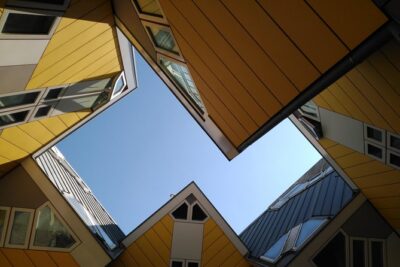
Rotterdam Must Do Tour: Highlights, History, WW2 and Architecture
Read our review →
Architecture Highlights Tour including the Depot
Read our review →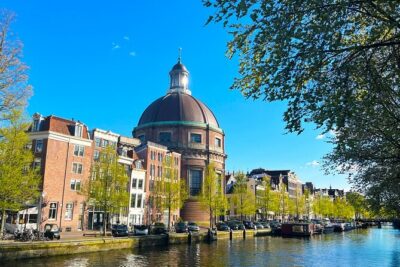
Walking Tour about Golden Age Architecture, private local guide
Read our review →
Rotterdam Architecture and Highlights Walking Tour (TOP RATED)
Read our review →Browse the lists this tour appears in