
Reviewed · WALKING TOURS
Delft: Guided Walking Tour
Delft feels like a lived-in painting. This guided walk ties together Johannes Vermeer, the murder of William of Orange, and the town’s famous Delft Blue pottery in one easy 2.5-hour loop through the old streets. If you like stories that connect art, power, and everyday life, this is a strong way to spend an afternoon in South Holland.
I particularly like two stops: the calm reset of Agnetapark and the dramatic historical weight you get at the Prince’s Court. Even when you are just strolling, the guide helps you see why Delft mattered, not just what buildings happen to be there.
One consideration: $217 per person for a 2.5-hour private tour is a splurge, so you’ll want to go in with clear priorities for guided context rather than sightseeing on autopilot.
In This Review
- Key things I’d circle before you go
- Starting at Markt 87, Hugo Grotius sets the tone
- Vermeer streets: seeing the town behind the paintings
- Town hall and ancient church stops that teach by pacing
- Agnetapark: the calm break that makes Delft feel livable
- Prince’s Court: where William of Orange’s story turns dark
- Inside the New Church: royal tombs and practical value
- Old vs New: making sense of Delft’s church landmarks
- Delft Blue pottery: how a craft becomes a Delft signature
- Price and logistics: is $217 per person worth it?
- Who this Delft walking tour fits best
- Should you book this Delft guided walk?
Key things I’d circle before you go
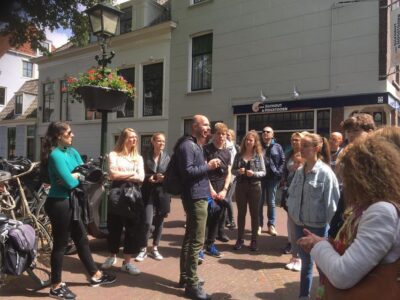
- A private guide means you can ask questions and move at a relaxed pace instead of getting swept along
- Vermeer-focused street spotting helps you connect Delft’s lanes to the settings behind his work
- Agnetapark time gives your legs a break while still keeping you in the old-town atmosphere
- Prince’s Court stop brings the William of Orange story out of the textbooks and into the streets
- New Church entrance included so you can see the tombs without hunting ticket details
- Delft Blue pottery tradition is built into the experience, not treated like an optional add-on
Starting at Markt 87, Hugo Grotius sets the tone
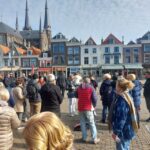
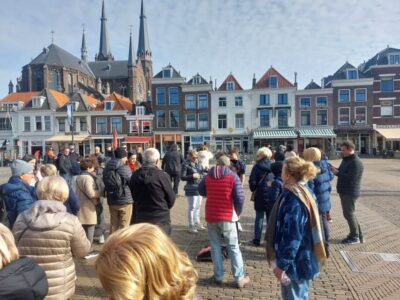
Your tour begins at the main square at the statue of Hugo Grotius, Markt 87, Delft. That choice makes sense because Markt is where you naturally orient yourself, and it keeps the walk anchored in the town’s everyday center rather than a remote meeting spot.
From there, you’ll spend the next 2.5 hours moving through Delft at a relaxed speed. The walking is described as moderate, so plan on comfortable shoes and don’t schedule anything tight right after. If your idea of a good walking tour is one where you can actually look up at facades and not just dodge crowds, you’re in the right mindset.
One practical note: the New Church entrance is included, which is great for reducing friction. Still, if timing is tight in your day plan, it’s smart to keep an eye on the visit window so you do not lose time at the last minute if anything needs sorting on the spot.
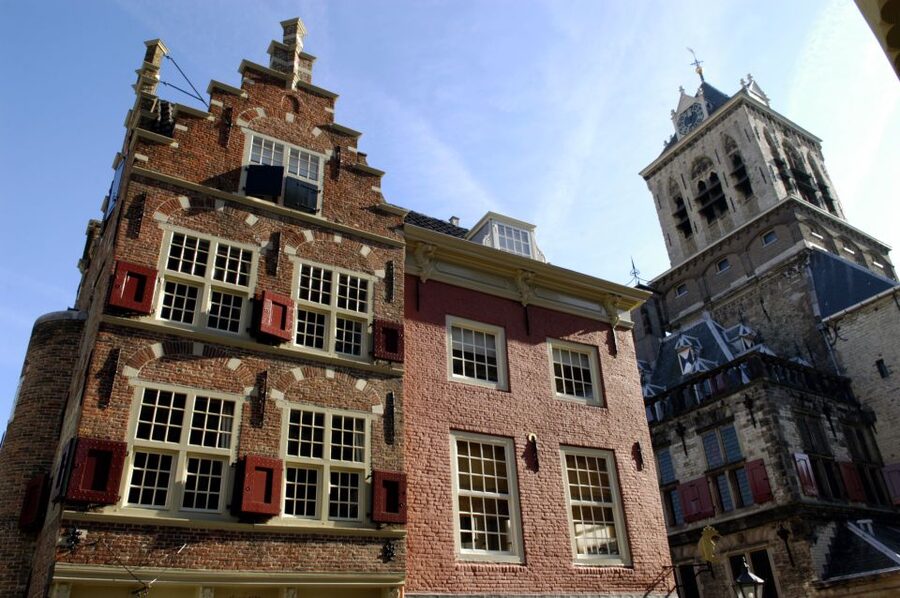
More gables counted on foot:

Vermeer streets: seeing the town behind the paintings
The heart of this walk is Delft as the artist’s hometown. The tour’s goal is not to recite a biography. Instead, it helps you walk through the same old-town setting where the majority of Vermeer’s masterpieces were staged, so his work starts to feel like place, not just a famous name.
As you go, you’ll be nudged to notice Delft’s visual patterns. That includes the kind of narrow street layout that guides how you experience light and distance, plus the general feel of older civic and church areas. You won’t need a museum ticket to get something meaningful here. The value is in the guided connection between art and real geography.
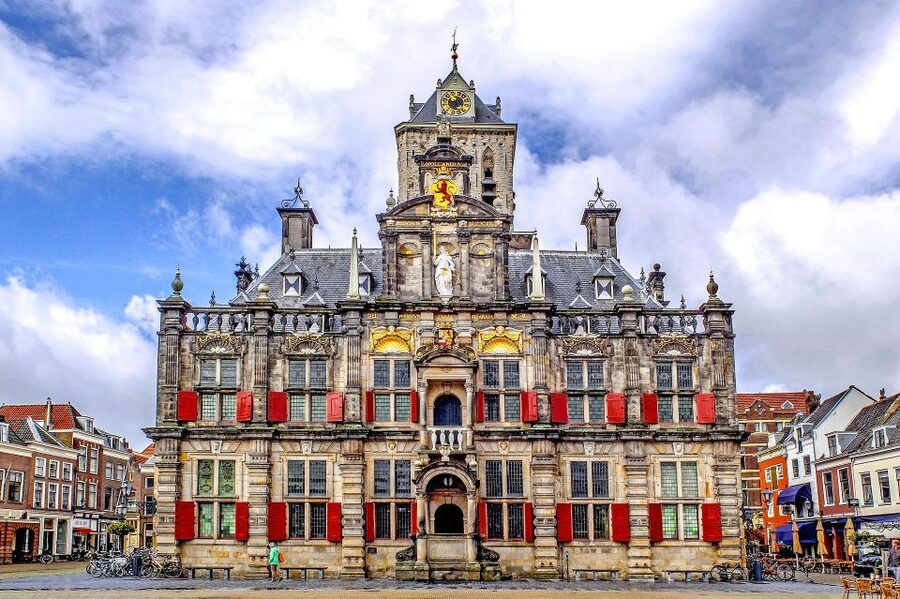
You’ll also pass key civic and religious landmarks on the way, including the town hall and an ancient church. Those stops help you understand that Delft was more than an art backdrop. It was a functioning town with institutions, public life, and power structures that shaped the everyday scenes an artist could draw on.
If you care about clarity, this tour tends to shine on that front. People have praised guides for giving clear, structured commentary, and for explaining Delft in a way that also makes the broader Netherlands easier to grasp. Names that have shown up in guides people talked about include Annique, Harold, Skip, and Nains, all described as friendly and engaging.
Town hall and ancient church stops that teach by pacing

This part of the walk is about slowing down just enough to read the town. As you move from the square into the historic core, the guide uses the streets and landmarks to build context. The town hall and ancient church are ideal anchors because they show Delft’s civic identity and its long-standing religious presence.
The biggest benefit here is tempo. Because the pace is described as relaxing, you can actually take in details like architecture style, the way streets funnel toward larger buildings, and how churches and civic buildings sit in relation to the center of town. That kind of observation is hard to do when you are racing from one selfie stop to the next.
A drawback to keep in mind: if you expect a strict museum-style itinerary with set photo times, you might feel a bit looser here. This is a walking tour that prioritizes storytelling and orientation over check-the-box rush. For many visitors, that is a feature, not a bug.
Agnetapark: the calm break that makes Delft feel livable
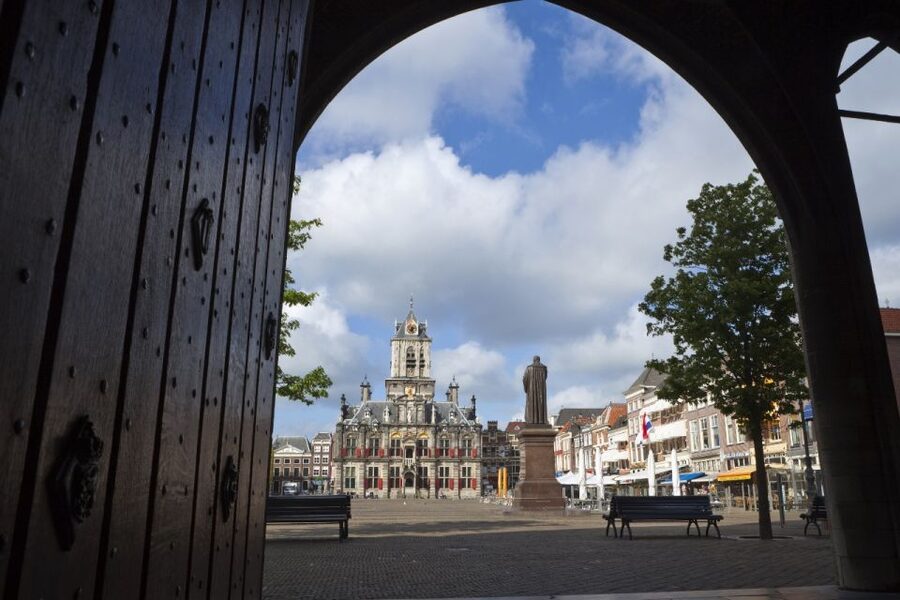
One of the standout highlights is Agnetapark. This stop matters because it gives your brain a reset after the denser old-town lanes. You go from architecture and history to a park that feels like the town’s pause button.
The tour describes it as a beautiful and famous area, and that matches how parks usually work in places like Delft. You get a change of pace, more breathing room, and better chances to actually enjoy the surroundings instead of just passing through. It also helps that the tour is only 2.5 hours, so an internal break like this prevents the whole experience from turning into one long “see everything” march.
If you are traveling with someone who gets tired of constant monuments, this is where you’ll likely hear fewer complaints. You can sit, take a short breather, and still stay within the guided flow so you do not lose momentum.
Prince’s Court: where William of Orange’s story turns dark
The tour takes you to the Prince’s Court, where William of Orange was murdered. This is the kind of stop that changes the tone of a walking tour in a hurry, because it brings a famous political event into a real street setting.
What I like about how this stop is framed is that it connects Delft to Dutch national history in a direct way. You are not just seeing a building. You are learning why this location mattered, and why Delft is tied to the founding father of the Netherlands.
It also makes the rest of the walk click. Once you understand Delft’s place in the power story around William of Orange, you start noticing how civic and religious spaces often sit near each other in European towns. That is not just a planning accident. It reflects centuries of how public life, faith, and authority overlapped.
This is also a good moment to ask questions. If your guide is the sort who explains clearly and fluently, this is where their answers can turn into the kind of extra context you remember later. People have shared examples of guides who connect local events to the bigger Netherlands story, and Prince’s Court is a natural anchor for that.
Also flying a pennant in Delft
- From Amsterdam: Rotterdam, Delft & The Hague Guided Day Tour
★ 4.2 · 2,065 reviews - Delft: Entrance Ticket for the Old and New Churches
★ 4.4 · 229 reviews - Delft: Craft Beer Tasting in Medieval Brewery
★ 4.3 · 116 reviews - Delft – Step/scootertour in and around the city
★ 4.8 · 9 reviews
Inside the New Church: royal tombs and practical value
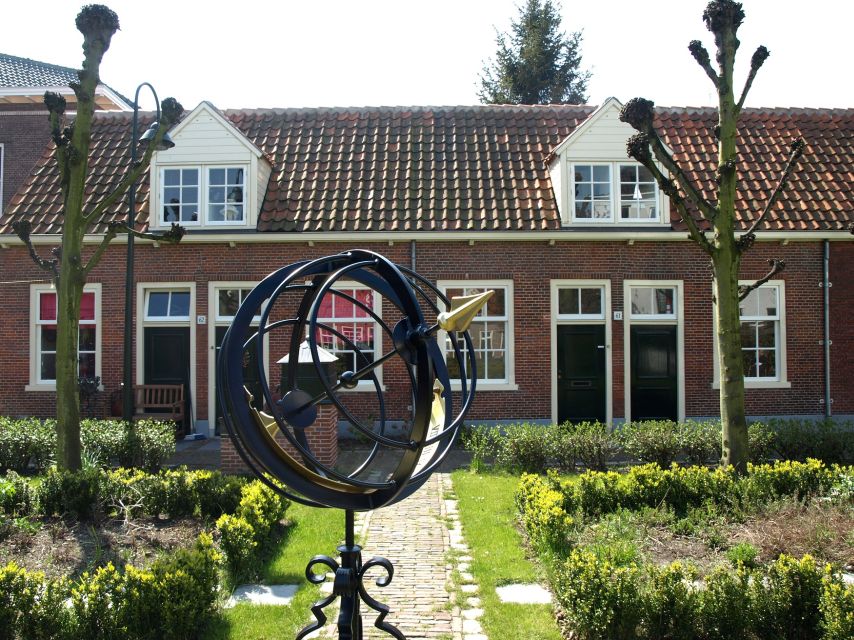
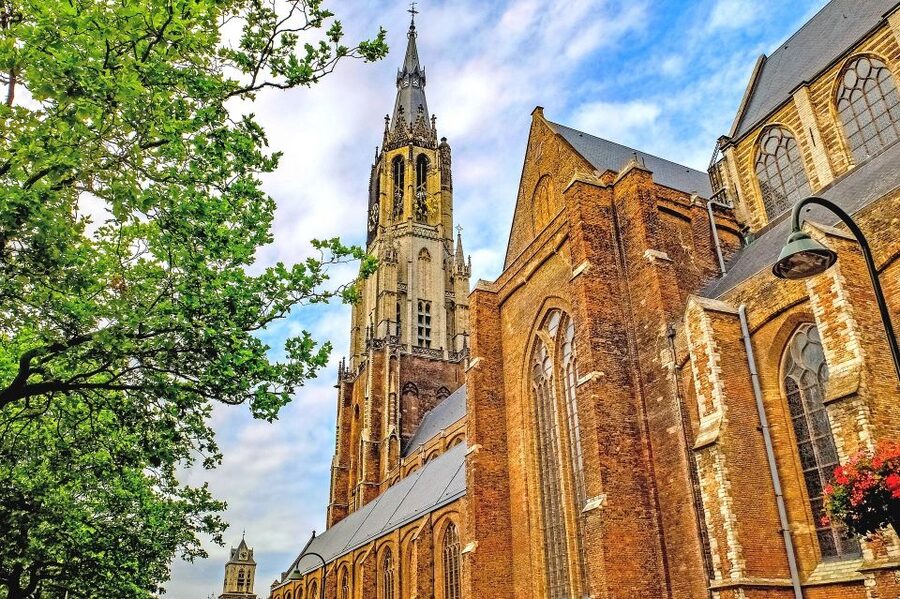
You will visit the New Church, and the entrance fee is included. The tour specifically calls it the burial place to the Dutch Royal family, and that includes William of Orange’s tomb as well as graves of the Dutch Royal family.
This stop is valuable for two reasons. First, it is tied to the national story you heard at Prince’s Court, so the narrative has continuity. Second, since the entrance is included, you do not have to manage ticketing during your already-limited time in Delft.
The New Church visit also tends to stand out because it shifts you from outdoor walking to an indoor space where you can slow down and actually absorb the meaning. Churches like this often create a quiet, structured atmosphere, which pairs well with a guide turning facts into a story you can feel.
One small caution: there has been at least one case where a guide did not realize the New Church access had already been arranged. To protect your schedule, I suggest you check your voucher or booking details the day-of and confirm the entry plan at the start of the tour. It is usually a quick fix, but it can prevent wasted time.
Old vs New: making sense of Delft’s church landmarks
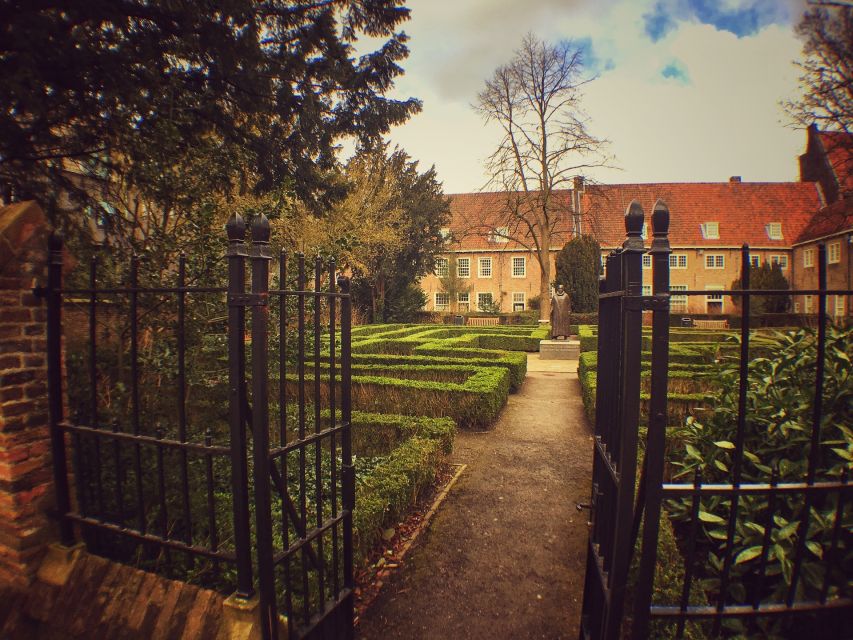
You will also see the old church area in the tour’s coverage, and the New Church is your major indoor destination. Even without getting overly technical, having both church references in one walk gives you a more complete picture of Delft’s long timeline.
I like that the tour uses these religious landmarks as waypoints for history rather than treating them as separate attractions. When you compare old and new, you start noticing how a town keeps its identity while still changing what it builds and where it places important people.
Also, because the walking is moderate and the total time is short, you are not asked to do extra museum-style searching. The guide helps you connect the dots.
Delft Blue pottery: how a craft becomes a Delft signature
Finally, the tour touches the part of Delft that many people recognize instantly: Delft Blue pottery. The experience frames Delft as a town with a celebrated pottery tradition, and it encourages you to admire the traditionally painted earthenware and those famous blue-and-white tones.
This part is more than a souvenir stop. It shows you that Delft’s identity is not only art and politics. It also lives in craft, in small businesses, and in a local style that traveled far beyond South Holland.
You may also get a chance to visit an official Delft Blue pottery place. That is a smart use of tour time because it gives you a visual reference for what you might later spot in shops. When you’ve seen the process or at least the context of how the craft is presented, buying a piece later becomes more informed instead of purely random.
If you plan to buy pottery, go in with a realistic expectation: you will see the tradition, but you might not have time to browse forever. Decide early what you want, because Delft Blue can look gorgeous in every size and price range.
Price and logistics: is $217 per person worth it?
At $217 per person for a private 2.5-hour guided walk, this tour is not trying to be the cheapest way to see Delft. It is paying for something more specific: a guide who can connect Vermeer, William of Orange, the royal burial site, and Delft Blue into one coherent route.
So how do you judge value? I’d use this filter:
- You want an expert guide who can explain why these places matter, not just what they are.
- You have limited time in Delft and want an efficient route through key stops.
- You prefer a relaxed pace where you can ask questions and still see the essential highlights.
If you are the type who enjoys wandering on your own, you could build a similar day using a map and guidebook. But if you want the town to make sense while you walk, private guiding can justify the cost.
Also note that food and drinks are not included. That is normal for a 2.5-hour tour, but it does affect your planning. If you are doing this in the afternoon, I’d line up a snack or plan to grab something immediately after so you do not end up rushing.
Who this Delft walking tour fits best
This tour is a great match if you enjoy the intersection of culture and place. It works especially well for you if you are into art history and want a practical route tied to Johannes Vermeer, but you also want the national story arc connected to William of Orange.
It’s also a good fit for couples or small private groups who want a guide, not a crowd. Because the group type is private, the pacing can stay relaxed, which helps on a moderate walking schedule.
If your travel style is photo-first and you hate talking to anyone in authority, you might find the guiding style more than you want. But if you like learning while you move, this tour is exactly that.
Language availability is broad, including English, German, Dutch, French, and Spanish. So if you want your questions answered in your comfort language, this setting can be a plus.
Should you book this Delft guided walk?
Book it if you want Delft to come with context. The combination of Vermeer streets, the Prince’s Court drama, the New Church royal tombs with entrance included, and the Delft Blue craft focus gives you more than a highlight reel. It is a guided story in a compact format.
Skip it or wait on it if you already have a long personal list of Delft sights and you plan to wander independently. Also, be honest about the price. This is a premium private experience, and it makes the most sense when you genuinely want the guide’s storytelling to drive the day.
If you do book, wear comfortable shoes, build a little slack into your schedule, and go in ready to look up, not just forward. Delft rewards that kind of attention.
Latest to arrive along the quays of Delft


Walking Tours, compared.
Amsterdam Anne Frank: Small-Group Walking Tour & Local Guide
Read our review →
Anne Frank’s Story – Guided Walking Tour through Amsterdam
Read our review →
Absolutely Amsterdam – the Essential Introductory Walking Tour
Read our review →
Anne Frank Guided Walking Tour in DE/EN/IT/ES
Read our review →


Anne Frank Walking Tour Amsterdam Including Jewish Cultural Quarter
Read our review →Browse the lists this tour appears in