
Reviewed · HISTORICAL TOURS
Delft: Private Historical and Cultural Guided Walking Tour
Delft feels best when you slow down. This private walking tour ties together canals, historic squares, and the stories behind Delft’s biggest icons, from William of Orange to Vermeer.
I especially like the customizable feel. You and your guide talk through what you want to prioritize, so you are not stuck on someone else’s checklist. I also love how the walk mixes major landmarks with smaller, quieter stops like hidden courtyards and bridges you would otherwise miss.
One drawback to consider: it is a 2.5 hour walking tour, rain or shine, so comfortable shoes really matter, and you will want to pace yourself if you are not used to cobblestones and canal-side steps.
In This Review
- Key highlights
- Starting at Nieuwe Kerk for fast orientation
- William of Orange mausoleum, and why it matters in Delft
- Town hall square, justice rooms, and Renaissance details
- Churches, bridges, and the canal-side magic you can actually navigate
- Vermeer in Delft, walking through painter locations instead of just a museum
- Delft Blue and the pottery stop where craft takes center stage
- The 2.5 hour private format, pacing, and multilingual guides
- Price and value at $135 per person for a private walk
- Practical tips to get the most out of your walk
- Should you book this Delft private historical and cultural walking tour?
- FAQ
- Where is the meeting point for the tour?
- How long is the Delft private guided walking tour?
- What languages is the tour offered in?
- Is this tour wheelchair accessible?
- What should I bring for the walking tour?
- Does the tour run in bad weather?
Key highlights
- William of Orange mausoleum: a powerful Delft landmark tied to Dutch independence
- Medieval to Renaissance center: from the town hall area to the spaces where justice was carried out
- Canal bridges and tucked away courtyards: charming back streets that make Delft feel personal
- Vermeer connections: walk through the painter’s hometown and see where his scenes were set
- Delft Blue and pottery time: learn the origins and watch a master painter at work
- Private, multilingual guiding: English, Dutch, German, French, Spanish, with Japanese also available
Starting at Nieuwe Kerk for fast orientation
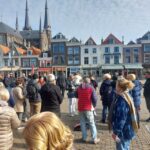
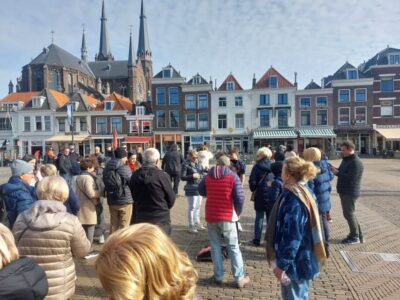
Meeting point is in front of the Nieuwe Church. That is a smart choice because it puts you right in the thick of Delft’s historic center, where the streets, canals, and landmark clusters start making sense quickly.
For a city like Delft, orientation matters. The canals can look pretty uniform at first glance, but once you know which bridges connect which neighborhoods, the whole city stops feeling like a maze and starts feeling like a map you can read. A private guide helps here, because they can match the route to your interests and how quickly you want to move.
You also get a built-in rhythm: the tour is 2.5 hours, so the plan is long enough to hit real highlights without turning into a sprint. With a private group, your guide can pause for photos, explain what to notice in the architecture, and adjust the flow if weather or energy levels change.
The tour runs rain or shine, so if drizzle is likely in your travel window, plan on a waterproof layer and shoes that handle damp stone comfortably.
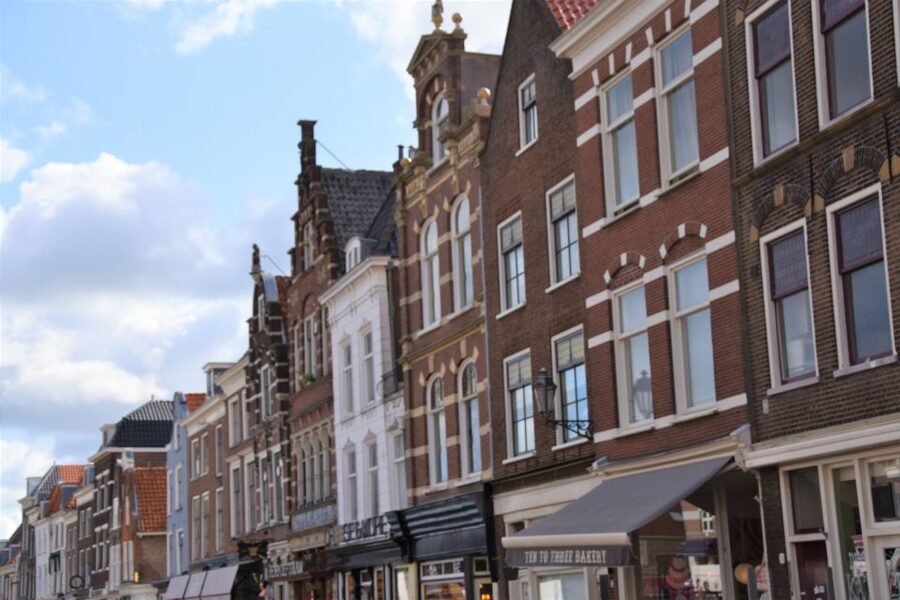
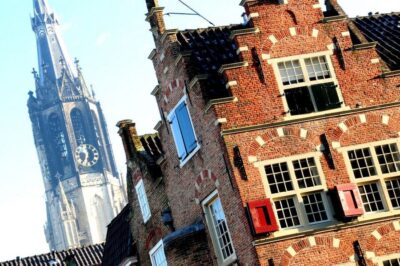
More gables counted on foot:

William of Orange mausoleum, and why it matters in Delft
Delft’s history is not just old buildings. It is political power, civic identity, and the way a city became part of a new nation. The tour’s centerpiece is the mausoleum of William of Orange, the founding figure of the Netherlands.
Standing near the monument is a reminder that Delft was shaped by major events, not just by trade or local culture. Your guide can connect what you are seeing to the bigger story, and that is where the walking format works well. Instead of reading a plaque and moving on, you move through the streets that historically belonged to the same world.
This stop also sets expectations for the rest of the tour. Once you understand that Delft is tied to national turning points, the churches, bridges, and court spaces start feeling less like random sightseeing and more like chapters that follow one another.
If you care about how places acquire meaning over time, you will likely appreciate this part most. If you only want pretty canals, you might find the political context a little heavy, but it is brief, and the payoff is that everything else has a reason to exist.
Town hall square, justice rooms, and Renaissance details
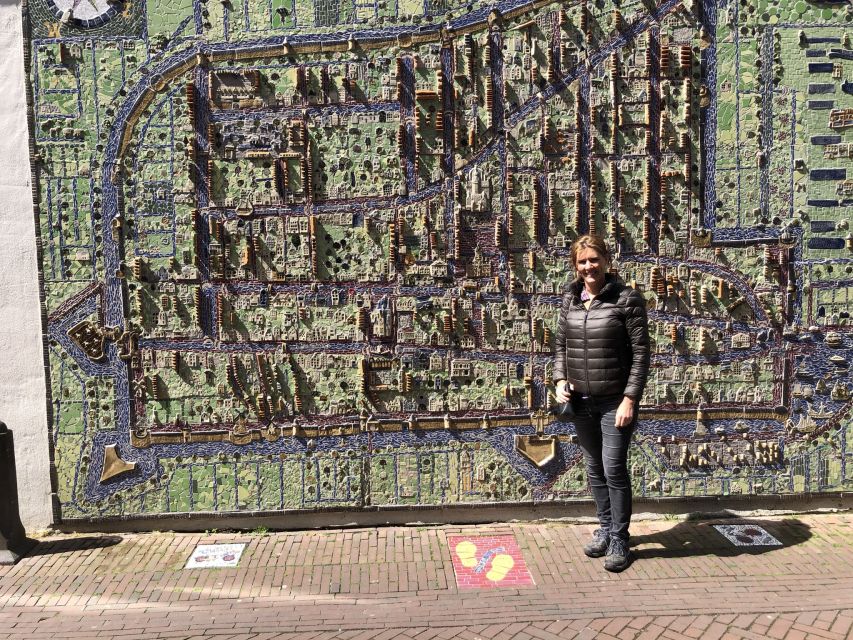
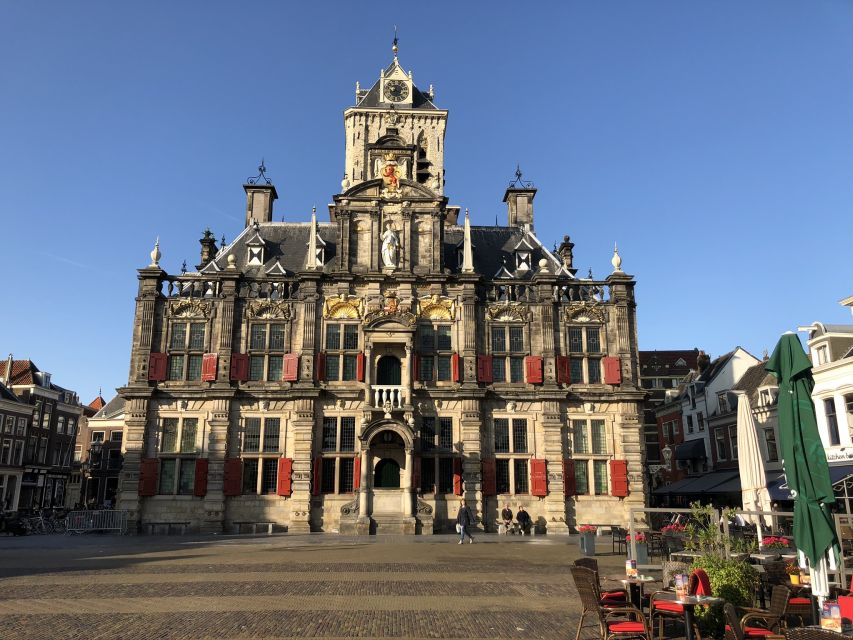
After the mausoleum, you move toward the town square area and the city’s town hall in Renaissance style. This is one of those spots where Delft’s identity shows up in its architecture: formal, civic, and meant to project order.
Your guide will lead you over the medieval square and then help you understand what you are seeing at the town hall. The tour includes time to peek inside and see how justice was spoken in the city centuries ago. That matters more than it sounds. Courts are where daily life and power intersect, and the way a city designed its civic spaces often tells you what it valued.
I like this stop because it bridges the personal and the political. Even if you do not care about courtroom history, you start noticing the city’s scale and priorities. Buildings stop being “old” and start being “built with intent.”
A practical consideration: interior viewing time depends on the day’s access. Wear layers if you feel cold in stone corridors, and keep your camera ready for the moments your guide points out specifics.
Churches, bridges, and the canal-side magic you can actually navigate
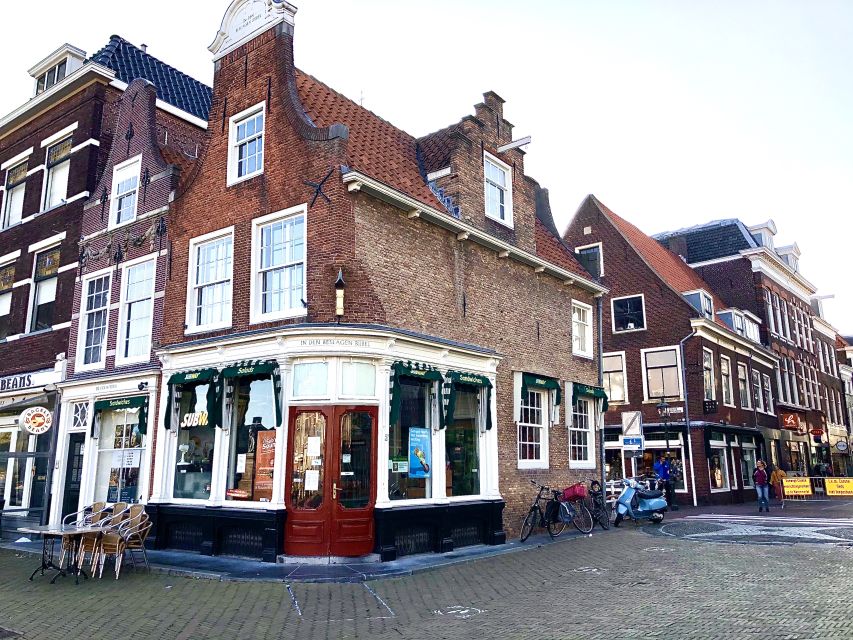
Delft’s canals are famous for a reason. But on your own, it is easy to wander in circles and only see the most postcard-friendly corners. This tour helps you move along the historic center in a logical way, with guidance on what each canal crossing and alley turn is doing.
You will cross historic bridges over the canals and move through small alleys toward charming courtyards and quieter back streets. This is where the private format pays off. The guide can point out tiny visual clues, like how bridges sit in the street pattern or how courtyards create a break from the main flow.
Along the way, you can expect stops tied to major civic and cultural sites, including an ancient church, the Prince’s Court area, and the beguinage. You also visit the only remaining historical windmill. That combination is a great reminder that Delft is not only “beautiful water and buildings.” It is also about livelihood, shelter, and how people worked and lived.
Then there is the “hidden” part of Delft. The tour includes the court of Almonde, often described as Delft’s best hidden court. That kind of stop is exactly why I prefer a guided walk here. You get the delight of a secret-like place without the frustration of searching for it by luck.
If you hate walking on tight sidewalks, or if your group has mobility limits, you may need more frequent pauses. The tour is wheelchair accessible, but you should still plan for uneven surfaces, since Dutch historic centers were built long before modern paving.
Vermeer in Delft, walking through painter locations instead of just a museum
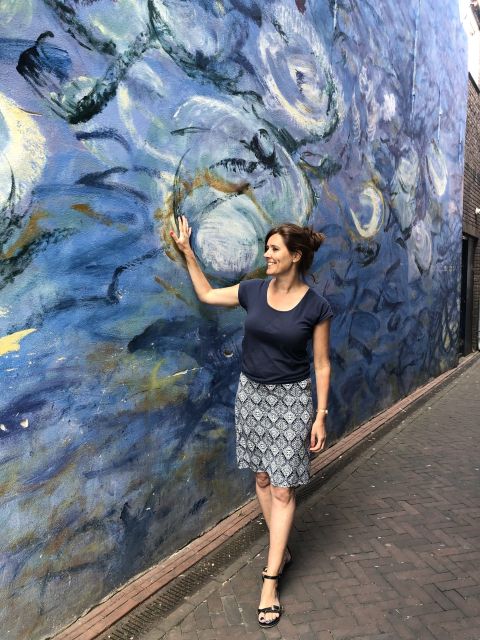
One of Delft’s biggest cultural threads is Johannes Vermeer. On this tour, you do not just hear about him in the abstract. You walk through his hometown and visit places where his masterpieces were set.
This is a big deal because it changes how you look at everyday things. Vermeer did not paint from a blank landscape. He painted from places with views, light angles, and street rhythms. When you stand in those neighborhoods with a guide explaining context, the city starts to feel like part of the artwork itself.
You will also get guidance that helps you notice details you might otherwise skip: the way buildings face certain streets, how light behaves in tight urban spaces, and how the canal city layout can shape what is visible from a window or doorway.
This portion is ideal if you are curious about art history but do not want a museum day. The walk format gives you a sense of place, not just facts.
A possible drawback is that if you are not interested in Vermeer at all, the tour’s art focus may feel like one part that you could skip. Still, Delft’s other highlights and the pottery stop give you plenty of non-art reasons to stay engaged.
More Golden Age corners on foot:
- Amsterdam Food and Cultural Tour with Tastings
★ 5.0 · 4,315 reviews - Rotterdam: Kinderdijk UNESCO World Heritage Entry Ticket
★ 4.6 · 1,477 reviews - The Hague: Hop-on Hop-off Heritage Tram Tour
★ 4.5 · 1,311 reviews - Amsterdam: Historic City Centre Canal Cruise
★ 4.3 · 659 reviews
Delft Blue and the pottery stop where craft takes center stage
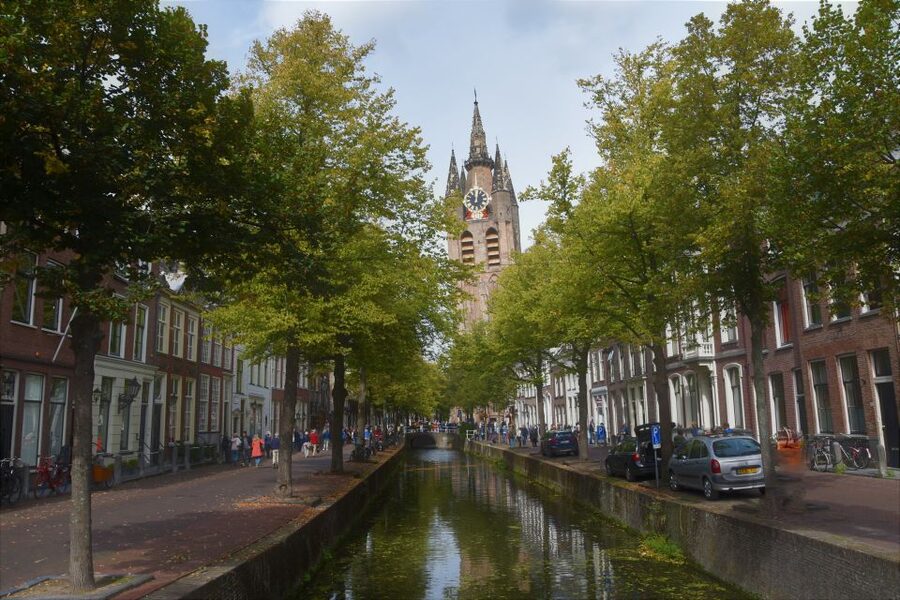
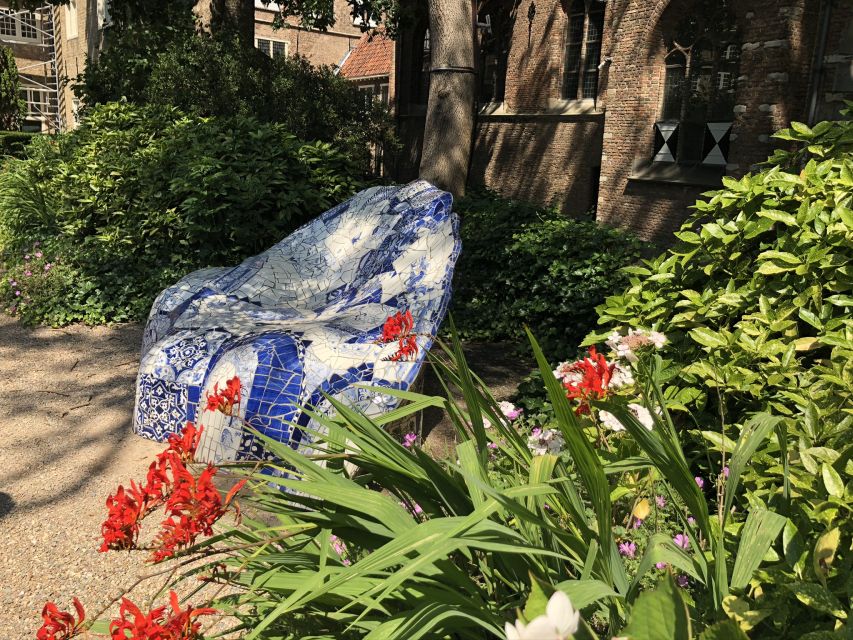
Delft is famous for more than Vermeer and William of Orange. It is also famous for Delft Blue pottery. This tour includes time to learn how that tradition began and, importantly, to see a master painter at work in a pottery place in town.
Watching the process is one of the easiest ways to appreciate why Delft Blue became iconic. You see how careful decoration is, how patterns get built up, and how the look you recognize from plates and tiles actually comes from skilled handwork.
Even if you do not plan to buy, the craft visit helps you connect the visual style to human effort. That makes the rest of the city’s ceramics and tile details feel less like decoration and more like a local industry with a story.
If you have limited time for shopping in Delft, this stop can still be worth it because it is educational. You can also use the guide’s timing to decide whether you want to spend extra money on pieces you truly like, instead of buying something random just because it is available.
The tour does not include food and drinks. Plan a snack break before you start or after you finish, especially if you have a long day ahead.
The 2.5 hour private format, pacing, and multilingual guides
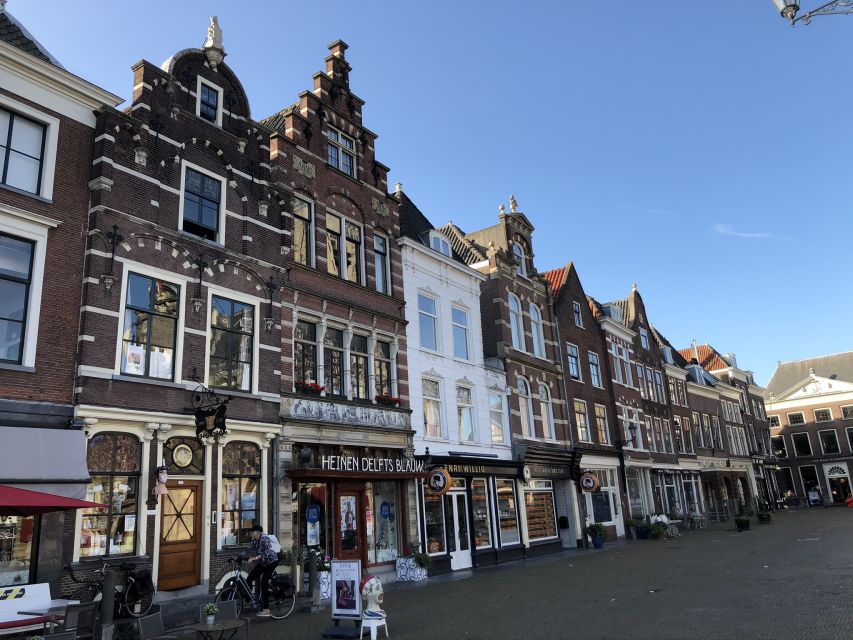
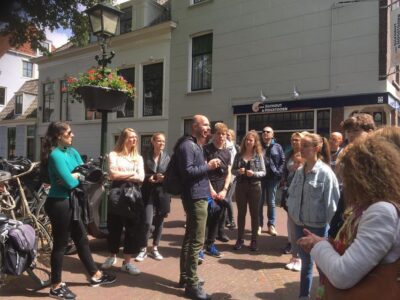
This is a private group tour, and that changes how the time feels. You are not waiting for the slowest person, and you are not rushed past things you want to see. Instead, you discuss which landmarks and routes you want, and your guide keeps the walk moving while staying flexible.
The duration is 2.5 hours, which is a workable sweet spot for Delft. You can cover the historic center core, include meaningful landmarks, and still have energy left to explore on your own afterward. It also makes the decision easier if you are weighing whether to do a walking tour versus a longer guided day trip.
You get professional local guiding, offered in English, Dutch, German, French, Spanish, and Japanese. That matters if you want precise explanations, not just general descriptions.
From past experiences with guides in Delft, I especially like the style when a guide is calm and keeps you moving at a comfortable pace. Names that come up include Harry, Yvette, and Jessica, and the common thread is clear: guides who make the city feel alive and who adjust to your group’s speed. If you are traveling with grandparents or teens, that kind of pacing can be the difference between a tour that feels like a checklist and one that feels like a conversation.
Price and value at $135 per person for a private walk
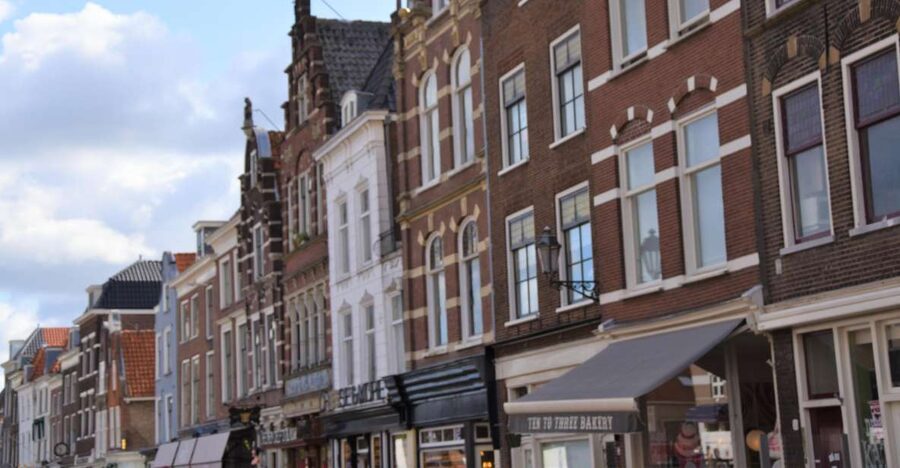
At $135 per person for 2.5 hours, this is not a budget tour. But it is priced like a private experience with a dedicated local guide, and the value is in what you avoid: wasted time, confusion, and generic stops.
Here is how you can think about value before you book:
- You pay for a guided route through high-density historic areas, including specific landmarks like the mausoleum, town hall area, canal bridges, Vermeer connections, and Delft Blue pottery.
- You pay for flexibility. You can decide which landmarks and routes you focus on instead of following a fixed script.
- You pay for language support. If you are comfortable in one of the listed languages, it can make the stories land better, especially for civic history and art context.
If you are traveling solo, it may feel like a luxury. If you are two adults, a couple, or a family group where everyone wants the same pace and interests, the private format often becomes easier to justify.
This is also a good price point if your alternative is trying to self-guide Delft by map. Delft rewards attention to details, and a guide can help you see more of what matters without spending half your time figuring out what to prioritize.
Practical tips to get the most out of your walk
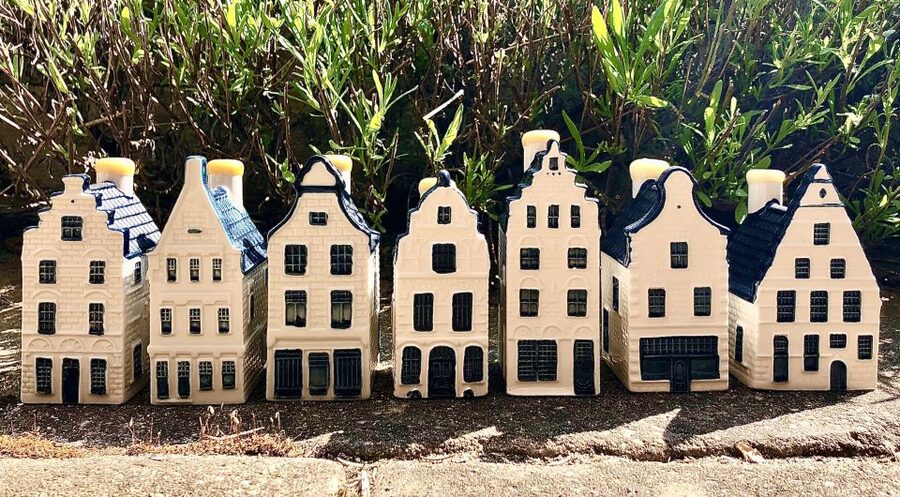
A few things will make the difference between a good walk and a great one.
First, wear comfortable shoes. Cobblestones, wet stone, and canal-side bridges can be slick when rain rolls through. You do not need hiking boots, but you do need traction and comfort for a 2.5 hour walking stretch.
Second, decide what you want most before you meet. The tour is customizable, so having one or two priorities helps your guide steer the discussion. If you care most about art, lean into Vermeer and the places linked to his works. If you care most about Dutch independence and civic life, highlight William of Orange and the justice-related town hall interior peek.
Third, keep your expectations realistic about food. Drinks and snacks are not included. If you want to end with pastries, plan a stop after the tour rather than trying to eat during it.
Finally, take your time with the quiet moments. Courtyards and hidden court stops are short, so if you rush, you will miss what makes them special.
Should you book this Delft private historical and cultural walking tour?
I would book this if you want Delft to feel like a story, not a photo album. The combination is strong: major landmarks like William of Orange, civic architecture with a town hall interior peek, canal bridges and courtyards, Vermeer connections, and a Delft Blue pottery visit with live craft.
You might skip or reconsider if you dislike walking for 2.5 hours, if your group has zero interest in Vermeer or civic history, or if you want a purely self-paced tour with no guiding at all.
If you are on the fence, think about this: Delft’s best moments often live in the space between the big sights. This tour is built to connect those moments in a logical route, with a guide who can adjust what you see and how long you linger.
FAQ
Where is the meeting point for the tour?
Please meet your guide in front of the Nieuwe Church.
How long is the Delft private guided walking tour?
The duration is 2.5 hours.
What languages is the tour offered in?
The tour is offered in English, Dutch, German, French, Spanish, and Japanese.
Is this tour wheelchair accessible?
Yes, the tour is wheelchair accessible.
What should I bring for the walking tour?
Bring comfortable shoes.
Does the tour run in bad weather?
The tour takes place rain or shine.
Latest to arrive along the quays of Delft

Historical Tours, compared.
Amsterdam Food and Cultural Tour with Tastings
Read our review →
Kinderdijk UNESCO World Heritage Entry Ticket
Read our review →

Amsterdam High-End Dutch Food & History Tour – Up to 8 guests
Read our review →
Cruise through the Historic City Center with Guide
Read our review →Browse the lists this tour appears in