
Reviewed · HISTORICAL TOURS
Spakenburg: Guided Walking Tour of the Historic Center
Botters, dikes, and tiny fishermen’s houses. This guided walking tour in Spakenburg is one hour, low-cost, and packed with the kind of local details you usually miss when you just wander. I really like how the stop at the museum harbour quickly puts you in the working-fishing world, then the walk carries that story into the old streets.
Two of my favorite parts are the chance to see the botter fleet highlights, including the oldest fishing boat, the EB44 from 1851, and the huge Grote Beer. The other standout is the view from the dike, where you get a sense of how geography shaped the village, from Zuiderzee days to the Afsluitdijk era. One thing to consider: the tour is short and involves walking on uneven surfaces, so it is not the best fit if you want a long, slow pace or frequent stops.
In This Review
- Key things that make this Spakenburg walk worth your time
- Spakenburg at a human pace, not a checklist
- Meeting point: Het Spui 1 and a black fisherman’s hat
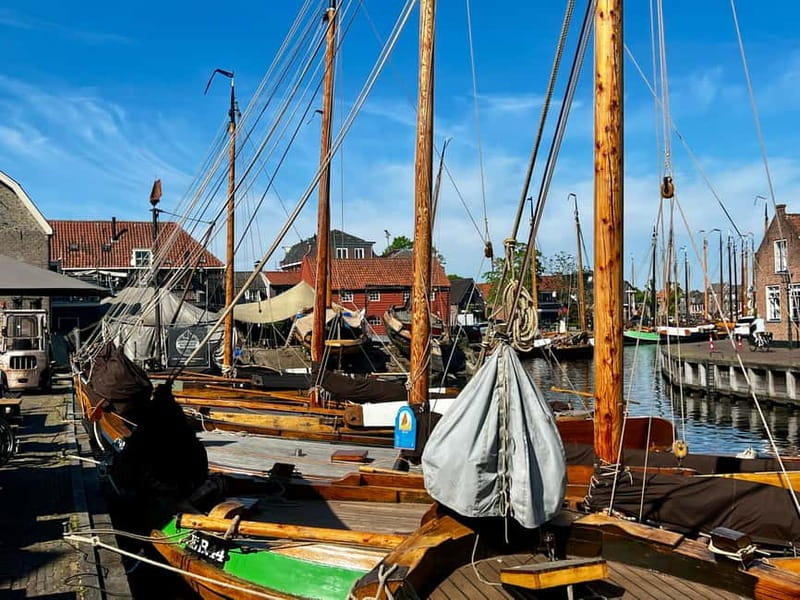
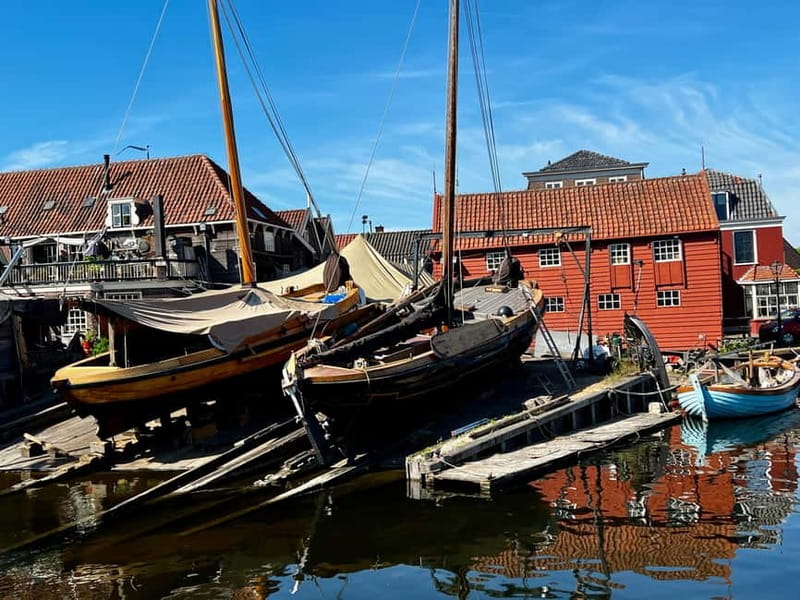
- Museum harbour: botters, including EB44 and the Grote Beer
- Walking the old fishing district and the small houses
- The dike viewpoint: Zuiderzee history to Afsluitdijk impact
- Traditional costume sightings, if luck is on your side
- What the 1 hour feels like in real life
- Price and value: why $8 makes sense here
- Practical tips so the walk stays enjoyable
- Who should book this Spakenburg walking tour
- Should you book? My decision guide
- FAQ
- How long is the Spakenburg guided walking tour?
- Where does the tour start?
- What is included in the price?
- How much does it cost?
- What language is the guide?
- Is the tour wheelchair accessible?
- Is food or drink included?
- Is transportation to and from Spakenburg included?
- Are bikes allowed?
- What restrictions are there on the tour?
- Can I cancel if my plans change?
Key things that make this Spakenburg walk worth your time
- Museum harbour botters, including the EB44 (1851) and the largest botter ever built, the Grote Beer
- Old fishing district streets with small fishermen’s houses and big-family stories
- Dike viewpoints over the three provinces lake and the man-made island made by people
- Historic village context, from Zuiderzee to the Afsluitdijk
- A guide who talks like a local, using personal experience rather than read-from-a-script facts
Spakenburg at a human pace, not a checklist
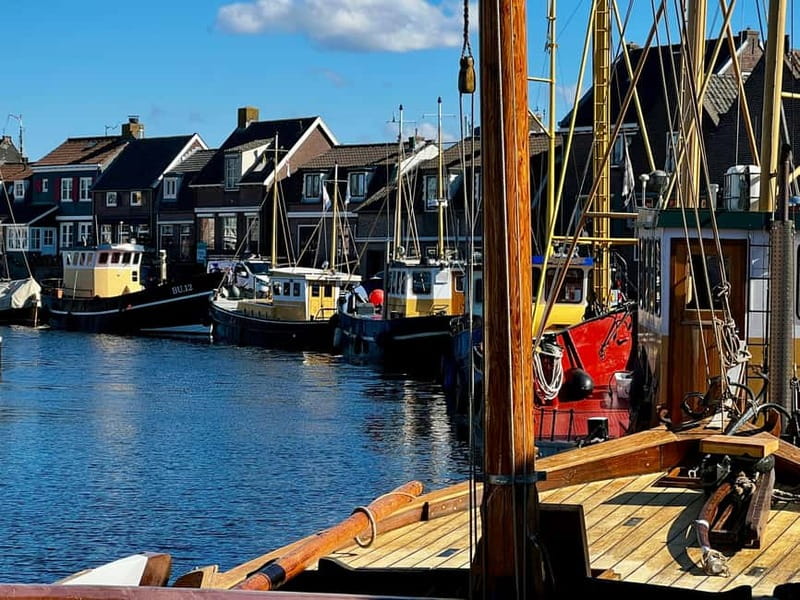
Spakenburg is the kind of Dutch place where details matter. On this tour, you move at a walking pace that is long enough to absorb the setting, but short enough that you are not stuck for half a day. For $8, you are not paying for a big production. You are paying for a guide to help you read what you see.
You start in the historic center and you keep moving through the most story-rich zones, the harbour area and the old fishing district. That matters, because botter boats only make full sense when you also see the lived-in neighborhood that grew around them.
More gables counted on foot:
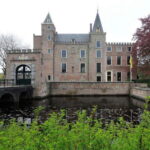

Meeting point: Het Spui 1 and a black fisherman’s hat
You will meet at Het Spui 1, near the benches, close to the start of the harbour area. The guide wears a black fisherman’s hat, which makes it easier to spot the right person quickly.
This kind of meeting point setup is practical. You can arrive, get your bearings fast, and then spend your time actually walking and looking. If you hate hunting for tour groups, this is one of those small design choices that helps a lot.
The guide leads in Dutch and English, so you can follow along without strain. And from a local review perspective, one thing that stood out to me was how much the guide relied on real experience and not just brochure-style lines. That difference turns the tour from facts into meaning.
Museum harbour: botters, including EB44 and the Grote Beer
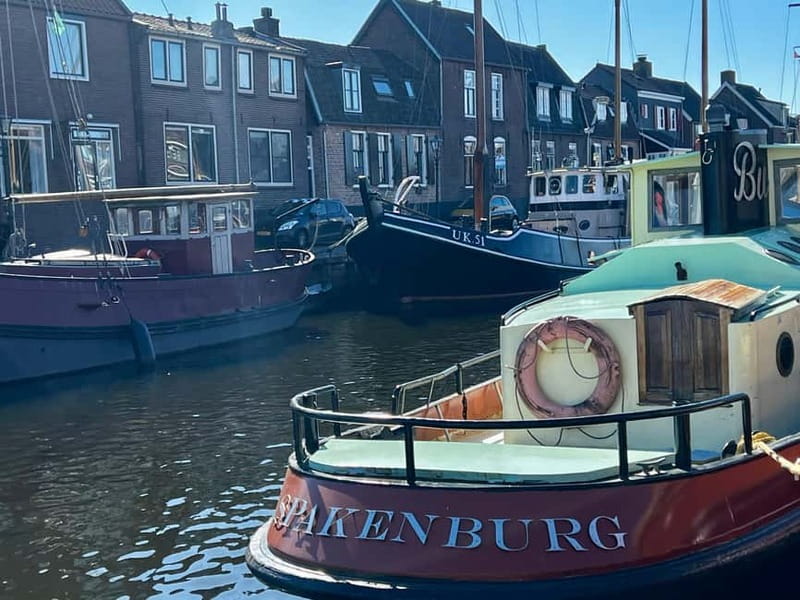
The museum harbour is where the tour clicks. You get close to the boats and the whole vocabulary of a fishing village suddenly becomes visual. A botter is an authentic wooden fishing boat, and seeing them in person helps you understand why people built entire lives around these vessels.
This is also where you hear about scale and time. The oldest fishing boat mentioned is the EB44 from 1851. That detail is not just a date, it is a reminder that the village’s relationship with the sea has been long and stubborn.
Then you move to the other end of the spectrum, the biggest standout: the Grote Beer, described as the largest botter ever built. When you hear that, you start noticing how a village economy can shift when ships get bigger. Larger boats mean bigger ambition, different rhythms at sea, and a different kind of presence back on land.
What I like about this stop is that it is not only about admiring boats. It is about learning what they represent for Spakenburg’s identity. Even if you do not consider yourself a boat person, you will still come away with a clearer picture of how a fishing village thinks.
Walking the old fishing district and the small houses
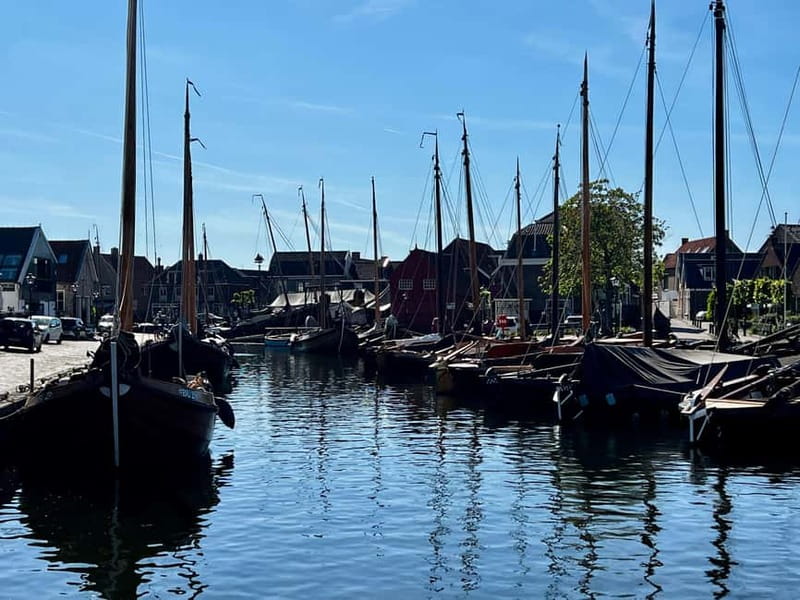
After the harbour, the tour moves into the old fishing district. This is where Spakenburg stops being a boat museum in your mind and becomes a place where families actually lived.
You will see the small fishermen’s houses. One of the most striking parts of what you learn here is that these were homes where families could have up to 16 children. Read that number twice. Even without photos, the idea changes your perspective on how people made space, shared daily life, and organized survival.
This section is worth your full attention because it is so easy to overlook in a quick self-guided stroll. When you are guided, you are not just walking past buildings. You are connecting those buildings to jobs, housing pressure, and the realities of fishing households.
A small practical consideration: you are walking on uneven surfaces, and the historic streets can mean more awkward footing than modern sidewalks. Comfortable shoes are not a suggestion here.
The dike viewpoint: Zuiderzee history to Afsluitdijk impact
One of the best parts of the tour happens from the dike. From there, you get a view over the three provinces lake and the largest island in the world constructed by people.
That is more than a scenic pause. It is an on-the-ground way to understand how water management shaped everyday life. Spakenburg was traditionally a fishing village located on the Zuiderzee. Then the Afsluitdijk was constructed. In other words, the sea environment changed, and a community built around fishing had to adapt.
When you hear that story while standing where you can see the water and the engineered island, it stops feeling abstract. You start to see how geography can rewrite an economy.
If the weather turns, this segment can feel exposed since you are on open ground near the dike. If you are sensitive to wind, bring a layer you can handle. If the day is clear, this view is the payoff for the walking.
More Golden Age corners on foot:
- Historic Outdoor Escape in Deventer
★ 5.0 · 1 review - Zierikzee Historic Highlights: Self-Guided Puzzle Quest
★ 4.0 · 1 review - Amsterdam Food and Cultural Tour with Tastings
★ 5.0 · 4,315 reviews - Rotterdam: Kinderdijk UNESCO World Heritage Entry Ticket
★ 4.6 · 1,477 reviews
Traditional costume sightings, if luck is on your side
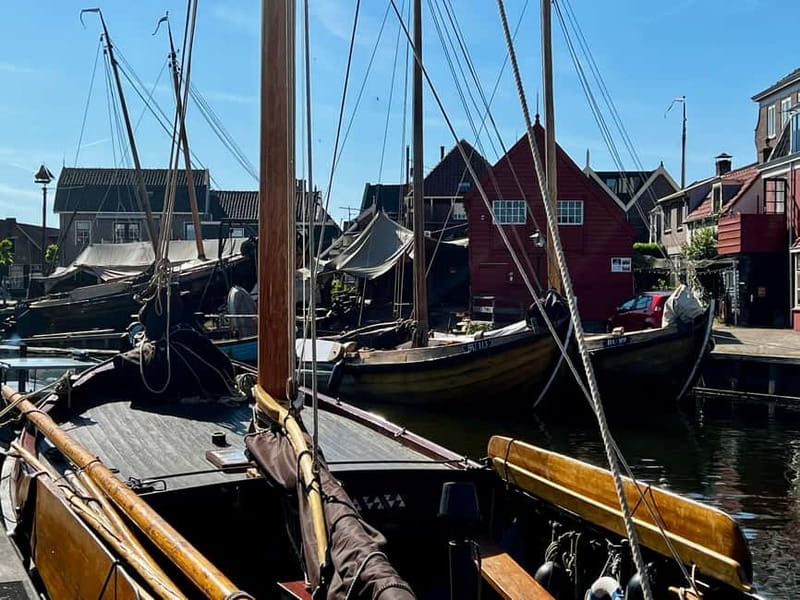
The tour also includes the possibility of seeing women in traditional costume. That is one of those details that is not guaranteed, but it is exactly the kind of local texture that makes Spakenburg feel alive rather than staged.
Even if you do not see the costumes, the tour still covers the core of what defines the village, boats, old homes, and the water-and-land story. But if you do get lucky, it is an extra layer of meaning you cannot plan from a map.
What the 1 hour feels like in real life
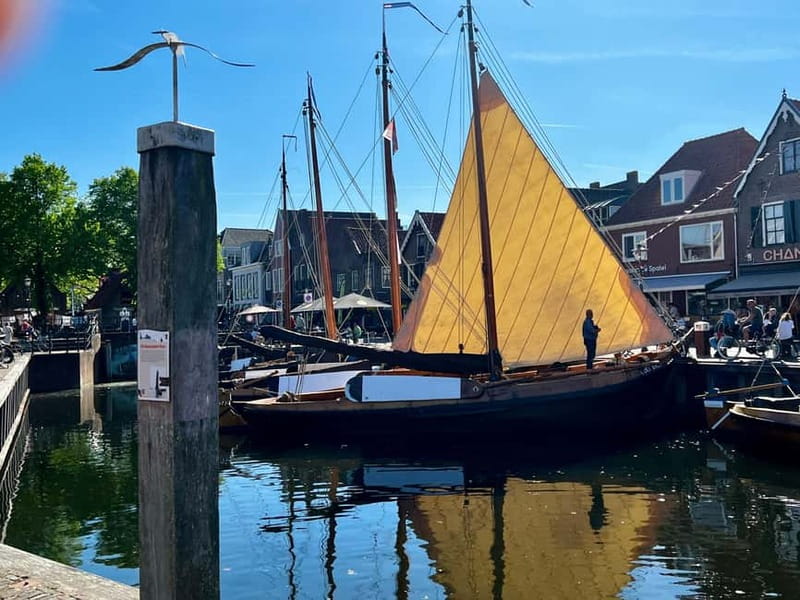
This tour is 1 hour. In practice, that means you get a focused route: harbour first, then the old fishing district, then the dike view. You are moving, stopping briefly for explanations, and moving again.
For me, short tours are good value when they do two things well. First, they help you see what matters fast. Second, they do not leave you exhausted. That is the vibe here. You do not need to commit a whole day to feel like you understood Spakenburg.
The one drawback, as mentioned earlier, is walking on uneven surfaces in a compact time window. If you are traveling with limited mobility, check what wheelchair accessible means for your specific needs, and consider whether uneven ground will be a comfort issue.
Price and value: why $8 makes sense here
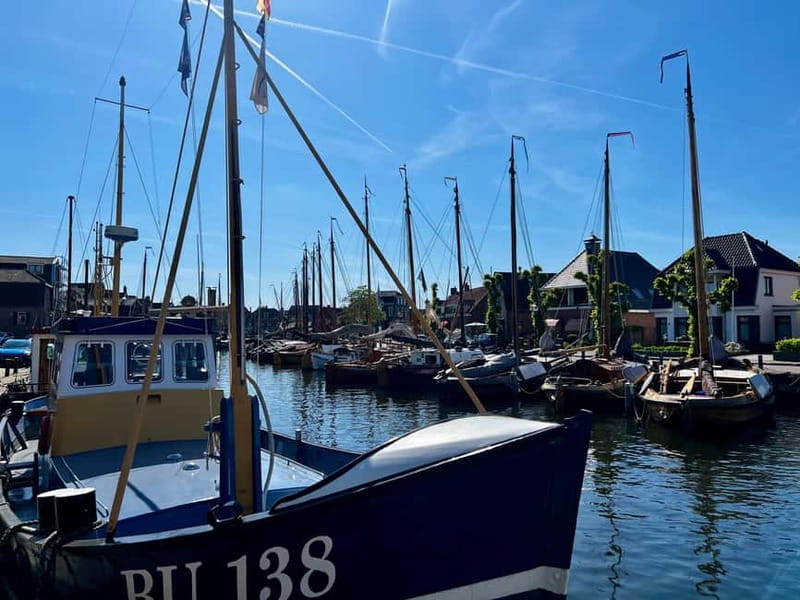
At $8 per person, this is priced like an efficient local experience, not a premium attraction. And the value holds up because the tour includes real components you would otherwise pay for with your own time and transport.
You are getting:
- A guided walking tour through the historic center
- A visit to the museum harbour
- A walk through the old fishing district
- A viewpoint from the dike over the three provinces lake and the man-made island
If you tried to replicate it on your own, you could still see parts of the area. But without a guide, it would be harder to connect the boats, the houses, and the water-management story into one clear picture. The guide’s personal storytelling approach, noted in a verified local review, is exactly the kind of value $8 is meant to buy.
Practical tips so the walk stays enjoyable
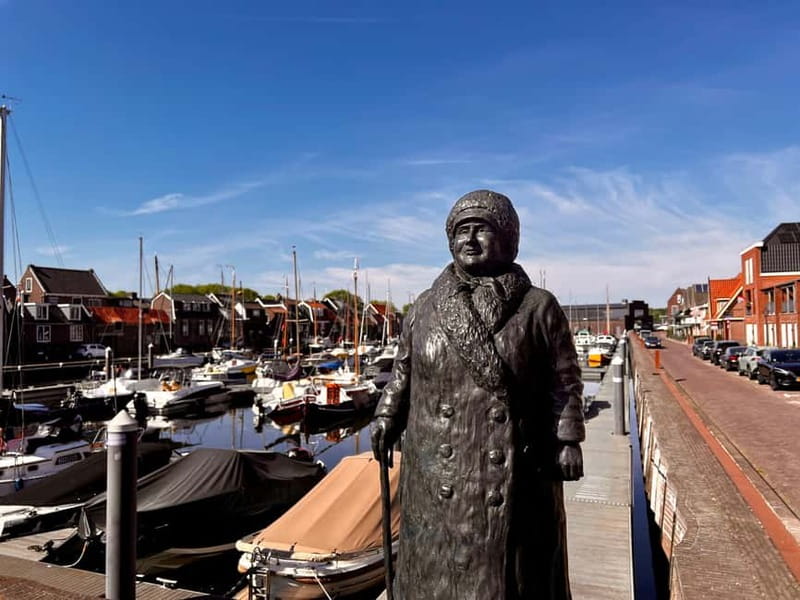
Here is how I would set yourself up to enjoy the hour.
- Wear comfortable walking shoes with good grip. Uneven surfaces are part of the deal.
- Check the weather forecast and dress for wind and changing light, especially near the dike viewpoint.
- Bring a small layer. Outdoors near water can feel cooler even when the town looks mild.
- Leave bikes behind. Bikes are not allowed on this tour.
- Keep it clean and simple: alcohol and drugs are not allowed.
Also, the guide wears a black fisherman’s hat, so if you are meeting at the harbour benches, look for that first. It saves time and reduces stress.
Who should book this Spakenburg walking tour
This tour fits best if you like:
- Local stories tied to specific places
- Small-scale, walkable sightseeing
- Maritime culture but also the everyday housing and village life behind it
It is a strong pick for couples, solo travelers, and anyone passing through North Holland who wants an authentic-feeling experience without big cost or big planning.
If you are the type who only wants long museum time, this may feel too short. But if you want a tight route that teaches you how to see Spakenburg properly, this is the right format.
Should you book? My decision guide
Book this tour if you want boats plus real village context in just one hour. The combination of museum harbour botters, the EB44 (1851) and the Grote Beer, the old fishermen’s houses, and the dike viewpoint makes it more than a casual walk. It helps you understand how Spakenburg’s identity connects to water, housing, and work.
Skip it if you strongly dislike walking on uneven surfaces or you need long breaks and lots of sitting time. Also, if you are expecting a full day of museum-style depth, this is not that kind of experience. It is a guided sampler that works because the guide steers you to the moments that matter.
If you are already in the area and you appreciate practical, story-led travel, I think this one is an easy yes.
FAQ
How long is the Spakenburg guided walking tour?
The tour lasts 1 hour.
Where does the tour start?
You meet at Het Spui 1, near the benches at the beginning of the harbour area, and the guide wears a black fisherman’s hat.
What is included in the price?
The tour includes a guided walking tour through the historic center, a visit to the museum harbour, a walk through the old fishing district, and a view from the dike over the three provinces lake and the largest man-made island in the world.
How much does it cost?
The price is $8 per person.
What language is the guide?
The guide offers live interpretation in Dutch and English.
Is the tour wheelchair accessible?
Yes, the tour is listed as wheelchair accessible. The tour does involve walking on uneven surfaces, so it is worth considering your own comfort level.
Is food or drink included?
No, food and drinks are not included.
Is transportation to and from Spakenburg included?
No, transportation to/from Spakenburg is not included.
Are bikes allowed?
No, bikes are not allowed.
What restrictions are there on the tour?
Alcohol and drugs are not allowed.
Can I cancel if my plans change?
You can cancel up to 24 hours in advance for a full refund.
Latest to arrive along the quays of Netherlands
Historical Tours, compared.
Amsterdam Food and Cultural Tour with Tastings
Read our review →
Kinderdijk UNESCO World Heritage Entry Ticket
Read our review →
Amsterdam High-End Dutch Food & History Tour – Up to 8 guests
Read our review →
Cruise through the Historic City Center with Guide
Read our review →Browse the lists this tour appears in