
Ghosts of Enschede turns a city walk into a mystery. You follow story clues tied to Enschede’s once-booming textile world, using the Questo app with GPS navigation and 15 interactive puzzles as you go. It is self-guided, so you set the pace and stop when you want, not when a group guide wants.
I especially like how the route mixes big landmarks with worker-focused history. You’ll pass places like the Fabrikantenvilla Van Heek and De Fabrieksschool, then see how the same industrial power shows up later in art, civic buildings, and even career matchmaking. The second thing I like is the design of the game itself, small puzzle moments that keep you moving and make you look twice at details you would otherwise skip.
One possible drawback: you are relying on your phone for the quest and map, so bring a charged battery and be ready for some steady walking during a 90-minute loop.
In This Review
- Key things you should know before you go
- A city mystery built from Enschede’s textile era
- Price and time: $10.80 for a 90-minute self-paced story
- Getting started at Stationsplein 33 (and ending near 7523 ZL)
- Stop 1: Fabrikantenvilla Van Heek, ambition you can see in the façade
- Stop 2: Stichting De Fabrieksschool, training the next generation of workers
- Stop 3: De Grote Kerk, the city’s spine through change
- Stop 4: Gemeente Enschede town hall, civic pride with an industrial backbone
- Stop 5: Rijksmuseum Twenthe, art tied to textile wealth
- Stop 6: Uitzendbureau Enschede Timing, a working-class gateway to the plot
- How to make the GPS puzzles work smoothly in real life
- Who this Enschede ghost puzzle walk is best for
- Should you book Ghosts of Enschede?
- FAQ
- How long is Ghosts of Enschede?
- How much does it cost?
- Do I need a live tour guide?
- Where do I start and where does it end?
- What’s included in the experience?
- What are the operating hours?
Key things you should know before you go
- GPS-led puzzle trail through Enschede, built around a guided-by-your-phone feel
- 15 puzzle challenges placed at key historic locations tied to the textile era
- Self-paced flexibility, with the ability to pause and resume
- Major stops with real context, from worker training to a church and art museum
- Value for money at $10.80 per person for a 1 hour 30 minute activity
A city mystery built from Enschede’s textile era
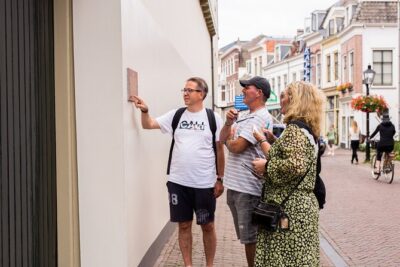
Ghosts of Enschede is basically a story walk. Instead of reading plaques only, you solve clue-based puzzles that connect the dots between Enschede’s industrial rise and fall and the creative reuse that followed. The plot theme is ghostly echoes from the mill world, but the practical payoff is simple: you learn how this city functioned when textiles powered daily life.
I like that it is not trying to be a full-day museum program. The time commitment is short, about 1 hour 30 minutes, which makes it a smart add-on to any Enschede plan. It also helps you experience the city streets in a more active way, not just standing still and looking up.
The game format matters for how you experience history. When a location is tied to an interactive question, you tend to notice things like architecture, entrances, and city layout. That means you come away with stronger memories than from passively viewing one building after another.
Also flying a pennant in Netherlands

Price and time: $10.80 for a 90-minute self-paced story
At $10.80 per person, this is budget-friendly in a way that makes sense for a self-guided experience. You are not paying for a live guide, and you are not paying for transit within the city either. Instead, you are paying for the app-driven storyline, the GPS map, and the 15 puzzle moments.
The duration, roughly 1 hour 30 minutes, is also a good match for real travel schedules. If you have a day with several stops, this keeps you from getting stuck in a long program. On the flip side, if you are the type who reads every sign carefully and stops often for photos, you might stretch it a bit. The format is designed to keep moving, so expect a steady walking pace.
Getting started at Stationsplein 33 (and ending near 7523 ZL)
The start point is Stationsplein 33, 7511 JD Enschede. The activity ends in the area of 7523 ZL Enschede. If you are arriving by public transportation, this is a strong setup since it is listed as near public transport.
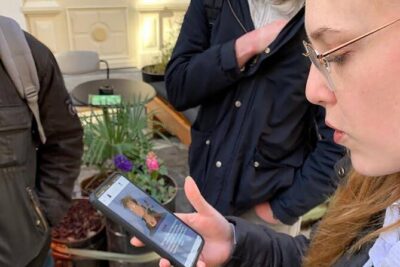
Once you book, you receive confirmation at the time of booking. You also get a mobile access code to unlock access to the quest in the Questo app. From there, you follow the built-in GPS map to each puzzle location.
A practical tip: download or open the app before you head out and check that GPS is working on your phone. If your battery is low, charge it first. This is not a rail line where you can easily pause and still finish later, because the game is tied to locations and your phone screen.
Stop 1: Fabrikantenvilla Van Heek, ambition you can see in the façade
One of the first highlights is the Fabrikantenvilla Van Heek, described as the once-lavish home of one of Enschede’s most powerful textile families. Even if you know nothing about the textile era, a place like this signals wealth and power in a way that a simple worksite never could.
In the story, this stop works as a starting point for the larger theme: industry did not only mean factories and wages. It also meant social status, influence, and new ideas invested by elite families. When the game prompts you to solve something here, you are encouraged to connect the grandeur of the home to the scale of the textile business that supported it.
What I like about this stop is the contrast. You begin with a symbol of prosperity, then later in the route you move closer to worker training, city governance, and culture. That arc makes the whole experience easier to understand as a shift from power to legacy.
Stop 2: Stichting De Fabrieksschool, training the next generation of workers
Stichting De Fabrieksschool once trained generations of young workers for Enschede’s booming textile mills. This is where the story turns more human. Instead of focusing on who owned the mills, you get a sense of how people learned skills and how structured training fed the industrial machine.
In a self-guided game like this, this kind of stop does more than teach facts. It helps you imagine the routines behind the scenes. If you slow down for the puzzle here, you will likely notice the mood of a training institution, the feel of discipline and preparation.
A small consideration: since the activity is designed as a puzzle walk, you may not get long, quiet time inside any building unless the location supports that. So plan to focus on the exterior and the immediate surroundings while you solve the challenges tied to the stop.
Under the next bridge out of Netherlands:
- Zeeland Zeehonden strand safari NL/DE
★ 4.5 · 58 reviews - Zeeland Strand safari met visnet NL/DE
★ 4.9 · 45 reviews - Discover Amerfoort’s city center in this Outside Escape game tour
★ 4.5 · 32 reviews - Surrealistic Art Maze in Tilburg
★ 4.0 · 29 reviews
Stop 3: De Grote Kerk, the city’s spine through change
De Grote Kerk is at the heart of Enschede, a centuries-old church that has witnessed the city’s transformation from a quiet town to an industrial powerhouse. In the ghost-mystery storyline, a church can be a natural anchor. It is a long-lasting landmark, so it makes a solid reference point for the city’s timeline.
Practically, this stop gives you a break from the industrial theme without losing the thread. You still stay in Enschede’s story, but the questions may nudge you to think about what endured when everything else changed.
If you like architecture and city centers, this is a good place to take a short pause between puzzles. The route has a lot of “look and answer” moments, and a central landmark like this can help you reset your brain before you move on to the more civic and cultural sites.
Stop 4: Gemeente Enschede town hall, civic pride with an industrial backbone
Gemeente Enschede, the city’s town hall, is described as a striking architectural landmark that reflects the power and pride of a city built on industry and resilience. This is an important bridge in the storyline because it shifts from mill life to what the industry funded beyond factory floors.
In your puzzle-solving, this stop is likely doing something clever: it connects the industrial economy to the civic identity of the city. When an industry shapes the money and ambition of a place, you see it in how cities govern themselves, how they build, and how they present their pride.
One nice thing about including a town hall in this kind of game is that it broadens your understanding of “textile history.” It is not just about jobs and mills. It is also about how a city reorganized itself around that economic engine.
Stop 5: Rijksmuseum Twenthe, art tied to textile wealth
Rijksmuseum Twenthe is a cultural anchor in the route. The description notes that it houses Dutch masters and contemporary art, set within a building gifted by a wealthy textile family. That detail is the key. You are not only seeing art, you are seeing a legacy of industrial fortunes turned into culture.
As a puzzle stop, this works well because you can connect the dots between wealth, patronage, and what gets preserved over time. In many cities, old wealth becomes either nostalgia or lost influence. Here, the museum framing suggests it became a lasting public resource.
If you enjoy mixing “serious” sites with a lighter interactive format, this stop is a strong mid-to-late journey moment. It gives your brain a change of pace: you are still in the quest, but you are also absorbing a museum-style environment.
Stop 6: Uitzendbureau Enschede Timing, a working-class gateway to the plot
The final highlighted stop is Uitzendbureau Enschede Timing, once described as a behind-the-scenes hub of employment and industrial matchmaking. In the story, this kind of place is a powerful ending because it relates to the ongoing question of work, labor, and how people got positioned inside the industrial system.
Even without adding extra facts, the idea is clear: textiles shaped jobs, and jobs shaped people. A puzzle at a staffing or employment hub reinforces the human side of industrial history. It also lands nicely with the ghost theme. Echoes of the mill era are not only in old buildings. They live in the systems that helped people find work.
This is also a practical end-point in the city. Since the activity ends in the 7523 ZL Enschede area, you can plan to continue your day nearby rather than needing to backtrack all the way to the station.
How to make the GPS puzzles work smoothly in real life
A phone-based, GPS-led quest has one main job: keep you oriented. The built-in GPS map and story-driven challenges are there to help, but it helps you too if you plan a tiny bit.
Here is what I’d do to avoid stress:
- Start with your phone at full charge. Keep a portable charger if you travel with one.
- Use the time you spend walking to your advantage. You will likely learn more if you slow down enough to read the on-screen prompt and then check your surroundings.
- Expect a mix of looking and answering. Some puzzle steps might feel quick, while others might require you to compare what you see with what the story hints.
Another practical point: the tour is flexible to pause and resume anytime. That matters if you need a restroom stop or want to step aside for a photo. You do not have to finish in one frantic stretch.
Who this Enschede ghost puzzle walk is best for
This is a strong fit for travelers who like stories but also like to move. If you enjoy history with a game layer, you will probably find the format more satisfying than a standard walking tour because you have decisions to make at each stop.
It is also a good match for families and couples who want a shared activity. Since it is self-guided and designed around short puzzle moments, you can keep the experience flexible, instead of being stuck listening to someone talk for the whole route.
It is even worth considering if you are not a big museum person. The game structure gives you a reason to care, even when you are tired or short on attention span.
Finally, because it is a private tour/activity, only your group participates. That can feel calmer than joining a mixed group, especially if you like moving at your own pace.
Should you book Ghosts of Enschede?
Yes, if you want a short, low-cost way to learn Enschede’s textile-era story while getting an excuse to wander. The 15 puzzle challenges, GPS guidance, and historic stops tied to the mill world make it a smart “active learning” option, and the price of $10.80 per person is hard to argue with for a 90-minute activity.
Skip it if you dislike phone-based navigation or you want a long guided explanation. Since there is no live tour guide, you are the one who sets the pace and follows the prompts, and the experience depends on the app working well on your device.
If you want a structured, self-guided mystery walk with a clear theme and real place names to aim for, Ghosts of Enschede is an easy yes.
FAQ
How long is Ghosts of Enschede?
The experience is about 1 hour 30 minutes.
How much does it cost?
It costs $10.80 per person.
Do I need a live tour guide?
No. It is self-guided using the Questo app, with a mobile access code to access the quest.
Where do I start and where does it end?
You start at Stationsplein 33, 7511 JD Enschede, Netherlands. It ends in the 7523 ZL Enschede area.
What’s included in the experience?
Included are a mobile access code, 15 puzzle challenges across key locations, a built-in GPS map, an immersive historical storyline, and the ability to pause and resume.
What are the operating hours?
It runs daily from 8:00 AM to 9:00 PM during the listed period (Aug 1, 2025 to Sep 13, 2026).
Latest to arrive along the quays of Netherlands
Self-Guided Tours, compared.
75 Minute City Canal Cruise with Audio Guide
Read our review →
Amsterdam Sightseeing Canal Cruise with Audio Guide
Read our review →
Amsterdam Van Gogh Museum with Audio or Guided Tour
Read our review →
Van Gogh Museum Skip the Queue with Audio Guide
Read our review →
Amsterdam 1h Canal Cruise by Semi-Open Boat with Audio Guide
Read our review →
Browse the lists this tour appears in