
Reviewed · BEACH & SURF DAYS
Scheveningen: Guided Walking Tour
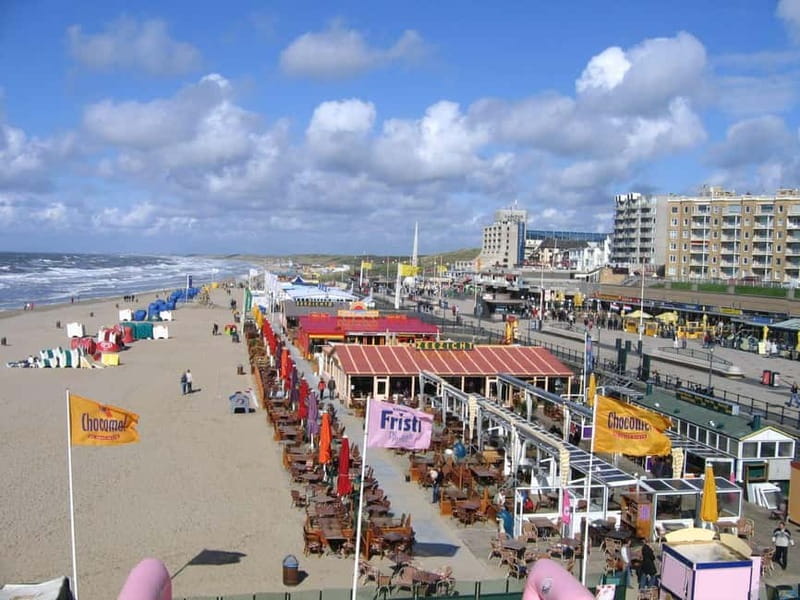
Scheveningen changes with the tides, and this walk explains why. In an hour, you trace how this seaside resort grew from an 1818 spa into today’s beach promenade, with stops at the pier and lighthouse.
I really like the way the route mixes big ocean scenery with real local details. I also like the fishing angle, especially how the story connects inns, boats, and the sea itself to the way people built and rebuilt here.
One practical drawback to plan around is meeting-point chaos. The start near the Kurhaus Hotel can be tricky to spot, and there have been cases of guides not showing up or being hard to reach, so arrive early and confirm by phone.
In This Review
- Key points to know before you go
- Why Scheveningen’s resort story starts with a spa in 1818
- Meeting at Kurhaus Hotel, and how to avoid wasting your time
- The one-hour route: beach, esplanade, pier, and lighthouse
- The long sandy beach
- The esplanade
- The pier
- The lighthouse
- Fishing village roots, inns, and the rhythm of work at sea
- Storm years that forced changes, and the harbor decision after 1894
- Price, group size, and what you really get for $29
- Comfort tips that keep the hour pleasant
- Who should book this walking tour in Scheveningen?
- Should you book this Scheveningen Guided Walking Tour?
- FAQ
- How long is the Scheveningen guided walking tour?
- How much does the tour cost?
- What is the group size?
- What languages are available?
- Where do we meet for the tour?
- What places do you visit on the walk?
- What is included in the tour price?
- What should I bring?
- Is the tour accessible for wheelchair users or people with mobility impairments?
- What are the cancellation and payment options?
Key points to know before you go
- 1818 onward: You get the resort’s evolution from small spa to major seaside destination.
- Beach to lighthouse in 60 minutes: Expect a tight loop with views at the beach, esplanade, pier, and lighthouse.
- Fishing village stories: Inns, work at sea, and how locals lived with harsh weather.
- Storm years you can remember: 1470, 1570, 1775, 1825, 1860, 1881, 1894, plus what changed after.
- Small group, big focus: Limited to 5 participants, so the guide can keep it interactive.
Why Scheveningen’s resort story starts with a spa in 1818
Scheveningen’s charm is that it is not only a beach day. The whole place is a lesson in how coastal towns grow when people decide the sea is worth the risk.
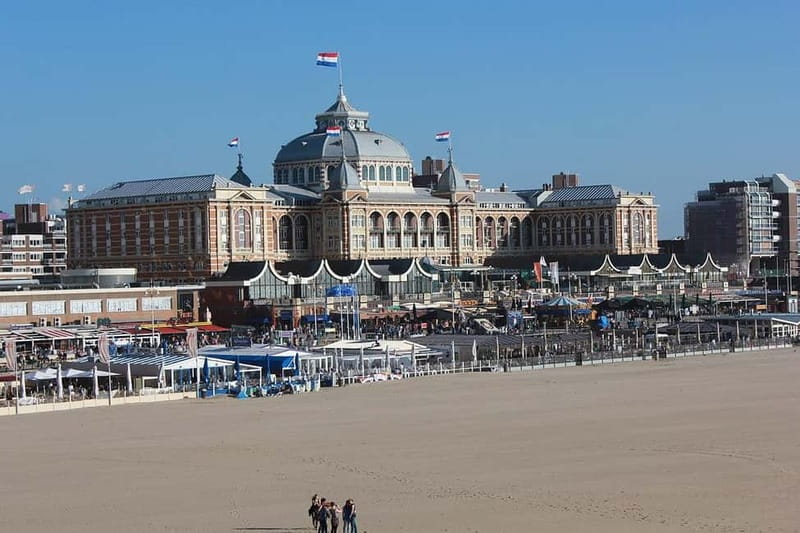
This guided walk tells the story of Scheveningen’s development beginning in 1818, when it started as a small spa. Over time it became more of a modern seaside resort, with the kind of seaside infrastructure you expect later on, like major hotels lining the coast. The timing matters. You can feel the shift from a place that drew visitors for health and quiet, to a place built for crowds, promenades, and constant ocean activity.
If you like history you can actually point at, you’ll enjoy how the guide keeps tying the dates to what you see on the ground. You are not stuck in a classroom explanation. You are walking past the shapes and spaces that grew from those choices, from early seaside leisure to later tourism and larger-scale development.
More Guided Walking Tours in The Hague

Meeting at Kurhaus Hotel, and how to avoid wasting your time
Your meeting point is in front of the Kurhaus Hotel. If you cannot find it, you’re told to call the guide.
That sounds straightforward, but here is the reality. A coastal resort has multiple entrances, and different tour groups can form in different spots. Some past visitors ran into confusion about whether to wait at the hotel front or along the nearby beach side. So do yourself a favor: arrive a bit early, look for the exact meeting instructions, and be ready to call.
Also, keep your camera and water handy from the start. If you are standing there waiting, you might as well be ready the moment the guide appears. And since the group is limited to 5 participants, missing the start can mean missing the whole experience.
The one-hour route: beach, esplanade, pier, and lighthouse
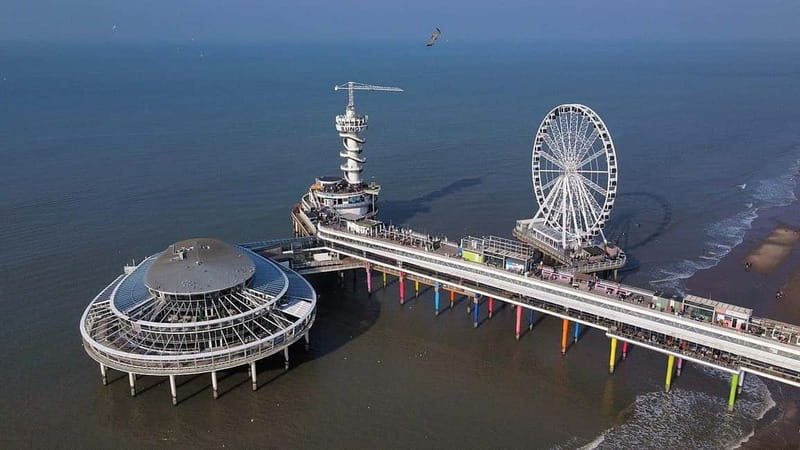
This is a short tour at 1 hour, built like a concentrated walk. The guide takes you through the modern resort highlights, with a focus on what each location represents.
The long sandy beach
You’ll start with the ocean-first part: the long sandy beach. This is where you get oriented. Even if you have seen beaches before, Scheveningen’s shoreline is part of the town’s identity, because people had to deal with storms and changing sea conditions for centuries. So while you’re looking at the water, the guide is likely connecting it to why the harbor and fishing practices evolved.
Tip: If the wind is up, you can feel it immediately on the beach. Dress for that, not just for the air temperature.
The esplanade
Next comes the esplanade, the strolling spine of the resort. This is where the “seaside town” becomes obvious. Think promenade energy, with space to walk, look, and take photos.
This stop is valuable because it’s the bridge between the working harbor story and the leisure resort story. You see how the town made room for visitors, while still being fundamentally a coastal place.
More North Sea breaks and beach days:
- The Hague: Scheveningen Beach RIB Speedboat Tour
★ 4.7 · 416 reviews - Scheveningen: LEGOLAND® Discovery Centre Entry Ticket
★ 4.1 · 257 reviews - The Hague: Beginner’s Surf Lesson Adults
★ 4.8 · 96 reviews - Scheveningen Beach: 1,5-Hour Surf Experience for Adults
★ 4.8 · 76 reviews
The pier
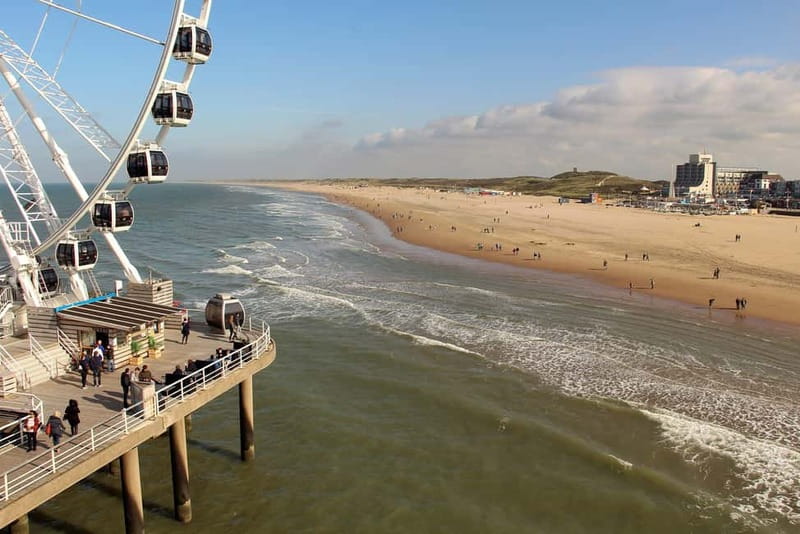
Then you reach the pier. For photographers, it is one of those spots where you can frame the horizon quickly, and for history lovers it serves as a physical reminder that Scheveningen is always negotiating with water, access, and safety.
A pier is not just a photo op. It’s infrastructure. In a town shaped by storms, the idea of building out instead of relying only on the shoreline is a big change.
The lighthouse
Finally, you’ll be at the lighthouse. This is your visual “bookmark” for the whole walk. Lighthouses exist because sailors need help navigating, especially when weather turns. Even if you are not thinking about ships, the guide’s stories give the lighthouse a job, and that makes it more than just a tall structure.
Fishing village roots, inns, and the rhythm of work at sea
Under the modern hotel-lined coastline, Scheveningen still carries the bones of a fishing village.
One of the most interesting parts is the way the guide connects community life to the sea. Historically, Scheveningen had many inns across the centuries, which makes sense when you consider how often fishermen and visitors would need food, shelter, and a place to gather.
The guide also brings up the local fishing practices, and this is where you learn something very specific: before the harbor existed, fishing boats used flat-bottom boats called bomschuiten. The idea was practical. These boats could be pulled up the beach, rather than needing deep harbor access.
By around 1870, more than 150 of these boats were in use. That number helps you picture scale. This was not a small side activity. It was a serious part of the working economy, and it shaped how the village functioned day to day.
If you like details that make a place feel real, this section does the job. You leave with an understanding of how the town’s sea work changed the way people built, organized, and eventually expanded.
Storm years that forced changes, and the harbor decision after 1894
Scheveningen’s coastline has been hit repeatedly by storms, and the guide doesn’t treat that as trivia. It’s the driving force behind the big changes.
You’ll hear about a devastating storm in 1470 that destroyed the church and half the houses. Then more storms followed in 1570, 1775, 1825, 1860, 1881, and 1894. Having multiple years like this is not just dramatic storytelling. It communicates that coastal communities do not “solve” storm risk once. They keep adapting.
After the last storm in 1894, the villagers decided to build a harbor. That decision is the turning point that transforms Scheveningen’s relationship with the water.
Here’s the follow-through story that makes it click: until the harbor was constructed in 1904, fishing boats were pulled up the beach. Once the harbor came, more modern ships replaced the bomschuiten over time.
And yes, this kind of history matters on a practical walking tour. When you stand near the pier and lighthouse, you can better understand why this area needed navigational help and protected access. You are not just viewing a postcard scene. You’re seeing the physical results of repeated weather pressure.
Price, group size, and what you really get for $29
The price is $29 per person for 1 hour, with a small group limited to 5 participants. For a short walk, the value depends on what you want from the hour.
If you want a fast orientation plus stories that connect the resort to its working past, you’re in the right place. You also get the key physical stops: beach, esplanade, pier, and lighthouse. That combination is helpful if you only have a day in Scheveningen and want the highlights without guessing.
The tour also runs with a live guide in Dutch and English, and the inclusion list mentions insights into local water sports and fishing history. That is a good mix. It’s not only archival history, and it’s not only scenery.
One thing to keep honest in your planning: given the previously reported issues with guide arrival and meeting-point confusion, I would treat this as a “confirm and be ready” tour. If you can build in a little buffer time, you’ll protect your schedule and reduce stress.
Comfort tips that keep the hour pleasant
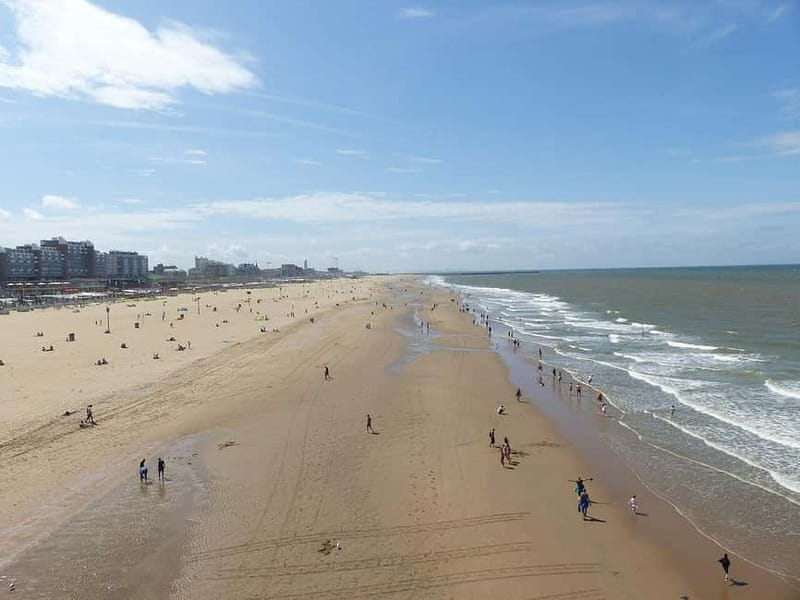
This tour is a walking experience, and the essentials are spelled out. Bring comfortable shoes, a camera, water, and weather-appropriate clothing.
Scheveningen can be windy, especially along the beach and pier. Dress in layers so you can adjust. If rain is in the forecast, bring something light that blocks wind and drizzle without slowing you down.
Two more practical notes:
- Smoking is not allowed.
- The tour is not suitable for people with mobility impairments or wheelchair users, so plan another option if you need step-free access.
Because the group is small, the guide can likely manage the pace, but the route still includes walking along seaside areas. Comfortable footwear is non-negotiable.
Who should book this walking tour in Scheveningen?
This is a good fit if:
- You want a quick, guided way to understand why Scheveningen looks the way it does.
- You enjoy mixing scenery with specific local facts, like storm dates and the bomschuiten boat system.
- You like photo-friendly stops, especially at the pier and lighthouse.
It may not be ideal if:
- You have limited mobility and need wheelchair access.
- You need a perfectly predictable start time and cannot handle meeting-point uncertainty. In that case, do yourself a favor and have a self-guided plan for the beach and pier in your back pocket.
Should you book this Scheveningen Guided Walking Tour?
I’d book it if you want a focused, story-led hour that connects resort life to fishing work and storm history. The payoff is strong when you care about how places evolve, not just what they look like.
But I would also book it with eyes open. There have been clear reports of guide no-shows and difficulty reaching someone, plus confusion about exactly where to wait near the Kurhaus Hotel. My advice: arrive early, verify the meeting spot in advance, and keep the guide contact ready so you are not stuck guessing.
If you’re flexible and you’ll enjoy learning why this coast had to change, this walk is a smart use of time. If your schedule is tight and you cannot risk a delay, consider building in buffer time or using the beach, esplanade, pier, and lighthouse as a self-guided fallback.
FAQ
How long is the Scheveningen guided walking tour?
It lasts 1 hour.
How much does the tour cost?
The price is $29 per person.
What is the group size?
The tour is limited to a small group of up to 5 participants.
What languages are available?
The live guide speaks Dutch and English.
Where do we meet for the tour?
You meet in front of the Kurhaus Hotel. If you cannot find it, you are instructed to call.
What places do you visit on the walk?
You’ll see the long sandy beach, esplanade, pier, and lighthouse.
What is included in the tour price?
Included are the guided tour, history and stories, visits to the beach, esplanade, pier, and lighthouse, plus insights into local water sports and fishing history.
What should I bring?
Bring comfortable shoes, a camera, water, and weather-appropriate clothing.
Is the tour accessible for wheelchair users or people with mobility impairments?
No. It is listed as not suitable for people with mobility impairments or wheelchair users.
What are the cancellation and payment options?
You can cancel for a full refund up to 24 hours in advance. You can also reserve now and pay later, meaning you can book without paying immediately.
Gables on Foot
- The Hague: Courtyard Walking Tour★ 4.5 · 71 reviews
- Walking Tour of Delft – The City of Orange and Blue★ 5.0 · 50 reviews
- Private Walking Tour of Delft: Dive into the Dutch Golden Age★ 5.0 · 33 reviews
- The Hague Private Walking Tour with a Local★ 4.0 · 29 reviews
Latest to arrive along the quays of The Hague

Beach & Surf Days, compared.

Drive it yourself electric Dune and Beach GPS audio tour
Read our review →

Self-Drive Electric Car Dune and Beach Audio Tour
Read our review →
Scheveningen Beach: 1,5-Hour Surf Experience for Adults
Read our review →
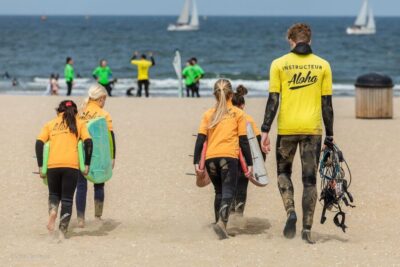
Scheveningen Beach: 1,5 hour Surf experience for families
Read our review →Browse the lists this tour appears in