
Reviewed · GRONINGEN TOURS & EXPERIENCES
Explore Groningen City with Self-Guided GPS and Audio Tour
Groningen can be tricky to read until you have a plan. This self-guided GPS and audio experience gives you that plan, then lets you wander the way you actually want, at a relaxed pace through the city center.
I like the smart flow of the route. You start at PronkVismarkt 56, then it strings together highlights from the Vismarkt area to churches, city landmarks, and even a couple of places you can enter for free.
One thing to keep in mind is that this is self-guided. If you want a live guide to answer questions on the spot, you’ll need to pause the audio and do a little extra reading as you go.
In This Review
- Key highlights at a glance
- Getting started at PronkVismarkt 56, then walking in your own rhythm
- Vismarkt and the science stop: where the city’s map starts to make sense
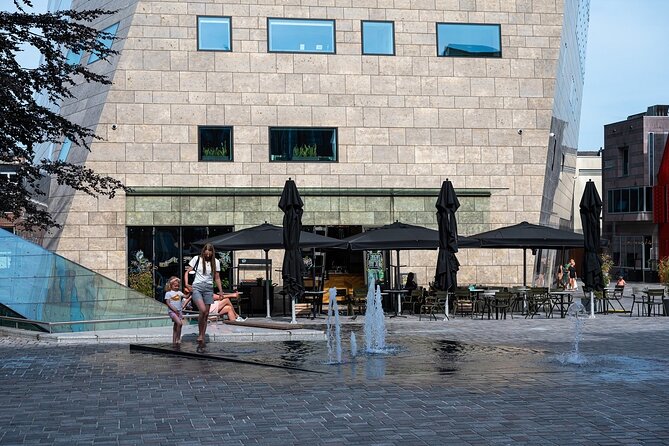
- Forum Groningen: modern culture, movies, and a rooftop view
- Martinikerk and Martinitoren: how centuries stack on one site
- Grote Markt and the City Hall: local democracy in classicist style
- Goudkantoor, a Renaissance tax office, and the message on the facade
- Pelstergasthuis: Groningen’s oldest guesthouse and a bell from 1459
- Groningen Synagogue: Moorish-oriental architecture and a domed statement
- Akerk: Saint Nicholas, the River A, and a church that stayed central
- Timing, pace, and what to do with the 2 hours you have
- Price value: is $8.41 worth it for a GPS audio walk?
- Who this walk suits best
- Should you book this Groningen GPS audio tour?
- FAQ
- FAQ
- How long does the Groningen self-guided GPS and audio tour take?
- Where does the tour start and end?
- What language is the audio available in?
- Is it a free walking tour?
- Which attractions on the route have free admission?
- What are the available times to start this activity?
Key highlights at a glance
- GPS guidance with audio so you stay oriented without racing your phone
- Two-hour city-center loop designed to hit major sights without a long commitment
- Multiple free entry stops, including Forum Groningen and historic religious buildings listed as free
- A real mix of eras, from Romanesque church roots to Gothic additions, plus Renaissance civic buildings
- English narration in a route that works well even if it’s your first time in Groningen
- Private for your group, so you can stop, restart, and linger without feeling rushed by strangers
Getting started at PronkVismarkt 56, then walking in your own rhythm
You begin at PronkVismarkt 56, 9711 KV Groningen, and you end right back at the same meeting point. That round-trip structure matters because it keeps the route simple, especially for a first visit.
The whole experience takes about 2 hours. You get GPS and audio guidance in English, with the travel time already baked into the schedule, which helps you plan the rest of your day.
Also, this is listed as a private activity, meaning it’s set up for only your group. If you’re traveling with friends or family and you don’t want to feel squeezed into other people’s pace, that’s a quiet quality-of-life win.
Also flying a pennant in Groningen

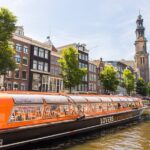
Vismarkt and the science stop: where the city’s map starts to make sense
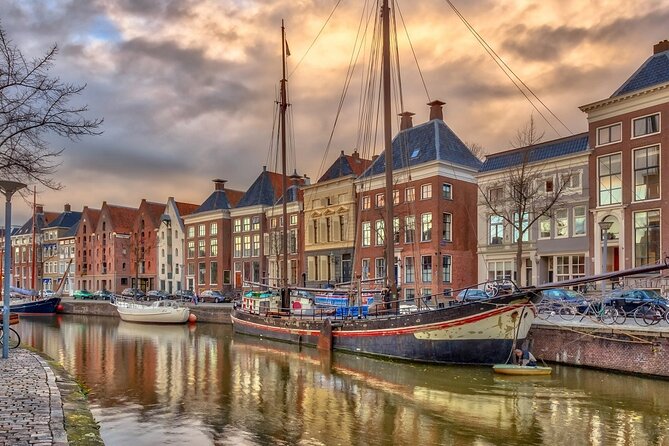
The walk opens at the Vismarkt, a square tied to Groningen’s fishing past. The name basically tells you what used to happen here, and it’s a good place to start because the city center is compact and easy to connect by foot.
There’s also an interesting theory in the narration: the street pattern of Groningen’s center may echo older city planning ideas going back to Roman times. Even if you treat that as a legend rather than a proven fact, it’s a fun lens for noticing how squares and streets line up.
Next comes a science museum stop located in Groningen’s academic heart since 1934. If you like quick, informative breaks, this is one of those stops that gives your walk more brain than just photos of brick and tower tops.
Then you’re guided into Muurstraat, a small street that fits the scale of Groningen well. Tiny streets like this are where you start to feel the city’s everyday rhythm instead of just hitting monuments.
Forum Groningen: modern culture, movies, and a rooftop view
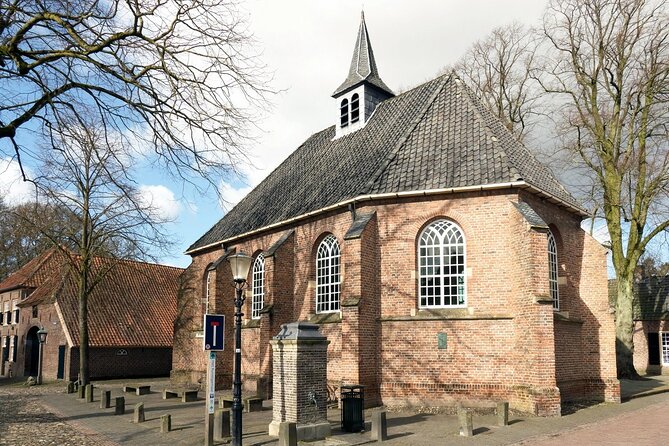
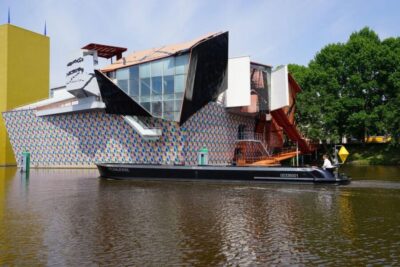
The route shifts into modern life with Forum Groningen. The narration frames it as a place for films, exhibitions, events, festivals, games, books, and talks, so it’s not just a building you pass, it’s a cultural engine for the city.
The good part for your time budget: Forum Groningen is free to visit, and you can go inside. You can also head up to the roof for a nice view over Groningen, which is the kind of payoff that makes a short walk feel like more.
If your schedule is tight, I’d use Forum as your “reset stop.” Sit for a moment, catch your bearings, then continue on. The audio keeps you moving, but you won’t feel like you must sprint.
Martinikerk and Martinitoren: how centuries stack on one site
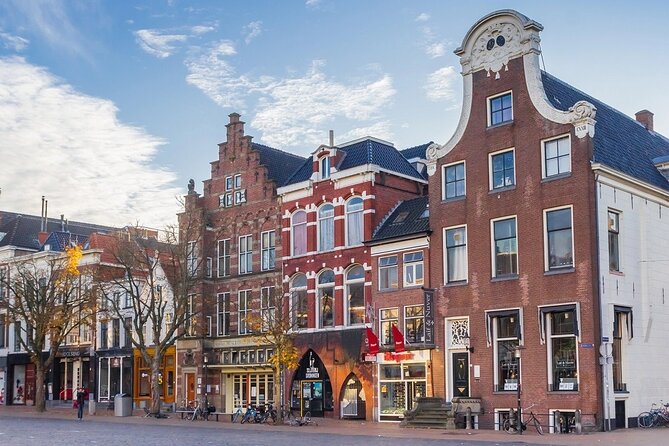
Now you get into the heart of the old city with Martinikerk and the Martinitoren tower. The narration explains that the first stone church was on the site around the year 1000, made in a Romanesque style with tuff stone.
Around 1220, the story changes into Romano-Gothic. You also get helpful architectural cues: the church originally had a three-aisled cruciform layout, and you can still see traces of that construction phase, including round windows and recessed decorative brickwork on the nave facades.
Then you reach the turning point for many churches in growing cities: by the 15th century, the building had outgrown its earlier size. The narration ties that to Groningen’s economic “golden age,” which is a reminder that religious buildings often track population and money as much as faith.
Right at the tower side, the Martinitoren becomes a city symbol. Locals call it D’Olle Grieze, the old grey one, and the name is a friendly way to talk about a landmark without turning it into a museum object.
The tower’s history is dramatic. It mentions multiple earlier towers on the site, including one built in the 13th century that was about 30 meters high, then destroyed by lightning in 1408. A later Gothic-style tower collapsed in 1468, after a lightning strike and a fire in the tower a few years earlier.
If you like heritage that has scars, this stop is strong. Instead of pretending the past was smooth, it shows how buildings evolve, break, and get rebuilt.
Grote Markt and the City Hall: local democracy in classicist style
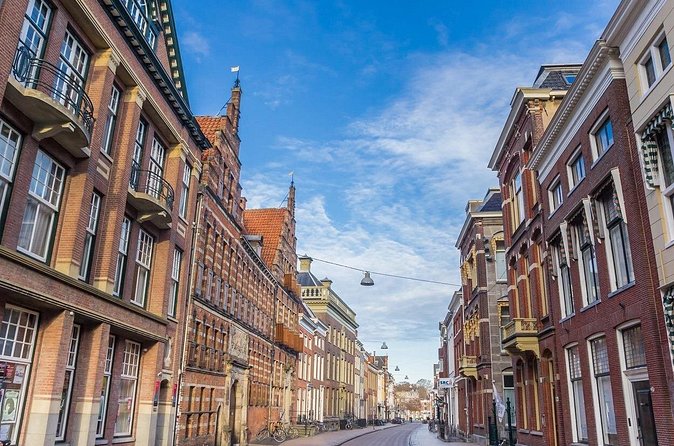
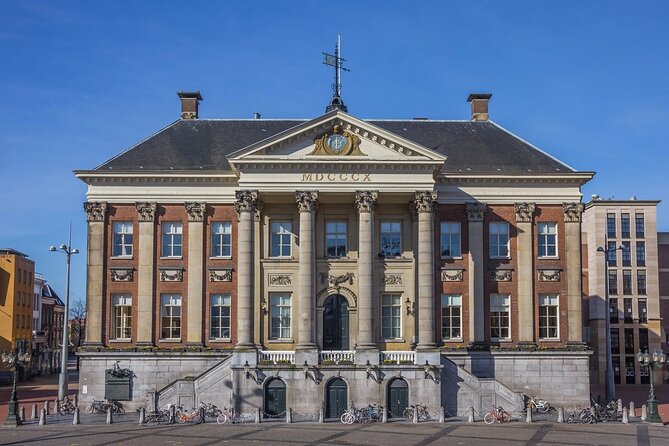
Next up is the Groningen Town Hall on the Grote Markt, described as the stronghold of local democracy. This is one of those stops where the value is not just visual, it’s that it helps you understand how the city governed itself through space.
The narration notes that until the late 18th century, the area was made up of a collection of buildings, some medieval. For more than two centuries, the town hall has stood in the middle of the Grote Markt, and it was created from the first architectural competition in the Netherlands in 1774.
The architect named here is Jacob Otten Husly, and the project was delayed by a lack of money and an invasion by French troops around 1800. The building wasn’t put into use until 1810, and the architectural style is given as Dutch classicist to neoclassical, which helps you “read” the facades.
There’s also a practical modern note: the town hall was completely renovated in 2020 to 2022. So you’re seeing a historic civic centerpiece that has been maintained recently, not a faded relic.
Under the next bridge out of Groningen:
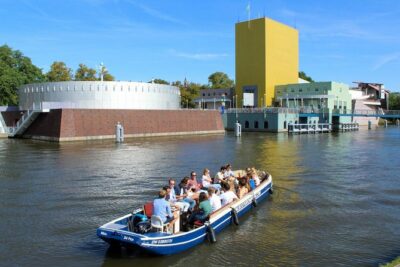
- Groningen: City Canal Cruise
★ 4.3 · 895 reviews - Groningen: Climb the Martinitower
★ 4.5 · 365 reviews - Groningen: Terrace Boat Experience with a Cozy Bar
★ 4.1 · 307 reviews - Groningen: Open Boat City Canal Cruise
★ 4.7 · 250 reviews
Goudkantoor, a Renaissance tax office, and the message on the facade
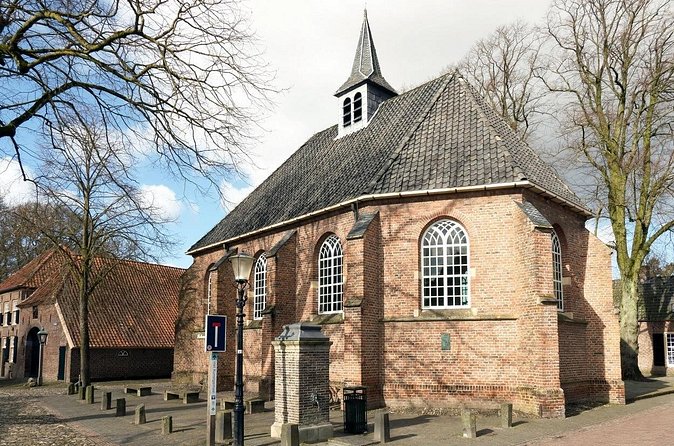
Close by, you’ll hit the Goudkantoor, a Renaissance-style building built in 1635. This one was originally meant as a tax office, and the narration points out that the purpose is still written on the facade.
The Latin phrase given is Date Caesari quae sunt Caesaris, basically a “give the emperor what is the emperor’s” idea. That’s the kind of detail that turns a facade into a historical clue rather than background decoration.
The narration also explains the ownership confusion after a period of French rule that lasted until 1814. Only in 1843 did clarity arrive, and at that point the provincial coats of arms were replaced by city arms.
The name Goudkantoor comes from an office of guarantee for gold and silver works that used the upper floor from 1814 to 1887. If you’re the type who likes to connect a building’s name to a real job function, this stop delivers.
Pelstergasthuis: Groningen’s oldest guesthouse and a bell from 1459
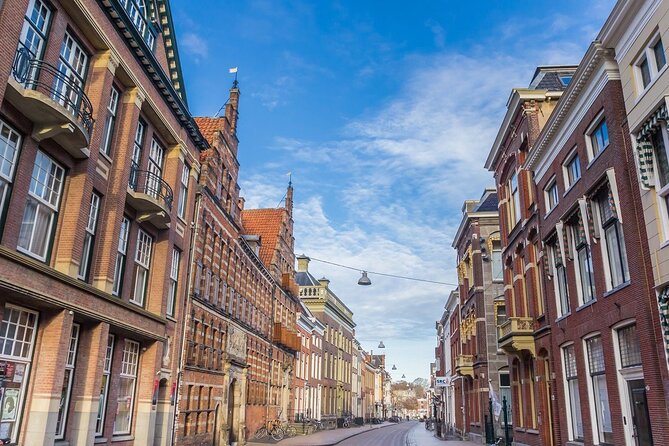
The route then leans into older everyday life with Pelstergasthuis, listed as the oldest guesthouse in Groningen. The narration places its origins in the 13th century, and it says it was the only guesthouse in the city until 1342.
You get a specific early reference point: it was first mentioned in 1267 when Pope Clement IV gave permission to build a chapel and cemetery on the site. The building you see today comes from multiple periods between the 14th and 19th centuries, which is a nice reminder that real structures usually grow over time.
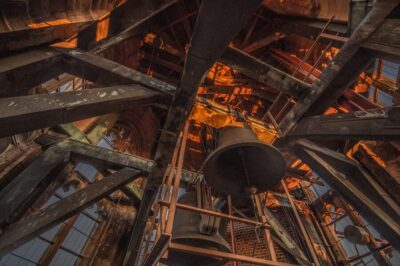
The church portion is said to be the oldest part still standing. Inside, the narration says you can find the oldest bell in Groningen, dated 1459, and the tour invites you to take a look inside.
This is a strong stop if you like human-scale history. Guesthouses sound boring until you remember they were infrastructure for travel, trade, and city life, not just hospitality.
Groningen Synagogue: Moorish-oriental architecture and a domed statement
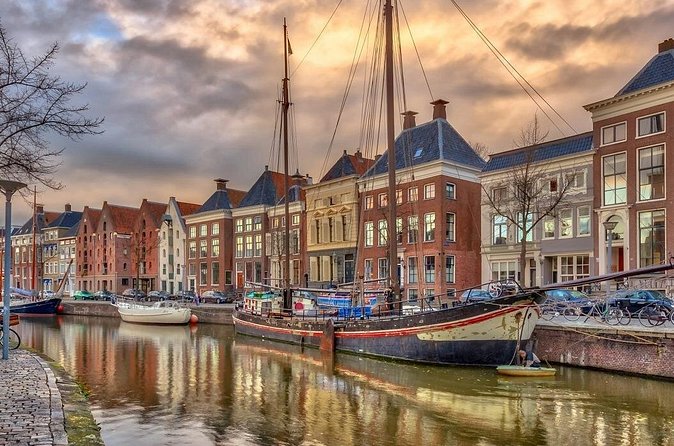
Next is the Groningen Synagogue, where the narration walks you through change over time. It describes the earlier synagogue as modest, serving since 1756 in Kleine Folkingestraat, also called Jodenstraatje.
Then in 1903, municipal authorities worked with architect Kuipers. The narration adds a useful detail: although he designed many churches, he had little knowledge of synagogues, so he studied examples in Germany and was impressed by the Moorish or oriental style, including inspiration from a synagogue in Berlin.
The building’s described features include a striking oriental dome and horseshoe arches in both the outer walls and the interior. That makes this stop less about a single room and more about how communities expressed identity through architecture.
You may find the building smaller than you expected. That can actually be a plus, because it pushes you to notice shape and detail rather than just grand scale.
Akerk: Saint Nicholas, the River A, and a church that stayed central
The final religious stop is the Akerk, described as about 800 years old. The narration says a chapel was built around 1200 on the eastern bank of the river A, and it grew into a basilica with a cruciform cross-like floor plan.
It was dedicated to Saint Nicholas, the patron saint of sailors, which fits neatly with the mention that the river A was a key trade waterway. The first written mention is 1246, and the church later expanded in the 15th century until around 1495, when it took much of its current shape.
The religious timeline keeps rolling: it was originally for Catholic worship, then taken over by Protestants during the Reformation in 1594. Protestant services continued until 1970, but the narration emphasizes that the church has stayed at the heart of city life.
This ending lands well because it returns you from towers and civic power to something more grounded. It also helps you connect Groningen’s past to day-to-day spaces you can still use today.
Timing, pace, and what to do with the 2 hours you have
The full loop is about 2 hours, including walking and the time needed for stops. That’s a sweet spot. It’s long enough to feel like a real overview, but short enough that it doesn’t crush your whole day.
Because the route is self-guided, you control how long you linger. If you want photos, plan a little extra time near the Martinitoren and the civic buildings around the Grote Markt, where viewpoints and facade details reward slow looking.
The experience is available from 7:00 AM to 7:00 PM, Monday through Sunday. I like mornings for this kind of walk because you can get clearer photos and you often avoid the thickest crowd levels in city centers.
What to bring is simple: solid shoes for a city walk, and a way to keep your phone charged. Also, if you rely on sound, keep your device volume at a comfortable level before you start moving between stops.
Price value: is $8.41 worth it for a GPS audio walk?
At $8.41 per person, you’re paying for a guided route experience, not for hotel-style group handling. Since most of the stops listed are free to enter (Vismarkt context, Forum Groningen, Pelstergasthuis, Groningen Synagogue, and Akerk are explicitly marked free), your money goes toward the direction and the storytelling.
The value is best if you like structure. With GPS and audio, you can hit the main points without needing to build your own plan from scratch, and without booking a full guided tour with a higher price tag.
One reason this may not be for everyone is if you already know Groningen well or you prefer total freedom with just your own map. In that case, you might get similar satisfaction with a free walking route plus a little reading. But if you’re new to the city, the route’s stop order and context can save you time.
Who this walk suits best
This is ideal for you if you want a city-center overview that stays within a manageable time window. It’s also a good fit if you like architecture and want explanations that connect buildings to real dates, functions, and city changes.
It’s less ideal if you hate using your phone for navigation, or if you strongly prefer a live guide who can customize answers. But if you’re okay with pausing, listening, and choosing how long to stand in each spot, you should feel in control.
Should you book this Groningen GPS audio tour?
If you want an easy way to understand Groningen without committing to a long group tour, I’d say book it. The price is low enough that you’re not taking a big gamble, and the route threads together practical city highlights in about 2 hours.
I’d especially recommend it if you enjoy getting context for landmarks like Martinikerk and the Martinitoren, and you like seeing how civic power, religion, and everyday travel spaces (like Pelstergasthuis) shape the city.
FAQ
FAQ
How long does the Groningen self-guided GPS and audio tour take?
It takes about 2 hours on average.
Where does the tour start and end?
The tour starts at PronkVismarkt 56, 9711 KV Groningen, Netherlands and ends back at the same meeting point.
What language is the audio available in?
The experience is offered in English.
Is it a free walking tour?
The tour has a price of $8.41 per person. Some stops listed on the route are marked with admission ticket free, but the tour itself is not free.
Which attractions on the route have free admission?
Stops marked with free admission in the tour details include Forum Groningen, Pelstergasthuis, Groningen Synagogue, and Akerk (as well as the Vismarkt stop context).
What are the available times to start this activity?
The opening hours are 7:00 AM to 7:00 PM, Monday through Sunday.
Latest to arrive along the quays of Groningen

Groningen Tours & Experiences, compared.

Browse the lists this tour appears in