
Reviewed · GRONINGEN TOURS & EXPERIENCES
Groningen: Walking Tour with Local Guide
Groningen gives you the whole story in a short walk. This 1.5-hour tour links 1,000 years of city history to today’s student power, so you get why Groningen looks the way it does.
I like that it is a small-group walk (max 25), with a real local guide to connect the big landmarks to street-level life. You will also cover both classic sights and newer city moments, starting and ending at Forum Groningen.
One drawback to note: it is weather-dependent, and the walk is about 1.5 km, so you will want comfy shoes and a layer.
A few details matter here: the guide focuses on how Groningen works now, not just old facts. You’ll walk past the places that shape daily rhythms, then finish with a view from the Forum platform.
In This Review
- Key highlights you will feel in your first 10 minutes
- 1.5-hour Groningen walking tour: why this format works
- Meeting at Forum Groningen: the smartest start point in the city
- Martini-toren: more than a gray tower photo op
- New Market Square and Grote Markt: civic power you can walk through
- Renaissance meets modern architecture, in walking distance
- Bikes and student town clues: how Groningen really runs
- Gold-office, academic buildings, and why details matter
- Yellow tower of the A-church and stepping back centuries
- Folkingestraat and Jewish history, plus Pepergasthuis on the right day
- Electric stair-cases to the 45 m Forum platform view
- Price and logistics: is $22 worth it for what you get?
- Who this tour suits best in Groningen
- Should you book this Groningen walking tour?
- FAQ
- How long is the Groningen walking tour?
- How far do you walk?
- Where do I meet the guide?
- What sites are included?
- Is the tour wheelchair accessible?
- Which languages are available?
Key highlights you will feel in your first 10 minutes
- Forum Groningen as a launchpad for modern culture and tech talk, right at the start
- Martini-toren storytelling, turning a landmark into a timeline you can remember
- Student town energy, with bike culture and everyday life woven into the history
- A tight loop through the center, including Grote Markt and the New Market Square
- Older layers of Groningen, from regents’ palaces to the oldest harbor area
- Forum platform at 45 meters, reached via electric stair-cases for a payoff view
1.5-hour Groningen walking tour: why this format works
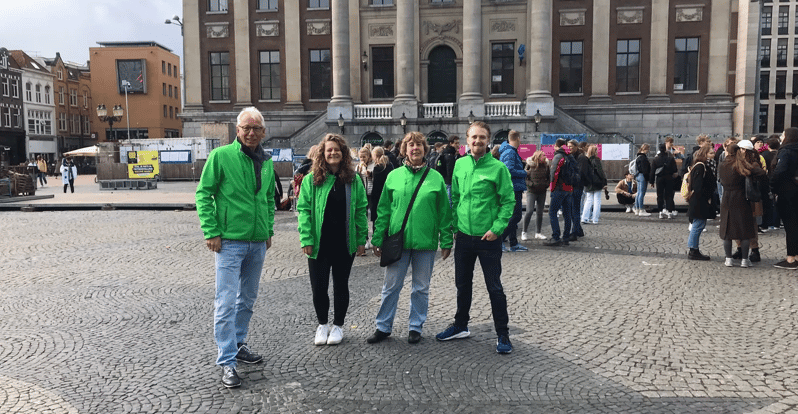
This tour is built for people who want clarity fast. Groningen can feel like it has two cities at once: the historic core and the modern pulse, plus a serious student population. With a guided walk, you get the “why” behind the mix, without having to map it all yourself.
For you, the big win is the pace. At 1.5 hours and about a 1.5 km route, you can see a lot of key stops while still having time to look up, ask questions, and reset at the end near the Forum. The group limit of 25 also helps. It keeps the guide from turning into a lecture and makes it easier to hear street-level details instead of just landmark names.
I also like the promise that you will learn about history, present, and future. That is not just marketing language. In Groningen, the “present” includes students, bikes, and modern buildings. The “future” comes through in how the city is evolving around new spaces like Forum Groningen.
A small practical note: this is an outside walk. If it is cold or rainy, you will feel it. That is not a reason to skip, just a reason to dress like a local north of the water.
More gables counted on foot:
Meeting at Forum Groningen: the smartest start point in the city
The tour starts inside Forum Groningen, and you meet your guide in front of the VVV-store at the yellow counter. Starting here makes sense because Forum is modern and active, not a quiet museum corner. It sets the tone right away, and it is where the tour brings you back at the end.
You can think of Forum as a kind of “link” building. It is close enough to the historic center that you can walk into old streets quickly, but it is clearly part of the city’s modern face. The tour uses that contrast on purpose, first talking about technical innovation, modern culture, and what is happening now.
This matters because Groningen’s identity is not frozen in the past. The city is still shaping itself. When you begin at Forum, the guide can show you how the old city supports the current one, instead of treating history like a sealed room.
Martini-toren: more than a gray tower photo op
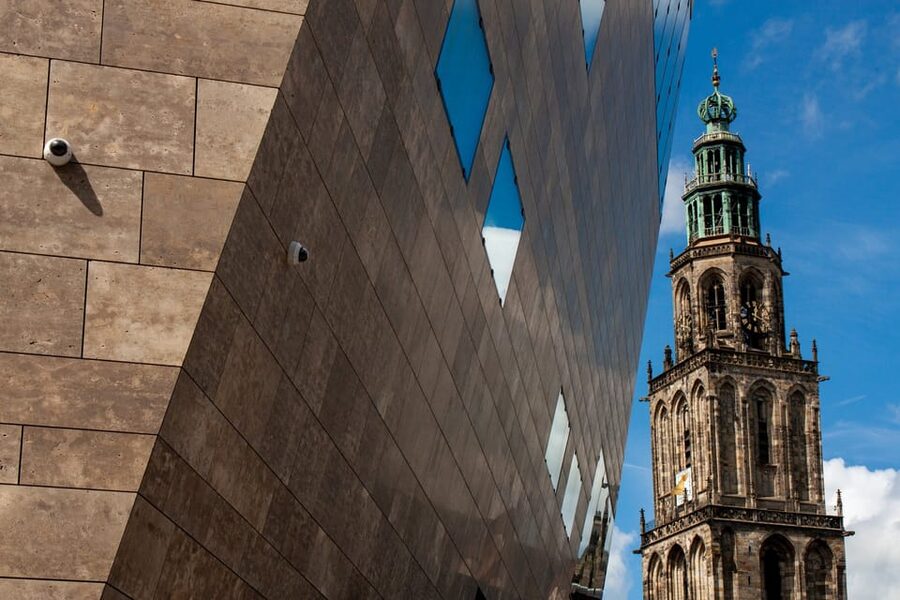
One of the first landmark stops is the Martini-toren, the old gray tower that dominates Groningen’s skyline. A tower sounds simple until a guide turns it into a story you can picture. That is exactly what this tour is aiming for.
You will not just learn it exists. The focus is on what it represents for the city, and how the surrounding streets relate to Groningen’s long timeline. When a guide connects a landmark to student life, commerce, and civic decisions, it stops being an object and becomes a reference point.
This is also where the guide’s enthusiasm really shows up in real-world feedback. People highlight guides who are genuinely involved with their own city, not just reciting facts. In the reviews, names like Margret and Wessel come up in connection with an energetic, engaged style. If you care about hearing the human side of history, that kind of guide presence is a major plus.
Tip for your own walk: when you reach the tower area, pause long enough to look at the tower from different angles. The tour is short, so you want quick clarity. A moment of looking helps your brain store the story your guide is sharing.
New Market Square and Grote Markt: civic power you can walk through
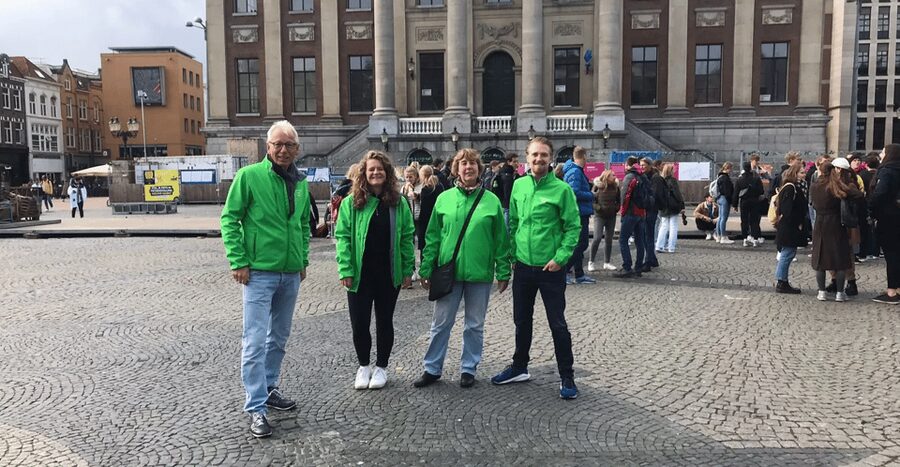
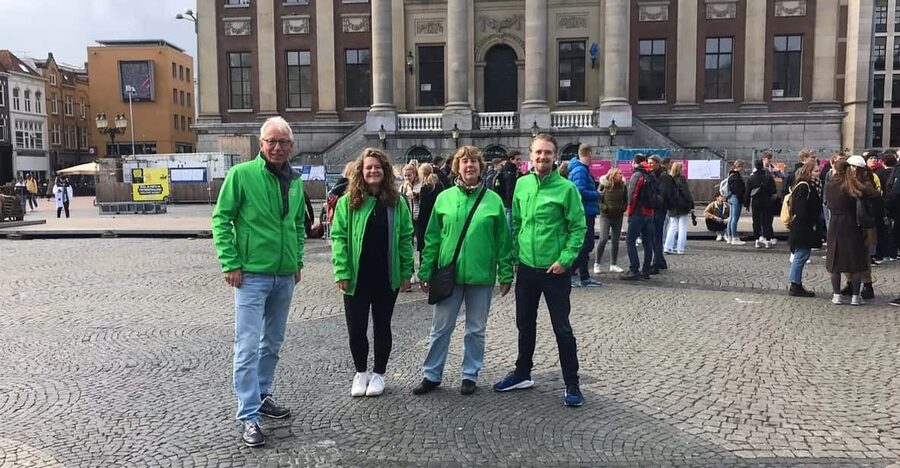
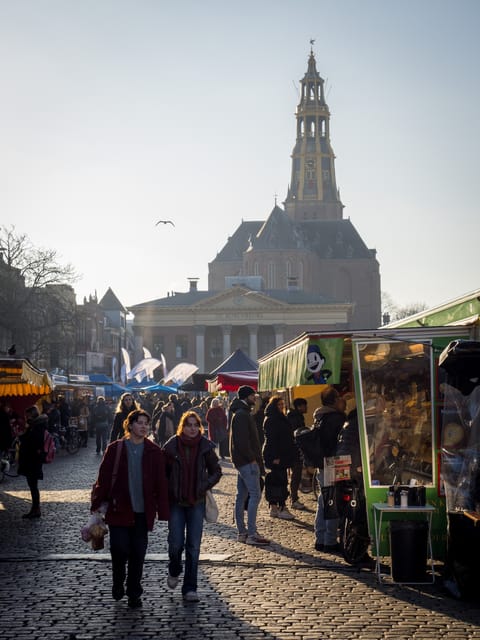
After the Forum start, the guide takes you toward the New Market Square and then into the Grote Markt area, where big civic buildings shape daily life. This is the part of the walk that helps you understand how Groningen organized itself over centuries.
On the route, you will see:
- The City Hall situated on Grote Markt Square
- The office of the Commisionar of the King
- The Palace of the 17th and 18th century Regents
Those names might sound like paperwork, but they point to real power structures. If you want context, this stop is where you learn how a city’s leadership and identity show up in stone and layout.
You also get a feel for the city’s “street purpose.” Market squares are not just pretty open space. They are where people gather, trade, discuss, and move on. Groningen’s squares help explain why the city can handle both history and daily rhythm at the same time.
Renaissance meets modern architecture, in walking distance
Groningen is known for an interesting mix: classic and older forms beside newer architecture. The tour is designed so you experience that mix physically, not as a map comparison.
You will walk through areas where you can see Renaissance elements alongside modern building styles. The guide uses that to explain Groningen’s shift over time, and how the city’s center remains functional. In a place like this, the history is not behind ropes. It sits in the middle of normal life.
This is the “future” part of the tour. You are not predicting anything. You are seeing what kinds of buildings, squares, and public spaces the city chooses to invest in now. That kind of understanding is useful because it changes how you wander afterward. You stop seeing everything as random and start seeing the logic.
Also flying a pennant in Groningen Netherlands
- Groningen: City Canal Cruise
★ 4.3 · 895 reviews - Groningen: Climb the Martinitower
★ 4.5 · 365 reviews - Groningen: Terrace Boat Experience with a Cozy Bar
★ 4.1 · 307 reviews - Groningen: Open Boat City Canal Cruise
★ 4.7 · 250 reviews
Bikes and student town clues: how Groningen really runs

A big theme is that Groningen is a student town. You are told the city has about 235,000 inhabitants, including around 70,000 students. That fact is not just a number. It explains the bike presence and the feeling of constant motion in the center.
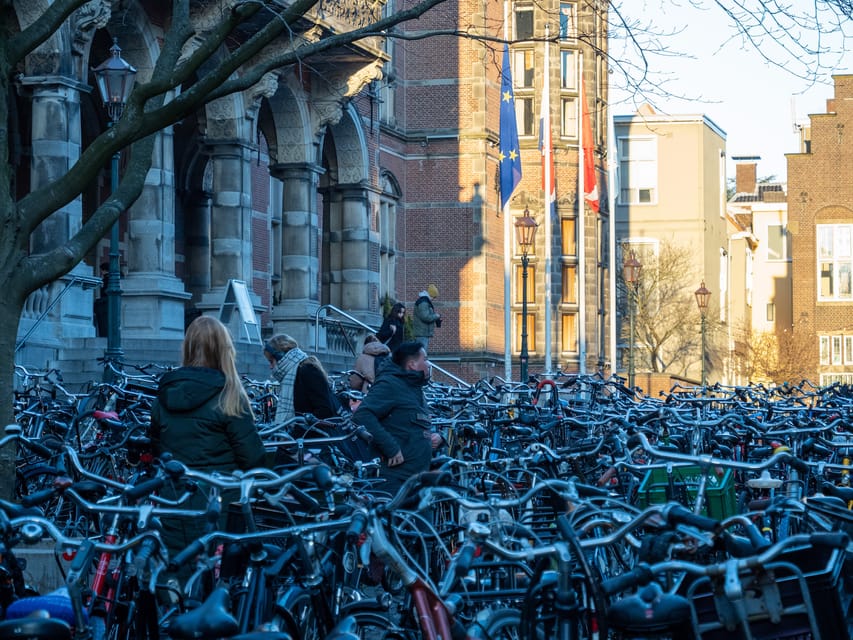
You will learn about student life as part of the story, and the tour highlights how deeply biking is woven into the city. It is easy to ignore bikes when you are only focused on landmarks, but here they are part of the city’s identity. When a guide connects bike culture to students and daily routines, you understand why the streets feel the way they do.
This is also where a good guide really matters. If your guide is energetic, you will leave with more than photos. You’ll leave with a sense of what Groningen feels like on a normal day.
If you get even a little tired, don’t worry. The walk is short, and the stops are set up so you can regroup as you move between viewpoints and buildings.
Gold-office, academic buildings, and why details matter
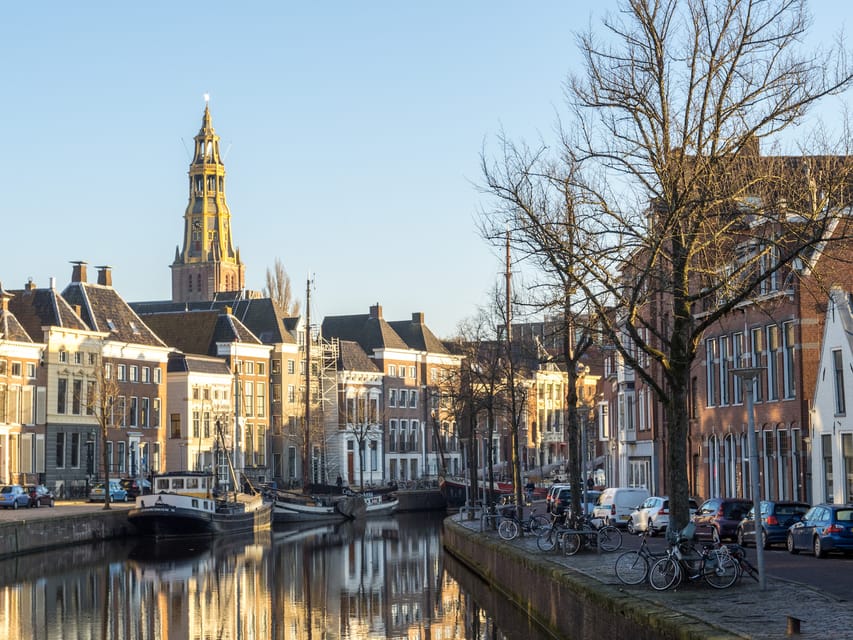
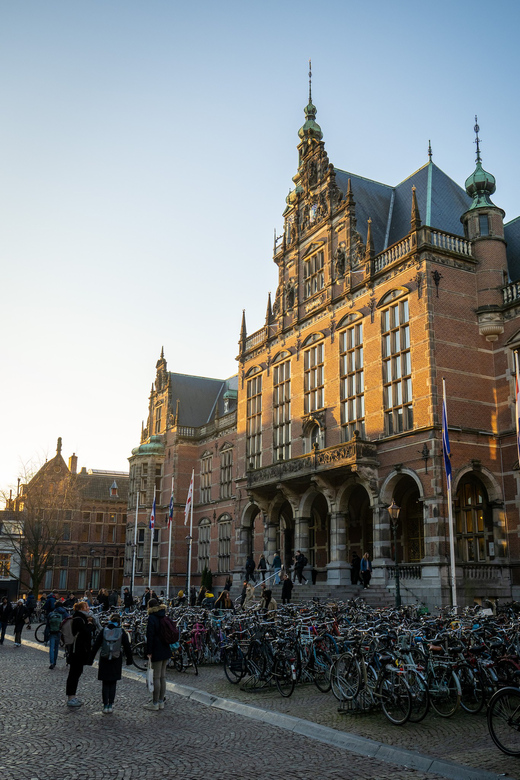
As you continue, the tour includes places tied to the city’s institutions, including the Gold-office and the Academic Building. These are the kinds of stops people sometimes skip when they travel independently. On a guided walk, they become useful because the guide frames them in the city’s story.
It is a reminder that Groningen’s history is not only religious or medieval. The city’s economy and education have also shaped its personality. That is a valuable context if you want to understand why Groningen feels practical and future-minded, not stuck in one era.
For you, these stops can be a confidence boost. After this tour, you will probably spot similar patterns elsewhere in the Netherlands: old civic authority plus modern education, with a practical everyday culture around it.
Yellow tower of the A-church and stepping back centuries
Another highlight is the yellow tower of the A-church. Color here is not decoration. It is a landmark you can anchor to when you picture the old parts of the city.
From there, the guide moves you toward the oldest areas, including the oldest harbor of Groningen. The tour is set up so you can “step back” about 800 years as you explore this older harbor area.
This is where walking helps more than reading. You can see how the city’s geography and street layout support its maritime roots. Even if you do not know anything about Groningen beforehand, the guided explanation gives you a simple mental model: the city grew where its water and trade made sense, and the modern center grew around that older footprint.
Practical tip: if you are sensitive to weather, this is where you may want a quick break if the wind is strong. The description focuses on storytelling and atmosphere, so take small pauses when you need them.
Folkingestraat and Jewish history, plus Pepergasthuis on the right day
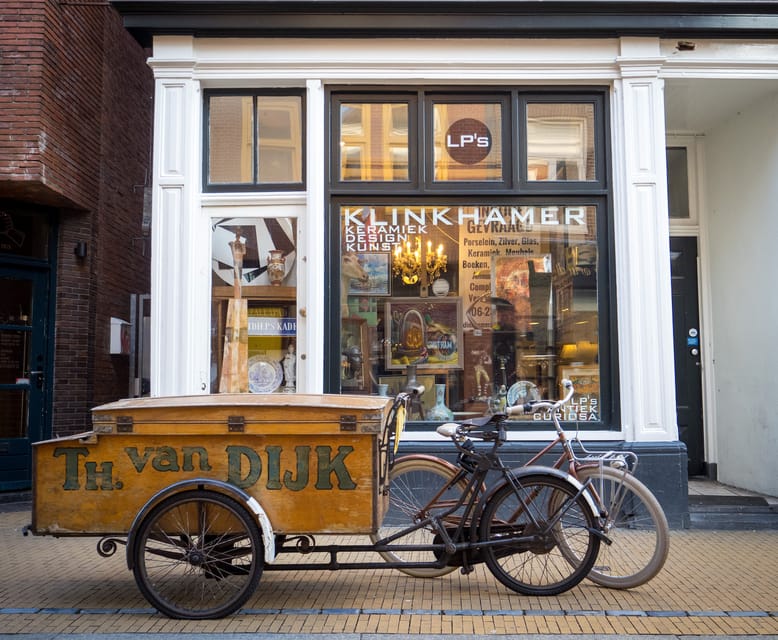
The tour includes Folkingestraat, with Jewish history highlighted as part of what you should notice while you pass through. That kind of inclusion adds depth, because it broadens the city’s story beyond only what is easiest to see from the main squares.
Another important stop is the Pepergasthuis. The key detail: it is not part of the tour on Sundays. So if you are choosing your travel day, double-check your calendar plans around that.
The Pepergasthuis is described as a shelter place for pilgrims who came to worship until the end of the 16th century. The tour also mentions the relic of Saint John the Baptist. That religious and historical context makes the building feel more than historic brick. It becomes a symbol of how Groningen welcomed visitors and how faith shaped movement through the city.
If you are traveling on a Sunday, you might miss that particular piece of the story, depending on the day’s routing. The good news is the tour still covers plenty of major stops either way.
Electric stair-cases to the 45 m Forum platform view
The finale brings you back to Forum Groningen, where you can use the electric stair-cases to reach a platform that is 45 meters high. The tour description calls the view breath-taking, and it is a logical payoff after a 1.5-hour walk.
This is one of the best “value boosters” in the experience. Your brain learns the city at street level during the walk, then you get the chance to see how it all lines up from above. From that height, it is easier to understand how Groningen’s streets and the skyline fit together.
Also, you are not doing this blindly. By the time you reach Forum again, you have already visited the tower area and the key civic squares. That means the view is more than scenery. It becomes a map you can understand.
Price and logistics: is $22 worth it for what you get?
At about $22 per person for a 1.5-hour walking tour, the value comes from three things: time, density, and guidance.
First, time. A 1.5-hour city walk is the sweet spot when you are on a tight schedule. Second, density. In a short route, you see multiple major landmarks, including the Martini-toren area, Grote Markt civic buildings, A-church, and older harbor context. Third, guidance. A local guide turns those stops into a connected story, so you are not left with a pile of photos and no meaning.
The small group size (max 25) helps here too. If it were a huge bus group, you might lose the context. With a walking format, the guide can pace the story with where you are standing.
Language is also part of the value equation. The tour is available in Dutch and German, and English is also mentioned in the overall description. If you book in your preferred language, you will get more out of every stop.
One more practical point: the tour is listed as covering around 1.5 km. That is manageable for most people, but still, wear shoes you trust. Groningen’s center has plenty of walking surfaces, and you will want to stay comfortable so you can actually enjoy the stops.
Who this tour suits best in Groningen
I think this tour is a strong fit if you want:
- A fast, guided way to understand Groningen’s identity
- A student-city feel, not just monuments
- Enough history to give context, without turning into a lecture
- A short walking loop with a real viewpoint at the end
It is especially good for first-time visitors who want their bearings. You’ll learn what to look for after the tour, like how squares function and how the skyline points back to key story moments.
If you are the type who loves deep reading and wants to spend hours in one museum, you might find the walk too short. But if you want a well-paced overview that still touches meaningful details, this is the right size.
Also, if you care about hearing that old and modern belong together here, this tour is set up for that exact connection.
Should you book this Groningen walking tour?
Yes, I would book it if you want the city’s story in a compact format. Starting at Forum Groningen, covering Martini-toren, key squares like Grote Markt, and older harbor context, then finishing with the 45 m platform view is a clean, satisfying plan for a first visit.
Skip or reconsider if you hate walking in the weather, or if you are only interested in one or two specific sites. The tour works best as a whole package, because the value is in how the stops connect.
If you book, do yourself a favor: come with one question in mind. Something like how Groningen became a student hub, or what the Martini-toren represents. A good guide will give you answers that make the rest of the walk click.
FAQ
How long is the Groningen walking tour?
The tour lasts 1.5 hours.
How far do you walk?
The route is described as being about a 1.5 km walk.
Where do I meet the guide?
Meet your guide inside Forum Groningen, in front of the VVV-store at the yellow counter.
What sites are included?
You’ll visit areas such as Forum Groningen, the New Market Square, the Martini-toren, Grote Markt Square including the City Hall, plus stops including the Commisionar of the King office, the Regents’ palace, the Gold-office, and the Academic Building. You also see the yellow tower of the A-church, the oldest harbor area, Folkingestraat with Jewish history, and the Pepergasthuis on days when it is included. The tour ends back at Forum Groningen.
Is the tour wheelchair accessible?
Yes, it is wheelchair accessible.
Which languages are available?
The tour information lists Dutch and German, and English is also mentioned in the tour description.
Latest to arrive along the quays of Groningen Netherlands

Groningen Tours & Experiences, compared.

Browse the lists this tour appears in