
Reviewed · WWII & REMEMBRANCE HISTORY TOURS
Eindhoven: Wings of Liberation, The WWII Airborne experience
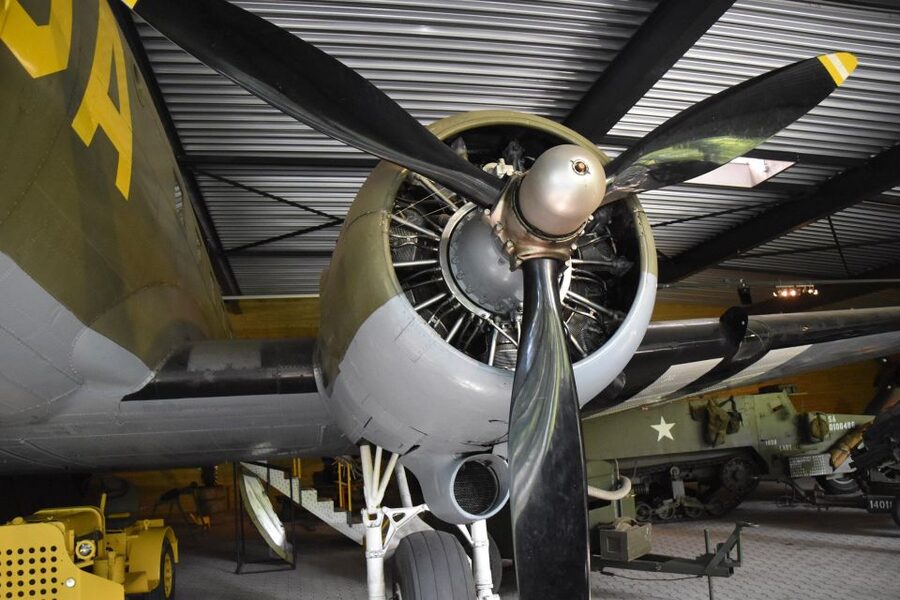
Roaring engines and real aircraft make this WWII stop feel close. Wings of Liberation in North Brabant tells the liberation story with an audiotour and lets you get on board a Dakota C-53 and the Horza glider. I love that the museum is not just indoor display cases, it is a timeline you can follow with photos, dioramas, and even weaponry used in the fighting. One possible drawback: it is a 1-day visit, so you will want to slow down, or you will miss the good stuff.
This museum sits in the region where airborne operations began on 17 September 1944, as part of Operation Market Garden. The route covers the occupation years starting in 1940, the repression period from 1940 to 1944, then the liberation in the final months of 1944.
If you like your WWII history grounded in physical detail, this is strong value at $14 for a full day. The experience includes a Dutch and English audio guide, and the site is wheelchair accessible, which makes it easier to plan for different needs.
In This Review
- Key highlights you will actually feel
- Wings of Liberation in Brabant: why this WWII museum works
- The 1940 to 1944 story arc: what you will learn, step by step
- Audio tour strategy: how to get the most from Dutch and English
- Boarding the Dakota C-53 and Horza glider: the scale factor
- Inside the collection: dioramas, photos, and real equipment
- Price and value: is $14 worth a full day?
- A one-day plan that keeps you from missing the best moments
- Who should book this experience
- Should you book Wings of Liberation?
- FAQ
- Where is Wings of Liberation located?
- How long does the experience last?
- What languages is the audio guide available in?
- What’s included with the ticket?
- Is the museum wheelchair accessible?
- Can I cancel or reserve with flexible payment?
Key highlights you will actually feel
- Board the Dakota C-53 and Horza glider for a hands-on, scale you can see and feel
- Follow a clear 1940 to 1944 timeline tied to the southern Netherlands liberation
- Use an audiotour in Dutch and English so you control the pace of the story
- See aircraft, weaponry, photos, and dioramas including items used in Operation Market Garden
- A host or greeter helps you get started, which makes the museum easier to navigate
Wings of Liberation in Brabant: why this WWII museum works
Wings of Liberation is built around one question: how did the southern Netherlands get from occupation to liberation in late 1944? The answer is told through a mix of storytelling and artifacts, and that matters because WWII history can turn abstract fast. Here, you stay connected to the people, the operations, and the hardware.
I particularly like the way the museum anchors itself to place. The museum is located where airborne operations as part of Operation Market Garden marked the beginning of liberation in the south. That geographical link adds weight, because you are not just reading about events. You are standing in the same broader area where those operations unfolded in September 1944.
Second, I like the balance between interpretation and objects. You get dioramas, photos, and explanations, then you also see real aircraft and weaponry tied to Operation Market Garden. That mix keeps the visit from becoming either too clinical or too dramatic.
One caution if you are planning a quick stop between other activities: this is not ideal for a “speed-run museum day.” If you are the type who reads labels for context, you will be happy. If you are the type who only wants highlights, plan to pick your priority zones so the 1-day format does not feel rushed.
Other WWII and remembrance history tours:

The 1940 to 1944 story arc: what you will learn, step by step
A big part of the value here is how the timeline is structured. The museum covers the entire arc from the start of the occupation in 1940, through the years of repression from 1940 to 1944, then into liberation in the final months of 1944.
That sequence matters. It helps you understand that liberation did not just appear in September 1944 like a movie plot twist. Instead, the story is framed as a long period of hardship, then a turning point where airborne operations opened the door for the southern Netherlands to move toward freedom.
When you reach the Operation Market Garden portion, the museum zeroes in on 17 September 1944 as a key moment. In practical terms, this gives you a “spine” for everything else you see. Aircraft and equipment feel less like random objects and more like tools connected to a specific phase of the fighting.
Also, the museum does not limit itself to one kind of exhibit. You will see photos and dioramas that help you visualize what those operations looked like. And because the museum includes weaponry that was actually used in Operation Market Garden, your brain naturally starts making connections between the story and the objects in front of you.
Audio tour strategy: how to get the most from Dutch and English
An audiotour is included, and it is available in Dutch and English. That sounds simple, but it changes how you experience the museum. Instead of trying to read every label or translate your way through explanations, you can listen while you look.
Here is how to use it well. Start with a quick listen through the first section, then slow down when you see aircraft and dioramas. The story gets more meaningful once you are standing near the things being described. If you do the reverse order, you may miss why certain displays matter to the timeline.
Also, plan to take short pauses. WWII museums can be emotionally heavy, even when the tone stays factual. Giving yourself a few moments to watch, listen, and then move on helps the information stick without turning the day into mental overload.
If you have a language preference, you can choose Dutch or English for your audioguide. Since the museum is wheelchair accessible, the audio format can also help you manage your pace if you need to stop more often.
Boarding the Dakota C-53 and Horza glider: the scale factor
One of the highlights is getting on board a famous Dakota C-53 and the Horza glider. This is the kind of attraction that sells the experience even to people who do not normally seek out military history.
Why? Because scale is hard to grasp through photos. When you stand next to aircraft, then step closer and see how large the structures are, your understanding changes. The size of the vehicles and aircraft is a repeated wow factor, and it makes sense. Aircraft are not just “models.” They are machines built for real missions, in real conditions.
You also get a more physical sense of the liberation operations. The airborne theme is a core part of the museum. Boarding the Dakota C-53 and viewing the Horza glider helps you connect that theme to something tangible.
Practical tip: take your time here. If you are the kind of person who wants to read every caption and also wants to touch everything that is permitted, the aircraft area can eat up more time than you expect. That is not a bad thing. Just give it space in your schedule so it does not feel like you are rushing through the best part.
Inside the collection: dioramas, photos, and real equipment
The museum’s collection is built for people who like authentic detail. You will find dioramas, photos, aircraft, and weaponry, and some of the items are tied directly to Operation Market Garden.
That word actually used is important. Museums often have impressive displays, but when you are looking at equipment connected to the specific operation the museum is telling you about, it feels more grounded. You can shift from general WWII thinking to the particular events of the liberation of the southern Netherlands.
The photos and dioramas play a key supporting role. They help you understand context around the hardware. Instead of seeing aircraft and thinking only about engineering, you can connect them to the human story and the operational goals of that period.
If you like vehicles and aircraft, you will probably enjoy the breadth of what is on display. The selection is strong, especially for a day museum focused on one major liberation storyline.
Under the next bridge out of Amsterdam:
- Amsterdam: Van Gogh Museum Ticket
★ 4.7 · 52,054 reviews - Amsterdam: Heineken Experience Ticket including 2 Drinks
★ 4.6 · 36,014 reviews - Amsterdam Classic Saloon Boat Cruise with Drinks and Cheese
★ 5.0 · 31,825 reviews - Amsterdam Luxury Canal Cruise + Unlimited Drinks & Bites option
★ 5.0 · 30,518 reviews
Price and value: is $14 worth a full day?
At $14 per person, this experience is priced like a straightforward museum admission, not a premium add-on. The value comes from the combination of things you get in a single day.
You are not only walking through indoor displays. You also get:
- Access to the main museum narrative about liberation in Brabant
- An audiotour in Dutch and English
- Time to board the Dakota C-53 and view the Horza glider
- A collection that includes aircraft, weaponry, photos, and dioramas tied to Operation Market Garden
So the question is not only “Is $14 cheap?” It is “Do you feel like you got a full day’s worth of meaningful content?” Based on the way the museum is set up, the answer is usually yes, as long as you give the audiotour time to work and you do not treat the aircraft section like a quick photo stop.
If you are on a tight budget, this is a standout value way to do serious WWII education without paying big-day-tour prices. If you hate audioguides and only want super short exhibits, you might find it less efficient. Still, even then, boarding the aircraft areas is often enough to justify the ticket.
A one-day plan that keeps you from missing the best moments
Because this is a 1-day experience, your planning should focus on pacing, not logistics. Think in terms of three “chunks”:
Chunk 1: The liberation timeline
Give yourself time to follow the sequence from 1940 occupation through repression and into the final months of liberation. This is where the museum gives your later displays meaning.
Chunk 2: Operation Market Garden focus
When you get to the 17 September 1944 turning point, listen closely on the audiotour and connect it to the objects nearby. This is where your understanding clicks into place.
Chunk 3: Aircraft and glider access
Plan this as your payoff. Boarding the Dakota C-53 and experiencing the presence of the Horza glider is the moment when the story becomes physical.
If you only do two chunks, do the timeline and the aircraft. That combination gives you a satisfying mix of context and impact.
Also, if you are visiting more than once, you may notice more information and reading material over time. One person who had a prior cancelled visit came back and found more info to read and see. It is a reminder that taking your time and re-checking exhibits can pay off.
Who should book this experience
This museum is a great fit if you:
- Like WWII history that is tied to real place and real operations
- Enjoy aircraft, military vehicles, and hands-on viewing
- Prefer learning at your own pace with an audiotour in Dutch or English
- Want a focused 1-day experience rather than a multi-day travel commitment
It is less ideal if you:
- Want only quick, shallow highlights and dislike reading or listening
- Are looking for a broad museum that covers all aspects of WWII beyond liberation in Brabant
Should you book Wings of Liberation?
Book it if you want a focused, day-length WWII experience with real aircraft access and an audiotour that helps you follow the story from occupation to liberation. At $14, the value is strong, especially if aircraft and Operation Market Garden details matter to you.
Skip it or reconsider if you are rushing through the day and plan to scan instead of listen. This is the kind of museum that rewards attention. If you give it that, you will leave with a much clearer picture of how liberation in the southern Netherlands started and why 17 September 1944 mattered so much.
FAQ
Where is Wings of Liberation located?
It takes place in North Brabant, Netherlands, at the Wings of Liberation Museum.
How long does the experience last?
The experience is valid for 1 day.
What languages is the audio guide available in?
The audioguide is available in Dutch and English.
What’s included with the ticket?
Your ticket includes an audio guide (Dutch and English), and there is a host or greeter. The experience also features the museum and the aircraft mentioned in the highlights.
Is the museum wheelchair accessible?
Yes, it is wheelchair accessible.
Can I cancel or reserve with flexible payment?
You can reserve now and pay later, and you can cancel up to 24 hours in advance for a full refund.
Latest to arrive along the quays of Amsterdam



WWII & Remembrance History Tours, compared.
Oranjehotel World War II Prison Entrance Ticket
Read our review →
Rotterdam Walk: Hilights, Gems, Architecture & WWII | 2 or 3hrs
Read our review →
Small Group Tour to Nazi WWII concentration camp from Amsterdam
Read our review →
Anne Frank and World War II Walking Tour (TOP RATED)
Read our review →
The Anne Frank Tour (Jewish Neighborhood & Amsterdam during WWII)
Read our review →
Rotterdam Must Do Tour: Highlights, History, WW2 and Architecture
Read our review →Browse the lists this tour appears in