
Reviewed · HISTORICAL TOURS
Discover Maastricht with a Smile! Culture, History and People
Maastricht starts with a grin. This private 2-hour walk mixes street landmarks, Roman and medieval layers, and human stories you can actually follow. I like the history-by-foot flow, and I also like that the route can be shaped to your group’s interests, from about 1.5 hours up to a whole day.
One possible drawback: many stops are quick looks (often 5 to 20 minutes), so if you want long museum-style time inside buildings, this plan may feel a bit fast, especially since one key church admission is not included.
In This Review
- Key moments that make this tour worth it
- First steps in Stokstraat: how this tour starts and stays easy
- Meet Peter and get the Maastricht story the fun way
- Sint Servaas basiliek: why the patron saint matters
- Sint Servaasbrug: the oldest bridge story, from Roman times to now
- Market Square: old city hall, a factory area, and civic pride
- Helpoort and the medieval towngate vibe
- Father Vinck Tower: medieval origins and the friar behind the name
- Jekerkwartier pause: Monument Fons Olterdissen
- Stokstraatkwartier: Roman settlement layers you can still feel
- De Mestreechter Geis: the symbol of Maastricht’s spirit
- Vrijthof: the main square as a choose-your-own story
- Onze Lieve Vrouw Sterre der Zee basiliek: the most popular church story
- Price and what you actually get for $210.27 per group
- Who this tour fits best
- My quick booking call: should you do it?
- FAQ
- How long is the Maastricht tour?
- Is this a private tour?
- Is pickup available?
- What language is the tour in?
- Are tickets and entry fees included?
- Can I cancel if my plans change?
Key moments that make this tour worth it
Humor with expert local detail: the guide’s style is funny and specific, not a fact dump.
Sint Servaasbrug’s big timeline: you hear how the oldest bridge story stretches from Roman times to today.
Medieval defenses on foot: Helpoort and Father Vinck Tower give you a real sense of how the city guarded itself.
Roman roots in Stokstraatkwartier: you walk through an area connected to the oldest Roman settlement.
Maastricht pride in De Mestreechter Geis: the city’s identity comes through in a single symbolic statue.
Flexibility built in: you can choose a shorter version or extend into a longer day depending on what you want.
First steps in Stokstraat: how this tour starts and stays easy
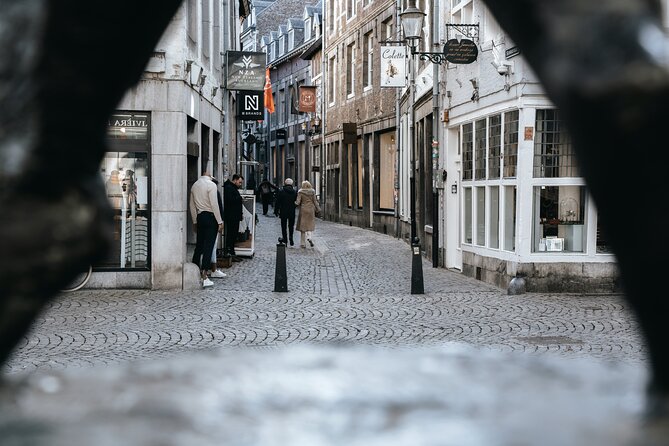
You begin in Stokstraat (6211 Maastricht). It is a practical start because it sits right in the part of town that connects well to other walking sights, cafes, and hotels. If you want pickup, it is offered. The exact pickup spot is worked out with you, and the guide calls about 10 minutes before meeting.
This is a private tour, meaning only your group joins. That matters more than it sounds. If someone in your crew walks slower, asks more questions, or wants extra time at one stop, the guide can usually adjust without making the rest of the group shuffle along.
The pace is “see and learn,” not “race and rush.” Expect a mix of short exterior stops and a couple of slightly longer ones. The total duration is about 2 hours for the main experience, with the option to shorten or expand depending on what your group wants to cover.
You also get a mobile ticket, and the tour runs in English. Service animals are allowed, and the walking level is listed as moderate physical fitness. So you do not need to be an athlete, but you should be comfortable with steady strolling and standing in spots to listen.
More Golden Age corners on foot:



Meet Peter and get the Maastricht story the fun way
In the reviews, the most consistent praise is about the guide. Peter (including Peter Corsius) is described as both funny and sharply informed, with small stories that make Maastricht feel like a lived-in place rather than a list of monuments.
That style matters because Maastricht can be easy to misunderstand if you only read plaques. The city has layered identities. It is tied to the Netherlands, but also feels close to its neighbors in culture and history. It is old, but not sleepy. A good guide helps you see the connections, like how a bridge can point back to Roman-era foundations, or how a gate can explain why the city grew where it did.
You will also notice something else: the tour is not just a straight line of stops. It is built around themes you can actually remember, like Maastricht as a border town, Roman influences, and later developments tied to the city’s social and industrial history. Those topics help you glue the whole walk together.
Sint Servaas basiliek: why the patron saint matters
The first major stop is Sint Servaas basiliek Maastricht, often described through its link to the city’s patron saint. You get a short history of the church and why Saint-Servaas is attached so tightly to Maastricht’s identity.
This is a good “setup” stop. It gives you a baseline for what you will keep seeing in the city: the way religion, civic pride, and local tradition overlap. Even if you are not the type to chase every church interior, this stop helps you understand why certain places feel like they belong to the city, not just to tourists.
Timing here is about 10 minutes, and admission is not included for this church. So if you want to go inside, plan to pay entry separately. If you prefer to stay outside, you can still get the core story in the time allotted.
Sint Servaasbrug: the oldest bridge story, from Roman times to now
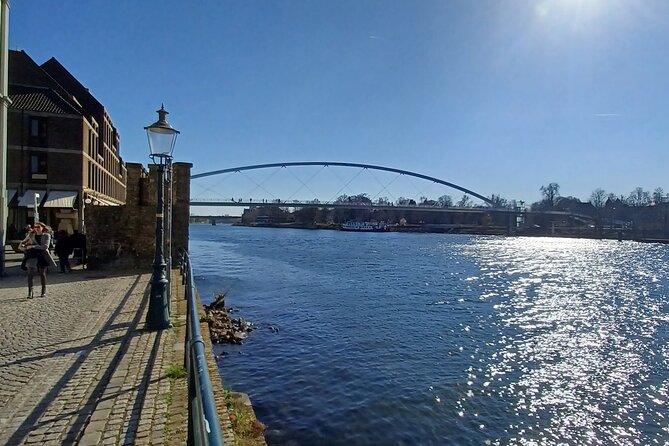
Next comes Sint Servaasbrug, the bridge you cannot miss once you are near it. This stop is a focused one: the story of the oldest bridge in the Netherlands, stretching from the Roman era to the modern day.
Bridges are more than crossings. In old cities, they were checkpoints. They were trade funnels. They helped decide where growth happened. When you hear the bridge described across centuries, you start to see Maastricht’s timeline in one glance.
This stop is about 10 minutes, and admission is free. Even if you only stand and watch, the context makes it click. You will understand why this bridge is treated like a landmark with a long memory, not just a pretty photo spot.
Market Square: old city hall, a factory area, and civic pride
Then you move to Market Square, where you get a look at the old city hall area, plus a statue of J.P. Minckelers and the nearby former Sphinx factory vicinity.
This is where the tour helps you read Maastricht like a city of institutions. Market squares are where the civic and commercial worlds collide. They show you how people lived together, argued, traded, and celebrated.
You also get a nod toward the industrial heritage theme. That is smart. Maastricht is not only about medieval charm. You will likely see how industry shaped growth and work patterns, and why certain parts of town feel different once you know the history behind them.
Stop time is about 10 minutes, and admission is free. It is a short stop, but it sets up what you will notice next, especially the city’s defensive and border-town layers.
Also flying a pennant in Maastricht
- Maastricht: Highlights Tour with a local Guide
★ 4.6 · 208 reviews - Highlight Running Tour
★ 5.0 · 118 reviews - e-Scavenger hunt Maastricht: Explore the city at your own pace
★ 4.5 · 110 reviews - Maastricht: Museum of Illusions Entry Ticket
★ 4.2 · 82 reviews
Helpoort and the medieval towngate vibe
At Helpoort, you walk through the oldest still existing towngate in the Netherlands. You get both history and a bit of gossip, which is exactly the right combination for a gate like this. You hear how these gates were used, what they controlled, and why they became symbolic pieces of the city’s edge.
This kind of stop works especially well in Maastricht because the city’s layout is still readable. When you are shown where a gate sits in the bigger story, you stop seeing streets as random and start seeing them as decisions made over time.
Helpoort is about 10 minutes, and admission is free. If you have limited time in Maastricht, this is one of the stronger “high impact” stops because the building itself does a lot of storytelling even when you only see it briefly.
Father Vinck Tower: medieval origins and the friar behind the name
Next is Father Vinck Tower, which is tied to medieval history and the question of who Friar Vinck was.
Tower stops can go two ways. Either it becomes a name-and-date lecture, or it becomes a doorway into how people lived and defended the city. In this tour, it is framed as a story about the person behind the name, so it feels less like homework.
This stop is about 10 minutes, and admission is free. If you like when the guide connects architecture to people, this is a great moment to slow down and listen.
Jekerkwartier pause: Monument Fons Olterdissen
You then reach a quieter spot in the Jekerkwartier, at Monument Fons Olterdissen. This stop is described as a meeting point for a local character, Maastricht’s version of famous cultural figures (with a similar spirit and legacy) and how that person left a mark on the city.
This is a small stop, but it is valuable because it shifts you from stone buildings to social memory. Cities keep themselves alive not just through walls and gates, but through how they remember their people.
Stop time is about 10 minutes, and admission is free. The vibe here is reflective. If your group wants more action, you may wish this were longer, but for a 2-hour overview it works well.
Stokstraatkwartier: Roman settlement layers you can still feel
Now the tour turns toward the older roots again at Stokstraatkwartier, a restored area tied to the oldest Roman settlement.
This is a strong “aha” stop. Roman Maastricht is not just an academic topic. Once you connect Roman influence to the streets you are walking, the city’s age stops being abstract. You start to picture how the settlement formed, and why the city’s later growth had to work around what came before.
Stop time is about 20 minutes, and admission is free. Because it is longer than many others, you get enough time to hear the context and ask follow-up questions.
A practical note: restored historic areas can be crowded at peak times. This tour is designed for listening and light strolling, but if you want space to take photos, you may need to time your visit based on the day.
De Mestreechter Geis: the symbol of Maastricht’s spirit
At De Mestreechter Geis, you meet a statue that symbolizes the Maastricht spirit and the city’s way of life.
This stop is short, about 5 minutes, but it is memorable because it is not a door you walk through. It is a marker of attitude. Maastricht has a recognizable tone, and a symbol like this gives you an easy handle to carry with you after the walk.
Admission is free. If your group likes playful moments mixed into history, this is one of those quick wins.
Vrijthof: the main square as a choose-your-own story
Next comes Vrijthof, Maastricht’s main square. Here, the tour does something smart: it lets the square be a prompt. The guide points out what might be interesting for you, based on your preferences.
Vrijthof is one of those places where you can easily lose time if you wander on your own. With a guide, you get a sharper sense of what to focus on. Even in about 10 minutes, you should walk away with a clearer picture of why the square is central to the city’s rhythm.
Admission is free. If you want more time in the square after the tour ends, this is a great place to keep exploring because it is built for people-watching and short sidetrips.
Onze Lieve Vrouw Sterre der Zee basiliek: the most popular church story
The walk ends at Onze Lieve Vrouw Sterre der Zee Basiliek on Onze Lieve Vrouweplein. In local usage, it is often referred to as Slevrouw. You get the story of why it is one of the most significant churches in the city and why it is so popular.
This stop is about 10 minutes, and admission is listed as free here. That is a win if you want a smooth finish without extra ticket steps for every building.
Even if you do not go inside for a longer visit, you will finish with a sense of how Maas-tricht’s religious landmarks fit into its civic identity. It ties the earlier patron-saint stop to the big central square feeling you got at Vrijthof.
Price and what you actually get for $210.27 per group
The price is $210.27 per group, up to 15 people, for about 2 hours. That pricing structure is the key to judging value.
If you travel as a small group, the cost per person may feel like a splurge. If you travel as a group of friends, a family unit with kids old enough to enjoy stories, or a multi-generational group, the price spreads fast.
Here is the simple math idea. If you had:
- 2 people, you’d be paying around $105 per person
- 6 people, around $35 per person
- 15 people, around $14 per person
Even if your group is smaller, you are paying for a guide who can connect themes across the city, plus a private pace that avoids the typical squeeze of group tours. And because the tour can be adjusted for different time lengths (from about 1.5 hours to a whole day), you are buying flexibility, not just a stopwatch run.
One more value point: admission is not included for Sint Servaas basiliek, but the other highlighted stops are free. So you should expect at least one possible extra entry cost if you choose to go inside that church.
Who this tour fits best
This is a great pick if you want:
- a walk-first introduction to Maastricht with context
- a guide style that is funny and story-led
- quick hits of Roman influence, medieval defenses, and later social and industrial themes
It is also a smart match if you have limited time and want to understand where to spend more time on your own later. You can use the tour as your shortlist builder: where to return for a longer church visit, where to linger in Vrijthof, and which alley areas feel worth another look.
If your group has very little tolerance for walking, this may not be the best fit since the format relies on getting from stop to stop. If your group loves museums and deep interiors, you might prefer a longer day version rather than the standard 2-hour plan.
My quick booking call: should you do it?
I would book this tour if you want Maastricht explained in a way that makes the city feel personal, not just old. The stop selection covers the big reads of the city, Roman to medieval to modern civic identity, and the guide reputation for humor plus local insight is a big reason to trust the experience.
I would skip or reconsider if you are chasing long, quiet time inside churches or museums. The pace is designed for overview and orientation. If that fits your travel style, you will likely love how quickly Maastricht starts making sense.
If you want, tell me your group size and what you care about most (Roman history, medieval walls, religious sites, or just the best city vibe). I can suggest how long to book it so you do not feel rushed.
FAQ
How long is the Maastricht tour?
The experience is about 2 hours on average, with a flexible format that can cover around 1.5 hours up to a whole day based on what you want to see.
Is this a private tour?
Yes. It is private, so only your group participates.
Is pickup available?
Pickup is offered. The pickup point is determined together with you, and the guide calls about 10 minutes before meeting up.
What language is the tour in?
The tour is offered in English.
Are tickets and entry fees included?
Coffee and food are not included. Admission is not included for Sint Servaas basiliek, while the other listed stops are free to visit.
Can I cancel if my plans change?
Yes, you can cancel for a full refund if you cancel up to 24 hours in advance of the experience start time. If you cancel less than 24 hours before, the amount you paid will not be refunded.
Latest to arrive along the quays of Maastricht


Historical Tours, compared.
Amsterdam Food and Cultural Tour with Tastings
Read our review →
Kinderdijk UNESCO World Heritage Entry Ticket
Read our review →

Amsterdam High-End Dutch Food & History Tour – Up to 8 guests
Read our review →
Cruise through the Historic City Center with Guide
Read our review →Browse the lists this tour appears in