

Reviewed · WALKING TOURS
Maastricht Private Walking Tour
Maastricht tells stories on every corner. This private walking tour in the heart of the city links Roman origins, medieval power, and European turning points to the streets you see right now.
I especially love how the route is anchored by real landmarks like Maastricht City Hall and the nearby oldest city gate, Helpoort. In just 1.5 hours, it feels focused, not rushed.
I also like the way the guide connects big themes, from the legend of Saint Servatius and religious wars to the Napoleonic era and the scars left by WWI and WWII. One watch-out: entrance fees are not included, so plan for extra costs if you want to go inside specific buildings.
In This Review
- Key highlights worth your attention
- Getting oriented at Markt Square and Maastricht City Hall
- St. Servaas Church and the legend that shaped Maastricht
- Helpoort, the oldest gate, and the city’s defensive logic
- Onze-Lieve-Vrouwekerk and the power of a very old footprint
- The statue of Pieke out de Stokstraot and everyday culture
- Roman origins, the Carolingian Empire, and the long timeline feeling real
- Maastricht’s economic transformation, then the Napoleonic turn
- WWI and WWII in Maastricht, and why the city still matters
- How much the $294 private price really buys you
- Who this Maastricht tour fits best
- A quick reality check on what you will miss
- Should you book this Maastricht Private Walking Tour?
- FAQ
- Where does the Maastricht Private Walking Tour start?
- How long is the tour?
- Is the tour private?
- What language is the guide speaking?
- What is the price?
- What’s included in the tour price?
- Are entrance fees included?
- What sights does the tour cover?
- Can I cancel for a full refund?
- Is there a way to book without paying immediately?
Key highlights worth your attention
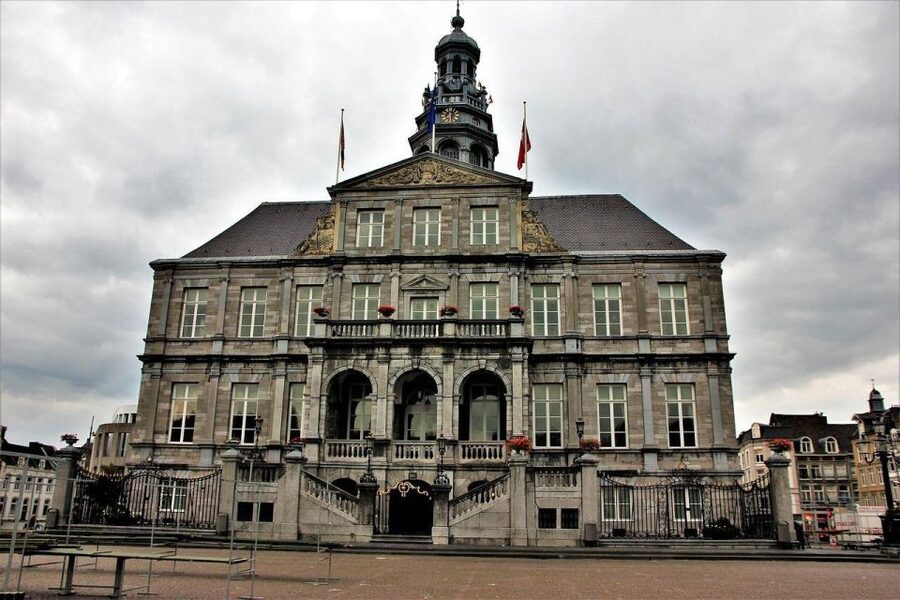
- 17th-century Maastricht City Hall, built in 28 years to serve two rulers in the same period
- Helpoort, described as the oldest gate of Maastricht and the Netherlands
- Saint Servatius and the city’s religious conflicts, tying legend to real political change
- Onze-Lieve-Vrouwekerk, with origins traced as far back as the year 1000 AD
- Hendrik van Veldeke and the statue in front of St. Servaas Church, plus the Boy and his Dog curiosity (Pieke out de Stokstraot)
Getting oriented at Markt Square and Maastricht City Hall
You start at the City Hall entrance stair at Markt Square (Markt 52-78). That location matters. You are dropped right in the middle of Maastricht’s central square life, where the city’s identity is easiest to read.
The tour’s first anchor is Maastricht City Hall, a 17th-century building that was built in 28 years. What I like about this stop is the purpose behind the building: it was designed to serve two rulers of the period. That detail helps you understand Maastricht as a place shaped by overlapping authority, not just one neat storyline.
If you care about how cities worked in the past, the City Hall stop gives you a practical mental map. You start thinking about who governed, who represented power, and why buildings were built when they were. And because the tour is private, you can ask the guide to point out what to watch for as you walk.
More Guided Walking Tours in Maastricht



St. Servaas Church and the legend that shaped Maastricht
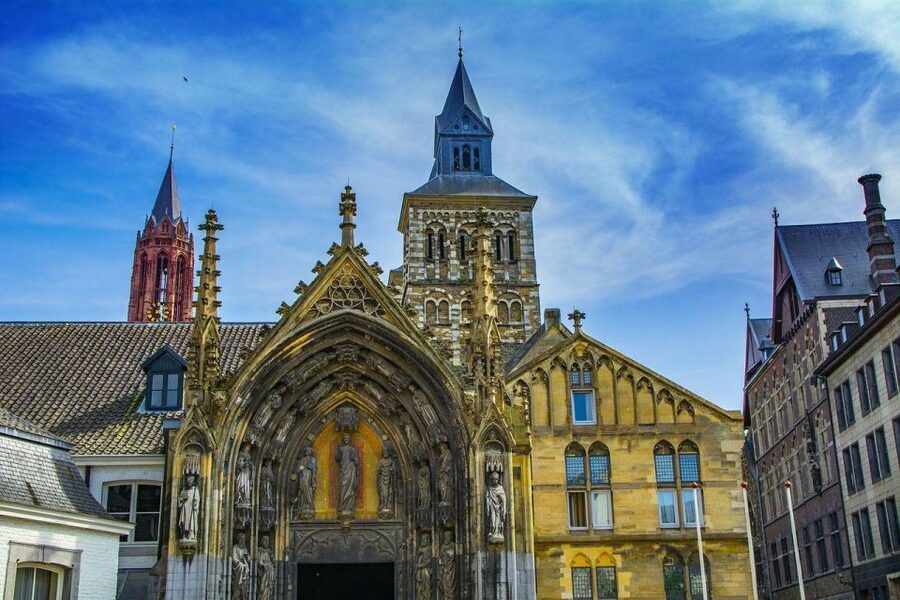
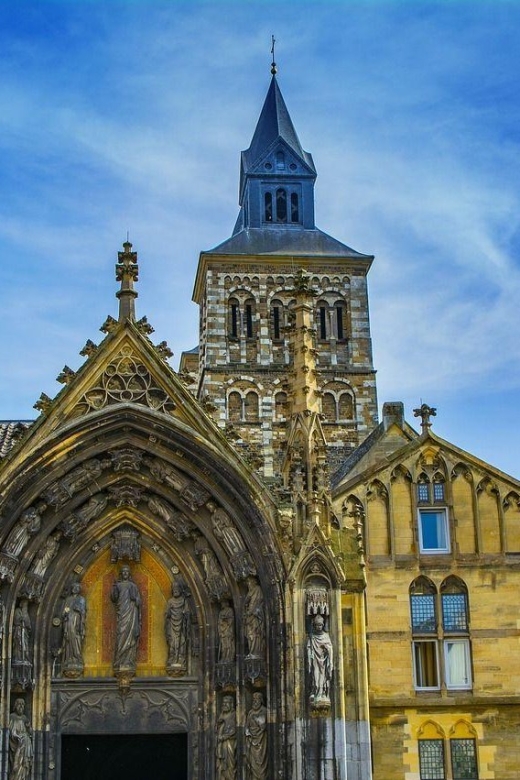
Next comes St. Servaas Church, and with it, one of the city’s best-known legends. The story centers on Saint Servatius, and the guide ties that legend to Maastricht’s religious wars. Even if you only know the basics, this stop gives you a reason to look closer at the church setting and the names attached to it.
In front of the church area, you’ll also see a statue honoring Hendrik van Veldeke. This is more than a random monument. The tour uses van Veldeke to connect literature to local identity. He is noted as the first writer to have written in the Dutch language, and the guide points you toward his work, The Legend of St. Servatius, written in the 12th century.
That matters for how you read the city. When a culture writes its stories in local language, it tends to stick around. It becomes part of what the community teaches, repeats, and builds around. So as you stand near St. Servaas, you are not just looking at stone. You are looking at a chain between religion, language, and civic identity.
Practical tip: if you’re the type who likes to “speed read” a city, ask the guide what details to notice here. You’ll get more out of the church area because the guide can translate local references on the spot.
Helpoort, the oldest gate, and the city’s defensive logic

Helpoort, also called Hell’s Gate, is next. The guide frames it as the oldest gate of Maastricht and the Netherlands. That’s a big claim, but it also changes how you experience the surrounding streets.
A gate like this was not just a decorative feature. It was a boundary. You can often spot the real function of old urban walls by how streets funnel people, where crossings would have been, and how the gate relates to key routes. The tour helps you see Maastricht as a place that had to defend itself, even while it grew and traded.
What I like about including Helpoort is that it gives you a physical “gear shift” from sacred space to civic and defensive space. You stop thinking only in religious terms and start thinking in strategy and movement. Roman-era roots and later empires can feel abstract on your own, but a gate makes the idea concrete.
Also, because the tour is a walking experience, you get to compare sights in sequence. Helpoort is the kind of stop that feels better when it isn’t standing alone.
Onze-Lieve-Vrouwekerk and the power of a very old footprint
Then the tour heads toward Onze-Lieve-Vrouwekerk, also known as the Church of Our Lady. The guide describes it as one of the most important and oldest Catholic buildings in town, dated as far back as the year 1000 AD.
This is where you start appreciating how long a city can keep building on the same spiritual ground. Even if you only get a quick look, the age reference alone helps you understand Maastricht’s continuity. Many places reinvent themselves. Maastricht, at least in its sacred architecture, shows stubborn persistence.
The guide’s job here is to connect that age to what the city became later. When you hear about Roman origins, the Carolingian Empire, and later political shifts, you can anchor those themes to something physical. That’s the difference between “hearing dates” and “feeling why the dates matter.”
If you’re someone who likes architecture but hates museum overload, this church stop can be a sweet spot. You get historical grounding without needing to spend hours indoors.
The statue of Pieke out de Stokstraot and everyday culture
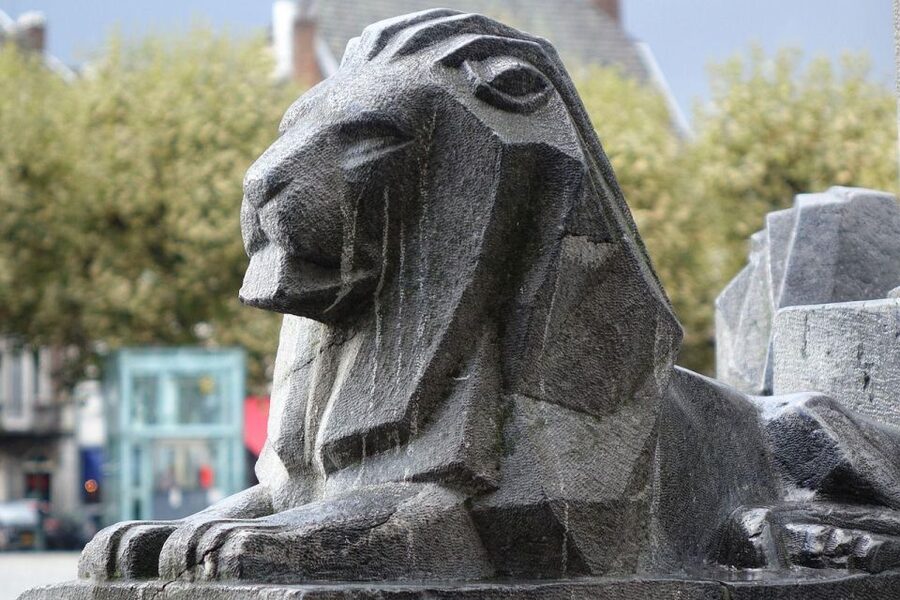
Maastricht also has a softer side, and the tour includes a small, famous curiosity: Pieke out de Stokstraot, known as the Boy and his Dog. This character comes from a novel by local author Bèr Hollewijn.
This stop is easy to skip if you’re sightseeing on your own, which is exactly why I value it on a guided walk. It tells you the city did not only produce grand monuments. It also created local humor, literature, and recognizable public characters.
It also helps you understand Maastricht as cosmopolitan in a modern way, shaped by centuries of arrivals and change. When a city celebrates a fictional character outdoors, it’s signaling that culture belongs in the streets, not just in libraries.
Practical approach: take a moment here to look at where the statue sits relative to the square and the church area nearby. The guide can often point out why this character is placed where it is, and how local stories “stick” in public space.
More gables counted on foot:
- Historical Maastricht: Private Walking Tour with Local Guide
★ 5.0 · 9 reviews - Maastricht Private Walking Tour With A Professional Guide
★ 4.0 · 6 reviews - Maastricht Highlights 2 hours Private Walking Tour +Local Tasting
★ 4.0 · 5 reviews - Maastricht: 2-Hour Walking Tour with Local Historian
★ 5.0 · 4 reviews
Roman origins, the Carolingian Empire, and the long timeline feeling real
One reason this tour works so well is that it pulls on long threads. You hear about Maastricht’s Roman origins and its role in the Carolingian Empire. Those periods can sound like textbook categories until you connect them to the physical layout and to later monuments.
On this tour, the guide uses the city’s layers as a teaching tool. You start near major civic architecture, move through religious landmarks, and then hit a defensive structure like Helpoort. Each stop becomes a clue that Maastricht changed roles over time, but kept a recognizable core.
For you, that means you end the walk with a clearer timeline than you would get by just reading a brochure. Instead of collecting random facts, you’re collecting evidence.
Maastricht’s economic transformation, then the Napoleonic turn
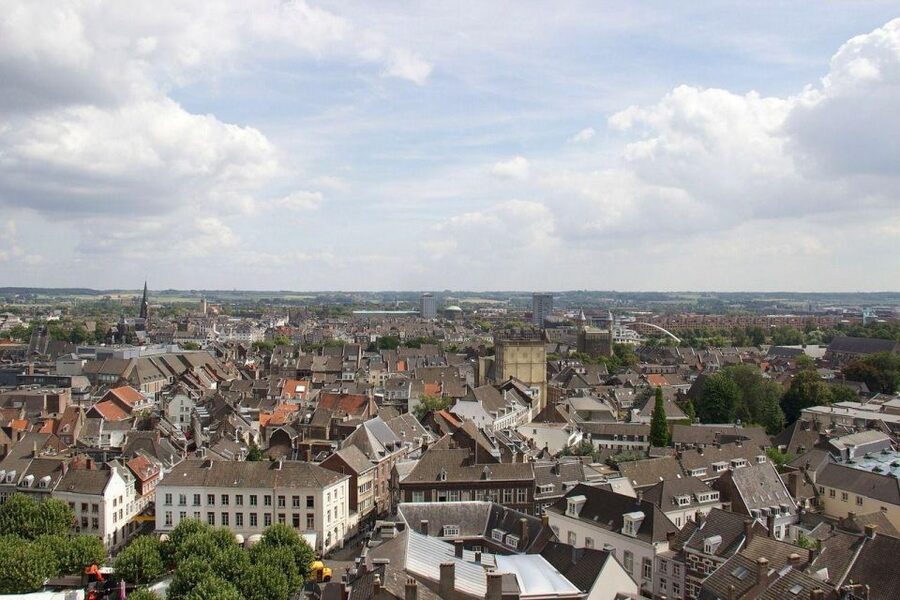
The tour doesn’t stay stuck in the medieval vibe. You learn about Maastricht’s economic transformation, then the story moves into the Napoleonic era and the Kingdom of the Netherlands.
Why I think that sequence matters: it gives context for why a city’s architecture and institutions look the way they do. Economic change drives population shifts, trade routes, and political attention. Those, in turn, shape what gets built, maintained, or repurposed.
When the guide takes you into the Napoleonic and later Kingdom-of-the-Netherlands period, you get a sense of how control changed hands and how that likely affected daily life. You do not need to be a politics fan to get value here. The tour keeps the emphasis on what those eras mean for how Maastricht looks and functions.
If your trip is short, this “economic then political” pacing is a smart way to avoid a purely romantic medieval walk.
WWI and WWII in Maastricht, and why the city still matters
Maastricht also has wartime chapters, and the tour includes the city’s experiences in WWI and WWII. Even though a 1.5-hour walk can’t replace archival research, it can give you a grounded sense of what “war history” means in a specific place.
What I like is that the guide treats war as part of the city’s ongoing story, not a separate lesson. After you hear about earlier empires and religious conflicts, the wartime sections feel like the latest version of upheaval. It’s not one random tragedy. It’s a repeated theme of power, fear, and rebuilding.
Then the tour lands on modern relevance with the Treaty of Maastricht and the foundation of the European Union. That jump works because Maastricht is not presented as a museum. It’s presented as a place that helped shape what Europe became.
By the end, you’re not just thinking about the past. You’re thinking about how decisions made here echo outward.
How much the $294 private price really buys you
The tour costs $294 per group up to 15 people, lasts 1.5 hours, and is guided live in English. That pricing model is important for value.
If you travel as a couple or a small group, the per-person cost can feel reasonable because you’re buying a private, on-the-ground explanation of landmarks you might otherwise half-understand. If you’re a larger group up to 15, the price can also make sense because the guide stays focused on your group rather than mixing you into a bigger crowd.
You also get potential customizing. The guide can adjust on the spot, which is useful if your group leans more religious history, architecture, or European politics. That flexibility can save time, because you get attention targeted to what you care about.
Two practical considerations for your budgeting: entrance fees are not included, and a private walk still depends on good walking comfort. If anyone in your group needs frequent breaks, you may want to plan for that in the schedule.
Who this Maastricht tour fits best
This tour is a great fit if you want a single, efficient way to understand Maastricht beyond postcards. I’d especially recommend it if you like when a guide ties themes together: Roman roots, medieval religion and conflict, political shifts, wartime impacts, then the European story.
It’s also a smart choice if you’re traveling with people who disagree on preferences. One person can care about St. Servaas and the legend. Another can care about Napoleons or the Treaty of Maastricht. The tour holds all those threads in one walk.
If you want a deep museum experience, you might feel limited. But for a focused 90 minutes that sets you up for the rest of your day, it’s strong.
A quick reality check on what you will miss
Because this is a short private walk, you won’t get every interior detail. The tour includes major sites like City Hall, St. Servaas Church, Helpoort, and Onze-Lieve-Vrouwekerk, but entrance fees are not included. So treat the walk as a guided orientation plus exterior interpretation.
Also, the public review record is small, with one verified booking at a perfect 5/5. That rating suggests high satisfaction, but it also means you should trust your own travel style. If you enjoy storytelling and clear historical connections, you’re likely to get what you want.
Should you book this Maastricht Private Walking Tour?
If you want a compact history thread through Maastricht, I’d book it. The combination of Roman and Carolingian context, specific landmarks like Helpoort and St. Servaas, and the modern payoff of the Treaty of Maastricht makes the 1.5 hours feel purposeful. You also get the value of a local professional guide who can tailor the walk while you are in motion.
I would skip or rethink it only if your priority is purely interiors you can enter for free, or if your group hates walking. Otherwise, this is an efficient way to leave Maastricht with a clearer timeline and a better sense of why the city matters beyond the weekend photo.
If you’re on the fence, here’s a simple test: if you like guides who explain why a building or statue got placed where it is, you’ll enjoy this tour.
FAQ
Where does the Maastricht Private Walking Tour start?
It starts at the City Hall entrance stair at Markt Square, Markt 52-78, 6211 CL Maastricht, Netherlands.
How long is the tour?
The tour lasts 1.5 hours.
Is the tour private?
Yes. It is a private group tour, with your local guide staying with your group only.
What language is the guide speaking?
The live guide speaks English.
What is the price?
The price is $294 per group, for up to 15 people.
What’s included in the tour price?
A local professional guide is included, and there may be possible customizing on the tour with your local guide on the spot.
Are entrance fees included?
No. Entrance fees are not included.
What sights does the tour cover?
It includes stops and stories connected to Maastricht City Hall, St. Servaas Church, Helpoort (Hell’s Gate), and Onze-Lieve-Vrouwekerk (Church of Our Lady), plus the statue of Hendrik van Veldeke and the Boy and his Dog curiosity, Pieke out de Stokstraot.
Can I cancel for a full refund?
Yes. Free cancellation is available up to 24 hours in advance for a full refund.
Is there a way to book without paying immediately?
Yes. You can reserve now and pay later to keep your plans flexible.
Latest to arrive along the quays of Maastricht


Walking Tours, compared.

Amsterdam Anne Frank: Small-Group Walking Tour & Local Guide
Read our review →
Anne Frank’s Story – Guided Walking Tour through Amsterdam
Read our review →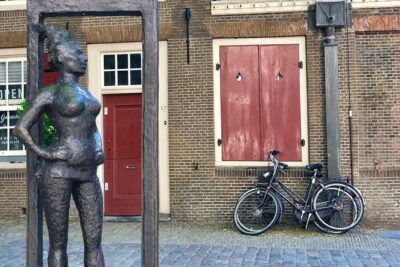
Absolutely Amsterdam – the Essential Introductory Walking Tour
Read our review →
Anne Frank Guided Walking Tour in DE/EN/IT/ES
Read our review →


Anne Frank Walking Tour Amsterdam Including Jewish Cultural Quarter
Read our review →Browse the lists this tour appears in