

Reviewed · CITY TOURS
e-Scavenger hunt Maastricht: Explore the city at your own pace
Maastricht becomes a game, not a chore. I like the GPS-guided freedom of a self-paced city hunt, and I love how the multilingual app turns major sights into quick questions and search tasks. The one thing to watch is translation quality, since some languages can feel rough or include locally specific questions that may not be easy if you do not know the culture well.
You get an interactive, phone-based route that lasts about 3 hours, with a mobile ticket and no meeting time required. You can start, stop, or pause whenever you want, and you will still stay on track thanks to the app’s navigation. The hunt is also designed for groups, since it works well when friends or families want something shared without splitting up.
In This Review
- Key bits that make this Maastricht hunt worth your time
- A phone game is a smart way to see Maastricht
- Price and value: $37.41 for a group beats buying solo tickets
- How the hunt flows, start to finish at your own pace
- GPS route basics: what helps you stay calm in a maze of streets
- Walking the route: what each stop adds to the game
- 1) Sint Servaas basiliek Maastricht
- 2) Sint Servaasbrug
- 3) Market Square (second later, too)
- 4) City Hall of Maastricht
- 5) Vesting Museum Maastricht – Helpoort
- 6) Onze Lieve Vrouw Sterre der Zee Basiliek
- 7) Maastricht Visitor Center – VVV Maastricht
- 8) North Caves Maastricht Underground
- 9) Maastricht
- 10) Maastricht Centraal
- 11) Boekhandel Dominicanen
- 12) Boekhandel Dominicanen (again)
- 13) Vrijthof
- 14) Fotomuseum aan het Vrijthof
- 15) Theater aan het Vrijthof
- 16) Fort Sint Pieter
- 17) Market Square (return)
- 18) Vesting Museum Maastricht – Helpoort (return)
- 19) De Bisschopsmolen
- 20) Bonnefanten Museum
- 21) Cafe In Den Ouden Vogelstruys
- The app experience: fun at your pace, with translation caveats
- Multilingual design, and why language choice affects your score
- Timing: when to play for the best atmosphere
- Group size: why it works for families and friends
- Accessibility and practical comfort points
- Should you book the e-Scavenger hunt in Maastricht?
- FAQ
- How long is the e-Scavenger hunt in Maastricht?
- How many people can be in a group?
- Where does the hunt start and end?
- Do I need to bring a smartphone?
- Is data required for the app?
- Can I start or stop whenever I want?
- What languages are available?
- Is this a private activity?
- Is there a mobile ticket?
- Is it suitable for people with hearing impairments and can service animals join?
Key bits that make this Maastricht hunt worth your time

- Start anywhere inside the day mindset, since the hunt is listed for 12:00 AM to 11:59 PM daily.
- Up to 6 people per booking, so it can be good value if you travel as a small group.
- GPS keeps you on route, which matters in a city center with lots of turns.
- Lots of recognizable stops, including basilicas, bridges, squares, museums, and even the North Caves.
- A quiz-style feel, so expect questions as well as location searching, not only picture-style riddles.
- Language options include French, German, Spanish, Italian, Dutch, English, and more.
A phone game is a smart way to see Maastricht

Maastricht is the kind of city where you can walk around for days and still miss side streets. This e-Scavenger hunt uses that truth in your favor. Instead of a lecture, you follow a route and answer prompts on your phone. It is a simple setup, but it pushes you to look up, not just stroll.
I especially like the rhythm: you reach a key spot, then the app asks you to pay attention. That turns famous names into something you actually notice. When the app is working smoothly, you end up learning little city facts without feeling like you are studying.
Also flying a pennant in Maastricht



Price and value: $37.41 for a group beats buying solo tickets
The price is $37.41 per group, up to 6 people. That is the main value angle here. If you travel as two or four people, your per-person cost drops fast compared with many guided tours.
Also, you are not paying for someone to walk you around at a fixed schedule. You are paying for the structure: the route, the GPS tracking, and the question prompts delivered through a mobile app. Since the hunt is about 3 hours, it can slot neatly into a half-day sightseeing plan.
One more practical note: your smartphone and data are not included. Bring a charged phone, and make sure you have a data plan or offline maps ready so the GPS guidance stays reliable.
How the hunt flows, start to finish at your own pace
This is a self-guided activity using a city game app. After booking, you get instructions for starting the tour, and then you can play whenever you choose. The experience is mobile-ticket based, and you will begin at Graanmarkt, 6211 Maastricht, Netherlands. The route ends back at the meeting point, so you do not get stranded at some random edge of town.
The best part is the flexibility. You can pause, take a break, and resume. That matters in Maastricht, where you might want a coffee stop, a quick sit-down, or a longer look at a church facade before you move on.
GPS route basics: what helps you stay calm in a maze of streets
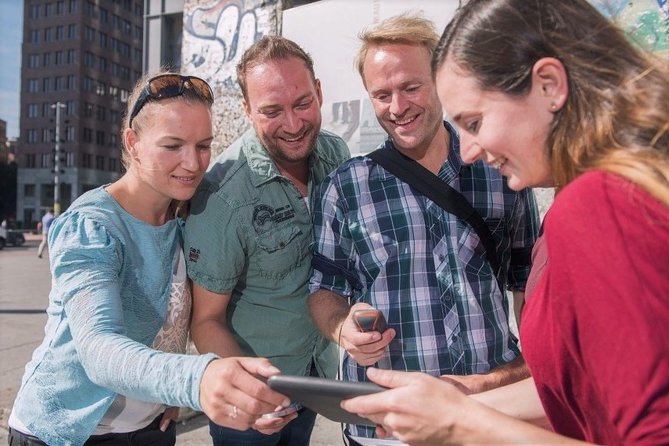
Maastricht’s center has plenty of small streets and quick turns. If you have ever lost your place in a walking tour, you will appreciate the design choice here: GPS keeps you on track. You do not need to memorize the route, and you do not need a map with lots of dots.
In practice, I suggest you do two things before you start:
- Find a comfy place to stand at Graanmarkt and confirm the app is working before you walk away.
- Keep your phone brightness reasonable and your battery in mind, especially if you are taking photos between stops.
One caution from the experience’s feedback: some people struggled when the translation did not feel clean. If you rely on one language, double-check the app’s language setting inside the app rather than trusting your phone or browser to translate everything for you.
Walking the route: what each stop adds to the game

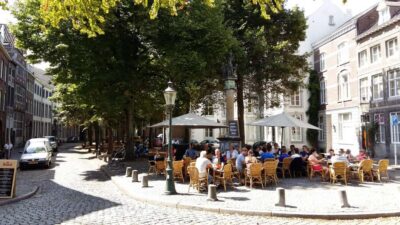
The route is built around well-known landmarks. That makes the city feel familiar while the prompts keep it interesting. You will hit churches, squares, civic buildings, museums, the train station area, and underground sights, plus a fort-like stop. Distances between points are described as short enough that the walk does not feel like a slog.
Here is the flow, in the order you will play it.
Under the next bridge out of Maastricht:
- Maastricht: Highlights Tour with a local Guide
★ 4.6 · 208 reviews - Highlight Running Tour
★ 5.0 · 118 reviews - Maastricht: Museum of Illusions Entry Ticket
★ 4.2 · 82 reviews - Maastricht Privat Sightseeing City Walk
★ 5.0 · 76 reviews
1) Sint Servaas basiliek Maastricht
You start with a church landmark that immediately gives the city a sense of place. The app will typically prompt you to look at something you might otherwise overlook. If you like history but hate slow lectures, this is a good opener because it is short and interactive.
2) Sint Servaasbrug
A bridge stop is a smart game move. Bridges naturally create viewpoints, and the app can use that moment for questions that encourage you to observe rather than just pass through.
3) Market Square (second later, too)
Market Square is the kind of place you want to walk through more than once. In this game, it becomes a checkpoint where the city’s everyday energy meets the quiz part. You will return to Market Square later, which helps the route feel loop-like rather than one straight grind.
4) City Hall of Maastricht
A civic building works well for prompts because there is often design detail and formal architecture to notice. Expect questions that push you to read or search for clues rather than only guess from memory.
5) Vesting Museum Maastricht – Helpoort
Helpoort adds a more fortress-like flavor to your walk. This stop is also a reminder that Maastricht has layers beyond the postcard streets. In a game format, it can make the area feel less intimidating and more like a mission.
6) Onze Lieve Vrouw Sterre der Zee Basiliek
A second church stop keeps the route in the most characterful part of town. If you are not used to church interiors or exteriors, the game helps you focus on what to observe, which can be more engaging than wandering with no plan.
7) Maastricht Visitor Center – VVV Maastricht
A visitor center stop is useful because it signals a practical angle. Even if you do not ask questions to staff, it is a reminder that you are in a tourist-friendly area and that the game route is designed to work with real places you can find.
8) North Caves Maastricht Underground
Underground stops are where self-guided games can shine, because you actually change your environment. When you move from open streets into cave territory, the game feels like a story shift rather than a long list of stops.
9) Maastricht
This stop name is broad, but in route games it usually means a general area checkpoint. Treat it like a small reset point where you catch up on the app prompts before the route continues.
10) Maastricht Centraal
You reach the train station area, which adds modern practicality to the walk. It also gives you a chance to orient yourself. If you need a rest or quick snack, this kind of central area makes it easier.
11) Boekhandel Dominicanen
A bookstore stop is one of those choices that feels instantly pleasant. It turns a typical street sight into a clue-based moment. If you like reading, you may also want to browse briefly once the game prompt lets you.
12) Boekhandel Dominicanen (again)
You hit the bookstore twice, which suggests the route uses it in different segments. That can be useful if your first pass was quick, or if the earlier checkpoint forced you to find something while later questions want you to notice something else.
13) Vrijthof
Vrijthof is one of Maastricht’s key squares. In a scavenger hunt, squares work because you can see more in one glance. Expect the game to use that open area for questions that feel easier to answer when you take a minute to look around.
14) Fotomuseum aan het Vrijthof
A photo museum stop keeps the game from getting purely architectural. Even if you do not enter the museum, the name points to a creative angle, and the game prompt can nudge you to think visually and observe details in the surroundings.
15) Theater aan het Vrijthof
Theater adds another culture layer. If you like performing arts or just like ornate facades, this is a fun stop because it feels like Maastricht has a pulse beyond old buildings.
16) Fort Sint Pieter
Fort Sint Pieter is a different mood entirely. Fort stops usually mean you are dealing with big structures or more open views. It is a solid mid-to-late route highlight because it breaks the walking pattern and makes the game feel like you are changing settings, not repeating.
17) Market Square (return)
Coming back to Market Square is practical. It gives you another chance to pause, grab water, or simply regroup while the app continues guiding you.
18) Vesting Museum Maastricht – Helpoort (return)
The return to Helpoort suggests the route loops in a way that keeps you from zigzagging too wildly. It also gives you a second look without feeling like you backtracked for nothing.
19) De Bisschopsmolen
This is a mill-named stop, and those places often stand out because they relate to how cities powered daily life. Even if you pass quickly through the area, the app makes it feel like part of a living system rather than a random stop.
20) Bonnefanten Museum
A museum stop brings a cultural anchor before the final stretch. If you are someone who likes to mix sightseeing with one or two places that feel more intentional, this fits well near the end of the route.
21) Cafe In Den Ouden Vogelstruys
Ending near a cafe is a smart move. When your brain has finished solving questions for a couple of hours, the option to sit down naturally makes the whole experience feel complete. You also end back at the starting area, so you can stay nearby for dinner or continue exploring.
The app experience: fun at your pace, with translation caveats

The heart of this tour is the phone game. You answer questions about the locations and do search assignments on site. People describe it as entertaining and informative, and many like that the route uses short distances so it does not drag.
Now the honest part. One key downside is translation quality. In English, some prompts were reported to feel poorly translated, and some answers relied on knowledge specific to the Netherlands or Dutch culture. If you pick English thinking it will work like a polished guidebook, you might get stuck or end up guessing.
Here is how to reduce that risk:
- Choose the app language that matches your comfort level, even if it feels less convenient. Some quizzes are easier when you play in the local language.
- If the app includes locally focused pop culture questions, do not worry. Use a phone browser search or ask someone nearby if you get stuck. The game format allows quick help if you need it.
- If your phone does auto-translate, turn it off for this app if the text starts looking weird or duplicated. People noted that double translation can create nonsense.
Also, the question style can be more quiz than hands-on puzzle. One person expected more riddle-solving that required city exploration, and found it closer to a set of quiz questions. That does not make it bad, but it changes the expectation. If you want mysteries and physical clues, treat this as more of a structured sightseeing quiz.
Multilingual design, and why language choice affects your score
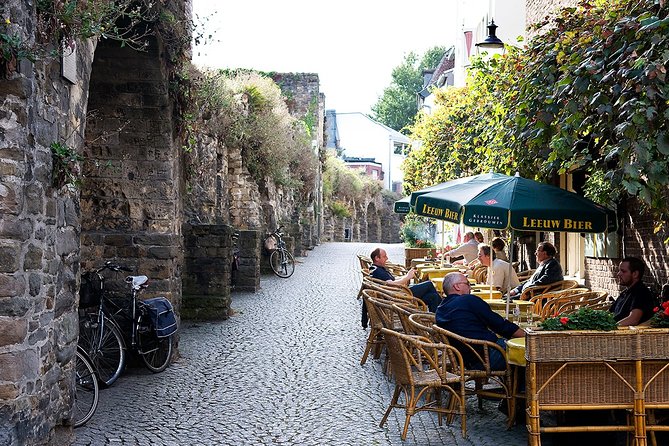
The tour supports French, German, Spanish, Italian, Dutch, English, and more. That is great for inclusion, especially for mixed-language groups.
But language is not just comfort. It affects whether questions make sense and whether answers are solvable. If you are traveling with friends who speak different languages, agree on one app language before you begin. Changing mid-game can cause confusion, especially when you are trying to answer quickly at each stop.
If you are Dutch-speaking, the experience likely feels easiest. If you are not, I would still try it, but I would go in expecting that a few prompts might be tougher and that you may need to look up an answer or accept a guess.
Timing: when to play for the best atmosphere
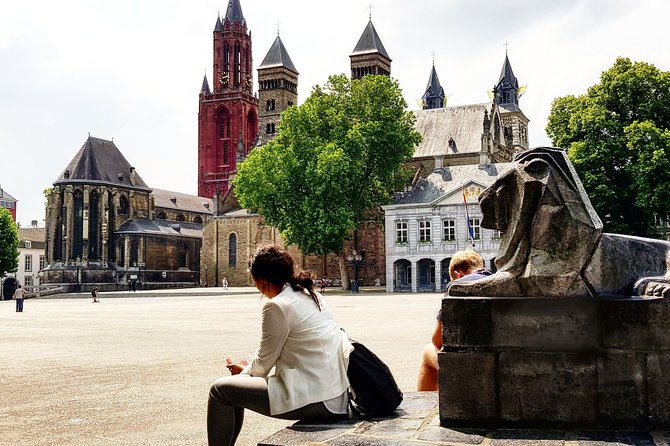
You can play any time of day in the listed schedule. Still, your best timing depends on how you want the city to feel.
If you want easier walking and good visibility for GPS and answering prompts, aim for daylight hours. If you want a more relaxed experience, pick a time when cafes and squares are active. Since the route loops through a lot of central areas, the streets you pass at quieter times can feel less fun when you are trying to solve questions that need you to look around.
As for pacing, plan for about 3 hours, then add extra time if you stop for photos or want to browse at the bookstore or museum area.
Group size: why it works for families and friends
This is private for your group, with a limit of up to 6 people per booking. That matters because everyone can play together instead of splitting into separate groups or dealing with someone waiting on instructions.
It is also described as family-friendly. The interactive quiz format gives kids and adults something to do at the same time, as long as everyone can read the prompts on the phone screen comfortably.
If you are a group of mixed ages, you might assign roles, one person watching GPS and another handling the answers. You get more laughs and fewer standstills.
Accessibility and practical comfort points
The experience is listed as user-friendly for hearing impaired, and service animals are allowed. It is also near public transportation, which is handy in case you want to start close to transit and then finish your walk without stress.
The big practical item is still your phone. Since smartphone and data are not included, bring a charged device and plan for mobile connectivity, especially if you rely on GPS throughout.
Should you book the e-Scavenger hunt in Maastricht?
Book it if you want a low-cost, self-paced way to cover a lot of Maastricht highlights without the structure of a traditional guided tour. It is especially good value for small groups up to 6, and the route feels designed to keep walking distances short while still hitting meaningful stops.
Skip it, or approach it with lower expectations, if you hate quiz-style questions or if you are picky about translation quality. If you rely on English and get frustrated by questions that need local knowledge, you may end up doing more guessing than solving.
My practical advice: treat this as a guided walk where the guidance is on your phone. Bring patience for a few tough prompts, but keep your curiosity high. When it clicks, you end up seeing Maastricht at a pace that feels like your own.
FAQ
How long is the e-Scavenger hunt in Maastricht?
The hunt takes about 3 hours.
How many people can be in a group?
This activity is priced per group for up to 6 people.
Where does the hunt start and end?
It starts at Graanmarkt, 6211 Maastricht, Netherlands and ends back at the meeting point.
Do I need to bring a smartphone?
Yes. A smartphone is not included.
Is data required for the app?
Data is not included, so you will need your own mobile data or another way to stay connected for the app and GPS.
Can I start or stop whenever I want?
Yes. You can decide when to start, stop, or pause, and GPS keeps you on track.
What languages are available?
The hunt offers multiple languages including French, German, Spanish, Italian, Dutch, and English, and more.
Is this a private activity?
Yes. It is private for your group.
Is there a mobile ticket?
Yes. The tour uses a mobile ticket.
Is it suitable for people with hearing impairments and can service animals join?
It is listed as user-friendly for hearing impaired, and service animals are allowed.
Latest to arrive along the quays of Maastricht



City Tours, compared.
75 Minute City Canal Cruise with Audio Guide
Read our review →
City Centre Canal Cruise including Audioguide
Read our review →

City Canal Cruise and Heineken Experience Ticket
Read our review →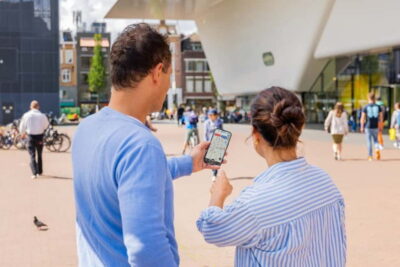
City Card with Free Entrance & Public Transport
Read our review →
Browse the lists this tour appears in