
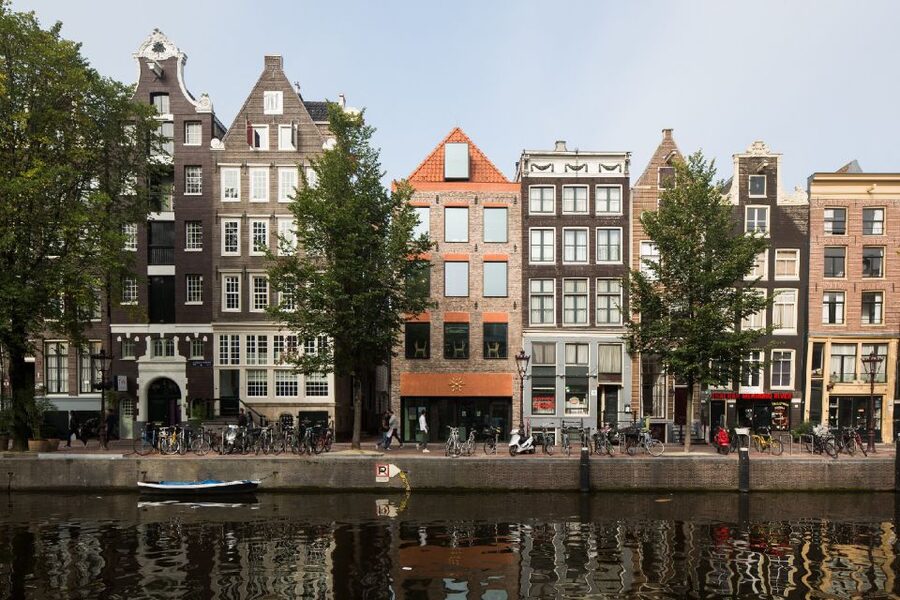
Reviewed · RED LIGHT DISTRICT WALKS
Amsterdam: Red Light District 1-hour Smartphone Audio Tour
Amsterdam’s loudest street gets calmer with audio. This 1-hour smartphone audio tour gives you walking narration about how the neighborhood formed, starting at Dam Square. It’s designed to help you notice the area as an actual Amsterdam quarter, not just a row of shopfronts.
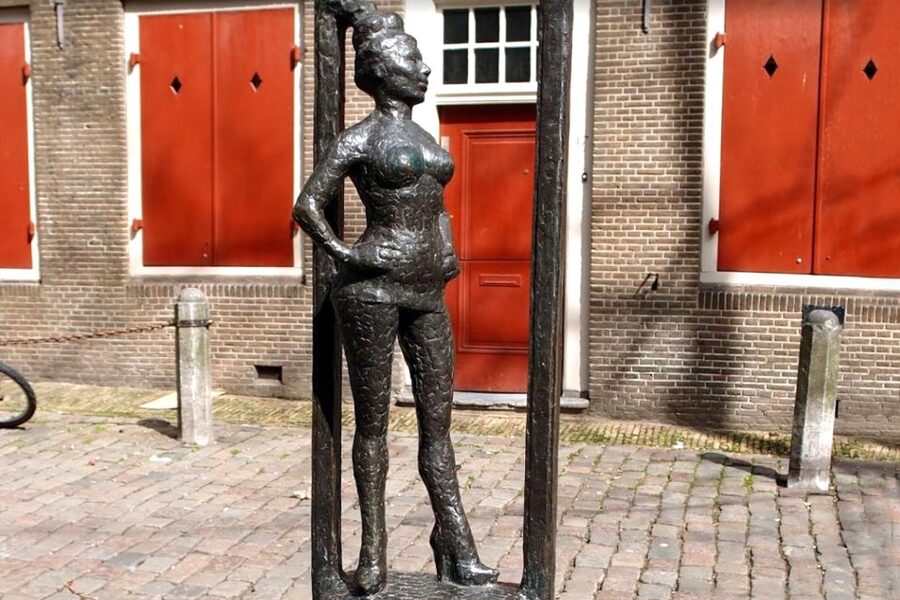
I like the way it steers you toward places such as Oude Kerk, Amsterdam’s oldest building, and Belle, the small statue honoring sex workers’ rights. You’re pushed to look at the human and civic side of the district, through architecture, institutions, and changing city life.
One thing to think about before you buy: if you’re mainly hunting for straight, street-level detail about prostitution, this tour may feel like it leans more toward city history and religious buildings than what you expected.
In This Review
- Key things to know before you go
- Dam Square to Nieuwmarkt, how the tour actually moves
- What makes the Red Light District stories feel different
- Oude Kerk and Belle: seeing the neighborhood through institutions
- Café In’t Aepjen, Ons’ Lieve Heer op Solder, and Bloedstraat
- The city’s layers: sailors, merchants, and changing streets
- Ending at Nieuwmarkt and the Waag building
- Price and value: is $7 a smart use of time?
- Tech you need: offline audio, storage, and headphones
- Who this tour suits best, and who should consider alternatives
- Small group setting: does 10 participants matter here?
- Quick booking checklist so you do not waste your hour
- Should you book this Amsterdam Red Light District smartphone audio tour?
- FAQ
- Where does the audio tour start?
- Where does the tour end?
- How long is the Amsterdam Red Light District smartphone audio tour?
- How much does it cost?
- Do I need tickets or paid entry to the sites mentioned?
- Is it a live guided tour?
- Can I use it offline?
- What languages are available?
- Is it compatible with Windows phones?
- What do I need to bring?
Key things to know before you go
- Start at Dam Square, no meeting point so you can begin on your own schedule
- Landmark-first stories that point you to Oude Kerk and Belle, not just window rows
- Offline audio and an interactive map so weak mobile signal is less of a problem
- A respectful tone with quirky storytelling built around how the neighborhood evolved
- Designed as a short walk that ends at Nieuwmarkt near the Waag building
- Limited group size of 10 (even though it’s self-guided)
Dam Square to Nieuwmarkt, how the tour actually moves
This is a self-guided, phone-only experience. There’s no live guide walking with you, and there’s no traditional meeting point. You begin at Dam Square, and the tour is designed to lead you through central Amsterdam back toward Nieuwmarkt, where the final stop is the Waag building.
For me, the smartest part of this format is that it gives you control. If you want a quick pass, you can keep moving. If a story grabs your attention, you can pause, listen, and slow down. The narration is meant to be there while you’re walking, so you’re not flipping between a map and a museum ticket.
Timing is also part of the value. The product is sold as a 1-hour audio tour, which is perfect when you want something meaningful without turning your day into a marathon. It’s also easier to fit around other Amsterdam plans, like the canal boat you booked earlier or the museum ticket you already have.
More lantern-lit windows explained:



What makes the Red Light District stories feel different
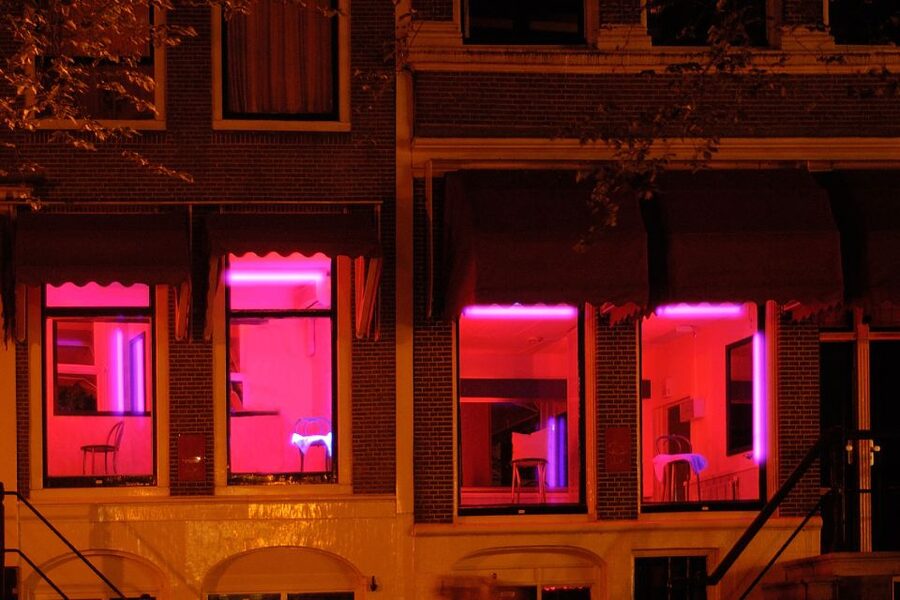
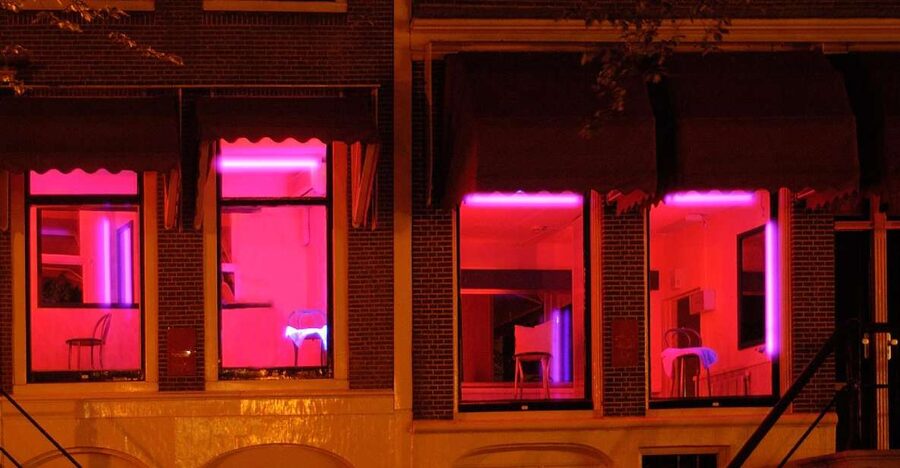
The Red Light District is famous for shopfronts, but the tour’s angle is different. You’re not being told to look at the windows as the whole point. Instead, you’re guided to understand why this corner of Amsterdam became what it is, using nearby landmarks and names that hold older layers of life.
That shift matters. When you hear the neighborhood described through churches, city institutions, and people who moved through the area as sailors, merchants, and residents, the district starts to feel like part of Amsterdam’s regular history. It becomes easier to walk through without feeling like you’re just watching a spectacle.
The storytelling concept is described as fun and quirky, and you’ll feel that in the way the narration links themes across places. It’s not just facts read aloud. It connects the dots between the city’s physical layout and the roles different groups played over time.
Still, keep your expectations realistic. The reviews and description both point to a bigger emphasis on historic Amsterdam and notable buildings. So if your goal is a long, detailed account of how prostitution works today, you may want another kind of tour for that.
Oude Kerk and Belle: seeing the neighborhood through institutions
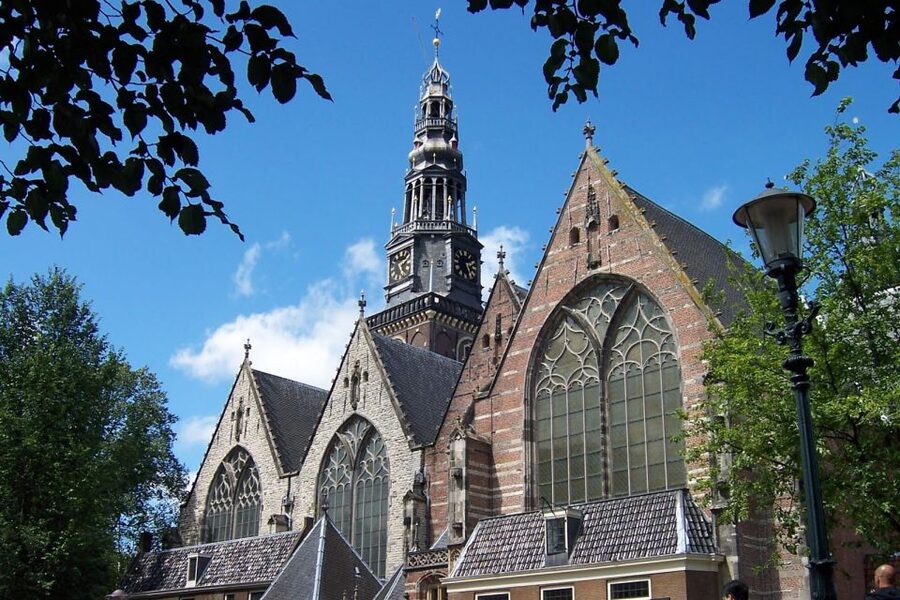
One of the clearest strengths here is how the audio guides you toward Oude Kerk and Belle. Oude Kerk is identified as Amsterdam’s oldest building, and the tour uses that status to anchor you. Instead of treating the district as a one-topic zone, it reminds you the area grew alongside major civic and religious spaces.
Belle is the other key name. The audio introduces Belle, the small statue honoring sex workers’ rights. That’s an important signal about tone. The tour frames sex work as part of a wider conversation about rights and recognition, not just a tabloid headline.
You’ll probably notice something else too. When a tour includes a landmark like Oude Kerk and then links to Belle, it nudges you to look at the district as a place where formal and informal life overlapped. It’s a different mental picture than what most people come with.
The practical takeaway: plan to slow down near these stops. If you rush, you might miss the narrative transitions that explain why these places matter.
Café In’t Aepjen, Ons’ Lieve Heer op Solder, and Bloedstraat
The tour sprinkles in several named stops that help you build a “map in your head” as you walk.
- Café In’t Aepjen is called out as a historic café. Even if you don’t go inside, hearing about its place in the neighborhood helps you recognize that everyday gathering spots matter in city history.
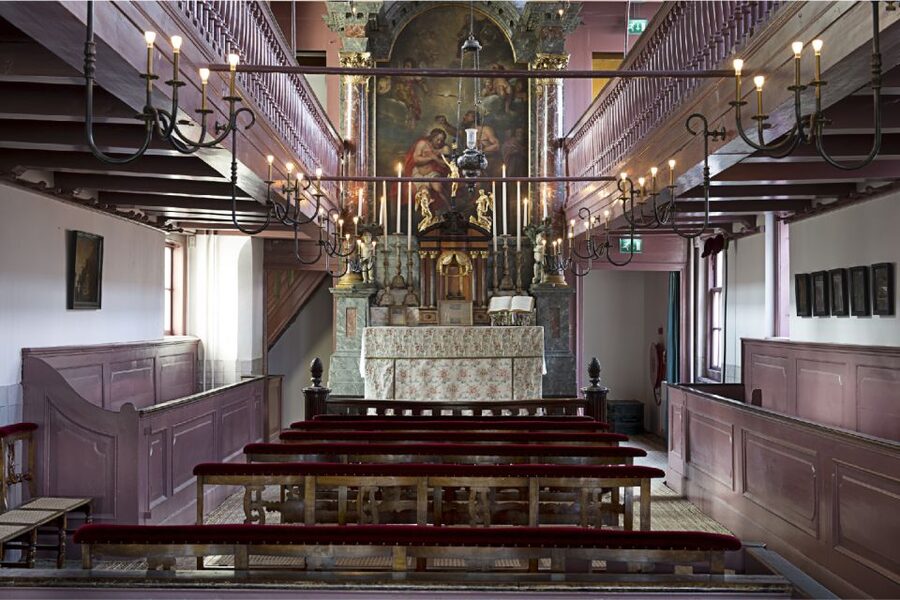
- Ons’ Lieve Heer op Solder is highlighted as a clandestine chapel. That description alone sets expectations for the kind of story you’ll hear. It’s the kind of place that invites intrigue, because it hints at private religious life and survival through changing times.
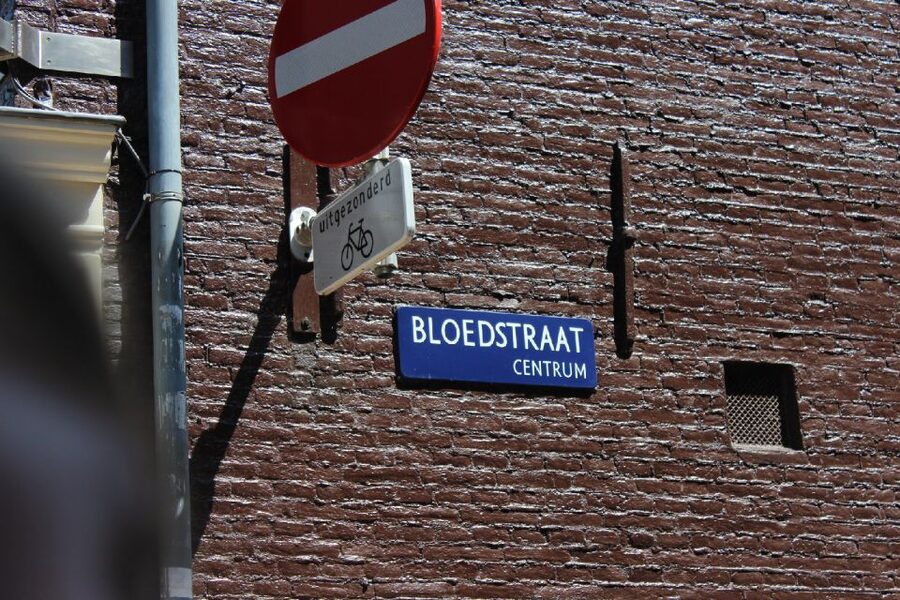
- Bloedstraat is mentioned by name, and the evocative title sets a mood before you even reach it. You’ll likely find that the audio uses street names and location details to explain how the district carried old meanings forward.
These stops also reflect the tour’s core theme: the Red Light District isn’t only one story. It’s the overlap of merchants and sailors, local residents, unusual corners of Amsterdam, and buildings with purposes that were never just about one thing.
One caution: because this is a short audio tour, you won’t get long museum-style explanations at every stop. The value is in the connections, not in deep stops that require extra time and ticket lines.
The city’s layers: sailors, merchants, and changing streets
A big part of what you’ll hear is how people moved through this area. The narration follows footsteps of sailors, merchants, residents, and travelers. That framing is useful, because it shifts the neighborhood from “a place you visit” to “a place people worked and lived.”
When you listen to those themes while walking narrow alleys and corners, you get a better sense of why the district’s layout matters. Even without seeing everything at once, you can start to understand the logic of a historic port city that brought wealth, risk, and new lifestyles together.
You’ll also get the sense that Amsterdam’s identity has always been evolving. That connects nicely to the endpoint at Nieuwmarkt and the Waag building, which is described as having served as a city gate, later a guildhall, and now a symbol of the city’s changing identity.
Also flying a pennant in Amsterdam
- Amsterdam: 75 Minute City Canal Cruise with Audio Guide
★ 4.4 · 19,938 reviews - Amsterdam: Royal Palace Entry Ticket + Audio guide
★ 4.6 · 7,889 reviews - Amsterdam Sightseeing Canal Cruise with Audio Guide
★ 3.5 · 828 reviews - Amsterdam Van Gogh Museum with Audio or Guided Tour
★ 4.0 · 266 reviews
Ending at Nieuwmarkt and the Waag building
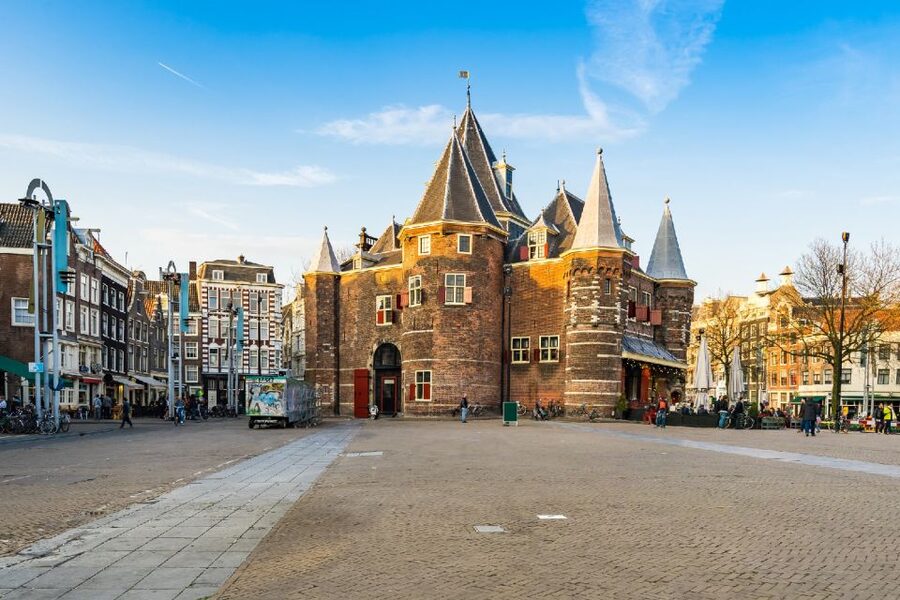
The audio tour ends at Nieuwmarkt, and it’s set up to land near the Waag building. According to the tour description, the Waag has worn multiple hats over time: city gate, then a guildhall, and now a symbol of Amsterdam’s evolving self-image.
This is a good ending point because it’s a place people can recognize. Nieuwmarkt feels more like a normal public square in the middle of the city, while the Red Light District sections feel more like the district’s older, tighter world. Finishing there helps your brain “close the loop” and see the whole walk as part of Amsterdam, not a separate micro-world.
As you wrap up, ask yourself a simple question: did the narration help you understand how the neighborhood fits into the city as a whole? If yes, this tour will land well.
Price and value: is $7 a smart use of time?
At about $7 per person, this is budget-friendly in a very practical way. You’re not paying for a live guide, and you’re not paying for entrance tickets. That keeps the cost low, but you should treat it as what it is: a well-structured storytelling walk you can do on your own.
What you don’t get matters. The description clearly states that tickets or entry to specific sites or museums are not included. So if you want to go inside Oude Kerk, the chapel, or the Waag, you should plan to pay separately. The audio tour can still make the architecture and names mean something, but it won’t replace the experience of entering those places.
You do get a lot on the logistics side for a low price:
- A self-guided smartphone audio tour
- An activation link
- Offline content, including an offline interactive map to help you avoid roaming charges
If you’re the type of traveler who loves short, focused city walks, that value adds up fast. If you want a full-day program with inside access and a person who answers your questions in real time, you’ll likely feel limited.
Tech you need: offline audio, storage, and headphones
You should think of this as an audio guide you build into your phone, not an app you barely check. You’ll want to bring headphones and a charged smartphone. The tour also notes that mobile signal may be weak in public areas, so the plan is: download beforehand and keep it offline.
Here’s what to make sure you do before you head out:
- Download the tour content before you arrive, since signal might be unreliable
- Make sure you have enough storage space, listed as 100 to 150 MB
- Expect the experience to work with Android or iOS, and not with Windows phones
Language options are English, German, and Italian. If you’re comfortable with any of those, you’ll have a better chance of catching every detail without straining.
Also note the rule about devices: it’s booked per device, not per participant. That’s important if you’re traveling with friends and want each person to control their own phone.
Who this tour suits best, and who should consider alternatives
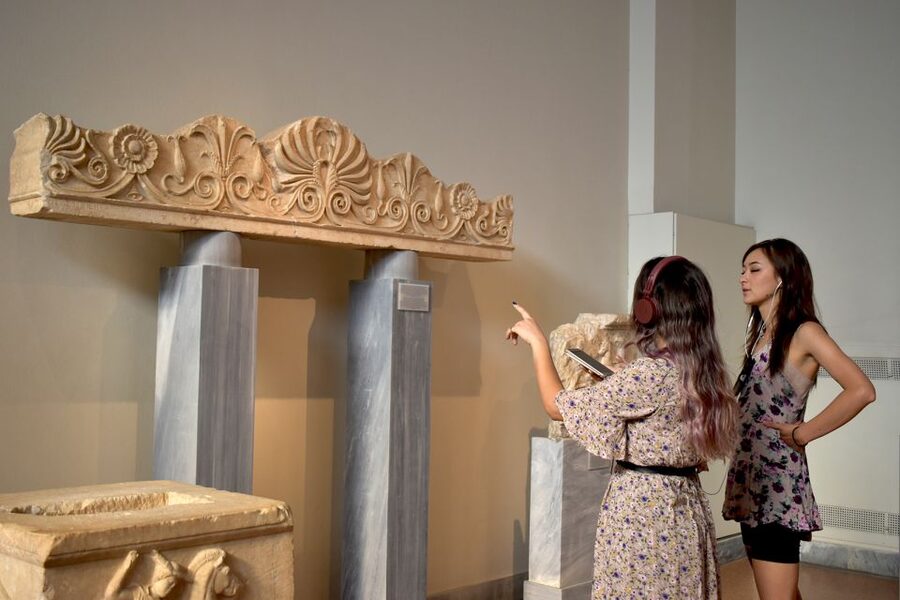
This works best if you want a respectful, thoughtful walk that connects the Red Light District to Amsterdam’s older civic and religious life. It’s a good fit for:
- First-time visitors who want context beyond the obvious
- Travelers who like walking tours but don’t want a live guide schedule
- People who enjoy short storytelling formats that you can control at your own pace
It may not be the best match if:
- Your main interest is explicit, detailed explanation of prostitution today
- You want a longer route specifically packed with street-level specifics and extended time in the busiest window areas
The tour description itself leans toward heritage and landmark narration, and that’s exactly what you should expect.
One more note: it’s described as not suitable for children under 18. If you’re traveling as a family, you’ll want to plan something else.
Small group setting: does 10 participants matter here?
Even though it’s self-guided, the experience is described as small group with a limit of 10 participants. In practical terms, this affects availability and how the provider may manage activations, rather than changing your day-to-day experience.
Since there’s no live guide, you won’t have the typical small-group dynamic of someone answering questions. Still, a smaller cap can be a comfort if you prefer not to share logistics with huge crowds.
Quick booking checklist so you do not waste your hour
The tour is only useful if your phone is ready. Don’t rely on last-minute signal.
Do this before you leave your accommodation:
- Confirm the email with download instructions, and check your spam folder
- Download the audio and map while you still have decent internet access
- Charge your phone fully and pack headphones
- Plan a route that starts at Dam Square, because there is no meeting point
If your phone dies mid-walk, you lose the guide. So keep a power bank if that’s your habit.
Also watch out for device compatibility. The tour is not compatible with Windows phones, and it also lists limitations for older iPhone and iPod Touch models, plus older iPads and iPad Mini 1. If your device is older, confirm compatibility first.
Should you book this Amsterdam Red Light District smartphone audio tour?
Book it if you want a low-cost, self-paced way to understand the Red Light District through landmarks like Oude Kerk, Belle, and the route ending at Nieuwmarkt and the Waag building. I like that it keeps the focus on history and civic identity rather than turning your walk into a window-shopping tour.
Skip it, or at least reconsider, if your priority is a lot of explicit detail about prostitution or a longer, more time-heavy walk through the busiest parts of the district. This is a short audio program, and the narration emphasis is more heritage than street-level mechanics.
My bottom line: if you treat it as a smart storytelling route that gives you context while you walk, it’s a solid $7 use of time. If you need something more direct and more detailed, you’ll likely want a different style of tour.
FAQ
Where does the audio tour start?
The audio tour starts at Dam Square. There is no meeting point and no live guide.
Where does the tour end?
The tour ends at Nieuwmarkt, near the Waag building.
How long is the Amsterdam Red Light District smartphone audio tour?
It is advertised as a 1-hour smartphone audio tour.
How much does it cost?
The price is $7 per person.
Do I need tickets or paid entry to the sites mentioned?
No. The tour notes that tickets or entry to specific sites or museums are not included.
Is it a live guided tour?
No. It is a self-guided audio tour with no live guide.
Can I use it offline?
Yes. It includes offline content and an offline interactive map to help you avoid roaming charges.
What languages are available?
The audio tour is available in English, German, and Italian.
Is it compatible with Windows phones?
No. The tour is not compatible with Windows phones.
What do I need to bring?
You should bring headphones and a charged smartphone. The tour also requires you to download it ahead of time for the best offline experience.
More Self-Guided Tours in Amsterdam
- Van Gogh Museum Skip the Queue with Audio Guide★ 4.0 · 261 reviews
- Amsterdam 1h Canal Cruise by Semi-Open Boat with Audio Guide★ 3.5 · 197 reviews
- Amsterdam: Museum of the Canals Ticket with Audio Guide★ 4.7 · 150 reviews
- Van Gogh Museum Amsterdam Entry with Optional Audio Guide★ 4.0 · 111 reviews
Latest to arrive along the quays of Amsterdam




Red Light District Walks, compared.

Amsterdam Red Light District & Coffee Shop Tour
Read our review →
Red Light District Pub Crawl with Unlimited Shots
Read our review →
Private Amsterdam Red Light District and Coffee Shop Tour
Read our review →
Browse the lists this tour appears in