
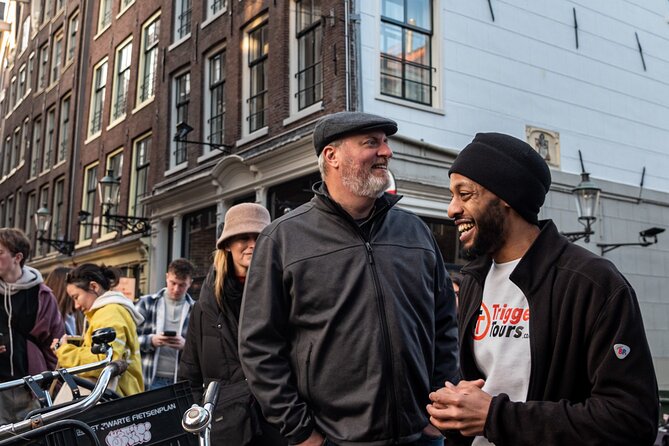
Reviewed · RED LIGHT DISTRICT WALKS
Amsterdam: Red Light District guided tour (TOP RATED)
Red lights, explained with local respect. This Amsterdam Red Light District tour is a 2-hour walk that helps you make sense of the De Wallen area fast, not just stare at shopfronts. You also get a local take on how the neighborhood works now, and why its rules exist.
What I like most is the small-group pace, with enough time to ask questions without feeling herded along. I also love how the guide connects street sights to real Amsterdam history, including things like the city’s old wooden foundations and landmark buildings tucked into the same area. One consideration: this is an adult neighborhood, so if you want a purely daytime sightseeing vibe, you may feel a bit out of place.
If you’re visiting Amsterdam for the first time, this is a smart way to get your bearings. It’s also a nice option for anyone who prefers facts and context over rumors, especially when the guide handles the subject with respect for the people who live and work there.
In This Review
- Key Takeaways Before You Go
- Why This De Wallen Walk Feels Different From Usual Tours
- Price, Timing, and the Real Value of a 2-Hour Small Group
- Damrak Meeting Point: Simple Logistics for a Complicated Neighborhood
- How the Route Builds Meaning: From Wooden Foundations to De Wallen Windows
- Stop 1: De Wallen (The Red Light District)
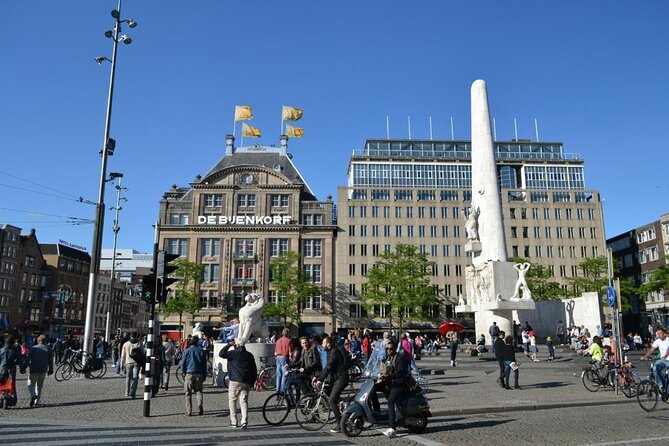
- The Dam: The City Built on Trees
- Old Town Context: The Area’s Age Matters
- Pub The Ape (Int Aepjen): A Surviving Wooden Building
- The Waag: From City Gate to Guild Hub
- The Smallest House of Amsterdam
- The World’s First Condom Shop (Since 1987)
- Coffeeshop Culture and Practical Tips You’ll Actually Use
- Guide Style, Respect, and Safety on the Streets
- Weather, Booking Windows, and How to Plan Your Slot
- Should You Book This Red Light District Tour?
- FAQ
- How long is the Amsterdam Red Light District guided tour?
- Where does the tour start and end?
- What is included in the ticket price?
- Is the tour offered in English?
- How big is the group?
- Is this tour suitable for everyone?
Key Takeaways Before You Go
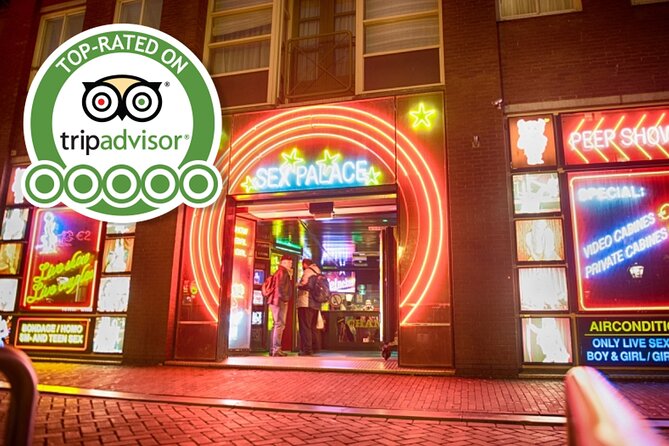
- Max 15 people means you can actually hear the guide and ask questions, even on a busy street.
- A local guide reframes the Red Light District with history and laws, not just what the windows look like.
- You start at Damrak and end there, which keeps the logistics simple after the walk.
- Expect a respectful, sensitive tone while still being honest about how the area became what it is.
- Night can be a better experience when the neighborhood has more activity and energy.
- It needs good weather, so plan for rain and check for schedule changes.
Why This De Wallen Walk Feels Different From Usual Tours
The Red Light District can be loud, confusing, and a little uncomfortable if you don’t know the basics. This tour tackles that head-on. Instead of trying to shock you or speed past the topic, the walk slows down just enough for context, and the guide explains what you’re seeing in plain language.
I especially like the way the tour treats the topic with dignity. You’re not given a lecture that turns people into a spectacle. The focus stays on how the neighborhood functions, how rules shape behavior, and what changed over time.
And it works well for first-timers. If you spend your first day in Amsterdam wandering without a plan, you often miss the connections between places. Here, those connections get spelled out as you go.
More lantern-lit windows explained:


Price, Timing, and the Real Value of a 2-Hour Small Group

At $34.17 per person for about 2 hours, this is priced like a typical guided walk, but with extra payoff because the guide is doing more than reciting dates. You’re paying for interpretation: why the area looks the way it does, how Amsterdam’s legal approach affects the district, and how that connects to the city’s overall identity.
The small group size matters for value. With a maximum of 15 people, you get a less frantic feel, and you’re more likely to get answers when you ask something. Several people highlighted that guides like Ben, Robin, Andrea, Aarre, and Catherine kept the pace comfortable and the Q&A open, which is exactly what you want on a walk like this.
Timing also matters. On one of the experiences, an evening time slot around 8pm was recommended over daytime because more is happening at night. If that option is available to you when you book, it can make the tour feel more alive.
Damrak Meeting Point: Simple Logistics for a Complicated Neighborhood
The tour meets at Damrak, 1012 Amsterdam, and ends back at Damrak. That round-trip setup is useful. You avoid the extra stress of figuring out a complicated drop-off point after you’ve been walking around narrow streets.
Because it’s close to public transportation, it’s easier to stitch into your day. Even if you have museum time earlier, you can still join this walk without a major reroute.
The route itself is a walking-heavy experience. It’s offered in English, and most people can participate. Still, it is not recommended for travelers with limited mobility, so if walking is a challenge for you, plan carefully.
How the Route Builds Meaning: From Wooden Foundations to De Wallen Windows
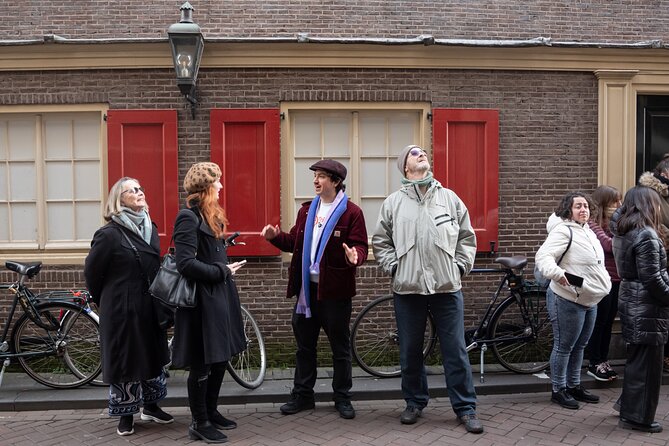
The best tours don’t just list stops. They build a story. This one starts with Amsterdam’s physical reality, then moves into old-city landmarks, and finally into the core of the Red Light District.
Stop 1: De Wallen (The Red Light District)
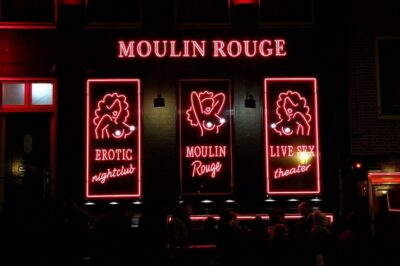
You walk through the narrow streets of De Wallen and see the sights up close. The guide explains the history and also the current situation of the district, so you understand what’s new versus what’s inherited.
This is where many people say they felt they learned something they would have missed on their own. If you explore alone, it’s easy to skim the surface: windows, signs, and street-level impressions. With a guide, you get the structure behind it, including how the district is regulated and what that means for how the neighborhood looks and behaves.
A key detail: the tour keeps a respectful tone. Several guide accounts mention that the subject was handled with sensitivity toward the workers. That matters, because it keeps the vibe from turning awkward or voyeuristic.
Also flying a pennant in Amsterdam
- Amsterdam: Van Gogh Museum Ticket
★ 4.7 · 52,054 reviews - Amsterdam: Heineken Experience Ticket including 2 Drinks
★ 4.6 · 36,014 reviews - Amsterdam Classic Saloon Boat Cruise with Drinks and Cheese
★ 5.0 · 31,825 reviews - Amsterdam Luxury Canal Cruise + Unlimited Drinks & Bites option
★ 5.0 · 30,518 reviews
The Dam: The City Built on Trees
Before you bounce deeper into the district, you hear a fascinating Amsterdam fact: parts of the city sit on wooden foundations driven down through difficult soil layers. Amsterdam’s ground is not simple ground. It’s fen, clay, peat, and water, so building required long timber supports reaching down to sand.
If that sounds abstract, the guide makes it feel real by placing the concept in the middle of the route. It’s a great reminder that Amsterdam didn’t become a great city by luck. It was engineered.
Old Town Context: The Area’s Age Matters
The area around the walk connects to the city’s oldest core. That matters because it helps you understand why you see a mix of buildings that feel layered, not uniform. The guide frames the Red Light District not as a random modern happening, but as part of Amsterdam’s long urban history.
Pub The Ape (Int Aepjen): A Surviving Wooden Building
You also stop at Pub The Ape, known in Dutch as Int Aepjen. The tour shares that it was built around 1540 and that it’s one of the remaining wooden buildings in Amsterdam.
The history of why wooden facades became less common also comes up, including the big fire in 1452. That fire is the reason government decisions pushed more brick-style exteriors. Hearing that while standing near an older wooden structure makes the history stick.
The Waag: From City Gate to Guild Hub
Next is the Waag, which used to be one of Amsterdam’s city gates and part of the defensive wall system. It was built around the 1400s and is described as the second oldest building in Amsterdam.
Later, it served guilds and craft organizations. It helps to know this, because it changes how you view the square. Instead of seeing just another historic building, you’re seeing a shifting role over centuries, from defense to commerce and community.
The Smallest House of Amsterdam
You’ll also hear about the smallest house of Amsterdam, built around the 1700s. It started as storage for the VOC trading company, then later became a long-term residence.
That stop is short, but it’s one of those moments that makes Amsterdam feel specific. You get a tangible sense of how space, trade, and living needs intersected here.
The World’s First Condom Shop (Since 1987)
Finally, you reach a modern, blunt reminder of how Amsterdam has been willing to address sexuality pragmatically. The tour highlights a condom shop described as the world’s first dedicated condom shop, operating since 1987, including custom sizes.
Even if you’re not interested in shopping, this stop fits the tour’s bigger theme: the district isn’t only about behavior on the street. It’s also about normalization, public health, and regulation.
Coffeeshop Culture and Practical Tips You’ll Actually Use
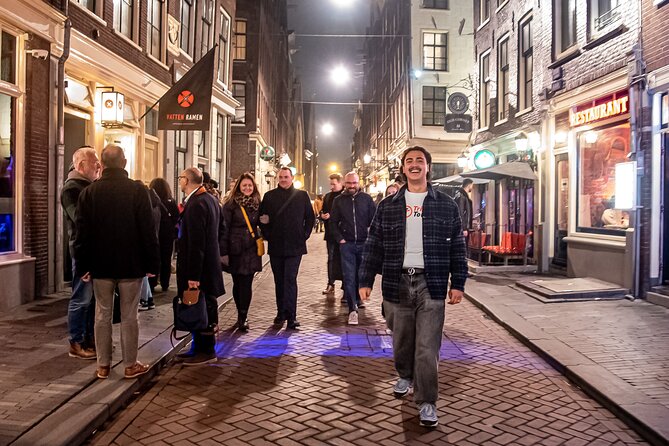
A big reason people love this walk is that it doesn’t treat the Red Light District as an isolated bubble. The guide also covers coffee house culture and the way Amsterdam’s rules shape what visitors see.
One tip that comes up is to ask about the banana bar. Even if you skip it, it’s a good example of how guides add practical pointers beyond the main talking points.
I like this approach because it saves you from wandering later with half-formed ideas. After the walk, you know what questions to ask, and you have a clearer sense of what kinds of places are typical in Amsterdam versus what’s just hype.
Guide Style, Respect, and Safety on the Streets
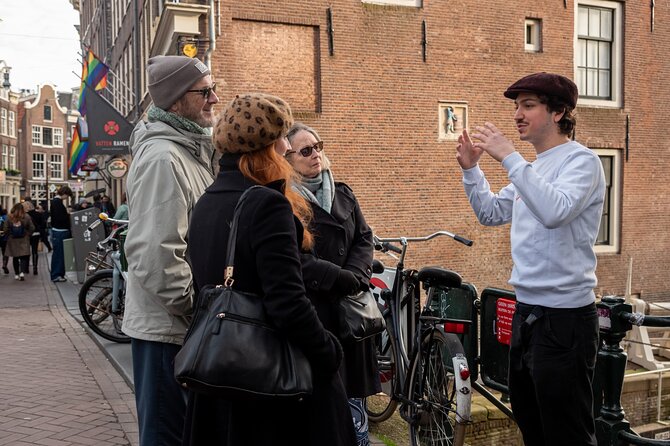
The tone is a big deal on this tour. Multiple guide accounts mention a respectful approach, including attention to the dignity of the workers. Guides were also praised for being funny in a thoughtful way, and for being open to questions.
Another practical element: Amsterdam street life has its own hazards. One guide account specifically mentions being mindful of fast bicycle traffic, which is a real-world reminder you can use anywhere in the city.
You also get what feels like a chaperone effect. People described it as a comfortable experience because the guide helps keep the group together and manages the flow through busy areas.
If you like tours where you can ask follow-ups and get straight answers, this one is a good fit. The format makes it easy to engage rather than sit through a one-way speech.
Weather, Booking Windows, and How to Plan Your Slot
This tour requires good weather. That means rain can affect whether it runs. If you’re booking near the end of your trip, build in some flexibility. If your schedule is tight, you may want to pick an earlier date so you have backup options if the weather changes.
It’s also helpful to know the tour is often booked about 45 days in advance on average. If you want a specific time, especially an evening slot that people recommend, book early enough that you’re not settling for whatever’s left.
On cancellation, the experience offers free cancellation with a full refund if you cancel at least 24 hours in advance. If weather cancels the tour due to poor conditions, you’ll be offered a different date or a full refund.
Should You Book This Red Light District Tour?
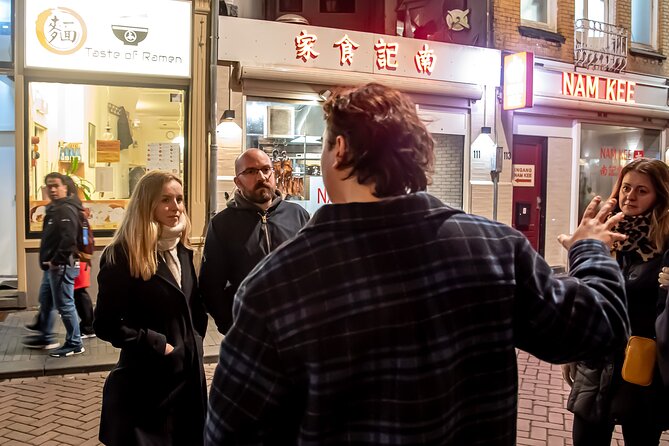
Book it if you want facts with a respectful tone, and you like walking tours that connect places to context. This is especially worth it for first-timers who feel a bit lost when they see De Wallen on their own. The small group size and the guide-centered Q&A style make it more than a surface-level pass-through.
Skip it if you strongly prefer family-friendly topics only, or if you have limited mobility and can’t handle a walking tour. Also, if you’re hoping for a quick photo route, this is not that. It’s a story walk, and the goal is understanding, not just snapping windows.
If you do book, aim for a time when you can actually enjoy the neighborhood atmosphere. Many people recommend going at night, and it makes sense: Amsterdam evenings add energy, and the guide’s commentary tends to land better when the streets feel active.
FAQ
How long is the Amsterdam Red Light District guided tour?
It lasts about 2 hours.
Where does the tour start and end?
The meeting point and end point are both at Damrak, 1012 Amsterdam, Netherlands.
What is included in the ticket price?
You get a local guide. Food and drinks are not included.
Is the tour offered in English?
Yes, the tour is offered in English.
How big is the group?
The tour has a maximum of 15 travelers.
Is this tour suitable for everyone?
Most people can participate, but it is not recommended for travelers with limited mobility. Service animals are allowed, and it is near public transportation.
Latest to arrive along the quays of Amsterdam




Red Light District Walks, compared.

Amsterdam Red Light District & Coffee Shop Tour
Read our review →
Red Light District Pub Crawl with Unlimited Shots
Read our review →
Private Amsterdam Red Light District and Coffee Shop Tour
Read our review →
Red Light Secrets: Museum of Prostitution Amsterdam
Read our review →Browse the lists this tour appears in