
Reviewed · WWII & REMEMBRANCE HISTORY TOURS
Amsterdam in World War Two Cycle Tour
Amsterdam feels calm today, but the streets remember. This small-group bike tour pairs modern views with wartime photos, so the past snaps into place fast. You also get access to parts of Amsterdam South that are hard to reach on foot, and cars do not dominate the route.
What I like most is how the tour uses then-and-now imagery. You are not just hearing facts, you’re seeing the exact corners, facades, and squares as they were during the occupation. I also like the pace and safety of the ride, with a group capped at six, which keeps the experience focused and easy to follow.
One consideration: this is heavy WWII material, with arrests, deportations, and resistance retaliation woven into the route. If you prefer lighter sightseeing, you may want to balance this with a museum day or canal time afterward.
In This Review
- Key Things That Make This WWII Cycle Tour Worth Your Time
- Why Biking Works So Well for WWII Amsterdam
- The Ride Starts at Tesselschadestraat, Then Hits Amsterdam South
- Victorieplein to the Frank Family Zone: Raids, Arrests, and a Diary’s Story
- The drawback to note in this early stretch
- Tilex Bar and Cornelis Troostplein: The Occupation’s Daily Life in Ordinary Corners
- Museumplein’s Nazi Stronghold: Flak Batteries, Offices, and the NSB HQ
- A practical consideration at Museumplein
- Roelof Hartplein Coffee Break and the Resistance Photo Shop
- Beethovenstraat, Apollolaan, and Euterpestraat: When Resistance Struck Back
- SD-HQ Amsterdam and the RAF Typhoon Mission: Offices, Files, and a Targeted Attack
- Potential emotional dip here
- Olympiaplein Registration and the Amsterdam Lyceum: Processing People and Controlling Spaces
- Queen Emma’s Statue and Charles Breijer’s 1944 Photo Moment
- After May 7, 1945: The Last Days on the Streets
- Price and Value: Why $66.09 Can Be a Smart Buy
- Should You Book This WWII Bike Tour?
- FAQ
- How long is the Amsterdam in World War Two Cycle Tour?
- What time does the tour start, and where does it meet?
- Is the tour offered in English?
- How big are the groups?
- Do I need a mobile ticket?
- Is there a coffee and restroom stop?
- What is the cancellation policy?
Key Things That Make This WWII Cycle Tour Worth Your Time
- Six-person max means you can ask questions and keep up without feeling rushed.
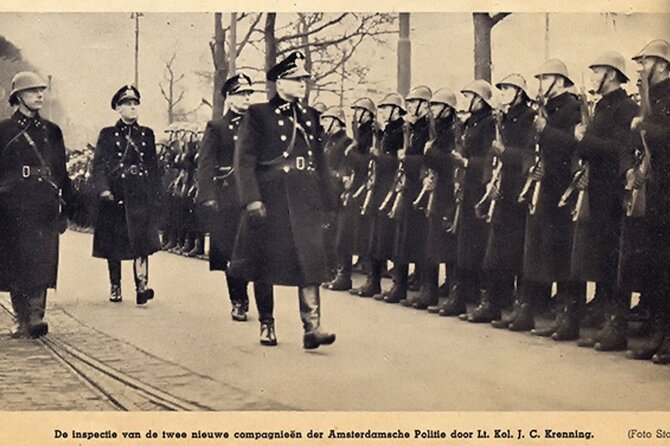
- Then-and-now WWII photos make locations feel real, not abstract.
- Amsterdam South routing helps you cover more ground than walking and avoids the most crowded center streets.
- Coffee and restroom stop at Roelof Hartplein keeps the ride comfortable.
- Specific, grounded stories tie raids, offices, and resistance networks to street-level landmarks.
- Rudy (and Peter) guide in a way that blends local context with wartime detail.
Why Biking Works So Well for WWII Amsterdam
WWII Amsterdam is not only in museums. It is in the street grid, building placements, and the way today’s neighborhoods grew around wartime scars. Riding a bike is the perfect way to experience that, because you move at a human speed and you can actually hold your gaze on a location.
This tour leans into that idea. You spend time at sites tied to raids, occupation administration, deportation processing, and resistance activity. Then you connect those stories to what you see now, including historic photo comparisons that show how much stayed recognizable.
The format also helps you retain details. Big museums can feel like information dumps. Here, you get stops that each have a clear focus, and you can mentally bookmark them as you go.
More Cycling Tours in Amsterdam
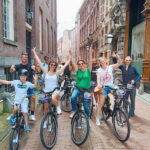
The Ride Starts at Tesselschadestraat, Then Hits Amsterdam South
You meet at Tesselschadestraat 1 at 11:00 am, and the tour loops back to the same meeting point. The total time runs about 2 hours 30 minutes to 3 hours 10 minutes, which is just long enough to feel like you covered ground without exhausting yourself.
The operator provides a mobile ticket, and the tour is offered in English. That matters because this is a topic where good pacing and clear explanations help a lot, especially when street names and wartime names differ.
The tour’s overall direction is into Amsterdam South. That’s not just geography, it is strategy. You spend less time in the thick tourist lanes and more time where the day-to-day city texture fits the stories.
And yes, safety is part of the package. The ride is structured, and the group size stays small, so you are not negotiating traffic chaos or getting separated into random pockets.
Victorieplein to the Frank Family Zone: Raids, Arrests, and a Diary’s Story
A key reason this tour sticks with people is how it anchors global events in local streets. At the first major stop, you start in the area known today as Victorieplein, but in wartime it was called Daniël Willinkplein. The guide connects this to the raid on June 20, 1943, when German forces carried out what’s described as a major roundup and arrest operation during the Judenaktion.
This raid included cooperation from Dutch police units (PBA, Police Battalion Amsterdam) and police volunteers linked to the NSB. You then learn how people were transported to places including Olympiaplein for registration and afterward to Westerbork in the east of the Netherlands. The point is simple, but it lands hard: the machinery of persecution was not only German, it used local structures too.
From there, you move to Merwedeplein 37-II (with the note that it’s the third floor by American counting). This is tied to the Frank family. Otto Frank took his family and acquaintances in summer 1942 to the Secret Annex at Prinsengracht, where Otto worked through his company’s connection.
A statue commemorates Anne Frank on Merwedeplein, and around the corner you reach the story of Jimmink. This long-running bookstore connection leads to the publication of Het Achterhuis (Anne Frank’s diary) in 1947, and the fact that it was at that bookshop Otto Frank bought the diary for his daughter. That detail is a useful emotional contrast: the area is tied to both destruction and the act of recording.
The drawback to note in this early stretch
This part gets emotionally intense quickly, since it covers arrests and deportations. If you have a short attention span for dark history, pace yourself and use the cycling breaks to steady your head.
Tilex Bar and Cornelis Troostplein: The Occupation’s Daily Life in Ordinary Corners
Next, you stop at Waalstraat 48, opposite Merwedeplein, which is now Café Blek. Wartime, it was the Tilex Bar connected to Tilly and Lex van Weren. The story you hear is not just a date and a name. You learn that Lex survived Auschwitz because he had to play his trumpet at executions.
That is the kind of detail that turns a city into a living record. It also helps you understand how persecution reached into music halls, bars, workplaces, and everyday social spaces, not only dramatic government buildings.
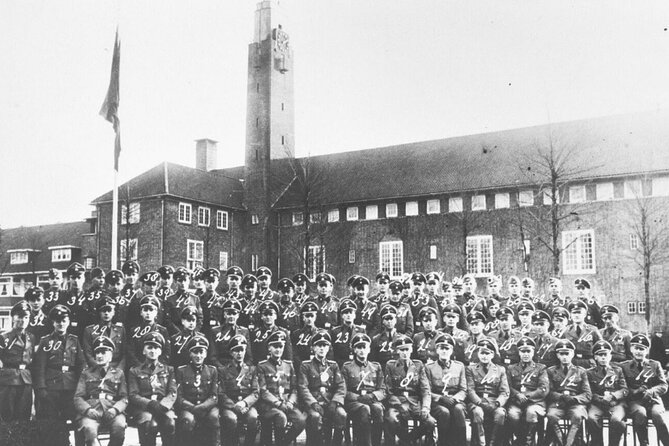
Then you ride toward Cornelis Troostplein 23, once home to PBA barracks. Before WWII, the complex was known as a Catholic peace parish area with two convents and a school. In spring 1942, the guide connects it to an inspection by the Sicherheitsdienst leadership, and the meeting of Reichsführer-SS Heinrich Himmler with SD/Gestapo chief Rauter at Museumplein.
This stop matters because it shows how local institutional spaces could be repurposed during occupation. A school becomes an administrative zone, a parish becomes a node, and the city changes function even when the street view looks familiar.
Other WWII and remembrance history tours:
- Amsterdam: Dutch WWII Resistance Museum Entry Ticket
★ 4.7 · 951 reviews - Small Group Tour to Nazi WWII concentration camp from Amsterdam
★ 5.0 · 112 reviews - Amsterdam: Anne Frank and World War II Walking Tour (TOP RATED)
★ 4.5 · 72 reviews - The Anne Frank Tour (Jewish Neighborhood & Amsterdam during WWII)
★ 4.5 · 56 reviews
Museumplein’s Nazi Stronghold: Flak Batteries, Offices, and the NSB HQ
One of the strongest segments is the long look at Museumplein during the occupation. The Germans transformed it into a stronghold, and you get a guided explanation that maps out the occupation footprint to what you see now.
When you face the concert hall, the guide points out the houses on your left that were occupied by German offices. The story includes the United States consulate building, which the tour describes as having housed the Zentralstelle für Jüdische Auswanderung (Central Jewish Emigration office). Nearby were the Ortskommandantur (Town Major) and the Feldgendarmerie (Military Police).
Then you move outward to the square area in front of the buildings. The tour describes the IJsclubterrein, an Amsterdam skating club site, where Germans built bunkers and anti-aircraft (Flak) batteries. If you only look at Museumplein today, you would miss how militarized it once was. The wartime photo comparisons are especially helpful here, because modern openness can trick your brain.
You also learn about the NSB HQ Amsterdam near the concert hall area. After the war, the bunkers were blown up, which is a reminder that the city did not simply return to normal automatically. It was rebuilt after deliberate destruction.
A practical consideration at Museumplein
Because this part focuses on buildings and squares, it can involve more standing and pointing than, say, a pure cycling segment. The good news is the stops are paced, and the small group size keeps everyone close for the explanations.
Roelof Hartplein Coffee Break and the Resistance Photo Shop
At Roelof Hartplein, you get a short pause at Café Wildschut for coffee and a restroom break. It’s only about 10 minutes, but it’s timed well. It resets your energy so you can handle the next set of street-level stories without feeling rushed.
Then you move to nearby Roelof Hartstraat, where the tour explains a photo shop beside the library building. During the war, the Dutch resistance used the store to develop distinctive photos, including images connected to the first roundup of Jews in Amsterdam by the SD/Gestapo and German order police.
That detail is a clever teaching tool. Many WW2 tours focus only on perpetrators and victims in broad terms. Here, you see how the resistance also acted as witnesses and record-keepers, producing photographic evidence of events as they happened.
The tour finishes this mini-cluster with a small monument remembering Jews taken from that neighborhood. It is quiet, but it adds weight to what you just learned.
Beethovenstraat, Apollolaan, and Euterpestraat: When Resistance Struck Back
Next comes a corner detail that feels like it belongs in a detective novel. At the corner of Beethovenstraat and Apollolaan (with the note that the street was called Euterpestraat during wartime), you learn about an execution and retaliation sequence in late October 1944.
The guide describes how Herbert Oelschlägel, an SS officer and Sicherheitsdienst/Gestapo agent, was executed by a Dutch resistance member near house number 6. The retaliation included burning two houses and executing 29 resistance fighters. It’s a reminder that resistance actions triggered immediate, brutal consequences.
The tour also connects the street area to Gerrit van der Veen, described as an important leader of a Dutch resistance group. In practical terms, this is one of the stops where you start recognizing the names that repeat across the tour: resistance figures, collaborating officials, and the machinery that hunted them.
SD-HQ Amsterdam and the RAF Typhoon Mission: Offices, Files, and a Targeted Attack
At the corner of Memlingstraat and Rubensstraat, the tour zooms in on two oppressive offices. You learn about the SD-HQ Amsterdam (with the description that it was an SD Außenstelle under Willy Lages) and the Hausraterfassungsstelle, tied to stealing possessions of deported Jews and part of the broader Zentralstelle für Jüdische Auswanderung system. The leader of this “possession record” effort is identified in the tour narrative as Henneicke, a Dutch collaborator.
Then it shifts from building names to strategy. The tour explains that in November 1944, resistance requested a Royal Air Force attack via a secret radio message. The stated main aim was destroying SD/Gestapo files, not just damaging buildings. That focus matters because documents and records were part of the persecution process.
You hear about the RAF mission leader: Group Captain Denys Gillam DSO, DFC, AFC, leader of 149 (Typhoon) wing. If you like history that links people to decisions, this is a standout. It also explains why a tour like this feels more grounded than a general war history lecture.
The guide then points to a resistance safehouse on the corner of Rubensstraat and Gerrit van der Veenstraat, referencing a Stolperstein as a way to find the address. The tour also mentions that in June 1944, this address was betrayed to the SD/Gestapo by a female informant labeled V-Frau.
Potential emotional dip here
This stretch mixes intelligence, bureaucracy, and retaliation. If you get tense with “paper trail” stories of oppression, take a breather during the next cycling minutes.
Olympiaplein Registration and the Amsterdam Lyceum: Processing People and Controlling Spaces
At Olympiaplein and Parnassusweg, the tour returns to the June 1943 raid theme. Here, the story is about registration. Jewish people arrested during the raid were registered by the SD/Gestapo with help described as Jewish camp police sent from Westerbork.
Again, the key value is the clarity. You are not asked to imagine a camp system. You are shown a street-level location and told how it functioned within that system.
Then you move to Valeriusplein and the Amsterdam Lyceum. The tour describes this school building as the headquarters of the Luftwaffe at the end of the occupation. Schools in wartime often get repurposed, but it still hits differently when you understand you are standing in an educational space that was controlled for military purposes.
Queen Emma’s Statue and Charles Breijer’s 1944 Photo Moment
Near the end, the tour includes a lighter but still meaningful resistance-defiance story. You visit the Statue of Queen Emma on Emmalaan and Prins Hendriklaan.
The tour explains that in summer 1940, people placed flowers at the statue as a public act of defiance against the German occupiers. It is a small action, but the guide frames it as an early signal that resistance could be visible even before armed resistance became the main story.
You also hear about Charles Breijer, a resistance photographer. The tour notes that he took a photo of a guard at the Kriegsmarine headquarters in 1944. This ties back to the earlier resistance photo-shop story, creating a thread across the route: not only fighting, but recording.
After May 7, 1945: The Last Days on the Streets
The final segment brings the narrative to the end of occupation. When the Germans surrendered on May 7, 1945, the tour explains that dangerous situations arose between frustrated German troops and resistance fighters.
You stop at a monument to the victims of one of the shootings on the last day. Then the guide brings you through Vondelpark to Leidseplein, where you effectively close the loop back toward the starting area.
This closing matters because it avoids the common trap of treating liberation as a clean, instant switch. The reality on the streets could still be violent, confused, and tense.
Price and Value: Why $66.09 Can Be a Smart Buy
At about $66.09 per person, this tour is not a bargain in the way a free walking tour can be. But you are paying for several concrete things that add up to value.
You’re getting 3-ish hours of guided orientation, a max of six riders, and detailed stop-by-stop explanations tied to specific locations. You’re also paying for the visual teaching tool, the wartime photos that line up with what you see today.
Then there’s the experience design. The route emphasizes cycling so you cover more territory than you could easily walk in half a day. And it targets Amsterdam South, so you get city texture that many short, center-focused tours miss.
If you’re the kind of traveler who wants more than plaques, the format makes sense. If you want only broad museum-style summaries, you might feel this is too focused and too direct.
Should You Book This WWII Bike Tour?
Book it if you want WWII context that lives on the street, not only inside exhibits. You’ll likely appreciate the small group approach, the guided mapping of occupation administration across recognizable buildings, and the then-and-now photos that turn empty walls into evidence.
Skip it if you dislike cycling or if this subject matter feels too intense for a single outing. Also consider doing it earlier in your trip, so you can later visit museums with a clearer sense of what you already saw outside.
If you go, go ready to pay attention at corners and squares. That is where the tour does its best work.
FAQ
How long is the Amsterdam in World War Two Cycle Tour?
The tour lasts about 2 hours 30 minutes to 3 hours 10 minutes.
What time does the tour start, and where does it meet?
It starts at 11:00 am and meets at Tesselschadestraat 1, 1054 ET Amsterdam, Netherlands.
Is the tour offered in English?
Yes, the tour is offered in English.
How big are the groups?
The tour has a maximum of 6 travelers.
Do I need a mobile ticket?
Yes, the tour uses a mobile ticket.
Is there a coffee and restroom stop?
Yes. There is a short stop at Roelof Hartplein for coffee and a restroom visit, about 10 minutes, and admission is free.
What is the cancellation policy?
Free cancellation is available up to 24 hours in advance for a full refund. If you cancel less than 24 hours before the start time, you will not receive a refund.
Kilometres on the Flat
- Countryside Bike Tour from Amsterdam: Cheese, Clogs & a Windmill★ 5.0 · 1,485 reviews
- Amsterdam: Hidden Gems & Highlights Guided Bike Tour★ 4.8 · 1,404 reviews
- Amsterdam: Windmill, Cheese, and Countryside E-Bike Tour★ 4.5 · 1,308 reviews
- Amsterdam Highlights Bike or E-Bike Tour★ 5.0 · 1,171 reviews
Latest to arrive along the quays of Amsterdam


WWII & Remembrance History Tours, compared.
Oranjehotel World War II Prison Entrance Ticket
Read our review →
Rotterdam Walk: Hilights, Gems, Architecture & WWII | 2 or 3hrs
Read our review →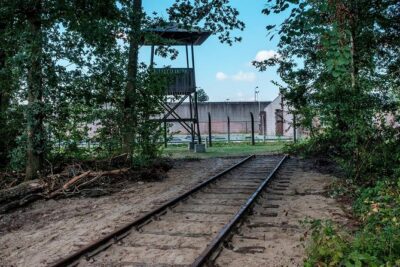
Small Group Tour to Nazi WWII concentration camp from Amsterdam
Read our review →
Anne Frank and World War II Walking Tour (TOP RATED)
Read our review →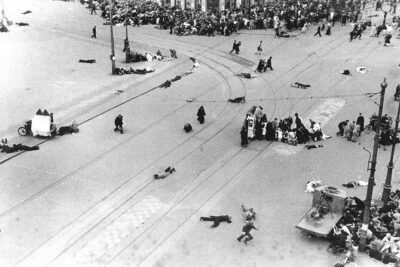
The Anne Frank Tour (Jewish Neighborhood & Amsterdam during WWII)
Read our review →
Rotterdam Must Do Tour: Highlights, History, WW2 and Architecture
Read our review →Browse the lists this tour appears in