
Reviewed · WWII & REMEMBRANCE HISTORY TOURS
Amsterdam: Cycling along the World War Two spots
Pedal past Amsterdam’s WWII trauma in three hours. This bike tour strings the World War Two story through Amsterdam South street corners you might otherwise just glide by.
I love how concrete it feels, you’re not stuck in abstract dates, you’re looking at exact locations tied to Anne Frank’s family home and to real people caught up in the occupation. I also like the human tone, led by three retired historians who stay focused and clear, so the facts land without turning into a lecture.
One thing to consider, the subject matter is heavy, with raids, arrests, and executions along the route. Also, you’ll need to deal with bike rental logistics, since the rental cost is not included and you’ll visit the rental shop together before you roll.
In This Review
- Key moments on this Amsterdam World War Two cycle
- World War Two Amsterdam on two wheels, why this route matters
- Meeting at Leidseplein, get your bearings before you start pedaling
- Bike rental isn’t included, and that affects the first timing
- Victorieplein and the June 20, 1943 raid: understanding sudden violence
- Merwedeplein 37-II: what it means to see the Frank family’s home address
- Waalstraat 48 and Lex van Weren: linking everyday streets to Auschwitz
- C. Troostplein and the Rauter meeting with Heinrich Himmler
- Museumplein as a wartime stronghold: SS, Gestapo, and concentrated power
- The ride also includes raids, executions, battles, and safe houses
- Price and value, what $47 buys you in real time
- Who should book this WWII cycling tour, and who should think twice
- Should you book Slagveldreizen.nl for this World War Two bike tour?
- FAQ
- Where is the meeting point for the tour?
- How long is the Amsterdam cycling tour?
- What does the tour cost?
- Is bike rental included in the price?
- What language is the tour guide?
- How big is the group?
- Which World War Two sites and addresses are included?
- Who leads the tour?
- What is the cancellation policy?
- Is there a reserve now, pay later option?
Key moments on this Amsterdam World War Two cycle
- Victorieplein, June 20, 1943: a major raid that shaped daily fear across the city
- Merwedeplein 37-II: the Frank family home, before they went into hiding
- Waalstraat 48 and Lex van Weren: a personal thread that runs from Amsterdam streets to Auschwitz survival
- C. Troostplein: Gestapo officer Rauter meeting Reichsführer Heinrich Himmler
- Museumplein during the war: the square reshaped into a stronghold, with SS and Gestapo presence including Himmler in 1941
World War Two Amsterdam on two wheels, why this route matters
This tour works because cycling forces your brain to map the past onto real space. You don’t just read about occupation, you pass the kinds of places where power, fear, and decisions played out street by street. Amsterdam South has layers, monuments and plain buildings side by side, and the contrast is part of what hits hardest.
I also like that the guide keeps it grounded in addresses and named people, instead of staying generic. When you know you’re looking at Merwedeplein 37-II, or you’re near the sites tied to rounds up and raids of Jewish citizens, the city stops feeling like a postcard. You start noticing how streets can become corridors of control during war.
The emotional side is real. Even if you know the broad history, the tour focuses on local events and consequences. So go in with your expectations set: this is a meaningful walk through difficult territory, not a casual sightseeing loop.
More Cycling Tours in Amsterdam
Meeting at Leidseplein, get your bearings before you start pedaling
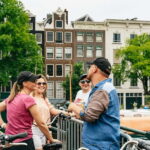
You meet at Leidseplein, right next to the entrance of the Apple Store. It’s an easy spot to find, and it also helps you start in a normal, lived-in part of the city before the tour shifts into occupation-era context.
Because it’s a bike tour, I suggest arriving a few minutes early so you can settle in, ask any last questions, and get comfortable with the ride. The tour length is 3 hours, so you want your energy for the full loop, not just the first stop.
Also, note the small-group setup. The tour is listed as a small group limited to 1 participant, which means you can expect a more personal flow. Practically, that can be a big advantage if you want to ask follow-ups when something clicks or when a specific address feels confusing.
Bike rental isn’t included, and that affects the first timing
The guided experience includes the bike tour, but not the bike rental. You’ll visit the bike rental shop together before the tour starts. For most people, that simply means budgeting a bit of time at the front and making sure you arrive ready for that handoff.
Here’s how I’d plan it: treat the bike rental moment as part of your tour time in your head. Even if the official duration is 3 hours, your practical start depends on that meeting with the rental shop. If you’re doing anything right before or after the tour, build in a buffer.
If you already ride confidently in city traffic, you’ll likely feel good fast. If you don’t, don’t panic. Amsterdam is built for bikes, but a guided ride still means staying alert and following the guide’s pace.
Victorieplein and the June 20, 1943 raid: understanding sudden violence
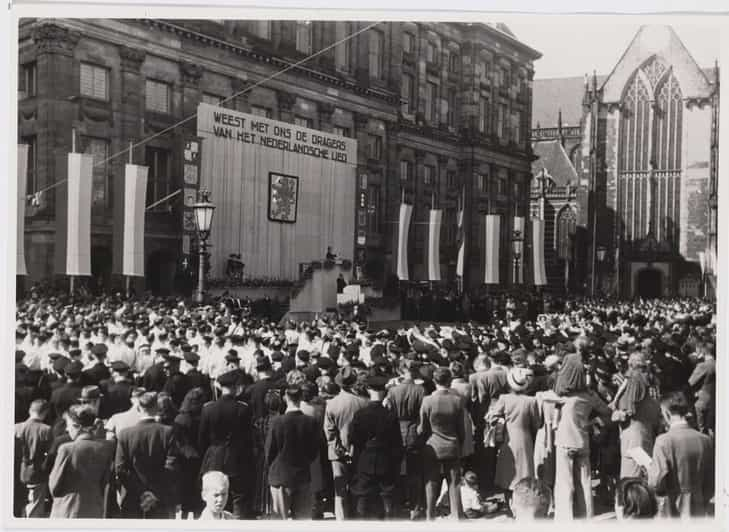
One of the first anchors is Victorieplein, tied to June 20, 1943, when a major raid took place in Amsterdam. The value of stopping at a public square like this is that it’s easy to imagine it as ordinary. You see how quickly normal city life can get ripped open when occupation forces move in.
This is where the tour’s approach clicks. Instead of saying war happened somewhere, you’re put at a recognizable point in the city grid and walked through what raids meant for Jewish residents in this part of Amsterdam. You start to see why people lived with constant uncertainty, because these actions weren’t hidden in distant places. They happened where you could be, where you might run errands, where you might wait for a tram or cross the street.
If you’re sensitive to intense historical topics, this stop can feel sharp. I’d recommend taking a short pause, even just a breath, so you can keep listening clearly. The guide’s job is to connect the facts, and your job is to stay present without rushing past the emotional weight.
Merwedeplein 37-II: what it means to see the Frank family’s home address
Next is Merwedeplein 37-II (3rd floor), identified as the home of the Frank family before they went into hiding. This is the kind of place that can pull you out of the flow of history and into the scale of a single apartment life.
I like how the tour doesn’t treat the Frank story as a museum piece. You’re in the city, on the street, and you’re reminded that this was domestic space before it became a symbol. When a guide points to the address and ties it to the decisions and fear that led to hiding, you understand that survival was not just courage, it was timing, luck, and relentless danger.
One practical note, standing by residential buildings can feel awkward if you stare too hard. So I’d try to watch the guide, listen first, then glance around when you’re ready. If you can respect the fact that people live there now, you’ll get more out of the stop and less discomfort.
Other WWII and remembrance history tours:
- Amsterdam: Dutch WWII Resistance Museum Entry Ticket
★ 4.7 · 951 reviews - Small Group Tour to Nazi WWII concentration camp from Amsterdam
★ 5.0 · 112 reviews - Amsterdam: Anne Frank and World War II Walking Tour (TOP RATED)
★ 4.5 · 72 reviews - The Anne Frank Tour (Jewish Neighborhood & Amsterdam during WWII)
★ 4.5 · 56 reviews
Waalstraat 48 and Lex van Weren: linking everyday streets to Auschwitz
At Waalstraat 48, the tour highlights Lex van Weren, described as someone associated with that location who survived Auschwitz. This stop is powerful because it takes you from famous narratives into a different kind of personal thread. Not everyone on the tour is learning the same details, but the address-based framing keeps it real.
What I find effective here is the shift from broad occupation mechanisms to a specific human story. You’re not just hearing about institutions. You’re connecting one person’s path from Amsterdam to the machinery of deportation and camps, then back again as survival and memory.
If you want to get the most from this stop, listen closely to how the guide explains the connection to that address. The tour uses these facts to show that war disrupted lives at every level, including people whose names you might not have encountered before.
C. Troostplein and the Rauter meeting with Heinrich Himmler
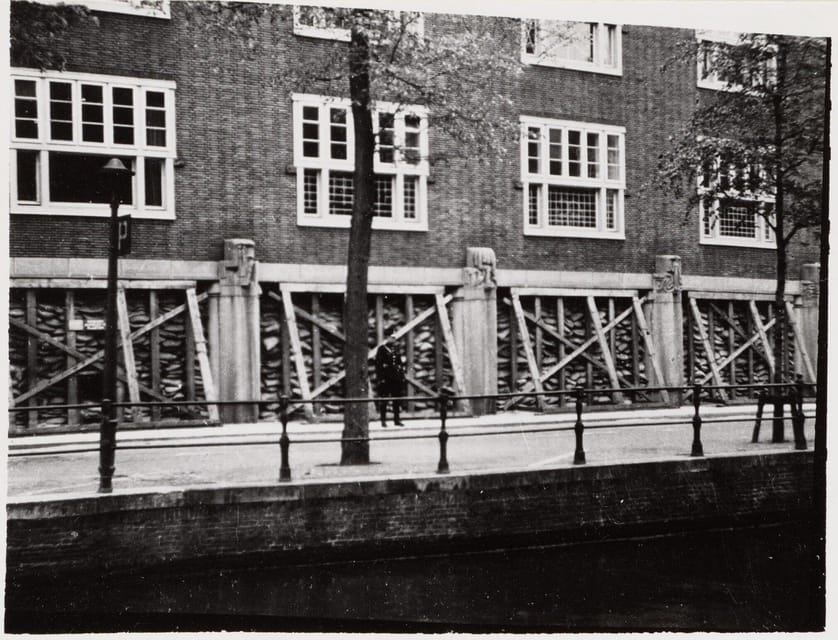
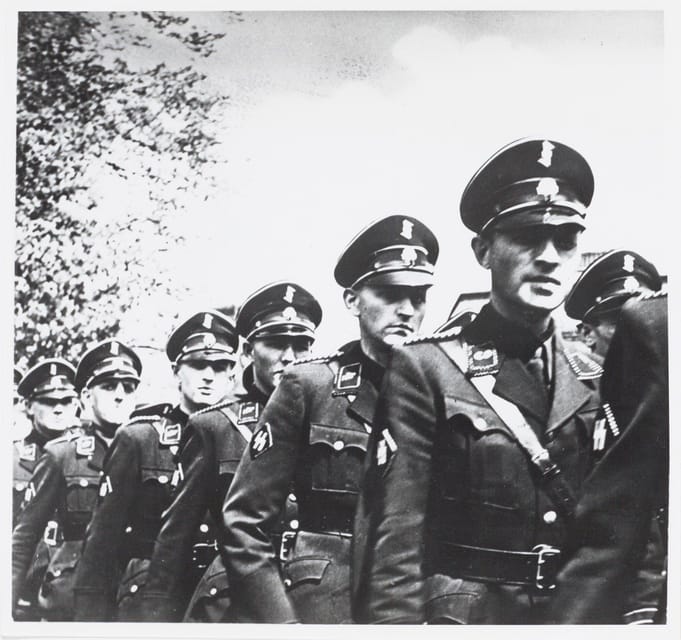
The tour also includes C. Troostplein, tied to a meeting where Gestapo officer Rauter met Reichsführer Heinrich Himmler. This isn’t just a name drop. It’s a location-based way to show how top-level Nazi leadership intersected with brutal local enforcement.
Stopping at a specific square helps you visualize scale. You start to realize that high command decisions and on-the-ground repression didn’t live in separate worlds. They came together in real spaces, in real buildings, and in real moments that shaped what happened next.
This is one of those stops where I’d recommend slowing down mentally. Let the guide finish the point before you move on. The worst history tours are the ones you rush through because you feel you already know what comes next. Here, the location makes you see the machinery more clearly.
Museumplein as a wartime stronghold: SS, Gestapo, and concentrated power
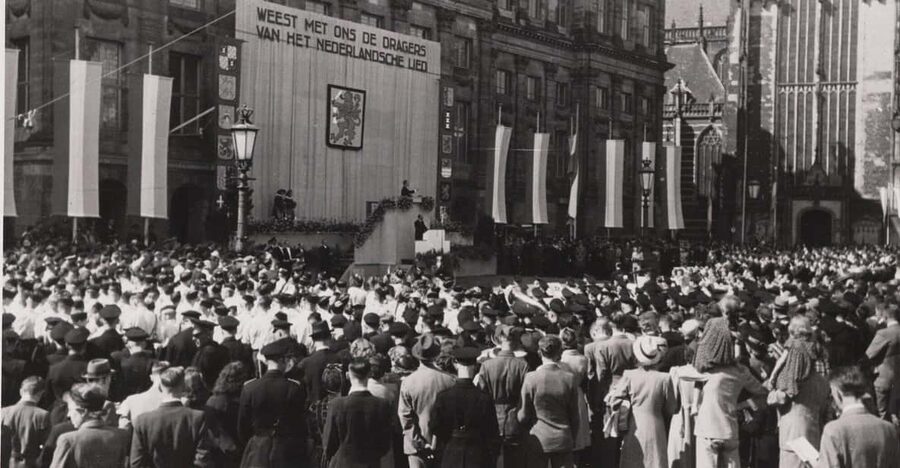
Museumplein is a core stop, and the tour frames it as a place the Germans transformed into a stronghold during the war. It’s also described as having concentrated key offices, including the German army headquarters and civil services, plus the headquarters of the Dutch Nazi party (NSB) in Amsterdam.
Then it gets more specific. In 1941, Museumplein was visited by SS and Gestapo chief Heinrich Himmler. When you stand near the kind of open space that feels modern and cultural, and a guide explains how it became administrative and security power, the contrast is intense.
I appreciate that the tour connects these details to what you’re seeing. Museumplein can seem like just another well-known square, but the guide’s job is to make you read it as wartime geography. Once you do, you start noticing the logic of occupation: headquarters need access, coordination, and visibility.
Also included in the broader area is the Gestapo headquarters Amsterdam, described as partially destroyed by allied air attack in 1944. Hearing that detail while you’re moving through the city helps you understand that war came in waves, not a single event. Occupation strengthened, resistance pushed back, and Allied attacks added more chaos and destruction.
The ride also includes raids, executions, battles, and safe houses
Beyond the headline addresses, the tour includes other kinds of wartime sites, like places where executions, raids, and battles between the Dutch resistance and German soldiers took place. It also includes resistance safe houses.
This variety matters. If you only focus on detention and deportation, you get one side of the story. If you only focus on resistance, you get the other side. This tour tries to connect both, showing how occupation tightened control and how people responded with courage and risk.
You’ll likely notice how the route stitches these themes together. The bike format helps because you’re always moving from one context to the next, and the guide can explain how events relate. When your next stop is a square tied to a raid, and the one after that is connected to resistance activity, the timeline feels less like a set of chapters and more like a living pressure system.
Price and value, what $47 buys you in real time
The price is listed at $47 per person for a 3 hour guided bike tour. That’s not just paying for someone to talk. You’re paying for a guided ride through specific WWII spots, led by three retired historians, with interpretation in English.
The biggest value lever here is the format plus the guide. You’re not wandering alone, guessing at what matters. You have trained people who can connect locations like Victorieplein and Merwedeplein to the larger occupation system and to human stories like Lex van Weren. In a city like Amsterdam, that kind of local linking turns a route into understanding.
The one cost consideration is that bike rental is not included. The good news is you visit the rental shop together before you start, so you’re not left figuring it out solo. Still, factor that extra cost into your total budget.
With the group limited to 1 participant, if you’re able to snag a slot, you may get a more tailored experience. You can ask questions and get answers that fit your pace and attention level.
Who should book this WWII cycling tour, and who should think twice
This tour is a strong fit if you:
- Want World War Two history grounded in real Amsterdam addresses, not only general museum storytelling
- Prefer learning while moving through the city on a bike
- Like guides who can explain context clearly and keep it humane
You might want to think twice if:
- You’re looking for light, relaxing sightseeing. This route covers raids and executions
- You feel uncomfortable with bike riding in an active city environment, even with a guide
If you’re somewhere in the middle, I’d still say go, but go with care. Wear comfortable clothes, keep your phone charged in case you need a break, and give yourself permission to pause if a stop feels too heavy.
Should you book Slagveldreizen.nl for this World War Two bike tour?
Yes, if you want a focused, location-based understanding of Amsterdam South during the German occupation. The tour is only 3 hours, it’s guided by retired historians, and it uses the city itself as your history textbook.
The key reason to book is simple: you’ll stand at exact places tied to the Frank family, major raids like June 20, 1943 at Victorieplein, and chilling links between Nazi leadership and enforcement such as the Rauter and Himmler meeting. That kind of specificity is hard to replicate on your own without the right context.
If the topic feels too intense right now, it’s okay to wait. But if you’re ready to learn in a careful, guided way, this is a smart use of time in Amsterdam.
FAQ
Where is the meeting point for the tour?
You meet at Leidseplein, next to the entrance of the Apple Store.
How long is the Amsterdam cycling tour?
The duration is 3 hours.
What does the tour cost?
The price is $47 per person.
Is bike rental included in the price?
No. The bike rental cost is not included, and you visit the bike rental shop together before the tour starts.
What language is the tour guide?
The live tour guide provides the tour in English.
How big is the group?
The tour is listed as a small group, limited to 1 participant.
Which World War Two sites and addresses are included?
The tour includes places such as Victorieplein (June 20, 1943 raid), Merwedeplein 37-II (Frank family home), Waalstraat 48 (Lex van Weren, Auschwitz survivor), C. Troostplein (Rauter and Heinrich Himmler), and Museumplein where Germans transformed the area into a stronghold. It also includes the Gestapo headquarters Amsterdam and other sites connected to raids, executions, battles, and resistance safe houses.
Who leads the tour?
The tours are given by three retired historians.
What is the cancellation policy?
Free cancellation is offered, and you can cancel up to 24 hours in advance for a full refund.
Is there a reserve now, pay later option?
Yes. The option is reserve now and pay later, so you can book your spot and pay nothing today.
Kilometres on the Flat
- Countryside Bike Tour from Amsterdam: Cheese, Clogs & a Windmill★ 5.0 · 1,485 reviews
- Amsterdam: Hidden Gems & Highlights Guided Bike Tour★ 4.8 · 1,404 reviews
- Amsterdam: Windmill, Cheese, and Countryside E-Bike Tour★ 4.5 · 1,308 reviews
- Amsterdam Highlights Bike or E-Bike Tour★ 5.0 · 1,171 reviews
Latest to arrive along the quays of Amsterdam


WWII & Remembrance History Tours, compared.
Oranjehotel World War II Prison Entrance Ticket
Read our review →
Rotterdam Walk: Hilights, Gems, Architecture & WWII | 2 or 3hrs
Read our review →
Small Group Tour to Nazi WWII concentration camp from Amsterdam
Read our review →
Anne Frank and World War II Walking Tour (TOP RATED)
Read our review →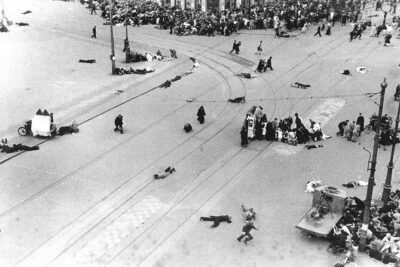
The Anne Frank Tour (Jewish Neighborhood & Amsterdam during WWII)
Read our review →
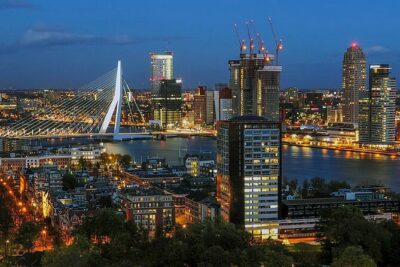
Rotterdam Must Do Tour: Highlights, History, WW2 and Architecture
Read our review →Browse the lists this tour appears in