
Reviewed · THE HAGUE TOURS & EXPERIENCES
The Hague Must-See attractions Private Walking Tour With A Guide
Some cities need a map, The Hague needs context. This private walking tour strings together royal landmarks, world-famous art stops, and the country’s political core in about 2 hours. The route is built for quick orientation, not rushing you through noise.
What I really like is the private format. You stay with an in-person English-speaking guide, so you can ask questions as you go and keep a steady pace that fits your group. I also love the way the tour mixes art and government side by side, so you leave with both culture and country-story, not just photos.
One thing to consider: the stops are intentionally short, so if you want a long, slow museum experience, plan for extra time. Also, the tour price does not include attraction tickets in general, even though the listed stops are marked as admission ticket free, so double-check what you need for any specific interior visit.
In This Review
- Key highlights you’ll actually feel
- The Hague in two hours, with the background you want
- Price and logistics, what $88.72 covers (and what it doesn’t)
- Meeting point to walking rhythm at Plein 17
- Het Plein and Willem van Oranje, how the Dutch Revolt shows up in stone
- Mauritshuis and Vermeer focus, art that’s easier when you know what to look for
- Binnenhof and the Ridderzaal, where buildings explain politics
- Hofvijver and Thorbecke Monument, outdoor stories with a brainy payoff
- Lange Voorhout, Escher Museum nearby, and the style of an embassy street
- Noordeinde Palace, the working residence you can spot without tickets
- Grote Kerk (St. Jacobskerk), the stork statue, and a dark political memory
- What the guides are like, based on standout feedback
- How to get the most from this private walk
- Is this the right tour for you?
- Should you book this The Hague private walking tour?
- FAQ
- How long is the walking tour?
- Is the tour private?
- What language is the guide?
- Where does the tour start and end?
- Are attraction tickets included?
- Do I need to pay for transportation during the tour?
- Do I get a ticket for the tour on my phone?
- Can I cancel for free?
Key highlights you’ll actually feel
- Private and exclusive: your group walks together with no one else joining
- Short, smart stops: about 15 minutes at major sights so you don’t lose the thread
- Vermeer moments: you’ll focus on Girl with a Pearl Earring and View of Delft at Mauritshuis
- Dutch politics on foot: Binnenhof and the Ridderzaal let you connect buildings to real decisions
- Outdoor meaning: Hofvijver, Het Plein, and the Thorbecke area show how stories live in public space
The Hague in two hours, with the background you want
The Hague can feel a bit split up: government buildings here, museums there, and royal residences in between. This tour helps you stitch it together fast, with a guide who explains what you’re seeing and why it matters. It’s the kind of walking plan that gets you oriented without turning your day into a checklist.
You start at Plein 17 in Den Haag. From there, you keep moving on a compact route, and the activity ends back at the meeting point. The whole idea is simple: you get enough time at each stop to understand the place, then you walk to the next one before you start drifting.
Because it’s private, you avoid the common problem of waiting for strangers. You also get a stronger sense of flow. If you notice a detail and want the story, you can ask on the spot rather than hoping a group guide catches your question later.
More Guided Walking Tours in The Hague

Price and logistics, what $88.72 covers (and what it doesn’t)
This tour costs $88.72 per person for a roughly 2-hour private walking experience. In practical terms, you’re paying for three things: the English-speaking guide in person, a walk that hits major sights in sequence, and help from the team to book tickets for visits you want.
What’s not included: tips, food and drinks, attraction tickets, and public transport costs. The route is marked as near public transportation, so getting to the start should be easy. But once you’re on the ground, the tour is mainly walking, and you should expect to cover the center on foot.
Here’s the value equation I’d use. If you’re pairing The Hague with other cities, this gives you a fast orientation plus real context, which usually beats wandering alone. If you plan to go deep into interiors, you may need to add time and possibly extra ticket costs, since the tour itself does not include attraction tickets.
Meeting point to walking rhythm at Plein 17
Plein 17 is a solid launch point, because it’s in the heart of the city center area. You start there, meet your guide, and then you move stop to stop. The pace is steady and designed around short timed visits, so it feels like a guided “greatest hits” walk with enough explanation to stick.
Each stop is scheduled for about 10 to 15 minutes. That’s not a long time, but it’s enough for you to pick up the key story and look around. The benefit is momentum. You don’t spend half your time trying to figure out where to look next.
If you like taking a few photos and then getting back to the meaning of the place, this format fits you well. If you prefer lingering in one spot, you may wish you had an extra hour, especially around the museum areas.
Het Plein and Willem van Oranje, how the Dutch Revolt shows up in stone
One of the first lessons you get is that Dutch history isn’t just in books. It’s named into squares and landmarks. At Het Plein, the tour focuses on Willem van Oranje, often called the Father of the Nation, and his major role in the Dutch Revolt against Spanish rule in the 16th century.
Even with only about 15 minutes here, the guide’s framing matters. You learn how the revolt connects to later Dutch identity and the idea of political legitimacy. The setting gives you a sense of scale, because public squares are where the country puts its big names.
A practical note: because it’s a public area, you can often take a quick look and keep moving. The drawback is also obvious. If you want to read plaques slowly or do extra background on your own, you may want to add time later.
Mauritshuis and Vermeer focus, art that’s easier when you know what to look for
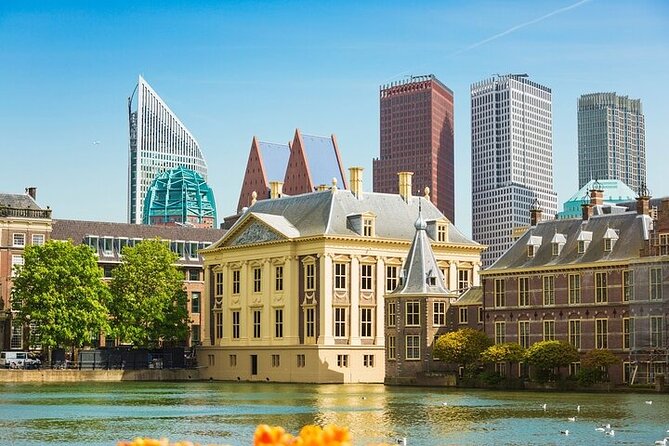
Mauritshuis is the art stop that turns a walking tour into a culture hit. The tour highlights major paintings, including Girl with a Pearl Earring and View of Delft. Even if you don’t spend hours in a museum, getting the guide’s pointer on what to notice can change everything.
I like this approach because it saves you from the common museum mistake: you walk in, see a lot, and leave with a blur. A targeted focus makes the experience feel sharper. You get a short list of what matters, then you can decide what to spend your own extra minutes on.
One careful point: the tour info says the stop is marked as admission ticket free, but the tour also says attraction tickets are not included, and the team can help you book tickets for desired visits. So treat this as a “plan your entry” situation. If you want to go inside the museum itself, confirm what you’ll need before you arrive.
More Private Tours in The Hague
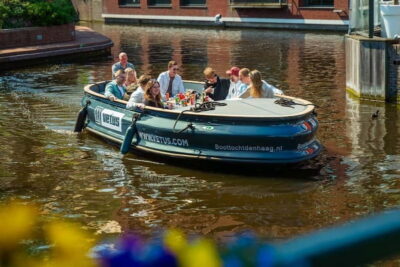
- The Hague: Private Boattour up to 10 persons
★ 4.9 · 37 reviews - Private Walking Tour of Delft: Dive into the Dutch Golden Age
★ 5.0 · 33 reviews - The Hague Private Walking Tour with a Local
★ 4.0 · 29 reviews - Royal The Hague Private Guided Walking Tour
★ 4.5 · 21 reviews
Binnenhof and the Ridderzaal, where buildings explain politics
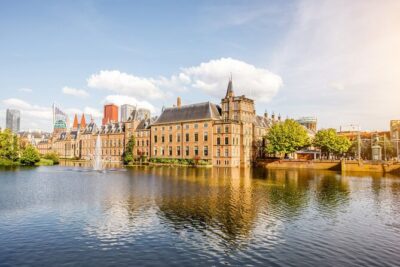
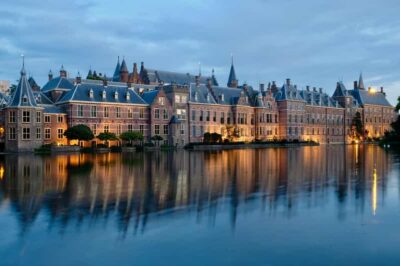
If The Hague is the seat of much of the Netherlands’ government world, Binnenhof is the center of that story. The tour takes you to the historic complex of the Binnenhof, which houses the Dutch Parliament, and it places the timeline back as far as the 13th century.
Then comes Ridderzaal (Knight’s Hall). This is where the guide makes a key point: political power is not just law, it’s also ceremony and space. Ridderzaal is described as the site for important political events and ceremonies, so you’re not just looking at a pretty hall. You’re seeing how tradition and governance share the same rooms.
The practical upside is that you learn to “read” architecture. Big gates, halls, and courtyards start to make sense when you connect them to the human process of decision-making. The short stop length means you get the idea quickly, but you might still want more time if you enjoy architecture details and inscriptions.
Hofvijver and Thorbecke Monument, outdoor stories with a brainy payoff
Hofvijver is one of those places that looks calm on the surface, but the guide turns it into a story machine. The pond is surrounded by historic buildings, and the tour includes the amusing angle that it once served as a hunting ground for medieval nobility. That contrast is fun, because it shows how daily life changes while places stay.
Then you shift to the Thorbecke Monument. Here the focus is on Johan Rudolph Thorbecke, the Dutch statesman known for drafting the Dutch Constitution in 1848. The tour connects that drafting to the foundation of modern parliamentary democracy in the Netherlands.
This is where the tour earns its keep. In 10 to 15 minutes, you get a key political idea in human terms. It’s not only dates and titles. It’s the way a constitution is a living framework that shapes what you see in the government district today.
If you like history, these outdoor stops are a nice balance. If you’re tired, they’re also a good breather, since you’re not stuck in lines. The only drawback is that you might want more time to absorb plaques or read signs if you’re a slow walker and slow reader.
Lange Voorhout, Escher Museum nearby, and the style of an embassy street
Next, the tour moves down Lange Voorhout, an elegant street lined with stately mansions and embassies. This is the kind of street where you start noticing design language: how buildings face the street, how grandeur is expressed, and how diplomacy gets a physical setting.
The Escher Museum is noted as being in the area, tied into the tour’s “Dutch art in the city” theme. Even if you do not go inside, it helps to know where the works of M.C. Escher sit in the city map. The guide’s explanation can also prepare you if you plan a separate visit.
This is one of the parts that feels less frantic. It’s a walk that lets you enjoy the neighborhood atmosphere while still getting context. If you’re sensitive to cold or rain, this is also the portion where you might wish you had gloves or a compact umbrella, because outdoor time stacks up here.
Noordeinde Palace, the working residence you can spot without tickets
Then you reach Noordeinde Palace, described as a working palace and the official residence of King Willem-Alexander and Queen Máxima. The stop is framed around the fact that it’s not a dead monument. It’s tied to current life and active role.
Even when you only admire the exterior, the guide’s context helps. You stop seeing palace walls as wallpaper and start seeing them as part of how monarchy, public identity, and modern governance coexist in the same city.
This is also a good stop for photos. You get the sense of grandeur without needing a long indoor visit. As always with palace exteriors, your exact photo angles may depend on street access and crowd levels, but the tour keeps you moving so you don’t waste time.
Grote Kerk (St. Jacobskerk), the stork statue, and a dark political memory
The final cluster of sights leans into two different kinds of memory: religious architecture and political tragedy.
At Grote Kerk, also known as St. Jacobskerk, you’re led through its 15th-century history. Nearby, there’s an iconic stork statue that you should not miss. This stop works well because it gives you visual anchors. You have the church exterior identity, then you have the nearby stork, and both become easy reference points as you walk back through your own mental map.
Then the tour ends with the Statue of Johan de Witt. The story is heavy. Johan and his brother Cornelis were lynched by an angry mob in 1672 during the Rampjaar, described as the Disaster Year. This is the sort of moment where a short stop still lands because it changes how you see the city. A statue isn’t just art, it’s warning, grief, and politics in one.
If you prefer lighter stories at the end of a walking tour, this might feel intense. But it’s also why the Hague tour is worth doing. The city holds the highs and lows in the same street grid.
What the guides are like, based on standout feedback
The tour has a 4.8 rating from five reviews, and the comments are consistent about one thing: the guide personality makes or breaks the experience.
Several reviews praise guides by name, especially Elfi and Elizabeth. Elfi is described as personable and knowledgeable in a way that includes charm, humor, and enthusiasm. Elizabeth is described as extraordinary, with strong cultural, historical, and architectural observations, and a very engaging personality. One comment even says the tour felt fun enough to feel like making a new friend.
There is one cautionary note too. One review mentions a guide who spoke in a monotone voice and seemed to have limited depth. That matters if you’re sensitive to storytelling style.
So here’s the practical way to handle that. If you want a lively, question-friendly tour, you’ll likely be happy with the overall guide trend. If you know you get checked out when the delivery is flat, plan to keep questions ready, and if the guide is hard to follow, pivot your attention to the visible details you can confirm with your own eyes.
How to get the most from this private walk
I’d treat this tour as your “setup” day. You’re not trying to see every museum in one go. You’re trying to learn the why behind the where, so you can move smarter later.
When your guide offers context, use it. For example, the constitution and parliamentary democracy storyline at Thorbecke and the government focus at Binnenhof will make later architecture feel less random. The royal residence stop at Noordeinde Palace also becomes easier to interpret when you already know how the city organizes authority.
A good move is to pick one or two places you want to revisit after the walk. Maybe you’ll want extra time around Mauritshuis because you learned which Vermeer works to zero in on. Or maybe Binnenhof and Ridderzaal will make you curious about ceremonial spaces. The tour helps you choose where to spend your own time.
If you’re sensitive to walking length, wear comfortable shoes. The route is doable, but it’s still a walking tour, and the stops are spread through the center.
Is this the right tour for you?
This is a strong match if you want a guided orientation that connects art, architecture, and government in a way that feels coherent. It’s also a good fit if you like short stops with clear takeaways, because the route is built around timed segments and quick meaning.
It’s less ideal if you want long museum sessions or a very slow pace. With about 2 hours total, you’ll get highlights and context, but not deep self-guided wandering time. It also helps to be prepared for ticket planning, since attraction tickets are not included even though the listed stops are marked as admission ticket free.
Should you book this The Hague private walking tour?
Yes, if you want a smart, time-efficient way to understand The Hague without turning your day into a scramble. The private setup, English-speaking guide, and the mix of Vermeer art themes with the Binnenhof and Ridderzaal political focus make this feel like real city learning, not just sightseeing.
Book it especially if you value guide energy and storytelling. The strong review trend around Elfi and Elizabeth suggests you’re likely to get an engaging host. Just keep your expectations aligned with the format: short stops, clear context, and a good chance you will want to return to one or two places on your own.
If that sounds like your style, this tour is a very solid way to get your bearings fast in The Hague.
FAQ
How long is the walking tour?
It runs for about 2 hours.
Is the tour private?
Yes. It is a private tour and your group will be the only participants.
What language is the guide?
The guide is English-speaking, in person.
Where does the tour start and end?
It starts at Plein 17, 2511 CS Den Haag, Netherlands, and ends back at the same meeting point.
Are attraction tickets included?
No. Tickets to any attractions are listed as not included, though the tour team can help you book tickets for the visits you want. The listed stops are marked as admission ticket free.
Do I need to pay for transportation during the tour?
Public transport costs are not included, so any local transit you use is your own expense.
Do I get a ticket for the tour on my phone?
Yes, it includes a mobile ticket.
Can I cancel for free?
Free cancellation is available up to 24 hours in advance of the experience start time, with a full refund if you cancel at least 24 hours ahead.
Gables on Foot
- The Hague: Courtyard Walking Tour★ 4.5 · 71 reviews
- Walking Tour of Delft – The City of Orange and Blue★ 5.0 · 50 reviews
- The Hague Walking Tour★ 4.5 · 16 reviews
- Get the best out of Delft by creating memories during our private walking tour!★ 5.0 · 15 reviews
Latest to arrive along the quays of The Hague


The Hague Tours & Experiences, compared.





Royal Delft: Delftblue Factory and Museum Admission Ticket
Read our review →Browse the lists this tour appears in