
Reviewed · THE HAGUE TOURS & EXPERIENCES
Surprise Walk of The Hague with a Local
The Hague is power, palaces, and paintings on foot. This small-group walk (up to 8 people) turns the main sights into a story you can actually remember, with personalized recommendations for what to do next. I like how the route focuses on real government buildings and the architecture around them, not just a checklist. One thing to watch: the word surprise can feel a bit marketing-ish, since the tour leans more factual and structured than playful.
In about 1 hour 30 minutes, you move from Mauritshuis to the Binnenhof area, past civic and royal spots, then over to the Palace of Noordeinde, the Peace Palace, and finally Madurodam. It is a smart way to get your bearings fast, especially if you want the city overview without spending half a day in museums.
You should also know this is mainly for walking. The pace can adapt to your group, and stops can shift with weather, but it is not recommended if you have mobility limitations.
In This Review
- Key things to know before you go
- From Mauritshuis to Madurodam, the tour’s real theme
- Start at Mauritshuis: why the art museum matters even on a walking tour
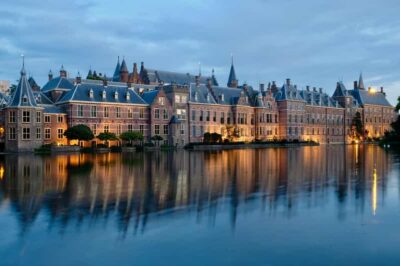
- The Binnenhof: Parliament housed in the oldest core
- City Hall and royal registrations: the ceremonies behind the doors
- Noordeinde Palace: the King’s place of work
- Peace Palace photo stop: brick, Gothic, and Neoclassical in one view
- Madurodam at the end: a miniature snapshot of Holland
- Small-group size is the hidden value here
- Price and value: is $126.29 a good deal?
- Itinerary breakdown, in a realistic walking-day order
- Best for your travel style
- Tips to make the walk feel worth it
- Should you book this Surprise Walk with a local?
Key things to know before you go
- Max 8 people, so you get more back-and-forth than on big bus tours
- Government landmarks first, with the Binnenhof and royal offices worked into the story
- Madurodam ends the walk, giving you a quick, fun snapshot of Holland
- No museum or monument entry included, so plan on seeing many stops from the outside
- Route adapts to your interests and walking pace, and can change if conditions are rough
From Mauritshuis to Madurodam, the tour’s real theme
This is not a random stroll. The core idea is that The Hague is where art, government, and everyday ceremonial life overlap. You start at Mauritshuis, a landmark museum tied to the top Dutch painting of the 17th century. Then you head into the political heart of the city at the Binnenhof, and you keep going through buildings connected to weddings, births registered for royalty, and the King’s work life.
By the time you finish at Madurodam, you have seen a version of Holland that mixes official brick buildings with something lighter and whimsical. That combination is why this works well for a first visit. You come away understanding the city’s “why,” not just the “what.”
And because the group stays small, you tend to get clearer explanations and more tailored pointers afterward, which matters when you have limited time.
More Guided Walking Tours in The Hague
Start at Mauritshuis: why the art museum matters even on a walking tour
Your tour begins at MauritshuisPlein 29. Even if you are not going inside during this outing, starting here is a clue about what you are about to get. Mauritshuis is home to the best Dutch painting of the 17th century, which puts you in the right mood for a city that prizes culture and display.
Practical upside: this makes the very first minutes less abstract. You are not just wandering into government buildings with no framing. The guide’s early context helps you understand how The Hague has long presented itself, both through art and through institutions.
One practical note: since museum entry tickets are excluded, you should treat Mauritshuis as your launch point for stories, not as a guaranteed museum stop. If you want to see the interior, plan that separately after the walk.
The Binnenhof: Parliament housed in the oldest core
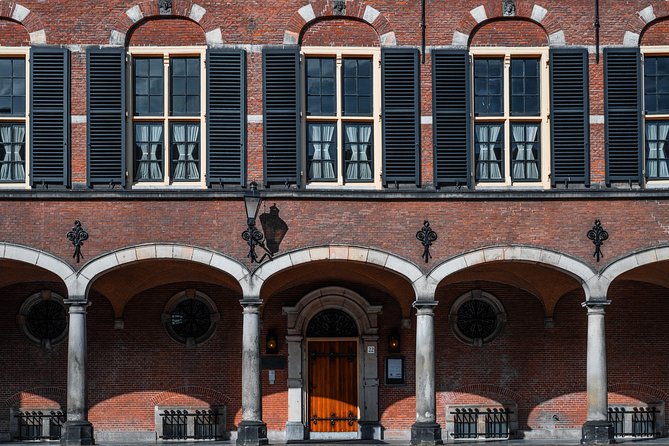
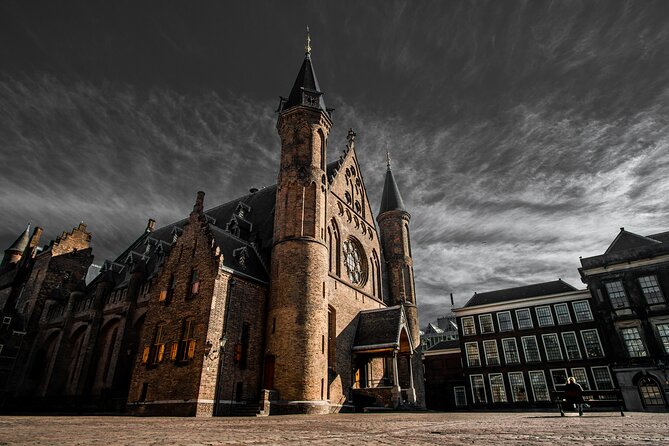
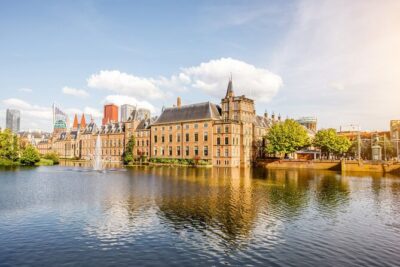
Next up is the Binnenhof. This is described as the oldest part of The Hague, and it houses both chambers of Parliament. That one detail gives the Binnenhof a lot more weight than a typical sightseeing stop.
What makes it interesting on a walking tour is that you are not just looking at a pretty building. You are learning how the city’s identity is built around decision-making. When your guide explains that it is the oldest section and also a functioning parliamentary setting, it changes how you read the streets around it. You start noticing why the area feels official, why it is laid out like it is, and why people care about this part of town.
Tip for your photo roll: look for angles that show how the buildings sit together. Even if you do not go inside, you can still capture the “institutional” look that defines this neighborhood.
City Hall and royal registrations: the ceremonies behind the doors
The tour then moves to the City Hall. This is where civic wedding ceremonies are held. It is also mentioned as where the Royal family registers family births.
That mix is the kind of detail that makes a small-group tour worth it. It is not only a place for public officials. It is also part of personal milestones, tied to both regular civic life and royal documentation. When you connect those roles, you get a better sense of how the Hague works as a center of governance and ceremony at the same time.
In plain terms: this stop helps you understand the local rhythm. You see how formal institutions are not just for paperwork and politics, but also for moments people remember.
Noordeinde Palace: the King’s place of work
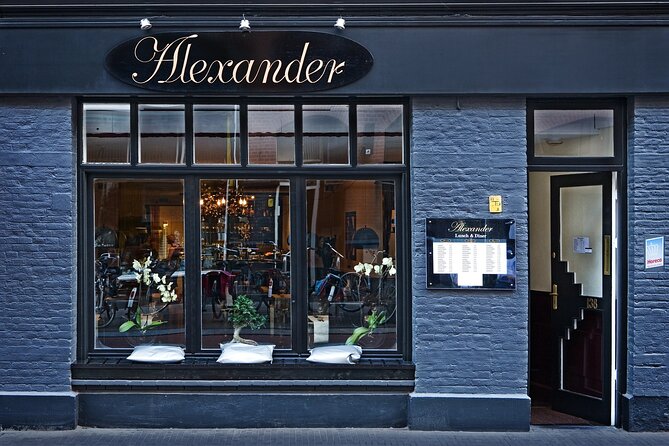
Then you head to Noordeinde Palace, described as the King’s place of work, and also framed as a major landmark in the route. This is one of those stops where the guide’s voice really matters, because you are seeing a royal workplace from the outside, and you need the context to appreciate what you are looking at.
Even without an entry ticket, the value here is the explanation. The palace is tied to active daily work, not just history as a backdrop. That is a different way of understanding royal buildings, because it treats them as living parts of government rather than as frozen museum pieces.
If you enjoy architecture, you will likely appreciate how your guide ties the building to its role. And if you do not care much about royalty, you still benefit because the story points back to the city’s administrative role.
More gables counted on foot:
- The Hague: Courtyard Walking Tour
★ 4.5 · 71 reviews - Walking Tour of Delft – The City of Orange and Blue
★ 5.0 · 50 reviews - Private Walking Tour of Delft: Dive into the Dutch Golden Age
★ 5.0 · 33 reviews - The Hague Private Walking Tour with a Local
★ 4.0 · 29 reviews
Peace Palace photo stop: brick, Gothic, and Neoclassical in one view
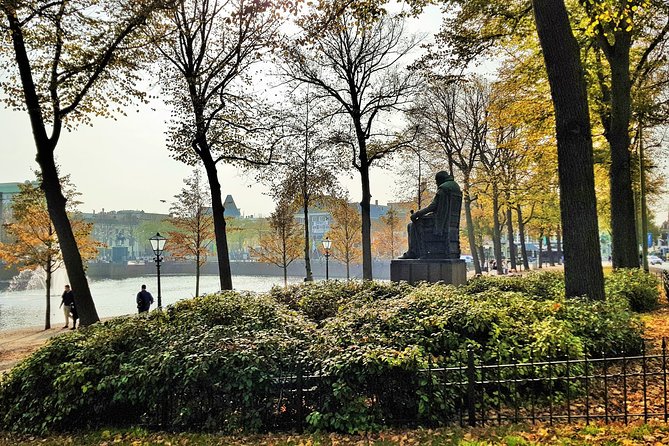
The route includes a photography moment at the Peace Palace, which the tour describes as an imposing brick building combining Gothic and Neoclassical styles.
This stop is short, but it can still be a high-impact one. Style mashups like this are often hard to spot unless someone points them out. The guide’s description helps you look at the building with sharper eyes, noticing how different design languages sit side by side.
If you like taking pictures, arrive ready. This is one of those places where a quick shot can turn into a keeper if you get the angle right. Since you may not be going inside, plan to frame what you can see: the brickwork, the overall massing, and the contrast of the styles.
Madurodam at the end: a miniature snapshot of Holland
The walk finishes at Madurodam, at George Maduroplein 1. This is a miniature park that replicates what makes Holland unique, including canal houses, windmills, and the Peace Palace.
Ending here is smart for two reasons. First, it is a change of pace from politics and palaces. Second, it gives you a compressed visual wrap-up of Dutch icons you can relate back to the real things you just saw.
Because the tour mentions that Madurodam includes elements like canal houses and windmills, you can treat the park as a fast review. You see the famous pieces of Holland in a simplified format, which helps them stick in your memory.
Also, if you are traveling with kids or you want something fun after a serious morning, this ending point does a lot of work. Even if you do not go deep into every exhibit, it helps close the loop on the theme of the day.
Small-group size is the hidden value here
Max 8 people is not a brag. It changes how the tour feels.
With a larger group, you usually get pulled along and talked at. Here, you are more likely to get explanations that fit what your group cares about. The tour also says the itinerary adapts to your interests and walking pace, and stops may vary based on weather. That flexibility is easier when the group stays small.
What you may notice most is how the guide can respond if you ask a question, not just repeat the same lines for everyone. That is also why personalized recommendations matter. A good local will help you decide what to see next based on how you like to travel, not based on what is easiest for a tour operator.
Price and value: is $126.29 a good deal?
At $126.29 per person for about 90 minutes, this is not the cheapest way to see The Hague. So the question is value for money.
Here is what you are paying for, based on what is included:
- A local guide
- A small group experience (up to 8 travelers)
- Personalized recommendations after the walk
- A mobile ticket
- Group discount availability (depending on how you book)
What you are not paying for:
- Entry tickets for transportation, museums, and monuments
So you should think of this as a guided city context service. You are buying the ability to understand the places you see, and to get a plan for what to do next. If you are the type who enjoys history and architecture connections, the guide’s storytelling can justify the price quickly.
If you are expecting a super playful route that feels totally unpredictable, one caution: the tour name may promise more surprise than the actual flow delivers. The strongest experiences seem to come from people who like structured facts paired with place-based context.
Itinerary breakdown, in a realistic walking-day order
Here is the order you will follow, and what to watch for at each part:
- MauritshuisPlein 29: your art-to-institutions kickoff. Expect the museum’s 17th-century Dutch painting fame to set the tone, not a full museum visit.
- Binnenhof: oldest core of The Hague, and home to both Parliament chambers. Focus on understanding the area as the city’s political engine.
- City Hall: civic weddings and royal birth registrations. Expect more human-scale ceremonial detail, not just government jargon.
- Noordeinde Palace: the King’s place of work. Treat this as a context stop where the explanation makes the exterior more meaningful.
- Peace Palace: short but photogenic stop for the brick building blending Gothic and Neoclassical styles.
- Madurodam at the finish: miniature versions of Dutch icons like canal houses, windmills, and the Peace Palace.
Because this is about walking time, not ticket time, keep your expectations aligned. Plan extra visits separately if you want museum interiors or longer monument time.
Best for your travel style
This tour is a good fit if:
- You want a first-pass orientation to The Hague
- You like history and how buildings reflect politics and civic life
- You care about architecture enough to pay attention to style and purpose
- You want a local to point you toward what to do next
It may be less ideal if:
- You do not enjoy factual explanations and would rather chase surprises on your own
- You need a route with minimal walking. The tour is not recommended for impaired mobility.
The good news: the pacing can adapt to your group and your guide can adjust how the tour moves. That helps most people have a comfortable experience.
Tips to make the walk feel worth it
This is a compact tour, so small choices matter.
- Wear comfortable shoes. You are moving between major landmarks, so your feet will do the time.
- Bring a phone with a charged battery for quick photo checks. The Peace Palace and the overall government-area views are worth saving.
- If you care about something specific, say it early. Since the route can adapt to interests, you will get more from the guide if you give a clear direction.
- Plan your next step right after. Because you get personalized recommendations, leave time in your schedule to use them, rather than rushing off with nothing mapped.
If you do those simple things, the tour’s short duration feels like a smart investment instead of a quick hit.
Should you book this Surprise Walk with a local?
I would book it if you want a focused, high-context orientation to The Hague. The small group size, the attention to government and ceremony, and the ending at Madurodam make it an efficient way to understand both the serious side of the city and the playful side that helps you remember it.
Skip it or adjust expectations if you are chasing a truly unpredictable, surprise-for-surprise’s-sake style. This is more about explained places than big spontaneous twists. Also, if mobility is a concern, take the not recommended note seriously.
If your goal is to leave with a clearer picture of The Hague and a practical plan for the rest of your day, this one is a strong match.
Latest to arrive along the quays of The Hague

The Hague Tours & Experiences, compared.




Royal Delft: Delftblue Factory and Museum Admission Ticket
Read our review →Browse the lists this tour appears in