
Leiden’s best stories are on your phone. This self-guided walking tour uses an easy app route and offline audio so you can pace the day your way, from canals and hofjes to the Rembrandt-era sights.
I also like how the walk gives you context, not just landmarks. You’ll learn why the canals matter, how windmills shaped everyday life, and how the city connects to major moments in Dutch and even American history.
One drawback to plan for: there’s no live guide to answer questions on the spot. You are doing the navigation and timing yourself, and since headphones are not included, you’ll want to bring your own setup if you prefer privacy.
In This Review
- Key highlights before you start
- Leiden in an hour, at your own pace
- Price and value: $7.20 for audio-led navigation
- How the Tourific app makes the walk easy
- Starting at Galgewater: canals and hofjes in your first minutes
- Windmills: the stop that explains daily life, not just photos
- The botanical garden and Tulip Mania context
- Rapenberg and the university vibe you can actually feel
- Young Rembrandt Studio: art lessons with a Pilgrims connection
- The Pilgrims site: when church history links two countries
- De Burcht: finish at a fortress with panoramic views
- How to pause, enter, and not lose the thread
- What makes this tour work for a day trip
- A few practical notes before you go
- Should you book this self-guided Leiden walk?
Key highlights before you start
- Offline audio for 1 year means you can download once, walk without internet, and replay later at home
- 11 audio locations with AI-narrated commentary in English, Spanish, French, and German
- Classic Leiden highlights like windmills, canals, hofjes, Rembrandt’s learning sites, and the university area
- Free stops at Young Rembrandt Studio and De Burcht help keep the cost down
- Flexible timing: you can pause at any point to step in, linger, or simply walk slower
Leiden in an hour, at your own pace
This tour is designed for a day in Leiden when you want structure without a rigid schedule. Plan for about 1 hour total, including the time you spend walking between stops and listening to the audio at each one. That makes it a smart choice if you’re pairing Leiden with other towns, or if your energy level wants a short, high-value route.
It starts at Galgewater and ends at De Burcht van Leiden (Burcht van Leiden, Van der Sterrepad 5). The walk is meant for most travelers, and the route is near public transportation, which helps if you need to hop in and out of the day easily.
Also, the group limit is max 20, but since it’s self-guided, you’re not locked into a bunch of people’s walking speed. In practice, it feels more like you’re following a local narrator who knows where to take you, while you control how long you stay.
More Walking Tours in Leiden


Price and value: $7.20 for audio-led navigation
At $7.20 per person, the value comes from what you get for that price. You’re paying for a full Tourific Smartphone app access (valid for 1 year), an in-app map, and audio commentary for 11 locations. That’s not just “where to go.” It’s an easy way to understand what you’re seeing, so the places you stop at mean more than a quick photo.
You also benefit from free admission at two key sites on the route: Young Rembrandt Studio and De Burcht. Free entries matter on a budget, and they also help because you don’t feel like you’re spending extra money to “complete” the experience.
Heads up on what you do pay for in a different currency: phone battery. You will want to arrive with your device charged, and you’ll want to download the tour before you start so the offline access works smoothly.
How the Tourific app makes the walk easy
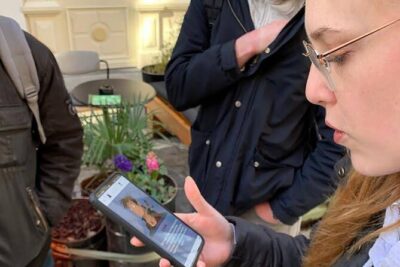
This is a mobile ticket experience. After booking, you receive confirmation at the time of booking, and you use the app to access your tour content.
What makes the app practical is the combination of:
- In-app map navigation, so you’re not constantly guessing where to turn
- Offline access once downloaded, so you can walk without chasing signal
- Audio you can replay at the location or later at home for the next year
The tour is available in English, French, German, and Spanish, which is great if you’re traveling with someone who prefers a different language.
One more reality check: a human tour guide is not included. If you love asking questions, this won’t replace a docent-led museum visit. But if you like learning at your own pace, pausing when something catches your eye, and keeping your day fluid, it works well.
Starting at Galgewater: canals and hofjes in your first minutes
Your route begins at Galgewater, and early on it sets the tone for how Leiden works: water first, then streets and buildings. The tour is built around the idea that Leiden’s famous features are connected systems, not random pretty scenes.
You’ll quickly get the storyline behind the city’s canals and how they shaped daily life. Leiden is famous for water-based city design, and the tour helps you understand why the canals are so important instead of treating them like background scenery.
If you’re the type who enjoys walking slowly and spotting small details, you’ll probably love the format. The audio guides you, then stops telling you what to do, so you can look around, take photos, or simply keep walking longer than planned.
Windmills: the stop that explains daily life, not just photos
One of the first major themed stops focuses on windmills and why they were integral to everyday life in the Netherlands. It’s a simple topic on the surface, but the value is in the explanation. Windmills in this part of the world are tied to work, water management, and how communities function.
What I like about this kind of stop is that it changes how you notice the urban details. Once you understand the role windmills played, you start connecting architecture and geography to practical needs. You stop seeing the skyline as decoration and start seeing it as infrastructure.
Practical tip: if you pause to take photos, give yourself an extra minute or two to listen before you move on. The windmill story is short, but it sets up the rest of the walk’s logic.
More gables counted on foot:
- Historical Leiden: Private Walking Tour with a Local Guide
★ 4.8 · 5 reviews - Best of Leiden: Private Walking Tour with a Local
★ 4.4 · 4 reviews - Leiden: Pilgrims Walking Tour
★ 5.0 · 1 review - Amsterdam Anne Frank: Small-Group Walking Tour & Local Guide
★ 4.8 · 12,789 reviews
The botanical garden and Tulip Mania context
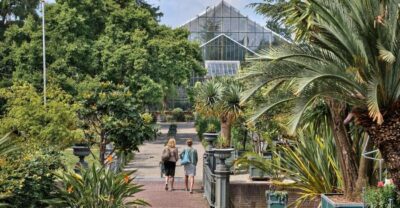
Next up is a stop centered on one of the oldest botanical gardens in the world. This part of the walk is especially good if you like history that actually explains why a place mattered, not just when it existed.
The audio connects the garden to the infamous Tulip Mania of the 17th century. That link matters because it turns a garden into a window on trade, collecting, and cultural obsession during a specific moment in time. It’s a reminder that the Netherlands’ relationship to plants, money, and global curiosity has long roots.
If you plan to step inside, treat it as a chance to slow down. You can pause the tour at any point, and this stop is the kind where an extra 10 to 15 minutes can feel worthwhile if you’re curious. If you’re in “move fast” mode, you can still get the full story by listening outdoors and continuing.
Rapenberg and the university vibe you can actually feel
Another stop highlights Rapenberg and gives you a sense of the city’s prestigious university culture, including famous alumni from this institution. Even if you don’t stop for an entrance ticket, this kind of thematic stop helps you read the streets differently.
Leiden is one of those cities where university life isn’t confined to one campus bubble. The school’s influence is woven into the city feel, the buildings, and the rhythm of the area. The tour’s approach helps you notice that university identity is part of what makes Leiden feel compact and alive.
One suggestion: if you like architecture, keep your eyes open at the edges of where you’d normally walk straight through. This stop is more about perspective than a single “must see” building.
Young Rembrandt Studio: art lessons with a Pilgrims connection
Stop 1 is Young Rembrandt Studio, and it’s listed as 15 minutes with admission ticket free. That’s a great combo for value: you get a themed, story-led stop without a cost barrier, and the time window is perfect for a focused visit.
The tour emphasizes what Rembrandt learned here. That alone makes it appealing if you’re drawn to Dutch art. But the best part is the way the audio connects the site to the church and then to the Pilgrims who lived in Leiden before their journey to America.
That’s one of the tour’s strengths. It doesn’t keep history trapped inside Dutch borders. It shows how Leiden served as a staging point in human stories that later moved toward America, so you leave feeling like the city is part of a longer narrative.
Practical pacing: since it’s a short stop, don’t rush your listening and walking at the same time. Take 1 minute to get oriented, press play when you’re ready, then step in and out without trying to do everything at once.
The Pilgrims site: when church history links two countries
This portion of the Young Rembrandt Studio area focuses on the church’s connection to the Pilgrims. Even if you don’t know much beforehand, the audio framing helps you understand why it has significance in both Dutch and American history.
A useful way to think about it: church buildings often hold layers of meaning. They are local community anchors, but they can also become part of migration, refuge, and world-changing departures. The tour’s audio nudges you to see the church not only as a religious space, but as a waypoint in a human journey.
If you want to maximize this stop, be intentional about silence for a minute or two while the audio plays. Let the story land before you move on. It will make the next, more scenic stop feel like a proper ending rather than just another viewpoint.
De Burcht: finish at a fortress with panoramic views
The final stop is De Burcht, listed as about 10 minutes, also with admission ticket free. Ending here is smart. You go from story-driven history to open views, and your brain gets to reset.
The audio ends at a historic fortress with panoramic views of the city. De Burcht is a classic “stand back and see the plan” kind of stop. You’ll likely notice the canal layout, the way streets funnel toward key areas, and how compact the city feels when seen from above.
My practical advice: if the weather is clear, linger. The audio gives you the story, but the views are something you feel with your eyes, not just what you hear. If it’s windy or cold, keep it efficient and still catch the highlights.
How to pause, enter, and not lose the thread
The tour is designed so you can pause at any point where you want to enter and explore more. That flexibility is the whole point of a self-guided walk. But it also introduces a small risk: you can get so interested you drift far off schedule.
Here’s a good way to handle it:
- Listen to the audio segment before you enter anything, if you can
- If you need extra time, plan for it at the “longer interest” stops like the botanical garden
- Keep moving between stops so you don’t end up rushing at the De Burcht finish
Think of the audio as your spine. Pause for muscles, not for hours. This approach keeps the route feeling complete and satisfying rather than chaotic.
What makes this tour work for a day trip
This walk is especially suited to you if:
- You have about an hour to spend and want a focused route
- You enjoy learning while walking, but you don’t want a group schedule
- You’re trying to understand how Leiden’s canals, windmills, and university are connected
- You want classic highlights plus the feel of quieter places, including the tour’s focus on hofjes
It’s also a good backup plan for days when museums feel too heavy. The stops are varied, and the pacing is friendly. You can handle a lot of meaning without needing a full-day commitment.
If you’re traveling with kids or family, the short duration and free entry stops can help. If your group includes people who want deeper museum time, you can pause and go inside while others take photos and listen to the audio from the edge.
A few practical notes before you go
- Bring your own headphones if you want audio that stays private. The tour does not include headphones.
- Plan to use your phone’s navigation and map, so keep your device charged.
- The tour is available in multiple languages, which can be a big deal if your travel group has mixed preferences.
- The meeting and ending areas are clearly defined, and the end at De Burcht is a satisfying wrap-up point.
- Service animals are allowed, and the experience is near public transportation.
Should you book this self-guided Leiden walk?
Book it if you want an easy, low-cost way to get your bearings in Leiden and learn what you’re seeing along the way. The offline audio, the 1-year access, and the focus on story-driven stops like windmills, canals, hofjes, Rembrandt’s learning site, and the university area make it feel like more than a basic route.
Skip it if you expect a live guide. If you want real-time answers, longer explanations, or guided inside-the-building interpretation beyond what the audio provides, you’ll likely be happier with a guided tour option.
Overall, for a short time in Leiden, this is a strong value choice: you get meaningful context, a walkable route, and two free historical stops, all controlled by you.
More Self-Guided Tours in Leiden
- e-Scavenger hunt Leiden: Explore the city at your own pace★ 4.0 · 19 reviews
- Discover Leiden with a self-guided Outside Escape city game tour!★ 5.0 · 16 reviews
- Leiden Rembrandt Quest Through His Life: Exploration Game★ 4.5 · 7 reviews
- Leiden Self Guided Sherlock Holmes Murder Mystery Game★ 3.0 · 2 reviews
Latest to arrive along the quays of Leiden


Leiden Tours & Experiences, compared.
Cruise through the Historic City Center with Guide
Read our review →
Historical and Fun City Tour in German, English, or Dutch
Read our review →
Leiden Tour with Live guide and Visit to Rembrandt’s First Studio
Read our review →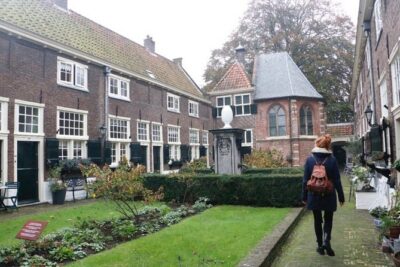
e-Scavenger hunt Leiden: Explore the city at your own pace
Read our review →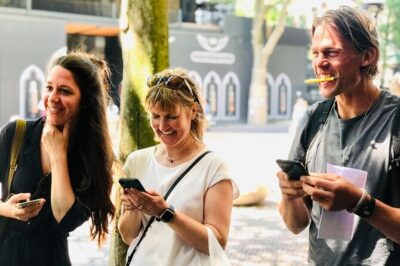
Discover Leiden with a self-guided Outside Escape city game tour!
Read our review →Browse the lists this tour appears in