
Leiden shows where the Mayflower chapter began. This 2-hour guided walking tour turns the Pilgrim Fathers years in Holland into something you can track street by street, with stop-and-explain moments that connect faith, community, and big ideas. I especially love how the guide links the story to Pieterskerk and brings in the role of pastor John Robinson, not just as a name, but as part of local life.
For context, you do not just hear dates. You walk through places that shaped routines, like the neighborhoods where people lived and worked, and the civic spaces where a city’s values show up in real architecture. One consideration: this is a walking tour through historic streets and sites, so comfortable shoes matter, and you will be on foot for the full 2 hours.
If you like early American history with real-world geography, this is a smart way to spend time in Leiden. It is also a good fit if you want the Dutch side of the story, including how the Dutch Golden Age and civic life influenced what the Pilgrims experienced.
In This Review
- Key highlights worth your attention
- Entering Leiden’s Pilgrim Chapter, without losing your bearings
- Meeting at Papegaaisbolwerk 20, then getting the city story started
- Pieterswijk neighborhoods: how daily life shaped community
- Pieterskerk: the church stop that makes names feel real
- Leiden’s education thread: Hortus Botanicus and the idea of intellectual freedom
- Leiden City Hall and the finish at Gemeente Leiden | Stadhuis
- Why the Dutch Golden Age details matter more than you think
- Price and value: $29 for two hours of guided place-making
- Who should book this walk, and who might skip it
- Practical tips so the 2-hour walk stays fun
- Should you book the Leiden Pilgrims Walking Tour?
- FAQ
- How long is the Leiden: Pilgrims Walking Tour?
- Where does the tour meet?
- What price should I expect?
- What stops or sites are included?
- What language is the tour guide?
- Is the tour wheelchair accessible?
- What is included or not included in the price?
Key highlights worth your attention
- A Pilgrim Fathers story grounded in specific Leiden locations, not generic background
- Pieterskerk, including the connection to congregation members buried there
- John Robinson’s influence, tied to where sermons and community life happened
- Leiden University’s 1575 founding, explained as part of the climate of intellectual freedom
- Dutch Golden Age themes, including the Siege of Leiden and the city’s resilience
- A short, focused 2-hour route that fits into a busy day
Entering Leiden’s Pilgrim Chapter, without losing your bearings
Leiden is one of those Dutch cities where history does not sit behind a museum wall. It lives in the streets, the canal-side views, and the way the older city center still feels like a place where daily life happened. That is the core idea of this tour: the Pilgrims did not arrive in a blank landscape. They stepped into a functioning society that already had systems for religious life, local responsibility, and education.
What I like most is the way the guide keeps the story practical. You learn why Leiden mattered in 1609, not just that it mattered. And you keep moving, so the time period stays attached to a place you can point to.
The tour is priced at $29 per person, and that is the first reason I think it feels like value. For two hours, you are not paying just for commentary. You are paying for a guided path through multiple meaningful stops, including Pieterskerk and other landmark sites tied to the Pilgrims’ experience.
More Walking Tours in Leiden


Meeting at Papegaaisbolwerk 20, then getting the city story started
Your tour begins at Papegaaisbolwerk 20, at a meeting spot described as a monumental factory from 1905. That choice is helpful. You start in an area that gives you an easy “modern-meets-old” sense of scale, then the guide steers you into the historic parts of Leiden where the Pilgrims lived and worked.
You will want to arrive a few minutes early to get your shoes on and your brain switched to walking-mode. Even with a short duration, a walking tour works best when you are not rushing at the start.
The guide runs the tour in English or Dutch, so you can expect clear explanations without needing to translate on the fly. If you prefer group history over solo reading, this style is friendly, because you get to ask questions in real time while the scenery is still in front of you.
And yes, it is designed to be manageable. The tour lasts 2 hours, so you can pair it with other Leiden stops without turning your day into a marathon.
Pieterswijk neighborhoods: how daily life shaped community
After you get oriented, the route focuses on the Pieterswijk area, which helps ground the story. This is where “Pilgrim history” stops being a lesson and starts becoming daily routine. You see the kind of historic street pattern that would have framed where families lived, walked, and worked.
The tour language emphasizes neighborhoods where people lived and worked, and you also get a sense of livelihoods. A key part of the Pilgrims’ Leiden years was employment in the thriving Dutch textile industry, and you will connect that to the places you are standing near. That matters because it corrects a common mental image. These were not just scholars and churchgoers. They were workers trying to build stable lives.
Leiden is also described as a place where worship could happen openly for more than a decade. The tour frames this as something rare in early 17th-century Europe. When you connect that idea to neighborhoods, the point lands better. It was easier to build a community when daily life did not constantly feel like you were hiding.
You also hear stories tied to individual Pilgrims and their families. That approach makes the emotional side more concrete, especially the difficult decision to leave a place where peace had finally taken root. If you enjoy human-scale history, this section is where the tour becomes more than architecture.
Pieterskerk: the church stop that makes names feel real
Next comes one of the tour’s biggest anchor points, Saint Peter’s Church, Leiden, commonly referred to as Pieterskerk. This is where you get the burial connection described on the tour. Many members of the congregation were buried here, so you are not just hearing about faith in the abstract.
Standing near a site tied to burial adds weight. It changes the tone from “they lived here” to “their lives ended here, in this place.” That is why Pieterskerk is such a powerful stop on a short route.
The tour also connects Pieterskerk to the community’s spiritual rhythm. You learn about the sermons led by their pastor, John Robinson, and how nearby gathering points supported the congregation’s shared life. Even if you already know the Pilgrim story, tying it to a specific church context helps you understand why religious practice was central to everything that followed.
A practical tip: churches and older sites can mean more standing around for explanations. If you have any mobility limits, you will likely still be able to enjoy it because the tour is listed as wheelchair accessible, but you should plan for uneven historic surroundings and some waiting while the guide gathers everyone.
Leiden’s education thread: Hortus Botanicus and the idea of intellectual freedom
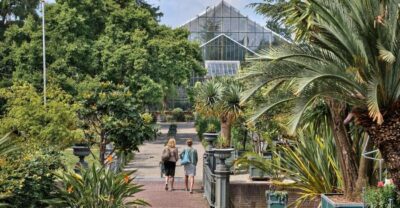
From the church area, the tour shifts into the education-and-ideas side of Leiden with a stop at the Hortus Botanicus, Leiden. A botanical garden might not scream Pilgrims at first glance, but it fits the tour’s argument. Leiden was not only a safe harbor for worship. It was also a place where learning had a reputation.
Then you connect the dots with Leiden University, founded in 1575. The tour highlights how the university helped create a climate of intellectual freedom the Pilgrims encountered and admired. In other words, the Pilgrims were not just seeking permission to worship. They were living in a city that valued education and open inquiry enough to attract and shape communities.
This is a subtle but important theme: ideas of self-governance, faith, education, and cooperation took root during the years in Leiden. The tour presents these values as seeds carried forward, and tying them to Leiden University makes the story feel grounded rather than symbolic.
If you like when history connects to how people think, this segment will likely click. You get to see how a city can influence beliefs without a single dramatic event. It can be daily, civic, and educational.
More gables counted on foot:
- Historical Leiden: Private Walking Tour with a Local Guide
★ 4.8 · 5 reviews - Best of Leiden: Private Walking Tour with a Local
★ 4.4 · 4 reviews - Self Guided Walking Tour at Leiden
★ 5.0 · 1 review - Amsterdam Anne Frank: Small-Group Walking Tour & Local Guide
★ 4.8 · 12,789 reviews
Leiden City Hall and the finish at Gemeente Leiden | Stadhuis
The tour closes with the civic side of Leiden, including a visit to Leiden City Hall, with the walk finishing at Gemeente Leiden | Stadhuis. This is where the tour’s “values” theme gets practical.
The city’s role during the Dutch Golden Age is a recurring thread, and you are meant to connect it to what the Pilgrims observed. The tour discusses Leiden’s resilience during the Siege of Leiden and the city’s rapid growth as a center of trade and craftsmanship. Those are the kinds of details that help you understand what independence looks like in real life, not just in political speeches.
You also learn how Leiden reflected civic responsibility, religious tolerance, and local self-rule. When you are near a municipal building like this, those ideas stop being abstract. They become part of how a society organizes itself.
I also like that the guide brings the narrative back to the Pilgrims’ ultimate goal. Even after all the safety and community-building, the tour explains why they still chose to leave: concerns about the future for their children and a desire to preserve their community. Then it ends by connecting the departure from Leiden to their journey aboard the Mayflower in 1620.
That ending choice makes the walk feel complete. You see the arc from arrival and adaptation to departure and legacy, and you end in a place that symbolizes civic order.
Why the Dutch Golden Age details matter more than you think
Some history tours drown you in background. This one uses background to clarify cause and effect. The Dutch Golden Age details, the Siege of Leiden mention, and the focus on trade and craftsmanship are not random trivia. They support the tour’s central claim: the Pilgrims lived among a society with local responsibility and tolerance, and they noticed how it worked.
That is a big reason the tour is aimed at people interested in American heritage. It frames the Pilgrim story as part of a two-way exchange. The Pilgrims changed history in North America, yes. But Leiden’s social structure played a role in shaping what they believed was possible.
It is also why the tour emphasizes cooperation. You hear that ideas of cooperation and self-go-governance took root in Leiden. When a society allows people to build community around shared beliefs, cooperation becomes necessary for survival and stability. You can see how that would become a carried value.
This is the type of tour that rewards curiosity. If you ever wondered how a “religious refuge” could produce political and educational ideas, this gives you a path to that answer.
Price and value: $29 for two hours of guided place-making
At $29 per person, this is not a budget-brutal walk, and it is not a “just pay and wander” experience either. You are paying for a live guide, English or Dutch, plus guided visits that anchor the story in multiple sites.
For value, think about what you would otherwise do alone. You would need to find the right church context, connect the university founding to the Pilgrims, and translate the meaning of civic spaces into a coherent story. The tour does that for you while you are walking, which is efficient.
You also get included access-style benefits that matter for interpretation: the tour covers historic neighborhoods where the Pilgrims lived, gives insights into Leiden’s Dutch Golden Age role, and includes a visit connected to Pieterskerk. On top of that, the guide offers stories of individual Pilgrims, which is usually where tours rise above standard sightseeing.
One more detail: the provided reviews highlight that the guide named Bart is enthusiastic and pleasant, with strong knowledge of Leiden and the Pilgrim Fathers story, and that he adds extra city history for context. That kind of guiding energy is exactly what makes a short walking tour feel worth the time.
Who should book this walk, and who might skip it
This tour fits best if you fall into at least one of these buckets:
- You care about the Pilgrim Fathers and how their ideas formed before 1620
- You want to pair Dutch history with early American heritage
- You like guided walking tours that connect stories to specific buildings and neighborhoods
It might be less satisfying if you only want big, standalone landmarks with minimal story. This walk is themed, so the narrative thread is the point. The route is built to follow that thread, and the stops are chosen to support it.
It is also a good choice for a day where you want something focused. Two hours is long enough to feel like you learned, short enough to keep your energy for the rest of Leiden.
Practical tips so the 2-hour walk stays fun
Wear comfortable walking shoes. The tour is described as involving walking through historic streets and sites, so you will want grip and cushioning.
Bring a small amount of patience for church and civic stop pacing. Even in two hours, a guide needs time to explain why each place matters, and you will likely pause more than you would on a casual stroll.
If you are coming from outside Leiden, the tour price does not include transportation to and from the city. Plan your travel separately so the walking portion feels stress-free.
And if you are traveling with someone who uses a wheelchair, the tour is listed as wheelchair accessible, which is a strong point for planning ahead.
Should you book the Leiden Pilgrims Walking Tour?
If you are interested in how the Pilgrim Fathers story fits into the real fabric of Leiden, I would book it. Pieterskerk, John Robinson, and Leiden University are the kind of anchor connections that make the Pilgrim narrative feel grounded, not like a generic lesson.
The $29 price also feels fair for what you get: guided context, multiple meaningful sites, and a clear thematic arc that ends with the Mayflower departure in 1620. If your time in Leiden is limited, the 2-hour format is a practical win.
If you want, tell me your travel dates and what other Leiden sites you plan to see, and I can help you slot this walk into a smooth day plan.
FAQ
How long is the Leiden: Pilgrims Walking Tour?
The tour lasts 2 hours.
Where does the tour meet?
The meeting point is at Papegaaisbolwerk 20, at the monumental factory from 1905.
What price should I expect?
The tour costs $29 per person.
What stops or sites are included?
The tour includes visits connected to Pieterswijk, Saint Peter’s Church (Pieterskerk), Hortus Botanicus, and Leiden City Hall, and it finishes at Gemeente Leiden | Stadhuis.
What language is the tour guide?
The live guide speaks English and Dutch.
Is the tour wheelchair accessible?
Yes, it is listed as wheelchair accessible.
What is included or not included in the price?
Included: the guided walking tour, visits to historic neighborhoods where the Pilgrims lived, stories of individual Pilgrims, insights into Leiden’s role during the Dutch Golden Age, and visits to Pieterskerk and other significant sites. Not included: transportation to and from Leiden, meals and drinks, and personal expenses.
Latest to arrive along the quays of Leiden



Leiden Tours & Experiences, compared.
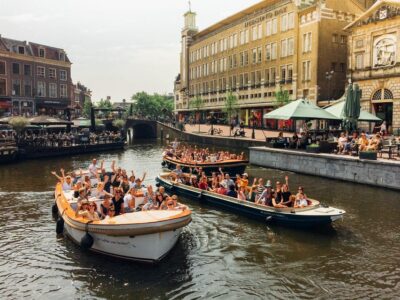
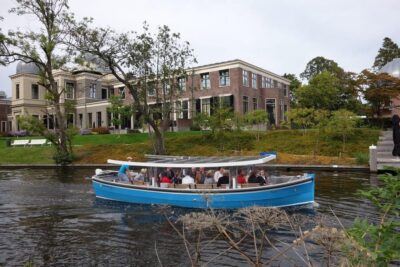
Cruise through the Historic City Center with Guide
Read our review →
Historical and Fun City Tour in German, English, or Dutch
Read our review →
Leiden Tour with Live guide and Visit to Rembrandt’s First Studio
Read our review →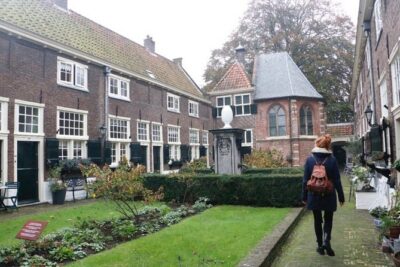
e-Scavenger hunt Leiden: Explore the city at your own pace
Read our review →
Discover Leiden with a self-guided Outside Escape city game tour!
Read our review →Browse the lists this tour appears in