
Reviewed · ROTTERDAM TOURS & EXPERIENCES
Rotterdam & Gouda Private Daily Walking Tour
Rotterdam and Gouda in one day is a smart way to see more. You get a private walking route that strings together modern architecture, old ports, and the kind of street-level landmarks that make cities feel real fast. Two standouts for me are the guide-led storytelling that gives you context at every stop, and the fact that you actually get inside at least a couple of highlights, like the Kijk-Kubus and the Red Lion windmill.
One thing to think about is cost creep. Several major sights on the day, like the Saint-John Church and the Gouda Cheese Experience, list separate admission fees, so you will want to budget extra on top of the tour price.
In This Review
- Key Things I’d Prioritize
- Price and Group Size: Is This Really Good Value?
- Where the Tour Starts: Rotterdam’s Port Area, Not the Usual Tourist Drop-Off
- Rotterdam Centraal and the Big-Station Feel
- Grotekerk Saint-Laurens and Erasmus: Rotterdam’s Oldest and Its Big Thinker
- Markthal and Kijk-Kubus: The Modern Rotterdam Stuff You Can Actually See
- Oude Haven to Witte Huis: Ports, Coffee Stops, and WWII Survivors
- De Hef and the Bridge-Story: Rotterdam’s Red Bridge and Modern Engineering
- The Gouda Shift: When You Trade Bridges for Brick Streets
- Saint-John Church and the “Long Church” Moment
- Tapijthuis, Leper Gateway, and Old Market Structures
- The Red Lion Windmill and Why This Stop Feels Different
- Remonstrantse Kerk and Weeshuis: Faith Buildings and a Former Orphanage Hotel
- Tour Pacing, Stops Count, and What a 7-Hour Day Really Means
- The Guide Matters, and This One Gets It
- Should You Book This Rotterdam and Gouda Private Walking Tour?
- FAQ
- How long is the Rotterdam and Gouda private walking tour?
- How many people can be in the group?
- What time does the tour start?
- Where do we meet and where does the tour end?
- Is pickup available?
- What language is the tour offered in?
- What’s included in the price?
- What admission fees are not included?
- Is public transportation included?
- Is there a mobile ticket?
- What is the cancellation policy?
Key Things I’d Prioritize
- Private group of up to 4, so questions stay easy and the pace stays human.
- Rotterdam bridges, ports, and WWII survivors, all on foot in one well-planned flow.
- Kijk-Kubus entry is included, letting you see how cube living actually works.
- Windmill ticket is included for Molen De Roode Leeuw, a classic working-mill feel.
- Gouda’s center is built for walking, with city hall, churches, and old gateways close together.
Price and Group Size: Is This Really Good Value?
This tour is priced at $592.56 per group, up to 4 people, for about 7 hours. That pricing only feels “fair” if you can fill the group, because the day is not cheap on a per-person basis when it’s just one or two of you.
If you book with a full party of 4, the tour portion works out to roughly $148 per person. Then you still need to plan for add-on admissions that are not included, specifically the Saint-John Church (about €11) and the Gouda Cheese Experience (about €16). Public transportation is listed as not included at €15 per person, but the tour notes also say transportation is included for the 7 hours. That mismatch matters. Before you go, confirm what your guide covers versus what you pay for separately, especially if you are starting away from the meeting area.
What you do get that helps value:
- Coffee and/or tea are included.
- Kijk-Kubus admission is included.
- The Red Lion windmill ticket is included.
So the best way to think about the price is not just the number, but the mix. You are paying for private time, local routing, and the guide’s attention, then your “museum tabs” are mostly limited to two obvious paid experiences.
More Guided Walking Tours in Rotterdam
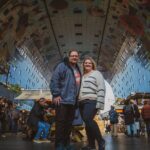
Where the Tour Starts: Rotterdam’s Port Area, Not the Usual Tourist Drop-Off
Your meeting point is the Port of Rotterdam, Wilhelminakade 909, 3072 AP Rotterdam. The day starts at 9:00 am and ends back at that same meeting point.
You also have pickup options. Because the tour can be customized, you might be picked up:
- at your hotel in Rotterdam or Gouda
- at Rotterdam or Gouda train/central points depending on the plan
- even at Amsterdam Central Train Station or Amsterdam Passenger Terminal (APT)
This flexibility is a real convenience for a first-time visit to the area. Rotterdam spreads out more than people expect, so avoiding extra admin and transit hassle can save time and energy, especially on a walking day.
Also note the tour is offered in English, uses a mobile ticket, and has a maximum of 4 travelers. That small size is part of why the pacing feels calmer than a large-group city tour.
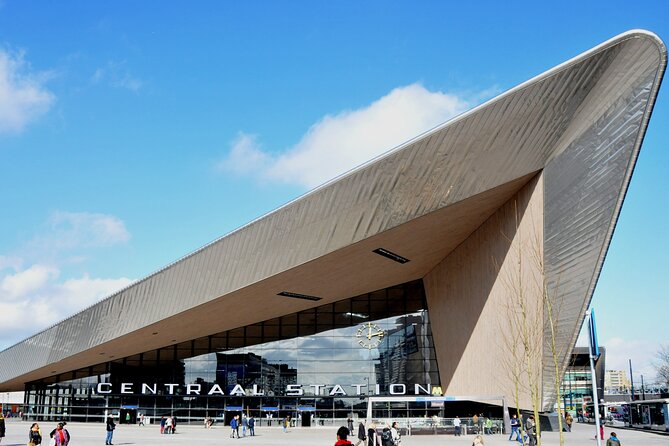
Rotterdam Centraal and the Big-Station Feel
The day opens at Rotterdam Centraal Station, described as a major architectural highlight and the city’s main rail hub with an average flow of about 170,000 passengers daily.
This stop matters because it sets the tone. Rotterdam is a city that rebuilt itself after war damage, and the station gives you a modern anchor point right away. Instead of just seeing buildings, you’re learning how the city functions as a living system.
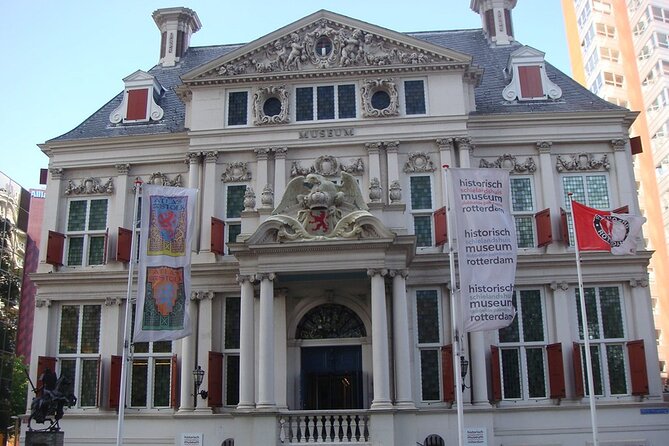
After the station, you head toward a 17th-century water-policy building tied to Hoogheemraadschap Schieland and Krimpenerwaard. It was linked to Napoleon Bonaparte as temporary accommodation. Even if you only get a quick look, the payoff is learning why this region thinks about water management as part of everyday life, not as a background issue.
Grotekerk Saint-Laurens and Erasmus: Rotterdam’s Oldest and Its Big Thinker
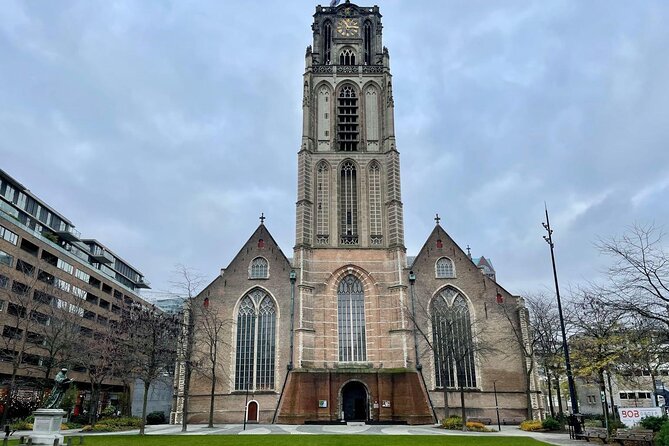
Next up is Grote of Sint-Laurenskerk, a late Gothic building dating to 1525, and the oldest building in Rotterdam. It’s also noted for surviving Nazi bombing on May 15, 1940.
That survival detail is not just trivia. It explains why Rotterdam’s city story is split into before and after, old and rebuilt. When you stand somewhere that made it through, you feel the weight of continuity. If you like architecture and history that connects to real events, this is one of the stronger stops on the day.
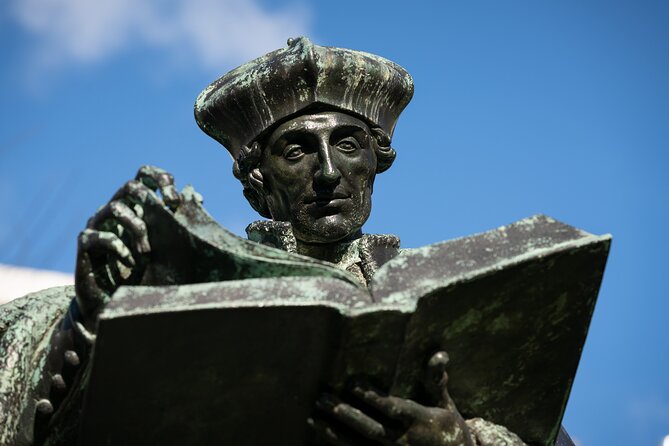
Then you move to the Erasmus Monument, honoring Desiderius Erasmus of Rotterdam. He is described here as a philosopher, theologian, scholar, and priest from the 16th century, and you’ll see his name show up in public buildings and education institutions. It’s a small pause, but it helps you notice something you might otherwise miss: Rotterdam’s identity is not only steel and ports, it also has an intellectual footprint.
Markthal and Kijk-Kubus: The Modern Rotterdam Stuff You Can Actually See
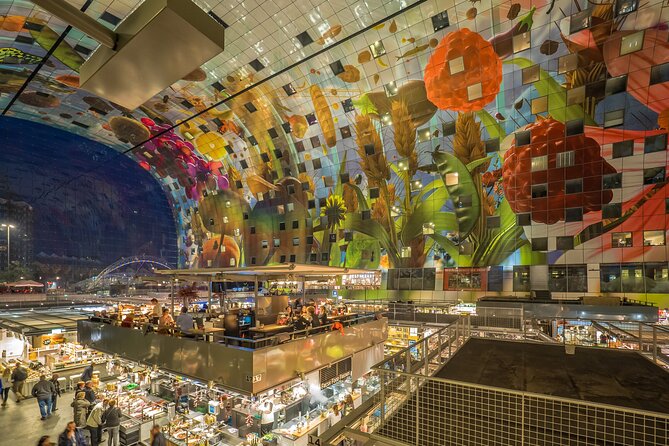
Markthal is a big contrast to the older church and monuments. It’s a modern building shaped in a horseshoe around a major square, combining a market with living space. It’s often nicknamed the Sistine Chapel of Rotterdam, which hints at how visually striking the interior is, even if you just get a short look.
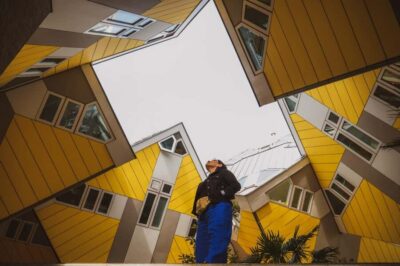
Then comes the stop I’d put on the “do not skip” list: Kijk-Kubus. These are the cube-like top apartments sitting on columns, and the key point you’ll learn is that because of the form, only 3/4 of the internal space is practical for normal living. In other words, this is not a gimmick you just photograph. It makes you understand tradeoffs in design when you’re forced to inhabit a shape.
Admission for Kijk-Kubus is included, which is a smart value move. Many tours stop at photo angles only. Here, you get a real entry moment.
More Private Tours in Rotterdam
- Rotterdam in half a day: All-inclusive, Authentic private Tour of Rotterdam
★ 5.0 · 146 reviews - All-Inclusive Private Windmill Tour to Kinderdijk from Rotterdam
★ 4.5 · 59 reviews - Rotterdam: Private Walking Tour with a Local
★ 4.8 · 49 reviews - Private Pedicab/Rickshaw Tour of Rotterdam With a Local Guide
★ 4.5 · 47 reviews
Oude Haven to Witte Huis: Ports, Coffee Stops, and WWII Survivors
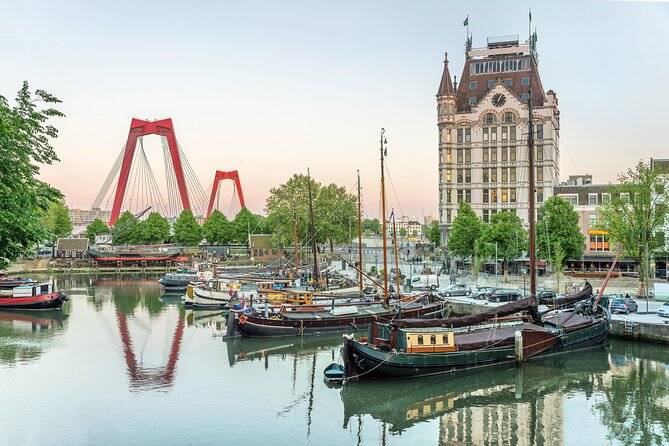
You then drift into the older heart of Rotterdam’s waterfront, starting with Oude Haven, one of the city’s oldest ports (though not the oldest). It used to be the meeting area for the Rotte river and the New Meuse route. Today it’s a favorite hangout area, with coffee bars, restaurants, taverns, and clubs.
Oude Haven is where the walking tour starts feeling like a stroll. You’re still learning, but the setting lets you reset. If you want a break without giving up the sightseeing, this is the right kind of stop.
From there, you see Witte Huis, once described as the highest “skyscraper” in Europe in the late 19th century, and also a rare survivor of Rotterdam’s Nazi bombing on May 14 to May 15, 1940 (the stop notes point to that period). This is one of those moments where architecture becomes a timeline. The contrast between old height and later rebuilding is the lesson.
De Hef and the Bridge-Story: Rotterdam’s Red Bridge and Modern Engineering
Rotterdam is famous for bridges, and you see several of them in a short stretch:
- Willemsbrug, the Red Bridge, dedicated to Willem III, connecting central and northern parts with southern districts
- De Hef, the big steel lift bridge (called The Lift), which used to lift and rotate for rail traffic, operating before the rail tunnel was built under the river
- Monument to the Merchant Navy ‘de Boeg’, a World War II memorial for the 3,500 people lost from Dutch merchant ships
- Leuvehaven, an open-air maritime museum area focused on steamships, cargo equipment, and shipping technology from the mid-1800s to the 1970s
This cluster is strong for two reasons. First, it keeps the city story focused: Rotterdam was built around water. Second, it gives you a mental map. By the time you reach the river crossings, you’re no longer guessing where everything is.
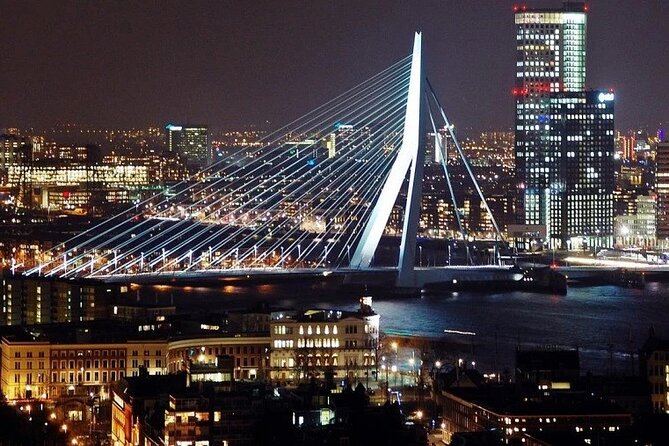
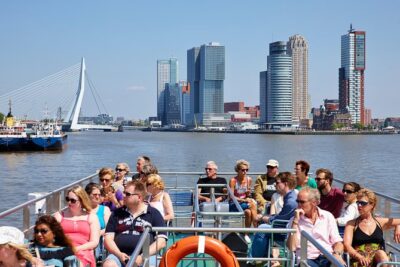
Then you end the Rotterdam section with Erasmus Bridge, described as the youngest bridge in Rotterdam and one of the city’s best-known symbols. It’s also nicknamed the Swan or the Harp, and described with a dramatic hanging structure and a large opening part. It’s one of those “wow” skyline moments, but framed as an engineering landmark, not just a photo stop.
The Gouda Shift: When You Trade Bridges for Brick Streets
After Rotterdam, you head to Gouda for a very different vibe. Gouda is smaller, slower, and more intimate. The pacing changes the moment you arrive, and that’s part of the appeal of this tour combo.
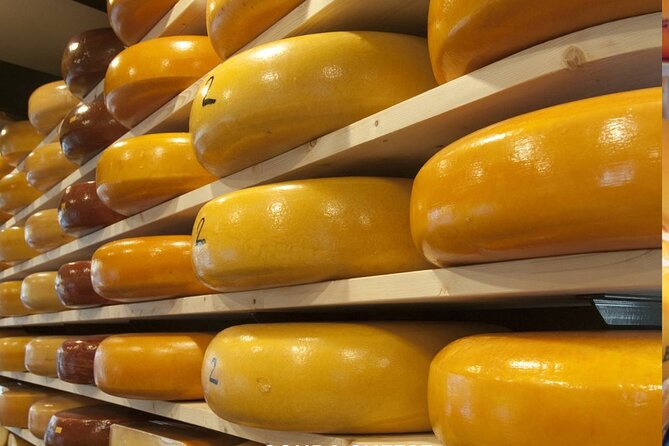
Your first big Gouda moment is the Gouda Cheese Experience, a 3 in 1 visit at a famous cheese museum and factory. Expect entertainment, tasting, and education. The admission is not included, about €16 per person, so treat it as a planned extra if cheese is your thing.
Next is Stadhuis Gouda, the city hall building dating to 1459. Admission is not included, but the building is an important anchor because it ties the city to its governance roots. Then you get VVV Gouda, a former custom house linked to the cheese trade from 1668, plus several other historic buildings.
This is also where the walk becomes more “street and details.” You pass gateways, church facades, and old quarters, and your guide’s job is turning them into a story you can follow without a study guide.
Saint-John Church and the “Long Church” Moment
One of the paid stops is Saint-John Church, with the provided admission fee noted as €11.00 per person.
The standout detail you get from this stop is that it’s famous as the longest church in the Netherlands and noted for 72 stained glass windows. Even if you only spend a short time inside or at the key viewing areas, that stained glass count gives you a concrete mental hook. It’s not just “pretty windows.” It’s a specific reason this church is known.
If you are traveling with someone who cares about interiors and stained glass more than, say, waterfront walks, this is the stop that tends to make the added ticket feel worth it.
Tapijthuis, Leper Gateway, and Old Market Structures
You’ll move through several smaller but memorable Gouda landmarks:
- Tapijthuis, described as a medieval building that started as a workshop by Flemish tapestry weavers, later became connected with a secret Catholic children school, then a 19th-century brewery, and later an art studio and gallery. Even if you only get a brief look, it’s a reminder that these buildings keep changing purpose.
- Lazaruspoortje, a famous gateway tied to a house that once hosted people suffering from leprosy.
- Rijksmonument De Visbanken, a former fish market dating to the mid-16th century.
- Evangelisch Lutherse Gemeente Gouda, a church dedicated to St. Joost, patron of bag carriers and connected to a guild.
These stops are worth it if you like how everyday places carried real lives. They don’t demand long ticket times, but they shape your understanding of how a city functioned.
The Red Lion Windmill and Why This Stop Feels Different
Then comes the highlight that is truly built into the tour value: Red Lion Windmill (Molen De Roode Leeuw). Admission here is explicitly included, and it is described as one of the oldest and still existing flourmills in the Netherlands, keeping its original shape inside and out.
Windmills in the region are often treated like postcard objects. This one is framed as a working mill experience, which tends to feel more grounded. If you want one “hands-on” style moment that makes the day feel more than just walking and looking, this is the best bet.
Remonstrantse Kerk and Weeshuis: Faith Buildings and a Former Orphanage Hotel
You finish Gouda with a few final landmarks:
- Remonstrantse kerk, a chapel connected to the Remonstrant Brotherhood Community, a Protestant movement that split from the Dutch Reformed Church in the early 17th century
- Weeshuis, a former orphanage from 1643, now described as a high-rated and exclusive hotel
- Museum Gouda (St. Catherine Gasthuis), a national monument composed of two fused buildings, previously used as a mental hospital, prison, and torture chamber, plus it served other functions including art and even a horse stable
- Arti Legi, a building in Gouda with a wide multi-purpose past in city history
- De Visbanken and the other old-quarter gateways already mentioned
A quick note on Museum Gouda: admission is not included, and the day time is limited. So you likely will view it from the outside or at the most essential points your guide chooses, unless your schedule allows more. This is one reason the tour feels manageable, even with so many stops.
Tour Pacing, Stops Count, and What a 7-Hour Day Really Means
The route is packed: more than two dozen stops across Rotterdam and Gouda. Most are short, around 5 to 20 minutes each, so you never linger too long in a single place.
That’s good for a busy first visit. You get a broad sweep, plus enough detail to make the landmarks meaningful. It’s also why you should wear comfortable shoes and plan for a long walk rhythm. This is not a sit-down, slow museum day.
The upside is you end up with a personal map in your head. You start at the port, move through stations, churches, markets, water, bridges, then transition into Gouda’s older street core. By the end, you can see how the cities are built and why they feel the way they do.
The Guide Matters, and This One Gets It
The review feedback I saw highlighted a guide named Aleks (also spelled Alex). The best praise was about how he kept the day moving, explained history through stories, and handled logistics smoothly when things got tricky.
That kind of competence matters more than people realize on a private day. When you have only one day to cover two cities, you want someone who can keep pacing and still make stops feel human, not rushed. That’s exactly the impression this tour gives, especially with such a small group size.
Should You Book This Rotterdam and Gouda Private Walking Tour?
Book it if you want:
- a private day that covers both Rotterdam and Gouda without you having to plan every hop
- a walking route focused on key landmarks, including bridge engineering, ports, and wartime survivors
- at least one interior experience in each city, with Kijk-Kubus and the Red Lion windmill included
Skip or reconsider if:
- you dislike added admission costs, because Saint-John Church and the Gouda Cheese Experience are separate ticket items
- you need a lighter walking day. With a 7-hour schedule and many short stops, you will be on your feet.
If you’re traveling with a group of up to four and you want the day to feel organized but not sterile, this is the kind of tour that can actually make both cities click.
FAQ
How long is the Rotterdam and Gouda private walking tour?
It’s scheduled for about 7 hours.
How many people can be in the group?
The tour has a maximum of 4 travelers.
What time does the tour start?
The start time is 9:00 am.
Where do we meet and where does the tour end?
You meet at the Port of Rotterdam, Wilhelminakade 909, 3072 AP Rotterdam, Netherlands, and the tour ends back at the same meeting point.
Is pickup available?
Yes. Pickup can be arranged because the tour can be customized, including pickup at a hotel in Rotterdam or Gouda, or at Amsterdam Central Train Station or Amsterdam Passenger Terminal (APT), and Dam Square.
What language is the tour offered in?
It’s offered in English.
What’s included in the price?
The tour includes coffee and/or tea, plus entrance tickets to the windmill called The Red Lion.
What admission fees are not included?
The Saint-John Church admission fee is listed at €11.00 per person, and the Gouda Cheese Experience is listed at €16.00 per person.
Is public transportation included?
Public transportation is listed as not included at €15.00 per person, but the tour information also says transportation is included in the 7-hour duration. You should confirm what applies to your plan.
Is there a mobile ticket?
Yes, a mobile ticket is offered.
What is the cancellation policy?
You can cancel for a full refund if you cancel up to 24 hours before the experience starts.
Gables on Foot
- Rotterdam 2-Hour Walking Tour | Discover The City With A Local★ 4.5 · 111 reviews
- Walking Rotterdam Food Tour★ 5.0 · 89 reviews
- Rotterdam: City Center Walking Tour★ 4.5 · 88 reviews
- Dordrecht: Highlights and Hidden Gems Walking Tour★ 4.7 · 84 reviews
Latest to arrive along the quays of Rotterdam

Rotterdam Tours & Experiences, compared.


Kinderdijk UNESCO World Heritage Entry Ticket
Read our review →
Browse the lists this tour appears in