
Reviewed · RED LIGHT DISTRICT WALKS
Red Light District tour in Amsterdam
Amsterdam has a secret side, and this tour explains. I love the way the guide puts De Wallen context in historical and legal perspective, not just shock value, and I love the focus on coffee houses and how they became part of Amsterdam identity. The main catch is you do not walk into the active Red Light District today because city rules since 2020 keep guided groups out.
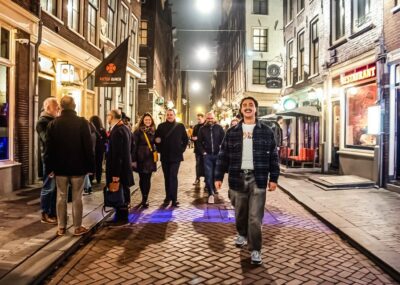
You’ll do a relaxed, mostly flat 1.5-hour perimeter walk with a small group (max 15). The guides I’ve heard named on this experience, like Manouk, Carlos, Nadav, David, and Valeria, are great at handling awkward questions with humor and respect. It’s still a walking tour, so expect rain gear or waterproof shoes if the weather turns Dutch.
In This Review
- Key points before you walk
- Why a Red Light District perimeter walk makes sense today
- Getting oriented at Bistro Berlage and pacing yourself for 90 minutes
- De Wallen: prostitution, location, and Amsterdam’s tolerance logic
- Dam Square: where coffee shop culture gets its origin story
- Warmoesstraat and the Old Church: an old street turned entertainment strip
- Zeedijk and Chinatown: danger in the 1970s to today’s favorite streets
- Nieuwmarkt: legalization, rules, and real-world challenges
- Kloveniersburgwal and coffeeshops: what’s legal, what’s cultural
- Paulusbroederssluis: your map, then self-guided exploring
- Price, timing, and group size: is it good value?
- The human side: what guides seem to do best
- Who should book, and who should skip
- So, should you book this tour?
- FAQ
- How long is the Red Light District tour?
- Is the tour offered in English?
- Does the tour enter the Red Light District itself?
- What is included in the tour?
- Where does the tour start and end?
- Do I need to buy admission tickets at the stops?
- Can I cancel for a full refund?
Key points before you walk
- You stay outside De Wallen because guided entry into the district is restricted since 2020
- Coffee house culture gets real context at Dam Square and around the canals
- Small group pace makes it easier to ask questions and keep up on foot
- Major stops are short but packed (about 5 to 10 minutes each) so you cover more ground
- You end with a self-guided map to explore what you see next
- A small gift is included (cheeky gummies have been mentioned, so smile is likely)
Why a Red Light District perimeter walk makes sense today
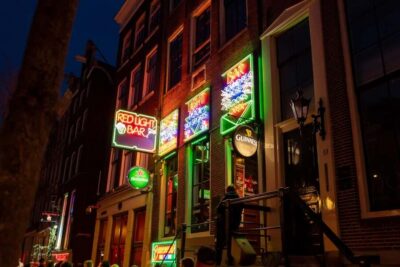
Let’s start with the practical truth. If you’re picturing a tour that winds you through alleys and lines you up for views of active windows, this is not that. Since 2020, guided tours are prohibited from entering the Red Light District itself, so you’ll learn from the edges instead of inside.
Honestly, that works better than you’d think. You can still understand the place: why sex work was concentrated there, how legalization shaped the city’s approach, and how coffee shops grew into a public cultural conversation. The tour’s goal is not to entertain you with spectacle. It’s to help you read the area like a local.
The other thing I appreciate is how the walk stays grounded in Amsterdam’s bigger story. The Red Light District is treated like one chapter in a city that prizes tolerance, laws, and pragmatic living. That makes the walk more than just a headline.
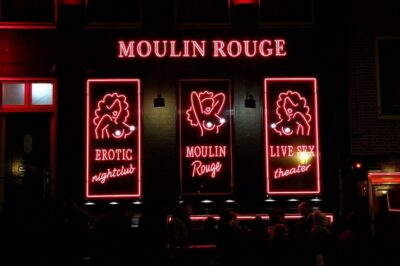
More lantern-lit windows explained:


Getting oriented at Bistro Berlage and pacing yourself for 90 minutes
The meeting point is Bistro Berlage at Beursplein 1, near central transit. It’s convenient, but do arrive a few minutes early so you’re not hunting for the group in the rain.
The tour runs about 1.5 hours and keeps you moving on foot while the guide fills in the context. In the places you stop, you might do a bit of standing and listening, because you’re centered on what the street layout communicates. From what people reported, the pace is usually manageable, with enough time to ask questions.
Group size matters here. With a max of 15, you tend to get real back-and-forth instead of one-way lecturing. Guides also have been praised for being funny, patient, and open to questions, like Carlos and Manouk in particular.
One last practical note: Amsterdam is flat, so the walking is not hard on hills. But it’s still walking for 90 minutes, and the stops are short, so wear shoes that handle slick sidewalks.
De Wallen: prostitution, location, and Amsterdam’s tolerance logic
Your first stop is the Red Light District itself, known as De Wallen. But you’ll experience it from the perimeter. This opening is where the tour earns its keep, because it sets up the “why here” question instead of only repeating the “what happens” headline.
You’ll hear about the district’s historic role and why sex workers chose to settle in this sacred place. That detail matters, because it frames the area as part of Amsterdam’s planning and social rules, not just an accident of geography. It also connects to how Amsterdam developed its reputation for a liberal attitude toward sex.
The guide focus also tends to be balanced. You’ll learn what the city has done through legalization and regulation, and you’ll hear why that approach brought both protection and complications. If you’re nervous about the topic, don’t be. The tone is typically respectful and human-centered rather than crude.
What to watch for at this stage: the street rhythm. De Wallen isn’t just a “district,” it’s a network of canals, narrow streets, and doorways that make the place feel intimate. Standing at the edge helps you understand the scale without turning the tour into a voyeur walk.
Dam Square: where coffee shop culture gets its origin story
Next up is Dam Square, a big public space where the tour ties the whole tolerance narrative together. This stop focuses on the idea that the concept of the coffee shop originated here and what Dam Square used to represent: the center of freedom and tolerance.
Why this matters: many people visit Amsterdam and think coffee shops are a standalone thing, like a quirky local rule. This tour links them to the city’s social and political personality. You end up seeing coffee shops not just as a place to buy something, but as an institution that grew alongside Amsterdam’s approach to regulating behavior.
You also get a useful way to talk about it with locals later. Instead of only repeating facts, you’ll have a story: the square as an early stage for tolerance, and the coffee shop idea as part of a broader cultural direction.
Don’t overthink this stop. It’s short, but it sets your mental map. When you hit the later canal area, you’ll understand what you’re looking at.
Warmoesstraat and the Old Church: an old street turned entertainment strip
Warmoesstraat is one of Amsterdam’s older streets, and it’s also a good lesson in how neighborhoods evolve. Here, the tour points out how this street now functions as an entertainment center, with a glimpse of the Old Church along the way.
The value of this stop is the contrast. Amsterdam layers new uses on old streets, and Warmoesstraat shows that in a very obvious way. You’ll get the sense that the city keeps changing the functions while keeping the bones.
Also, if you’re the type who likes architecture or city textures, the Old Church view adds a real Amsterdam moment. You’re not just learning about the Red Light District topic. You’re watching the city itself in motion.
A small drawback to consider: if your expectation is mostly history of sex work and legalization, this can feel like a neighborhood interlude. Still, it helps you understand how the Red Light District sits inside a living city, not in a separate theme park.
Also flying a pennant in Amsterdam
- Amsterdam: Van Gogh Museum Ticket
★ 4.7 · 52,054 reviews - Amsterdam: Heineken Experience Ticket including 2 Drinks
★ 4.6 · 36,014 reviews - Amsterdam Classic Saloon Boat Cruise with Drinks and Cheese
★ 5.0 · 31,825 reviews - Amsterdam Luxury Canal Cruise + Unlimited Drinks & Bites option
★ 5.0 · 30,518 reviews
Zeedijk and Chinatown: danger in the 1970s to today’s favorite streets
At Zeedijk, you’ll learn about Chinatown and the street’s darker chapter in the 1970s, when it was considered one of Amsterdam’s most dangerous places. Then the story shifts to the decline of that period and how Zeedijk transformed into one of the areas many Amsterdammers like to spend time.
That arc is important. It reminds you that “red light area” labels can flatten a complex place. The street is not one single category. It’s a shifting social landscape shaped by policy, community, and economic change.
This part of the tour can also be where expectations need care. If you’re only interested in the Red Light District and you’d rather skip any other neighborhood context, you might feel that Zeedijk goes off-topic. But if you want to understand Amsterdam’s approach to tolerance as a city-wide theme, this stop makes the tour click.
Tip for your mindset: treat Zeedijk like a case study. The guide uses it to show how stigma and reputation can change, and how streets can recover and reinvent themselves.
Nieuwmarkt: legalization, rules, and real-world challenges
Nieuwmarkt is where the tour slows down a bit emotionally. You’ll hear about the legalization of prostitution and the challenges sex workers face today.
This is the part that tends to feel most grounded, because you’re moving from “how it started” to “how it works now.” You’re also learning why legalization does not erase problems. Laws shape conditions, but lived experience still brings complications.
I like how the tour frames this without turning it into drama. It’s more like a practical explanation of what city policies attempt and what they can’t fully control. It’s also where the guide’s skill matters, because discussing sex work requires clarity and respect.
If you want to be prepared, think of this stop as a bridge between the district’s historic concentration and the current legal status of adult entertainment and related services.
Kloveniersburgwal and coffeeshops: what’s legal, what’s cultural
Kloveniersburgwal is one of the key areas for understanding coffeeshops. The tour uses this stop to explain their cultural significance and the legal status around them.
This is where many people realize the tour is not just sightseeing with an edgy theme. It’s a structured attempt to answer a question: how does Amsterdam put boundaries around behavior while still allowing personal freedom?
You’ll also get a better sense of how normalization works. In Amsterdam, the conversation around coffee shops and certain adult services is public and institutionalized, not hidden behind private rumor.
This stop is shorter, around 5 minutes, so don’t expect to memorize every rule. Use it to form a framework. Later, when you’re walking on your own, you’ll notice signage, street patterns, and the way the area functions day to day.
Paulusbroederssluis: your map, then self-guided exploring
The end of the walk brings you to Paulusbroederssluis, where you receive a map with information about the Red Light District and then you can discover the area yourself.
This is a smart approach because it respects the 2020 restriction while still giving you agency. Your guide does the hard part, building context and pointing you to what to notice. Then you decide how much time you want in the surrounding streets.
People have liked this “last stretch” gift of a map, especially because it helps you avoid wandering without direction. Since you can’t join a guided group inside De Wallen, this self-guided step is how you turn the tour into a real experience.
You might also pick up recommendations from the guide about where to go if that’s your interest and what to expect there. Guides have been praised for being open to questions here, which is a great time to ask about what’s appropriate to see and how to handle the crowds politely.
Price, timing, and group size: is it good value?
At $31.44 per person for around 1.5 hours, the price is very reasonable for a focused, topic-specific guided walk in central Amsterdam. You’re not paying for a ticket into a museum. You’re paying for interpretation, context, and a route that makes the city readable.
It’s also good value compared to a generic walking tour. A regular city stroll might touch on Amsterdam tolerance in passing. This one builds a chain: De Wallen history, coffee house origins at Dam Square, neighborhood evolution at Warmoesstraat and Zeedijk, and then the legal reality you can’t understand from stereotypes alone.
One timing tip: the tour tends to sell out ahead, with an average booking window of 37 days. If your schedule is tight, book early and choose a time that fits your energy. Evening can feel more atmospheric, but it also means you’ll be out later in the weather.
Also, you’ll use a mobile ticket, and confirmation comes around the time of booking. There’s no complicated paper process.
Finally, remember the pacing. Some people mentioned the tour can finish quicker than the advertised 1.5 hours, depending on group questions and flow. That usually just means you’re leaving informed, not rushed, but it’s worth being mentally flexible.
The human side: what guides seem to do best
The strongest praise in the experience is about the guide. People repeatedly highlight that the guides are excellent at making tough content approachable, often funny, and very willing to answer questions.
Names that show up in the conversation include Carlos, Nadav, David, Valeria, and Manouk. That variety matters, because you might get a slightly different angle from a different person, even if the main themes stay consistent.
If you’re the kind of traveler who asks lots of follow-ups, you’ll likely like this format. If you want a purely visual tour where you barely talk, you might find it more “conversation and standing stops” than “walk and snap photos.” There are also a couple of mentions that the tour felt more like a lecture when the group was mainly listening from a street corner. So if you prefer interactive movement, be ready to ask questions.
A final detail that made people smile: a small gift at the end. One person mentioned gummies shaped like genitalia. If that kind of humor doesn’t bother you, it’s a fun closing touch.
Who should book, and who should skip
This tour is a great fit if you want:
- Context and clarification about De Wallen, legalization, and coffee shops
- A guided way to understand Amsterdam tolerance without relying on internet myths
- A structured walk where someone points out what to notice in the streets
You might skip it if you:
- Came only for window views inside De Wallen, because guided entry is not part of this experience
- Don’t want any talk about sex work or adult entertainment, even if it’s respectful and factual
- Prefer a short photo-focused stroll with little talking
Also, if meeting points are stressful for you, arrive early. A few people said they had trouble finding the exact start location. Being on time is your best fix, because the meeting spot is central but not always obvious from a distance.
So, should you book this tour?
Book it if you want to understand Amsterdam’s Red Light District and coffee shop culture as a real city system, with rules, history, and human stakes. The perimeter approach is not a limitation so much as the current reality, and it keeps the experience grounded.
Skip it only if your goal is to be inside the district with a guide or if you want minimal discussion of adult topics. If you can handle a respectful, thoughtful walk, this is a smart way to get oriented fast and then explore the streets on your own with a map and better questions.
FAQ
How long is the Red Light District tour?
The walking tour is about 1.5 hours.
Is the tour offered in English?
Yes, it is offered in English.
Does the tour enter the Red Light District itself?
No. Tours in the Red Light District have been prohibited since 2020, so this tour goes to the outskirts and uses a map for what to explore yourself.
What is included in the tour?
It includes the 1.5-hour walking tour, a map with information for the last stretch, and a small gift.
Where does the tour start and end?
It starts at Bistro Berlage, Beursplein 1, 1012 JW Amsterdam, and ends back at the meeting point.
Do I need to buy admission tickets at the stops?
The stops listed show free admission.
Can I cancel for a full refund?
Yes. You can cancel up to 24 hours in advance of the experience for a full refund.
Latest to arrive along the quays of Amsterdam




Red Light District Walks, compared.
Amsterdam Red Light District & Coffee Shop Tour
Read our review →
Red Light District Pub Crawl with Unlimited Shots
Read our review →
Private Amsterdam Red Light District and Coffee Shop Tour
Read our review →
Browse the lists this tour appears in