
Reviewed · THE HAGUE TOURS & EXPERIENCES
Private Tour of The Hague, Delft and Rotterdam with Lunch
One day, three very different Dutch worlds. This private tour ties together Dutch Golden Age art and modern Rotterdam design, with an expert guide who keeps the pace easy and the story clear. I love how the route moves from political power in The Hague to Vermeer-era Delft, then into Rotterdam’s post-war reinvention. I also like that lunch is built in, with time to sit down and regroup in Delft. One drawback to weigh: it is a full day with lots of walking and city-to-city hops, so comfortable shoes matter, even if breaks are frequent.
For the money, this feels like strong value because you get more than sight-seeing. You get a private guide, transfers between cities (by train or car), an air-conditioned vehicle for the longer legs, and a ticket included for one of Rotterdam’s most iconic photo stops, the Kijk-Kubus (Cubic Houses). I also like that you can shape the day, either by choosing where to be picked up and dropped off or by adjusting the pace with your guide.
In This Review
- Key things that make this tour worth your time
- Why The Hague, Delft, and Rotterdam fit together so well
- Price and what $552.69 per person really buys you
- Your day at a glance: guided walking plus smart city-to-city hops
- The Hague highlights: Mauritshuis, Binnenhof, and the royal streets
- Mauritshuis (Vermeer’s world in one museum)
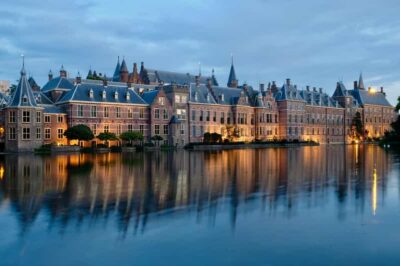
- Binnenhof and Ridderzaal (where Dutch politics lives)
- Het Plein, Hofvijver, and the monuments
- Lange Voorhout and the “Champs-Élysées” feel
- Grote Kerk and Johan de Witt
- Delft’s Vermeer and canal charm: from Oostpoort to Prinsenhof
- Enter through Oostpoort, then land in Beestenmarkt
- Maria van Jessekerk and the Vermeer connection
- Nieuwe Kerk and Delft’s royal burial question
- Stadhuis Delft and the old town hall stories
- Old Church, brewing quarter vibes, and the skewed tower detail
- Museum Prinsenhof Delft: the Oranje story in a tight stop
- Gemeenlandshuis van Delfland and Delft’s smaller museum feel
- Armamentarium, Dutch East India Company ties, and another Vermeer spot
- Rotterdam’s architecture and design stops: Markthal, Cubic Houses, and Oude Haven
- City Hall area and the shift to modern Rotterdam
- Grote of Sint-Laurenskerk and bombing survival
- Markthal: food hall energy plus a huge art ceiling
- Kijk-Kubus: the Cubic Houses ticketed visit
- Witte Huis: Europe’s early skyscraper claim
- Oude Haven: finish with terraces and options
- Lunch at Beestenmarkt in Delft, and how to use that time
- Practical tips so the 8 hours feel easy
- Should you book this private tour?
Key things that make this tour worth your time
- A single guide across three cities so nothing feels like a random checklist
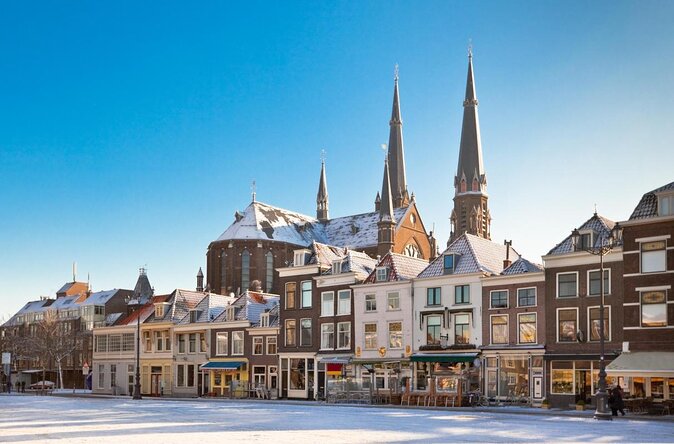
- Vermeer connections tied to real places in The Hague and Delft
- Delft lunch at Beestenmarkt so you are not rushing through the prettiest square
- Rotterdam’s design stops including the Cubic Houses and Markthal
- Flexible start options from either The Hague or Rotterdam, depending on your plans
Why The Hague, Delft, and Rotterdam fit together so well
I like this combination because it explains how the Netherlands thinks and builds, not just what it looks like.
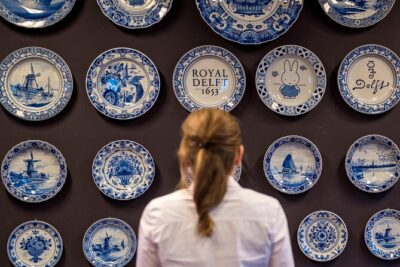
In The Hague, you get the country in “government mode.” That means parliament buildings, royal-related streets, and monuments that help you understand modern Dutch civic life. Then you hop to Delft, where the emphasis shifts to craft, faith, and art. You are looking at churches and historic squares, yes, but you also get the Delft story tied to Johannes Vermeer and the world that produced Delft Blue pottery.
Finally, Rotterdam changes the tone. This is where you see what happens when a city rebuilds itself with big architecture and bold planning after massive destruction. The day reads like a timeline, not three separate city tours.
If you want a one-day overview that still feels personal, this is a good structure. And since it is private, you are not stuck with a rigid crowd pace.
More Private Tours in The Hague

Price and what $552.69 per person really buys you
At $552.69 per person, you are paying for a private day with real logistics handled. That matters here because you are combining three cities in about eight hours, which normally is where self-guided plans get complicated and time gets eaten up.
From the included details, you can think of the price as covering:
- Three private city segments with one guide
- Lunch in Delft, built into the schedule at Beestenmarkt
- Transfers between cities using train or car, plus an air-conditioned vehicle
- A ticket included for the Cubic Houses
- All fees and taxes tied to the included components
What makes it feel fair is that you are not just buying narration. You are buying time. You avoid the friction of figuring out routes between cities while also trying to hit specific sites.
One note for your budgeting: gratuities are optional, so you will want to plan a little extra in your head for that.
Your day at a glance: guided walking plus smart city-to-city hops
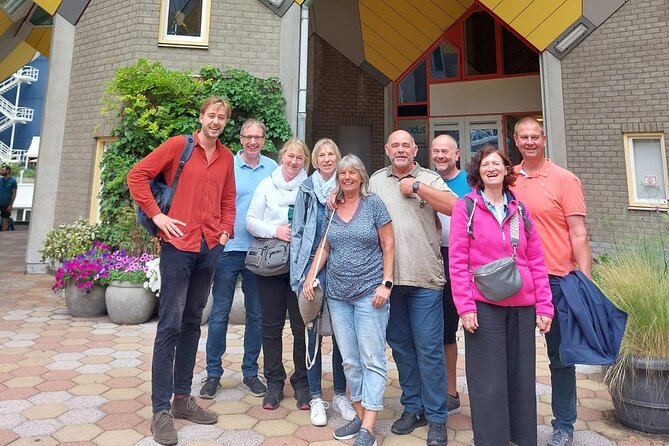
The heart of the tour is a guided walking flow, but it is not “walk, walk, walk” all day. There are short scenic pauses and museum-style introductions, then car or train travel to connect the cities.
A typical flow looks like this:
- Start in The Hague or start in Rotterdam, depending on your choice
- Walk through key squares and buildings with quick, focused stops
- Use short transport legs to keep the day realistic
- Take the lunch break in Delft at Beestenmarkt
- Finish in Rotterdam with enough time to relax on terraces around the harbor area
Also, the tour is private, so you will only share the route with your group. In a rainy moment, that private format helps a lot, because your guide can adapt where you stand and how long you pause.
The Hague highlights: Mauritshuis, Binnenhof, and the royal streets
The Hague is your “politics meets culture” day opener.
Mauritshuis (Vermeer’s world in one museum)
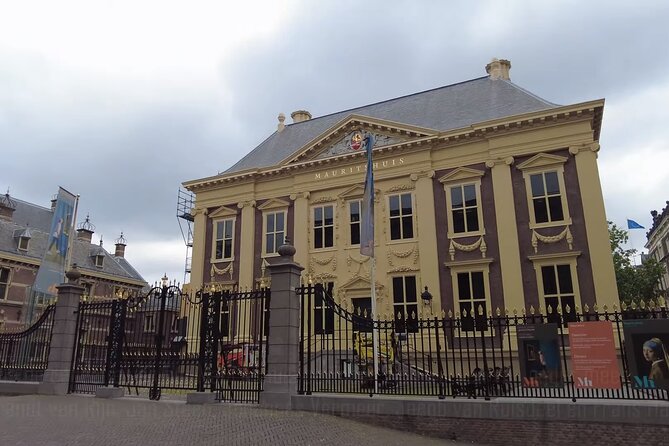
You start at the Mauritshuis, where you will learn the museum’s role and history. The big payoff, as the tour frames it, is the presence of famous paintings by Johannes Vermeer connected to Delft. Even if you do not go deep into every gallery, this stop sets the emotional tone for Delft later.
What to watch for: Vermeer is not just a name here. The guide uses the museum context to connect art to place, so Delft feels less like a separate stop and more like the same story continuing.
Also flying a pennant in The Hague
- Scheveningen Full-day Surfing lessons with Lunch
★ 4.3 · 8 reviews - Delft in a Day: Private Tour with Royal Delft, Churches & Lunch
★ 5.0 · 3 reviews - Private Tour of Delft, Rotterdam and Gouda with Lunch and Cheese
★ 5.0 · 2 reviews - Amsterdam: A’DAM Lookout Ticket and Lunch or Dinner Voucher
★ 4.5 · 1,046 reviews
Binnenhof and Ridderzaal (where Dutch politics lives)
Next comes the Binnenhof complex and the Ridderzaal. You will walk onto the square within the parliament area and learn why this site matters. This is one of those spots where the buildings look “important” even before you know the details. With the guide, it becomes specific.
Het Plein, Hofvijver, and the monuments
You then move through a sequence of iconic sights:
- Het Plein (The Square), with a look at Willem van Oranje, tied to Dutch national identity
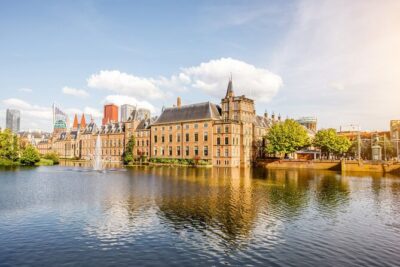
- Hofvijver, the pond in front of parliament and the prime minister’s office, with stories that add personality to what could be just a pretty backdrop
- The Thorbecke Monument, linked to the Dutch constitution
These stops are short, but that is the point. In a single day, you want quick context that makes the next street make sense.
Lange Voorhout and the “Champs-Élysées” feel
You take a walk along Lange Voorhout, described as the Hague’s version of a grand boulevard. You will pass embassies, an art museum, a temporary senate building, and statues of Dutch heads of state. It is not just architecture spotting. It helps you see how modern international life sits right next to royal-era symbols.
Grote Kerk and Johan de Witt
You will also see the Grote Kerk and look up at the distinctive stork on the top, then wrap The Hague segment with the statue of Johan de Witt. The guide explains why his story is so unusual, including the fact that a Dutch mob once angered him. It is the kind of detail that sticks, because it turns a person into a real historical turning point.
Possible drawback here: The Hague is packed with meaningful stops, and some are outside. If the weather is bad, you may spend more time standing close together, so plan for layers even if it feels mild in the morning.
Delft’s Vermeer and canal charm: from Oostpoort to Prinsenhof
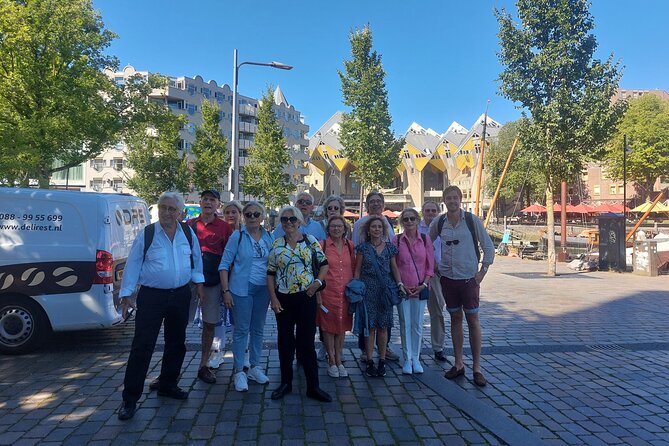
Delft is where the tour slows emotionally, even if the schedule stays tight.
Enter through Oostpoort, then land in Beestenmarkt
You arrive in Delft through the Oostpoort, described as the city’s only gate still standing. That quick entry moment is handy because it gives you a sense of arrival before you zoom into the center.
Then you reach Beestenmarkt, the square where lunch happens. The plan sets aside about an hour here, with choices for food and drinks. This is one of the smartest parts of the day because it gives you breathing room. You are not just “eat and go.” You can actually settle, regroup, and let the guide’s stories sink in.
Maria van Jessekerk and the Vermeer connection
You pass the Maria van Jessekerk, Delft’s first Catholic church built in the center. The tour also notes a Vermeer link, since it stands on the spot where Vermeer used to live and paint.
Why it matters: this is not random trivia. It makes Vermeer feel tied to daily life, not locked inside a museum.
You will also get a quick look at the church’s two towers, including a detail the guide points out as amusing or notable.
Nieuwe Kerk and Delft’s royal burial question
On the Markt square, the Nieuwe Kerk appears, with the tour highlighting that the royal family is buried there. You will learn why the royal burial ties to Delft, which is a great example of how this itinerary keeps asking “why” instead of only pointing.
Stadhuis Delft and the old town hall stories
You view Stadhuis Delft, dating to the 13th century, and learn that it also served as a prison for centuries. The tour mentions a particularly famous prisoner, which gives the building a human edge beyond dates and stone.
Old Church, brewing quarter vibes, and the skewed tower detail
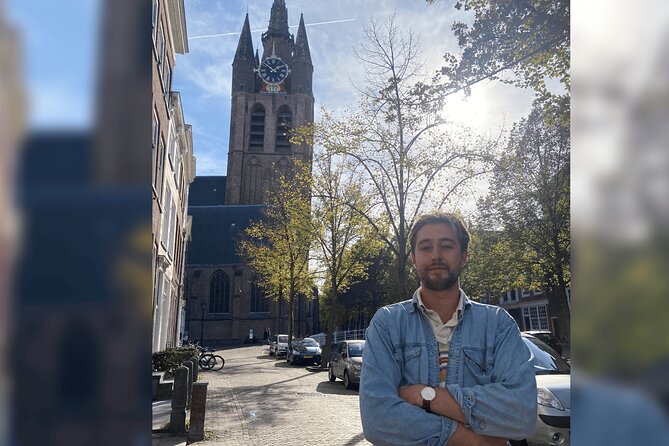
You move into the older beer brewing quarter area and see the Old Church. The guide focuses on exactly why it is so recognizable, including why it looks skewed. That kind of detail is perfect for a private guide, because you get a clear explanation in your walking time.
Museum Prinsenhof Delft: the Oranje story in a tight stop
Then comes Museum Prinsenhof Delft, where you get a peek into the inner court of Willem van Oranje’s former residence. The tour mentions the place where he was shot, and there is a life-sized statue you can compare your height to.
Gemeenlandshuis van Delfland and Delft’s smaller museum feel
You get close to the Gemeenlandshuis van Delfland, known for its decorated facade. The guide also mentions visiting the smallest museum of Delft, which signals how the itinerary favors intimate, story-driven stops rather than only big-ticket monuments.
Armamentarium, Dutch East India Company ties, and another Vermeer spot
You finish the Delft walk with the Armamentarium, a former weapons armory and linked to the headquarters of the Dutch East India Company (Delft Chamber). This is your Golden Age link made physical.
The guide also points out the exact spot where Vermeer was standing for the painting View of Delft. That is one of the best “walk a few steps and see the viewpoint” moments you can get in a one-day plan.
Finally, you head toward Station Delft, where the transfer to Rotterdam begins.
Possible drawback here: Delft is easier than Rotterdam in some ways, but you are still on foot. If your knees do not love stairs or uneven cobblestones, take it slow on the short churchyard sections.
Rotterdam’s architecture and design stops: Markthal, Cubic Houses, and Oude Haven
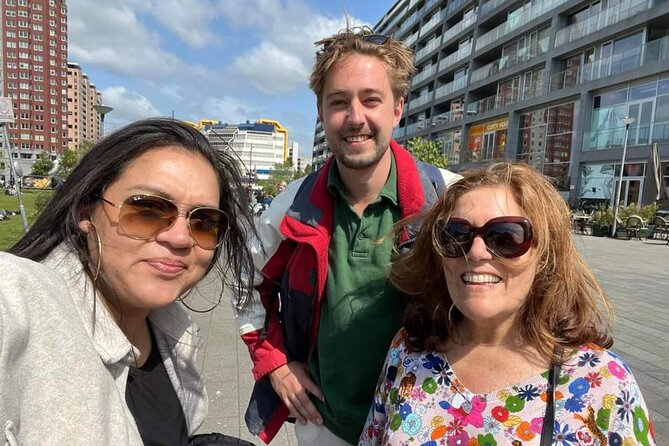
Rotterdam is your bold reset. The tour intentionally contrasts it with Delft’s historic center.
City Hall area and the shift to modern Rotterdam
You arrive near the heart of Rotterdam on Coolsingel, close to the city hall. The guide shows the outside, and possibly the inside, depending on access. Even just seeing the setting helps you understand how Rotterdam thinks about civic space.
Then you head toward the older harbor area, but not before hitting key landmarks.
Grote of Sint-Laurenskerk and bombing survival
Next is Grote of Sint-Laurenskerk, a 14th-century church whose tower survived the bombing of Rotterdam. Today, it is used mostly for events, and the tour connects it to Erasmus. This gives you a clear way to think about Rotterdam’s survival and cultural continuity, even after destruction.
Markthal: food hall energy plus a huge art ceiling
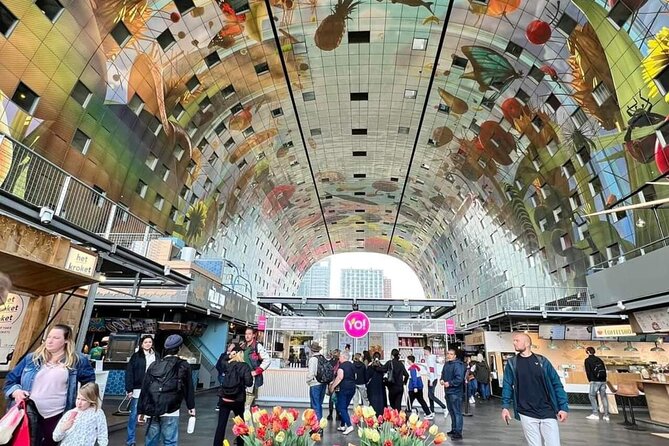
Then you enter Markthal, the dramatic market hall. You will spend time inside, learn about the building’s structure, and hear about how apartments sit on both sides while food options fill the inside. The tour also reminds you to look up, pointing out a massive piece of art on the ceiling.
This is one of those stops where a private guide helps you spot what matters fast. You do not wander in circles. You go straight to the features that make the building memorable.
Kijk-Kubus: the Cubic Houses ticketed visit
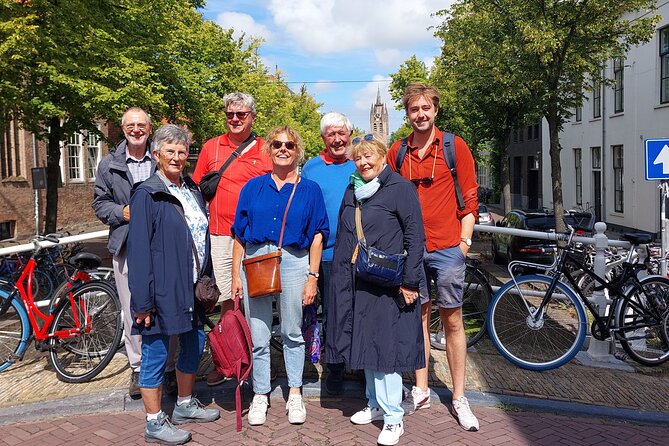
You visit the Kijk-Kubus (Cubic Houses), a set of unusual cube-shaped homes created in the late 70s and finished in the early 80s. People actually live there, so the guide explains how practical it is, not just how it looks.
Since the Cubic House ticket is included, you do not have to decide whether it is worth paying extra. You just go.
Witte Huis: Europe’s early skyscraper claim
You also see the Witte Huis, noted as the first skyscraper in Europe. The tour mentions that it survived the bombing of Rotterdam center, which connects the building to the city’s resilience story.
Oude Haven: finish with terraces and options
The day ends at Oude Haven, now a lively recreational area with an harbor view and ships anchored nearby. The tour gives you a short wrap-up time and then leaves you free to choose your next move, whether you want terrace time or a quick hop toward the Maas river south bank area.
Possible drawback here: Rotterdam ends strong, but because it ends in an active area, you may want to plan your post-tour transport in advance so you do not spend your best sunset energy waiting around.
Lunch at Beestenmarkt in Delft, and how to use that time
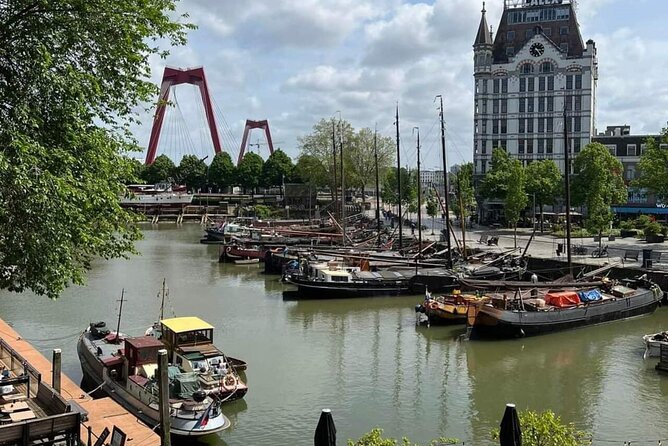
Lunch is included and it happens at Beestenmarkt, described as Delft’s coziest square. The plan gives about an hour here, with enough options to choose from.
I like this because it gives you control without breaking the tour. You are not forced into one set menu, and you can pick something that fits your energy level after a morning of churches, squares, and quick museum context.
Practical tip: use this hour to slow down. It is when you can ask your guide follow-up questions while your feet recover. Also, if rain starts, this is the part where you can still stay comfortable inside or under cover, depending on what you choose.
Practical tips so the 8 hours feel easy
This is a private full-day plan with lots of “see and learn” stops. Moderate physical fitness is suggested, so plan for steady walking.
A few things I’d do to make it smoother:
- Wear comfortable walking shoes. Even the short stops add up.
- Bring a light layer for changing weather, especially since much of the walking is outside.
- Think about your “must see” priority. If the Cubic Houses or the museum art connection matters most to you, tell your guide early so your pace matches your interests.
- Keep your camera ready for the obvious skyline moments, especially in Rotterdam, and for Vermeer viewpoint connections in Delft.
Also, start time is 8:45am, so treat it like a real day. You will get more out of the tour if you eat breakfast and arrive ready to walk.
Should you book this private tour?
I think you should book if you want a one-day way to understand the Netherlands in three chapters: politics and culture in The Hague, art and old-town charm in Delft, and rebuilding and design in Rotterdam. The private format, the included lunch, the included Cubic House ticket, and the handled transfers make it feel like a practical shortcut to a lot of top sights without the stress.
Skip it only if you hate walking, want a slower museum-heavy schedule, or prefer to spend all day in a single city. This tour is built for variety, and it does not pretend to be slow.
If your ideal day is guided, focused, and efficient, this one is a strong pick. And based on the guide feedback you can expect a friendly, adaptable tone, with Robin mentioned by name as a great match for travelers who want both humor and solid explanations.
Latest to arrive along the quays of The Hague

The Hague Tours & Experiences, compared.


Royal Delft: Delftblue Factory and Museum Admission Ticket
Read our review →Browse the lists this tour appears in