
A day trip that hits two historic towns in one go is rare. This private tour pairs Delft and Gouda with a guided walk through key landmarks, plus a short transfer so you actually see a lot without feeling rushed.
I especially like how the guide connects what you see to what made the Dutch Republic tick. You get a practical feel for places tied to rulers and trade, then you end with Gouda’s cheese market-era buildings that still shape the city’s look.
One thing to consider is time. At 4 hours 30 minutes, you will see highlights, not every museum room or every side street, so it helps to tell your guide what you care about most, like churches, Delft Blue, or cheese history.
In This Review
- Key highlights to look for on this Delft and Gouda private tour
- Why Delft and Gouda feel like the perfect pairing from The Hague
- How the half-day flow works, including transfer and pickup
- Delft Stops: Markt and Old Church, then Prinsenhof and Delft’s power buildings
- A realistic expectation for Delft timing
- Delft’s Armamentarium and Delft’s Golden Age trade story
- The Gouda transfer moment: keep your energy, then switch gears
- Gouda Stops: De Visbanken, Stadhuis, Sint-Janskerk, Museum Gouda, and the Waag
- What you should pay attention to in Gouda
- What you learn beyond landmarks, Dutch life, nationalism, and real context
- Price and value: is $264.85 per person fair for this private day?
- Practical tips to make the most of your Delft and Gouda day
- Should you book this private Delft and Gouda tour?
- FAQ
- How long is the private tour of Delft and Gouda?
- Where does the tour take place?
- Can the tour start in Delft or in Gouda?
- Is hotel pickup and drop-off included?
- Is there a transfer between Delft and Gouda?
- Is the tour fully private?
- Are entrance tickets included for the stops?
- Are gratuities included?
- Are air-conditioned vehicles used?
- Is free cancellation available?
Key highlights to look for on this Delft and Gouda private tour
- Flexible pacing inside a structured half-day, so you can stop for snacks and photos without feeling that everything is on rails
- Free-entry stops at major sights, so you spend more time looking and less time deciding tickets
- Delft’s power points, from the Markt and Old Church to Prinsenhof, tied to the Father of the Fatherland
- Gouda’s market-era icons, especially the Waag weighing house and the long-form church story
- Smart transfer setup between cities by train or by car, keeping the day realistic
Why Delft and Gouda feel like the perfect pairing from The Hague
Delft and Gouda both have that calm canal-and-stone look, but they teach different sides of Dutch life. Delft reads like a city of craft, learning, and political memory, while Gouda feels more market and trade forward, with buildings that were built for business.
The big win is that you get both flavors in one half-day. Instead of doing one city and wishing you had one more, you leave with a clearer picture of how Dutch towns worked. You also get to compare styles: Delft’s historic facades around the center and canals, then Gouda’s famous civic buildings and church scale.
This is a private tour, so your day is built around your group. The pacing is yours, and that matters when you want time to wander, grab a bite, or just stand back and take in the streetscapes.
More Private Tours in The Hague

How the half-day flow works, including transfer and pickup
This is about 4 hours 30 minutes total, with time built for walking and for short pauses. You start in either Delft or Gouda, depending on the option you choose, and then you transfer between the two with a short trip of about 30 minutes.
Transport is handled in an air-conditioned vehicle. If you pick the setup that includes hotel pickup and drop-off by car, you can use it to simplify your day. The route between cities can be by train or car, depending on what’s best during your time slot.
Here is why this matters: Delft and Gouda are not far, but they are far enough that a self-guided day can turn into “check the map, miss the feeling.” A guided half-day with a fixed structure keeps you from wasting time while still giving you freedom where it counts.
Also, you get a mobile ticket and all fees and taxes are included. That means fewer little admin tasks and more time planning where you want to linger.
Delft Stops: Markt and Old Church, then Prinsenhof and Delft’s power buildings
Delft’s walk starts at the Markt, the city’s central square. Here you will see a landmark church that is described as the second-tallest church in the Netherlands. Your guide will point out who is buried underneath, so you are not just looking at stone and spires. You will also hear about that statue of a man and take in the old town hall vibe around the square.
From there, you head to the Old Church, and this is where Delft’s layers show up fast. The area is described as part of the old beer brewing quarter. That detail changes how you read the neighborhood. You are not only seeing a church, you are seeing the footprint of daily industry and craft before the city became famous for other reasons. You will also learn about why the Old Church is skewed and how old it is.
Next comes Museum Prinsenhof Delft. This stop has a heavy political connection, including the assassination of the Father of the Fatherland there. Even if you are not a history buff, the guide’s framing helps the place make sense. You start to understand why Delft mattered beyond being a pretty city on a map.
You also pass the Gemeenlandshuis van Delfland as you move along the Oude Delft canal. The facade is described as heavily decorated, and you will learn what the building was for and why it mattered. Passing by can feel quick, but in Delft, those “in-between” moments are often where you spot the best architecture.
A realistic expectation for Delft timing
With only a half-day total, you should treat Delft as a highlights sampler: big square, big church, political site, decorated canal facade, then you move on. If you want long museum time, plan to come back later. The value of this tour is that you leave Delft with the main story threads tied together.
Delft’s Armamentarium and Delft’s Golden Age trade story
After the center and older landmarks, you head south toward the Armamentarium. This is a former weapons armory associated with the VOC. That is the clue to how Delft’s Golden Age worked. You are not just in a craft city, you are in a city that contributed to Dutch trade power and overseas reach.
This stop is short, but the guide’s interpretation makes it stick. Instead of treating it like a random exterior, you get a sense of how Delft fit into the broader Dutch Republic story. You can look at the building mass and imagine its purpose in an era when armaments and maritime trade traveled together.
A small caution: this tour keeps moving. If you are the kind of person who wants to stop and read every sign, you may feel the time limits. That said, the pace is flexible, so you can ask for a few extra minutes around the areas that matter most to you.
Also flying a pennant in The Hague
- Private Tour of Delft & Rotterdam with Cube House and Transfer
★ 5.0 · 12 reviews - Private Tour of Delft and The Hague including Transfer
★ 5.0 · 9 reviews - Private Transfer from The Hague City to Schiphol Airport
★ 5.0 · 5 reviews - Private Tour of Rotterdam and The Hague including Transfer
★ 5.0 · 3 reviews
The Gouda transfer moment: keep your energy, then switch gears
After Delft, you transfer for about 30 minutes and arrive in Gouda. This short break is useful. You get the mental reset of moving from Delft’s canal center feel to Gouda’s market-and-church scale.
Once you are there, the Gouda stops are arranged like a walking route from market history to religious landmark, then to museum space, and finally to the weighing house. It is a smooth flow that helps you understand how the city functionsed day to day.
And one practical perk from a guide like George, based on feedback tied to this experience: he helps people plan what to do next, even after the tour. In at least one case, he assisted with train connections back to Amsterdam, which is the kind of small support that saves you time and stress.
Gouda Stops: De Visbanken, Stadhuis, Sint-Janskerk, Museum Gouda, and the Waag
Gouda starts at De Visbanken, an area linked to fish cleaning and preparation dating back to 1588. Even though the stop is brief, the point is powerful: you see that this was a working place long before it became a postcard city. The view you get here also helps you read the city layout as something built around trade.
Next is the Stadhuis Gouda, the city hall. You will see the gothic town hall character and learn what it represented in local governance and civic pride. In a lot of Dutch towns, the city hall is the “power face” of the place, and Gouda’s architecture helps you feel that.
Then you move to Sint-Janskerk. This is a standout stop because it is described as the longest church of the Netherlands, with the first building phase starting in 1272. That timeline gives you perspective. This is not a quick build style, it is an era-spanning project. Your guide’s explanation helps you see the church as a long-term investment by the community.
From there, you visit Museum Gouda. The museum housed in the former St-Catharine guest house is a good example of how buildings get repurposed instead of replaced. You get the chance to connect the city’s historical travel and hospitality needs to the later museum role.
The tour ends at the Waag, the weighing house. This is one of Gouda’s most practical, hands-on historical locations: farmers from the wide area came on market days to have cheese weighed here. It is a fitting closer because it ties the city’s identity to something you can understand instantly. Cheese was commerce, and buildings like this were how the commerce ran.
What you should pay attention to in Gouda
If you only glance at pictures, you might miss the “why.” In Gouda, pay attention to how civic buildings, church scale, and the weighing house relate to each other. Your guide’s story lines should help you connect the dots: markets, rules, measurement, and community investment all in walking distance.
What you learn beyond landmarks, Dutch life, nationalism, and real context
The best guided days do more than list dates. They give you language to interpret a place. A strong point of this tour is that the guide connects sites to Dutch life and nationalism in a way that feels grounded rather than abstract.
In plain terms, that means you will understand why places like Prinsenhof Delft matter and why the city’s landmarks keep repeating themes: governance, trade, faith, and identity. You also learn to recognize Delft and Gouda as different expressions of the same national story.
George’s style, as described in feedback for this tour, also stands out for pacing and support. He walks people through the highlights of both cities, while staying flexible for rests, shopping, and snacks in the markets if you want them. That flexibility matters in the real world because you are not always the same energy level at 11:00 a.m. as you are at 2:00 p.m.
And when you need logistics, he can help. In one instance, he supported getting back to Amsterdam by train at the end of the day. If you are basing your trip out of The Hague but want to keep Amsterdam options open, that kind of guidance is more valuable than it sounds.
Price and value: is $264.85 per person fair for this private day?
At $264.85 per person, you are paying for something more than sightseeing. You are buying a private guide, a structured route, air-conditioned transport, and a transfer between cities, plus all fees and taxes. You are also getting the ability to choose the starting city and the pacing.
So is it worth it? For couples and small groups, this kind of price often becomes fair when you compare it to paying separately for guided time plus transport plus admission costs. Even though many of the stops are listed with free admission tickets, the guide and the logistics are the real value.
If you are traveling solo, the cost can feel steep compared to a public bus and a self-guided walk. But if you care about context, and you want the flexibility to tailor stops, a private setup tends to feel more efficient. Especially here, where the story threads tie across two cities in one half-day, a guide keeps you from missing the meaning.
My practical take: if you want “high signal” and you do not want to spend your day figuring out how to stitch Delft and Gouda together, this price can make a lot of sense.
Practical tips to make the most of your Delft and Gouda day
This tour works best when you go in with a short plan for what you want to prioritize. For Delft, decide if you care most about the churches, the political sites, or the Golden Age trade connections. For Gouda, decide if you want to focus on the church scale, market history, or the weighing house ending moment.
Wear good walking shoes. Even with private transport between stops, you will still cover a lot on foot. Bring a small snack or water plan, because there are market opportunities built into the day and you can use the flexibility to pause for shopping and bites.
If you have a train connection after your tour, ask the guide for practical advice during the final stretch. In this experience, the guide support is not just about the itinerary. George helped with getting back to Amsterdam by train for one group, so it is worth asking.
Also, take advantage of the private nature. Your pace is yours. If the group wants extra time at a church, or you want to linger at a canal facade, ask. That is the whole point of private.
Should you book this private Delft and Gouda tour?
Book it if you want a half-day that feels organized but still flexible, and you want the context behind Delft Blue-style culture and Gouda’s market-era identity. This tour is a great choice when you base yourself around The Hague and want two top historic cities without losing the day to transit decisions.
Skip it if you are the type who wants hours inside museums or who prefers a fully independent deep dive into every street. This experience is built for highlights, guided interpretation, and an efficient transfer.
If you can match your expectations to what the day offers, this is a very good value way to see Dutch history in two different flavors, Delft’s civic and Golden Age story, and Gouda’s market and cheese weighinghouse ending.
FAQ
How long is the private tour of Delft and Gouda?
The duration is approximately 4 hours 30 minutes.
Where does the tour take place?
The tour is offered in the Netherlands, based out of The Hague.
Can the tour start in Delft or in Gouda?
Yes. You can choose to start in Delft or start in Gouda.
Is hotel pickup and drop-off included?
Hotel pickup and drop-off by car is included if that option is booked.
Is there a transfer between Delft and Gouda?
Yes. There is a short transfer of about 30 minutes between the two cities, either by train or by car.
Is the tour fully private?
Yes. It is a private tour, and only your group participates.
Are entrance tickets included for the stops?
Admission tickets are listed as free for the stops on the itinerary.
Are gratuities included?
No. Gratuities are optional and not included.
Are air-conditioned vehicles used?
Yes. The tour includes an air-conditioned vehicle for the transfer.
Is free cancellation available?
Yes. You can cancel up to 24 hours in advance for a full refund.
Latest to arrive along the quays of The Hague

The Hague Tours & Experiences, compared.


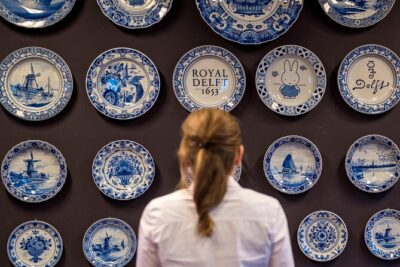
Royal Delft: Delftblue Factory and Museum Admission Ticket
Read our review →Browse the lists this tour appears in