
Reviewed · AUDIO TOURS
Old Amsterdam: A Self-Guided Audio Tour
Old Amsterdam audio tours are a good way to move at your speed. This one covers the East Side and Jewish District with stories from producer Edmond Van Putte, delivered through the VoiceMap app as you walk. I especially like the turn-by-turn GPS audio and the fact you can go in about 2 to 2.5 hours without planning a group. The main catch is you will be listening outside, not getting guided into the museums and synagogues along the route.
If you want a low-cost way to understand what you are looking at, this works well. You get lifetime access to the English audio, plus offline audio, maps, and geodata so your phone does not have to be a battery victim. The pacing is designed for real wandering, with frequent stops and the option to pause longer.
One thing to consider: you will need your own smartphone and headphones, and you must use them at key moments. It is also non-refundable, so only buy it when you are pretty sure your Amsterdam dates are locked.
In This Review
- Key highlights I think you will care about
- How the VoiceMap audio tour works once you land
- Price and value: $9.99 for a whole neighborhood walk
- Where it starts and where it ends near Odebrug
- Stop by stop: what you will notice across the East and Jewish District
- Jodenbuurt and the Rembrandt House area
- Churches and canal transitions, from South Church to Waterlooplein
- Bridges: Blauwbrug and Magere Brug
- H’ART Museum and what is linked to Dutch art collecting
- Memorials and Jewish landmarks: learn first, then decide how long to stay
- National Holocaust Names Monument and Auschwitz Victims memorial
- Jewish Museum and Portuguese Synagogue
- Hortus Botanicus, ARTIS, and how the tour shifts from old to living spaces
- Wartime resistance and Amsterdam after conflict
- Entrepotdok, Maritime history, and NEMO’s ship-like building
- Pacing that actually lets you breathe, plus a key tip
- Who this audio tour fits best
- Should you book Old Amsterdam: A Self-Guided Audio Tour?
- FAQ
- How long is the Old Amsterdam self-guided audio tour?
- Where do I start and end the tour?
- How much does the tour cost?
- What app do I use for the audio?
- Does the tour work offline?
- Is museum entry included?
- Can I use it only on my booking date?
- What do I need to bring with me?
- Is there a virtual option?
- Is the booking refundable if I cancel?
Key highlights I think you will care about
- VoiceMap GPS playback with turn-by-turn directions, plus offline support
- Edmond Van Putte provides the on-the-ground historical storytelling throughout
- East Side to Jewish District route, with bridges, markets, memorials, and landmarks
- Pass-by stops only, with museums and attractions needing separate tickets if you enter
- Lifetime access in English, with unlimited use around your booking date
- Flexible timing, start when you want and linger where you want
How the VoiceMap audio tour works once you land
This experience is built for self-guided walking, but it still feels guided. After you book, you get a ticket with instructions and a unique code shown under Before You Go. In the VoiceMap app, you enter that code, then the app handles directions to the starting point.
Once you are at the right place, you tap start and the audio follows your location. The system uses automatic GPS playback plus turn-by-turn directions, so you are not stuck trying to match street signs to a printed map. Even better, you can use it offline, meaning the walking part stays smooth when cellular service gets spotty in older neighborhoods.
The practical part matters here: bring a phone with enough battery, and pack earbuds or over-ear headphones that stay comfortable for a couple of hours. If you are traveling with friends, each person may want their own audio setup for independent listening and easier pacing.
Also flying a pennant in Amsterdam



Price and value: $9.99 for a whole neighborhood walk
At $9.99 per person, the price is hard to argue with, especially because you are not paying for a single fixed departure. You get lifetime access to the English audio tour, and the access window includes unlimited use before your booking date and after it.
That means if you return to Amsterdam later, or your schedule changes, you do not lose the tour content. You also get the option for a virtual tour from home, which can be a fun way to get your bearings before you ever step outside.
You should think of this as paying for historical context while you walk, not for museum admission. The audio is designed to explain what you are seeing from the sidewalk and canal edges, and the tour clearly notes that you will not be guided through indoor attractions.
Where it starts and where it ends near Odebrug
Your walk begins at Nieuwmarkt, Amsterdam, and it ends near Odebrug, just before the bridge. That end point is useful because you can often connect to transit or continue walking into the central canal area, depending on your day’s plans.
Timing is also part of the value. The tour is listed at about 2 to 2.5 hours, but you control how long you linger. If a memorial makes you pause, or you want extra time near a market or museum entrance, the route supports it without making you feel rushed.
The biggest planning tip is not about the app, it is about your feet. Amsterdam sidewalks are friendly, but you still want decent walking shoes, because you will be moving through multiple distinct areas rather than doing one tight loop.
Stop by stop: what you will notice across the East and Jewish District
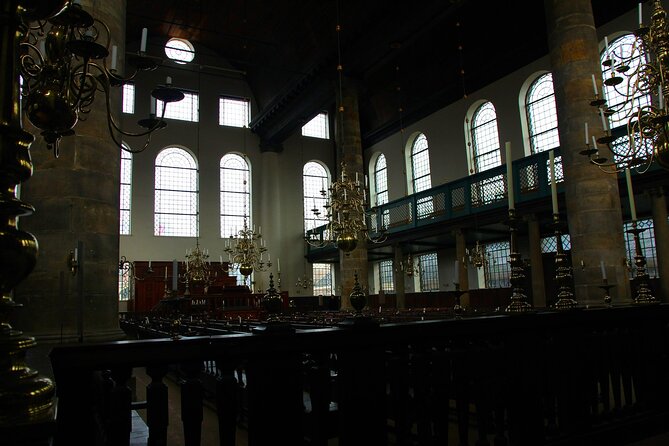
This route takes you through a string of recognizable places, mostly as pass-by moments with audio context. You will see landmarks and street scenes tied to trade, migration, religious community life, war, and Amsterdam’s maritime identity.
Jodenbuurt and the Rembrandt House area
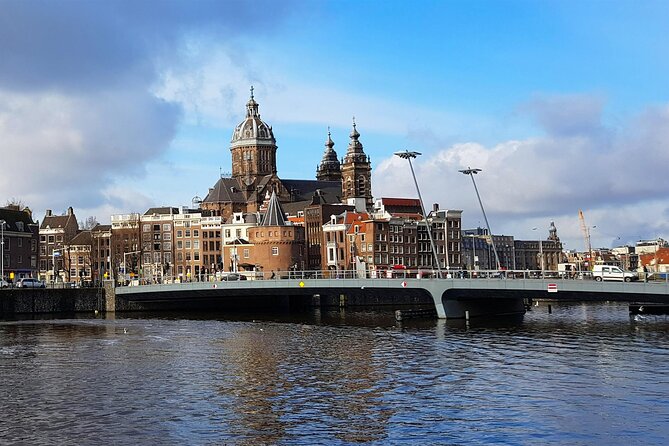
You start in Jodenbuurt, the neighborhood that became a center for the Jewish community from the 1600s onward, and also connects to Amsterdam’s earlier role as a hub for international trade and exploration. If you have never heard the phrase Amsterdam East Side in a historical way, this is where the tour starts making sense.
From there, you pass by the Rembrandt House Museum, modeled to look as it did in the 1600s. Even if you do not enter, the audio framing helps you understand why a place associated with Rembrandt matters in the broader story of city life at the time.
Under the next bridge out of Amsterdam:
- Amsterdam: Van Gogh Museum Ticket
★ 4.7 · 52,054 reviews - Amsterdam: Heineken Experience Ticket including 2 Drinks
★ 4.6 · 36,014 reviews - Amsterdam Classic Saloon Boat Cruise with Drinks and Cheese
★ 5.0 · 31,825 reviews - Amsterdam Luxury Canal Cruise + Unlimited Drinks & Bites option
★ 5.0 · 30,518 reviews
Churches and canal transitions, from South Church to Waterlooplein
Next up is the South Church, again as a pass-by stop with audio guidance. Religious buildings in Amsterdam often feel like landmarks from the outside, and the audio gives you a way to read them beyond their facades.
You also reach Waterlooplein, where you have the chance to stroll along the market. The tour notes it as one of the largest and oldest flea markets in the city. If you like browsing rather than committing to a shopping stop, this is a good place to slow down and watch daily life flow by.
Bridges: Blauwbrug and Magere Brug
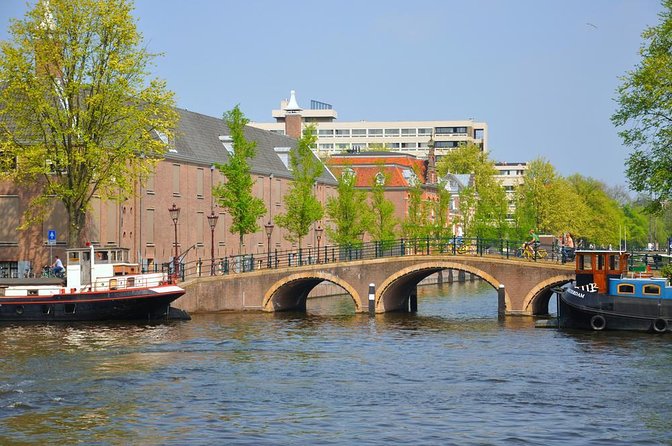
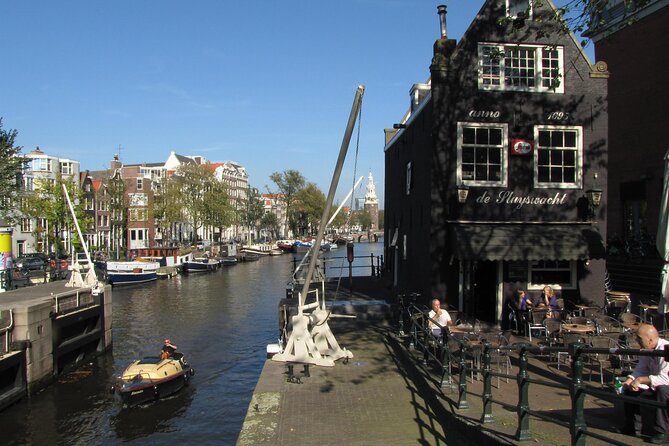
Canals and bridges are a big part of how Amsterdam “feels,” and this tour uses them as natural checkpoints. You pass Blauwbrug, then later Magere Brug, with audio tied to each location.
The practical benefit is that bridges give you a clear moment to stop walking and look. You can look for canal sightlines, photo angles, and the way buildings sit close to the water. If you are the kind of traveler who enjoys structure and rhythm, this route gives it to you without needing a guide walking beside you.
H’ART Museum and what is linked to Dutch art collecting
At H’ART Museum, the audio connects you to the Hermitage Amsterdam story. It explains that the museum houses Dutch artwork collected by the Russian Tsars. Even as a pass-by, it is useful background because it gives you language for what you may see or recognize nearby.
If you are curious and want to go inside, the tour does not guide you through it, so you would need to purchase entry separately. Still, hearing the audio context first can make the visit feel more meaningful when you do decide to step in.
Memorials and Jewish landmarks: learn first, then decide how long to stay
A major strength of this walk is that it does not treat the Jewish District as just scenery. It includes stops connected to the Holocaust and remembrance.
National Holocaust Names Monument and Auschwitz Victims memorial
The tour brings you past the National Holocaust Names Monument and memorials including the Memorial to Auschwitz Victims. These are heavy subjects, and the audio gives you a way to slow down without turning the walk into a blur.
Here is my advice: plan a little extra time around these stops. Even if you do not stay long, a pause lets the information land, and you can decide how much quiet you need in the moment.
Jewish Museum and Portuguese Synagogue
You pass by the Jewish Museum, then later the Portuguese Synagogue of Amsterdam. The audio specifically points out Sephardic Jewish traditions and notes that this synagogue has been the largest synagogue in the world for centuries.
If you are interested in Jewish culture and religious architecture, these pass-by moments can set you up to go deeper later. But again, the tour’s scope is outside listening. Entry to buildings is on you, so decide in advance whether you want your walk to stay photo and street-level, or if you want to add a museum stop by stop.
Hortus Botanicus, ARTIS, and how the tour shifts from old to living spaces
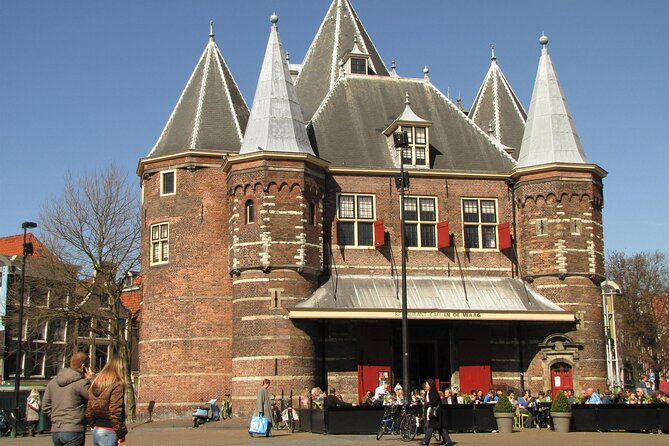
The route also reaches green and living institutions, which helps balance the emotional weight of the memorials with everyday places people enjoy.
You pass Hortus Botanicus Amsterdam and ARTIS Amsterdam Royal Zoo. The audio notes Hortus Botanicus and ARTIS as some of the oldest botanical gardens and zoos in the world. Even if you do not step inside, you will likely notice how “city” softens when you approach gardens and animal habitats.
There is also a clear double-take moment in the route design. You hear about these sites more than once through the sequence of stops, including a pass-by that references ARTIS again. That repetition can help you remember what you are seeing as the tour moves from neighborhood streets to institutional spaces.
Wartime resistance and Amsterdam after conflict
You also pass Verzetsmuseum Amsterdam, the Museum of WWII Resistance. The audio frames it as a way to learn about what life was like for locals during the war.
This is a solid stop to treat as optional time. If your schedule allows, you might want to add an entry there, because the audio tells you enough to know why the museum exists. If you keep it as pass-by listening, you can still come away with context that makes the area’s other memorial elements more coherent.
Entrepotdok, Maritime history, and NEMO’s ship-like building
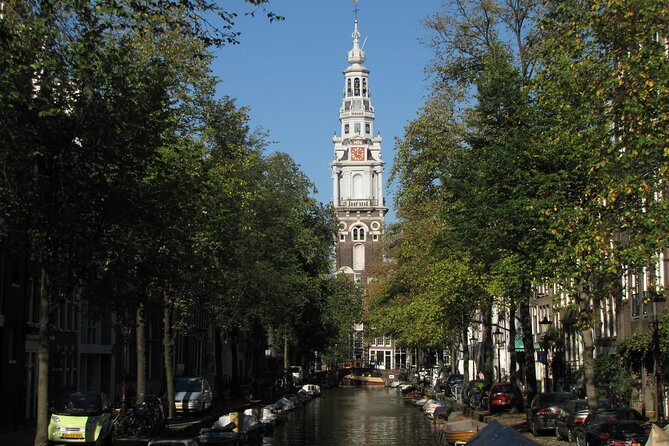
Later, the tour shifts from neighborhoods and memory into Amsterdam’s role as a trading and naval power.
You pass Entrepotdok, then the National Maritime Museum. The audio connects the Dutch fleet, the long-running Anglo-Dutch wars, and the way the old Navy Warehouse became what is now the National Maritime Museum. It also mentions the building’s connection to one of the worst defeats, without needing you to be a naval-history expert to understand the significance.
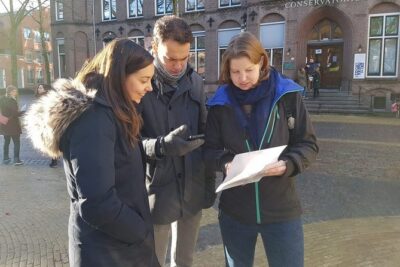
Then you reach Conservatorium van Amsterdam as a pass-by. Even when you do not know the building, it is a reminder that Amsterdam is not only museums and memorials, it is also music and daily cultural life.
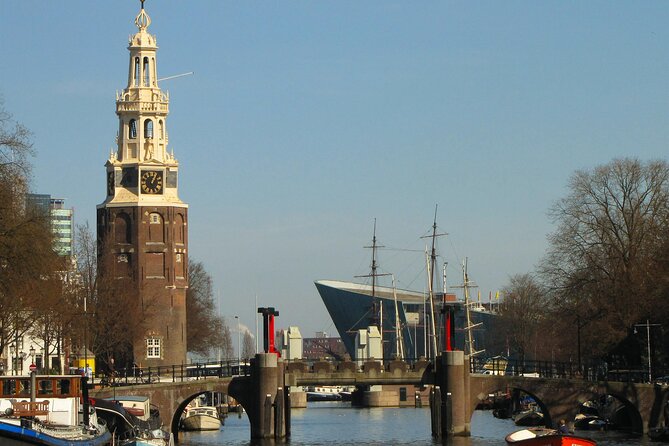
Finally, there is NEMO Science Museum, described as the green building shaped like a ship. The audio notes it was built in what used to be the arm of the sea that linked Amsterdam to the ocean. That connection is a smart kind of fact because it ties modern architecture to older water-based infrastructure.
Pacing that actually lets you breathe, plus a key tip
The best part of this kind of audio walking tour is not the tech. It is the rhythm. This tour is built around frequent informational stops and a walking pace that gives you time to listen without sprinting between locations.
A key suggestion that pays off: treat the audio like a schedule, not a trap. If you want to step into a museum or simply take extra time near a memorial, pause the audio and adjust. Because the app keeps working as you move, you can still finish the route even if you spend longer at one stop than planned.
Also, listen with purpose. As you approach major landmarks like the National Holocaust Names Monument or the Portuguese Synagogue, give yourself a moment to look up from your phone and see what you are about to hear. It changes the payoff.
Who this audio tour fits best
This works best if you:
- want a self-guided Amsterdam walk, not a group schedule
- like getting context while you roam, especially in the Jewish District
- want an affordable option that covers a lot of ground in a single outing
- prefer to choose your own museum timing instead of being pulled inside
It is less ideal if you:
- need a guided walkthrough inside multiple attractions as part of one ticket
- do not want to rely on a smartphone and headphones during the walk
- want a fixed, fast route with no lingering
If you are traveling solo, it is a great match because GPS audio makes the route feel personal. If you are traveling with others, it still works well, but you may each want your own audio device so nobody has to pause for group coordination.
Should you book Old Amsterdam: A Self-Guided Audio Tour?
Book it if you want a low-cost way to understand the East and Jewish District, and you are happy listening while you walk. The value is strong because lifetime access and offline VoiceMap support keep the tour usable long after the day you buy it. The route also balances neighborhood storytelling with memorial context, then shifts into museums, gardens, maritime history, and modern Amsterdam architecture.
Skip it only if you specifically want museum entry included, or if you dislike audio-on-a-phone experiences. Since the tour is pass-by focused, you will need to pay separately if you want to go inside the museums and synagogues mentioned along the way.
In most cases, this is a practical, thoughtful way to see a meaningful side of Amsterdam, on your schedule, without paying for a full guided tour.
FAQ
How long is the Old Amsterdam self-guided audio tour?
It is listed at about 2 hours to 2 hours 30 minutes, depending on how long you linger at stops.
Where do I start and end the tour?
The tour starts at Nieuwmarkt, Amsterdam and ends just before the Odebrug bridge, near Odebrug in Amsterdam.
How much does the tour cost?
The price is $9.99 per person.
What app do I use for the audio?
You use the VoiceMap app for Android and iOS. After booking, you enter your unique code in the app to access the tour.
Does the tour work offline?
Yes. Offline access includes audio, maps, and geodata.
Is museum entry included?
No. The tour does not guide you through museums or other attractions mentioned en route. If you want to enter, you pay for it separately.
Can I use it only on my booking date?
You get unlimited use before your booking date and after it, and you also have lifetime access to the tour in English.
What do I need to bring with me?
You need your own smartphone and headphones.
Is there a virtual option?
Yes. The tour offers a virtual tour option at home.
Is the booking refundable if I cancel?
No. This experience is non-refundable and cannot be changed for any reason.
Latest to arrive along the quays of Amsterdam





Audio Tours, compared.

75 Minute City Canal Cruise with Audio Guide
Read our review →

Amsterdam Sightseeing Canal Cruise with Audio Guide
Read our review →

Amsterdam Van Gogh Museum with Audio or Guided Tour
Read our review →
Van Gogh Museum Skip the Queue with Audio Guide
Read our review →
Amsterdam 1h Canal Cruise by Semi-Open Boat with Audio Guide
Read our review →
Browse the lists this tour appears in