
Reviewed · RED LIGHT DISTRICT WALKS
MUST DO: Amsterdam’s Red Light District tour with a local
Amsterdam at night has a different soundtrack. This Red Light District tour uses an expert local guide to connect what you see today with the area’s older roots, including the oldest parts of town and the structures built to survive a watery city. I especially like the on-foot pacing through narrow streets, and the specific stops that make the whole evening feel concrete, not just headline-based. One consideration: it is not recommended for limited mobility, since you’ll be walking around an uneven, historic area after dark.
You’ll also get a small-group feel, with a maximum of 20 travelers, and the tour runs about 2 hours. Price is $31.32 per person, and it’s often booked about 47 days ahead, so planning ahead is a good move if you want the slot you prefer.
In This Review
- Key Points Before You Go
- After-Dark Context: What Makes This Red Light District Tour Work
- Price and Timing That Make Sense for 2 Hours
- Meeting at Geldersekade 2, Then Learning the Area on Foot
- Stop 1: The Red Light District Streets, with History and Today’s Reality
- The Dam Area and the Story of Amsterdam as City Built on Trees
- Pub The Ape (Int Aepjen): Wooden Heritage After the Big Fire
- Waag: The Second-Oldest Building and the Guild Square Story
- Amsterdam’s Smallest House and the VOC Storage-to-Living Switch
- The Condom Shop Since 1987: How the Area Keeps Evolving
- Who This Tour Is Best For (and Who Should Think Twice)
- Guides, Tone, and What to Expect from the Storytelling
- Practical Tips for a Smooth, Respectful Night Walk
- Should You Book This Red Light District Tour?
- FAQ
- How long is the Amsterdam Red Light District tour?
- What does the tour cost?
- Is the tour offered in English?
- Where do I meet the guide?
- Is there a mobile ticket?
- Is food and drinks included?
- How big is the group?
- Does the tour run after dark?
- Is it suitable for limited mobility, and are service animals allowed?
- What is the cancellation policy?
Key Points Before You Go
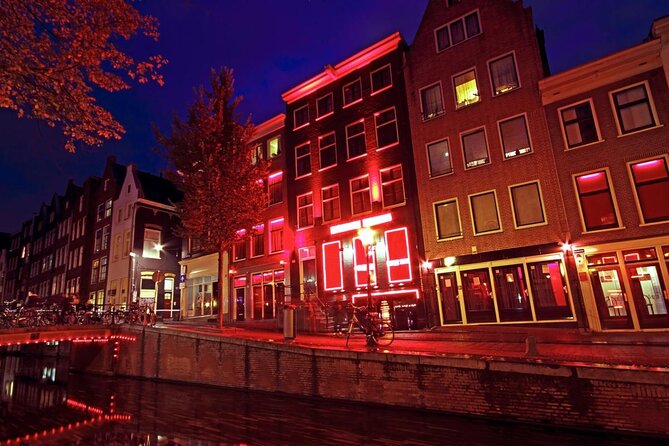
- After-dark atmosphere: you’ll see a side of Amsterdam most people skip during daytime sightseeing
- Max 20 travelers: small enough to keep the guide’s explanations clear
- Landmarks with real stories: Waag, Pub The Ape (Int Aepjen), Amsterdam’s smallest house, and more
- Amsterdam’s watery engineering: the wooden-pole foundation story near the Dam area
- A modern twist in the middle of old town: a condom shop that has specialized since 1987
After-Dark Context: What Makes This Red Light District Tour Work
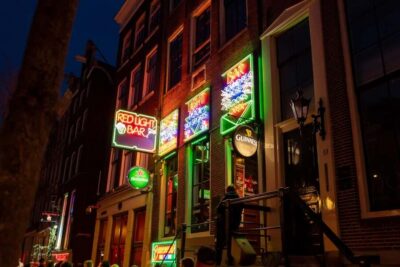
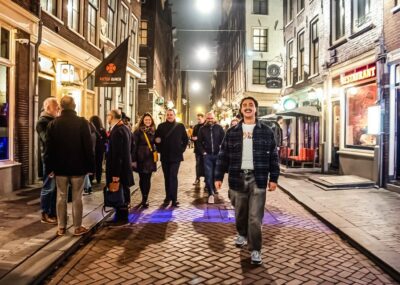
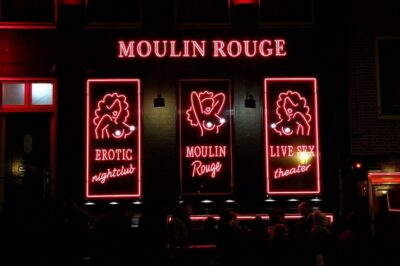
If you only visit the Red Light District in daylight, you miss the rhythm of the place. This tour is timed for after dark, which changes everything. The narrow streets feel more like a real neighborhood at night, not a museum set.
What I like most is how the tour doesn’t treat the area like a single topic. It frames the district as part of Amsterdam’s wider story, then brings you to particular sites where history is visible in the buildings themselves. Expect an expert guide to talk about both the history and the current situation, with the walk keeping you moving so the information lands without lectures feeling long.
More lantern-lit windows explained:


Price and Timing That Make Sense for 2 Hours
At $31.32 per person for about 2 hours, this is priced like a guide-led walking experience, not an all-inclusive night-out. Since food and drinks are not included, you’re free to grab your own choices before or after, rather than paying for something you might not want.
One practical advantage: it’s offered in English, and you’ll get a mobile ticket. That matters because you can spend less time sorting paperwork and more time standing where the guide wants you to stand.
Also, with an average booking window around 47 days in advance, you’ll want to reserve early if you’re traveling in a busy season. The group size cap of 20 helps, but it still sells out.
Meeting at Geldersekade 2, Then Learning the Area on Foot
The tour starts at Geldersekade 2, 1012 BH Amsterdam, and it ends back near the starting point. That round-trip setup is convenient, because you’re not trying to navigate a new route at night once you’re done.
From the start, the strategy is simple: walk the streets, stop at specific points, and learn what you’re actually looking at. You’ll be out long enough to get a feel for the neighborhood vibe, but not so long that you need to turn it into your whole evening. For many people, this works well as an early or mid-evening activity, then you can keep exploring after.
Small group size also helps here. A maximum of 20 travelers means the guide can manage questions and keep everyone oriented, even in tight streets.
Stop 1: The Red Light District Streets, with History and Today’s Reality
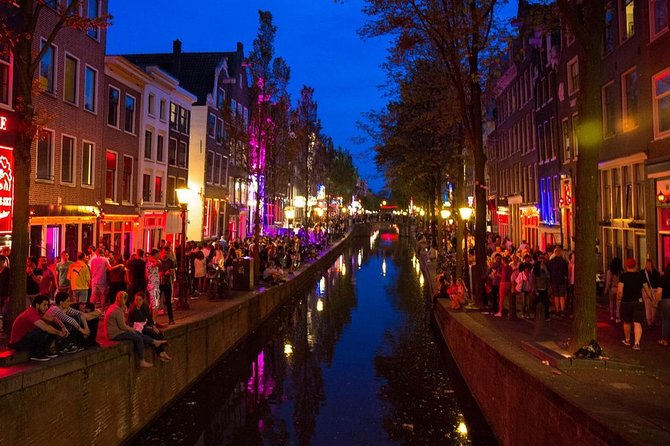
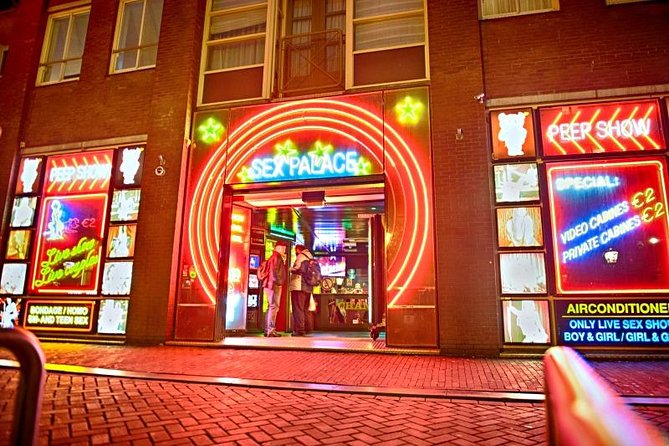
The walk begins in the Red Light District itself, right where the narrow lanes do their work. This part is about more than seeing famous storefront windows. The guide’s job is to put the place into context, including how the area developed and what the current situation looks like.
One thing I appreciate about this style of tour is that it keeps you from turning your brain off. You’re not just looking for images. You’re learning how Amsterdam’s city planning, social rules, and local history shape what’s visible now.
Practical note: expect to be walking on city streets, outdoors at night. If you’re sensitive to the subject matter or you get uncomfortable fast in adult-themed environments, this is exactly the kind of setting that can feel intense.
The Dam Area and the Story of Amsterdam as City Built on Trees
One of the most interesting stops is the lesson about Amsterdam’s foundations. You’ll hear why the city ended up built on wooden poles: the ground includes a thick layer of fen and clay, and older buildings were supported by piles driven down until they reached a first layer of solid sand.
The tour mentions that wooden poles were fixed into the sandy layer that lies roughly 11 meters deep. That detail isn’t trivia. It helps you understand how Amsterdam stayed upright, even while the city grew and the water stayed close.
This is also where the tour ties the geography to the idea of the city’s oldest core. The area you visit is part of the Old Town zone, and that matters because older districts carry older layers of architecture and rules.
Why this stop is worth it: it turns the Red Light District from a tabloid idea into a real place with real infrastructure problems solved over centuries.
Also flying a pennant in Amsterdam
- Amsterdam: Van Gogh Museum Ticket
★ 4.7 · 52,054 reviews - Amsterdam: Heineken Experience Ticket including 2 Drinks
★ 4.6 · 36,014 reviews - Amsterdam Classic Saloon Boat Cruise with Drinks and Cheese
★ 5.0 · 31,825 reviews - Amsterdam Luxury Canal Cruise + Unlimited Drinks & Bites option
★ 5.0 · 30,518 reviews
Pub The Ape (Int Aepjen): Wooden Heritage After the Big Fire
Next, you’ll get a stop at Pub The Ape, known in Dutch as Int Aepjen. The building is described as being built around 1540, and it’s held up as one of the remaining wooden buildings in Amsterdam.
The tour also connects the pub’s survival to the citywide memory of the big fire in 1452. After that fire, the government decided buildings should have brick facades. So when a wooden structure still exists, it feels like a time capsule.
What to look for: even if you don’t stare at architecture like a professor, you can still spot how unusual the building is compared to the idea you usually have of old Dutch streets. This is one of those stops where the guide’s explanation makes your eyes work.
If you love history you can see with your own two eyes, this is a highlight stop.
Waag: The Second-Oldest Building and the Guild Square Story
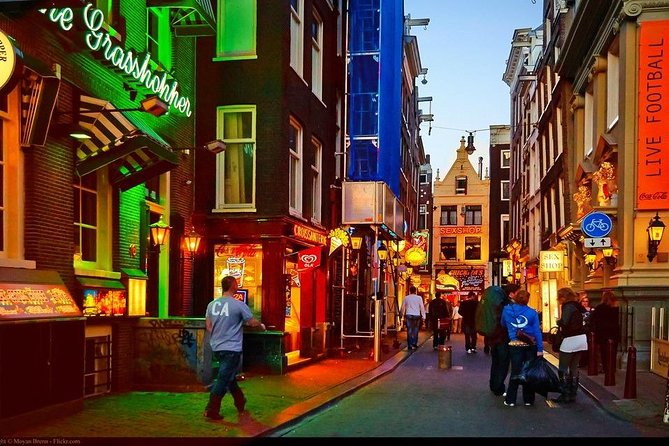
Another stop focuses on the Waag, which used to be one of the city gates and defensive wall features. The tour places it around the 1400s, and it’s described as the second oldest building in Amsterdam.
Then comes the city-life twist: later on, the Waag served the needs of guilds and craftsman organizations. Those groups were tied to the building and the square around it.
This part helps you understand something about Amsterdam that often surprises first-timers: the same squares and buildings that look like backdrops to modern strolling were once linked to defense, trade, and professional life.
Drawback to consider: depending on where you are standing, it can be tough to hear every word if the street is busy. If you prefer quieter explanations, it helps to stay close to your guide and avoid drifting to the side for photos.
Amsterdam’s Smallest House and the VOC Storage-to-Living Switch
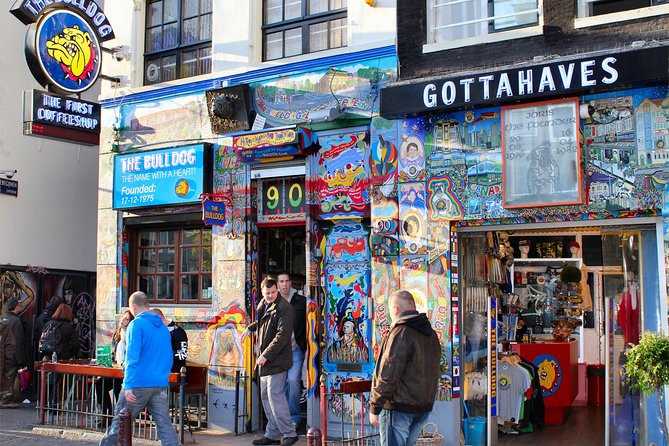
The tour includes a look at the smallest house of Amsterdam, built around the 1700s. The guide explains that it first functioned as storage for the VOC trading company, then later became a long-term living space.
That “storage first, then living” detail is the kind of thing I love on walking tours. It gives you a human scale to the city economy. Instead of treating trade like an abstract concept, you see how the needs of commerce shaped how people occupied space.
This stop also reinforces why walking this area at night works. The buildings can feel close together and compact, so the scale of something called the smallest house lands immediately.
The Condom Shop Since 1987: How the Area Keeps Evolving
Here’s the modern anchor that shifts the emotional gear of the walk. The tour points out a condom shop described as the world’s first specialty condom shop, with the business in place since 1987. The guide notes you can get customized sizes and different types of condoms.
Even if you’d rather skip adult topics, this stop is useful for understanding how the Red Light District functions today. It’s not only about the headlines. It’s also about everyday services, commerce, and what residents and businesses need to offer.
I like how this kind of stop prevents the tour from feeling one-note. You’re seeing a living district with practical businesses mixed into the older urban fabric.
Who This Tour Is Best For (and Who Should Think Twice)
This is a smart choice if you want more than a photo stop. I’d book it if you like:
- city history tied to real buildings, like Waag and wooden structures
- guided explanations that connect old Amsterdam engineering to what you see on the ground
- an adult-themed city walk you can handle confidently
You might think twice if:
- you have limited mobility, because it is not recommended
- you get uncomfortable with adult subject matter, since the district and its related services are part of the story
It also fits well for first-time visitors who want context fast, and for people who enjoy learning from local guides with a knack for turning locations into meaning.
Guides, Tone, and What to Expect from the Storytelling
A big part of whether this tour feels great is the guide. Several names come up in positive feedback: Ben, Robin, Sander, and Max. The common thread is clear explanation plus entertaining delivery, with local tips thrown in so you leave with more than just dates.
I also see a theme in the best reviews: guides make the experience fun while still keeping it respectful and informative. That balance is what turns a potentially awkward subject into something that feels educational instead of uncomfortable.
Practical Tips for a Smooth, Respectful Night Walk
- Wear sturdy shoes. You’re walking around streets, and after dark conditions can feel slick or uneven.
- Stay with the group. With a small crowd and narrow lanes, drifting away means missing the key context.
- Keep expectations realistic. This is a walking tour. Food, drinks, and long indoor breaks are not part of the plan.
- Be ready for adult themes. The tour includes adult-focused content as part of the area’s reality, so choose this with your comfort level in mind.
Should You Book This Red Light District Tour?
If you want an after-dark Amsterdam experience that explains what you’re seeing, I think this is worth booking. The value comes from the guide-led pacing, the small group size, and the variety of stops that connect engineering, old-town survival, guild history, and modern commerce.
Book it if you’re comfortable with adult neighborhoods and you want more meaning than a quick photo. Skip it if limited mobility is a factor, or if you’d rather avoid adult-themed content entirely.
If you do book, aim to arrive at Geldersekade 2 a few minutes early so you’re not stressed before the walk starts.
FAQ
How long is the Amsterdam Red Light District tour?
It’s about 2 hours.
What does the tour cost?
The price is $31.32 per person.
Is the tour offered in English?
Yes, it’s offered in English.
Where do I meet the guide?
The meeting point is Geldersekade 2, 1012 BH Amsterdam, Netherlands.
Is there a mobile ticket?
Yes, you’ll have a mobile ticket.
Is food and drinks included?
No, food and drinks are not included.
How big is the group?
The tour has a maximum of 20 travelers.
Does the tour run after dark?
Yes, it sets off after dark.
Is it suitable for limited mobility, and are service animals allowed?
Service animals are allowed, but it is not recommended for travelers with limited mobility.
What is the cancellation policy?
You can cancel for free up to 24 hours in advance for a full refund.
Latest to arrive along the quays of Amsterdam




Red Light District Walks, compared.
Amsterdam Red Light District & Coffee Shop Tour
Read our review →
Red Light District Pub Crawl with Unlimited Shots
Read our review →
Private Amsterdam Red Light District and Coffee Shop Tour
Read our review →
Browse the lists this tour appears in