
Reviewed · WALKING TOURS
Maastricht Private Walking Tour With A Professional Guide
Maastricht rewards slow walking, and this private tour walks you straight through time. I like that you’re with a local professional guide only, not stuck with a crowd. I also like how the route connects major eras, from Romans to the Maastricht Treaty, without making you feel lost.
One possible drawback to plan for: this is a history-heavy walk, so if you only want scenic stops, you may feel a bit overwhelmed. Also, entrance fees aren’t included, so a couple of sights may cost extra if you want to go in.
You meet at Markt 52 and the tour ends right back there, which keeps things simple. It’s about 2 hours on foot, and you’ll use a mobile ticket to check in.
In This Review
- Key highlights you will feel on this tour
- Why Maastricht’s story works best on foot
- Starting at Markt 52 and walking a tight, efficient route
- Romans, Carolingians, and the origin story that explains everything
- Stadhuis, the street market, and the city’s rhythm
- Dominicans Church and St. Servatius Church: religious history with context
- Museum Aan Het Vrijthof and the artistic side of Maastricht
- Helpoort, then the city’s defensive logic
- From Napoleonic era to Dutch integration, the border story
- War, refuge, occupation, and the aftermath you can still feel
- The Maastricht Treaty, the Euro, and why the city matters today
- Price and value for a private guide in Maastricht
- How to get the most from your 2-hour walk
- Should you book this Maastricht Private Walking Tour?
- FAQ
- How long is the Maastricht private walking tour?
- How much does the tour cost, and what group size does that cover?
- Is the tour private?
- What is included, and are entrance fees covered?
- Where do we meet for the tour?
- Is the ticket mobile, and are service animals allowed?
- Can I get a full refund if I cancel?
Key highlights you will feel on this tour
- Private and customizable: your guide can steer the conversation toward what you care about
- Walkable city-center route: you see landmarks up close, not from a distant bus window
- Big story, clear stops: Roman origins, St. Servatius, wars, and the EU era, all in one flow
- Churches with real context: you learn why the religious history matters to the city’s shape
- Perfect first-time framework: you get the map in your head fast, so you can explore afterward
Why Maastricht’s story works best on foot
Maastricht is the kind of city where the past isn’t behind glass. It’s in the street layout, the churches, the bridges, and the way rulers and borders kept changing over centuries. A walking tour is ideal here because you can actually notice the details that get skipped when you roll past in a vehicle.
What I like most is that the guide connects the dots. You’re not just collecting facts like souvenirs. You’re building a timeline that makes the buildings easier to read. That matters in a place like Maastricht, where the city’s role in Europe is not a modern marketing slogan. It’s rooted in older power shifts and complicated geography.
Also, going private changes the vibe. You can ask follow-up questions in the moment, pause when something catches your eye, and adjust the focus when you realize you care more about, say, religious history than Napoleonic reforms. The tour is made for that kind of back-and-forth.
More Guided Walking Tours in Maastricht



Starting at Markt 52 and walking a tight, efficient route
The tour starts at Markt 52, 6211 CK Maastricht, and it ends back at the same spot. That round-trip setup is practical. You’re not hunting for a different ending point, and you can plan your next meal, museum visit, or train connection with less stress.
Duration is about 2 hours, so think of this as a focused orientation walk. It’s long enough to cover major eras and multiple landmarks, but short enough that you still have energy for your own exploration afterward.
You’ll also want to keep your phone ready. This experience uses a mobile ticket, and it’s best suited to mobile travelers since you’re basically checking in with your device. Service animals are allowed too, which is good to know if that affects your planning.
And yes, it’s a walking tour. You’ll cover a lot of ground on foot in a short time. Plan for comfortable shoes and a steady pace. This is the kind of city where the interesting bits reward careful steps.
Romans, Carolingians, and the origin story that explains everything
The tour begins with Maastricht’s early origins, starting with the Romans. You don’t just hear that the Romans were here. You learn how their presence shaped the city’s development and why that early start matters for what came later.
Then the story moves through the Middle Ages and the Carolingian Empire. This part is useful even if you’re not a medieval-history person. The key value is the cause-and-effect: how leadership and culture changed, and how that change filtered into what you see in the city center.
From there, the tour sets up one of Maastricht’s most important religious legends: the Saint Servatius story. Even if you’ve never heard of him, the guide helps you understand why this legend is more than a name. It connects faith, power, and the way communities organized themselves.
If you’re wondering why this early section feels like a map, that’s the point. When you later reach churches and institutions, you’ll recognize that they’re not random landmarks. They are outcomes of centuries of decisions.
Stadhuis, the street market, and the city’s rhythm
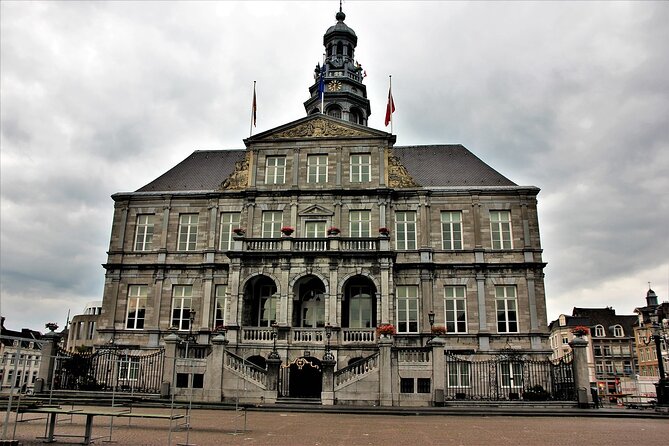
Along the way, you’ll see City Hall (Stadhuis). This stop is more than a photo opportunity. It helps you understand how Maastricht organized civic life in different periods and why a city’s political center often sits near its historic core.
Next up is the Street Market. Market life sounds ordinary until you connect it to the city’s economy and survival. A local guide can explain how commerce shaped Maastricht over time, and why markets tend to cluster where people already gather.
This middle stretch is also a nice break in the pacing. You’re moving between bigger historical stops, so you’re not stuck in lecture mode the entire walk. You also get a sense of the city’s flow, which is a huge help once you start exploring on your own after the tour.
Dominicans Church and St. Servatius Church: religious history with context
Two of the most important religious stops are Dominicans Church (Dominikanerkerk) and St. Servatius Church. In a city like Maastricht, churches are not just architecture. They’re evidence.
The tour links these places to the story of religious wars of the 16th and 17th centuries. That’s a heavy topic, but the value is in clarity. You’ll learn how conflict and belief shaped identities and institutions, and why certain religious landmarks continued to matter even as political power shifted around them.
The guide also helps you connect legend to physical place. Saint Servatius is part story, part cultural anchor. Understanding that makes a difference when you look at a church and realize the building has been part of the city’s meaning-making for a very long time.
Drawback consideration here: churches can be crowded at certain hours, and you’re on a timed walking itinerary. So if you love slow, long interior visits, you might want to plan extra time after the tour to return on your own.
More gables counted on foot:
- Historical Maastricht: Private Walking Tour with Local Guide
★ 5.0 · 9 reviews - Maastricht Highlights 2 hours Private Walking Tour +Local Tasting
★ 4.0 · 5 reviews - Maastricht: 2-Hour Walking Tour with Local Historian
★ 5.0 · 4 reviews - Maastricht Private Walking Tour
★ 5.0 · 1 review
Museum Aan Het Vrijthof and the artistic side of Maastricht
You’ll also see Museum Aan Het Vrijthof. Even if you don’t go inside, it’s a useful stop because it signals how Maastricht protects and presents its own identity. A guide’s job is to help you understand what kind of stories the city chooses to tell.
Then comes Hendrik van Veldeke. This is one of the stops that makes the tour feel specific to Maastricht instead of generic city sightseeing. A local guide can connect him to the city’s cultural voice and why language and literature matter in how people remember the past.
You’ll also see St. John Church (Sint-Janskerk) and Church of Our Lady (Onze-Lieve-Vrouwekerk). These stops help you compare different religious influences and architectural styles. More importantly, you’ll hear how each one fits into the broader timeline of Maastricht’s changing role in Europe.
If you’re the kind of traveler who thinks history means kings and wars, this is where the tour corrects you. Maastricht’s story includes art, language, and identity, not only battle dates.
Helpoort, then the city’s defensive logic
One of the most characterful sights you’ll pass is Helpoort. City gates are a great way to learn geography without a map in your hand. They show where people expected the city to be protected, and where movement and pressure were anticipated.
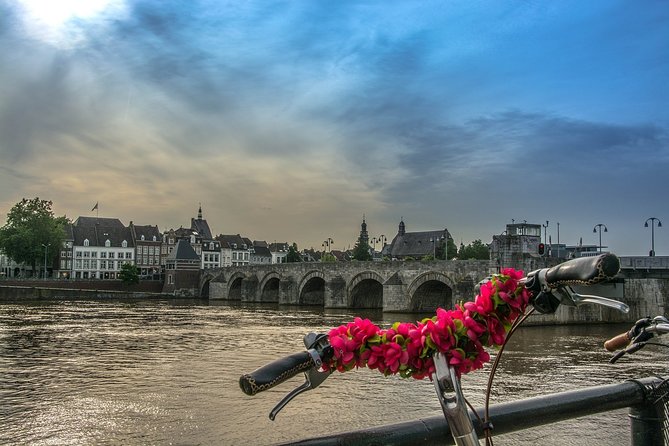
After that, you’ll also reach Sint Servaasbrug, the bridge that ties into the city’s relationship with surrounding areas. Bridges are practical, but in old towns they also act like historical punctuation marks. They show how the city connected itself when borders and power centers were always shifting.
The tour also includes Pieke oet de Stokstraot, a distinctive stop that adds local flavor to the route. This kind of place-name stop matters because it keeps the tour from feeling like a textbook walk. It reminds you that Maastricht has a living local culture alongside its big historic moments.
A small consideration: because you’re walking a compact loop with many themed stops, you’ll want to keep your expectations realistic. You won’t have time to read every plaque in detail. Think of it as guided orientation, then your own follow-up.
From Napoleonic era to Dutch integration, the border story
The tour moves through major political shifts, including the Napoleonic era and the Kingdom of the Netherlands. What makes this section valuable is the emphasis on hard integration of Maastricht into Dutch rule. That phrase matters because it suggests the change wasn’t simply political paperwork. It affected daily life and governance.
Then the tour connects the city’s modern importance to its longer history. Maastricht becomes not only a place of buildings, but a place of decisions that reverberated beyond its streets.
This section is a strong fit if you like understanding why European borders feel “sticky.” Maastricht is a perfect example of that. You see the city, then you understand the why behind it.
War, refuge, occupation, and the aftermath you can still feel
The tour covers World War I as a haven for refugees, then moves to World War II and German occupation. Those are emotionally heavy topics, but the tour treats them as part of the city’s lived history, not as distant tragedy trivia.
Finally, you’ll reach post-war developments. This part helps you understand how a city rebuilds meaning after disruption. It’s also where Maastricht’s modern identity starts to make more sense. The city’s later role in European unity isn’t random. It’s shaped by what the world learned through conflict.
If you want balance, this is one of the tour’s strengths. It doesn’t skip over war years, but it also doesn’t drown you in gloom. The guide keeps returning you to the city’s physical landmarks and what they represent.
The Maastricht Treaty, the Euro, and why the city matters today
The tour ends with a modern milestone: the Maastricht Treaty and how it connects to the foundation of the European Union and the Euro. This is the portion that turns Maastricht from a pretty city into a political one, in the most human way possible.
It’s one thing to hear that the EU started in Maastricht. It’s another to walk around the city, learn what it meant for power to shift there, then understand how a treaty could emerge from a place that has seen so much change.
This is where the guided context really pays off. You leave with a better sense of why Europeans care about Maastricht, and why that story still touches your wallet when you use the Euro.
The tour finishes back at the meeting point, so you can continue your day without needing transit planning.
Price and value for a private guide in Maastricht
The price is $275.65 per group, up to 15 people. That pricing model is important. You’re not paying per person on a standard group bus scale, which can make sense if you’re traveling with family or friends and want a real conversation.
Two hours with a local guide is also part of the value equation. This isn’t just someone walking alongside you while you read plaques. It’s a professional licensed guide who has been guiding for 20+ years. That kind of experience usually shows in how the guide paces the story, answers questions, and helps you connect buildings to themes.
Is it expensive? It can be, depending on your group size and what else you plan to do. But if you care about history and you want the city to make sense quickly, private guiding often feels like money well spent because it saves you time and confusion.
My rule of thumb: if you’re likely to spend your first day wandering without direction, this tour can be a shortcut. You get the key landmarks and the timeline, then you explore freely with fewer dead ends.
Since it’s commonly booked about 14 days in advance, I suggest reserving sooner rather than later, especially in busier seasons. You’ll also want to lock in your preferred timing while the tour slot is available.
How to get the most from your 2-hour walk
Since the tour is designed to cover a lot, you’ll get better results with a little planning on your side.
First, pick your top interests before you arrive. If religious history matters to you, be ready to ask about Saint Servatius and the churches. If you prefer political change, focus questions on the Napoleonic era, Dutch integration, and the EU treaty.
Second, wear shoes you can stand and walk in comfortably. This is straightforward, but it matters. Maastricht’s center is walk-first, and you’ll cover multiple stops.
Third, keep your phone charged for the mobile ticket. It’s small, but it prevents a last-minute scramble.
Finally, bring your curiosity. The best moments tend to come when the guide explains how something you’re looking at connects to the big story happening behind it.
Should you book this Maastricht Private Walking Tour?
Book it if you want a first-time orientation that actually teaches you why Maastricht looks the way it does. This tour is especially worth it when you like history that links directly to places, not history that stays in lecture format.
Skip it or consider another option if you only want relaxed sightseeing with minimal context. The walk is guided through many eras, including wars, so it’s not the lightest stroll.
If you’re flexible, traveling with a small group, and you want real Q and A time with a professional local guide, this is a strong pick. You’ll come away with a clearer mental map of Maastricht, from the Romans to the Euro, and you’ll be able to explore the rest of the city with confidence.
FAQ
How long is the Maastricht private walking tour?
The tour lasts about 2 hours.
How much does the tour cost, and what group size does that cover?
It costs $275.65 per group, for up to 15 people.
Is the tour private?
Yes. It is a private tour, and only your group participates.
What is included, and are entrance fees covered?
Included is a local guide with your group only, a private guided tour, and possible customization on the spot. Entrance fees are not included.
Where do we meet for the tour?
You meet at Markt 52, 6211 CK Maastricht, Netherlands.
Is the ticket mobile, and are service animals allowed?
Yes, it uses a mobile ticket. Service animals are allowed.
Can I get a full refund if I cancel?
Yes, you can cancel up to 24 hours in advance for a full refund. If you cancel less than 24 hours before the start time, the amount paid is not refunded.
Latest to arrive along the quays of Maastricht



Walking Tours, compared.
Amsterdam Anne Frank: Small-Group Walking Tour & Local Guide
Read our review →
Anne Frank’s Story – Guided Walking Tour through Amsterdam
Read our review →
Absolutely Amsterdam – the Essential Introductory Walking Tour
Read our review →
Anne Frank Guided Walking Tour in DE/EN/IT/ES
Read our review →


Anne Frank Walking Tour Amsterdam Including Jewish Cultural Quarter
Read our review →Browse the lists this tour appears in