
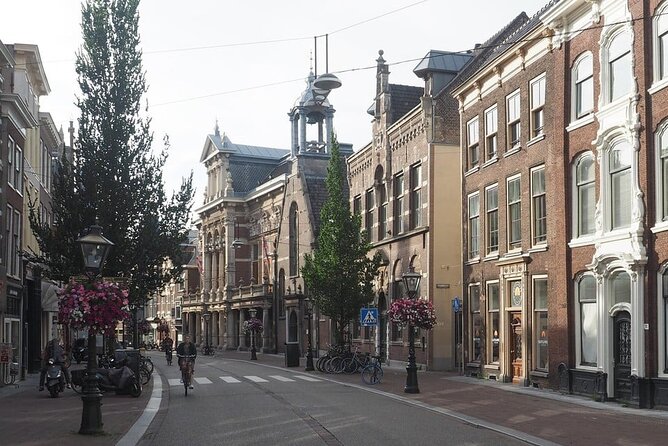
Reviewed · LEIDEN TOURS & EXPERIENCES
Historical Leiden: Private Tour with Local Guide
Leiden history walks right up to you. This private tour is a smart way to see how Leiden ties together the Pilgrim Father story, Rembrandt, and the oldest Dutch university, all in one focused route. I like that it’s private, so the guide can shape the pace to your group, not some rigid crowd schedule.
Two things I especially liked were the chance to ask questions on the spot and the way key landmarks connect into one clear timeline. You’ll move past the Morspoort (one of the city’s oldest entrances) and end at the popular Haarlemmerstraat, so you finish where it’s easy to keep exploring. One possible drawback: it’s a walking tour with short stops, so you’ll mostly enjoy the sites from the outside, with limited time for lingering inside any buildings.
In This Review
- Key highlights to look for
- Getting oriented in Leiden Centraal, then stepping into the past
- Morspoort, the old city entrance that sets the tone
- Molen de Put: Leiden’s iconic 17th-century windmill stop
- Rembrandtplaats and the Rembrandt thread through Leiden
- Stadsgehoorzaal along Breestraat, a concert hall with street energy
- Pieterskerk of Leiden, 12th-century roots and living use
- Stadhuis van Leiden uit 1596: the town hall as a power signal
- Burcht van Leiden exterior: a hilltop pause for views and defense
- Haarlemmerstraat finish: where to head next
- Price and value: when a private tour makes sense
- What makes the guide experience feel personal
- Who this tour suits best
- Should you book this private historical Leiden tour?
- FAQ
- How long is the Historical Leiden private tour?
- Where does the tour start and end?
- Is this tour private, and how big can my group be?
- Do I need to buy tickets for the stops?
- What ticket method is used?
- What if I need to cancel?
Key highlights to look for
- Private guide, you control the pace during a short 2-hour route
- Big names, real places: Rembrandt connections plus the Pieterskerk area
- Old Leiden at street level with stops like Morspoort and the 1596 town hall
- Windmill landmark: a classic Leiden sight with context from your guide
- Hilltop views at the Burcht as a finish-worthy “picture moment”
Getting oriented in Leiden Centraal, then stepping into the past
The tour starts at Leiden Centraal, in front of the station. That’s a great choice because it means you can arrive by train, meet your guide easily, and get your bearings fast before you go wandering. If Leiden is new to you, this start helps you understand where things sit in relation to the station and the old city center.
In a private format, you can immediately set the tone. If you want more focus on Rembrandt, the Dutch Golden Age, the university, or the Pilgrim Father connection, you can steer the conversation. You’re not stuck with a one-size-fits-all script.
This route also works well if you have limited time. With an approx. 2-hour duration, you’re not signing up for a half-day commitment. You get a strong overview that helps you decide what to revisit afterward at your leisure.
More Private Tours in Leiden



Morspoort, the old city entrance that sets the tone
Your first real stop is Morspoort, one of Leiden’s oldest entrances. Even if you’re not a “history person,” you can feel the difference between a city that grew around defense and a city built for cars and commerce. Your guide can explain what the gate meant in day-to-day life, not just as an old stone object.
A good thing about this opener: it frames the rest of the walk. You’re already thinking about protection, movement, and how people entered and exited the city. Then you keep rolling forward, so each next landmark feels connected rather than random.
For photos, this is also a strong early stop. If you’re the type who likes to take a few pictures before you lose track of time, arrive ready with your camera app open.
Molen de Put: Leiden’s iconic 17th-century windmill stop
Next you walk past Molen de Put, a well-known 17th-century windmill that’s a typical Leiden landmark. Windmills often show up in Dutch travel brochures, but here the windmill works as a “city clue.” Your guide can connect it to the way the Netherlands managed water and work in different eras.
Because the stop is short, the goal is not a long windmill lecture. It’s more like a quick orientation marker: you see it, you understand why it matters, and you move on. That makes the tour feel efficient.
If you’re someone who loves industrial or working-history details, you can ask questions here, and this is a good place to do it. Ask how windmills fit with daily life in the Leiden area, and you’ll likely get answers that stick.
Rembrandtplaats and the Rembrandt thread through Leiden
One of the more fun stops is Rembrandtplaats, named for Rembrandt van Rijn, who lived in Leiden. This is where the tour becomes more than just medieval and civic buildings. It turns into culture, art, and the “who lived where” side of city history.
Rembrandt connections can feel abstract in other places. Here, the naming of a square keeps him in your line of sight while you’re walking through the center. You’ll also get a sense of how the Dutch Golden Age culture lived alongside older religious and university life.
If you like art history but don’t want museum overload, this is a good compromise. You get the story in the streets, not as a detached lecture.
Stadsgehoorzaal along Breestraat, a concert hall with street energy
As you pass along Breestraat, you’ll see Stadsgehoorzaal, a major concert hall. If it’s open, you can visit the inside afterward. That flexibility matters, because it gives you an optional upgrade without changing the tour length.
Even without going inside, the hall is useful context. It signals that Leiden isn’t just preserved old stone. You’re walking through a city that still uses historic space for modern life and events.
Practical tip: if you’re hoping to get inside, keep your ears open and ask your guide right away whether access is possible at that moment. Since openness can depend on day and hour, having a local guide asking on your behalf is a small advantage.
More Golden Age corners on foot:
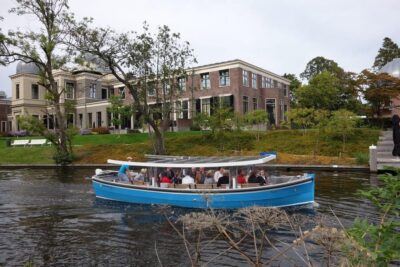
- Leiden: Cruise through the Historic City Center with Guide
★ 4.6 · 445 reviews - Leiden: Historical and Fun City Tour in German, English, or Dutch
★ 4.9 · 35 reviews - Leiden: Historical private guided tour from Amsterdam
★ 5.0 · 1 review - Amsterdam Food and Cultural Tour with Tastings
★ 5.0 · 4,315 reviews
Pieterskerk of Leiden, 12th-century roots and living use
You can’t miss Pieterskerk Leiden, Leiden’s best-known church. The big headline is its age, with origins going back to the 12th century, and it’s still used today. That combination is powerful. Ancient buildings can feel like stage sets when they stop functioning. Here, it’s part of current city life.
Your guide will explain the church’s history and its current use. I like this kind of stop because it bridges time periods. You’re not just hearing dates. You’re seeing how religion, community, and architecture have shaped a city over generations.
Because the tour timing is tight at each stop, don’t expect a long interior wandering. The value is the context you gain, so you understand what you’re looking at when you walk around later on your own.
Stadhuis van Leiden uit 1596: the town hall as a power signal
Another key civic landmark is the Stadhuis van Leiden uit 1596, Leiden’s old town hall. Town halls are more than pretty facades. They’re visible reminders of how cities organized governance, law, and power.
This is where you can ask questions if you want the “why” behind the Golden Age story. Leiden’s role in Dutch history is not just about great painters. It’s also about how cities managed growth, trade, and institutions.
The tour doesn’t just point at the building. It helps you read it. You start noticing the choices made by designers and leaders centuries ago, and you get a better sense of how city life worked.
Burcht van Leiden exterior: a hilltop pause for views and defense
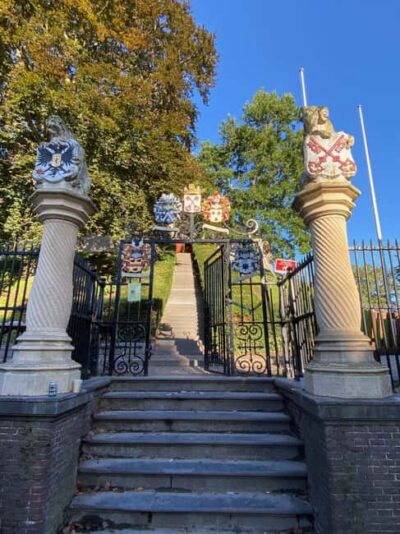
Next comes Burcht van Leiden, the exterior of an old castle used for defense purposes. It sits on top of a hill, and that elevation changes the mood instantly. Even a brief look can make you understand how people once thought about safety, distance, and control.
This stop is a good one for taking a breath. It’s also a good photo moment. If you like getting at least one good overhead view of a city layout, this is where the tour naturally gives you that.
Since it’s the exterior, the emphasis stays on meaning: why a castle here mattered, how the hill influenced the city’s shape, and how defense connected to the wider urban story your guide is building as you walk.
Haarlemmerstraat finish: where to head next
The tour wraps near the station on Haarlemmerstraat, a popular shopping street. That’s a smart ending because it turns your history tour into a practical next step. You can grab a snack, browse, or head back toward your hotel without needing to figure out the layout from scratch.
Finishing near the station also makes it easier to connect with other plans. If you want to go back for more time at Pieterskerk, or spend longer around Rembrandt-related spots, you’re positioned well to do that.
I also like this “choose your next adventure” approach. A private tour should not trap you. By ending on a livelier street, it leaves you options.
Price and value: when a private tour makes sense
This private tour costs $347.91 per group, for groups of up to 15 people. That pricing structure is why this can be good value, depending on your group size.
If you travel with several friends or family members, the math can work out better than paying separate per-person fees. With a max group size of 15, you could spread the cost across many people, as long as you truly have that many.
The tour also includes a private Dutch guide, plus a mobile ticket. The listed stops show admission ticket free for the tour activities, so you should not expect to pay extra entry fees at each stop.
To decide if it fits you, think about what you want: if you want a quick, high-quality overview, a private guided format is often worth it. If you prefer self-guided wandering with an audio app, then this may feel pricier than you need.
What makes the guide experience feel personal
The tour’s value is not only the buildings. It’s the fact that you can ask questions without feeling rushed.
In one case, the guide was Federico, and the tone was upbeat and relaxed, with lots of patience and room for questions. You can see what that means for you: instead of just hearing facts, you can ask follow-up questions about Dutch life, how institutions work, or why Leiden matters the way it does.
Also, because it’s private, your pace is flexible. If you want extra time at Pieterskerk, or you’re the kind of person who needs five minutes longer for a view at the Burcht, you can typically do that. If you want to move quickly and keep things efficient, you can also do that.
That control is not a small perk. In a compact city like Leiden, timing mistakes are common. A guide helps you avoid wandering too long in the wrong direction.
Who this tour suits best
This tour is a great match for you if:
- You want a focused introduction to Leiden’s big storylines, not a long museum day
- You like walking, but prefer a guide to explain the meaning behind landmarks
- You’re traveling with teens or friends who can handle history if it’s made clear and conversational
- You value the ability to ask questions and steer the discussion
It may be less ideal if:
- You expect long, inside-the-building time at multiple sites
- You want a deep museum-style visit rather than a city streets overview
- You dislike short stop-and-go pacing
The tour also notes a moderate physical fitness level and a near-public-transport location. So plan for walking on city streets, not a fully seated experience.
Should you book this private historical Leiden tour?
I think you should book it if you want a clean, efficient way to understand Leiden in a single outing. The route hits the main anchors you care about, from the old entrance at Morspoort and Rembrandt-themed landmarks to Pieterskerk and the 1596 town hall, then finishes where it’s easy to keep going.
If you’re the kind of traveler who likes asking questions and getting a local guide’s take on how the Netherlands works beyond just dates, this format will feel satisfying. And if you’re traveling as a group, the per-group price can become very reasonable.
If you’re only interested in museum interiors or long hands-on time inside churches and halls, you might feel a bit constrained by the short stops. In that case, pair this with extra unstructured time afterward.
If you want Leiden to make sense quickly, this is a solid choice. Book it, then spend your extra time choosing one or two spots to revisit when the facts you learned start clicking into place.
FAQ
How long is the Historical Leiden private tour?
It lasts about 2 hours.
Where does the tour start and end?
It starts at Leiden Centraal (2312 AK Leiden) and ends back at the meeting point.
Is this tour private, and how big can my group be?
Yes, it’s private, and it’s priced per group for up to 15 people.
Do I need to buy tickets for the stops?
The activities at the listed stops show admission ticket free.
What ticket method is used?
You get a mobile ticket.
What if I need to cancel?
You can cancel for free up to 24 hours before the experience start time for a full refund. If you cancel less than 24 hours before, the amount paid is not refunded.
Latest to arrive along the quays of Leiden
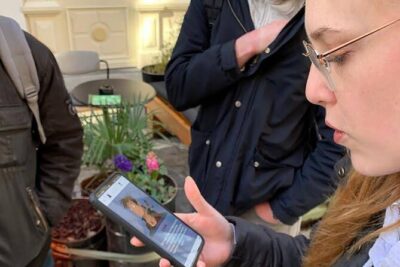


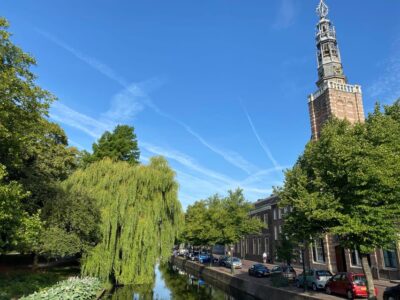
Leiden Tours & Experiences, compared.
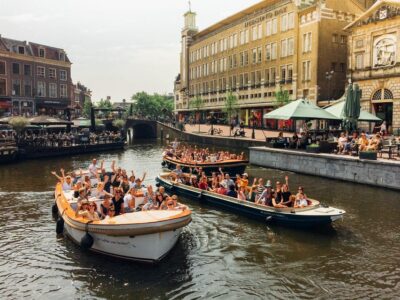
Cruise through the Historic City Center with Guide
Read our review →
Historical and Fun City Tour in German, English, or Dutch
Read our review →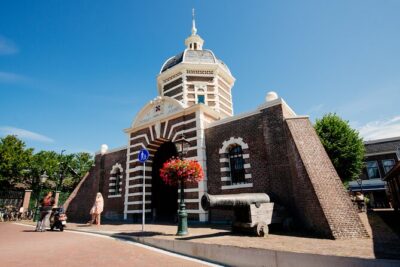
Leiden Tour with Live guide and Visit to Rembrandt’s First Studio
Read our review →
e-Scavenger hunt Leiden: Explore the city at your own pace
Read our review →
Discover Leiden with a self-guided Outside Escape city game tour!
Read our review →Browse the lists this tour appears in