
Reviewed · THE HAGUE TOURS & EXPERIENCES
Guided Pottery Workshop on a Turntable in Choorstraat
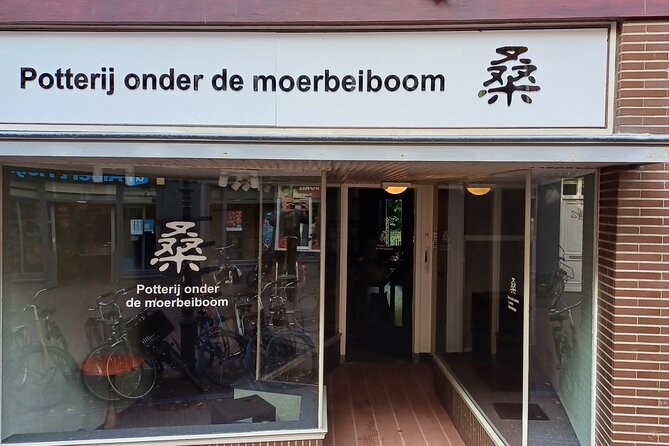
Clay on a turntable feels calm, and this 3.5-hour workshop is interesting because you work with a real studio process, not just a quick demo. I like how the teacher is patient and practical, guiding a small group through each step. You’ll shape pieces, choose your favorite, then do finishing work after a break at Potterij onder de moerbeiboom.
I also really enjoy the part where your decisions matter, especially the glaze choices. You handle the shaping and selection, and the studio takes over the drying, firing, and glazing schedule so your piece actually reaches the next stages.
One thing to consider: you do not take the finished ceramic home the same day. Drying takes about 10 days, and pickup is approximately 3 weeks later, so this is more of a process than an instant souvenir.
In This Review
- Key highlights to look for
- Pottery on a studio turntable, and why it works for beginners
- Your 3.5-hour flow: shaping first, then finishing after the break
- 1) Start with turntable shaping
- 2) Choose your favorite piece
- 3) Finish after the break
- What you are actually doing during the workshop
- The break: coffee and cake, or prosecco with nuts
- How your pottery goes from greenware to glazed ceramic
- Drying, firing, glazing, and the second firing
- Pickup timing: plan for about 3 weeks
- Shipping note, and why it might cost extra
- Price and value: what $114.39 buys you
- What the best teachers do in this workshop
- Who should book this turntable workshop
- Getting there in Delft, and how to plan your afternoon
- Should you book this workshop?
- FAQ
- How long is the pottery workshop?
- Where do you meet for the workshop?
- What time does the workshop start?
- Is the workshop in English?
- What is included in the price?
- What happens after the class if I want the finished ceramic?
- Is shipping included?
- How big is the group?
Key highlights to look for
- Small-group guidance with a maximum of 8 travelers, so you get real attention
- Turntable crafting with a guided rhythm that helps beginners succeed
- Pick-your-piece moment, where you select a favorite and refine it after the break
- Glaze options provided, letting you steer the look even though the studio does the firing work
- A proper workshop break (coffee or tea with cake, or prosecco with nuts)
- Studio-managed finishing, including drying, two firings, and glazing before pickup
Pottery on a studio turntable, and why it works for beginners
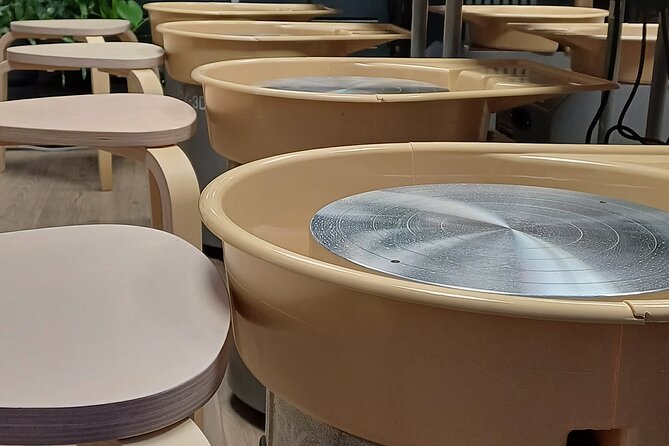
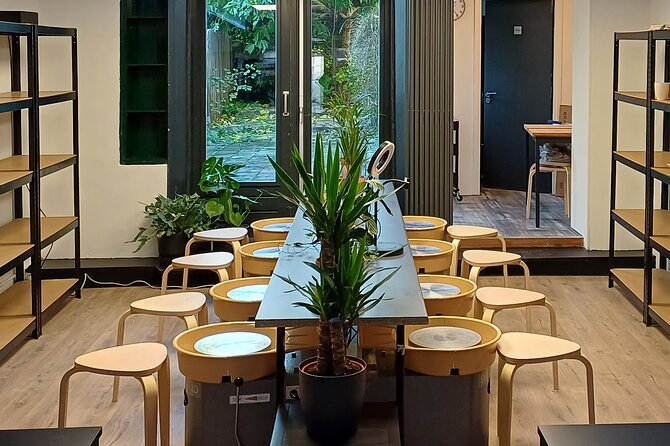
This workshop is built around a turntable workflow, which changes the experience from the usual hands-on pottery class. Instead of only wrestling with clay from a standing position, the turntable helps you focus on form, symmetry, and gentle shaping moves while the clay keeps rotating at a steady pace. For first-timers, that alone can reduce frustration, because you’re not constantly re-centering everything.
At Potterij onder de moerbeiboom, the setup feels like a real studio class. The teacher guides you while the turntable is used to create different pieces as the session progresses. Then you get to choose a favorite piece, and that selection becomes your main project for the rest of the time. That structure is smart for your time, and it keeps the lesson moving without turning into a slow art project that drags.
What I like best is that the instruction sounds geared to people who have no experience. The guidance is patient and friendly, and the teachers are clearly into the craft, not just the logistics of teaching. Even if you end up with a piece that is simple in shape, the process still feels like you made real pottery, not a craft for kids.
More brushes dipped in Delft blue:



Your 3.5-hour flow: shaping first, then finishing after the break
The workshop runs about 3.5 hours. The pace matters here, because you get more than one “phase” of pottery making, and it is designed so you can see the logic of the craft as you go.
1) Start with turntable shaping
You begin by working with the turntable as different pieces get made during the session. You’re not just passively watching. You’ll follow guidance, practice shaping movements, and get enough time to feel your way around the clay.
This part is where the teacher’s attention becomes a real value. When you’re new, small corrections make a huge difference. That’s also where the best classes earn their reputation for patience. The goal is not to produce something perfect on day one. The goal is to learn how to shape while you still have the opportunity to adjust and refine.
2) Choose your favorite piece
After the turntable stage, you select the piece you like best. That moment is important because it shifts you from experimenting into committing. It also helps you avoid the all-too-common pottery-class trap where everyone ends up with a random result because nobody really got a chance to focus.
3) Finish after the break
Then comes the part where your chosen piece is finished after the break. The workshop is set up so the break is not random downtime. It is a real pause inside a structured session, before you do the final work that makes your selection look like a finished ceramic form.
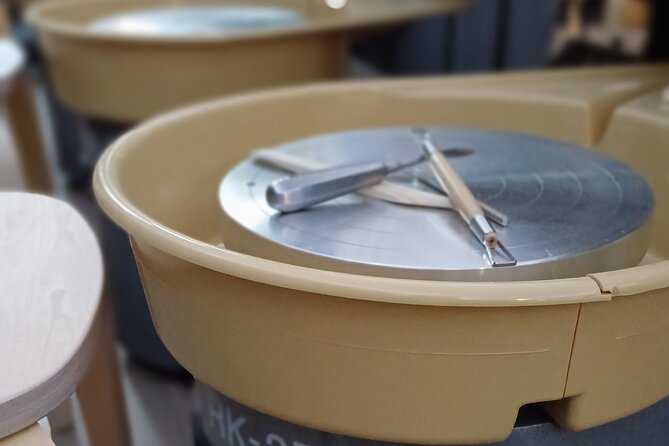
More benches with the tools set out:
- The Hague: Beginner’s Surf Lesson Adults
★ 4.8 · 96 reviews - Amsterdam: Traditional Dutch Syrup Waffle Making Workshop
★ 4.8 · 4,093 reviews - Amsterdam Traditional Dutch Syrup Waffle Making Workshop
★ 5.0 · 960 reviews - Amsterdam: Bols Cocktail Experience and Cocktail Workshop
★ 4.8 · 666 reviews
What you are actually doing during the workshop
You’re essentially doing the “hands-on” part:
- shaping on the turntable
- picking one piece to focus on
- doing finishing work after the break
Your final look depends on glaze choices and studio firing steps, so the day feels less like a single-day craft and more like your part of the bigger pottery pipeline. That makes the experience feel more confident and less chaotic.
The break: coffee and cake, or prosecco with nuts
The break is built into the session, not squeezed in at the margins. During your break, you can opt for coffee or tea with cake, or a glass of prosecco with nuts. That choice is a nice touch, especially because the workshop is hands-on and you may appreciate a proper reset rather than a quick snack.
This break also serves a practical purpose. You get a mental reset before you finish the selected piece. And if you’re someone who likes to chat, this is also the moment where the teacher’s storytelling energy tends to shine, because the room relaxes.
I also think it helps that the class is small, so the break feels like part of the experience rather than a food-line interruption.
How your pottery goes from greenware to glazed ceramic
Here is the real magic, and it is also where you get the best value for your money. The studio takes care of the steps after you leave.
Drying, firing, glazing, and the second firing
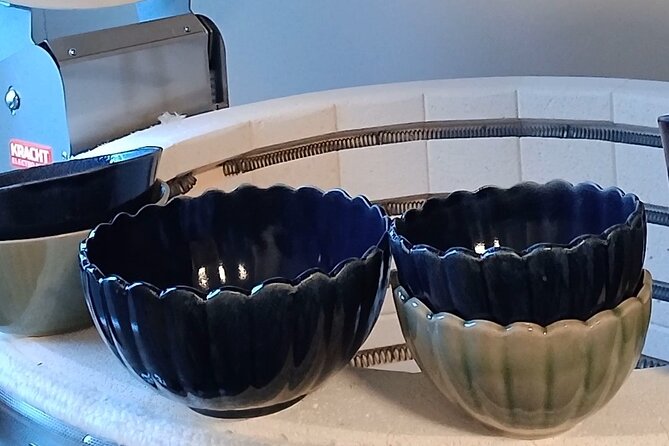
Once your piece is created, the drying process takes about 10 days. After that, your pottery is first fired, then glazed using one of the glaze options provided during the class or process. Finally, it goes through a second firing.
You might be tempted to think you are paying for a workshop experience only. But you are also paying for professional handling of the most technical parts: drying and firing cycles. Those steps strongly affect whether the piece survives and whether the surface and glaze finish properly. The fact that the studio manages all of this is a big part of why this class feels like more than a one-off activity.
Pickup timing: plan for about 3 weeks
After roughly 3 weeks, your piece can be picked up in the store. So, you should plan for it like you would plan for a tailor or a made-to-order item, not like a painting class where you leave with everything in hand.
If you are visiting for a short trip, this timing can be the only mismatch. Still, it’s easy to plan around if you will be back home or near the area later.
Shipping note, and why it might cost extra
Postage costs for sending your ceramic piece are possible but not included. If shipping matters to you, you’ll want to ask about it when you confirm your order or pickup details, since the only thing you can rely on here is that shipping is not bundled into the base price.
Price and value: what $114.39 buys you
At $114.39 per person, the cost is not low. But the value is built into what is included and what the studio handles for you after the class.
You get:
- coffee and/or tea
- materials and tools
And you also get the studio’s expertise after you finish shaping:
- about 10 days of drying
- first firing
- glazing from options
- second firing
- pickup available after about 3 weeks
That means you’re not paying only for a 3.5-hour activity. You’re paying for the part that typically makes pottery difficult for beginners: turning fragile greenware into a fired, glazed ceramic that you can actually use or display.
For me, the best value sign is the clarity of the process. You know what happens next and when. The class gives you the satisfying hands-on part, while the studio takes over the technical steps.
What the best teachers do in this workshop
A lot of pottery classes claim they are beginner-friendly. This one earns that reputation through the way teaching is described in real outcomes.
The standout theme is patience. The teacher helps people with no experience get results, and it sounds like guidance is active, not hands-off. If you’ve ever tried pottery on your own and ended up with lopsided shapes, you’ll understand why attentive instruction matters so much.
Another praised element is storytelling. The teacher shares interesting stories about pottery and where the knowledge came from, and it shows during the demonstration. That matters because it helps you understand the why behind the steps. Even if you do not remember every detail later, you tend to remember the feeling of learning something real.
There is also at least one memorable personal touch described, where the teacher surprised a birthday celebration with cake. That’s not something you should count on as a guarantee, but it tells you the vibe is human and celebratory, not stiff or purely transactional.
Who should book this turntable workshop
This is a great fit if:
- you want a guided ceramics experience without needing previous skill
- you like a small group setting (max 8 travelers) where someone can correct you
- you want to make a ceramic piece with glaze options and let professionals handle firing steps
- you enjoy structured classes with a defined pace and a real break
It’s also a strong choice if you like learning through stories as well as instructions. The teaching style here seems built for both technique and context.
You might want to skip it if:
- you need a finished item immediately to take home the same day
- your schedule cannot handle a return trip for pickup in about 3 weeks, or you don’t want to deal with possible postage costs
Getting there in Delft, and how to plan your afternoon
You meet at Choorstraat 38, 2611 JH Delft, Netherlands. The workshop starts at 1:30 pm and ends back at the same meeting point.
A few practical notes that make a difference:
- It is offered in English, which helps if you do not want to rely on translation.
- It is near public transportation, so you are not stuck with a car plan.
- Confirmation is received at booking, and the experience uses a mobile ticket.
- Service animals are allowed, which is reassuring if you travel with one.
Because it ends where it begins, you can usually plan dinner nearby without too much rushing. The 3.5-hour duration is also a good length for an afternoon activity that does not swallow your whole day.
Should you book this workshop?
I’d book it if you want a genuine ceramics experience with real guidance and studio follow-through. The small group size, the turntable method, and the fact that drying and firing are handled for you make it feel like a smarter pottery class than the ones where you only touch clay and hope for the best.
I would hesitate only if you strongly need a finished piece right away. The payoff here is the process and the professional finishing that happens afterward, with pickup roughly 3 weeks later and possible postage not included.
If you like hands-on learning, patient teachers, and you’re okay planning for a pickup date, this is a very solid choice.
FAQ
How long is the pottery workshop?
The workshop lasts about 3 hours 30 minutes.
Where do you meet for the workshop?
You meet at Choorstraat 38, 2611 JH Delft, Netherlands.
What time does the workshop start?
The start time is 1:30 pm.
Is the workshop in English?
Yes, it is offered in English.
What is included in the price?
Coffee and/or tea are included, along with the material and tools for the workshop.
What happens after the class if I want the finished ceramic?
The studio takes care of drying (about 10 days), firing, glazing, and a second firing. After approximately 3 weeks, the piece can be picked up in the store.
Is shipping included?
Possible postage costs for sending the ceramic piece are not included.
How big is the group?
The workshop has a maximum of 8 travelers.
Latest to arrive along the quays of The Hague






The Hague Tours & Experiences, compared.








Royal Delft: Delftblue Factory and Museum Admission Ticket
Read our review →Browse the lists this tour appears in