Reviewed · TOURS
Groningen: Battlefield tour
Groningen has its scars, and you can read them. This Battlefield Tour, led by Joël Stoppels (International Guild of Battlefield Guides badge 70), makes the April 1945 liberation feel human, specific, and grounded in what is still visible today. What I like most is the personalized guidance style and the way the route is explained with printed maps. The only real drawback to consider is that the subject matter is intense, and you’ll be walking city streets for the full 2 hours.
The backdrop is April 1945, when Groningen became the scene of street fighting that lasted four days. You follow the Canadians’ advance toward the Zuiderdiep and the Grote Markt, finishing at the former State Archives in the Sint Jansstraat, where German forces were ultimately surrounded. You also get period visuals, including photos and objects from 1945, which help the story stick in your mind.
This is a 2-hour guided battlefield route in central Groningen, starting at the Grote Markt area. It’s offered in Dutch or English, and it’s designed as a private group format priced per group (up to 25). If you are hoping for museum time, coffee included, or a “sightseeing-only” city stroll, you’ll want to set expectations accordingly.
In This Review
- Key things to know before you go
- Why April 1945 in Groningen still matters
- Meet at De Martinitoren, then start where the story begins
- Following the advance: Grote Markt to the State Archives in 2 hours
- How the guide uses maps, photos, and objects to make the past legible
- What you’ll notice along the route (and how to look at it)
- Price and logistics: $171 per group, and why that can be good value
- Who this tour fits best in Groningen
- Should you book the Groningen Battlefield Tour with Joël Stoppels?
- FAQ
- How long is the Groningen Battlefield Tour?
- Where do we meet for the tour?
- What start location does the tour use?
- What does the tour include?
- What is not included in the price?
- What languages are available?
- Is this tour private?
- Is audio recording allowed?
- Are there any rules about alcohol or drugs?
- What is the cancellation policy?
Key things to know before you go
- Guide credentials you can verify: Joël Stoppels holds International Guild of Battlefield Guides badge number 70.
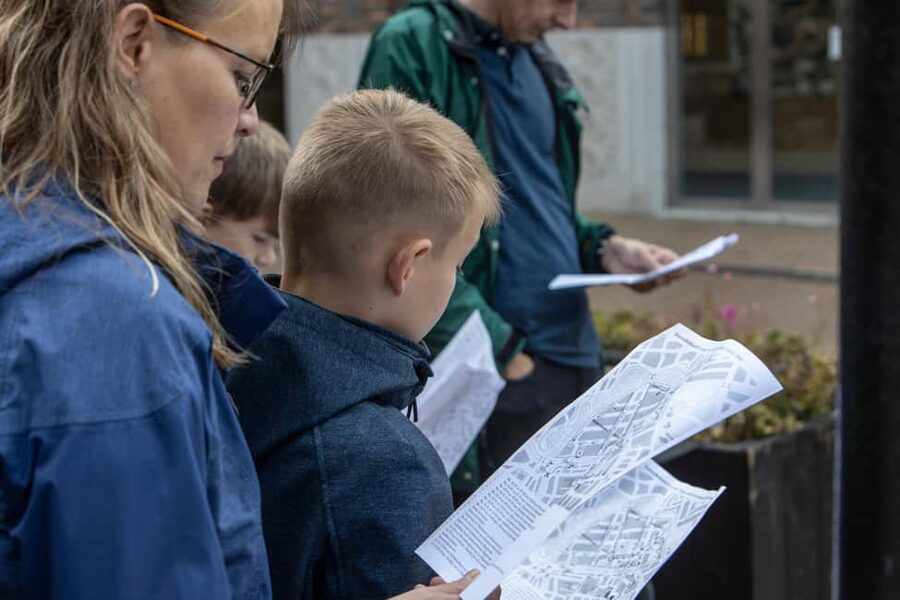
- Route clarity with printed maps: you follow the exact line of advance on handouts during the walk.
- Period evidence, not just talking: you’ll see impressive photos and objects from 1945, paired with street-level locations.
- You can still spot wartime damage: the city holds tangible reminders along the way.
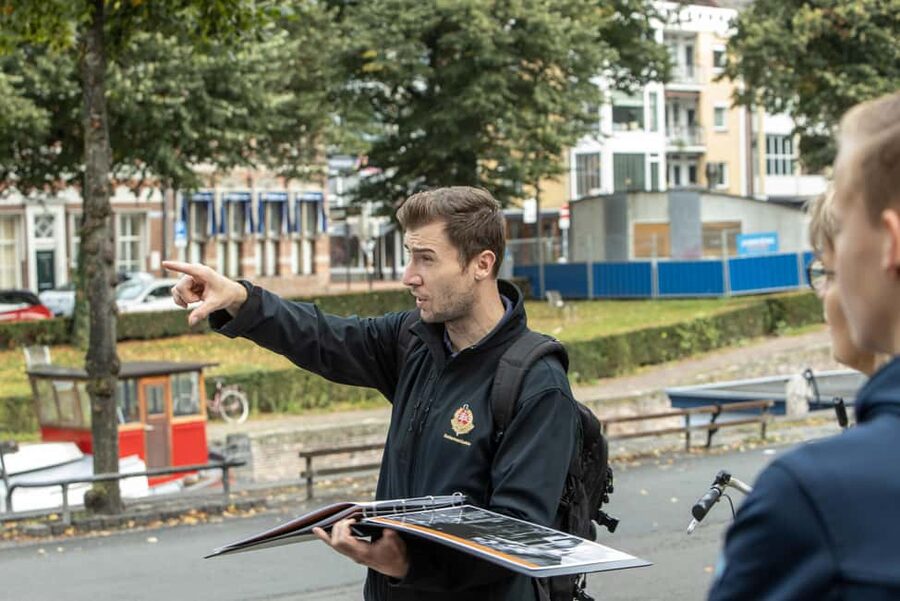
- Tuned to your questions: the guide is open to questions and can add small side turns into Groningen’s broader past.
- Heavy moments, kept respectful: the tour centers on liberation, casualties, and remembrance tied to specific places.
Why April 1945 in Groningen still matters
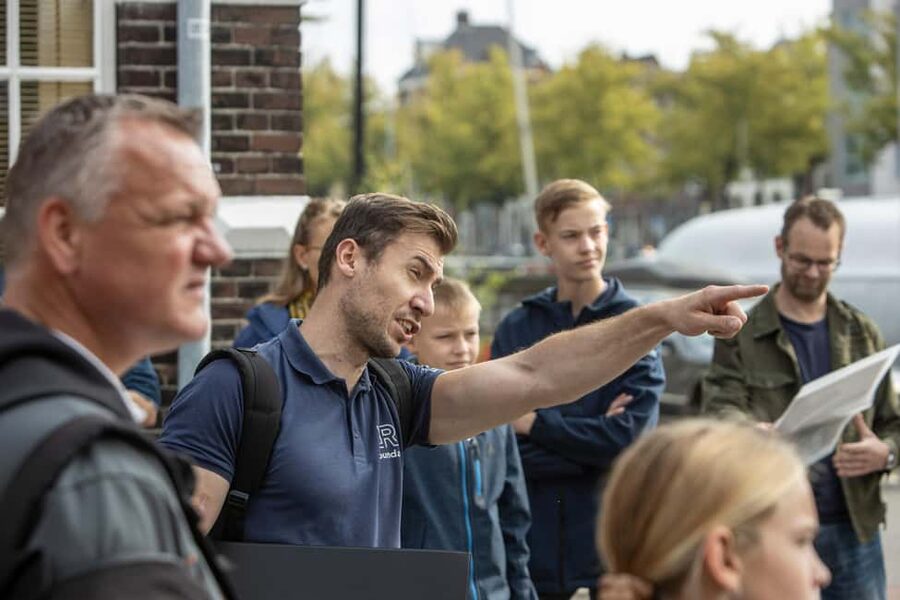
Groningen’s liberation in April 1945 wasn’t a quick victory lap. On April 13, 1945, soldiers of the 2nd Canadian Infantry Division began the liberation of the city. German resistance was fierce, under the command of General Johannes Blaskowitz, within the so-called Festung Holland. The fighting was urban and brutal, lasting four days, and it unfolded street by street, alley by alley, and house by house.
That framing is what makes this tour different from generic World War II walks. You are not getting a distant overview. You’re walking through the kind of places where buildings were cleared under heavy fire, and where the city’s center took serious damage. The Grote Markt, once the vibrant heart of Groningen, was left in ruins, with more than 270 buildings destroyed.
If you care about history that connects to real geography, this route does. And the numbers matter, too: forty-three Canadian soldiers and 110 civilians lost their lives during those days. It’s not presented as shock value. It’s part of how the guide keeps the story anchored in remembrance, with the locations and consequences tied together.
Tied up a few moorings along in Netherlands:


Meet at De Martinitoren, then start where the story begins
You meet at De Martinitoren, a practical meeting point in central Groningen that makes it easy to arrive without hunting for obscure addresses. From there, the tour begins at the Grote Markt, which is important because that square is one of the story’s key turning points.
The guide for this experience is Joël Stoppels, and his background signals that you’re in professional hands. He is part of the International Guild of Battlefield Guides and has badge number 70. In plain terms, that means he’s not just reciting facts. He’s working from a battlefield-guiding method that helps you track the advance and understand why each stop fits the wider sequence.
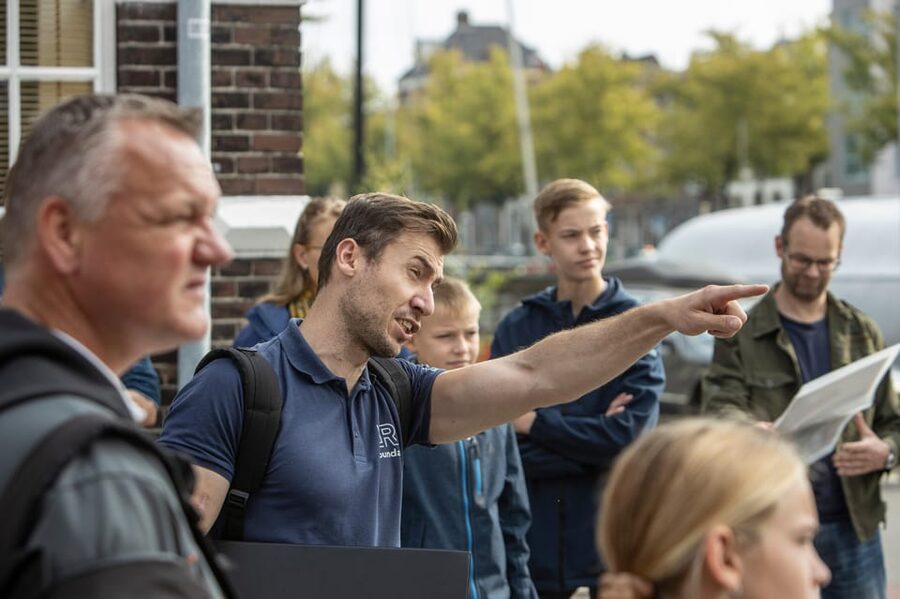
The two biggest “quality” signals from real-world feedback are consistency and responsiveness. You’ll get a friendly, approachable guide who stays open to questions. And if your group has particular interests, he has a habit of tailoring the tour, taking time to get to know people first and then sharing information that connects to you.
Language options are Dutch and English, so you can match your comfort level. Also, you’ll notice the tour style is built for interaction. This isn’t a headset lecture. You’re walking, looking, asking, and getting answers on the spot.
Quick note for expectations: the activity is listed as private group, and it’s built for groups up to 25. If you’re coming as a larger organization, the provider says they can also accommodate group sizes from 30 to 45 for their battlefield tours, but this specific 2-hour offering is priced for up to 25.
Following the advance: Grote Markt to the State Archives in 2 hours
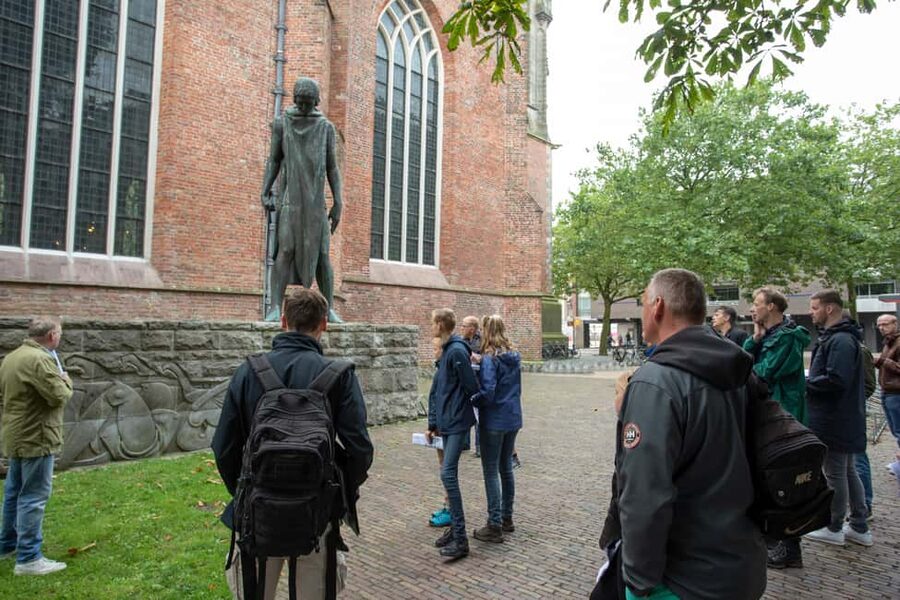
The itinerary is short on paper, but it’s not empty. In two hours, you cover a focused route that traces where the Canadians moved and where the battle’s endgame became clear.
Stop 1: Grote Markt (starting point).
The tour begins at the Grote Markt because this is where the battle’s impact is most visible in the city’s historical memory. Since the Grote Markt was left in ruins and over 270 buildings were destroyed across the city, the guide can explain what the square meant before the damage and what it became during the fighting.
Then: toward the Zuiderdiep and back through the battle line toward the Grote Markt.
The story moves along the line of advance toward the Zuiderdiep, and you’ll continue following that logic as you walk. The key is that you’re not just absorbing random “war spots.” The route is structured around the Canadians’ movement, which is exactly what you want if you like battles explained as a sequence rather than a collection.
Finish: former State Archives, Sint Jansstraat.
The tour ends at the former State Archives in the Sint Jansstraat, where German forces were ultimately surrounded. That finale helps the tour “close the loop.” You start in a place tied to devastation in the city center, follow the advance, and end at a location that signals the end of the battle phase you’ve been tracing.
One practical upside of this layout is that it gives you a sense of direction. You understand the “start,” the “push,” and the “surrounding,” instead of just collecting stops. And because the guide uses printed maps, you can follow along even if you don’t know Groningen well yet.
How the guide uses maps, photos, and objects to make the past legible
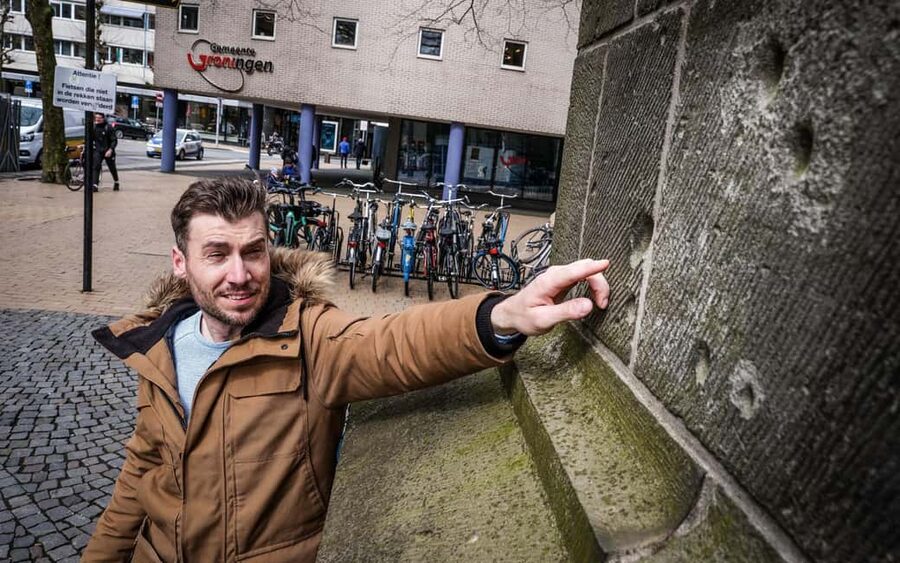
A Battlefield Tour is only as good as its method. Here, the method is very practical: printed maps during the walk and period materials that anchor what you see.
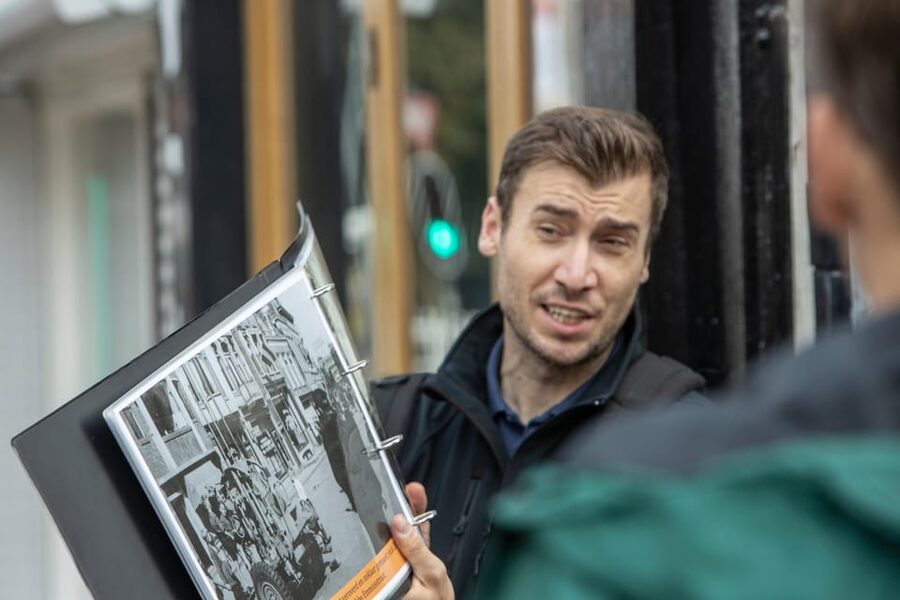
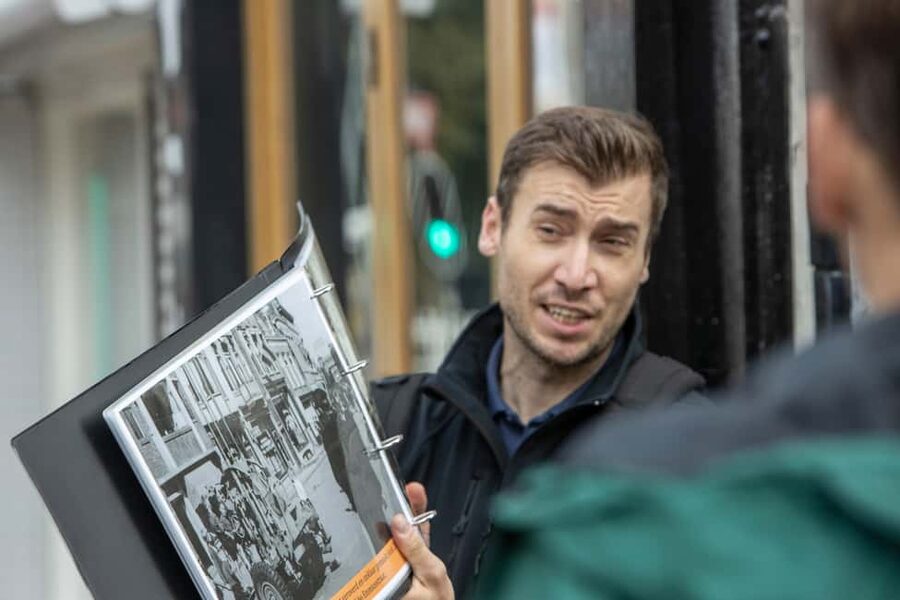
You’ll be given map handouts so you can follow the exact route of the Canadians’ advance. That matters more than it sounds. Without maps, a street-level WWII tour can turn into a series of moments. With maps, you can connect the dots: where forces moved, how the sequence built pressure, and how specific areas tied into the wider urban battle.
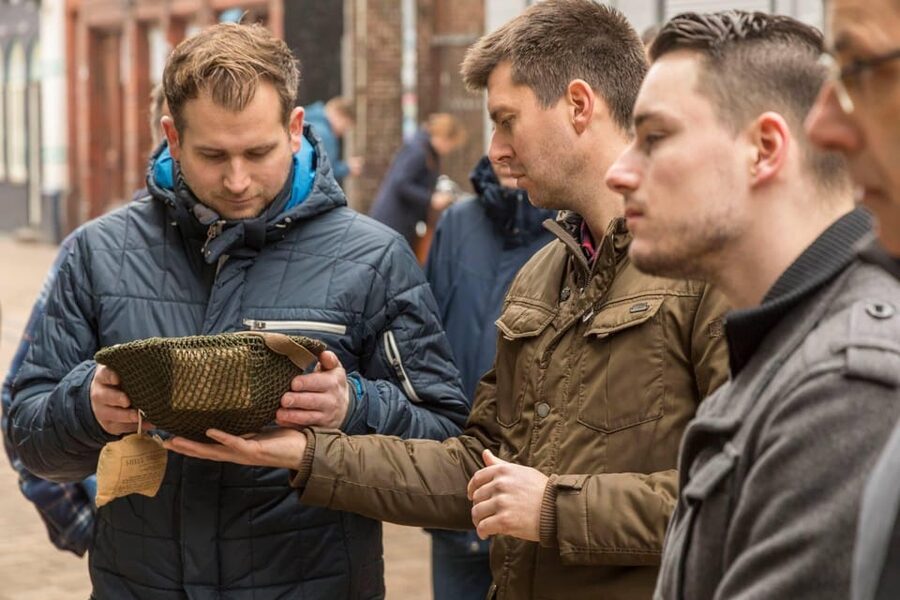
The tour also uses impressive photos and objects from 1945. This is where your brain stops treating the war as distant and starts treating it as real life in real streets. Period photographs can show what buildings looked like during or right after the fighting. Objects from the time help you imagine hands, daily routines, and the physical reality of 1945, not only the tactics.
And because the guide points out remnants of wartime damage that are still visible, you get a double layer of understanding:
- what the city looked like under pressure in 1945, and
- what parts of that story still linger on today’s streets.
That combination is exactly why people who like history grounded in place tend to enjoy this format.
What you’ll notice along the route (and how to look at it)
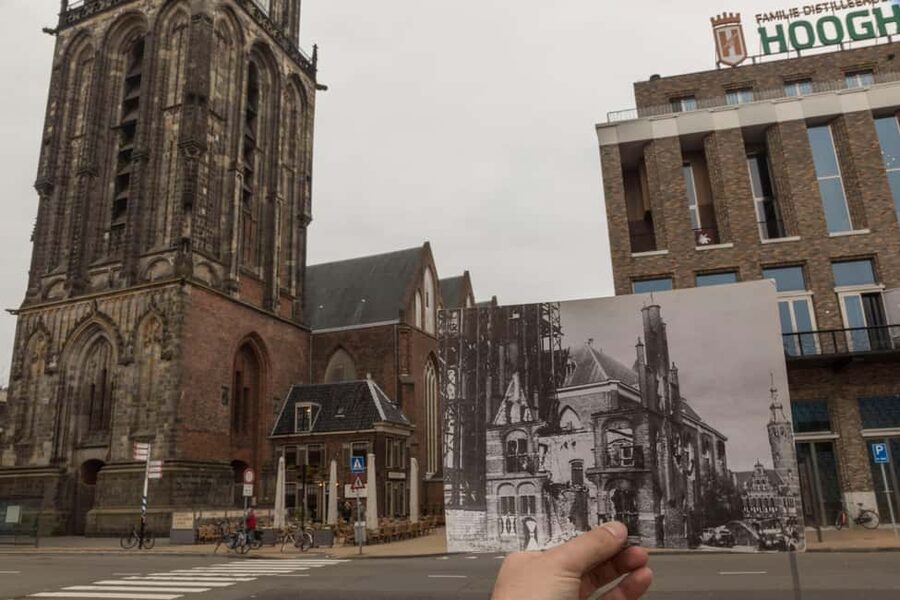
The tour’s content makes you look at Groningen in a different way. Instead of focusing on architecture for its own sake, you begin reading the city like a record.
Expect to spend time on locations where wartime damage is still present, and where the guide can explain what you are seeing in relation to the April 1945 battle. Even if you’re not a WWII expert, you’ll be able to follow the narrative because the route is tied to the Canadians’ advance and you have the maps to keep your bearings.
Here’s a helpful mindset for your walk: try to treat each stop as answering one question. Where were the Canadians at this moment in April 1945? Why did this area matter? What was the impact on civilians and the city’s core spaces?
That’s the kind of guided structure that keeps the tour from becoming overwhelming. It channels the heavy parts into a sequence you can understand.
Also remember the tour includes reminders of casualties and loss. The guide’s job is to keep it factual and respectful, and the point is remembrance, not theatrics.
Under the next bridge out of Netherlands:
- Discover Amerfoort’s city center in this Outside Escape game tour
★ 4.5 · 32 reviews - Surrealistic Art Maze in Tilburg
★ 4.0 · 29 reviews - e-Scavenger hunt Zierikzee: Explore the city at your own pace
★ 4.5 · 24 reviews - e-Scavenger hunt Zwolle: Explore the city at your own pace
★ 4.5 · 23 reviews
Price and logistics: $171 per group, and why that can be good value
The price is $171 per group, for a group size up to 25, and the tour runs for 2 hours. If you fill the group, the cost per person drops quickly, which can make this a strong deal compared with many private guided experiences in Europe.
Even more important than the arithmetic is what you’re paying for:
- a professional battlefield guide, Joël Stoppels (International Guild badge 70)
- a structured route focused on a specific battle timeline in Groningen
- printed maps you can follow during the walk
- period photos and objects from 1945
- a small-group format where questions are welcome
What’s not included is also straightforward: you’ll want to plan for coffee or tea on your own, and you should assume there’s no transport provided. Museum entrance fees are not included either, which matters if you’re planning to tack on museum time after the tour.
You also won’t be able to bring alcohol or drugs, and audio recording is not allowed. If you like to capture everything on your phone, plan to rely on note-taking instead.
Who this tour fits best in Groningen
This tour is a smart match if you want WWII history that is tied to streets, squares, and specific turning points. It’s also a great choice if your group likes a guide who can answer questions rather than rush past them.
It’s especially worth it for groups who value a custom feel. One piece of feedback from a Canadian booking highlighted that the guide personalized the tour for the group, taking time to get to know people first and researching information related to them. Another booking from the Netherlands emphasized how friendly and open the guide was to questions, plus the occasional small detour into other parts of Groningen’s history.
That kind of flexibility is a real quality-of-life feature. It means you’re not stuck in a script, even though the route stays focused on the battle.
Because this is centered on April 1945 urban fighting and its impact, it also suits anyone willing to handle heavy history with respect. If you want light entertainment, this isn’t that.
One caution to check before booking: the listing says wheelchair accessible, yet it also says it is not suitable for people with mobility impairments. If mobility is a concern for you or someone in your group, contact the operator directly and ask how the route and pacing work in practice.
Should you book the Groningen Battlefield Tour with Joël Stoppels?
Book this tour if you want a 2-hour, guided way to understand the liberation of Groningen in April 1945, with the Canadians’ advance clearly traced and supported by printed maps, period photos, and objects from 1945. It’s also a good fit if you’re traveling with a group that values questions and a guide who takes time to connect the story to the people in front of them.
Skip it, or at least adjust expectations, if you’re only interested in museums or if you want transport and refreshments handled for you. And if mobility needs are part of your decision, verify route suitability in advance because the provided accessibility notes conflict.
If what you’re after is remembrance tied to real streets, and you like history that has direction and detail, this one is an excellent use of a couple of hours in Groningen.
FAQ
How long is the Groningen Battlefield Tour?
The tour lasts 2 hours.
Where do we meet for the tour?
The meeting point is De Martinitoren.
What start location does the tour use?
The guided tour starts at the Grote Markt.
What does the tour include?
The guide brings printed maps so you can follow the exact route of the Canadians’ advance during the tour.
What is not included in the price?
Coffee and tea, transport, and any museum entrance fees are not included.
What languages are available?
The live guide can lead the tour in Dutch and English.
Is this tour private?
Yes, this activity is listed as a private group.
Is audio recording allowed?
No, audio recording is not allowed during the tour.
Are there any rules about alcohol or drugs?
Alcohol and drugs are not allowed.
What is the cancellation policy?
Free cancellation is available up to 24 hours in advance for a full refund.
Latest to arrive along the quays of Netherlands
Tours, compared.
Zaanse Schans, Edam, Volendam & Marken Bus Tour
Read our review →
Amsterdam Anne Frank: Small-Group Walking Tour & Local Guide
Read our review →
Anne Frank’s Story – Guided Walking Tour through Amsterdam
Read our review →
Big Bike tour Amsterdam – See all in 3 unforgettable hours
Read our review →
Guided Zaanse Schans, Windmills & Cheese Tour
Read our review →