

Reviewed · MUSEUMS
Garderen: Sandsculpture Exhibition Entry Ticket
Sand turns Amsterdam into 3D history. The Zandsculpturen Garderen exhibition in De Beeldentuin makes 750 years of the city feel graspable, from origins to today, all through detailed sand scenes. It’s a creative way to see Amsterdam’s story without getting stuck indoors with another museum floor map.
I love the clear “walk through time” layout, because you can move at your own pace while still hitting the big chapters: the fishing village start, the Golden Age, the canals, and wartime resilience. I also like that you get extra value with free entry to the Beeldentuin and garden area, so your visit can feel like more than just one ticketed room. One consideration: plan for about 3 hours on average, so it’s not the kind of activity you’ll stretch into an entire day at a sprint pace.
In This Review
- Key things to know before you go
- Sand sculptures in Garderen: what you are really buying
- The Amsterdam timeline you walk through, scene by scene
- From fishing village roots to the Golden Age
- Canals and daily life in miniature
- Wartime resilience and key moments
- Famous landmarks you recognize
- Interactive displays: how the facts are delivered
- Timing it right: 3 hours that feel comfortable
- Photography and the rules: easy win planning
- Value check: why $16 can feel like a bargain
- Who this suits best
- Languages and getting help on site
- A note on group visits and the feel of the day
- Should you book the Zandsculpturen Garderen sand sculptures?
- FAQ
- Where is the sand sculpture exhibition?
- How much does the entry ticket cost?
- How long should I plan to visit?
- Is the ticket valid for more than one day?
- What is included in the ticket?
- What languages are supported by the host or greeter?
- Is it wheelchair accessible?
- What should I bring with me?
- What is not allowed during the visit?
- Can I change my plans after booking?
Key things to know before you go

- De Beeldentuin Garderen setting makes the sculptures feel like an outdoor stroll with art and history together.
- Amsterdam in sand over 750 years covers origins, the Golden Age, canals, daily life, and wartime resilience.
- Interactive displays give facts as you walk, so it’s not just looking.
- Family-friendly photo moments are built in, with lots of scenes that work well for kids and adults.
- Group-friendly welcome can include a small touch like music when groups are received.
Sand sculptures in Garderen: what you are really buying

For $16 per person, you’re paying for something surprisingly specific: entry to a sand sculpture exhibition that tells a long Amsterdam timeline through scenes you can walk through. The price makes sense when you factor in three things. First, the average visit is about 3 hours, so you get real time with the art. Second, you get sand sculptures plus extra garden entry, which often turns a quick stop into a half-day outing. Third, this is an experience that works for mixed ages. Adults get the history beats, and kids get the wow factor of huge, temporary artwork that still holds incredible detail.
And the setting helps. This is hosted at De Beeldentuin in Garderen, so you are not just “viewing.” You are walking an organized route in a garden environment. That matters because the sculptures are the main event, and a stroll format makes it easier to pause, take photos, and compare scenes without feeling rushed.
More museum halls off the squares:



The Amsterdam timeline you walk through, scene by scene
This exhibition is built around a simple idea: show major chapters of Amsterdam’s evolution using sand sculptures that you can follow from beginning to end.
From fishing village roots to the Golden Age
You start with Amsterdam’s earlier identity, including its origins as a fishing village. Then the path moves toward the city’s growth and prosperity, including the Golden Age. This is one of the smartest parts of the concept. People often know Amsterdam for canals and landmarks, but they forget how it got there. Watching the progression laid out physically in sand makes the story feel logical instead of textbook-ish.
Look for the little details. Even if you don’t read every fact panel, the visuals help you connect “why Amsterdam looks like it does” with “how it got that way.”
Canals and daily life in miniature
Next comes the big Amsterdam visual language: the construction of the iconic canals. After that, you’re not stuck on famous buildings only. The exhibition also includes scenes of daily life, which is where the history becomes human. This is the moment that tends to land best for families, because you get everyday actions, not only big dates.
Practical tip: when you take photos, widen your shot a bit. Some scenes are easier to appreciate when you show the sculpture and the surrounding garden space, not just the central figure or building.
Wartime resilience and key moments
The exhibition does not stop at prosperity. It also covers Amsterdam’s resilience through wartime, plus other key historical moments. That shift adds contrast, and it’s a good reminder that cities are shaped by more than celebrations and golden bricks.
If you like history that has emotional weight, this section is likely to feel more serious than the earlier “wow” moments. Still, the presentation stays approachable, because it’s delivered through sculpted scenes rather than a heavy lecture.
Also flying a pennant in Amsterdam
- Amsterdam: Heineken Experience Ticket including 2 Drinks
★ 4.6 · 36,014 reviews - Amsterdam: Rijksmuseum Entry Ticket
★ 4.7 · 29,512 reviews - Amsterdam: Icebar Entry Ticket with 3 Drinks
★ 4.2 · 14,562 reviews - Amsterdam: The Upside Down Experience Entrance Ticket
★ 4.4 · 11,918 reviews
Famous landmarks you recognize
As you continue, you’ll see sand versions of famous landmarks and recognizable city elements. This is a great section if you are an Amsterdam first-timer. You’ll leave with visual mental anchors, so later, when you visit the real city, you’ll notice the references faster.
Interactive displays: how the facts are delivered

The exhibition includes interactive displays with fascinating facts about how Amsterdam changed over time. That’s important, because sand alone can become “pretty but passive.” Here, the interaction helps you turn your walk into learning without making it feel like school.
The best way to use this part is simple: don’t sprint. Spend an extra minute at each display, then go back to the nearby sculptures and connect what you read to what you see. That back-and-forth is what makes the learning stick.
If you are traveling with kids, this is also your secret weapon. Kids usually don’t want to stand still to read long text, but interactive bits are easier for them to engage with. Then they can point out what they saw in sand right after.
Timing it right: 3 hours that feel comfortable
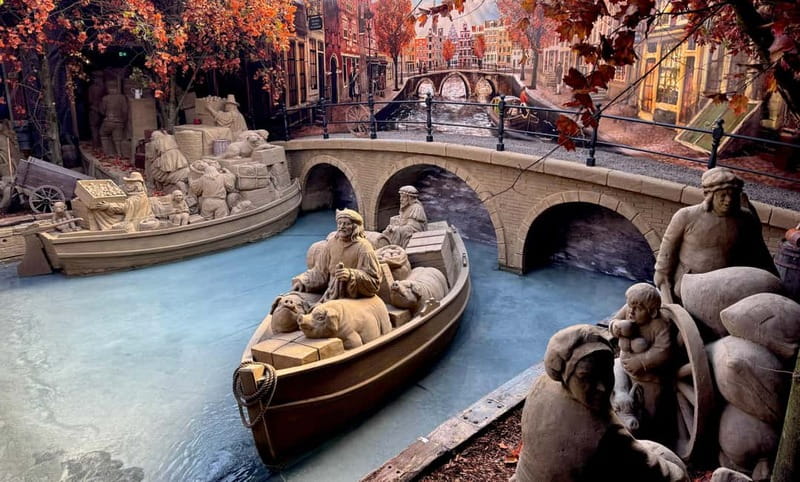
The average visit duration is 3 hours. That’s a sweet spot. It’s long enough to see everything properly, and short enough that you can still plan snacks, a relaxed walk in the garden, or other nearby stops.
If you want your visit to feel unhurried, I’d plan:
- About 2 hours for the sand sculpture route
- About 30 to 45 minutes for interactive stops and photos
- About 15 to 30 minutes for garden areas you get free with your ticket
Keep in mind that your ticket is valid for 1 day, so you can align it with your schedule. Starting times depend on availability, so check what works best for your day.
Photography and the rules: easy win planning

Bring a camera. That’s officially recommended, and honestly, it’s the right call. Sand sculptures can be photographed beautifully, especially when you have time to step back, change angles, and frame the scene with the setting.
Two quick notes based on the on-site rules:
- Alcohol and drugs are not allowed
- Nudity is not allowed
Also, if you are traveling with a group or family, decide ahead of time whether you’ll do “photo checkpoints” every 10 to 15 minutes. It keeps the day organized without making it feel like a scavenger hunt.
Value check: why $16 can feel like a bargain

At $16 per person, the value comes from the combo: sand sculptures plus extra garden entry. Many attractions charge for the main exhibit only, and the surrounding space is either unrelated or costs more. Here, the free entry tickets for the Beeldentuin and garden mean you can extend the day naturally.
This matters most if you have:
- Kids who need time to move around
- Anyone who likes photos and a slower pace
- A group that wants a shared activity without complicated planning
It’s also a smart option if you want a history-themed outing that isn’t locked into one strict schedule like timed museum tours. You walk, you pause, you return to sections, and you keep control.
Who this suits best

This exhibition is especially good if you want something that hits multiple goals at once.
It’s a great fit for:
- Families who want history plus visual wow
- Amsterdam fans who want a fun, visual way to connect time periods
- Budget-minded travelers looking for a meaningful experience in a single stop
- Wheelchair users, since it is wheelchair accessible and the full park is wheelchair friendly
If you’re traveling solo, it still works well. The route is structured, the learning supports your curiosity, and you can take your time with photos.
Languages and getting help on site

The host or greeter speaks Dutch, English, and German. That’s a useful range if you are not fluent in Dutch, and it keeps the experience approachable for a wider set of visitors.
Also, you’ll likely feel more comfortable asking simple questions about where to start, what to see first, or how the interactive displays work. Having staff who can handle your language matters in a garden setting where people might wander between zones.
A note on group visits and the feel of the day
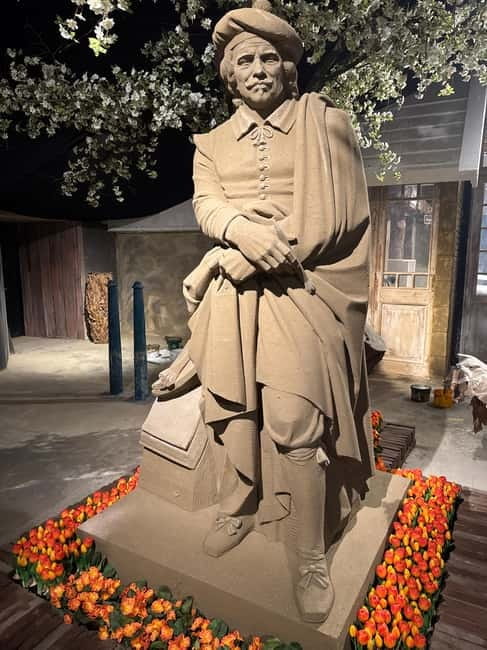
There’s a small but telling detail from the experience: when groups are received, they may be met with music. That kind of welcome touch makes the first minutes feel friendlier, and it can help set a calm mood for families and school groups.
Even if you are not in a big group, that atmosphere can make the day feel more like a community event than a strict exhibit line.
Should you book the Zandsculpturen Garderen sand sculptures?
Book it if you want:
- A 3-hour family-friendly history experience
- A “walk-through” Amsterdam timeline without heavy reading
- Sand sculptures that connect the city’s origins, Golden Age, canals, and wartime resilience
- Extra garden time included for free
Skip it if you are looking for a full guided tour of Amsterdam streets, or if you only want a deep dive into one narrow topic. This is about a wide, visual sweep of time periods, not an exhaustive academic seminar.
If you want a satisfying, good-value outing in Gelderland that feels different from the usual museum day, this one is an easy yes.
FAQ
Where is the sand sculpture exhibition?
It’s in Gelderland, Netherlands, at De Beeldentuin in Garderen.
How much does the entry ticket cost?
The price is listed as $16 per person.
How long should I plan to visit?
The average visit duration for the sand sculptures is about 3 hours.
Is the ticket valid for more than one day?
The ticket is valid for 1 day.
What is included in the ticket?
You get entry tickets for the sand sculpture exhibition, plus free entry tickets for the Beeldentuin and garden.
What languages are supported by the host or greeter?
Dutch, English, and German.
Is it wheelchair accessible?
Yes. The activity is wheelchair accessible, and the full park is wheelchair friendly.
What should I bring with me?
A camera is recommended.
What is not allowed during the visit?
Alcohol and drugs are not allowed, and nudity is not allowed.
Can I change my plans after booking?
There is free cancellation up to 24 hours in advance for a full refund. You can also reserve now and pay later.
Latest to arrive along the quays of Amsterdam




Museums, compared.


Moco Museum Amsterdam Entrance Tickets with Banksy & More
Read our review →

Amsterdam’s Weirdest Museum: Ripley’s Believe It or Not!
Read our review →



Browse the lists this tour appears in