

Reviewed · CITY TOURS
e-Scavenger hunt Amersfoort: Explore the city at your own pace
Amersfoort turns into a game with a phone in hand. This Qula e-scavenger hunt is a self-guided city trail with flexible start times, phone-based riddles, and a route that keeps you moving through real corners of the historic center. It is built for small groups, so you can actually talk things through and get competitive without dragging a crowd.
I like that you can start whenever you like and the trail runs 24/7 with no time limit, so it fits your day instead of the other way around. I also love the pacing of the stops, it walks you past key sights like gates, churches, and courtyards while feeding you location-based tasks that make you look closer. One thing to keep in mind, the app language quality can vary, so if you want the cleanest experience, go in with solid English or your chosen language ready to read carefully.
In This Review
- Key highlights at a glance
- A self-guided Amersfoort city trail that actually fits your day
- Price for up to six people, and why it feels good value
- Getting started at Achter de Kamp, with a phone that does the heavy lifting
- Walking the loop: what each stop is really like
- 1) Koppelpoort
- 2) Lutherse Kerk Amersfoort
- 3) St. Franciscus Xaverius Kerk Amersfoort
- 4) Marienhof Amersfoort
- 5) Amersfoort
- 6) Muurhuizen
- 7) Kamperbinnenpoort
- 8) Hofje de Armen de Poth
- 9) Oude Haven
- 10) Monnikendam / Waterpoort
- 11) Sint Jansstraat
- 12) Huis Tinnenburg (1452)
- 13) Oude Stadhuis Amersfoort (1782)
- How the riddles make you see Amersfoort differently
- Pacing tips: the smart way to manage stops, breaks, and photos
- Common considerations: route shape, translations, and phone dependence
- Who should book this e-scavenger hunt in Amersfoort?
- Should you book this e-scavenger hunt? My take
- FAQ
- Do I need a reserved start time?
- How long does the Qula City Trail take?
- Is this tour for groups or solo travelers?
- What is included, and what should I bring?
- Where do I start and where do I end?
- What is the cancellation policy?
Key highlights at a glance
- Flexible timing, 24/7 access: Start any day or hour, and pause or stop whenever you want
- Designed for groups up to six: One team dynamic, plus friendly competition options
- Phone-based riddles with place-based info: Each stop asks you to pay attention in a practical way
- ~2 hours for the core route: You can often get a big chunk done quickly, with extra time if you linger
- Lots of sight types in one loop: City gates, churches, hofjes, harbor areas, and historic streets
- No time limit: Great for families, slow walkers, or anyone who wants lunch built in
A self-guided Amersfoort city trail that actually fits your day
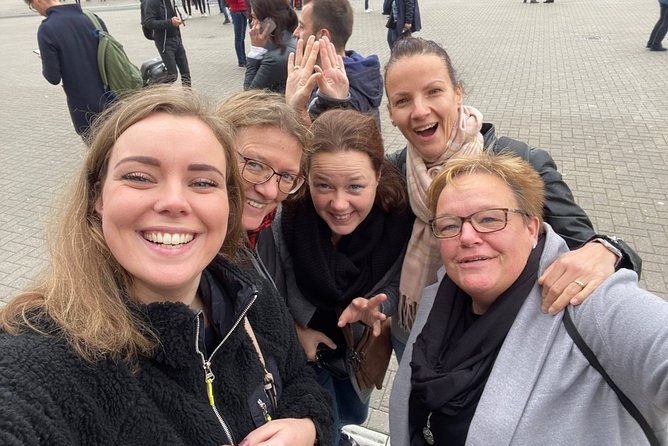
This is not a guided tour where you wait for a group to assemble and march at a set pace. You get a mobile trail you can do on your schedule. Once you have the instructions by email, you show up at the starting point and begin your quest on your smartphone. The trail is available 24/7, and the clock is not chasing you, you can start, pause, and stop whenever it fits.
That flexibility is a big deal in Amersfoort. The center is compact enough for a half to three quarters of a day stroll, but planning can still be tricky when you have lunch, weather, or kids who need breaks. With this format, you can treat it like a route you can flex, rather than a rigid tour slot.
Also flying a pennant in Netherlands



Price for up to six people, and why it feels good value

The price is about $37.33 per group, up to six people, for around 3 hours. That math works because the trail is for teams, not for single seats. If you travel with family or friends, the cost per person becomes much more reasonable than many paid guided experiences.
What you get for that money is the core experience: the smartphone trail itself, with tasks and riddles at each stop, plus the ability to revisit the day at your own pace since there is no time limit. The only real tradeoff is that you need to bring a smartphone, and data is not included, so plan for at least enough mobile connectivity to keep the trail working.
If you are traveling solo, this still might be fun, but the value is clearest for small groups who can share a phone and work through questions together.
Getting started at Achter de Kamp, with a phone that does the heavy lifting
The trail starts at Achter de Kamp 256, 3811 JH Amersfoort, and it ends back at the same meeting point. It is near public transportation, so you should be able to reach it without a complicated car plan.
Your key job is simple: follow the instructions you receive by email and load the trail on your phone. Then, once you are at the start, you start walking and responding to prompts. On a practical level, the best part is that the trail is built for you to stay in motion while learning. Instead of reading a brochure in one place, you do short tasks, get nudges where you are standing, and keep the energy up.
One practical tip: if you are bringing kids or mixing adults with different walking speeds, agree on a simple pace rule at the start. The trail makes it easy to drift from stop to stop, so having a plan helps you finish without turning it into a marathon.
Walking the loop: what each stop is really like
The trail moves through a historic, walkable loop with 13 stops. A core portion can often be done within about 2 hours, and the full route takes roughly 3 hours depending on breaks and how long you linger.
Below is what you can expect from each stop, and what is worth paying attention to as you play.
1) Koppelpoort
This is where the whole game feels anchored, because it is a clear, recognizable medieval-style gate. Expect the trail to get you oriented by asking you to look at architectural details and connect them to a clue. It is a strong first stop because gates are easy to spot and give you a sense of direction right away.
Possible drawback: if you arrive right when the area is busy with foot traffic, it can feel a little tight while you read prompts and decide as a team.
Under the next bridge out of Netherlands:
- Zeeland Zeehonden strand safari NL/DE
★ 4.5 · 58 reviews - Zeeland Strand safari met visnet NL/DE
★ 4.9 · 45 reviews - Discover Amerfoort’s city center in this Outside Escape game tour
★ 4.5 · 32 reviews - Surrealistic Art Maze in Tilburg
★ 4.0 · 29 reviews
2) Lutherse Kerk Amersfoort
Church stops can turn into quick photo moments, but here you are meant to slow down just enough to notice features. Use this as a pause-and-think stop, not a rush-through. The prompts tend to make you focus on what is in front of you, which is where the learning happens.
Consideration: if your team is more interested in movement than reading, this stop can still work, but assign one person to handle the clue while others listen and keep walking.
3) St. Franciscus Xaverius Kerk Amersfoort
This is another church in the route, and it helps keep variety after the first one. Expect the trail style to change slightly, since you are moving from one building type to another. In practice, it keeps you from getting bored by repeating the same kind of challenge.
If you are sensitive to quiet environments, keep your phone sound low and move respectfully through the area.
4) Marienhof Amersfoort
A hof or courtyard-style area like Marienhof often feels like a breather in the middle of a city walk. You are still playing, but the atmosphere is different from street corners and gates. This stop is a good place to reset your team’s energy, take a quick look around, and then re-enter the game mode.
If the weather turns, this kind of stop can be a blessing because it can give you a natural moment to decide your next move.
5) Amersfoort
You will see a stop labeled simply Amersfoort. That likely means you are in a central pocket where the trail wants you to recognize a broader city context rather than a single object. Treat this as a navigation checkpoint, and be ready for questions that connect what you just walked past to the larger layout of the city.
Because the label is broad, keep your expectations flexible. If your team wants specific visuals, zoom in on whatever the app shows you at that moment.
6) Muurhuizen
The name Muurhuizen points to buildings tied to city walls or wall-adjacent structures. Expect this stop to reward careful observation, because wall-related areas often have lots of small architectural cues. This is one of those places where the game format makes you look up, not just straight ahead.
If you are moving with children, this is a good spot to stop briefly, because the architecture is easier to explain when you can point.
7) Kamperbinnenpoort
Another gate stop. Gates are great for a scavenger hunt because they are both symbolic and practical navigation landmarks. The trail likely uses that to create an easy-to-follow progression: you arrive, you confirm details, and you move on with confidence.
Possible drawback: if you start late in the day, lighting can make reading any small text more annoying. Bring your brightness settings up and plan to squint less.
8) Hofje de Armen de Poth
A hofje (courtyard for residents) is the kind of place you can walk past without noticing, which is exactly why it works in a game. The trail here can feel like a small discovery moment, where the space changes from street-level to an enclosed, calmer view. Slow down and let the team take it in.
This is also a good stop for a quick morale boost. Hofjes tend to feel charming, and the game gives you a reason to actually look.
9) Oude Haven
The Oude Haven section brings water and an open view into the loop. Expect the trail prompts to connect to the environment, so the challenge becomes less about architecture and more about noticing the setting around you. This is the place where you can naturally plan for a break.
Practical tip: if you want lunch later, bank your appetite here, because the walk keeps pulling you forward.
10) Monnikendam / Waterpoort
This is a combined stop that likely links a named area with a water-related gate or passage. Waterpoort sounds like it has a stronger connection to canals or water management, so be ready for clues that relate to water features and crossing points. This is usually a satisfying step because it feels like the city’s practical systems showing up in historic form.
If your phone battery is low, conserve it here, because the next few stops may require more reading.
11) Sint Jansstraat
A street stop is a chance for the trail to test recognition, not just landmark spotting. Look for how shopfronts, façades, and street features line up with the prompt. This kind of question often slows teams down in a productive way, because you stop treating the city like a corridor and start treating it like a collection of clues.
If your group likes shopping, this stop can also be a natural moment to browse between answers, since the trail is self-paced.
12) Huis Tinnenburg (1452)
Now we get a specific date, 1452, and that signals a more historic, story-heavy stop. A named historic building with a year attached usually means the trail wants you to connect something concrete to the past. Enjoy this as a learning moment, then keep moving.
Possible drawback: because historic buildings can have lots of details, the clue might require careful reading. If your team is tired, assign one person to focus on the prompt and keep the others engaged.
13) Oude Stadhuis Amersfoort (1782)
The final major historic stop includes the year 1782. This is a great finish because it gives the game a sense of closure. When you get to the end, you often feel like you have walked the city with purpose, not just from one photo spot to the next.
Since the trail ends back at the starting point, expect the last steps to feel like a wrap-up. If you finish with energy, you can use the surrounding area to keep exploring after the game.
How the riddles make you see Amersfoort differently
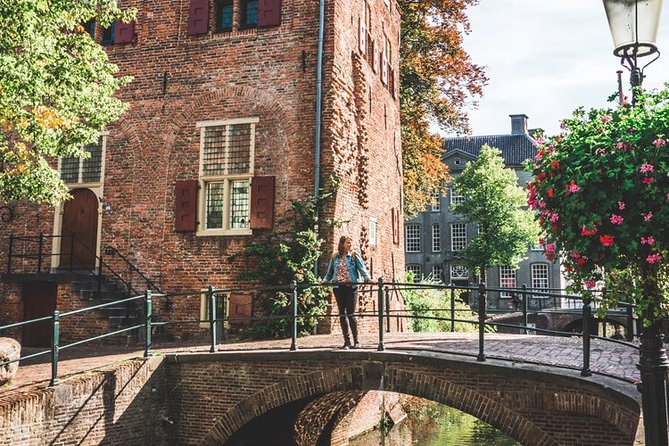
The best version of a scavenger hunt does not just entertain you. It changes your attention. This one works by giving you short tasks tied to where you are standing. That means you learn in small chunks, without needing to memorize facts.
A couple patterns stand out from how the game is described and how people talk about it. First, the app instructions tend to be clear enough that you can start without a long learning curve. Second, the questions often feel engaging, not too easy and not predictable. You are likely to stay focused, especially if your group has a friendly competitive streak, since you can play as multiple teams.
You also get a useful benefit: even when you stop for lunch or a terrace break, the trail keeps pulling you back to the next place with a reason. That turns downtime into part of the experience rather than a break from it.
Language note that matters: it is offered in multiple languages, including English, German, French, Dutch, Spanish, and Italian. Still, language quality can vary. If you know you struggle with reading in your chosen language, consider using English to avoid frustration when a clue is not crystal clear.
Pacing tips: the smart way to manage stops, breaks, and photos

Since it is roughly 3 hours but often includes a core around 2 hours, you should plan flexibility. Here is a simple approach that tends to work well for groups:
- Start with everyone on the same page about how you will answer clues (one reader, one or two people checking the view).
- Take a short break early, so you are not stuck later when energy dips.
- Save your longer photo sessions for after you finish the game, unless the clue specifically asks you to linger.
Also, because you can pause and stop whenever you want, you can build lunch into the natural rhythm of the loop. One of the best parts of these trails is that you can keep walking while exploring shops and terraces without feeling like you are missing a tour deadline.
Common considerations: route shape, translations, and phone dependence

This type of e-scavenger hunt lives or dies by your phone. Smartphone and data are not included, so you need to bring your device and plan for connectivity if the trail relies on it.
The route can also feel zigzaggy as it moves through the center. That is not a dealbreaker, but it changes expectations. If you want a straight, scenic walk with minimal turns, you might find the stop-to-stop navigation takes more attention than you planned.
Finally, consider translations. The trail is available in several languages, but not every clue will be equally smooth in every language. Some people found certain translations less reliable, and that can make a question harder to solve. If you want the least friction, use the language you can read fastest, and do not be afraid to ask your group to switch to English if needed.
Who should book this e-scavenger hunt in Amersfoort?
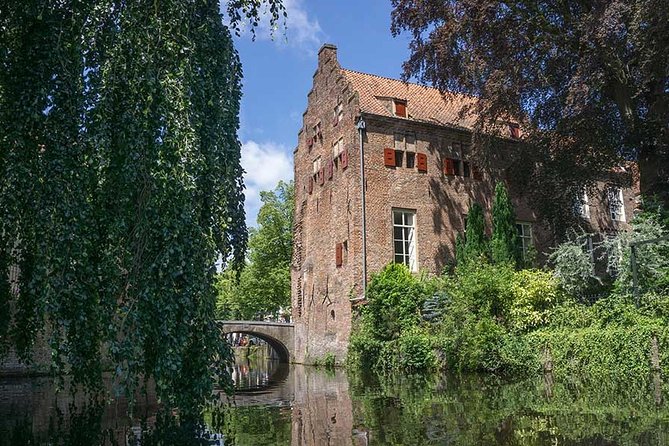
This is a strong fit if you are:
- Traveling with a group of up to six who like playful challenges
- Looking for a self-guided activity that still teaches you something
- Planning a family-friendly afternoon where you want movement plus structure
- Wanting an affordable way to see a lot of the historic center without booking a timed guide
It might be less ideal if:
- You hate using your phone while walking
- You need a highly curated, narrated explanation of each sight
- Your group is very sensitive to unclear wording in non-English languages
Should you book this e-scavenger hunt? My take
I think this is a good booking when you want a hands-on way to explore Amersfoort without locking yourself into a schedule. The flexible 24/7 access and no time limit make it easy to fit into real life. The stop variety, including gates, churches, and historic buildings with specific dates like 1452 and 1782, gives the game a sense of place, not just random tasks.
If you go in with a charged phone, enough connectivity for your comfort, and a language choice your group can read confidently, you will likely have an afternoon that feels both active and informative. For small groups in particular, the price per group makes it one of the more budget-friendly ways to turn sightseeing into something you actually do.
FAQ
Do I need a reserved start time?
No. You can start whenever you like, and the trail is available 24/7 with no time limit.
How long does the Qula City Trail take?
It takes about 3 hours for the full experience, and you can often complete the guided portion within about 2 hours depending on how you play and how long you pause.
Is this tour for groups or solo travelers?
It is designed for a team of up to 6 people. You book for your group, and only your group participates.
What is included, and what should I bring?
Included is the City Trail for your group. You need to bring your smartphone, and smartphone data is not included.
Where do I start and where do I end?
You start at Achter de Kamp 256, 3811 JH Amersfoort, Netherlands, and the activity ends back at the same meeting point.
What is the cancellation policy?
Free cancellation is available. You can cancel up to 24 hours in advance for a full refund. If you cancel less than 24 hours before the start time, you do not get a refund.
Latest to arrive along the quays of Netherlands



City Tours, compared.
75 Minute City Canal Cruise with Audio Guide
Read our review →
City Centre Canal Cruise including Audioguide
Read our review →

City Canal Cruise and Heineken Experience Ticket
Read our review →
City Card with Free Entrance & Public Transport
Read our review →
Browse the lists this tour appears in