
Reviewed · THE HAGUE TOURS & EXPERIENCES
Delft 2-Hour Walking Tour | Discover The City With A Local
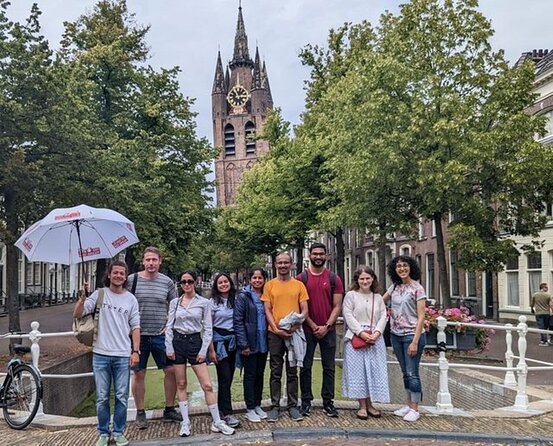
Delft in two hours feels surprisingly complete. You’ll meet at the Hugo Grotius Statue by the Markt and get a guided circuit that mixes Delft Blue pottery, royal-flavored local lore, and landmark stops like the Old Church and Markt square. You also step into a live viewing box experience with the guide, which is where the Delft Blue story turns from talk into something you can actually watch.
I love that the tour is built for real orientation. In the walk, the guides also share what to do next after the 2 hours and how to spot tourist traps, so you leave with a short plan instead of just photos. The small-group setup (maximum 10 travelers) makes it easier to ask questions as you go.
One thing to consider: the group stays on schedule and you won’t catch up if you arrive late. Also, a few guests noted that some guides can speak a bit too fast or softly, so if you’re sensitive to audio, it helps to be near the front at the start.
In This Review
- Key highlights to look for
- Starting on Delft’s Markt, by the Hugo Grotius Statue
- Stop 1: Delft Blue, the Girl With the Pearl Earring, and the live viewing box
- Old Church, nicknamed Crooked John, and why the tower matters
- Markt square: 120m by 50m, civic life, and holiday energy
- House of Bells and the water authority office you might otherwise miss
- Guide style in English, speed, and how to get the best out of it
- Value, price, and what you get for your time
- What to do after the walk in Delft
- Should you book this Delft 2-hour walking tour?
- FAQ
- Where does the tour start?
- How long is the Delft 2-hour walking tour?
- What time does the tour start?
- Is the tour in English?
- How many people are in the group?
- Can I cancel for a full refund?
Key highlights to look for
- Live viewing box for Delft Blue so you get more than a quick exterior stop
- Crooked John Old Church with a 13th-century tower view over the square
- Markt square size and rhythm (120m by 50m) with special energy during national holidays
- House of Bells turned water authority office and the bell-shaped flowers story
- Small group, English-guided walking that works well for questions on the move
Starting on Delft’s Markt, by the Hugo Grotius Statue
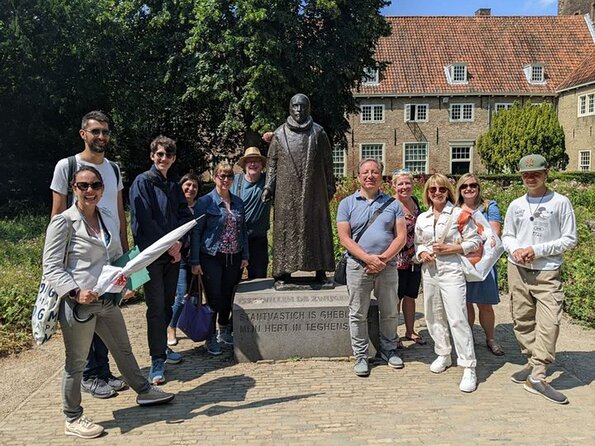
This walk begins right where Delft’s center starts to make sense. Your meeting point is the Hugo Grotius Statue at the Markt, Delft (2611 GW). That matters because Delft is a “walk-it” kind of city. Starting on the Markt helps you orient fast, since the key buildings sit around you rather than scattered miles apart.
The tour runs about 2 hours and loops back to the same meeting point when you’re done. That creates an easy rhythm for the rest of your day. You can tack on a meal nearby, or continue on to other Delft sights without needing a second meetup or transit plan.
You’ll want to show up on time, too. The format is group-paced, and you won’t be able to catch up if you’re late, since the tour doesn’t pause for stragglers. I treat that as a good sign. It means the guide can keep the flow tight and actually cover the planned stops.
Finally, it’s offered in English and designed for most travelers. Service animals are allowed, and the start area is near public transportation, so getting there from wherever you’re staying should be straightforward.
More Guided Walking Tours in The Hague

Stop 1: Delft Blue, the Girl With the Pearl Earring, and the live viewing box
The first real “payoff” stop is Delft itself, centered on the city’s best-known export and cultural identity: Delft Blue pottery. This is where the tour goes beyond a checklist. You’re guided through why Delft Blue became so tied to the city, and you get cultural anchors like the Girl With the Pearl Earring and Delft’s place in royal history.
Then comes the part that makes this tour feel more practical than many walking tours: you step into a live viewing box. You’re not just walking past things. You’re positioned to watch and learn as the guide explains what you’re seeing and how it connects to Delft’s story.
Admission for that segment is listed as free, which is an important value point. In other city tours, you might still pay extra for the “real” experience. Here, the structure aims to include the attention-worthy bit, so your $3.57 per person price isn’t only for walking.
What I like about this stop is how it sets up everything else. When you understand why Delft Blue matters, the rest of the city feels less like buildings and more like a lived-in backdrop for art, craft, and status. Even if you’ve seen Delft Blue products in shops back home, this gives you a sense of where the look came from and why it became such a signature.
Old Church, nicknamed Crooked John, and why the tower matters
Next you head to the Old Church, locally nicknamed Crooked John. It dates to the 13th century, and the whole point of the stop is its tall tower dominating the square where the walking tour begins.
This stop is short, but it’s useful. Old churches in Western Europe often feel interchangeable unless a guide gives you context. Crooked John gets you that context with the nickname and age, and it makes the landmark easier to remember after you leave. You can picture the tower above the Markt area and you’ll likely spot it again later while you wander on your own.
There’s also a built-in tie to the surrounding architecture. The Markt square is framed by major civic and religious buildings, and the Old Church acts like a visual anchor for the whole layout. So even if you’re not a church-history fanatic, it helps you understand how Delft’s center was designed to work socially, not just aesthetically.
The practical downside? Like any quick landmark stop, you get the key facts and the visual orientation, but you probably won’t leave with time for a long, independent exploration inside the church complex unless you plan extra time afterward.
Markt square: 120m by 50m, civic life, and holiday energy
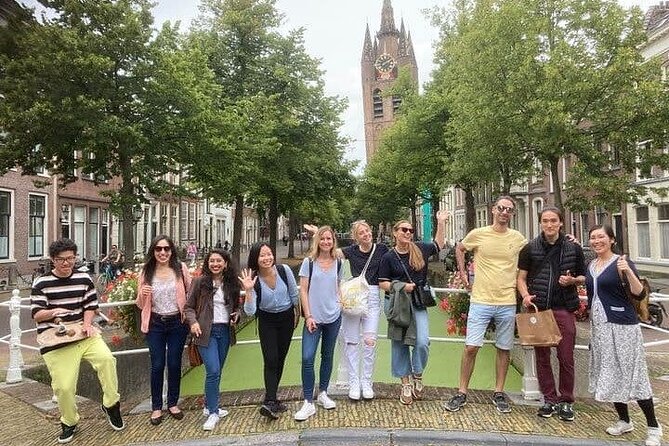
After the Crooked John moment, you step into the Markt itself. It’s a huge Dutch city square, listed as 120m in length and 50m wide, framed by the Old Church and the Town Hall on each side. This scale is one of those details that helps you stop and look for real. The square isn’t a small photo backdrop. It’s built to host daily life, events, and crowds.
On an ordinary day, you’ll see cafe terraces and small activities drifting around the square. That everyday scene is part of Delft’s charm, because it feels like locals live here, not just visitors pose here.
The guide also points out when the square really shifts into event mode. During national holidays, it comes alive with live music performances, market stalls, and food trucks as locals gather. Even if you’re not in Delft on a holiday, hearing this helps you understand why the square is so prominent in photos and why it plays such a central role in the city’s rhythm.
What makes this stop valuable is the way it connects past to present. You’re learning about civic space through a square you can immediately use. Once you know where the square sits and what it’s used for, it becomes easier to plan your own strolling routes during the rest of your trip.
House of Bells and the water authority office you might otherwise miss
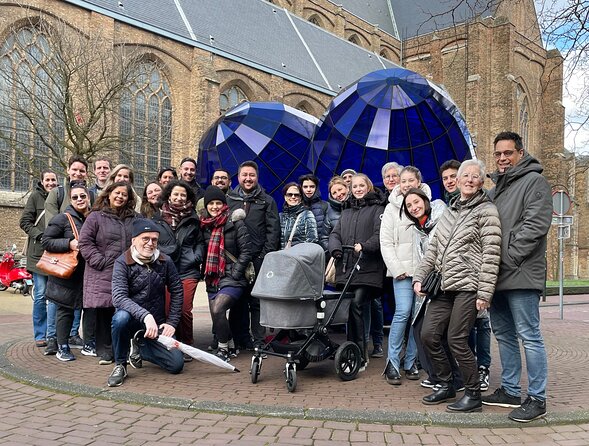
The final landmark stop centers on a unique building with a very Delft-style backstory. This structure was originally built as a residential building, but it’s now used as the main office for the regional water authority.
Historically, it was referred to as the House of Bells because of the bell-shaped flowers that grew around the porch. It’s a wonderfully specific image, and it gives the building personality beyond its current function. Even if you never track down the exact architectural details, you’ll remember the bell-shaped flowers story because it’s unusual and very local.
This stop also hints at something Delft does well: it blends daily governance, geography, and culture. Delft’s relationship with water isn’t a vague concept. It shows up in how places are used and named. So even a quick stop like this can make you more attentive when you later spot canals, water structures, or the city’s practical systems.
The only consideration here is time. If you’re the type who wants to linger, you might wish the tour gave you more minutes at each stop. Since it’s a 2-hour walk, the guide keeps moving so you still hit every scheduled point.
More gables counted on foot:
- The Hague: Courtyard Walking Tour
★ 4.5 · 71 reviews - Walking Tour of Delft – The City of Orange and Blue
★ 5.0 · 50 reviews - Private Walking Tour of Delft: Dive into the Dutch Golden Age
★ 5.0 · 33 reviews - The Hague Private Walking Tour with a Local
★ 4.0 · 29 reviews
Guide style in English, speed, and how to get the best out of it
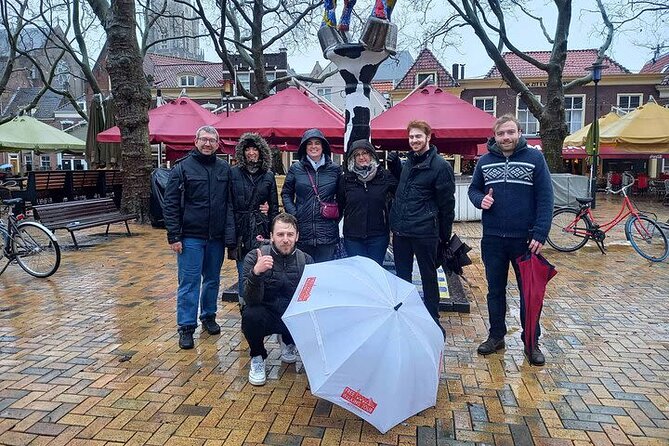
A walking tour lives or dies with the guide’s delivery. This one is clearly strong in engagement and pacing. Names that come up include Michel, Niels, and Jos, and the comments around them share a consistent theme: people appreciated humor, clear answers to questions, and guides who keep the group together in busier areas.
That said, there’s a real practical caution. Several notes mention that some guides can speak too fast or softly, making it harder to catch every sentence. One review even described trouble understanding due to speed and volume, and another noted the guide was entertaining but moved into the walking portion a bit later than expected.
So here’s how you protect your experience. Arrive a few minutes early at the Hugo Grotius Statue, then position yourself where you can hear well. Since the tour is small (up to 10 travelers), you’ll usually have room to step closer to the front at the start. Also, keep expectations realistic: this is a conversational, story-driven walk, not a slow lecture.
If you’re traveling with someone who prefers quiet sightseeing, you might find the guided format a little more talk-heavy than you like. But if you want context while you’re walking, the guide’s style is exactly the point of the tour.
Value, price, and what you get for your time
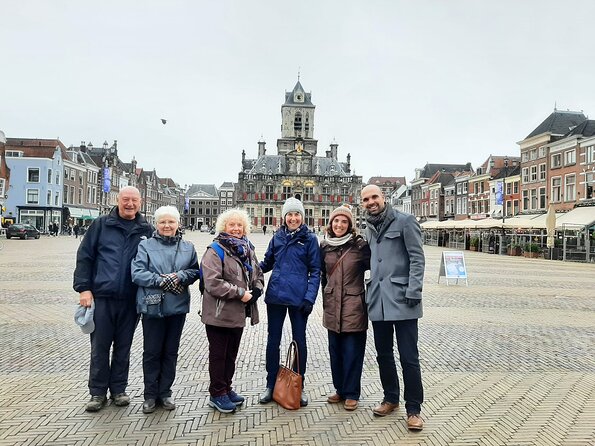
At $3.57 per person for a roughly 2-hour guided walk, this is strong value if you care about context and local storytelling. You get multiple major landmarks clustered in Delft center: Delft’s identity through Delft Blue, the Old Church (Crooked John), the Markt square, and the House of Bells.
The pricing also becomes even more reasonable because one part of the experience is listed with admission as free. That live viewing component is the kind of add-on that often costs extra on other tours, so having it included makes the ticket feel like more than just a walking guide fee.
Group size matters for value, too. A maximum of 10 travelers typically means you’re not fighting for attention. It also means the guide can keep pace through crowded spots, which is a real factor in historic city centers.
You’re not looking at a “see everything” tour. This is a focused introduction. If you’re trying to build a first-day plan, it helps you pick what to return for later. If you only want a quick peek at buildings from the outside, you may find it slightly structured for your taste.
What to do after the walk in Delft
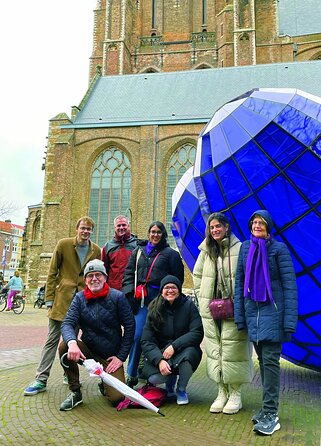
One nice promise built into the format is that the guide tells you what to visit after the tour and which tourist traps to avoid. Even without a long list, that kind of guidance changes your second half day.
Here’s the simple way to use that advice. Spend the rest of your time doing one of two things:
1) Return to the Markt area for a relaxed meal, now that you understand the layout and why it matters.
2) Follow the Delft Blue angle further, since the tour starts by explaining why the city is tied to the pottery story and famous artworks.
Because the tour ends back at the same meeting point, you don’t have to solve your next move. You can wander on foot from the Markt with less friction.
If you’re the type who collects details, watch for what the guide pointed out. For example, after you learn why the Old Church is nicknamed Crooked John and why the House of Bells got its name, those things become easy to spot again while you roam.
Should you book this Delft 2-hour walking tour?
Book it if you want a small-group, English-guided introduction to central Delft that links pottery, local landmarks, and civic spaces into one coherent walk. The live viewing box for the Delft Blue story is a major reason to choose it, especially at this price. It’s also a good fit if you like guides who bring personality, humor, and practical suggestions for what to do next.
Skip it or go in with caution if you strongly need slow, loud narration. A few guests flagged issues with guides speaking too quickly or softly, and since the tour is scheduled and doesn’t allow catching up late, you’ll get the best results by arriving on time and standing where you can hear.
If your goal is to get your bearings fast, learn a few Delft details you’ll actually remember, and then keep exploring on your own, this is the kind of tour that works.
FAQ
Where does the tour start?
The tour starts at the Hugo Grotius Statue at the Markt, 2611 GW Delft, Netherlands.
How long is the Delft 2-hour walking tour?
It lasts about 2 hours.
What time does the tour start?
The listed start time is 1:30 pm.
Is the tour in English?
Yes, the tour is offered in English.
How many people are in the group?
The maximum group size is 10 travelers.
Can I cancel for a full refund?
Yes, you can cancel for a full refund up to 24 hours in advance of the experience start time.
Latest to arrive along the quays of The Hague


The Hague Tours & Experiences, compared.




Royal Delft: Delftblue Factory and Museum Admission Ticket
Read our review →Browse the lists this tour appears in