

Reviewed · SELF-GUIDED TOURS
Amsterdam’s Magic Canals: Self-Guided Puzzle Adventure
Most city walks in Amsterdam are about seeing. This one is about figuring out. You follow a story through key spots like Dam Square, the 9 Streets, and the Begijnhof, using a mobile puzzle game rather than a guide telling you where to go.
I really like the self-guided format. It is built for your pace, so you can pause when you want a photo, then keep moving when you feel the momentum. I also like the value: at about $7.24 per person for a 2 to 3 hour experience, you are paying for the game and directions, not museum entries or attractions.
One drawback to plan around: the puzzles can feel hard to interpret if the clue text is not super clear, and you may need extra help from the app support.
In This Review
- Key Things to Know Before You Start
- Price and Value: Paying for a Game, Not Tickets
- The Route: A 2 to 3 Hour Walk Through Classic Amsterdam Names
- How to budget your time day-of
- Using the Questo App: Your Real Guide Here
- Start at Dam Square: The First Clue Sets the Tone
- Torensluis: You Keep Going at Your Own Pace
- Homomonument: A Named Stop That Breaks Up the Walk
- Descartes House: Reading Becomes Part of the Sightseeing
- Westerkerk: A Mid-Route Check-In Moment
- The 9 Streets: Where the Puzzle Turns Into Street Time
- Felix Meritis: Another Story Step, Another Direction
- Begijnhof: A Pause Stop Built Into the Experience
- Café De Dokter: The Final Stretch Before the Ending
- Finish at Amsterdam Museum: Optional Extra Pay, Same Ending
- Who This Is Best For (And Who Might Not Love It)
- Tips to Make the Most of the Puzzles (Based on the Main Feedback)
- Should You Book Amsterdam’s Magic Canals Puzzle Adventure?
- FAQ
- How long does Amsterdam’s Magic Canals take?
- Where does the experience start and end?
- Is there a tour guide with you?
- Do I need to pay for Amsterdam Museum?
- What language is the experience offered in?
- What do I use during the game?
- Are tickets for attractions included?
Key Things to Know Before You Start
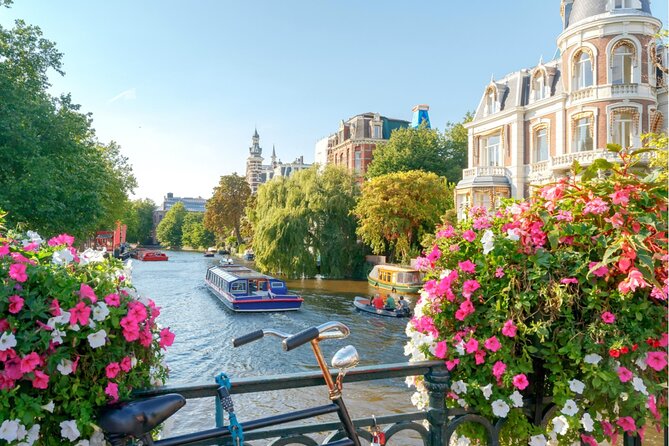
- Phone-based quest through the Questo app, with a story sequence that guides your walk
- Stops with story clues at Dam Square, Torensluis, Homomonument, Descartes House, Westerkerk, the 9 Streets, Felix Meritis, Begijnhof, Café De Dokter
- Flexible timing: you can linger at each stop and keep going at your own pace
- English availability with mobile ticket access
- Support included 24/7, which matters if a clue feels confusing
Price and Value: Paying for a Game, Not Tickets
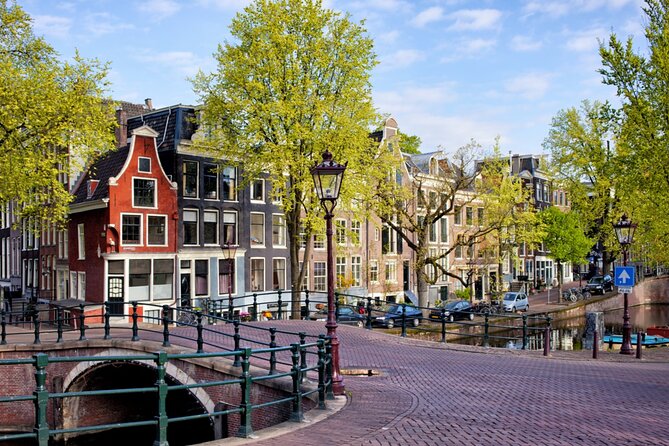
This is one of those Amsterdam activities where the price makes sense once you understand what you are actually buying. You are not paying for a live guide or bundled attraction admission. You are paying for a city exploration game on your phone, plus directions and story prompts that pull you through central areas.
At $7.24 per person, it is positioned as a low-cost way to add structure to a day of sightseeing. You do still have the option to visit the Amsterdam Museum at the end, and that is €20, but it is explicitly not required for the activity. That means you can use the game to explore and then decide later if you want to spend more time or money.
If you are traveling with friends or family, there is also a group discount and the experience is private for your group. That combination can be a good value if you want a shared plan without being merged into a big crowd.
Finally, it is booked about 28 days in advance on average, which is a hint to reserve sooner rather than later, especially if you have a tight itinerary window.
Also flying a pennant in Amsterdam



The Route: A 2 to 3 Hour Walk Through Classic Amsterdam Names
You are looking at an easy-to-picture walk that threads together widely known places in the center. The game starts at Dam Square and ends at Amsterdam Museum (Amstel 51). Along the way, you hit named stops that make the route easy to remember, even if you forget the plot details.
The overall duration is 2 to 3 hours, which is long enough to feel like a real mini-adventure, not just a quick riddle stop. It is also short enough to fit between major sights or as a structured “connector” activity that keeps you walking while you explore.
Because it is self-guided, you control the pace. The instructions at each stop are basically the same pattern: you arrive, you get a clue, you solve the challenge, and then the next segment points you onward. At each stop, it says you can stop for as long as you like. That means you can slow down for canal photos, or you can speed up if you are on a mission.
How to budget your time day-of
If you are even slightly puzzle-prone, plan closer to the top end of 3 hours. If you like solving and reading carefully, you might finish sooner. Either way, you will be walking through the city core, so wear shoes you can stand in.
Using the Questo App: Your Real Guide Here
There is no tour guide with you. Instead, you get a city exploration game on your phone through the Questo app. That matters, because the quality of your experience depends on how well the app supports your progress.
The setup is designed to work with a mobile ticket, and confirmation is received at booking. The experience also includes 24/7 customer support, which is useful if the game text feels unclear or you get stuck. In fact, one of the only direct review comments calls out that some riddles were not well described, and that support or help was needed often.
Here is how I would set yourself up for fewer headaches:
- Charge your phone fully before you start.
- Keep mobile data or Wi-Fi available if the app needs it to load the next clue.
- If a clue is ambiguous, do not burn 20 minutes wandering. Use the app support pathway rather than guessing.
If you are the type who enjoys scavenger-style activities, this will feel like a fun way to make Amsterdam more interactive.
Start at Dam Square: The First Clue Sets the Tone
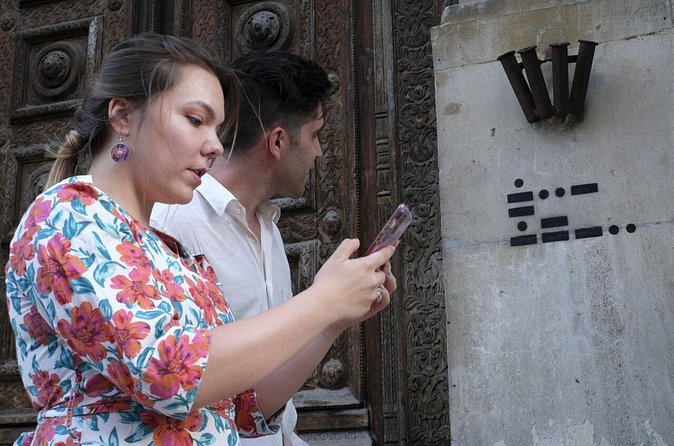
Your starting point is Dam Square. The game begins by giving you your first clue to solve. The purpose is practical as much as it is story-based: once you solve it, you get the directions for the next stop.
Dam Square is a good anchor because it is central and easy to orient yourself. That helps if you arrive a bit early. You can get started, then transition right into the puzzle flow without doing extra route planning.
What to expect at the start:
- A short intro clue, then immediate instructions
- The feeling that the city is now part of the game, not just scenery
If you like challenges that feel like they turn sightseeing into a game, this first segment does that job.
Under the next bridge out of Amsterdam:
- Amsterdam: Van Gogh Museum Ticket
★ 4.7 · 52,054 reviews - Amsterdam: Heineken Experience Ticket including 2 Drinks
★ 4.6 · 36,014 reviews - Amsterdam Classic Saloon Boat Cruise with Drinks and Cheese
★ 5.0 · 31,825 reviews - Amsterdam Luxury Canal Cruise + Unlimited Drinks & Bites option
★ 5.0 · 30,518 reviews
Torensluis: You Keep Going at Your Own Pace
Your second stop is Torensluis. Again, you get a new clue to solve, and then you move forward.
The key advantage here is rhythm. You do not need to figure out the route from scratch. The game sequence is doing the heavy lifting for direction and timing.
The drawback is also the same as the whole experience: if the clue wording is hard to parse, the “at your own pace” freedom can turn into slower progress. That is where the included support can save your momentum.
Homomonument: A Named Stop That Breaks Up the Walk

At Homomonument, you receive another clue and another piece of the story. Even without adding extra facts about the site, the practical value is clear. Named stops act like little milestones, so you feel a sense of progress.
This is one of the reasons I like these puzzle formats. They prevent the common Amsterdam problem where you walk for an hour and realize you only took photos, not that you learned anything or moved with intention.
Here, the game gives you a reason to look around instead of just drift. Solve, move on, then repeat.
Descartes House: Reading Becomes Part of the Sightseeing
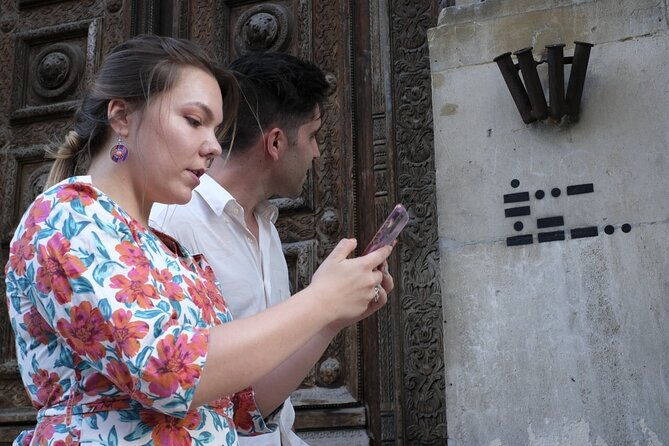
The next clue stop is Descartes House. At this point, you are probably getting comfortable with how the clues are delivered and what kind of answers the game expects.
The “reading” part matters because it slows you down in the right way. You start noticing street details you would otherwise ignore. But if your phone is glitchy or the clue text is tough, you might end up stuck longer than you want.
If you tend to get frustrated by unclear instructions, I would be ready to lean on the 24/7 support quickly rather than forcing it.
Westerkerk: A Mid-Route Check-In Moment

At Westerkerk, you get another clue and you can stop as long as you like. Westerkerk is a strong location name in the city, and it helps the route feel like more than just a string of coordinates.
This is also where you can take a short pause even if you are not stuck. Grab water, reset your phone, and decide whether you want to keep solving fast or slow down for the rest of the story.
The 9 Streets: Where the Puzzle Turns Into Street Time
The game continues to The 9 Streets. This is one of the stops where the experience naturally overlaps with casual strolling. You can enjoy the area as you go, then return to the puzzle at the next clue step.
The practical sweet spot of this segment is that it breaks the walk into a more human-scale area. Rather than passing through a single huge landmark zone, you get time where you can look around, check storefronts, and plan your next move calmly.
Just keep in mind: because you are solving, you might not want to get distracted for too long. If you wander off your intended path, it is easier to re-sync if you pause, check your phone, then continue.
Felix Meritis: Another Story Step, Another Direction
Next up is Felix Meritis. You will get a clue, solve it, and receive directions to the following stop.
By now, you have likely developed your own strategy. Some people answer quickly and keep moving. Others like to read carefully and cross-check. Either works as long as you stay with the sequence so you do not lose track.
What I find helpful: treat each clue as a task, not a debate. If you are stuck for a while and the game text is unclear, that is usually the moment to use the app support rather than sink time into guesses.
Begijnhof: A Pause Stop Built Into the Experience
At Begijnhof, the same pattern repeats. You get a clue, you solve it, and you can stop as long as you like.
This stop is valuable because it gives you room to slow down. Even if the clue is solved quickly, you can use the extra time to enjoy a quieter pocket of the city rather than keeping a constant pace.
This is where the self-guided design is at its best. You get structure without feeling rushed.
Café De Dokter: The Final Stretch Before the Ending
The game brings you to Café De Dokter for the last clue segment. Again, you solve and then follow the final directions.
If you have been doing well with the puzzles, this can feel like the final boss. If you have been stuck earlier, this segment is your last opportunity to use support and still finish comfortably within the time window.
I like placing a final clue here because it sets you up to finish with a sense of completion rather than wandering to an endpoint empty-handed.
Finish at Amsterdam Museum: Optional Extra Pay, Same Ending
The activity ends at Amsterdam Museum at Amstel 51. This is where the story and city exploration game end.
Important practical note: visiting the museum is not mandatory. The museum entry is listed as €20, so you can decide on the spot if you want to spend the money and time.
The ending is still a win even if you skip it. You get a clear destination and a natural stopping point that feels like a planned route, not just an open-ended walk.
If you do want to go in, you will need to budget the ticket cost separately.
Who This Is Best For (And Who Might Not Love It)
This works best for you if you:
- Like turning walking into a structured activity
- Want a low-cost game to fill 2 to 3 hours
- Enjoy solving puzzles at your own speed
- Prefer self-guided travel where you can stop whenever you want
It might feel less fun if you:
- Hate phone-based puzzles or you dislike reading clues on small screens
- Get easily frustrated when instructions are not clear
- Expect a guided explanation of how to solve
Because there is no tour guide, you are the solver. The app and the included 24/7 support are what you rely on if you hit a wall.
Tips to Make the Most of the Puzzles (Based on the Main Feedback)
One direct piece of feedback highlights that some riddles were not very well described, and that help was often needed. I would treat that as a signal to prepare slightly, not a deal-breaker.
Here is a practical way to reduce stress:
- If you cannot figure out a clue within a few minutes, do not “spiral.” Switch to app support fast.
- Take notes as you go. If the answers are small and you wait too long between stops, you can forget what you already tried.
- Keep your expectations realistic. This is a puzzle walk, not a guided historical tour.
Also, since the activity is offered in English, you can solve in your language without needing translation tools. Still, some clue wording can be tricky, so a calm approach helps.
Should You Book Amsterdam’s Magic Canals Puzzle Adventure?
If you want a simple way to explore central Amsterdam with a built-in plan, I think you should seriously consider booking. The biggest strength is the mix of value and freedom: you get a multi-stop route, phone guidance, and enough time to wander, without paying for museum entries as part of the core cost.
I would book only if you are okay with the fact that there is no guide and puzzles may require extra help. With the included 24/7 support and a self-paced setup, you can still have a good time, especially if you treat the game as a fun challenge rather than a perfectly clear worksheet.
If you prefer fully guided sightseeing or you absolutely hate ambiguous clues, you might want to skip this one and choose a traditional walking tour instead. But if you enjoy puzzles and city walking, this is a smart, budget-friendly way to turn Amsterdam into something you actively do.
FAQ
How long does Amsterdam’s Magic Canals take?
It takes about 2 to 3 hours.
Where does the experience start and end?
It starts at Dam Square and ends at Amsterdam Museum (Amstel 51).
Is there a tour guide with you?
No. It is a self-guided city exploration game on your phone.
Do I need to pay for Amsterdam Museum?
No. The museum visit is not mandatory. The museum entry is listed as €20 if you choose to go.
What language is the experience offered in?
It is offered in English.
What do I use during the game?
You use your phone with the Questo app (a city exploration game).
Are tickets for attractions included?
No. Entry tickets to attractions are not included.
Latest to arrive along the quays of Amsterdam






Self-Guided Tours, compared.

75 Minute City Canal Cruise with Audio Guide
Read our review →

Amsterdam Sightseeing Canal Cruise with Audio Guide
Read our review →

Amsterdam Van Gogh Museum with Audio or Guided Tour
Read our review →
Van Gogh Museum Skip the Queue with Audio Guide
Read our review →
Amsterdam 1h Canal Cruise by Semi-Open Boat with Audio Guide
Read our review →
Browse the lists this tour appears in