
Reviewed · WALKING TOURS
Amsterdam Walking Tour with Audioguide on Your Smartphone
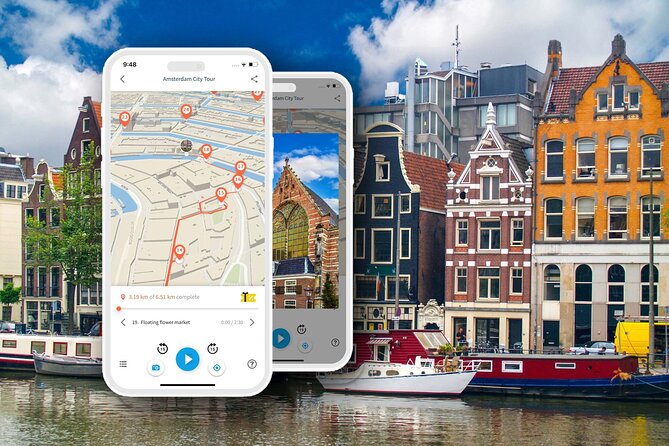
Turn your phone into a city guide. This Amsterdam walking tour gives you a smartphone audio guide with GPS and 31 key stops, so you can pause, rewind, and keep walking without a group pace. I also like the offline GPS map plus landmark illustrations, which help you match what you see with what you are hearing.
The main trade-off is that it is fully self-guided, so you need your own phone, and entry tickets are not included if you want to go inside major museums and attractions.
In This Review
- Key points to know before you go
- Smartphone GPS audio that lets you walk on your own time
- Price and value for a 2.5 hour route
- Amsterdam Centraal to Weeping Tower: start with building history
- Houten Huys, secret churches, and the Oude Kerk story
- The Waag and De Wallen: anatomy theater and port-city reality
- Dam Square, royal power, and the New Church
- Churches and courtyards: De Papegaai and the Beguinage
- Canals and flowers: Singel, Bloemenmarkt, and the Lieverdje
- Mint Tower to Tuschinski: skyline clues and art deco cinema
- City Archive, Heineken, and Paradiso: modern stories in old buildings
- Choosing your art museum energy at Museum Quarter
- Who should book this smartphone audio walk, and who might skip it
- Should you book this Amsterdam walking tour with smartphone audio?
- FAQ
- How long is the Amsterdam walking tour?
- Is this tour self-guided or do I meet a guide?
- Does the tour include museum entry tickets?
- Do I need internet to use the GPS route?
- What devices does the audio guide app work on?
- How many audio stops are included?
- Where does the tour start and end?
- What is the cancellation policy?
Key points to know before you go
- GPS with an offline map, so you are not stuck hunting for the next stop
- 31 audio recordings narrated by a professional historian
- Landmark illustrations to help you recognize buildings and clues fast
- No group schedule, you control the pace and listening time
- Covers classic icons and overlooked corners, not just the obvious photo spots
- Low price for the time, but you still handle your own museum tickets
Smartphone GPS audio that lets you walk on your own time
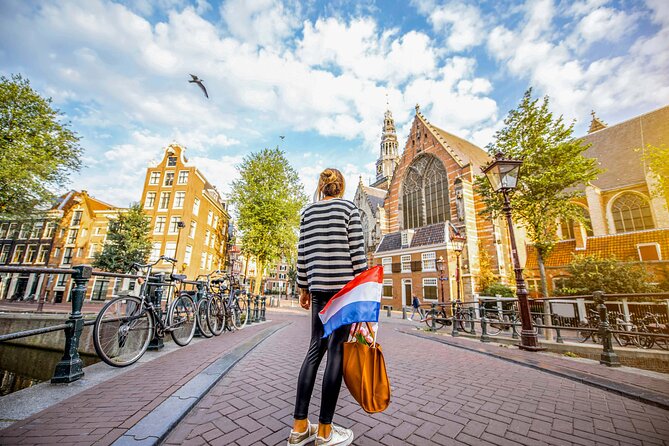
This is built for the kind of day where you want to steer, not follow. You start at Amsterdam Centraal, then the app guides you stop to stop with GPS navigation and audio that you can control. Want to linger at a canal view for longer than the audio? Do it. Want to skim through a stop because you are in a hurry? That is also on you.
What makes this work well is the combination of offline GPS mapping and visual cues. Amsterdam streets can be confusing even on a clear day, and having an offline route means you are not constantly checking data or trying to remember directions. The illustrations matter too, because some landmarks are easy to miss from street level, especially if you are focused on bikes, boats, and the next side street.
This tour also fits a specific travel style: you like your sightseeing with stories attached. The audio is narrated by a professional historian, and the tone can feel like you are walking with a smart, funny companion who drops practical context alongside the major highlights. In particular, you are not limited to big-name art topics, you also get helpful side threads that can cover things like museums, coffeeshop culture, and local facts.
More Guided Walking Tours in Amsterdam


Price and value for a 2.5 hour route
At $8.37 per person, you are paying mainly for the guided content and route help. You are not paying for an in-person guide, and you are not getting museum entry tickets included. That is the value equation: this is an inexpensive way to add “what am I looking at” to your walk, without paying a premium for private guiding.
The timing is also realistic for a walking day. It runs about 2 hours 30 minutes and is organized around short listening segments at each key point. Many stops are designed around about 5 to 10 minutes of audio, which makes the route feel like steady progress rather than a long sit-down tour.
Also note the app access comes with one-year access, which is useful if you want to replay sections later on the same trip or refresh your memory when you get home. And since the product is limited to a maximum of 20 travelers, it is not a giant crowd experience. Even so, remember it is self-guided, so your “crowd size” is really just you plus the normal Amsterdam street level traffic.
Amsterdam Centraal to Weeping Tower: start with building history
Your walk begins at Amsterdam Centraal, Stationsplein. From here, the audio sets you up with a big theme: Amsterdam is layered. The central station is not just a transport hub, it has a story tied to the location where a former harbor used to be. That kind of start helps you read the city as something built, rebuilt, and re-used, not a static backdrop.
From there, you move to the Weeping Tower. You will get the fun explanation behind why Amsterdam’s crying tower does not cry at all, plus the link to the East India Trading Company. This is a great example of how the tour uses “cool fact” as a doorway into larger context. Instead of treating buildings like random sights, you get a thread that connects architecture, trade, and city growth.
This early stretch is also a good way to calibrate your route. By the time you leave these first points, you know how the app signals the next stop and how long you want to spend with each story.
Houten Huys, secret churches, and the Oude Kerk story
Next you hit one of the most satisfying parts of Amsterdam for me: the older layers that sit right in the middle of modern streets. The Houten Huys (Wooden House) is presented as the oldest surviving house in Amsterdam, built around 1425, and it sits close to the heart of the Red Light District. Hearing that it is timber-framed and medieval helps you slow down and notice details you might otherwise gloss over.
Right around here, the audio shifts into a “how did they hide that?” mode with Museum Ons’ Lieve Heer op Solder. This spot is described as a 17th-century canal house with a hidden Catholic church tucked in the attic. Even if you do not go inside, the story gives you a lens for why Amsterdam has so many discreet, unconventional survival stories in its old neighborhoods.
Then comes the Oude Kerk, Amsterdam’s ancient church. The audio focuses on a dramatic belief story about miraculous healing that helped turn the city into a pilgrimage destination. What I like about this kind of stop is that it reminds you Amsterdam’s identity is not only canals and commerce. It also includes religion, community rituals, and the stories people needed to explain suffering and hope.
A small practical consideration: this section touches areas where the atmosphere can feel sensitive depending on the time of day and how you feel about the Red Light District nearby. If you prefer quieter streets, you can always adjust your walking pace, spend less time at those specific points, and keep moving.
The Waag and De Wallen: anatomy theater and port-city reality
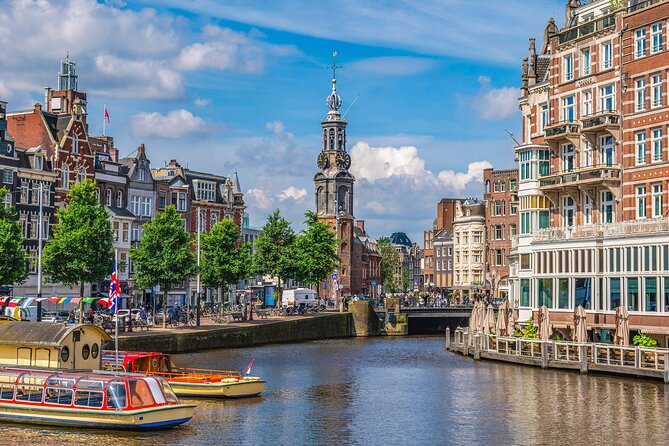
The tour then moves you to The Waag (weigh house). You will hear about anatomical theaters, with a note that Rembrandt loved to visit for inspiration. This is a strong pivot because it connects science, art, and curiosity rather than keeping the story locked to one discipline.
From there, you enter the Red Light District (De Wallen) zone. The audio does not treat it as just neon and red curtains. It frames De Wallen as a complex area shaped by history, culture, and modernity, and it ties it back to the city’s port life. That framing is useful because it pushes you to see the neighborhood as part of Amsterdam’s trade and movement, not only as a tourist spectacle.
When I think about whether this stop is a “good fit,” I look at your comfort level with walking through a high-visibility entertainment area. If you are okay with that, the audio’s context can make it more interesting and less random. If you would rather keep your city walk free of that kind of scene, you may want to keep the audio volume on and listening short, then move to the next landmark quickly.
More gables counted on foot:
- Amsterdam: Anne Frank Guided Walking Tour in DE/EN/IT/ES
★ 4.9 · 3,107 reviews - Amsterdam: Anne Frank Guided Small Group Walking Tour
★ 4.8 · 2,722 reviews - Amsterdam: Cultural Highlights Walking Tour
★ 4.9 · 2,629 reviews - Amsterdam: Ganja Walking Tour
★ 4.2 · 2,127 reviews
Dam Square, royal power, and the New Church

Next up is Dam Square and Damstraat, the central stage for landmark architecture and national storytelling. Here you get mentions of the Royal Palace and the New Church, plus context about how the Netherlands evolved into a kingdom.
The audio also breaks out key buildings like the Koninklijk Paleis (Royal Palace), which is described as originally built in the 17th century as a city hall. The point is clear: the Golden Age shaped wealth and power, and the building reflects that. If you like reading a city’s political and economic shifts through its stonework, this is a good section.
Then the route includes the De Nieuwe Kerk (New Church). It is described as a 15th-century Gothic church that has hosted royal ceremonies. You get a sense of Amsterdam as a place where public life and faith were always mixed in visible ways.
Also nearby on this route is Madame Tussauds Amsterdam. Even if you skip it, the audio’s presence here works like a reminder that the area is not only historic, it is still a major visitor hub.
Churches and courtyards: De Papegaai and the Beguinage
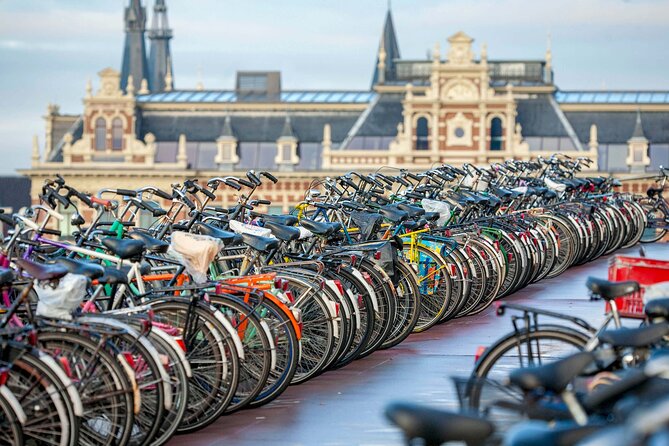
If you want a calmer change of pace after the big square, the audio brings you to H.H. Petrus en Pauluskerk (De Papegaai). This one is described as a neo-Gothic church from the 19th century with a towering spire and intricate stonework. The story here feels like a counterpoint to older churches, a reminder that Amsterdam keeps adding layers.
Then you get the Beguinage section. The focus is on a former Beguinage order and the inner courtyard, with attention to the rise of early feminists in Europe. That is a strong way to spend time, because it shifts the viewpoint. You are not only looking at rulers and merchants, you are hearing about social roles, community life, and the people who built support networks.
This section is also one of the most “useful walking breaks” in the route. Courtyards and quieter church-adjacent spaces give you a moment to reset before the walk turns back toward canals and major city landmarks.
Canals and flowers: Singel, Bloemenmarkt, and the Lieverdje
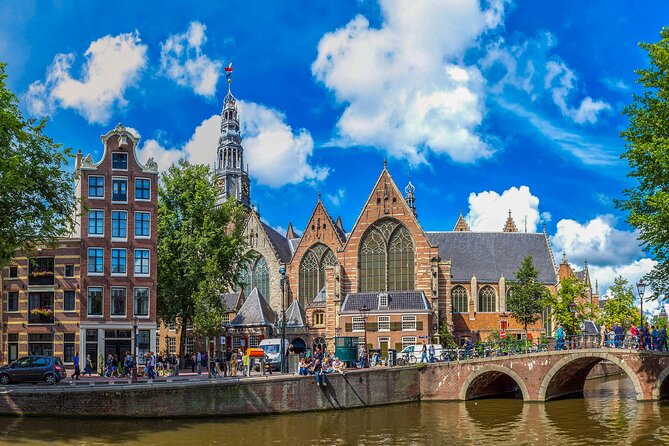
No Amsterdam walk is complete without canals, and here you get the Singel canal described as Amsterdam’s most ancient canal. The audio also covers the total number of canals and why the city built an extensive canal system. That kind of question is exactly what turns a canal photo into something you understand.
Soon after, you reach the Bloemenmarkt, the famous floating flower market along the Singel Canal. You get the basics and the context: it has been around since the 19th century and originally served as a hub for flower distribution. When you hear the market’s background, the storefront chaos feels purposeful instead of random.
Between canals and markets, the route includes the Statue Amsterdams Lieverdje. It is a small bronze figure of a young boy placed near the edge of Vondelpark. The audio connects it to Amsterdam’s working-class past, which helps you see public art as a memory system, not just a photo stop.
Mint Tower to Tuschinski: skyline clues and art deco cinema
The route continues with the Munt Tower (Munttoren). It is described as part of Amsterdam’s old defensive walls, built in the 15th century, and it still shows up on the skyline at the intersection of busy streets. Even if you never go inside, this stop helps you understand why the city’s layout and defenses shaped how it developed.
Next is Pathe Tuschinski, the Tuschinski Theater. The audio describes it as an architectural gem that transports you to the golden age of cinema, opening in 1921 with an Art Deco look and ornate interiors. This is one of the stops where the audio can change how you see a building you might otherwise pass. Instead of thinking theater, you start thinking design, craft, and the cultural mood of the era.
Then you reach Rembrandtplein, a lively square named after Rembrandt, anchored by a statue paying tribute to the painter. The audio keeps it grounded, tying the name to a real visual landmark and city identity marker.
City Archive, Heineken, and Paradiso: modern stories in old buildings
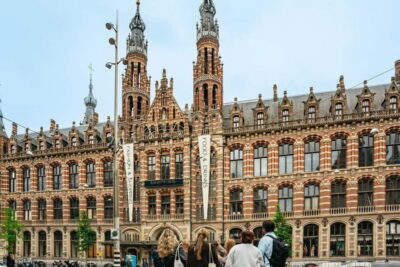
The tour then shifts toward places that many people only consider if they already have museum energy. Stadsarchief Amsterdam (City Archive) is described as a modern building that holds millions of documents, photographs, and maps. Even from outside, it is a reminder that Amsterdam’s story is stored, cataloged, and preserved, not just painted.
There is also a stop for the Heineken Experience. It is presented as an interactive museum in the brand’s former brewery. If you are into hands-on storytelling and pop culture history, this can be a fun add-on after your walking section.
Next comes Paradiso, which the audio describes as Club Paradiso, known for live music and DJ nights, originally a 19th-century church with dramatic architecture and stained glass. That kind of reuse, old sacred space turned music venue, shows how Amsterdam keeps adapting historic forms for new uses.
Choosing your art museum energy at Museum Quarter
The end of the route works like a decision point. You pass into Museum Quarter (Museumkwartier) around Museumplein, described as Amsterdam’s cultural heart with major museums nearby.
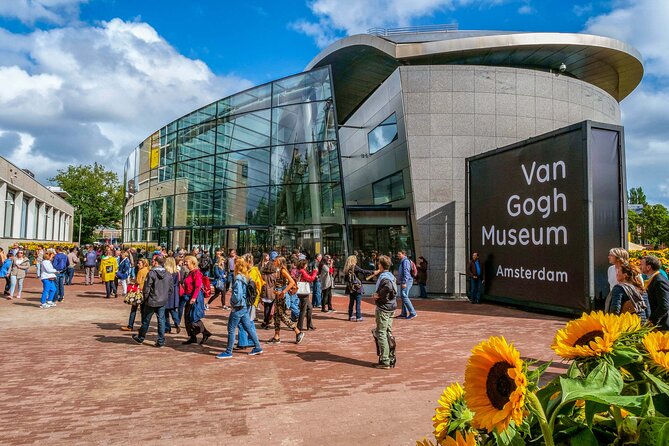
The audio mentions major museum names like the Rijksmuseum, the Van Gogh Museum, and the Diamant Museum. Since entry tickets are not included, you need to decide based on time and ticket priority. The good news is you can treat this as a “prime view of possibilities” moment, then choose only what fits your interests that day.
If you are art-focused, you can prioritize the biggest hitters like Rijksmuseum and Van Gogh. If you like design history, you might prefer the mix of architecture and craft you get in these areas. If your energy is lower, you can stay with the walk and use the audio to set up what you might tackle later.
A practical note: because the tour is timed, the audio does not replace museum time. It adds the context to make your eventual museum visits smarter.
Who should book this smartphone audio walk, and who might skip it
I think this tour is best for you if you like structure without pressure. It works well for independent travelers who want GPS help, want to avoid group timing, and enjoy story-driven sightseeing. The professional historian narration plus illustrated landmark recognition can make a big difference when you want Amsterdam to feel like more than a list of famous places.
You might want a different option if you hate navigation chores. This route is self-guided, so you are responsible for having the app ready and following the map. Also, if you expect all major attractions to be included, adjust your mindset: entry tickets to museums are not included, so your final cost depends on what you choose to go into.
Should you book this Amsterdam walking tour with smartphone audio?
I would book it if you want an affordable way to turn a 2.5 hour walk into a narrated route with GPS support and offline maps, plus a historian voice that can feel like a witty companion. At $8.37, the value is in making each landmark make sense, especially in areas where Amsterdam’s clues are easy to overlook.
Skip it only if you strongly prefer a human guide, or if you want guaranteed museum entry included in the price. If you like to explore on your own terms and you are okay handling tickets separately, this is a smart match for an easy, story-rich Amsterdam day.
FAQ
How long is the Amsterdam walking tour?
The duration is about 2 hours 30 minutes (approx.).
Is this tour self-guided or do I meet a guide?
It is self-guided. You download the audio guide mobile app, activate your purchase, and follow the route on the app’s map without a human guide.
Does the tour include museum entry tickets?
No. Entry tickets are not included and must be purchased separately in advance if you want to visit museums.
Do I need internet to use the GPS route?
The tour includes an offline GPS map with the route, so you can navigate using the offline map.
What devices does the audio guide app work on?
The audio guide is available for iPhone and Android.
How many audio stops are included?
The tour includes 31 audio recordings narrated by a professional historian.
Where does the tour start and end?
It starts at Amsterdam Centraal, Stationsplein, 1012 AB Amsterdam, Netherlands, and ends back at the meeting point.
What is the cancellation policy?
Free cancellation is available. You can cancel up to 24 hours in advance for a full refund, and cancellations within 24 hours are not refunded.
More Self-Guided Tours in Amsterdam
- Amsterdam: 75 Minute City Canal Cruise with Audio Guide★ 4.4 · 19,938 reviews
- Amsterdam: Royal Palace Entry Ticket + Audio guide★ 4.6 · 7,889 reviews
- Amsterdam Sightseeing Canal Cruise with Audio Guide★ 3.5 · 828 reviews
- Amsterdam Van Gogh Museum with Audio or Guided Tour★ 4.0 · 266 reviews
Latest to arrive along the quays of Amsterdam





Walking Tours, compared.
Amsterdam Anne Frank: Small-Group Walking Tour & Local Guide
Read our review →
Anne Frank’s Story – Guided Walking Tour through Amsterdam
Read our review →
Absolutely Amsterdam – the Essential Introductory Walking Tour
Read our review →
Anne Frank Guided Walking Tour in DE/EN/IT/ES
Read our review →

Anne Frank Walking Tour Amsterdam Including Jewish Cultural Quarter
Read our review →Browse the lists this tour appears in