
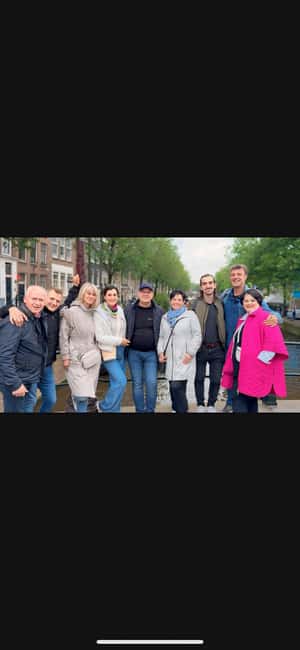
Reviewed · RED LIGHT DISTRICT WALKS
Amsterdam: Red Light District Tour in German
A side street in Amsterdam teaches fast, if you do it right. This German Red Light District walking tour gives you the history and the current reality, with a local guide, Sandro, who keeps the pace friendly and question-friendly. I like that it is built for real explanations, not vague “just walk and look” sightseeing.
Two things I especially value are the structured stops for photos and the way the guide answers practical questions about what you might see, including how different window colors are used and how meetings generally work. One possible drawback: it is not suitable for kids under 14, and the subject matter is adult, so keep your comfort level in mind before you book.
In This Review
- Key Highlights Worth Prioritizing
- Meeting Sandro Near Centraal Station
- From Saint Nicholas to Nieuwmarkt Square, the City Warming Up
- Chinatown and the Red Light District, One Walk, Two Moods
- Reading the Windows, Understanding Safety, and Avoiding Guesswork
- Getting Answers While You Walk, Not After You Google
- Price, Time, and What You’re Actually Paying For
- How the Route Fits Different Visitors (and Who Should Skip It)
- Optional Versions: Private Groups and a Bar Stop
- Should You Book This German Red Light Tour?
- FAQ
- What language is the tour offered in?
- How long is the tour?
- Where do I meet the guide?
- Is the tour wheelchair accessible?
- Is the tour suitable for children?
- What happens if I need to cancel?
Key Highlights Worth Prioritizing
- German-led local guidance from Sandro, with English also available
- Photo stops and alley viewing, so you can actually frame the area before you keep walking
- Practical Q&A, including how meetings work and what green and blue windows mean
- A route that blends old Amsterdam corners like Nieuwmarkt area and Chinatown with the Red Light District
- Clear safety and cultural context, including how this differs from Hamburg
Meeting Sandro Near Centraal Station
If you want Amsterdam to feel real, start where the city actually moves. This tour meets near Centraal station, about 50 meters in front, and Sandro will approach you. That matters because you can get your bearings fast, then focus on the walk instead of playing “where is the group?” You are also told to look for the guide using the name from your booking, and you receive Sandro’s cell number in your confirmation email, which is helpful if anything goes sideways.
You will do a classic city-walk style experience: short segments, time to stop, and space to ask questions. The tour runs about 2 hours, so it fits well into a tight schedule. It is also a walking tour with a local guide, meaning you are not just passing landmarks, you are hearing the “why” behind the places you stand in front of.
One more practical note I appreciate: comfortable shoes are recommended. Even if you think you are fine on city pavement, 2 hours of purposeful walking can surprise you. And dogs are welcome, which can be a lifesaver if your travel plans include a furry companion.
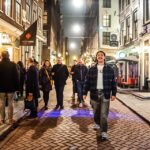
More lantern-lit windows explained:


From Saint Nicholas to Nieuwmarkt Square, the City Warming Up
Before you reach the Red Light District, the tour sets you up with Amsterdam texture. You begin at the Basilica of Saint Nicholas, and then you move through the older, lively streets around Nieuwmarkt. This is a smart approach: it gives you context before the adult-focused area, so the tour feels like one continuous story rather than a sudden, jarring jump.
You will have a photo stop early, then a walk segment at Nieuwmarkt Square. Nieuwmarkt is a great “midpoint” stop because it still feels like an everyday Amsterdam area, not only a tourist corridor. It also helps you build a rhythm. You get used to the pace of the guide, the way the group moves, and how long you actually have at each spot to look around.
The tour also mentions an old church stop in the area you visit. Even if you are not going inside, the presence of a historic church in the route adds balance, because Amsterdam’s identity is never only about one neighborhood. It is about layers, and this itinerary keeps those layers in view.
If you are the type who gets restless when tours are too slow, this is likely to work for you. There are multiple stops, but the schedule stays tight enough that you keep moving.
Chinatown and the Red Light District, One Walk, Two Moods
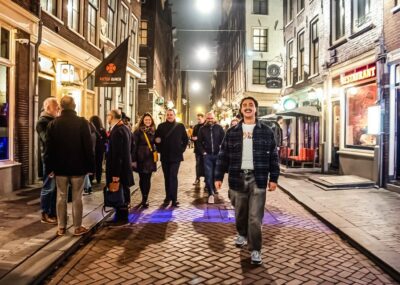
One of the most useful parts of this tour is that it does not treat the Red Light District as a single destination blob. You walk through the transition, including the Chinatown area and nearby corners, so the adult neighborhood is framed by surrounding city life.
This “two moods on one route” is exactly what makes a short tour feel worth the money. You get the normal Amsterdam streetscape, then you arrive in the alleys where the Red Light District is known for shop windows and a famous main street. The guide also points out where to look for the shop fronts in the alleys, and that is valuable because Amsterdam is easy to get turned around in visually.
You also get time for questions during the Red Light District portion, which is where a lot of tours either go quiet or go too fast. Here, the format is relaxed, with a mix of German and English support. That gives you a chance to ask about specifics you are genuinely curious about, instead of guessing based on what you have seen in photos.
You will likely use your phone a lot here. The tour is designed with plenty of stops for selfies and pictures, so you are not rushing to snap before the guide moves on. Just do yourself a favor: keep your phone ready but not glued to your hand. Looking up, listening, and stepping aside when others pass will keep the experience smooth for you and everyone around you.
Reading the Windows, Understanding Safety, and Avoiding Guesswork
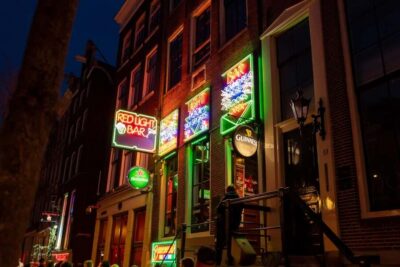
The heart of the tour is the Amsterdam Red Light District itself. You will see the red-light area, including the main street feel and the shop windows tucked into the alleys. That is the visual hook, but the real value is what the guide explains while you are there.
Sandro covers the history and origins of both the city and this area, but he also focuses on the current situation. For you, that means you get more than old stories. You get the context needed to understand why the area looks the way it does today and how the neighborhood is talked about now.
A standout point for practical curiosity: Sandro clarifies what green and blue shop windows mean. People often arrive with rumors, photos, and half-understood headlines. Having the meaning explained on the ground helps you avoid the common trap of over-interpreting what you see.
He also addresses how a meeting with a prostitute works, and he goes into safety. That combination is what turns the tour from “shock tourism” into learning. I would treat his explanations as your baseline, then stay respectful and cautious in real life. If you are unsure about boundaries or what is appropriate, this is the kind of tour where you can ask before you act.
Finally, he compares Amsterdam’s Red Light District with the one in Hamburg. Even if you have never been to Hamburg, that comparison can sharpen your understanding of what is unique to each place rather than assuming all German and Dutch nightlife areas are the same.
Getting Answers While You Walk, Not After You Google
One reason people love Sandro’s style is that he does not just talk at you. The tour is built around questions. During the walk, you get time to ask, and Sandro is expected to clarify questions like what you should expect in encounters and how safe the area is.
That matters because adult neighborhoods come with a lot of misinformation online. If you show up with questions like, Is it safe? What do these signs and windows mean? How do people approach situations responsibly? you will get help directly, rather than piecing together bits from the internet in a way that might be incomplete.
The tour also mentions live shows and entertainment bar ideas along the way, plus pubs and more. That is useful because after a Red Light District experience, the question for most visitors becomes: what now? Having a local guide mention live entertainment options gives you a natural next step for your evening plans, while keeping you in the local rhythm.
Also, the guide is reachable by call or WhatsApp in advance, and even after the tour you can message with questions. That creates a helpful safety net, especially if your group has mixed comfort levels or you have lingering questions you do not want to ask in the moment.
Also flying a pennant in Amsterdam
- Amsterdam: Van Gogh Museum Ticket
★ 4.7 · 52,054 reviews - Amsterdam: Heineken Experience Ticket including 2 Drinks
★ 4.6 · 36,014 reviews - Amsterdam Classic Saloon Boat Cruise with Drinks and Cheese
★ 5.0 · 31,825 reviews - Amsterdam Luxury Canal Cruise + Unlimited Drinks & Bites option
★ 5.0 · 30,518 reviews
Price, Time, and What You’re Actually Paying For
At $31 per person for about 2 hours, this is priced like a focused city-walk with a real local guide. You are not just paying for access to the Red Light District as a location. You are paying for interpretation, structure, and live explanations in German (with English support). That is the difference between a cheap walk and a useful one.
Think about what you likely need most: context, safety guidance, and answers you can ask in real time. This tour is designed around exactly that, and the presence of multiple stops, photo opportunities, and Q&A means the time is actively used, not spent idling.
If you like value, look at the format: about 2 hours, walking pace that includes frequent stops, and guided time in the main Red Light District area where the windows and alley views are the whole point. It is also described as wheelchair accessible, which can increase its value if you need a route that is actually feasible for your mobility.
Where value might feel lower for some people: if you want a purely sightseeing-focused stroll with zero adult-context discussion, this tour is likely to feel more serious than you expect.
How the Route Fits Different Visitors (and Who Should Skip It)
This tour is adult-focused, so it has clear boundaries. It is not suitable for children under 14, and that is a good sign. It means the guide can keep the conversation at an appropriate level without policing the group every few minutes.
On the other hand, it is not just for one kind of visitor. It includes wheelchair accessibility, and Sandro is described as able to guide people with disabilities through the area. That is important in Amsterdam, where sidewalks and alleyways can vary a lot by neighborhood.
You can also bring a dog, which is rare for city walking tours and useful if you travel with pets. Language-wise, it is available in German, with English also offered, so it can work for mixed-language groups.
Who I think should book:
- adults and couples who want context, not just photos
- German-speaking visitors who want a guided explanation on the ground
- anyone who is curious about what the window colors mean and how meetings work, and wants those answers in a respectful environment
Who should consider skipping:
- families with kids under 14
- anyone who gets extremely uncomfortable with adult subject matter, even when it is handled responsibly
- people who want a silent, minimal-talk experience
Optional Versions: Private Groups and a Bar Stop
This tour has variations depending on your group and your interests. There is a private group option for four or more people at a reduced rate, and there is also a version that includes a bar visit with a free drink, plus a stop at a coffee shop.
If you want more flexibility and fewer group-pace surprises, a private group version is often the better match. It can also be easier to ask questions at your own comfort level without feeling rushed.
If you want the tour to transition into social time, the bar visit option can be a nice flow. In the real world, a Red Light District walk can make you curious, reflective, or even slightly awkward. Having a planned drink stop can help you decompress with a guide who already knows what questions you might have.
Should You Book This German Red Light Tour?
I’d book it if you want a practical, question-led way to understand Amsterdam’s Red Light District, in German, with a guide named Sandro who explains window meanings, safety, and how meetings work. The route through Nieuwmarkt area, Chinatown, and the nearby historic church adds balance, so it feels like Amsterdam, not just one neighborhood.
I would skip it if adult content will genuinely ruin the mood of your trip, or if you only want scenery with no discussion. And since it is a walking tour, you should be ready for 2 hours on your feet in an area with narrow streets and alley walking.
If you do book, bring comfortable shoes, arrive with 2 or 3 questions you actually care about, and use the photo stops but keep your attention on the guide. This is the kind of tour where you get the most value by listening, asking, and letting context replace guesswork.
FAQ
What language is the tour offered in?
The tour is offered in German, and English is also available.
How long is the tour?
The tour lasts about 2 hours.
Where do I meet the guide?
The meeting point is about 50 meters in front of Centraal station.
Is the tour wheelchair accessible?
Yes, the tour is listed as wheelchair accessible.
Is the tour suitable for children?
No, it is not suitable for children under 14.
What happens if I need to cancel?
There is free cancellation up to 24 hours in advance for a full refund.
Latest to arrive along the quays of Amsterdam




Red Light District Walks, compared.
Amsterdam Red Light District & Coffee Shop Tour
Read our review →
Red Light District Pub Crawl with Unlimited Shots
Read our review →
Private Amsterdam Red Light District and Coffee Shop Tour
Read our review →
Browse the lists this tour appears in