
Reviewed · ANNE FRANK & JEWISH HERITAGE TOURS
Amsterdam: Anne Frank Walking Tour
A few streets in Amsterdam can hit hard. This Anne Frank walking tour traces the people, places, and wartime pressure that shaped her family story, starting around Waterlooplein and moving through the Jewish neighborhoods tied to WWII. I like how the guide keeps the narrative moving across real streets, not just facts on a page. You also get built-in context for what life in Amsterdam meant during the German occupation, including the February strike and the Hunger Winter.
What I really enjoy is the mix of landmark stops and neighborhood detail. You’ll see the Portuguese Synagogue area, the Jewish Historic Museum, and the Auschwitz Monument, then reach the Anne Frank House area from the outside (no ticket included). One possible drawback: the route is best with comfortable shoes, and it is not suitable for wheelchair users because you’re walking through narrow streets and making multiple stops.
In This Review
- Key things you’ll notice on this tour
- A 2-hour walk that links Anne Frank to real Amsterdam streets
- Starting near Waterlooplein and getting your bearings fast
- Portuguese Synagogue and the Jewish Quarter: where centuries meet WWII
- Jewish Historic Museum stop: short visit, big context
- Waterlooplein area, Nieuwmarkt, and Lastage: wartime Amsterdam in slices
- Auschwitz Monument and the Anne Frank House area: two powerful endings
- Plantage district: the story’s next step after the hiding
- Price and value: what you get for about $21 per person
- Should you book this Anne Frank walking tour?
- FAQ
- How long is the Anne Frank walking tour in Amsterdam?
- Where do I meet the guide?
- Does the tour include entrance tickets to the Anne Frank House?
- What languages are the tours offered in?
- Is the tour wheelchair accessible?
- What should I bring for the tour?
Key things you’ll notice on this tour
- Waterlooplein meeting point and a tight 2-hour route that keeps your feet moving (in a good way)
- Portuguese Synagogue and Jewish Quarter stops that help you place Jewish life in Amsterdam over centuries, not just during WWII
- Jewish Historic Museum quick-hit moments that connect the neighborhood to the larger wartime story
- Auschwitz Monument as a strong, thoughtful turning point before the Anne Frank House area
- Guides who pace the story well, often named James or Aaron in the most positive feedback, with empathy and humor kept in balance
A 2-hour walk that links Anne Frank to real Amsterdam streets
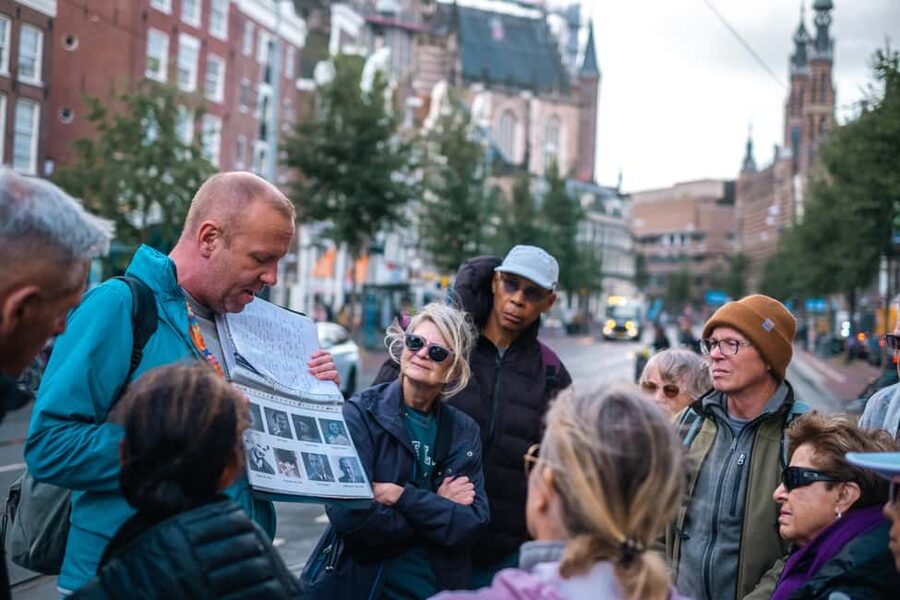
This tour is designed to fit into a busy day: about 2 hours, guided in English or Spanish, with a local guide leading you through key Jewish sites in Amsterdam connected to WWII. For me, the best walking tours do one thing well, they teach you how to look. Here, you’re learning how to read the city, not just observe it.
The big value is the way the story unfolds in layers. You start with the Jewish Quarter and nearby landmarks, then you zoom out to what occupied Amsterdam felt like: fear, restrictions, hunger, and resistance. The guide also connects Anne Frank’s life to the larger community story, including what happened to many Jewish families in Amsterdam. You’ll hear about February strike events, the Hunger Winter, and the aftermath through her father’s role in publishing her diary after the war.
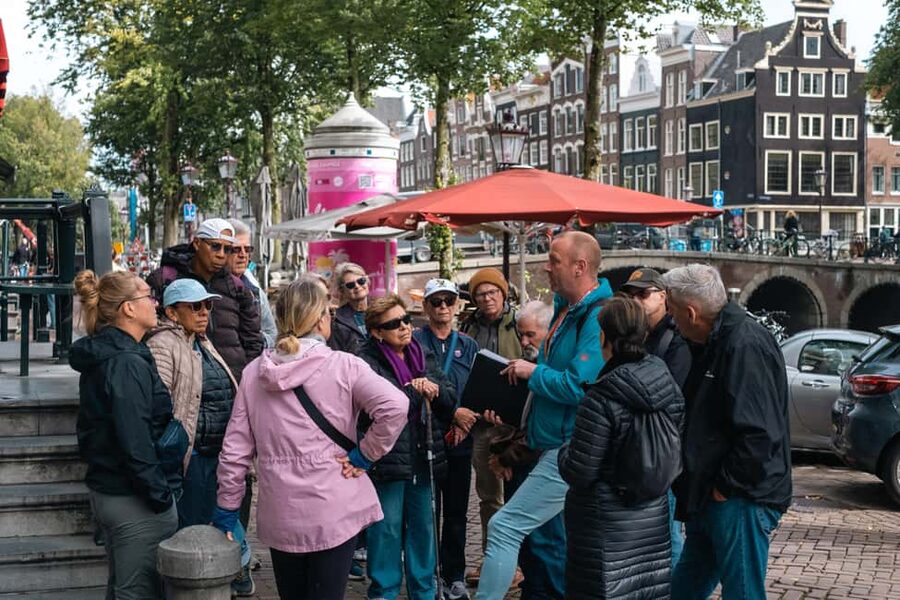
The other practical win is pacing. Multiple people in the feedback highlight that the tour timing feels right, so you’re not stuck with a long speech at each corner. You do get short guided moments at several stops, which keeps energy up, especially if you’re doing this after getting through the morning crowds.
More Guided Walking Tours in Amsterdam


Starting near Waterlooplein and getting your bearings fast
Your tour starts near Waterlooplein, with meeting point details that can vary depending on the option booked. In the information provided, the starting and ending location options both point to Studio Infinity, so you’ll likely be in that general area and back there at the end.
From the first stretch, your guide sets the scene: what Amsterdam looked like during the occupation, and how the Jewish neighborhoods fit into the city’s everyday geography. Waterlooplein matters because it’s central to the areas you’ll be walking through next. It helps your brain create a simple map, which is huge when the subject matter is emotionally heavy.
Also, the guides’ delivery seems to matter a lot here. Several names show up in the best reviews, including James and Aaron, and people consistently note storytelling that stays clear, paced well, and open to questions. That matters because you’ll likely have follow-ups, like how the family ended up where they did, or why certain streets and institutions are remembered.
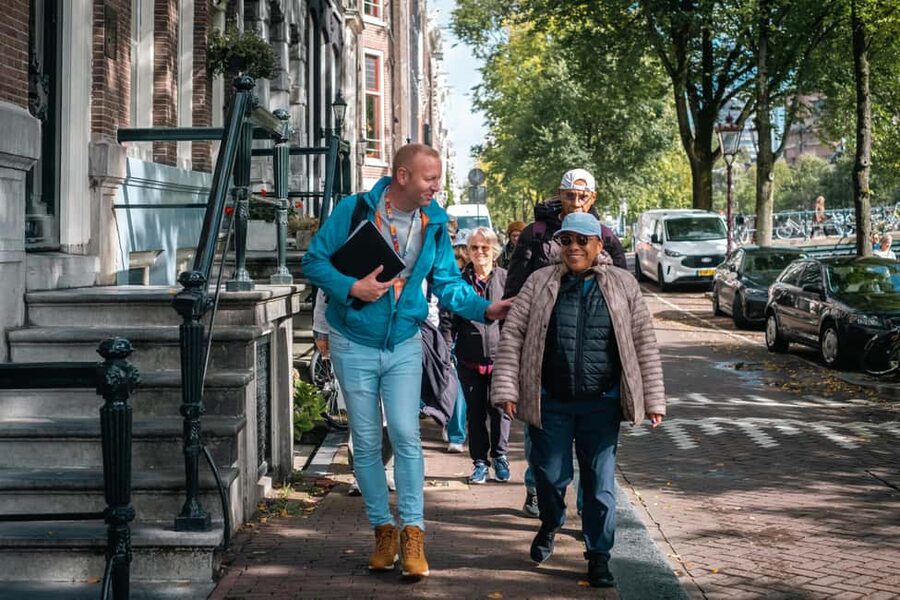
Practical tip: plan to spend extra time with your eyes. As you walk, notice architectural cues and street shapes. The tour moves through narrow alleys of the Jewish Quarter, and the guide uses those tight lanes to explain how community life worked and how it could be disrupted.
Portuguese Synagogue and the Jewish Quarter: where centuries meet WWII
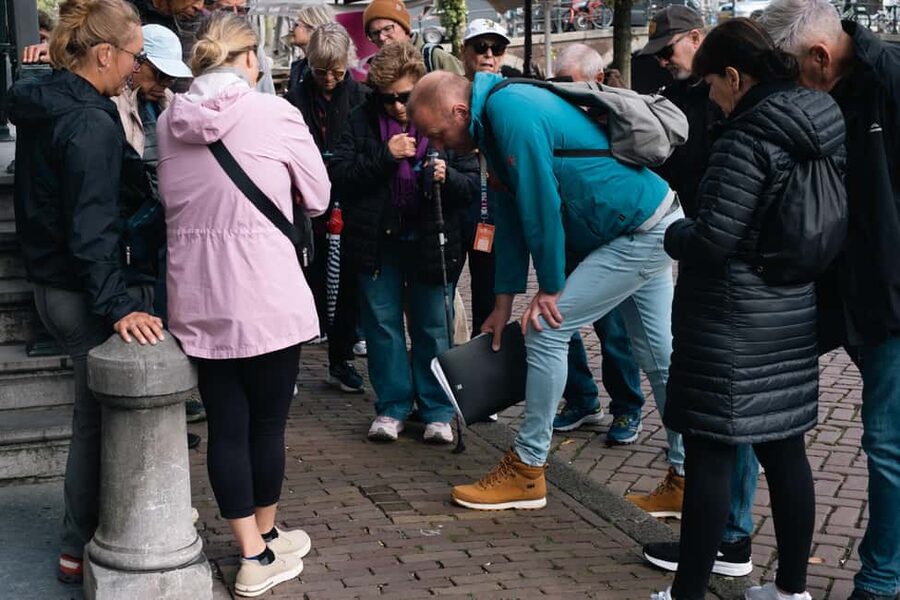
One of the first stops is the Portuguese Synagogue area. Even when your time there is brief, it works as a frame. You’re not only hearing about the Holocaust, you’re also learning about Jewish life in Amsterdam across longer timelines, including how communities shaped the city’s culture.
Then you move into the Jewish Quarter proper. This is the heart of the walking portion where you’ll get a concentrated dose of place-based history. Expect guided time centered on narrow streets and historic buildings associated with Jewish life. The guide helps you understand why certain locations became targets and why the neighborhood’s identity is still visible in the streets today.
A smart, small detail to keep in mind: pay attention to the pavement elements. One reviewer specifically called out small metal squares in the road and said they explain what those mean. Even if you don’t fully catch every detail on the spot, ask the guide about them. That kind of street-level marker turns a normal walk into a living lesson.
If you’re visiting Anne Frank sites for the first time, this section helps you avoid the common trap of treating the story as only one house and one diary. You start to see it as a whole web of people, institutions, and neighborhoods.
Jewish Historic Museum stop: short visit, big context
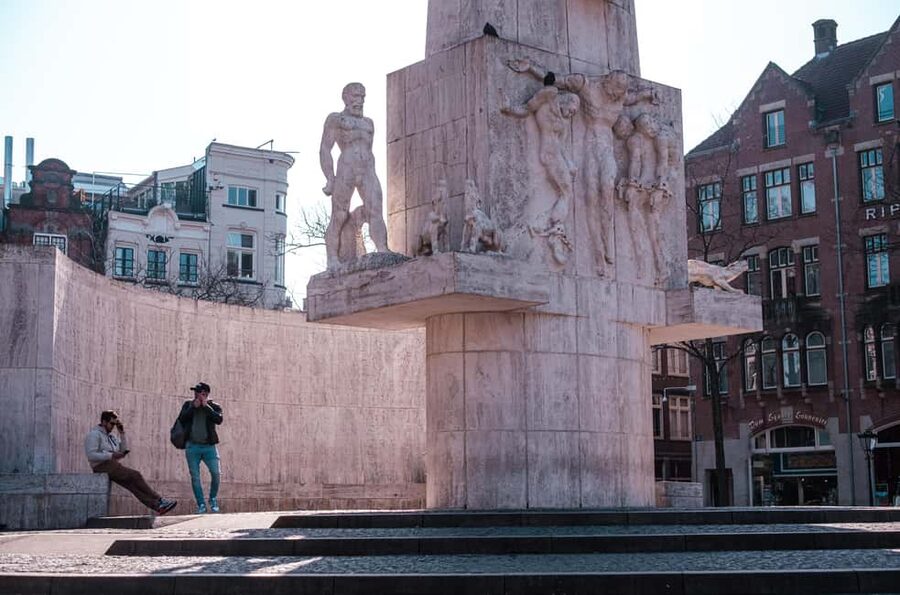
You’ll also stop at the Jewish Historical Museum for a short guided window. Since the tour timing is tight, you won’t get the full museum experience here, but you will get what you need to make your future museum visit smarter, if you choose to return.
The advantage of placing this stop in the middle of the walk is that it turns your attention from street texture to documented context. You’re hearing how Amsterdam’s Jewish community changed over time, and how wartime events reshaped lives. When the museum gets referenced in the route, it feels like the guide is connecting what you see outside with what exists inside in records and artifacts.
In the feedback, people often praise how guides answer questions and handle both history and emotion with care. That’s especially important in this topic. You’re not just learning what happened, you’re also learning how to talk about it respectfully while still being honest.
If you’re someone who likes to ask many questions, you’ll likely appreciate this format. Multiple reviews mention guides being patient and open to questions, including when families and teens were on the tour.
Waterlooplein area, Nieuwmarkt, and Lastage: wartime Amsterdam in slices
After the Jewish Quarter moments, the route continues through areas like Waterlooplein again and on to Nieuwmarkt and Lastage. These sections are about connecting the story to the city’s layout, not just hitting a list of famous points.
This is where the tour really helps you understand daily life in occupied Amsterdam. The guide ties events like the February strike and the Hunger Winter to the neighborhoods you’re walking through. You start to feel how war was not only something happening far away. It was also rationing, fear, pressure, and constant uncertainty in normal street life.
You might also notice how the guide links institutions and community spaces across the walk, like a timeline you can physically follow. That narrative thread is one of the most praised aspects in the feedback, with people saying guides connect events well and keep the story flowing.
One caution: this portion can feel emotionally dense. The tour is not a museum timeline with quiet room breaks. It’s a walking narrative through public streets. If you need frequent pauses, look for moments when the guide stops talking and take a breath. The tour does include short guided times at each stop, which helps.
Other Anne Frank House and Jewish heritage visits:
- Amsterdam: Anne Frank Guided Walking Tour in DE/EN/IT/ES
★ 4.9 · 3,107 reviews - Amsterdam: Anne Frank Guided Small Group Walking Tour
★ 4.8 · 2,722 reviews - Anne Frank Walking Tour Amsterdam Including Jewish Cultural Quarter
★ 5.0 · 1,879 reviews - Anne Frank’s Last Walk & See Anne Frank House in Virtual Reality
★ 5.0 · 957 reviews
Auschwitz Monument and the Anne Frank House area: two powerful endings
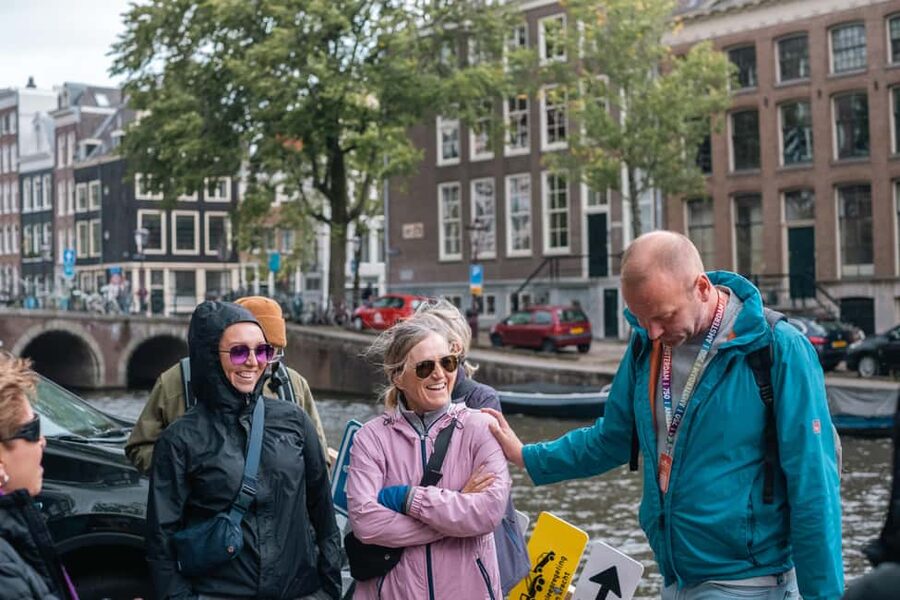
A major highlight is the Auschwitz Monument in Amsterdam. In a 2-hour tour, it can be a turning point because it pushes the story from neighborhood-specific events to something broader and deeply tragic. The guide typically frames why memorials matter, and why they stay in public space as long as they do.
In many accounts, this monument is the most moving part, and it makes sense. You’re standing in a place designed for remembrance, while the guide’s story gives it the right weight. If you’re sensitive to heavy topics, know this is where the mood most likely shifts.
From there, the walk continues toward the Anne Frank House area. Important detail: the tour does not include entrance to the Anne Frank House. That means you’re getting an orientation and storytelling around the site, not the in-house museum experience. This is still valuable, because the walk has built a personal map of who Anne Frank was, where her family belonged in Amsterdam’s Jewish life, and how the story reached the wider world.
You’ll hear about Anne Frank’s diary and how it was published after the war by her father, and how it became one of the best-selling books of all time. Ending with that idea, after memorial context, helps the story land with both clarity and humanity.
Plantage district: the story’s next step after the hiding
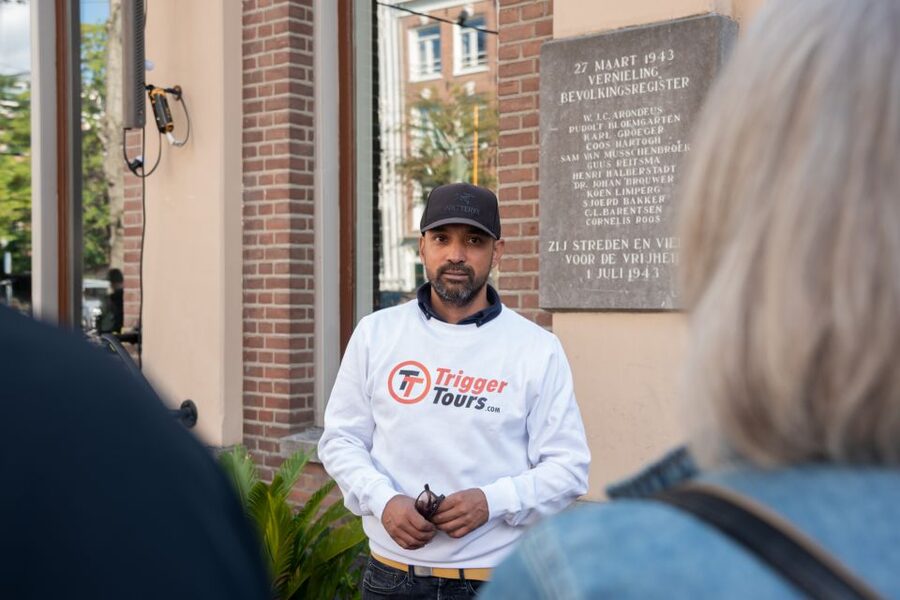
Finally, you reach the Plantage district for guided time. Plantage works as a sort of geographic and emotional bridge. After the Auschwitz Monument and Anne Frank House area, you’re shifting from the most direct WWII memory points to the surrounding city context.
Your guide can use this section to explain how the Jewish community’s presence, resilience, and legacy shaped Amsterdam’s culture and heritage over the long term. Even though the tour focuses on WWII, this ending helps you avoid the feeling that history starts and stops in one cramped moment.
For me, that matters. Anne Frank’s story is unforgettable, but it also risks becoming abstract if you only think of one house and one diary. Ending through Plantage gives the history somewhere to go, it keeps the memory tied to a living city.
If you’re traveling with kids or teens, this section is also a chance to ask questions and process what you just heard. The best feedback notes that guides create a comfortable environment for questions, including when young visitors were on the tour.
Price and value: what you get for about $21 per person
At around $21 per person for about 2 hours, this tour is strong value if you want a guided storyline through key WWII Jewish neighborhoods. You’re not paying for big museum tickets here, and that’s actually a good thing to understand up front.
The price covers a local guide and the walking route, with included guided stops at key locations like the Jewish Quarter, the Jewish Historic Museum, and the Auschwitz Monument. Since the Anne Frank House entrance is not included, you’re effectively paying for context and access to a coherent narrative, not for another queue, another ticket, and another admission fee.
That’s ideal if you:
- want a guided way to understand Amsterdam’s WWII Jewish geography
- prefer short stops over a day-long museum marathon
- like asking questions and hearing explanations tied to what you see outside
Where it may not fit is if you want only one famous site. If your top goal is going inside the Anne Frank House, you’ll need separate entrance tickets, because the tour does not include them. In that case, this walking tour works best as the warm-up, or as a complement to your main Anne Frank House visit.
One more practical note: wear comfortable shoes. You’ll be walking through older streets, and the tour includes multiple stop-and-listen moments.
Should you book this Anne Frank walking tour?

Yes, I’d book it if you want a guided path through Amsterdam that explains the neighborhood context behind Anne Frank, not just the diary headline. The best part is how the guide ties together wartime events, community history, and specific places, including the Portuguese Synagogue area and the Auschwitz Monument, in a tight 2-hour timeline.
Skip or rethink if you’re only interested in the Anne Frank House interior. This experience intentionally does not include entrance tickets, so you’d still need to plan that separately. Also, it is not suitable for wheelchair users, because the walk includes narrow streets and multiple stops.
If you do book, I recommend you come with one or two questions in mind. Then use the guide time to connect the story to what you see on the street. That is where this tour seems to shine, and it turns a normal walk into something that stays with you long after you move on.
FAQ
How long is the Anne Frank walking tour in Amsterdam?
The duration is about 2 hours.
Where do I meet the guide?
The meeting point may vary depending on the option you booked, but the starting location options listed include Studio Infinity.
Does the tour include entrance tickets to the Anne Frank House?
No. The tour does not include entrance to the Anne Frank house.
What languages are the tours offered in?
The live guide offers English and Spanish.
Is the tour wheelchair accessible?
No, it is not suitable for wheelchair users.
What should I bring for the tour?
Bring comfortable shoes, since it is a walking tour with several stops.
Gables on Foot
- Amsterdam: Cultural Highlights Walking Tour★ 4.9 · 2,629 reviews
- Amsterdam: Ganja Walking Tour★ 4.2 · 2,127 reviews
- Amsterdam Highlights Walking Tour: Small Group Experience★ 5.0 · 1,132 reviews
- Amsterdam Small-Group Walking Tour★ 4.7 · 995 reviews
Latest to arrive along the quays of Amsterdam




Anne Frank & Jewish Heritage Tours, compared.
Amsterdam Anne Frank: Small-Group Walking Tour & Local Guide
Read our review →
Anne Frank’s Story – Guided Walking Tour through Amsterdam
Read our review →
Anne Frank Guided Walking Tour in DE/EN/IT/ES
Read our review →
Anne Frank Walking Tour Amsterdam Including Jewish Cultural Quarter
Read our review →
Anne Frank’s Last Walk & See Anne Frank House in Virtual Reality
Read our review →
Anne Frank and Jewish Quarter Amsterdam Private Walking Tour
Read our review →
Anne Frank’s Last Walk & Visit Anne’s House in VR
Read our review →Browse the lists this tour appears in