
Reviewed · WALKING TOURS
Amsterdam Small-Group Walking Tour
Amsterdam clicks into focus fast, with a 2.5-hour small-group walk that connects the Golden Age, the Red Light District, and World War II stories to what you see on the street. Guides such as Rob, Laura, and Claire are often praised for humor and for answering questions without rushing you.
I love how the route mixes postcard landmarks with quieter, slower moments like the Begijnhof courtyard. I also like the way the guide ties Amsterdam’s big eras to human stories, including the Anne Frank chapter.
Plan for real walking, and if you have mobility needs, confirm accessibility details in advance. The tour is marked wheelchair accessible but also listed as not suitable for people with mobility impairments.
In This Review
- Quick highlights before you go
- Why this 2.5-hour Amsterdam walk is a smart first-day move
- Meeting at Beursplein 1, then getting oriented fast
- Beursplein and Dam Square: trade power, public space, and city theater
- Nieuwe Kerk and the Royal Palace: iconic facades with just enough time
- Zeedijk and Nieuwmarkt: street history that makes the center feel real
- Zuiderkerk and the Begijnhof pause: a slower Amsterdam moment
- Amsterdam Flower Market and Muntplein: color and landmarks you’ll recognize later
- The real value: the stories behind Golden Age, Red Light District, and Anne Frank
- Who this tour suits best, and what to expect on your feet
- Pricing and value: why $20 can still feel like a bargain here
- Should you book this Amsterdam Small-Group Walking Tour?
- FAQ
- How long is the Amsterdam small-group walking tour?
- Where does the tour start at Beursplein 1?
- What languages is the tour offered in?
- How large is the group?
- Is the tour wheelchair accessible?
- What should I bring for the tour?
Quick highlights before you go
- A first-day orientation built from icons and side streets**, so you learn the city’s layout fast
- Golden Age and modern Amsterdam in one story arc**, not just dates and facts
- Red Light District and drug policy explained carefully**, with context for today’s Netherlands
- Short photo stops at major landmarks, so you can actually keep moving and stay on time
- Begijnhof gets a longer, calmer stop, which helps the tour feel balanced
- Flower Market time is built in, so you get color and local atmosphere without extra planning
Why this 2.5-hour Amsterdam walk is a smart first-day move
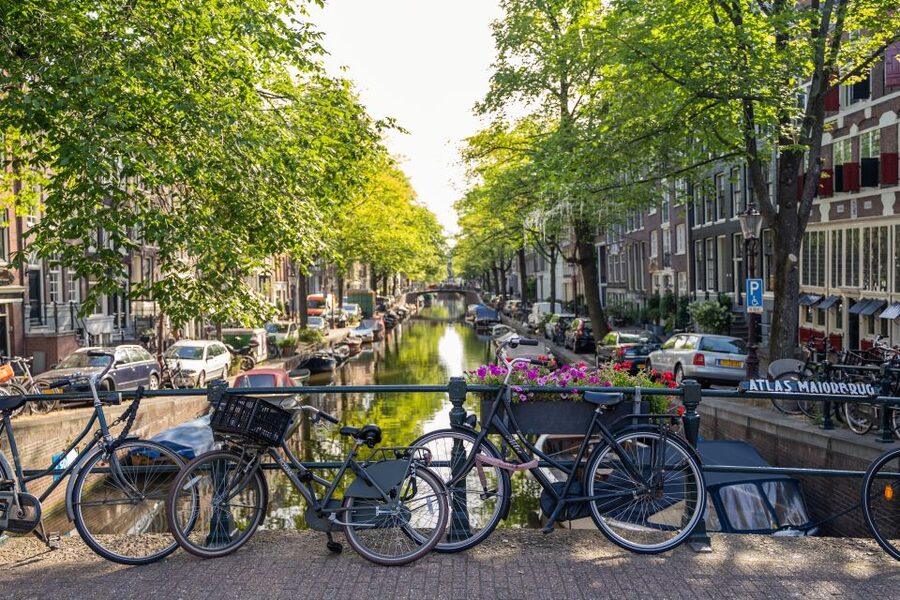
Amsterdam is famous for canals and looks, but the city only clicks when someone explains how it got that way. This tour is designed as a fast foundation, linking what you see in the center with the bigger story behind it, from trade and wealth to political choices and wartime tragedy.
I like the rhythm. In just about 2.5 hours, you move through a concentrated slice of the city and hear how a muddy riverside settlement grew into an influential trading hub during the Dutch Golden Age. Then the guide shifts gears to the harder, more complicated Amsterdam: prostitution, drug policies, and the darkest parts of the 20th century, including the Nazi occupation and the story of Anne Frank.
At $20 per person, you’re paying for something that’s hard to recreate on your own. You’re buying time, direction, and interpretation. You also get practical tips for what to do next, so the tour becomes a launch pad rather than a one-and-done checklist.
More Guided Walking Tours in Amsterdam


Meeting at Beursplein 1, then getting oriented fast
You start at Beursplein 1, right by the action in central Amsterdam. The guide waits in front of Cafe Bistro next to the bull figure, with a blue umbrella or a tag showing the Amsterdam Guides & Tours logo. That setup matters, especially if you arrive slightly early and don’t want to stand around guessing.
From there, the tour moves in a way that helps you understand the map. You’re not zigzagging randomly. You’re walking through a connected chain of squares, churches, and neighborhood edges that will make your later self-guided wandering feel more confident.
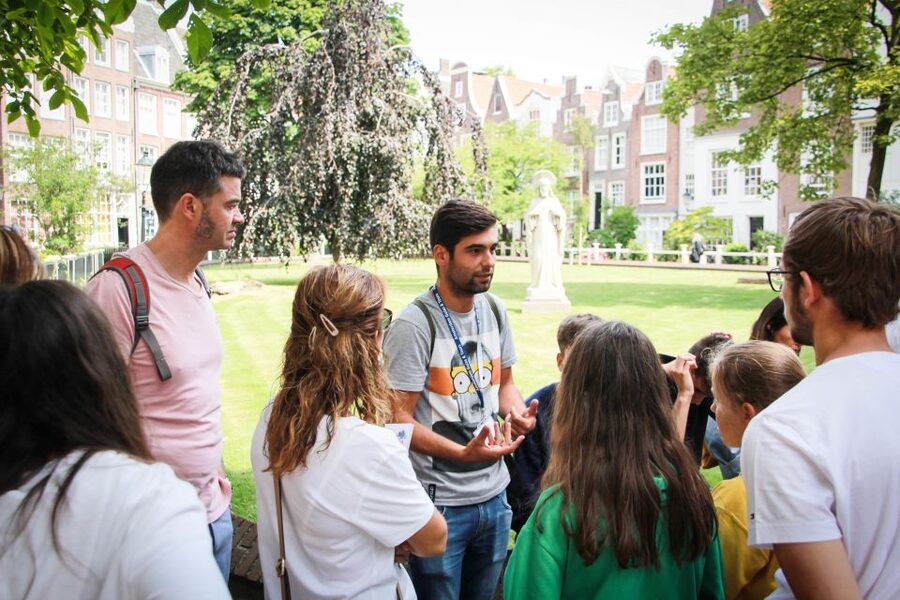
Small groups help too. This one is limited to 10 participants. When the group is small, guides can slow down when someone asks a question or when you want a bit more context, instead of reading everything from a loud, rushed microphone.
Beursplein and Dam Square: trade power, public space, and city theater
Beursplein is a strong kickoff point because it sits at the center of Amsterdam’s public life. You spend about 20 minutes here with guided talk, and it sets the tone: Amsterdam wasn’t just a pretty place, it was a trading system. The guide connects the city’s rise to the way people moved money, goods, and ideas through ports and canals.
Then you head toward Dam Square, where the focus is quicker, about 10 minutes of guided storytelling. Dam Square is one of those spaces you immediately recognize, but it can feel generic if you only treat it as a photo stop. On this tour, it’s framed as part of Amsterdam’s public identity, tied to power and the city’s ability to reinvent itself over centuries.
If you’ve never visited Amsterdam before, this combo is useful. It gives you a sense of what’s “downtown” in a historical sense, not just a modern sense.
Nieuwe Kerk and the Royal Palace: iconic facades with just enough time
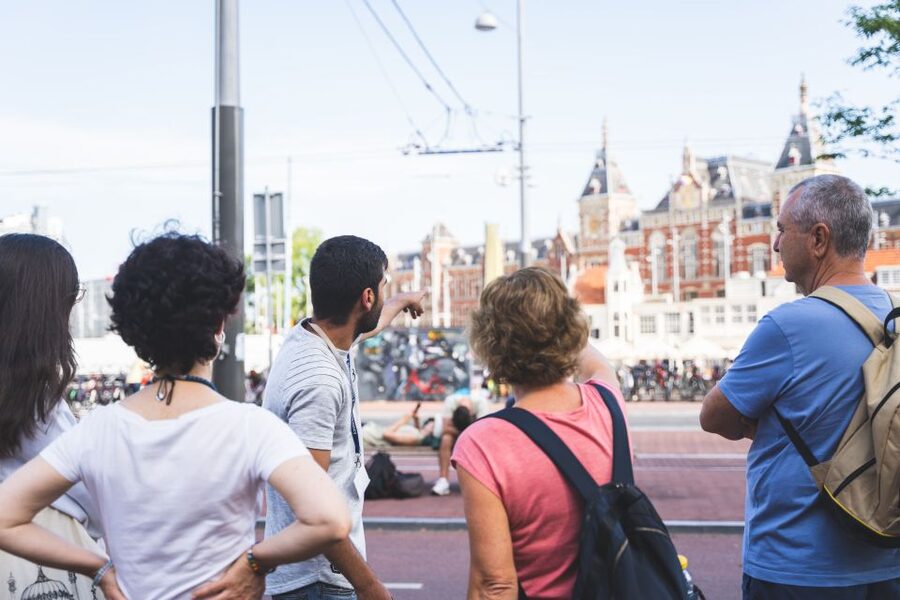
You get two classic landmarks with short photo stops: Nieuwe Kerk, Amsterdam (about 5 minutes) and then the Royal Palace (another 5 minutes). That brief structure is smart. You see the big exteriors, but you don’t lose the momentum that keeps a walking tour fun.
In a city like Amsterdam, the temptation is to stop forever. These quick breaks help you do the one thing your future self will thank you for: you remember where the major anchors are, so later you can plan museum time or canal walks without backtracking.
One practical plus is that the tour doesn’t depend on museum entrances. If you want a lightweight first visit, this approach keeps your schedule flexible for whatever you want to add later.
Zeedijk and Nieuwmarkt: street history that makes the center feel real

Then comes Zeedijk Street, about 10 minutes of guided talk. This kind of street segment is valuable because it turns the city from a set of isolated sights into a living layout. The guide uses these crossings to explain how different neighborhoods and communities shaped the city’s culture, not just its buildings.
Next is Nieuwmarkt Square (around 15 minutes guided), followed by the Jewish Cultural District (about 10 minutes guided). This is where Amsterdam’s layers start to feel more personal. You hear about the community history that helped shape the city, and you get context that makes later walks through the area feel connected instead of random.
If you care about the human side of history, this section tends to land well because it moves beyond monuments into lived experience. You also get a sense of how Amsterdam’s tolerance and controversies can sit side by side.
More gables counted on foot:
- Amsterdam: Anne Frank Guided Walking Tour in DE/EN/IT/ES
★ 4.9 · 3,107 reviews - Amsterdam: Anne Frank Guided Small Group Walking Tour
★ 4.8 · 2,722 reviews - Amsterdam: Cultural Highlights Walking Tour
★ 4.9 · 2,629 reviews - Amsterdam: Ganja Walking Tour
★ 4.2 · 2,127 reviews
Zuiderkerk and the Begijnhof pause: a slower Amsterdam moment

After more movement, the tour brings you to Zuiderkerk for a short photo stop (about 5 minutes). It’s a reminder that Amsterdam’s religious architecture is part of the city’s identity, even if you don’t step inside.
Then you get a longer, calmer stop at Begijnhof (about 20 minutes guided). This is one of the best moments for resetting your brain. It’s quieter, more enclosed, and it gives you a break from the wider streets.
I love this kind of stop because it changes the feeling of the day. After squares and streets, Begijnhof gives you a sense of what Amsterdam feels like when life slows down. It also reinforces the theme of the tour: Amsterdam is not one story. It’s a patchwork of values, eras, and contradictions.
Amsterdam Flower Market and Muntplein: color and landmarks you’ll recognize later
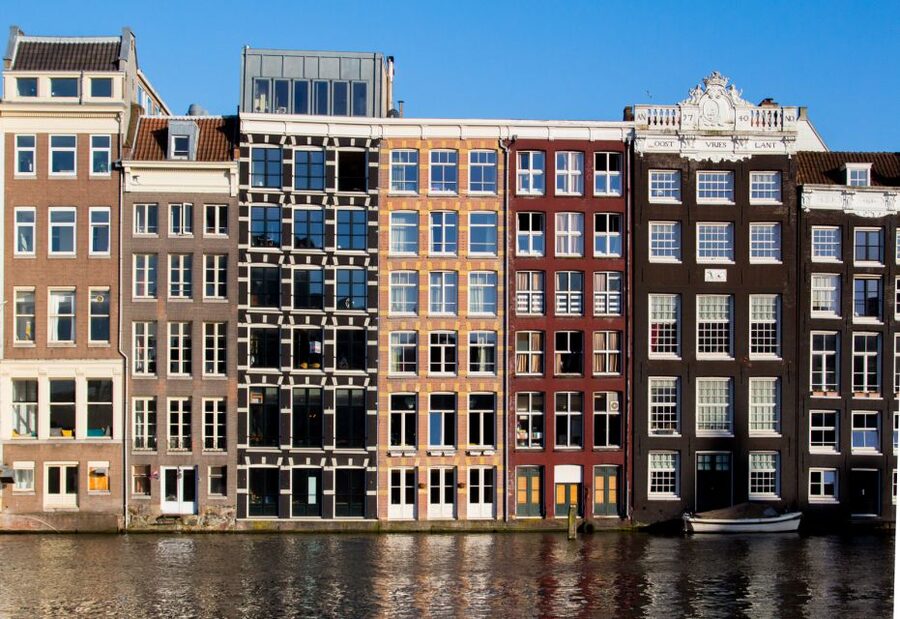
The tour includes a visit to the Amsterdam Flower Market for about 20 minutes. This is not just about buying souvenirs, although you might want to. It’s a chance to see a busy local space in a way that feels grounded in everyday city life.
Then you finish with Muntplein for a short photo stop (about 5 minutes). Muntplein is another central point that helps you mentally map the city when you later wander on your own.
By the time you return to Beursplein 1, you’ve walked a loop that gives you anchors you can orient around. That matters because Amsterdam is easy to get excited in, and easy to get lost in, if you do not know your bearings.
The real value: the stories behind Golden Age, Red Light District, and Anne Frank
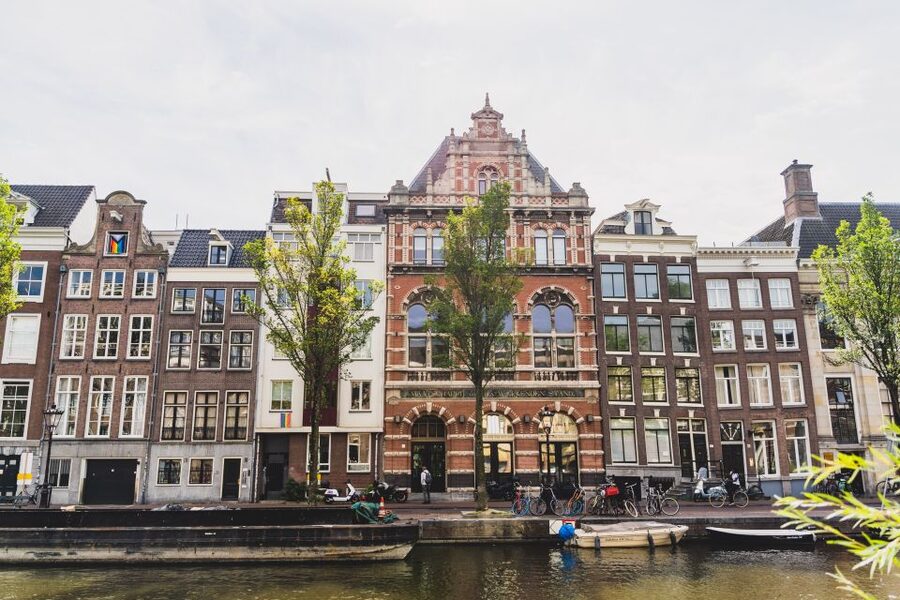
This tour isn’t only about architecture. The guide’s storytelling is the main reason people rate it highly.
You’ll hear how Amsterdam’s growth tied to the Golden Age, when the city became a trading hub that pulled merchants, artists, and adventurers from around the world. The guide doesn’t keep it abstract either. You get a sense of how money, movement, and opportunity shaped what the city looked like.
Then the tour shifts into the more uncomfortable chapters. You’ll learn about the evolution of the Red Light District and the city’s liberal approach to prostitution, plus how Dutch policy shaped attitudes around drugs. This is the kind of context that can prevent future confusion, because Amsterdam often gets described in one-liners, not in nuance.
Finally, you get the darker 20th-century side, including the Nazi occupation and the moving story of Anne Frank. That portion gives the whole city visit more weight. It makes it easier to understand why Amsterdam can be both tolerant and haunted, cheerful and serious, tourist-friendly and historically burdened.
Guides are praised for keeping these topics human and paced. People also mention styles like dry humor and foreshadowing, plus guides who take time for questions. That combination helps because Amsterdam history can feel heavy, and you want the tour to feel like a conversation, not a lecture.
Who this tour suits best, and what to expect on your feet
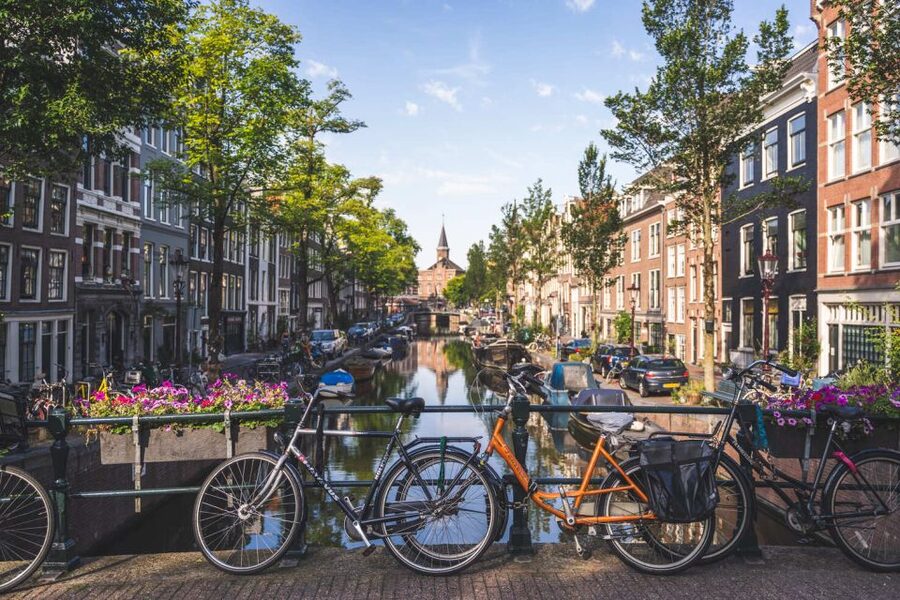
This is best for your first trip to Amsterdam, especially if you want a quick orientation plus story context. It’s also good if you plan to split your remaining time among canals, cafés, and museums. The tour sets you up to wander with confidence afterward, including options like the Jordaan area, where you can mix canal strolling with cafés and boutiques.
It does involve walking, and the day runs around 2.5 hours. In colder months, you’ll want to dress for wind, since Amsterdam weather can shift quickly. The group is small, limited to 10 participants, but you should still expect a shared pace.
Language is live and offered in Spanish and English. If you’re traveling with friends who prefer one of those languages, you can likely match the guide and keep the tour smooth.
Accessibility note is important. The tour is marked wheelchair accessible, yet it is also listed as not suitable for people with mobility impairments. If that applies to you, check directly before booking so you understand what the route will feel like in real conditions.
Pricing and value: why $20 can still feel like a bargain here
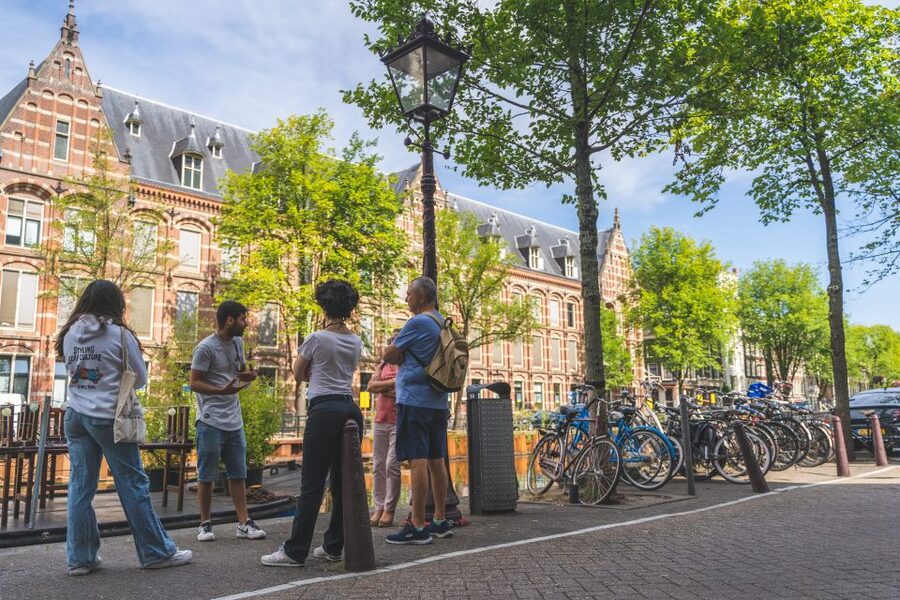
$20 for a 2.5-hour guided walk is not expensive for Amsterdam. What makes it feel like good value is the combination: you get an expert local guide, a route that hits major landmarks, and also the interpretation behind the places.
You also get practical tips to continue exploring like a local. That might mean where to eat, where to warm up, and what areas make sense next based on what you’re curious about. In the reviews, people specifically mention guides pointing out food options and even helping with small practical needs like finding rest breaks.
If you’re the type who hates wasting half a day figuring out where to go next, this tour saves time. Think of it as paying for a guide to teach you how to read Amsterdam quickly, so your other hours are better spent.
Should you book this Amsterdam Small-Group Walking Tour?
Book it if:
- You want an efficient first introduction to Amsterdam, with orientation plus story context
- You want more than photos, including Golden Age, Red Light District context, and Anne Frank history
- You appreciate a guide who answers questions and keeps the pace comfortable
Skip or reconsider if:
- You do not want to walk for about 2.5 hours
- Mobility constraints are a concern for you, and you need clarity beyond the mixed accessibility notes
Overall, this is a strong choice for first-time visitors who want the city explained, not just seen.
FAQ
How long is the Amsterdam small-group walking tour?
The tour is about 2.5 hours. The length is approximate.
Where does the tour start at Beursplein 1?
The guide meets at Beursplein 1, in front of Cafe Bistro next to the bull figure. Look for a blue umbrella or a tag with the Amsterdam Guides & Tours logo.
What languages is the tour offered in?
The live tour guide speaks Spanish and English.
How large is the group?
The small-group tour is limited to 10 participants.
Is the tour wheelchair accessible?
The activity is marked wheelchair accessible, but it is also listed as not suitable for people with mobility impairments. If this affects you, confirm route details before going.
What should I bring for the tour?
Wear comfortable shoes and bring drinks. The tour involves walking.
Latest to arrive along the quays of Amsterdam




Walking Tours, compared.
Amsterdam Anne Frank: Small-Group Walking Tour & Local Guide
Read our review →
Anne Frank’s Story – Guided Walking Tour through Amsterdam
Read our review →
Absolutely Amsterdam – the Essential Introductory Walking Tour
Read our review →
Anne Frank Guided Walking Tour in DE/EN/IT/ES
Read our review →

Anne Frank Walking Tour Amsterdam Including Jewish Cultural Quarter
Read our review →Browse the lists this tour appears in