
Reviewed · UTRECHT TOURS & EXPERIENCES
Utrecht Private Walking Tour With A Professional Guide
Utrecht rewards slow walking, and this private tour is the easiest way to do it. In about two hours, you’ll connect the dots from Roman-era Traiectum to modern reconstruction, while seeing major landmarks like the Dom Tower and the Oudegracht canal. It’s a simple plan, and the payoff is big because the route comes with context.
I especially like the private guide setup. You’re not stuck listening to a one-size-fits-all script, and guides like Willemijn and Giovanna have clearly earned repeat praise for making the story make sense without rushing you.
One thing to consider: it’s a tight 2-hour loop, so you won’t cover every museum stop or linger long in each church. Also, entrance fees are not included, so if you want lots of inside time, budget a bit extra.
In This Review
- Key Things to Know Before You Walk Utrecht’s History
- A 2-Hour Plan That Turns Utrecht Into a Story
- Price and Value for a Private Group Up to 15
- Meet at Neude, Then Get Oriented Fast
- The Timeline Walk: Roman to WWII, Stop by Stop
- Roman Utrecht and the Meaning of Traiectum
- Invasions, Carolingians, and Utrecht’s Religious Weight
- Independence Ends, Then the Republic and Trade Hub Role
- Industrial Age and the Hard Reality of WWII
- Dom Tower, Domkerk, and Other Big Church Stops
- Neude Square and the Street-Level Feel of Voorstraat
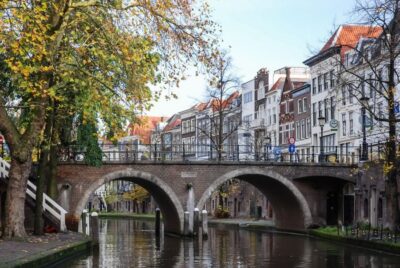
- Walking Along Oudegracht Canal for Real Utrecht Views
- Stadhuis van Utrecht and How Civic Power Shows Up in Stone
- Oudegracht, Janskerk, and the Joy of Not Rushing
- The Guides: Friendly, Funny, and Able to Explain Clearly
- Who This Utrecht Private Walking Tour Is Best For
- Should You Book This Tour?
- FAQ
- How long is the Utrecht private walking tour?
- Where does the tour start?
- Is this tour private or shared?
- What is included in the price?
- Does the tour include English?
- What landmarks will I see?
- Are entrance fees included for churches or other sites?
- Can service animals join the tour?
Key Things to Know Before You Walk Utrecht’s History
- Private pacing for your group, with a local guide who talks only to you
- Dom Tower and multiple churches, including Domkerk and other major religious sites
- Oudegracht canal and central squares like Neude, so you get both buildings and street-level atmosphere
- A guided timeline that runs from Roman Traiectum through WWII and liberation to today
- Group size up to 15, so families and small friend groups can make the per-person cost feel reasonable
A 2-Hour Plan That Turns Utrecht Into a Story
Utrecht can feel like the kind of city you can “mostly see” on your own in a day. This tour changes that. It gives you a timeline you can hold in your head, so the streets and churches stop being random photo backdrops and start behaving like clues.
I like the fact that the focus isn’t only medieval bragging rights. You move through Roman rule, later upheavals, the Carolingian period, the city’s role in northern Christianity and trade, and then the 20th-century chapter that Utrecht did not get to skip. That mix is a big reason people score this tour so highly.
And since it’s private, you can ask questions without waiting for a whole crowd to catch up. If you’re the type who likes to stop and look up details on stone and brick, this format fits your style.
More Guided Walking Tours in Utrecht
Price and Value for a Private Group Up to 15
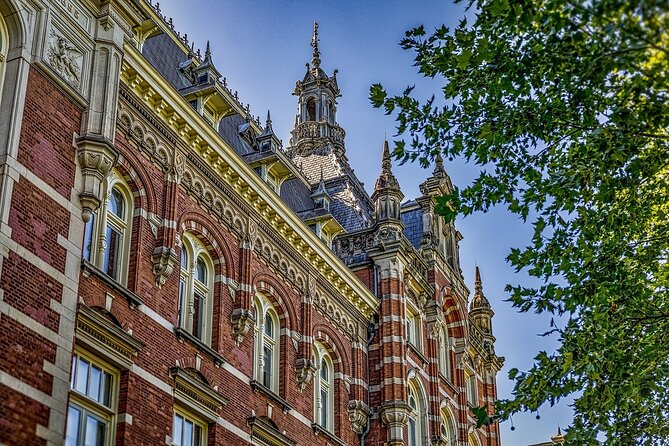
The price is $313 per group, for up to 15 people, and it runs about 2 hours. That matters because it’s not really “per person” pricing unless you’re booking solo or as a couple.
Here’s the practical math. If you’re a group of 2, you’ll feel the cost more sharply because you’re paying close to the full amount. If you’ve got 6 to 10 people, the cost per person becomes much easier to justify, especially since you get a truly private guide and not a shared audio plan.
Also, the tour is offered in English, and it includes a local guide who is with your group only. That’s part of the value, because the guide can tailor your walk in real time when something sparks curiosity.
One more small planning note: this experience gets booked about 129 days in advance on average. If you’re traveling in peak season or you want a specific time window, book early so you don’t end up squeezing your schedule.
Meet at Neude, Then Get Oriented Fast
You start at Neude, 3512 Utrecht, and the tour ends back at the meeting point. It’s set up so you can keep the rest of your day flexible, whether that means grabbing lunch nearby or continuing on foot to other spots.
The area is near public transportation, which is handy if you’re using Utrecht as a base between day trips. You’ll also get a confirmation at booking time, and you’ll receive a mobile ticket, which makes check-in smoother.
In a city like Utrecht, orientation is half the battle. The route links central landmarks, canal views, and church-heavy streets, so you finish knowing where things are, even if you’ve only visited for the first time.
The Timeline Walk: Roman to WWII, Stop by Stop
This is the part you’ll feel in your head after the tour. The guide builds a chronological thread, so each landmark lands with a meaning instead of just a name.
Roman Utrecht and the Meaning of Traiectum
You start by grounding the story with the Roman period and the origin of the city name, Traiectum. This is where Utrecht’s geography starts to matter. You’ll get a clearer sense of why the settlement grew where it did, and why later powers cared so much about this spot.
If you like history that connects to real places, this is a smart opening. It turns “Utrecht is old” into “here’s why it grew.”
More Private Tours in Utrecht
- Private Walking Tour in Utrecht
★ 4.5 · 14 reviews - Private Utrecht Food Walking Tour with 8 Tastings
★ 5.0 · 12 reviews - Private tour: Your Own Utrecht – mysteries and treasures
★ 5.0 · 9 reviews
Invasions, Carolingians, and Utrecht’s Religious Weight
Next come the Germanic invasions and the Carolingian Empire, which helps explain how power shifted over time. Then the story turns to why Utrecht mattered as a center of Christianity in the north.
This is a good moment to pay attention to church buildings you see right away. When the guide explains the timing and the influence, you start noticing how these sites reflect different eras, not just a single medieval look.
Independence Ends, Then the Republic and Trade Hub Role
You’ll move into the 16th-century end of independence, then the rise of the Republic of the Netherlands, and you’ll also hear how Utrecht functioned as a trade hub. For me, this section is valuable because it prevents the city from feeling like a theme park of cathedrals.
Utrecht was also a working city. The trade and governance context helps you understand why so much energy went into civic buildings and street networks, not only religious architecture.
Industrial Age and the Hard Reality of WWII
Then the tour reaches the industrial age and the 20th century, including the WWII blitz, Utrecht under Nazi domain, and the eventual liberation. This part matters because it adds honesty. It’s not just “old and charming,” it’s “old and scarred and rebuilt.”
You’ll also hear about modern reconstruction, which is where the walk connects past to present. Even if you’re not a big WWII reader, it helps to see how a place physically continues after disruption.
Dom Tower, Domkerk, and Other Big Church Stops
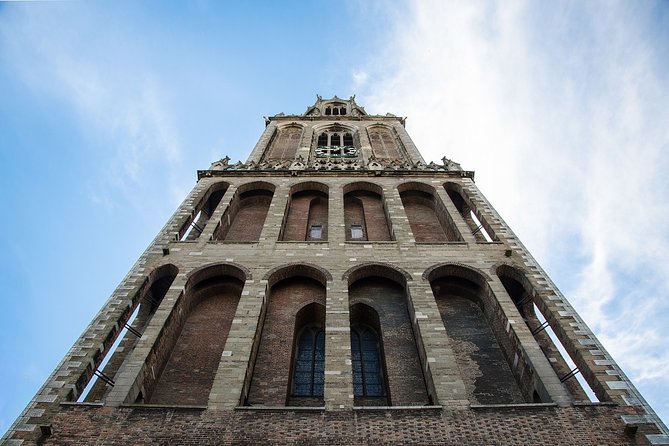
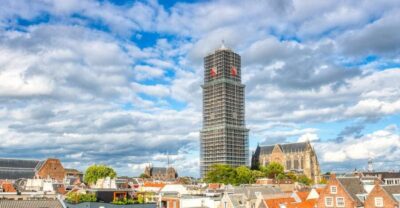
Utrecht’s skyline is heavily church-shaped, and this tour leans into that. You’ll see Dom Tower and Domkerk, plus other major religious landmarks like Sint-Catharinakathedraal and Sint-Willibrordkerk.
Here’s what you should do as you walk: don’t just stare at the tallest tower. Use the guide’s timeline to ask yourself what period you’re looking at, and why that building mattered politically or religiously.
A nice bonus is that some routes like this often include time inside key churches when possible, and one guide-led experience specifically highlighted time in a cathedral. Since entrance fees are not included, you might pay separately if you choose to go in. If you care about interiors, it’s worth asking your guide on the spot what’s available.
Neude Square and the Street-Level Feel of Voorstraat
After the big monuments, you get back to city rhythm. You’ll visit Neude Square, plus areas like Oudaen and Voorstraat.
This is where the tour becomes more than architecture. Neude Square is a public room for the city, and when the guide ties it back to Utrecht’s changing roles over time, the square feels less like a stop and more like a living stage.
For practical travelers, these street-level stops help you figure out where you’ll want to return later for coffee, shopping, or just hanging out between museums. You come away with a map in your mind.
Walking Along Oudegracht Canal for Real Utrecht Views
One of the most praised parts of this tour is the walk along Oudegracht. Canals in the Netherlands can look pretty similar until you understand what shaped them and why people lived and worked alongside them.
In this case, the canal stop works because it sits inside the historical story. Utrecht wasn’t only towers and churches. It was also movement, trade, and daily life tied to the water.
If you like easy photo moments, this is where you’ll naturally slow down. Even if you don’t take many pictures, you’ll feel the city’s human scale here.
Stadhuis van Utrecht and How Civic Power Shows Up in Stone
You’ll also see the Stadhuis van Utrecht. Civic buildings have a different voice than churches, and the guide’s historical framing helps you notice the difference.
This is a good stop to listen closely, because the reason Utrecht’s political role grew ties back to earlier sections about the city’s importance and trade. When your guide connects that timeline to the building in front of you, the architecture starts doing the storytelling for you.
Oudegracht, Janskerk, and the Joy of Not Rushing
Other listed sights include Janskerk, and between those stops you’ll naturally pass smaller corners and alleyways that make Utrecht feel like a place with personality, not just a checklist.
The tour stays on a workable pace. Multiple guide reviews mention a relaxed feel, with people appreciating how the guide matched the group’s speed and kept explanations clear. That’s exactly what I want in a first visit: enough structure to understand the city, without feeling like you’re being herded.
The Guides: Friendly, Funny, and Able to Explain Clearly
The reviews are consistent on one point: the guides know how to teach without sounding like a lecture. People praised guides for being friendly, easy to talk with, patient, and good at picking up on what the group wants to know.
Names that came up include Willemijn, Giovanna, Famke, and Willemijn again in separate positive notes. One review also highlighted a sense of humor, which is more important than it sounds. When the guide can lighten the tone, history feels more human.
If you’re nervous about tours that move too fast, this is another reason to consider booking. The private setup plus a guide who can pace the conversation is a winning combination.
Who This Utrecht Private Walking Tour Is Best For
This tour makes the most sense if you want a strong history framework in a short window. You’ll enjoy it if you like walking, church architecture, and stories that connect big events to specific places.
It’s also ideal for:
- Families who want a guided overview without museum complexity
- Small groups of friends who share interests and want to keep questions going
- First-time Utrecht visitors who want a clean orientation plus context
If you’re the kind of traveler who wants to stay planted in one museum for hours, you might find the 2-hour duration limiting. Think of this as your “turn on the lights” tour, not your entire Utrecht plan.
Should You Book This Tour?
I’d book it if you’re looking for an efficient, private way to understand Utrecht’s key eras while still enjoying real street life. The route covers Dom Tower, Domkerk, church sites like Sint-Catharinakathedraal, central squares such as Neude, and the canal walk along Oudegracht.
Also, the price becomes much more reasonable with multiple people, since it’s per group up to 15. If you’re a solo traveler or a couple, weigh whether you’d rather spend that budget on additional entry tickets and longer independent time, because you won’t have hours to linger.
For a city-first visit, this is the kind of guide-led overview that helps you come back later and notice more.
If you want, tell me how many people are in your group and what time of year you’re going, and I’ll help you judge whether this private format is the best value for your situation.
FAQ
How long is the Utrecht private walking tour?
It runs for about 2 hours.
Where does the tour start?
The meeting point is Neude, 3512 Utrecht, Netherlands.
Is this tour private or shared?
It’s private, meaning only your group participates.
What is included in the price?
A local guide with your group only, a private guided tour, and possible customization on the spot. Entrance fees are not included.
Does the tour include English?
Yes, it’s offered in English.
What landmarks will I see?
You’ll see Dom Tower, Domkerk, Sint-Catharinakathedraal, Oude Hortus, Sint-Willibrordkerk, Stadhuis van Utrecht, Oudegracht, Neude Square, Oudaen, Janskerk, and Voorstraat.
Are entrance fees included for churches or other sites?
No, entrance fees are not included.
Can service animals join the tour?
Yes, service animals are allowed.
Gables on Foot
- Utrecht Old Town: Medieval Monster Hunt & Walking Tour★ 4.0 · 62 reviews
- Utrecht Guided Highlights Walking Tour★ 5.0 · 22 reviews
- Cultural and Historical Audio Guided Walking Tour of Utrecht★ 2.9 · 18 reviews
- Utrecht: Highlights and Secrets with a Walking Tour★ 5.0 · 17 reviews
Latest to arrive along the quays of Utrecht

Utrecht Tours & Experiences, compared.
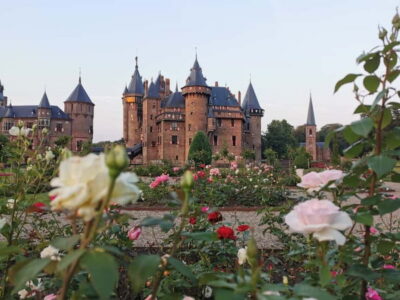
De Haar Castle Gardens and Park Only Entry Ticket
Read our review →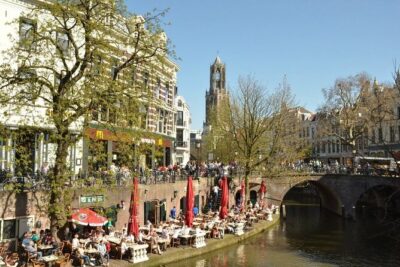
Utrecht 2-Hour Walking Tour | Discover The City With A Local
Read our review →
Discover Our Utrecht: Limited Group Size + Optional Extras
Read our review →Browse the lists this tour appears in