
Reviewed · WALKING TOURS
Small Group Walking Tour – Hello Amsterdam
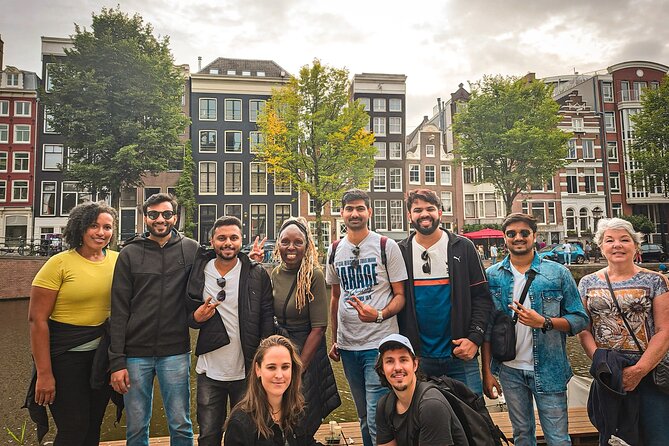
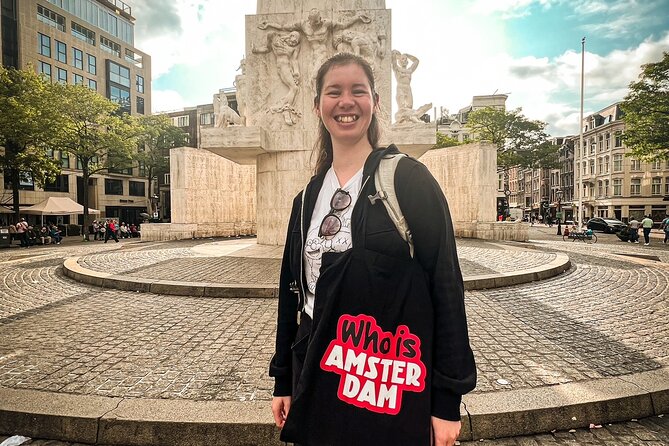
Two hours, and you know Amsterdam. This small-group walk from Dam Square to the canal belt uses quick games and local context so you can get your bearings without a stressy schedule.
I love how the tour packs major center-city landmarks into a tight route without heavy ticket costs, and I love the way guides like Dani, Jonas, and Adam turn streets, buildings, and symbols into stories you can remember. One possible drawback: there is a moderate walking pace, and the meeting point can feel busy, so it helps to study your tour details before you show up.
In This Review
- Key Highlights You’ll Actually Feel on This Walk
- A Tight Two Hours to Get Your Bearings in Amsterdam
- Route in Plain English, From National Monument to Homomonument
- Dam Square and Damstraat: The City’s Loud Center, Quickly Explained
- Beurs van Berlage: Stock Exchange Architecture with a Moral Center
- Damrak Near the Red Light District: Fun Facts, Not Awkwardness
- Haarlemmersluis: Canal Belt Gateway and the Bike Culture Story
- Singel’s Dancing Houses: Where the View Does Half the Teaching
- Torensluis: UNESCO Canal Belt, Plus the Hard Part of History
- Keizersgracht (Emperor’s Canal): Family Life and Dutch Identity
- Westerkerk Area, Anne Frank Neighborhood, and the Live-and-Let-Live Theme
- Price and Value: Why This Costs What It Costs
- Walking Pace and Who This Tour Fits Best
- Should You Book Hello Amsterdam?
- FAQ
- How long is the Hello Amsterdam walking tour?
- What does it cost?
- What language is the tour offered in?
- How big is the group?
- Where does the tour start and end?
- What is the meeting point address?
- Where is the tour end in relation to the Anne Frank House?
- Does the tour use a mobile ticket?
- Is the tour dependent on weather?
- Are service animals allowed?
Key Highlights You’ll Actually Feel on This Walk
- Dam Square to the canal belt in about two hours, perfect for first-time orientation
- Game-style learning at Damrak that keeps the facts easy to absorb
- Real Amsterdam themes like bikes, tolerance, and the city’s complicated past
- UNESCO canal belt views with photo-friendly stops along Singel and Keizersgracht
- Local guide recommendations for what to eat and where to shop after the tour
A Tight Two Hours to Get Your Bearings in Amsterdam
If Amsterdam feels like a maze of canals, bikes, and postcard views, this is one of the smarter ways to calm the chaos. The whole experience runs about 2 hours, and the structure is built around a simple idea: you learn the city by moving through it.
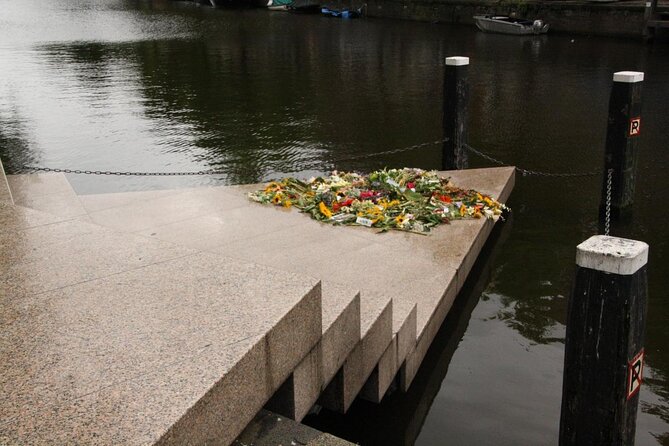
You start at the National Monument area at Dam Square and end at the Homomonument near Westermarkt, right by the Westerkerk and about a 2-minute walk from the Anne Frank House. That routing is practical. It helps you understand where key places sit relative to each other, not just where they are on a map.
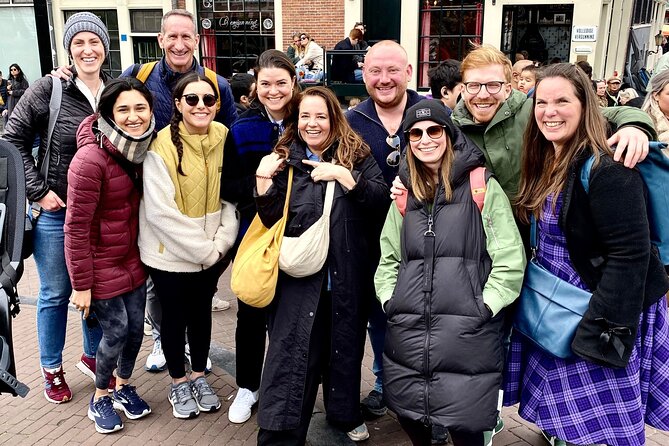
The “small group” size matters too. With a maximum of 15 people, you’re more likely to actually hear the guide, participate in the games, and get personal recommendations at the end rather than feeling like one face in a crowd.
One more detail I appreciate: the tour is offered in English, uses a mobile ticket, and runs at 10:00 am. For a first day in Amsterdam, that timing is useful because you can still plan museums, neighborhoods, and meals afterward without losing your whole day.
More Guided Walking Tours in Amsterdam


Route in Plain English, From National Monument to Homomonument
Here’s what the flow feels like: you’ll hop between the city’s big public spaces (Dam Square), its landmark architecture (like Beurs van Berlage), and the canal views that make Amsterdam look like it was designed for photos (Singel and Keizersgracht). Then you finish with a human-rights and diversity message near the Westerkerk area.
Stop by stop, the tour keeps each moment short:
- Dam Square and Damstraat, about 10 minutes
- Beurs van Berlage, about 15 minutes
- Damrak, about 10 minutes
- Haarlemmersluis, about 10 minutes
- Singel, about 10 minutes
- Torensluis, about 10 minutes
- Keizersgracht (Emperor’s Canal), about 10 minutes
- Westerkerk zone, about 10 minutes
So you get variety without getting stuck. If you’re the type who starts wandering on day one and ends up miles away with sore feet, this route gives you guardrails.
Dam Square and Damstraat: The City’s Loud Center, Quickly Explained
Your tour starts at Dam Square at the National Monument. This is the kind of place where Amsterdam announces itself. It’s central, it’s symbolic, and it’s one of those spots where you immediately notice the mix of crowds and landmarks.
From there, you move through Damstraat, a key artery that helps you understand how people actually flow through the city center. The guide frames the area with what you can see: the Royal Palace, the National Monument, and the New Church are all part of the visual story.
What I like here is that it’s not just “here’s a square.” The guide gives you the context you need so these landmarks stop feeling random later in the day. Even if you only catch parts of it at first, you leave with a mental anchor for the rest of the center.
Practical note: this is a busy meeting and start area. Wear shoes you don’t mind walking in, and if you’re trying to find your guide, keep your eyes on the meeting instructions tied to your tour ticket.
Beurs van Berlage: Stock Exchange Architecture with a Moral Center
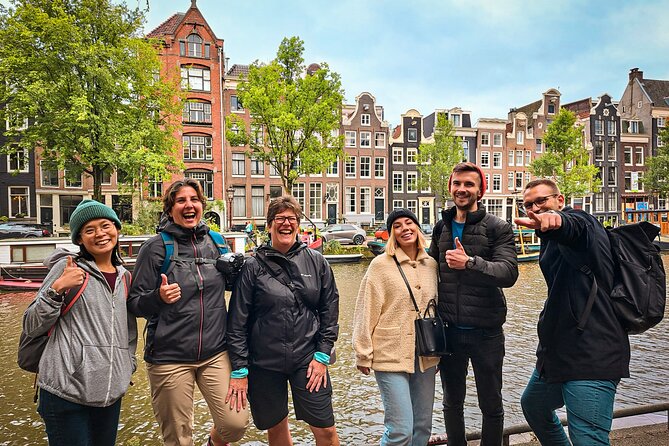
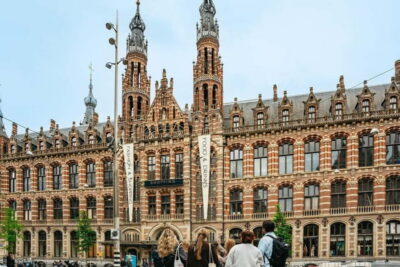
Next up is Beurs van Berlage. The focus is on Amsterdam’s commercial rise and the way the city built institutions that shaped finance and trade. This is where the tour shifts from public squares to architectural identity.
The building itself is a standout, but the more useful part is the story the guide attaches to it. You learn that Amsterdam helped pioneer the stock exchange, and the guide connects that to the city’s later golden era. It’s the kind of context that helps you understand why Amsterdam looked beyond canals and boats and built systems to move wealth, ideas, and people.
Also, this is your longest stop at about 15 minutes, which gives the guide a little extra time to make it click. For first-time visitors, that extra time is valuable because it prevents the tour from turning into only “look at this, move on.”
Damrak Near the Red Light District: Fun Facts, Not Awkwardness
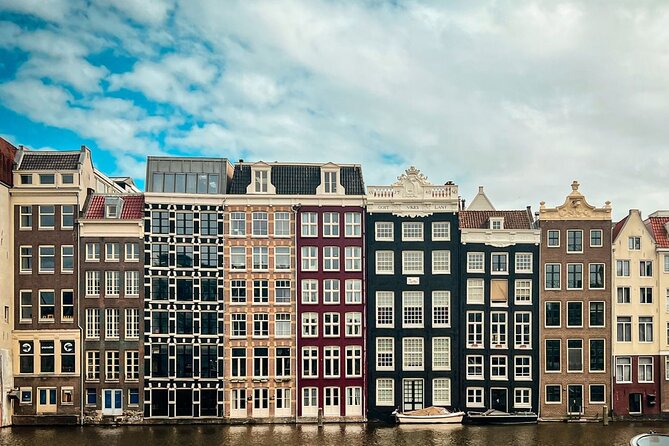
Damrak is close to the Red Light District, and the tour handles that proximity with a light touch. You’ll play a fast true-or-false game that tests knowledge about Dutch culture, including topics like tolerance and coffeeshops.
The best part here is the format. Games lower the pressure. You don’t need to know anything beforehand, and the questions naturally lead to explanations. It’s a good way to get comfortable with Amsterdam’s real cultural quirks without feeling like you’re on the spot.
You’ll also notice the street-level beauty near this area, including the dancing houses you can spot along the route. Even if you’ve seen photos online, you get better context in person because you can see how the buildings sit in the street and canals around them.
If you’re sensitive to adult-themed neighborhoods, this doesn’t turn into an uncomfortable tour. It’s more about how Amsterdam balances different kinds of expression and rules than about shock value.
More gables counted on foot:
- Amsterdam: Anne Frank Guided Walking Tour in DE/EN/IT/ES
★ 4.9 · 3,107 reviews - Amsterdam: Anne Frank Guided Small Group Walking Tour
★ 4.8 · 2,722 reviews - Amsterdam: Cultural Highlights Walking Tour
★ 4.9 · 2,629 reviews - Amsterdam: Ganja Walking Tour
★ 4.2 · 2,127 reviews
Haarlemmersluis: Canal Belt Gateway and the Bike Culture Story
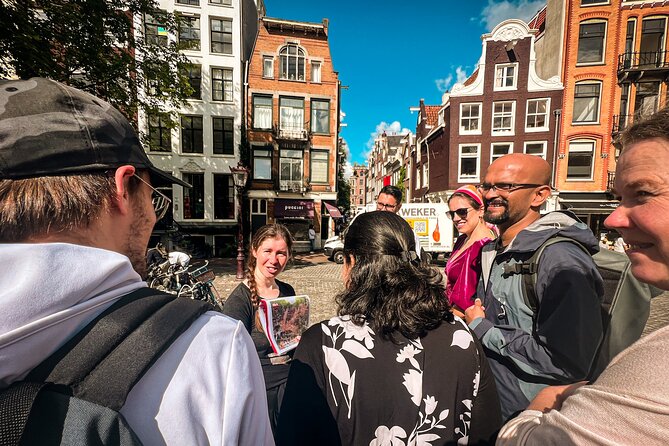
At Haarlemmersluis, you get a “gateway” view toward the famous canal belt. This stop is short at about 10 minutes, but it delivers a key theme: Amsterdam bike culture.
The guide frames it in a memorable way, emphasizing that there are more bikes than people. That one fact helps you understand why the city feels like it has its own traffic rhythm. It also explains why streets, bridges, and canal-adjacent paths are designed for bicycles first and everything else second.
If you plan to rent a bike later, this is a helpful stop. You’ll be more alert when you notice bike lanes, bike signals, and the way locals ride with confidence. Even if you never ride, it helps you read the city correctly.
Singel’s Dancing Houses: Where the View Does Half the Teaching
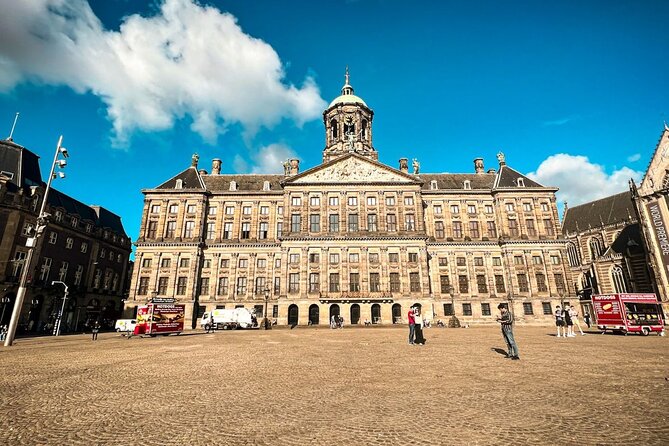
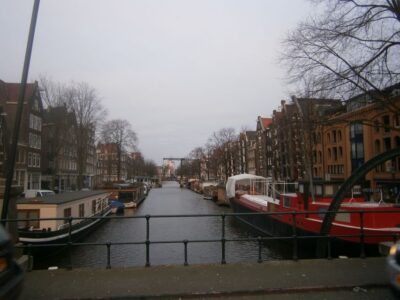
Singel is one of those canal walks where the environment does a lot of the work. You’ll stand alongside the water and get a clear look at the Dancing Houses.
These tilted canal-side homes can look whimsical in photos, but the guide adds the “why” so you understand them as architecture and history, not just curves for decoration. This stop is designed for photo time, but it also teaches you how to look: watch how the angle changes the street view and how the houses fit into the canal edge.
At about 10 minutes, it’s not a long photo session. Think of it as a short, guided moment that gives you a reason to take a few pictures and then move on.
If you want extra photos, bring a quick burst attitude. Get your favorite angle, then return attention to the guide so you don’t miss the story.
Torensluis: UNESCO Canal Belt, Plus the Hard Part of History
At Torensluis, the tour shifts to the UNESCO canal belt story: creation, secrets, and the unique landmarks that define the area.
This stop also brings in an important topic: Amsterdam’s shadowed past of slavery. The guide doesn’t treat this as an off-topic detour. Instead, it frames the beauty of the canals alongside the reality that wealth and power in the city were built through harm.
For me, this is where the tour feels responsible. It prevents the city from being reduced to only pretty water and perfect facades. You learn that Amsterdam’s legacy is complicated, and it deserves acknowledgment right next to the iconic scenes.
If you prefer “only light sightseeing,” this might be heavier than you want on day one. But if you want a more honest orientation, this is one of the strongest parts of the itinerary.
Keizersgracht (Emperor’s Canal): Family Life and Dutch Identity
Next is Keizersgracht, sometimes called Emperor’s Canal. This is another canal view stop at about 10 minutes, but the guide’s angle here is cultural rather than architectural.
You learn about Dutch family dynamics and why the guide connects this to the idea of Dutch kids being among the happiest in the world, including a reference to UNICEF 2017. The goal is not to turn Amsterdam into a personality quiz. It’s to help you understand what people mean when they talk about Dutch identity, balance, and daily life.
Then the tour ties it back to what you can do during your visit: you get advice on how to blend in and act with respect, based on that cultural lens.
In practice, this is useful. When you understand cultural context, your day feels less confusing. You also spot norms, like how people relate to public spaces, and how straightforward communication is valued.
Westerkerk Area, Anne Frank Neighborhood, and the Live-and-Let-Live Theme
The last stop is around the Westerkerk, where the tour connects the area with the Anne Frank House vicinity and the Gay Monument. The message centers on acceptance and the idea of live and let live.
The guide also references Geert Mak, pointing to the city’s “monumentality” as coming from people’s mentality, not just its buildings. That’s a big shift from the earlier stops. You move from architecture and institutions to values and how a city handles difference.
At the end, you’re also placed where it makes sense to continue: the finish is at the Homomonument near Westerchurch and very close to the Anne Frank area. So even if you don’t plan to visit those places immediately, you now know where you’re headed.
Price and Value: Why This Costs What It Costs
The price is $35.07 per person for about 2 hours. For Amsterdam, that’s not just “cheap walking.” It’s a structured orientation with multiple landmark stops, guide-led explanations, and at least one built-in participation component through the true-or-false game.
You also get:
- A small group size (max 15), which improves the quality of listening
- English instruction
- A mobile ticket experience
- Stops that are set up with free admission tickets (so you’re not hunting for paid entry fees during the walk)
If you’re doing Amsterdam on a tight schedule, value often comes from reducing decision fatigue. This tour helps you decide faster where to spend your next hours. It also gives you concrete local recommendations for where to eat and shop, based on what your guide thinks fits your pace and interests.
Walking Pace and Who This Tour Fits Best
Most people can participate, and the tour is designed as an easy city-center walk. That said, one review note points out a moderate amount of walking. So I’d treat it as active sightseeing, not a sit-down overview.
This works especially well if you:
- Are in Amsterdam for the first time and want a clean orientation
- Like learning through movement, not through museum rooms
- Prefer short stops with a guide rather than wandering alone
- Enjoy interactive bits, like the game at Damrak
It might be less ideal if you:
- Want a long, museum-style deep dive with extended indoor time
- Have limited walking tolerance and need frequent breaks
- Are only interested in one narrow topic, like architecture only or slavery history only
Should You Book Hello Amsterdam?
I’d book it if you want a smart first-day foundation and you like your history and culture delivered while you’re outside seeing the real streetscape. The route hits major center-city anchors, the guide-led tone stays engaging (including guide styles like Dani, Jonas, and Adam), and the interactive game format makes the facts stick.
If you’re already confident navigating Amsterdam and you prefer long, quiet self-guided time, you might decide you only need a map and a playlist. But for most first visits, this tour is a practical shortcut to understanding the city.
FAQ
How long is the Hello Amsterdam walking tour?
It runs for about 2 hours.
What does it cost?
The price is $35.07 per person.
What language is the tour offered in?
It is offered in English.
How big is the group?
The tour has a maximum size of 15 travelers.
Where does the tour start and end?
It starts at the National Monument Dam, 1012 JS Amsterdam and ends at the Homomonument, Westermarkt, 1016 DW Amsterdam.
What is the meeting point address?
The start meeting point is at National Monument Dam, 1012 JS Amsterdam, Netherlands.
Where is the tour end in relation to the Anne Frank House?
The tour ends in the city centre at the Homomonument, about a 2-minute walk from the Anne Frank House and right by the Westerchurch.
Does the tour use a mobile ticket?
Yes, it’s a mobile ticket experience.
Is the tour dependent on weather?
Yes, it requires good weather. If canceled due to poor weather, you’ll be offered a different date or a full refund.
Are service animals allowed?
Yes, service animals are allowed.
Latest to arrive along the quays of Amsterdam




Walking Tours, compared.
Amsterdam Anne Frank: Small-Group Walking Tour & Local Guide
Read our review →
Anne Frank’s Story – Guided Walking Tour through Amsterdam
Read our review →
Absolutely Amsterdam – the Essential Introductory Walking Tour
Read our review →
Anne Frank Guided Walking Tour in DE/EN/IT/ES
Read our review →

Anne Frank Walking Tour Amsterdam Including Jewish Cultural Quarter
Read our review →Browse the lists this tour appears in