
Reviewed · ROTTERDAM TOURS & EXPERIENCES
Rotterdam Tour with Cube House Admission
Rotterdam surprises you in just two hours. This tour pairs a private guide with major sights like the Markthal and cube houses, plus you get real reasons for Rotterdam’s modern style, starting with what happened during WWII. One note to keep in mind: at $22 per person, it’s a value-priced tour, but it may feel pricey if you want even more city detail than the stops allow.
You’ll cover a smart loop of historic anchors and stand-out new buildings. Town Hall, St. Laurens Church, and the first high-rise building in Europe set the stage, then you shift into modern Rotterdam with the Erasmus Bridge, the cube houses, and the Markthal. You also end up back in the shopping streets, where the city’s daily pace feels different than the postcard version.
The best part is how the guide handles the group. Based on the solid feedback, guides like Edwin keep a calm tempo, explain clearly, and make room for questions, so you don’t feel rushed while you’re spotting architecture like a pro.
In This Review
- Key highlights
- Meeting Rotterdam Central, under the meeting cloud
- Town Hall and St. Laurens Church: the old city part you will actually remember
- WWII bombings and the reason modern architecture dominates
- Spotting the first high-rise building in Europe on a real walking route
- Markthal and Erasmus Bridge: your 2-stop architecture punch
- Cube houses and Cube House Museum: more than a photo op
- Shopping streets and a local-style finish
- Private guide quality: what the best feedback really signals
- Price and time value at $22 for 2 hours
- Who should book this Rotterdam Cube House tour
- Should you book this tour, yes if you want clarity and cubes
- FAQ
- How long is the Rotterdam tour with Cube House Museum admission?
- What is the price per person?
- Where do I meet the guide in Rotterdam?
- What languages are available for the live guide?
- What’s included in the tour?
- What is not included?
- Can I cancel for a full refund?
- Is there a flexible payment option?
Key highlights
- Private, 2-hour walking tour with an expert live guide in English or German
- Markthal, cube houses, and Erasmus Bridge in one logical route
- Town Hall and St. Laurens Church to anchor the story in what came before
- WWII context that explains why modern architecture dominates here
- Cube House Museum admission so you do more than just look from the sidewalk
Meeting Rotterdam Central, under the meeting cloud
Your tour starts inside Rotterdam Central Station, under the meeting cloud, right in front of the Tourist Information center. That matters more than it sounds. If you arrive at the station already tired, you’ll still find the group quickly, and you won’t spend the first 15 minutes playing navigation games.
Plan to arrive a few minutes early and scan the area for the guide before you drift toward exits. Rotterdam Central is busy, so give yourself some buffer if you’re figuring out which platform entrance you used or where you came out of your tram or metro connection.
Also, remember this is a walking tour. You will cover multiple stops in about 2 hours, which is a comfortable pace for most people, but it’s not a sit-down, museum-only day. Wear shoes you’d trust for pavement and occasional curb cuts, and bring a light layer. Rotterdam weather can change fast, even when the schedule looks simple.
Also flying a pennant in Rotterdam



Town Hall and St. Laurens Church: the old city part you will actually remember
Once you’re lined up, your guide starts weaving Rotterdam’s story in a way that helps the buildings make sense. You’ll pass the Town Hall and St. Laurens Church early, so you’re not jumping straight into modern glass and cube-shaped houses.
Here’s why these stops are useful. When a city rebuilds, people often remember the dramatic parts. But the smaller landmarks help you understand the human scale of the place before the 20th-century upheaval. The Town Hall and St. Laurens Church give you a reference point, so when later you see the new forms, you can feel the contrast.
The key is what your guide does with your eyes. Instead of pointing and moving on, a good guide ties each building to the broader Rotterdam reality: how the city has lived, changed, and rebuilt. Expect a local-style explanation, not a script that sounds like it came from a brochure.
If you enjoy architecture as a language, this part is where it clicks. You start seeing details, proportions, and choices. And you start thinking like the guide, which makes the modern stops easier to read.
WWII bombings and the reason modern architecture dominates
Rotterdam’s modern look is not just a design choice. It’s a result of history, and your guide is planning the route to make that history practical.
During WWII, Rotterdam suffered major devastation from bombings, and that loss shaped what came next. Your tour connects those dots as you move from older landmarks toward the city’s newer, bolder construction. It’s the difference between memorizing a date and understanding why the street scene looks the way it does today.
This context also changes how you experience the modern buildings. Instead of seeing them as random, futuristic shapes, you’ll recognize them as answers to real constraints and needs: rebuilding fast, building efficiently, and making the city unmistakably Rotterdam again.
If you like explanations that help you interpret what you’re seeing, this is the part you’ll appreciate most. It turns a walk into an “I get it now” experience, especially when you reach the big showpieces like Markthal and the cube houses.
Spotting the first high-rise building in Europe on a real walking route
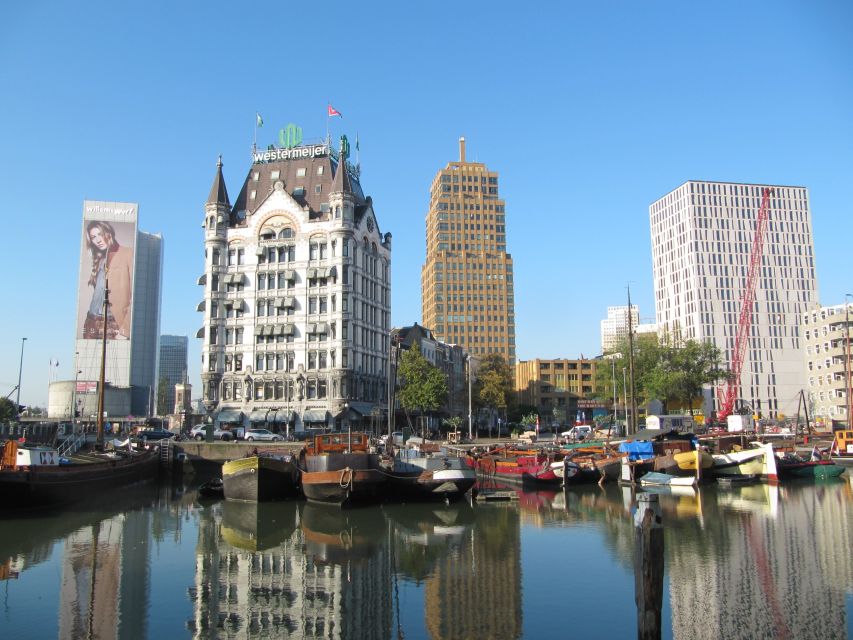
You’ll also pass the first high-rise building in Europe, a detail that sounds like trivia until you see it in context. Your guide brings this up as you walk, which is exactly how these facts should be delivered. In a city, scale is easier to understand when it’s in your line of sight.
Standing at the right spot, the building helps you grasp the shift from older urban forms to vertical ambition. And that sets you up for the later modern structures, where height and massing are part of the design message.
One practical tip: take a moment to look both at the facade details and at how the building sits within its street surroundings. When you do that, your brain stops treating it as a single landmark and starts reading it as a transition point.
This is also a good moment to ask questions. If you’re curious about how planners and architects think in a rebuild, you can steer the conversation before you hit the more famous modern icons.
Markthal and Erasmus Bridge: your 2-stop architecture punch
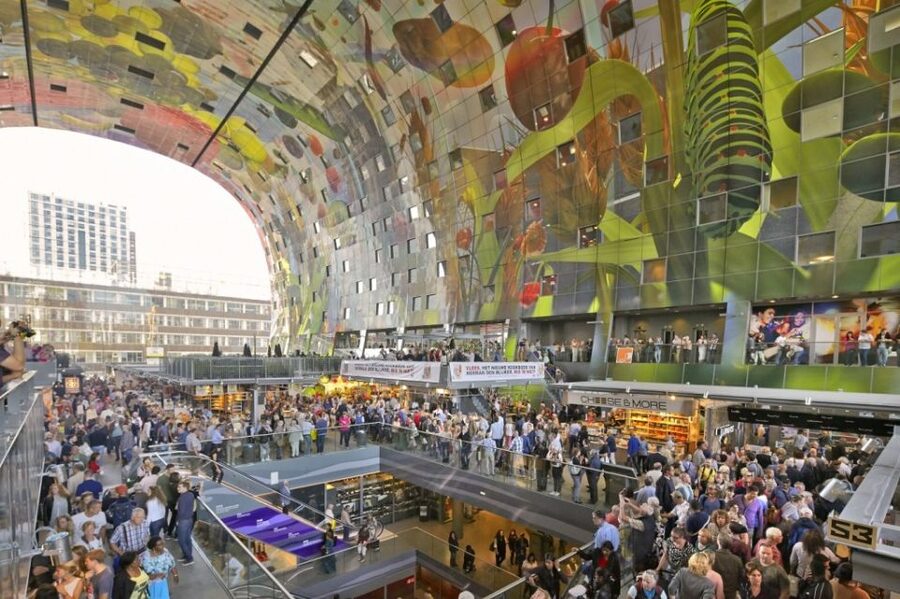
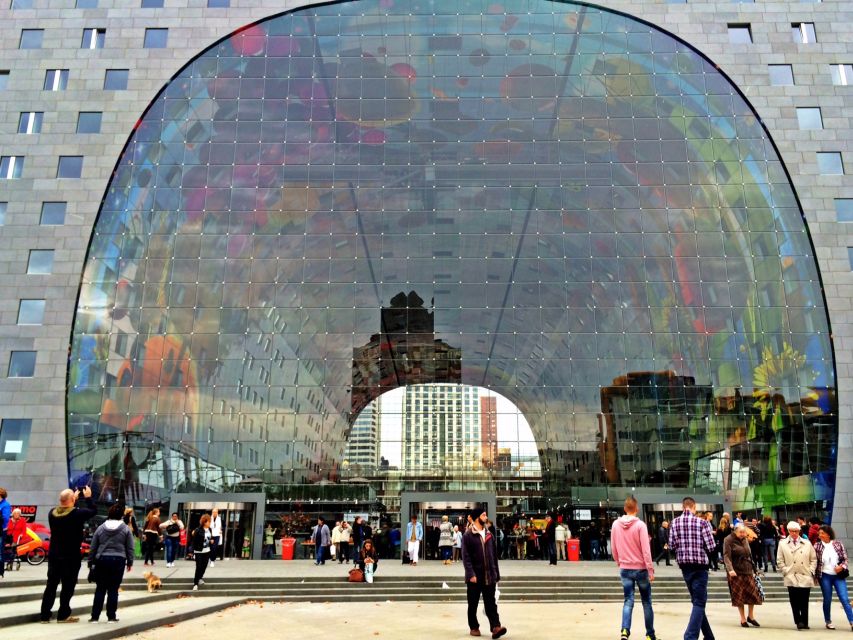
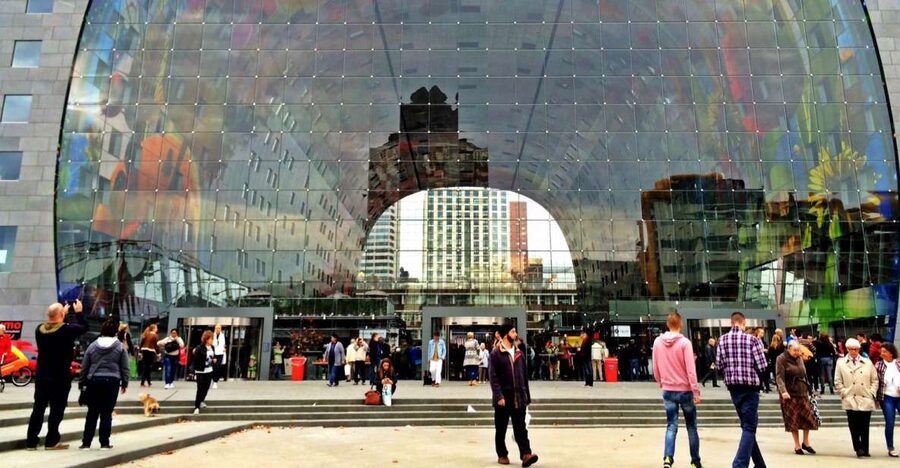
Then comes the modern architecture sequence, and it’s built to keep your attention. You’ll admire the imposing Markthal next, and later you’ll see the Erasmus Bridge.
Markthal is the kind of building you feel before you can fully describe it. The structure is prominent, and it signals modern Rotterdam immediately. On this tour, your guide ties it back to the city’s bigger pattern: rebuilding and reimagining, not just restoring.
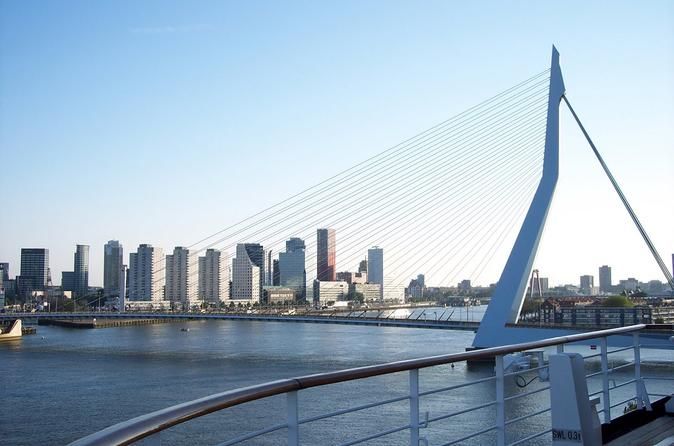
The Erasmus Bridge brings in another kind of wow factor. Bridges are storytelling devices in cities. They show how people move and how the urban layout connects communities. Even if you don’t memorize engineering details, you’ll likely remember the bridge because it frames views and gives you a sense of scale.
What I like about this pairing is rhythm. Markthal gives you architectural identity. Erasmus Bridge gives you perspective, literally. Together, they help you understand modern Rotterdam as more than isolated landmarks.
Take your time here. This is where you’ll want a few photos, but also where you’ll benefit from watching the city around you. The tour’s value is not only what you see, it’s how you start seeing.
Under the next bridge out of Rotterdam:
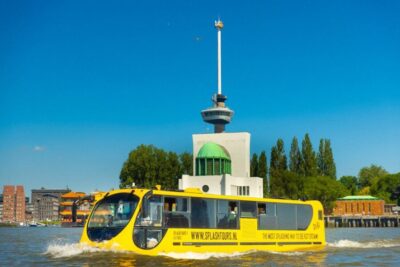
- Rotterdam: Pancake Cruise
★ 4.4 · 1,986 reviews - Rotterdam: Kinderdijk UNESCO World Heritage Entry Ticket
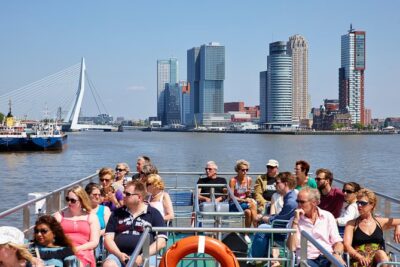
★ 4.6 · 1,477 reviews - Rotterdam: Harbor Cruise with Live Guide
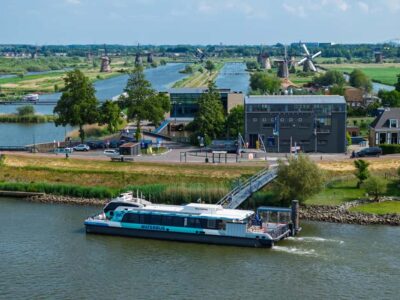
★ 4.0 · 1,270 reviews - Rotterdam: WaterShuttle Ticket to Kinderdijk
★ 4.6 · 731 reviews
Cube houses and Cube House Museum: more than a photo op
Cube houses are why many people sign up, but the best move is the museum admission. You won’t just admire the odd geometric shapes from the sidewalk. You’ll also step inside and see what that design means for everyday space.
Your tour includes admission to the Cube House Museum, so the stop has a real purpose. A cube-house exterior is visually strange, but your brain needs a second layer to understand how people live (or would live) in that configuration. The museum is that layer.
Here’s the value for you: you’ll connect the design to function. The cube concept can look like a gimmick if you only view it as sculpture. Inside a museum setting, it becomes a story about architecture experimenting with form.
When you’re there, look for how the layout changes as you move through rooms. The angles and edges force you to rethink what straight lines usually do. That’s the kind of lesson that sticks, and it makes the rest of Rotterdam’s modern architecture feel more legible afterward.
Also, keep asking questions during the museum visit if your guide has time. Based on feedback about guides like Edwin, your guide is the type who can adjust explanations to your interests, including when someone in the group is focused on architecture.
Shopping streets and a local-style finish
After the big architecture hits, your walk continues along the shopping streets. That part is underrated. Rotterdam can feel dramatic in photos, but daily life is what makes it real.
Your guide uses this section to help you experience modern Rotterdam as people actually move through it. It also gives you breathing room. You’ve been in history mode and architecture mode, and now you shift into urban rhythm, the stuff you’d notice if you lived here for a week.
This is a good place to ask follow-up questions. If you’ve been tracking the city’s rebuild story, you can ask what parts are oldest, what areas show the most modern influence, or how Rotterdam’s design choices affect daily life.
It’s also practical. If you need a restroom stop or want to grab a snack after the tour, you’re finishing in the kind of area where those options tend to be easy.
Just remember meals and drinks are not included. So plan to eat before or after, not during the tour.
Private guide quality: what the best feedback really signals
Most of the standout praise centers on the guide experience. Names like Edwin and the quick, positive shoutouts to Ed show up often, but the pattern is more than name recognition.
The best reviews highlight three things you should care about:
- A calm pace that lets you look at buildings instead of sprinting between them
- A lot of interesting details delivered in a way that’s easy to follow
- A guide who adjusts to your group, including when someone in the group cares deeply about architecture
That last point matters because a private tour is supposed to feel personal. If you’re traveling with an architect friend, a history buff, or someone who just wants the key facts, a good guide will keep the story readable for everyone.
If you’re the type who asks questions, this tour is set up for that. Your guide encourages questions as you go, and because it’s a walking format, your answers land right where they matter, at the specific building or sight.
So, while you’re paying for the route and the museum ticket, you’re also paying for someone who can turn “cool buildings” into “I understand why these choices were made.”
Price and time value at $22 for 2 hours
At $22 per person for a 2-hour private guided walking tour with Cube House Museum entry, this sits in a practical middle range for what you get.
Here’s how I’d judge the value if you’re deciding:
- You’re paying for a private guide rather than a larger group, which usually means more room for questions
- You get a 2-hour route that combines historic landmarks, modern architecture icons, and a museum stop
- You’re not just looking at cube houses from outside, you’re getting museum admission included
What you are not getting is meals. That’s normal for a city walking tour, but it means you should mentally budget for food separately.
The only drawback you may feel is the “two hours goes fast” factor. One comment suggests the tour can feel pricey and that more attraction detail could help. If that’s your style, you might want to bring extra curiosity, like planning which buildings you want to spend extra time on, so you can ask targeted questions when you’re near them.
Still, if you want a structured Rotterdam overview without spending your whole day planning, this price and length make sense.
Who should book this Rotterdam Cube House tour
This tour is a strong fit if you’re traveling with any of these goals:
- You want modern architecture plus a grounded historical explanation, not just photo stops
- You like tours where the guide can answer questions and keep a steady tempo
- You want a memorable cube house experience with museum admission included
- You’re short on time and want a walk that covers several major landmarks
It’s also a good option if you’re meeting Rotterdam for the first time. Town Hall and St. Laurens Church give you context, then the route pivots into the modern identity of the city. That combination helps you avoid the common problem of seeing only either “old city” or “new city” and ending up with an incomplete picture.
If you hate walking, or you want long museum time, you might feel squeezed. This is built as a 2-hour circuit, not a slow crawl with extended inside visits at every stop.
And if you’re traveling on a tight food budget, plan ahead since meals and drinks are not included.
Should you book this tour, yes if you want clarity and cubes
I think you should book this tour if your idea of a great day is: a focused walk, clear local storytelling, and cube houses you understand instead of just photograph. The best feedback centers on guides like Edwin delivering a calm, informative experience, and the included Cube House Museum ticket makes the cube stops worth your time.
Skip it or reconsider if you’re the kind of traveler who wants a long list of attractions covered at deep length, or if you’re sensitive to the idea of paying extra for a shorter format. One caution raised is that it can feel pricey if you crave more detail on the city beyond the featured stops.
If you decide to go, do two simple things. First, come in ready to walk for two hours with good shoes. Second, bring curiosity. Ask questions while you’re near Town Hall, St. Laurens Church, Markthal, and the cube houses. That’s where the tour turns from sightseeing into a real understanding of Rotterdam.
FAQ
How long is the Rotterdam tour with Cube House Museum admission?
The tour lasts 2 hours.
What is the price per person?
The price is $22 per person.
Where do I meet the guide in Rotterdam?
The meeting point is inside Rotterdam Central Station under the meeting cloud, in front of the Tourist Information center.
What languages are available for the live guide?
The live tour guide is available in English and German.
What’s included in the tour?
It includes a private tour guide, a 2-hour walking tour of Rotterdam, and Cube House Museum entrance.
What is not included?
Meals and drinks are not included.
Can I cancel for a full refund?
Yes, free cancellation is available up to 24 hours in advance for a full refund.
Is there a flexible payment option?
Yes, you can reserve now and pay later, which means you can book and pay nothing today.
Latest to arrive along the quays of Rotterdam



Rotterdam Tours & Experiences, compared.




Kinderdijk UNESCO World Heritage Entry Ticket
Read our review →
Browse the lists this tour appears in