
Reviewed · DUTCH WINDMILL & ZAANSE SCHANS TOURS
Rotterdam and Kinderdijk Daily Walking and Boat Tour
Rotterdam can feel like a time machine. This 7-hour small-group walk with Alex mixes modern, sometimes weird Dutch architecture with the practical story of polder windmills at Kinderdijk. I love the contrast between Rotterdam’s traditional bones and avant-garde design, and I love how Kinderdijk explains water management you can actually connect to today. One catch, you’ll likely pay extra at Kinderdijk for the main historical windmills and the pump-station area, since those entries are not included.
I also like the format: you’re not lost in a crowd of 30. Pickup is flexible at Rotterdam Centraal or Erasmusbrug, the group is capped at 4, and Alex brings the facts in a way that makes the city feel understandable instead of just scenic. The tour is in English, with other languages available (Czech, Slovak, Serbian, Croatian, Serbo-Croatian, Bosnian).
Finally, weather matters here. Rotterdam and Kinderdijk can be windy and rainy, so bring a real rain layer, not just a light umbrella, and plan for damp walking.
In This Review
- Key points worth knowing before you go
- Rotterdam Central to the Old Harbor, walking a city that rebuilt itself
- Europe’s “modern weird” architecture, plus the water-and-city logic behind it
- Churches, skyscraper stories, memorials, and bridges that do engineering work
- The lowest point coffee stop, and other surprises that make Rotterdam feel like a real place
- Heading to Kinderdijk by boat, 45 minutes that change the pace
- Kinderdijk polder windmills: how the guide connects 18th-century water control to today
- The food and drinks at Kinderdijk keep the day social
- Know what is not included at Kinderdijk, and plan your add-on
- Pacing over 7 hours: enough walking, enough breaks, built for small groups
- Price and value: $553 per group, what you get for it
- Should you book this Rotterdam and Kinderdijk walking plus boat tour?
- FAQ
- How long is the Rotterdam and Kinderdijk daily walking and boat tour?
- Where can we be picked up and dropped off?
- What is the group size and language options?
- Is the boat ride included, and how long is it?
- What is included in the price?
- What Kinderdijk tickets or entrances are not included?
- Is it possible to cancel for a refund?
Key points worth knowing before you go
- Small-group pace (up to 4) means you can ask questions and get tighter focus from Alex
- Rotterdam architecture tour with real landmarks goes from Rotterdam Centraal to bridges, churches, and the Markthal
- Coffee stop at the lowest Dutch point below sea level (-7.67 m) adds a memorable, practical detail
- Kinderdijk polder windmills are the point with 19 authentic windmills from the early 1700s
- Extra Kinderdijk tickets are likely for the two specific windmills, the pump station Wisboomgemaal, and part of the boat tour
Rotterdam Central to the Old Harbor, walking a city that rebuilt itself
Your day starts with a smart setup: pickup at Rotterdam Centraal or Erasmusbrug. From there, the focus is on moving through the city in a way that makes sense, not just ticking off photos. You’ll be walking and seeing how Rotterdam’s story shows up in brick, steel, and bridges.
Rotterdam Centraal is your first big visual hit. It’s a modern architectural showpiece, and it also functions like a serious transportation hub, serving about 170,000 passengers daily. Standing near it helps you understand why Rotterdam built for motion and connections, not just monuments.
Then you shift into older Rotterdam details that survived the chaos. The Schieland House dates to the 17th century and once served as the headquarters for Waterschap Schieland, the water-policy and management institution for this part of South Holland. You also learn it was temporary accommodation for Napoleon Bonaparte, which adds a surprising Europe-wide layer to a city known for shipping and rebuilding.
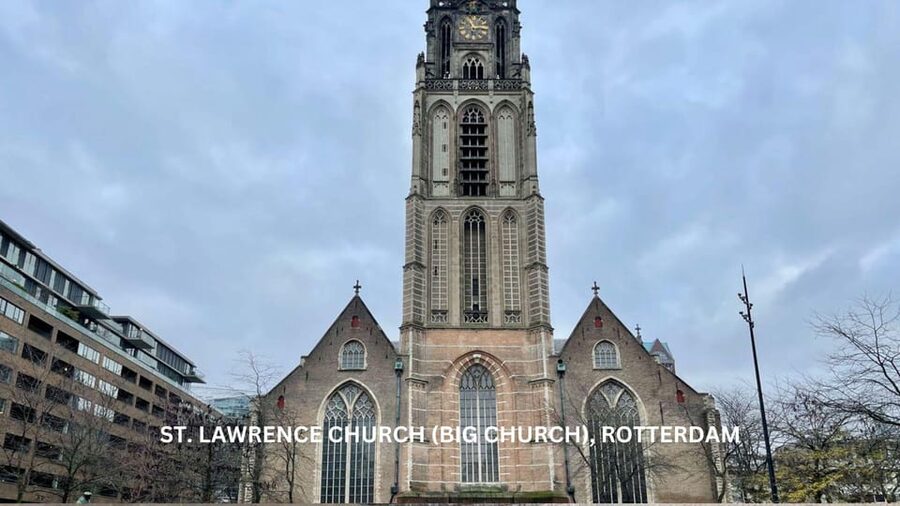
The tour also visits St. Lawrence Church (Big Church), a late Gothic landmark from 1525. What makes it special is not just age, it’s survival. It was one of the rare buildings that endured the bombing of May 15, 1940, so it becomes a physical reminder of what Rotterdam lost and kept.
More Boat Trips in Rotterdam


Europe’s “modern weird” architecture, plus the water-and-city logic behind it
Rotterdam’s reputation for futuristic design is real, but this route doesn’t treat it like random novelty. You learn to read the city as a system that keeps working, even when the aesthetics change.
The Erasmus Monument honors Desiderius Erasmus of Rotterdam, a major 16th-century philosopher and scholar. This stop matters because Rotterdam’s public identity leans hard into learning and influence, and Erasmus is one of the city’s anchor names. You’ll also see how many institutions and public buildings carry Rotterdam’s association with him.
Next comes the Markthal, a modern market hall shaped like a horseshoe on one of Rotterdam’s biggest squares. It combines a closed market with living space above, and people often call it the Sistine Chapel of Rotterdam for the famous interior ceiling artwork. Even if you’re not a museum person, it helps you understand how Rotterdam uses vertical space and daily life in the same design.
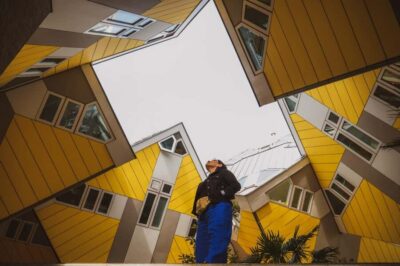
Then you get the Kijk-Kubus (Cube Houses). This is one of those Rotterdam stops that’s hard to capture with a single photo because it’s a full concept, tree-like structures supporting cube apartment tops. The practical detail I found most useful is that because of the shape, only about 3 out of 4 of the interior space is truly usable for normal living. In other words, it’s not just a sculpture, it’s architecture with tradeoffs.
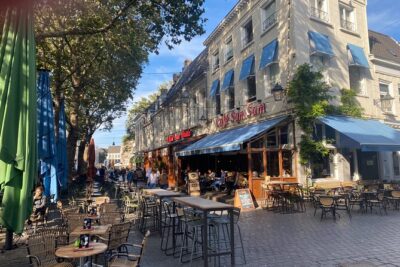
The tour also takes you through the waterfront identity of the city. Stops like the Old Harbor show Rotterdam as a place where residents actually hang out, with coffee bars, restaurants, taverns, and nightlife nearby. And the maritime-side details matter too, including the Leuwhaven Maritime Museum, an open-air collection with steamships, cargo-handling equipment, ship engines, and other maritime objects.
Churches, skyscraper stories, memorials, and bridges that do engineering work
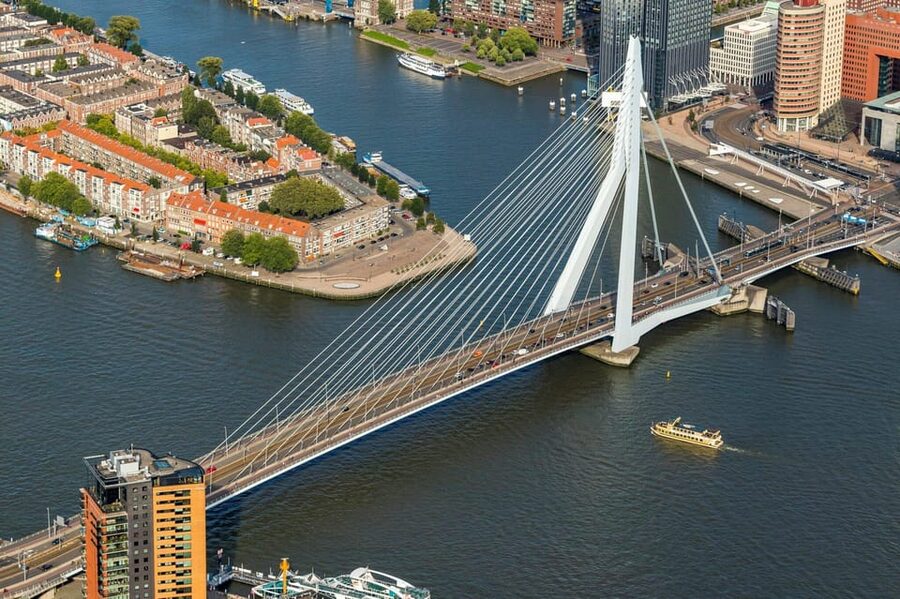
Rotterdam’s skyline is full of structures with jobs, not just views. As you walk, you’ll notice the city keeps blending daily movement with bold design.
For example, the De Witt House (White House) once held the title of Europe’s highest skyscraper at the end of the 19th century, at 42 meters. Even if you’ve seen lots of towers elsewhere, this one helps you see Rotterdam’s ambition has been long-running, not a recent trend.
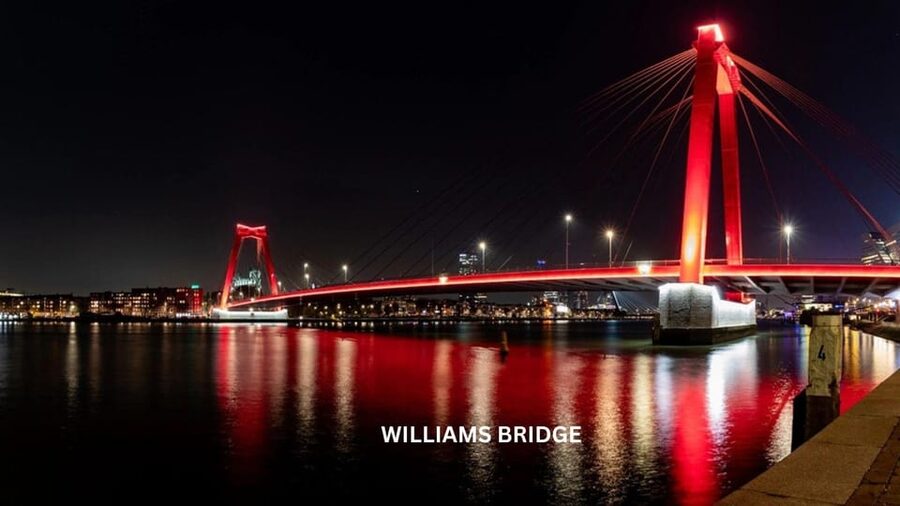
You also visit the Willemsbrug, often called the Red Bridge, dedicated to Willem III. It’s a practical connector between central and northern districts, and it works visually as a color signal for where you are in the city.
The tour includes De Hef (the Elevator), a huge steel construction that previously served as a train bridge across the Nieuwe Maas, rotating and lifting as needed. That is Rotterdam engineering in plain clothes. You’re seeing how the city deals with water crossings while keeping rail moving.
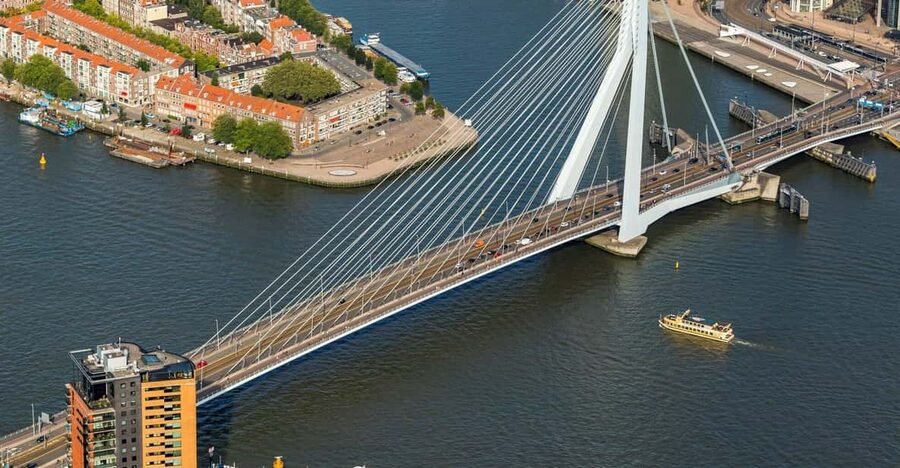
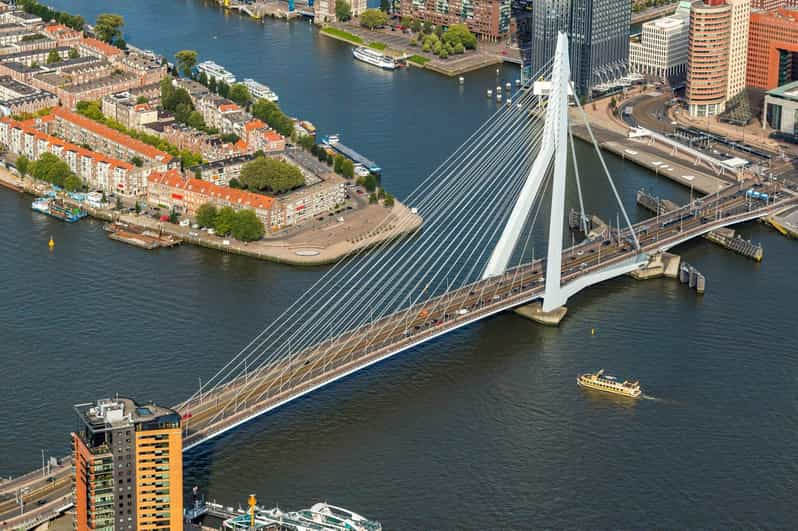
There’s also the Erasmus Bridge, one of Rotterdam’s most recognizable symbols. It’s sometimes called the Swan or the Harp, and it reaches 139 meters with a massive opening section of 80 meters. Even if you’re not an infrastructure geek, this stop changes your perspective: the bridge is a city landmark, but it’s also functional machinery.
Finally, the day includes a memorial note with De Boeg, a war memorial for 3,500 people on Dutch merchant ships who died in World War II. It’s the kind of moment that grounds the day. Rotterdam’s modern face is impressive, but this reminds you why the city rebuilt so determinedly.
The lowest point coffee stop, and other surprises that make Rotterdam feel like a real place
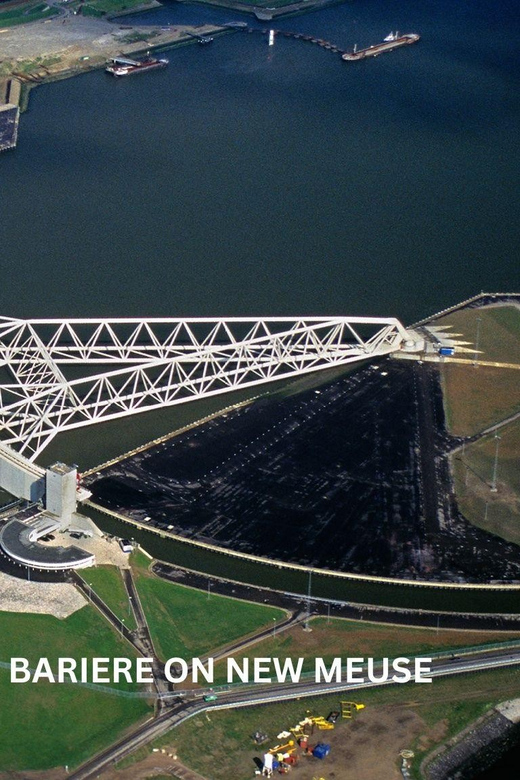
A highlight you should mentally plan for is the coffee stop at the lowest Dutch point below sea level (-7.67 m). This isn’t a random trivia moment. It’s Rotterdam’s water story in a single practical stop: the city exists under sea-level pressure, so understanding that reality is part of understanding why windmills and polders matter later.
You’ll also pass through an area with a different-style Red Light District than what many people associate with Amsterdam. The point here isn’t moralizing or sensationalizing. It’s that Rotterdam’s city layout and culture show up in its neighborhoods, and this tour does not pretend those areas do not exist.
And yes, Rotterdam is often called the greenest city in the Netherlands. That theme works well on this itinerary because the next chapter is Kinderdijk, where “green” is not just parks, it’s working land, water control, and preserved wetlands for wildlife and calm.
Heading to Kinderdijk by boat, 45 minutes that change the pace
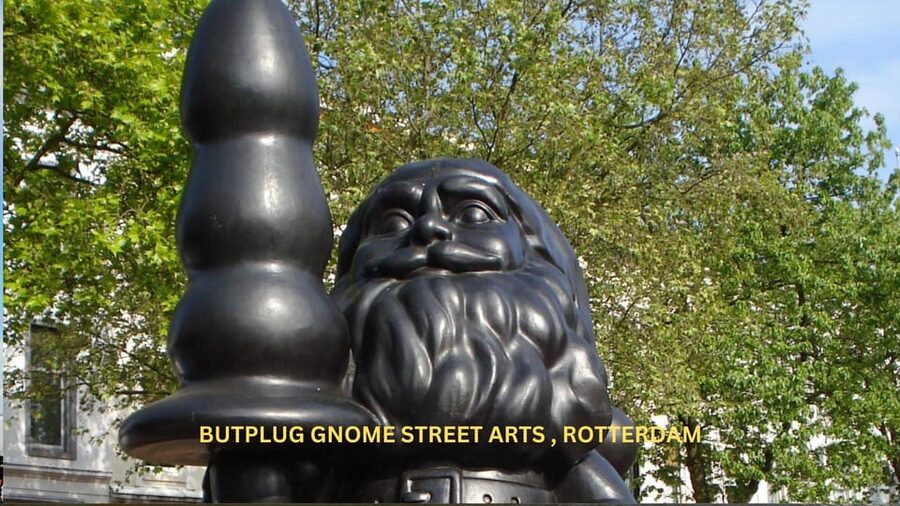
Once Rotterdam’s streets are behind you, the day shifts tone. You take boat transport from Rotterdam to Kinderdijk, about 45 minutes. This is a smart pacing tool. Walking through a big city can blur details fast. On the water, the spacing clears your head and you start spotting the shapes of polder life.
On the boat ride, you get the best kind of travel transition: you’re literally moving from dense port energy to controlled countryside calm. Kinderdijk is about 15 kilometers from the biggest European port, so the contrast stays sharp even after you board.
And because the area is known for its birdlife and quieter nature, the boat gives you a chance to slow down a bit. You’re not rushing to “see everything.” You’re arriving with your attention tuned to what’s next.
More Guided Walking Tours in Rotterdam
- Rotterdam: Architectural Highlights Guided Walking Tour
★ 4.8 · 215 reviews - Rotterdam: Highlights, Gems, Architecture & History Walk
★ 5.0 · 191 reviews - Rotterdam Walk: Hilights, Gems, Architecture & WWII | 2 or 3hrs
★ 5.0 · 149 reviews - Rotterdam 2-Hour Walking Tour | Discover The City With A Local
★ 4.5 · 111 reviews
Kinderdijk polder windmills: how the guide connects 18th-century water control to today
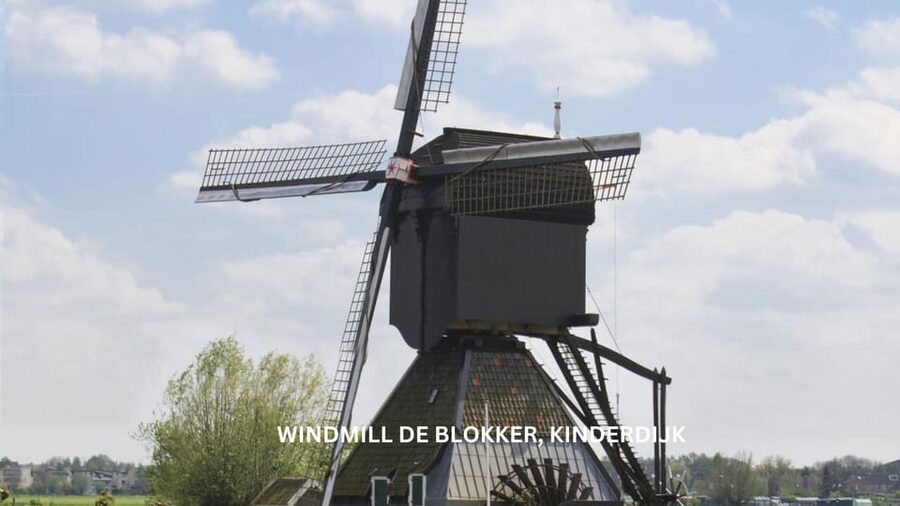
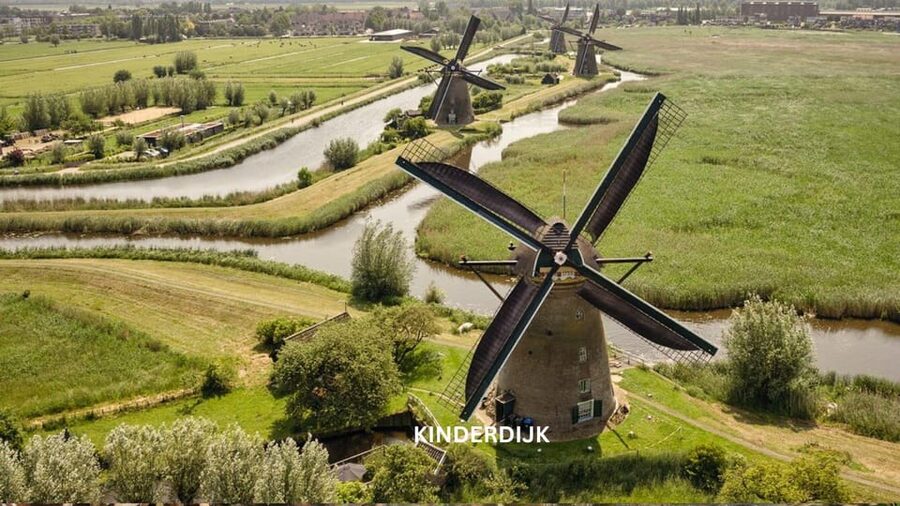
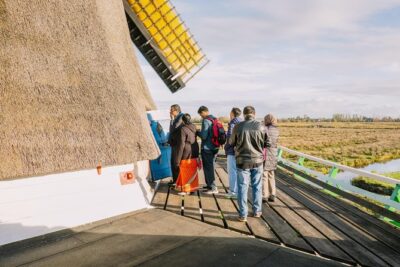
Kinderdijk is the heart of the experience. The area features 19 authentic polder windmills from the first half of the 18th century. The key concept the tour stresses is that windmills here are not decorative. They are part of a coordinated system, built to keep land livable by managing water in low areas.
What I like most in this part is how the explanation is framed. You get facts about windmills and polders, including how they were proposed, created, and maintained over time. That wording might sound a bit formal, but the meaning is clear: water control needs long-term effort, not one-time engineering.
You’ll also enjoy the on-site atmosphere. Kinderdijk is described as a green oasis of peace and calm, and that matches what you feel when you’re walking among windmills spaced across the water network. You’re surrounded by a working landscape rather than a theme park.
The food and drinks at Kinderdijk keep the day social
This stop is not all photos and facts. In addition to sightseeing and guided walking, you’ll have beer, coffee, tea, street food, and food tasting. That matters because Kinderdijk can feel like it’s only about “looking at structures.” The food component makes it easier to relax, chat, and stay engaged without turning the day into a lecture marathon.
Know what is not included at Kinderdijk, and plan your add-on
One of the most practical things to check before you go: the main Kinderdijk facility entries are not included. Your ticket is likely to include additional costs for:
- entrance to two historical windmills, windmill number 2 and De Blokker
- about half of a boat tour along the windmills
- entrance to the facility former pump station Wisboomgemaal
The tour suggests you can book those tickets online in advance or buy at the ticket desk at Kinderdijk. Prices given are adult €18 and kids 4 to 12 years €6.5.
If you’re the type who likes to go inside technical sites and see how things work up close, budgeting for those extras will make the day feel complete. If you’re fine with outside views and a guided overview, you may choose a lighter spend.
Pacing over 7 hours: enough walking, enough breaks, built for small groups
A 7-hour tour is a real day. You’ll do city walking plus a boat ride plus more walking at Kinderdijk. That’s why the small group of up to 4 matters. You’re less likely to get stranded at the back of a big group, and Alex can keep track of who needs slower steps or a quick regroup.
Comfort-wise, wear shoes you trust on city sidewalks and wherever Kinderdijk paths take you. Also plan for wind. The Netherlands can swing from mild to chilly fast, and wet weather can feel sharper when there’s wind.
Bring a rain coat even if the sky looks fine. The tour info calls out that umbrellas often do not protect you efficiently in windy conditions.
Price and value: $553 per group, what you get for it
The price is $553 per group up to 4, so the math depends on how many people you’re traveling with. When the group is full, it’s easier to justify because you’re splitting the fixed tour cost among four people.
Here’s where the value shows up clearly, based on what’s included:
- tour guide services (Alex)
- drink and local snacks during or after the tour
- entrance fees to the Cube Houses
- transportation costs (round trip boat tickets) from Rotterdam to Kinderdijk, up to 4 people
Then account for what’s not included:
- the added Kinderdijk facility tickets for the specific windmills, the pump station, and part of the boat tour
So, the best way to think about the price is this: you’re paying for a guided, structured day with transportation and a key indoor entry. You may add spending at Kinderdijk depending on how hands-on you want to be.
Also, if you want to change the plan, customization is mentioned as possible. On request, the tour may be tailored by participant amount, and the departure city could potentially be Amsterdam or The Hague, but that needs discussion.
Should you book this Rotterdam and Kinderdijk walking plus boat tour?
Book it if you want a day that connects big-city architecture with practical Dutch engineering. You’ll enjoy it most if you like guides who explain how cities work, not just what they look like. With Alex, the emphasis is on clarity, details, and making the Kinderdijk story relevant, not distant.
You might skip or adjust if you’re strict about cost and hate add-on tickets. Since the key Kinderdijk interiors and the pump station are not included, you’ll either budget for that or accept more outside viewing.
If you want a strong fit, this tour suits couples, small families, or friends who prefer a focused itinerary, comfortable conversation, and a route that makes Rotterdam feel human. Just pack rain gear, plan for a real walking day, and you’ll have a memorable mix of modern design and water-management reality.
FAQ
How long is the Rotterdam and Kinderdijk daily walking and boat tour?
The tour lasts 7 hours total.
Where can we be picked up and dropped off?
Pickup options are Rotterdam Centraal or Erasmusbrug. Drop-off locations are also Erasmusbrug or Rotterdam Centraal.
What is the group size and language options?
It is a small group limited to 4 participants. The live tour guide is offered in English, and also in Czech, Slovak, Serbian, Croatian, Serbo-Croatian, and Bosnian.
Is the boat ride included, and how long is it?
Yes. The tour includes round trip boat transportation from Rotterdam to Kinderdijk for up to 4 persons. The boat ride time is about 45 minutes.
What is included in the price?
Included items are the tour guide, drink and local snacks, entrance fees to the Cube Houses, and transportation costs for the round trip boat tickets from Rotterdam to Kinderdijk (for up to 4 people).
What Kinderdijk tickets or entrances are not included?
Not included are the additional entrance items at Kinderdijk, including entry to windmill number 2, De Blokker, the facility Wisboomgemaal (former pump station), and about half of a boat tour along the windmills. Adult tickets are €18 and kids 4 to 12 years are €6.5.
Is it possible to cancel for a refund?
Yes. The activity offers free cancellation up to 24 hours in advance for a full refund.
Gables on Foot
- Walking Rotterdam Food Tour★ 5.0 · 89 reviews
- Rotterdam: City Center Walking Tour★ 4.5 · 88 reviews
- Dordrecht: Highlights and Hidden Gems Walking Tour★ 4.7 · 84 reviews
- Rotterdam Architecture Highlights Walking Tour★ 5.0 · 66 reviews
Sails Above the Polder
- Rotterdam: Kinderdijk UNESCO World Heritage Entry Ticket★ 4.6 · 1,477 reviews
- Rotterdam: WaterShuttle Ticket to Kinderdijk★ 4.6 · 731 reviews
- All-Inclusive Private Windmill Tour to Kinderdijk from Rotterdam★ 4.5 · 59 reviews
- Kinderdijk Bike Tour★ 5.0 · 35 reviews
Latest to arrive along the quays of Rotterdam

Dutch Windmill & Zaanse Schans Tours, compared.
Zaanse Schans, Edam, Volendam & Marken Bus Tour
Read our review →
Day Trip to Zaanse Schans, Edam, Volendam and Marken from Amsterdam
Read our review →
Guided Zaanse Schans, Windmills & Cheese Tour
Read our review →
Windmill Tour from Amsterdam, Including Volendam & Marken
Read our review →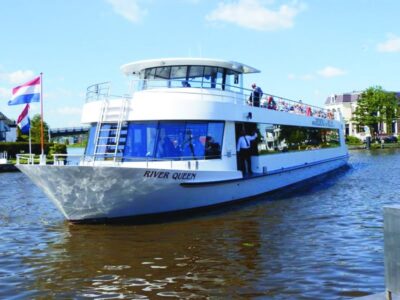
Tour to Keukenhof Gardens with Windmill Cruise
Read our review →
Zaanse Schans Windmills, Clogs and Dutch Cheese Small-Group Tour from Amsterdam
Read our review →Browse the lists this tour appears in