
Reviewed · ROTTERDAM TOURS & EXPERIENCES
Rotterdam: 2-Hour Guided Walking Tour
Rotterdam gets interesting fast on foot. On this 2-hour guided walking tour, you start at Central Station and get a local’s take on why this city looks the way it does, from wartime scars to modern architecture. I like that the route hits both headline sights and normal street life, so you come away with a real feel for how Rotterdam works.
Two things I really enjoy about this tour: you get a tight overview of the city’s big architectural ideas, including the Markthal and Cube Houses, and you’re not stuck reading plaques on your own. The guides in the feedback, like Edwin and Michel, are praised for answering questions and connecting buildings to daily life.
One drawback to consider: in just two hours, you cover a lot of ground. If you want slower museum time or deeper stops at every site, you might feel a bit rushed, and food and drinks aren’t included, so plan for a snack break later.
In This Review
- Key things you’ll notice on this Rotterdam walk
- Rotterdam in Two Hours, from Central Station to Modern Icons
- Why the WWII story and reconstruction theme matters here
- Central Station, Town Hall, and St. Lawrence Church: your orientation stops
- Timmerhuis and OMA architecture: modern design explained without the jargon
- Markthal: Europe’s covered market and real daily life
- Cube Houses and Coolsingel: playful design meets shopping streets
- Erasmus Bridge: finishing with Rotterdam’s modern viewpoint
- Price and value: is $25 worth it for two hours?
- What you should ask your guide while you’re walking
- Who this tour is best for, and who should skip it
- Should you book this Rotterdam walking tour?
- FAQ
- Where is the meeting point for the tour?
- How long is the guided walking tour?
- How much does the tour cost?
- What is included in the price?
- Are food and drinks included?
- What languages are the tours offered in?
- Is there a private group option?
- Can I cancel for a refund?
- Is there a pay later option?
- What are some of the main places you will see?
Key things you’ll notice on this Rotterdam walk
- Central Station as the launchpad, so you get oriented right away
- Town Hall, St. Lawrence Church, and an early high-rise moment, tied to the city’s growth
- Timmerhuis by OMA, with an architecture focus that stays understandable
- Markthal, Europe’s covered market, where everyday life is the point
- Cube Houses and Coolsingel shopping streets, mixing playful design with real routines
- Erasmus Bridge viewpoints, landing the story on Rotterdam’s modern era
Rotterdam in Two Hours, from Central Station to Modern Icons
This is the kind of tour that helps you get your bearings fast. You meet at Rotterdam Central Station and spend the next two hours walking through the city’s key layers, old and new, with a guide who explains what you’re seeing and why it matters.
The route is built for first-timers. You get recognizable stops like the Cube Houses and Markthal, plus architectural anchors along the way such as the Timmerhuis and the Erasmus Bridge. And because it’s walking, you don’t just stare at facades, you actually move through the same streets that locals use.
You should expect a “big picture, strong details” style. The guides are noted for sharing background that turns buildings into stories, and that’s especially useful in Rotterdam, where the city’s looks can be surprising if you only know the basics.
More Guided Walking Tours in Rotterdam



Why the WWII story and reconstruction theme matters here
Rotterdam is not just modern for modern’s sake. A major thread you’ll hear about is what happened during World War II, including the bombing, and why postwar rebuilding reshaped the city’s skyline.
That matters because it changes how you read everything else. When you learn the city’s reason for reinventing itself, the sharp lines, bold forms, and large-scale design projects start to feel less random and more like a long-term plan, even when the results look dramatic.
It also helps you connect architecture with the city’s mindset. In the feedback, guides like Edwin and John are singled out for making Rotterdam feel alive, not like a static list of sights. The best part is the balance: you get history, but it stays tied to what you can see on the street today.
Central Station, Town Hall, and St. Lawrence Church: your orientation stops
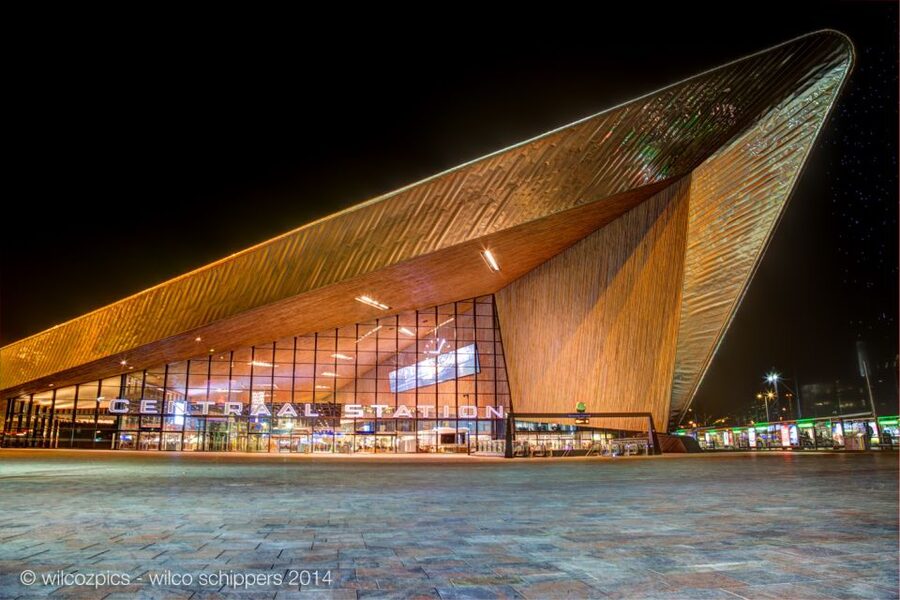
Your tour begins where practical sense meets city importance. Central Station sets the tone, because it’s a major entry point and a natural place to understand how the city channels people into different neighborhoods.
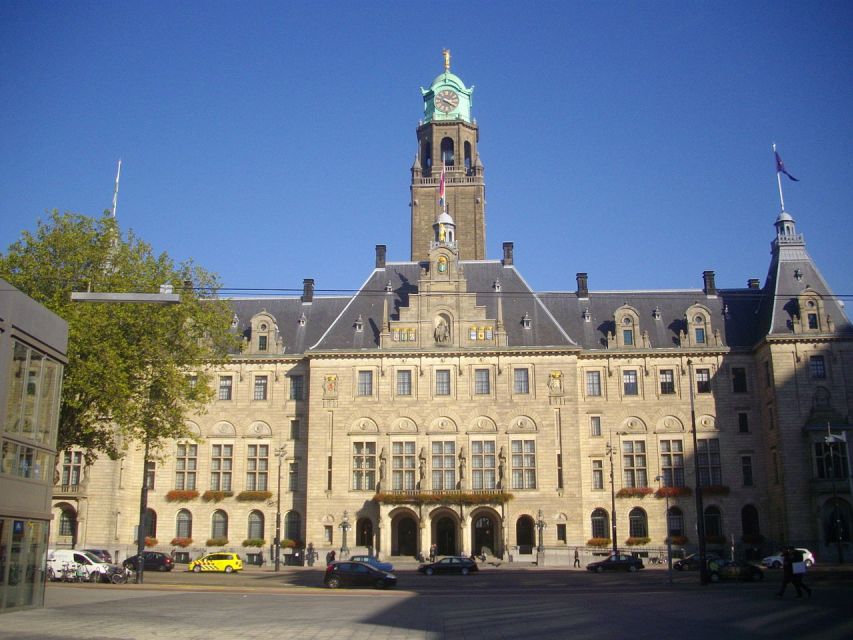
From there, the walk includes stops that place you in Rotterdam’s timeline: the Town Hall, St. Lawrence Church, and a mention of Europe’s first high-rise building. Even if you don’t know the names beforehand, this part is useful because it frames Rotterdam’s rise and how the city developed before the modern design boom.
A good guide helps you notice small things you’d otherwise miss. For example, when the guide points out why a church or historic landmark sits where it does, you start seeing the city as a pattern, not a pile of attractions.
Timmerhuis and OMA architecture: modern design explained without the jargon
One of the tour’s standout architectural stops is the Timmerhuis, linked to OMA. If you’ve ever looked at a dramatic building and wondered what you’re supposed to learn from it, this is the right moment in the tour.
Here’s what you should look for while you walk: the building’s scale, its relationship to nearby streets, and how its design signals modern ambition. The guide’s job is to translate that into plain language, and that’s exactly what’s praised in the reviews, including the way guides answer questions and point out details you might otherwise walk past.
This stop also teaches you something useful for your own exploring afterward. Once you understand the design logic at one major site, you’ll be better at recognizing it elsewhere, including along the next stretch of city-center architecture.
Markthal: Europe’s covered market and real daily life
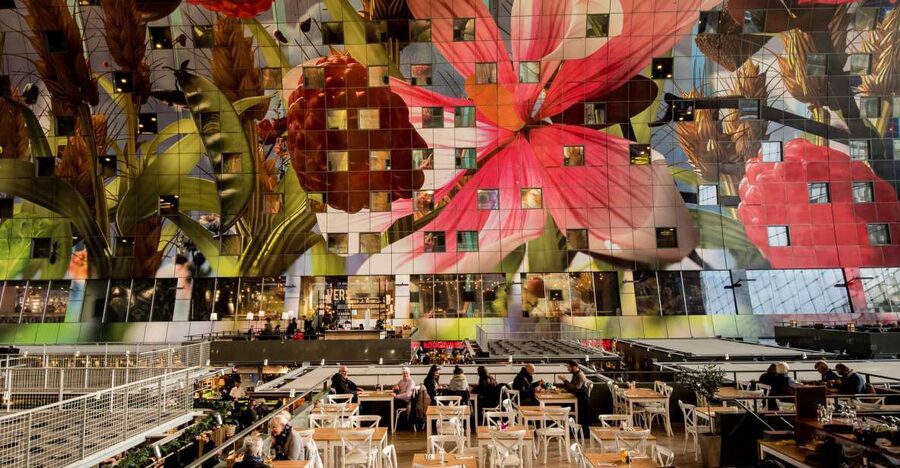
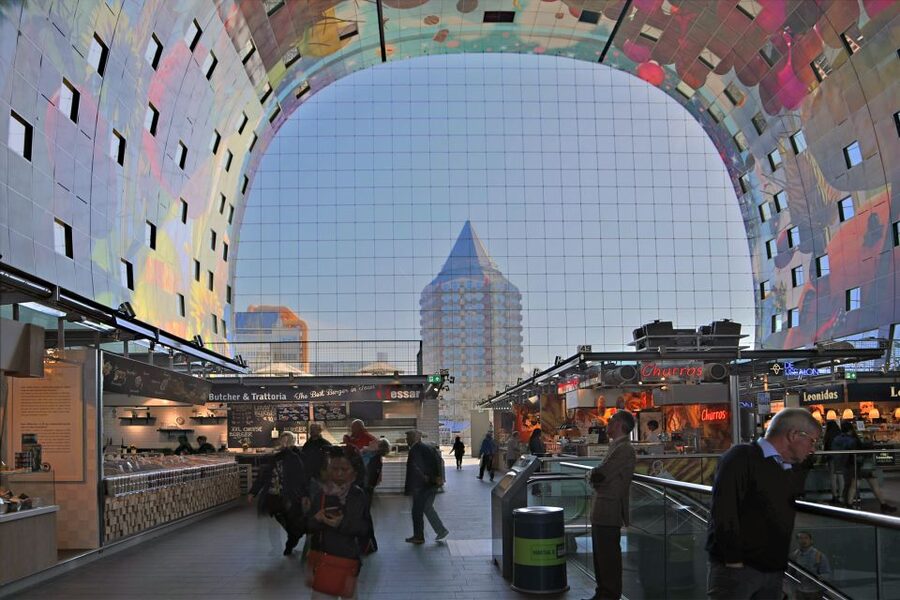
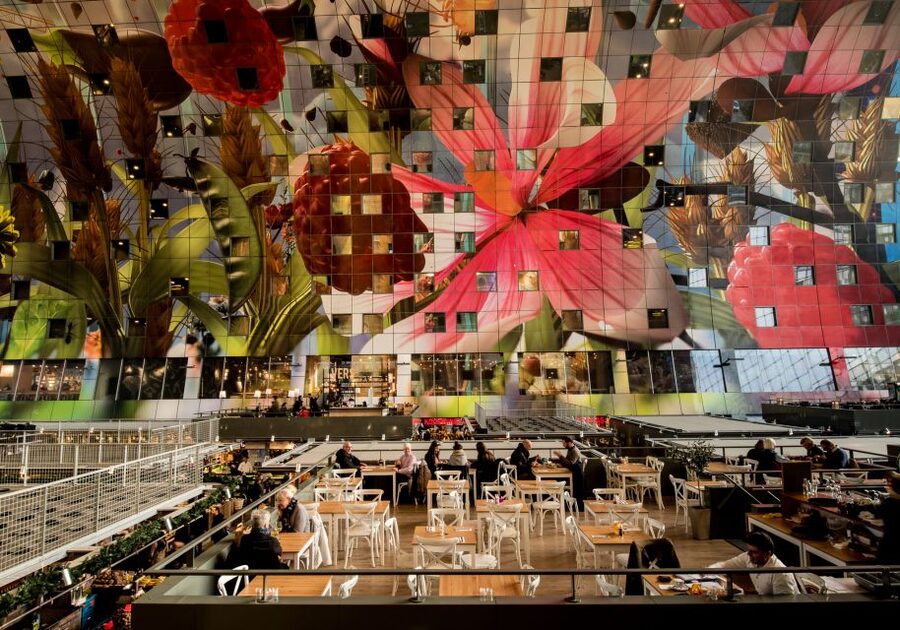
The Markthal is where the tour shifts from architecture talk to human rhythms. It’s a covered market, and the key point is that you see the everyday side of Rotterdam, not just a photo backdrop.
You’ll also learn why this market is so talked about: it’s described as Europe’s most unique and beautiful covered market. But even if you don’t care about architecture awards, you’ll likely enjoy the atmosphere. A covered market changes how a city feels, because it makes street life happen under one roof.
If you like travel that mixes food culture with city design, this stop delivers. And since this is a walking tour, you get to experience the space as part of your route, not as a separate detour.
One practical note: food and drinks aren’t included. That’s not a dealbreaker, but it does mean you should plan to grab something nearby after the tour if you want a bite right away.
More gables counted on foot:
- Rotterdam 2-Hour Walking Tour | Discover The City With A Local
★ 4.5 · 111 reviews - Walking Rotterdam Food Tour
★ 5.0 · 89 reviews - Rotterdam: City Center Walking Tour
★ 4.5 · 88 reviews - Dordrecht: Highlights and Hidden Gems Walking Tour
★ 4.7 · 84 reviews
Cube Houses and Coolsingel: playful design meets shopping streets
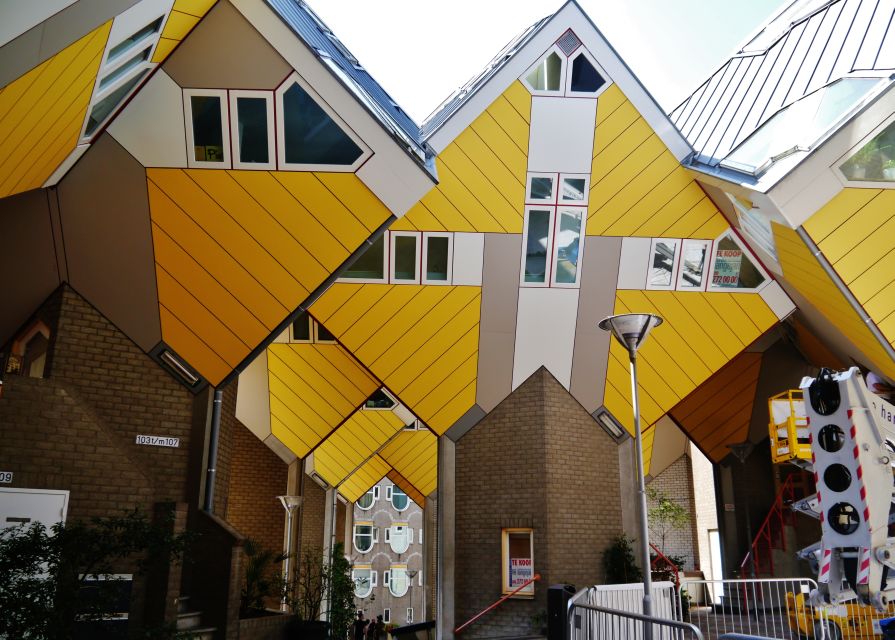
Next, you move into a part of Rotterdam that feels more playful and more immediately fun. The Cube Houses are the kind of landmark that practically begs for a slow look, even on a timed tour. You’ll see the unusual “tilted” concept up close and get context for why this idea became part of Rotterdam’s visual identity.
After that, the walk continues through shopping streets, including Coolsingel. This section is valuable because it shows you Rotterdam beyond the Instagram icons. You get the sense of where people actually go for everyday errands and casual browsing, which makes the city feel more real.
The guide helps you connect the design experiments to the surrounding lifestyle. That can change how you remember the Cube Houses. Instead of thinking of them as just odd houses, you start seeing them as part of a city that likes to take risks and then build whole districts around that attitude.
Erasmus Bridge: finishing with Rotterdam’s modern viewpoint
A great walking tour ends with a perspective, not just a final stop. Here, the Erasmus Bridge is the kind of destination that helps you wrap your brain around the city’s modern era.
Bridges are also useful on a walking tour because they widen the mental map. Even without a big speech, the bridge cues you to think about movement, the harbor story, and Rotterdam’s role as a working port city. That aligns with the tour’s focus on harbor history and the city’s transformation.
If you’re the type who likes to photograph a “final hero shot,” this part gives you that. But it’s also more than photos. It’s where the tour’s theme clicks into place, because Rotterdam suddenly feels like one designed system rather than separate attractions.
Price and value: is $25 worth it for two hours?
At $25 per person for a two-hour guided walk, the value comes down to how much you benefit from expert storytelling.
If you’re the DIY type, you could technically walk between these sights on your own. But the tour is priced like a shortcut to understanding, not just transportation. You’re paying for a local guide who ties together WWII context, architecture, and day-to-day urban life in a way that’s hard to replicate from guidebooks alone.
The feedback supports that the guides work hard on this. People mention guides like Susan and John for knowledge, and Edwin and Michel for answering questions and pointing out details you might otherwise miss. That’s the real value you’re buying, the “why this, why here” explanation.
It’s also a good price point if you’re time-limited. Two hours is enough for orientation and highlights. It’s not long enough to replace a full-day city exploration, but it’s a smart start.
What you should ask your guide while you’re walking
This tour encourages questions, and you should use that. If you’re curious about how the city rebuilt after the bombing, ask. If you want to understand why modern architecture appears so often, ask. If you’re wondering how Rotterdam’s harbor connects to design choices, ask.
Based on the reviews, guides frequently respond well and tailor answers on the spot. For example, Edwin and Michel were praised for addressing the questions that people bring, not just reading from a script.
Here are a few high-impact questions that fit the route:
- Which building is most important to know first, and why?
- How did the postwar changes affect daily life, not just the skyline?
- What design ideas show up again and again in Rotterdam?
- Where should I walk next on my own after this tour?
Who this tour is best for, and who should skip it
This is a strong fit for first-time visitors who want a fast but meaningful introduction. If you enjoy architecture, urban planning, and city stories that explain the present through the past, you’ll likely get a lot out of the Timmerhuis, Markthal, and WWII context.
It also suits travelers who want direction. The guide helps you walk efficiently through major sights like the Cube Houses and Erasmus Bridge without getting tangled in logistics.
You might want to consider a different option if you prefer slow pacing or you plan to spend a lot of time inside specific sites. Since it’s only two hours and there’s no food included, you’ll get the overview, but not a long stay.
Should you book this Rotterdam walking tour?
Yes, if you want a well-taught two-hour orientation that connects Rotterdam’s history to its modern look. The combination of Central Station to major icons, plus explanations of WWII impact, is exactly what makes this more useful than a simple sightseeing loop.
Also, the guide quality seems to be the big strength. Names like Susan, Edwin, Michel, and John show up in the feedback as standouts for knowledge, responsiveness, and making the city feel real.
Book it if you’re arriving for the first time and you want to understand what you’re looking at. Skip it only if you know Rotterdam well already, or if you want lots of extra time at each stop instead of a compact highlight route.
FAQ
Where is the meeting point for the tour?
You meet at Rotterdam’s Central Station. The exact meeting point can vary depending on the option you book.
How long is the guided walking tour?
The tour lasts 2 hours.
How much does the tour cost?
The price is $25 per person.
What is included in the price?
A local live guide is included.
Are food and drinks included?
No. Food and drinks are not included.
What languages are the tours offered in?
The live tour guide is available in English, Dutch, and German.
Is there a private group option?
Yes, a private group is available.
Can I cancel for a refund?
Yes, you can cancel up to 24 hours in advance for a full refund.
Is there a pay later option?
Yes, you can reserve and pay later.
What are some of the main places you will see?
You’ll pass and see major highlights such as the Cube Houses, Markthal, Coolsingel, and the Erasmus Bridge, along with other landmarks like Town Hall and St. Lawrence Church.
Latest to arrive along the quays of Rotterdam


Rotterdam Tours & Experiences, compared.


Kinderdijk UNESCO World Heritage Entry Ticket
Read our review →
Browse the lists this tour appears in