
Reviewed · WORKSHOPS
Private Sushi Workshop in Hilversum
A sushi class that ends with you eating. You’ll learn four core styles, maki, nigiri, uramaki, and temaki, with a sushi chef and former sushi restaurant owner, Nigel van der Weerd, in a private setting in North Holland.
I especially like that the guidance is practical, from rice to toppings, so you’re not just watching. I also like the meal payoff: the sushi you make becomes your dinner, with snacks and alcoholic beverages included.
One thing to consider is the setup for groups. This experience has a minimum number of travelers, and it can be organized at your vacation rental only if you have a kitchen available.
In This Review
- Key Things I’d Prioritize Before You Book
- A Private Sushi Class in Hilversum: What Makes It Interesting
- Your 2.5-Hour Game Plan: Four Sushi Styles, One Dinner
- Meet Nigel van der Weerd: The Kind of Chef Who Explains Without Making You Feel Lost
- From Rice to Toppings: What You Actually Do During the Workshop
- Rice handling and setup
- Rolling, shaping, and portion control
- Toppings and choosing what goes where
- Meat, fish, or vegetarian adjustments
- Eating Your Own Sushi Dinner: Drinks Included, and That Changes the Mood
- Price and Value for $108.45: What You Get for the Money
- Where You Start in Hilversum, and Why Timing Matters
- Can This Workshop Come to Your Vacation Rental Kitchen?
- Who This Private Sushi Workshop Fits Best
- Should You Book This Private Sushi Workshop in Hilversum?
- FAQ
- Where does the workshop meet and how does it end?
- What time does it start?
- How long is the private sushi workshop?
- How many sushi varieties will I learn to make?
- Are snacks and drinks included?
- Can the menu be made vegetarian?
- Can this workshop be held in my vacation rental or Airbnb?
- How many people can join the workshop?
- When will I receive confirmation after booking, and can I cancel?
Key Things I’d Prioritize Before You Book
- Four sushi types in one session: maki, nigiri, uramaki, temaki, so you actually see different techniques
- Chef Nigel van der Weerd’s background: a former sushi restaurant owner who can coach you through what matters
- Dinner included, not just instruction: you’ll eat the sushi you craft
- Drinks and snacks are part of the deal: wine, beer, or non-alcohol drinks included
- Vegetarian-friendly options: menus can be adapted to avoid fish and meat if needed
A Private Sushi Class in Hilversum: What Makes It Interesting
This is the kind of food experience that feels like a plan, not a performance. You start in Hilversum at Kometenstraat, 1223 Hilversum, Netherlands, and by the end you’re sitting down with sushi you made yourself. The timing works well too, since it begins at 5:00 pm and runs about 2 hours 30 minutes, which lands it right in that sweet spot between late afternoon and a real dinner.
What makes it especially appealing is the “transfer of skills” vibe. You learn multiple sushi styles, and those styles demand different hands-on moves, like rolling, shaping, and assembling. That means you’re not stuck doing one thing on repeat for the entire class.
The private format also changes the feel. Even with a max group size of 10, it’s designed to keep the attention on your table and your progress, which is perfect if you learn best when someone can correct your technique quickly.
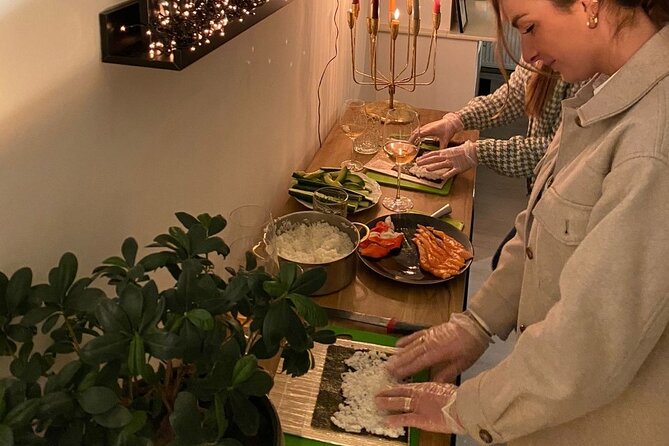
More benches with the tools set out:


Your 2.5-Hour Game Plan: Four Sushi Styles, One Dinner
You’ll learn how to make four varieties of sushi during the workshop: maki, nigiri, uramaki, and temaki. Think of this as one lesson that covers the main sushi “families,” not a deep specialization that leaves you confused about everything else.
Here’s what you can expect, in plain terms.
First, you’ll work through the fundamentals that all sushi needs. Even before you shape anything, sushi lives or dies by rice quality and handling, plus how you add toppings. Then the workshop shifts into the specific styles:
- Maki focuses on the roll format, where you control spacing and pressure.
- Nigiri is about shaping and topping, so the piece stays neat without turning mushy.
- Uramaki changes the structure, since it is typically rice-forward and requires a different rolling or assembly approach.
- Temaki is the hand-roll style, where shaping happens differently because it’s made to be eaten as a cone.
Because the workshop is hands-on, you’re not just “sampling” each style. You’re building them, then you’ll eat them at dinner after the class.
The practical value here is big. If you’ve ever tried to make sushi at home and it turned into a rice-sticky mess, this kind of guided, style-by-style practice helps you understand what to focus on, not just what ingredients to buy.
Meet Nigel van der Weerd: The Kind of Chef Who Explains Without Making You Feel Lost
This workshop is led by Nigel van der Weerd, a sushi chef and former sushi restaurant owner. That background matters because restaurant owners tend to teach for consistency. In other words, you’re likely to get coaching that aims at repeatable results, not just a one-off showpiece.
In the same spirit, the experience has a warm, patient tone. One of the standout themes in the provided reviews is that the team brought patience and passion, and walked people through the process step-by-step, from the rice all the way to the toppings.
That combination, a real restaurant background plus calm teaching, is exactly what you want in a cooking class. Sushi can intimidate people because it looks precise. You’ll feel better when someone breaks it into small actions you can actually do with your hands.
If you’re worried you’ll be behind because you’re new to sushi, this is the right kind of instruction. You’re learning techniques, not trying to perform.
From Rice to Toppings: What You Actually Do During the Workshop
The workshop runs at a private setting near public transport, and the session is built around doing. You’ll start with the essentials, then move through the four sushi varieties.
Even with no split into labeled “stations,” the structure is clear: you’ll practice each style and assemble your own sushi pieces. And because the chef is teaching, you’ll get guidance on the parts that are easiest to mess up.
Here are the elements that matter most for your results.
Rice handling and setup
You’ll learn about the rice you use and how it’s handled during sushi making. Rice is the foundation of every sushi style, and improper temperature, texture, or moisture can ruin everything. The reviews highlight that rice is part of the teaching focus, so you’ll have a better chance of getting it right the first time.
Also flying a pennant in North Holland
- Private Electric Boat Rental in Haarlem (No License Required)
★ 5.0 · 186 reviews - Haarlem Private Canal Tour with Bites and Unlimited Drinks
★ 4.5 · 18 reviews - IJmuiden to Amsterdam Private Transfer
★ 5.0 · 6 reviews - Private Transfer Service Between Ijmuiden and Amsterdam
★ 5.0 · 6 reviews
Rolling, shaping, and portion control
Maki and uramaki require rolling skills, but the goal is control, not perfection. You’ll practice the technique, then learn how to adjust so your roll holds together.
Nigiri and temaki shift the skill into shaping and assembling. With these, topping placement and even pressure matter. The coaching from a sushi chef should help you avoid the common failure mode: pieces that collapse or look uneven.
Toppings and choosing what goes where
You’ll also learn about toppings. One review specifically mentions going from rice to toppings, which is where a lot of home sushi attempts fall flat. Getting toppings right is what transforms sushi from “edible” to “actually good.”
Meat, fish, or vegetarian adjustments
The menus can include meat and fish, but they can also be adapted for vegetarians. That means the workshop isn’t forcing one rigid set of ingredients. If you want a vegetarian-focused class, you should be able to discuss the menu with the provider when arranging your booking.
Eating Your Own Sushi Dinner: Drinks Included, and That Changes the Mood
The best part of many cooking classes is the food. The best part of this one is that your dinner is literally your output.
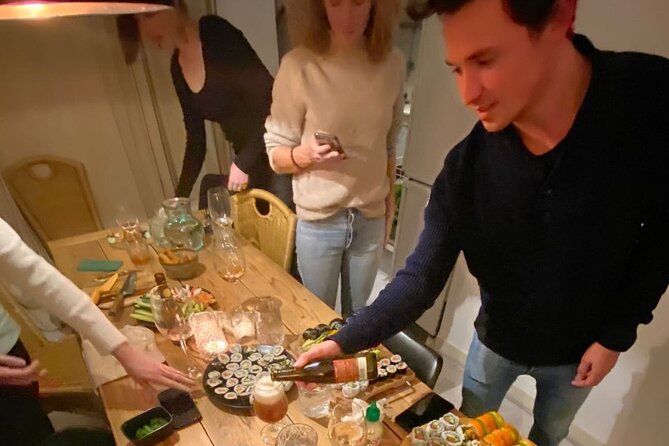
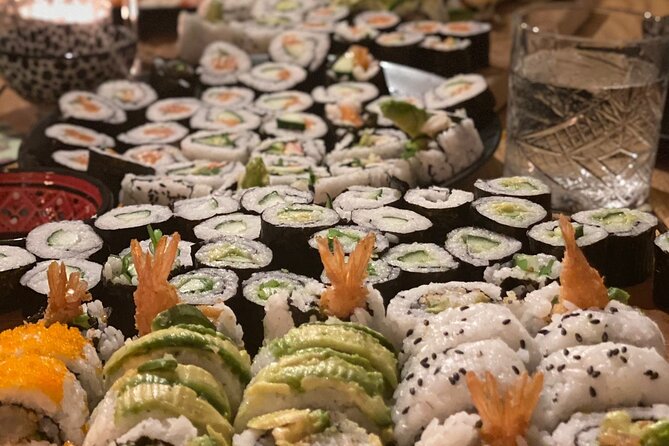
After the workshop, you’ll enjoy the beautiful sushi you made as your dinner. Snacks are included, and alcoholic beverages are included too. The listed options are wine, beer, or non-alcohol drinks, so you’re not locked into one type of beverage.
This setup changes the mood. Instead of “class, then food somewhere else,” you get one continuous experience, with the cooking and eating happening together. If you’re going with friends or family, it’s also a natural way to share laughs, compare rolls, and trade tiny technique tips mid-meal.
And if you love Japanese food but don’t always know the right order or style to try, this gives you four experiences in one plate.
Price and Value for $108.45: What You Get for the Money
At $108.45 per person, it’s not a casual bargain. But for a private, guided, hands-on class that includes dinner plus snacks and drinks, it can make sense.
Here’s why the value can be stronger than it looks on the price tag:
- You get instruction from a sushi chef and former restaurant owner, not just a generic cooking guide.
- You learn four distinct sushi styles in one session, so the “coverage” is better than a single-style class.
- You get the meal payoff immediately, meaning the class cost is tied to what you eat.
- Snacks and wine or beer (or non-alcohol options) are included.
Also, the workshop is designed for a small group. It has a maximum of 10 travelers, and it’s preferably with a group of minimal 4 persons. For couples or solo travelers, you might want to check whether the minimum group size is likely to be met for your date, because that can affect availability.
If you’re splitting the cost with a small group, you’re also more likely to get the “private attention” feel that makes a class like this worth it.
Where You Start in Hilversum, and Why Timing Matters
The meeting point is Kometenstraat, 1223 Hilversum, Netherlands, and the activity ends back at the meeting point. Start time is 5:00 pm.
That matters for two reasons.
First, a 5 pm start keeps it realistic. You’re not rushing in from sightseeing at midday, and you’re not waiting until the late evening to eat. It’s designed to feel like dinner plans.
Second, the class length, around 2 hours 30 minutes, gives enough time to get hands-on with multiple sushi styles. Sushi instruction needs time for practice, mistakes, and re-tries. This duration suggests you won’t feel dragged along by a schedule that’s too short.
Can This Workshop Come to Your Vacation Rental Kitchen?
Yes, with conditions. The workshop can be organized at your guest or Airbnb location, but only if you have a kitchen available. If you want the experience to feel more like hosting a private chef in your own space, this is the option to consider.
Just keep in mind that “only if you have a kitchen” is the big limiter. You’ll want to check that your kitchen setup can handle cooking work and prep safely and comfortably.
This mobile option can be great if you’re traveling with a small group and want something more personal than meeting at a fixed location. It also helps if you already have ingredients you want to coordinate with, as long as the menu preferences are supported by the provider.
Who This Private Sushi Workshop Fits Best
This workshop is ideal for you if you want a hands-on Japanese cooking experience that leads directly to dinner. It’s also a strong choice if you like clear coaching and you want to learn technique, not just eat good food.
It tends to suit:
- Couples or small groups who want a private, guided dinner activity
- People new to sushi who feel nervous about getting it wrong
- Friends who can enjoy making four styles and then tasting the results together
- Groups that include vegetarians, since menus can be adapted
It may be less ideal if you want a flexible “drop in for 30 minutes” style experience. This is built for a full session and it follows the flow of sushi instruction and dinner.
And because there’s a minimum group requirement, solo travelers or very small groups should confirm whether their date will run.
Should You Book This Private Sushi Workshop in Hilversum?
I’d book it if you want sushi skills you can actually use again at home. The reason is simple: you’re guided through four sushi styles and then you eat what you make. That combination of technique plus meal payoff is hard to beat.
Book it sooner than later if you’re traveling as a group and you’re looking for a plan that feels special without requiring advanced cooking knowledge. The chef-led, patient teaching style is exactly the kind that turns sushi from intimidating into doable.
Skip or reconsider if your schedule is too tight, your group is too small to meet the minimum requirement, or you do not have a suitable kitchen if you’re aiming for the mobile version.
If you like hands-on classes and you want dinner that tastes better because you built it, this private workshop is a smart use of your evening in North Holland.
FAQ
Where does the workshop meet and how does it end?
It starts at Kometenstraat, 1223 Hilversum, Netherlands, and it ends back at the same meeting point.
What time does it start?
The workshop starts at 5:00 pm.
How long is the private sushi workshop?
It lasts about 2 hours 30 minutes.
How many sushi varieties will I learn to make?
You will learn how to make four varieties of sushi: maki, nigiri, uramaki, and temaki.
Are snacks and drinks included?
Yes. Snacks are included, and alcoholic beverages are included too. Wine, beer, and non-alcohol drinks are listed options.
Can the menu be made vegetarian?
Yes. The menus can include meat and fish or be adapted for vegetarians.
Can this workshop be held in my vacation rental or Airbnb?
It can be organized at your guest or Airbnb location, but only if you have a kitchen available.
How many people can join the workshop?
There is a maximum of 10 travelers. It’s preferably with a group of minimal 4 persons.
When will I receive confirmation after booking, and can I cancel?
You should receive confirmation within 48 hours of booking, subject to availability. Free cancellation is available if you cancel at least 24 hours before the experience’s start time for a full refund.
Latest to arrive along the quays of North Holland




Workshops, compared.

Traditional Dutch Syrup Waffle Making Workshop
Read our review →Amsterdam Traditional Dutch Syrup Waffle Making Workshop
Read our review →


Amsterdam Bols Cocktail Experience and Cocktail Workshop
Read our review →Amsterdam Traditional Dutch Blue Tile Painting Workshop
Read our review →Browse the lists this tour appears in