
Reviewed · HISTORICAL TOURS
Private Amsterdam Historical Walking Tour
Amsterdam rewards slow walking and smart questions. This private 2 to 3 hour route stitches together Dam Square, the canal ring, and Amsterdam’s more rebellious pockets, so the city makes more sense as you go. My guide, Nikolai, shared history alongside what’s happening now, which helped me leave with context, not just snapshots.
The mix of big landmarks and short side stops is a major win, especially De Beurspassage and the UNESCO-listed Grachtengordel canal belt. You’ll also get a calm breather around Spui and the nearby Begijnhof area, then finish in Reguliersdwarsstraat, known for LGBTQ+ life. One consideration: it’s a walking tour and it depends on good weather, so wear shoes you can handle for a solid couple of hours.
In This Review
- Key things I’d plan around
- Where the tour starts and how the timing works
- Dam Square and the Royal Palace, Amsterdam’s power center
- De Beurspassage, where canals get turned into ceiling art
- Grachtengordel canal ring (UNESCO), the 17th-century plan you can still read
- Vrankrijk, Amsterdam’s activist and alternative scene
- Spui and the book-market atmosphere, plus a quiet break at Begijnhof
- Reguliersdwarsstraat, LGBTQ+ life you can actually walk into
- Price and value, what you’re really paying for
- Who should book this, and who might skip it
- Should you book this private Amsterdam historical walking tour?
- FAQ
- How long is the private Amsterdam Historical Walking Tour?
- Is this tour private, and how big is the group?
- What language is the tour offered in?
- Where do we meet, and where does the tour end?
- Do I need a ticket, and is it mobile?
- Are service animals allowed on this tour?
- What happens if weather is poor, or if I need to cancel?
Key things I’d plan around
- Private group up to 10 means you can move at your pace and ask questions without feeling rushed
- Nikolai’s history plus today angle helps you connect what you see to how Amsterdam works
- De Beurspassage gives you a quick art break, with a ceiling decorated in canal-themed motifs
- Grachtengordel canal ring (UNESCO) shows how 17th-century trade shaped the city layout
- Spui to Begijnhof pairs book culture with a quiet courtyard retreat
- Reguliersdwarsstraat is a practical way to understand Amsterdam’s LGBTQ+ scene beyond postcards
Where the tour starts and how the timing works
This is a private walking tour for your group only, priced per group (up to 10 people). The time window is about 2 to 3 hours, which is long enough to cover several distinct neighborhoods but short enough that you do not need to plan the whole day around it.
You start at Magna Plaza, Nieuwezijds Voorburgwal 182I, 1012 SJ Amsterdam, near the Flower Market area. The tour ends on Reguliersdwarsstraat, 1017 Amsterdam. Practically, that means you can tack on dinner nearby afterward, instead of starting and ending in the same exact spot.
The guide uses a mobile ticket, and the tour is offered in English. You’ll also want to pay attention to weather, because the experience requires good conditions. If rain or gray skies show up, plan for a light layer, not just a thin jacket, and keep your pace steady.
More Guided Walking Tours in Amsterdam


Dam Square and the Royal Palace, Amsterdam’s power center
Dam Square is the kind of place where Amsterdam’s layers stack fast. It’s the city’s historical heart, a large plaza surrounded by major landmarks, and at the center you find the Royal Palace. What I liked here is that the focus is not just the building itself. You get the sense of how this spot moved from official city use to today’s role in Dutch public life and ceremony.
The Royal Palace building is impressive in scale and detail, and Dam Square’s layout helps you understand why it became a natural gathering point. Even if you have only a day or two in Amsterdam, it’s a useful place to get your bearings. You can compare what you know from books with what you see in front of you.
The only drawback is that Dam Square can feel crowded, especially in peak daytime hours. If you tend to get annoyed by foot traffic, keep your expectations realistic. This stop works best when you treat it as a history orientation moment, then keep moving instead of trying to linger like it’s a museum hall.
De Beurspassage, where canals get turned into ceiling art
Right after the open space of Dam Square, you switch to something more intimate: De Beurspassage. This passageway connects Damrak and Nieuwendijk, and it’s famous for its decorated ceiling. The design takes inspiration from Amsterdam’s canal world, using mosaics, glass, and mirror-like elements to create a kind of moving-light effect as you walk through.
I like this stop because it’s short and low effort, but it changes your perspective. Amsterdam can be all bridges and facades when you rush. Here, you see that the city also puts visual creativity into practical spaces, like a connector passage between busy streets.
One practical note: because it’s a passageway, it can be tight when there’s a flow of people. You do not want to stop in the middle and block others. Instead, pause near the edges if you want photos, and let the guide keep the group moving. The payoff is worth it, since the ceiling details are exactly the sort of thing you might walk past without noticing on your own.
Grachtengordel canal ring (UNESCO), the 17th-century plan you can still read
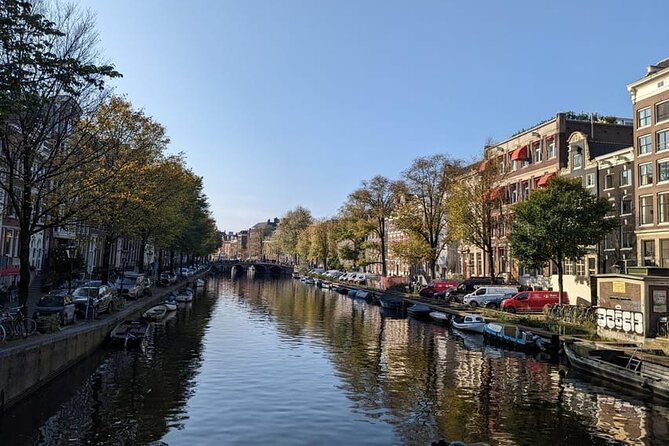
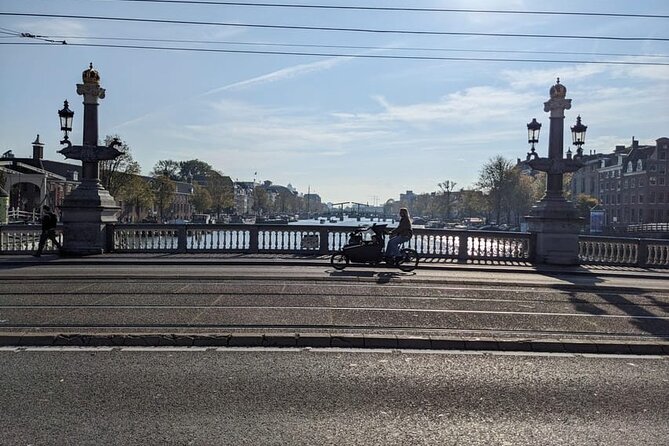
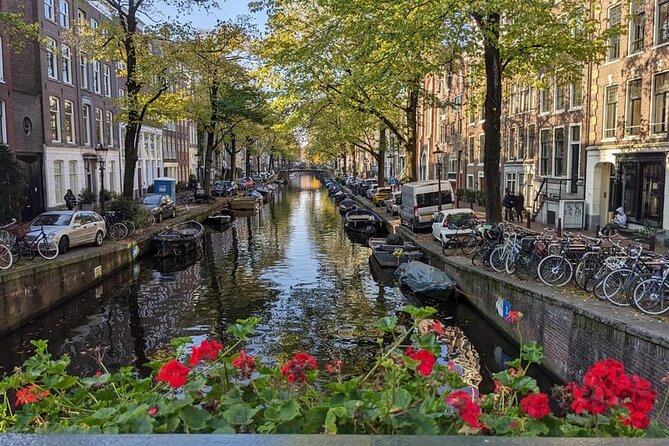
Then you step into what makes Amsterdam instantly recognizable: the Canal Ring, or Grachtengordel, a UNESCO World Heritage area. This is where you see the bigger urban idea. In the 17th century, canals were built to expand the growing city, and they also reflected Amsterdam’s trade strength. That matters because it explains why you get those elegant townhouses, bridges, and houseboats lined along the water.
What I found useful is that the guide framing helps you read the scenery. Instead of just thinking, nice houses, you understand why the waterways were laid out the way they were. You start noticing the rhythm of bridges and the way the canals shape routes through the city.
If you like photos, this is a good section for them, but I’d also treat it as a slow-walk moment. Bridges force you to look left and right, and the canal views help you appreciate how the city works at human scale. If weather is bad, though, the walking parts feel longer and the photos can look flat. The good news is that the tour is designed to keep you moving and still deliver the highlights.
Vrankrijk, Amsterdam’s activist and alternative scene
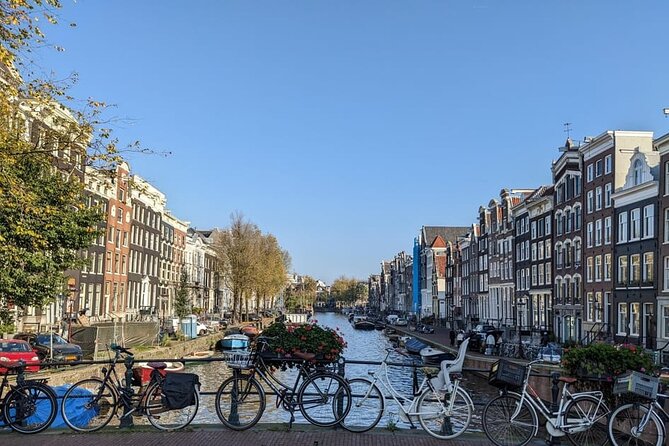
One of the more surprising stops is Vrankrijk. This is an alternative cultural space and former squat, known for activist roots and countercultural history. If you’ve only seen Amsterdam through canal cruises and postcard streets, this stop is a reminder that the city also has an edge.
Here, the focus is on how spaces like Vrankrijk can shape social movements and independent creative life. I appreciated that it’s not presented as just a cool story. It helps you understand why activism and DIY culture have had a visible footprint in Amsterdam, especially when people talk about the city as progressive.
This stop does come with a simple consideration. It might feel more intense or politically charged than some of the other stops. If you prefer strictly traditional sightseeing, you might need a minute to adjust your mindset. For me, that’s exactly the point, it gives you a different Amsterdam than the one you usually get.
More Private Tours in Amsterdam
- Rijksmuseum Amsterdam Small-Group Tour with Private Upgrade
★ 4.5 · 1,547 reviews - Van Gogh Museum Tour Reserved Entry Semi Private
★ 5.0 · 1,437 reviews - Private Amsterdam Red Light District and Coffee Shop Tour
★ 5.0 · 763 reviews - Anne Frank and Jewish Quarter Amsterdam Private Walking Tour
★ 5.0 · 684 reviews
Spui and the book-market atmosphere, plus a quiet break at Begijnhof
After Vrankrijk’s counterculture angle, you head toward Spui, a lively square tied to cultural and literary life. Spui is known for the weekly book market and for independent bookstores and historic cafés. Even if you are not there on market day, this area still gives you the sense of how Amsterdam supports everyday culture, not just big-ticket attractions.
The pacing also helps. The tour does not treat Spui like a stop to sprint through. You get time to look around and connect what you see with the idea of a city that spends energy on books, conversation, and small local spaces.
Nearby is the Begijnhof courtyard, a peaceful retreat from the street noise. This is the kind of contrast Amsterdam does well. In one direction, you’ve got a square and shops. In the other, you’ve got a courtyard feel, quiet enough that you can actually hear your own thoughts.
A practical drawback is timing. Since the book market is weekly, your exact experience depends on when you visit. It might be running or it might not. Either way, the area is still worth the stop for the atmosphere and the courtyard break.
Reguliersdwarsstraat, LGBTQ+ life you can actually walk into
The tour ends on Reguliersdwarsstraat, one of Amsterdam’s most lively and diverse streets. It’s long been associated with the city’s LGBTQ+ community, and the street has a mix of cafés, restaurants, and entertainment venues.
I like that this is not framed as a lecture or a distant viewpoint. Ending the tour here is practical. You finish in a neighborhood where you can keep exploring in a normal way, whether you want a drink, a meal, or a late evening stroll.
There’s one consideration if you’re sensitive to noise. This street is known for nightlife energy, so depending on the time of day, it can get loud. If you want the calm version of Amsterdam, try to plan this end segment earlier. If you want the social energy side, finishing here later can feel like a feature.
Price and value, what you’re really paying for
The price is $189.44 per group, up to 10 people, for about 2 to 3 hours. On paper, it’s not cheap. But private tours in central Amsterdam often cost a lot because your guide is spending real time with your group and tailoring how you move through the city.
Here’s what makes this feel closer to good value than a random walking tour. You’re not just paying for a list of stops. You’re paying for a guide with an ability to connect history with what’s happening now. My experience with Nikolai’s approach was a big part of why the route landed well. It turns the landmarks into a story you can repeat.
Also, the route mix is smart. You get major points like Dam Square and the canal ring, plus stops that most casual self-guided walkers might miss, like De Beurspassage and the cultural side at Vrankrijk. That combination helps you feel like you got both the iconic Amsterdam and the less expected Amsterdam.
Who should book this, and who might skip it
This tour is a strong fit if you want a guided walk that stays practical and makes the city make sense. It’s especially good for groups who want a shared plan without splitting up, since it’s private and sized for up to 10 people.
It also works well if you like history but get bored when everything is dates and names. Nikolai’s approach, history plus current-day context, is the kind of explanation that helps you notice details as you go.
You might want to skip or choose something else if:
- You hate walking and want a mostly sit-down experience
- You’re visiting in poor weather and hate rescheduling
- You want only famous museum-level stops with minimal street time
For most people, this hits a sweet spot, city core landmarks plus cultural depth, all in a manageable 2 to 3 hour window.
Should you book this private Amsterdam historical walking tour?
If you value context and not just checklists, I’d book it. The strongest reason is the combination of stops that cover multiple Amsterdam moods, Dam Square, the UNESCO canal ring, a canal-art passage, and then the alternative and literary sides. Finishing in Reguliersdwarsstraat is also a smart move, because you’re not shipped off to nowhere after the tour.
My one caution is simple: plan for decent walking weather and good shoes. If you do that, you’re likely to end with a clearer, more human picture of Amsterdam than you’d get from icons alone.
FAQ
How long is the private Amsterdam Historical Walking Tour?
The tour lasts about 2 to 3 hours.
Is this tour private, and how big is the group?
Yes. It is a private tour for only your group, with a maximum group size of up to 10 people.
What language is the tour offered in?
The tour is offered in English.
Where do we meet, and where does the tour end?
You start at Magna Plaza, Nieuwezijds Voorburgwal 182I, 1012 SJ Amsterdam. The tour ends on Reguliersdwarsstraat, 1017 Amsterdam.
Do I need a ticket, and is it mobile?
Yes, you get a mobile ticket.
Are service animals allowed on this tour?
Service animals are allowed.
What happens if weather is poor, or if I need to cancel?
The tour requires good weather. If it is canceled due to poor weather, you will be offered a different date or a full refund. You can also cancel for a full refund up to 24 hours in advance.
Golden Age Corners
- Amsterdam Food and Cultural Tour with Tastings★ 5.0 · 4,315 reviews
- Amsterdam: Historic City Centre Canal Cruise★ 4.3 · 659 reviews
- Amsterdam: Haunted History and Ghost Walking Tour★ 4.5 · 488 reviews
- Amsterdam High-End Dutch Food & History Tour – Up to 8 guests★ 5.0 · 482 reviews
Gables on Foot
- Amsterdam: Anne Frank Guided Walking Tour in DE/EN/IT/ES★ 4.9 · 3,107 reviews
- Amsterdam: Anne Frank Guided Small Group Walking Tour★ 4.8 · 2,722 reviews
- Amsterdam: Cultural Highlights Walking Tour★ 4.9 · 2,629 reviews
- Amsterdam: Ganja Walking Tour★ 4.2 · 2,127 reviews
Latest to arrive along the quays of Amsterdam




Historical Tours, compared.
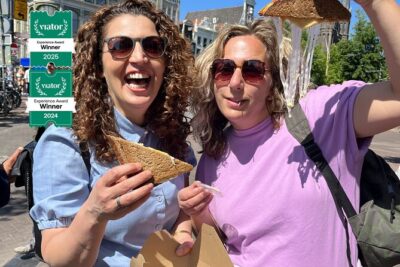
Amsterdam Food and Cultural Tour with Tastings
Read our review →
Kinderdijk UNESCO World Heritage Entry Ticket
Read our review →
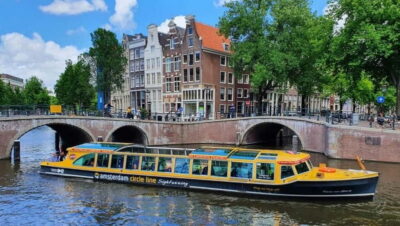

Amsterdam High-End Dutch Food & History Tour – Up to 8 guests
Read our review →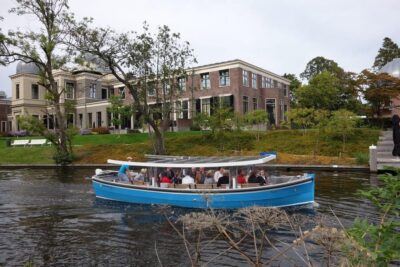
Cruise through the Historic City Center with Guide
Read our review →Browse the lists this tour appears in