
Reviewed · HAARLEM TOURS & EXPERIENCES
Historical Haarlem: Private Walking Tour with a Local Guide
Haarlem comes alive fast on foot. I love how this tour ties the city’s big turning points to real places you can see, and I also like the pace, with time to absorb details rather than speed past them. My only caution is that it is priced per group, so if you are traveling solo or as a couple, the per-person value may feel steep.
You get a local private guide leading the way, and that matters here because Haarlem is full of small facts that connect across centuries. I also like that each stop is focused, with free admission to the places discussed, so you do not need to plan around extra ticket costs.
Because this is a walking tour with a set route, bring comfortable shoes and plan to stay attentive for the full 1 hour 40 minutes. If you prefer long museum time or sitting down breaks, you might want to pair this with a later stop on your own.
In This Review
- Key highlights you’ll actually remember
- Walking from Grote Markt, with a private guide’s rhythm
- Haarlem Station and why the Spaarne changed the city
- Grote Markt: Haarlem’s heart, old justice, and a larger medieval square
- St. Bavo Church and the Haarlemse noon moment
- Botermarkt’s skeleton discovery, and why Cornelis matters
- Jopen barrels and Haarlem’s beer-making past
- Frans Hals landmarks nearby and what his style was really doing
- Price and value for a private group up to 14
- Who should book this Haarlem private walk
- Smart tips to make your 1 hour 40 minutes count
- Should you book this private historical Haarlem tour?
- FAQ
- How long is the private walking tour of historical Haarlem?
- Where does the tour start and end?
- Is this tour private?
- Is the tour offered in English?
- Can I get pickup from my hotel?
- Is a mobile ticket provided?
- How many people can be in a group?
- What is the cancellation policy?
Key highlights you’ll actually remember
- Haarlem Station’s role after 1850, tied to factories along the Spaarne
- Grote Markt details like medieval justice on ’t Sand and a historically larger square
- St. Bavo Church power stories, including the Haarlemse noon of 1578
- Botermarkt archaeology, with the recovered skeleton story and the chosen name Cornelis
- Beer city identity (Jopen), linking water, barrels, and transport along the rivers
- Frans Hals context nearby, including why his brushwork feels so human
Walking from Grote Markt, with a private guide’s rhythm
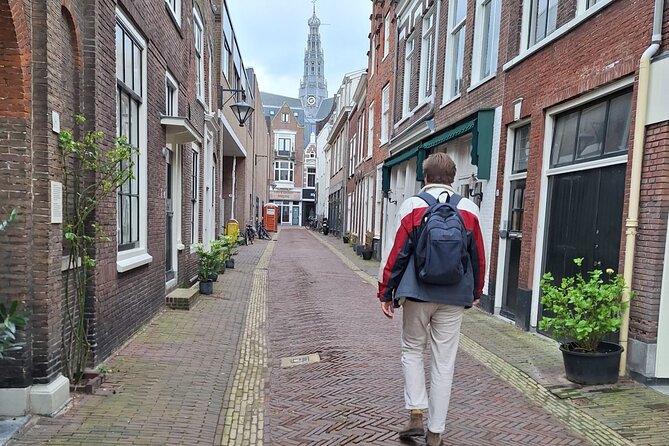
You start at the Grote Markt, right in the center of Haarlem, and you end back there. The tour is private, so only your group goes along with the guide, which is a big deal if you like asking follow-up questions as you walk.
Expect a steady city-center route that mixes architecture, art, and local culture. With a group size that can go up to 14 people, it is still designed to feel guided, but the experience will be most satisfying if your group keeps questions moving and you do not try to multitask too much.
The timing is tight in the best way: about 1 hour 40 minutes. That means you get a curated look at Haarlem’s layers without turning the day into a long slog.
More Guided Walking Tours in Haarlem


Haarlem Station and why the Spaarne changed the city
Your first stop is in front of Haarlem’s train station, often described as one of the Netherlands’ most beautiful. But the guide’s angle is not just architecture. You learn how the railways helped drive Haarlem’s revival after 1850 by improving infrastructure and enabling small businesses to grow into industrial players.
This is where Haarlem’s geography helps. The guide points to the Spaarne area as a working corridor where commerce clustered. You hear names tied to industry and craft, including the Figee machine factory, the Droste chocolate factory, and the Conrad shipyard, all associated with the river area. You also hear about the Beijnes railway carriage factory at Stationsplein, which connects the station in front of you to what Haarlem built for the railway era.
What I like about this opening is that it sets up the whole tour. You are not just collecting trivia, you are learning how people, transport, and jobs shaped where landmarks ended up and why certain stories matter today.
If you are a train fan, or you enjoy “how a city got its economy,” this first stop is a strong way to begin.
Grote Markt: Haarlem’s heart, old justice, and a larger medieval square
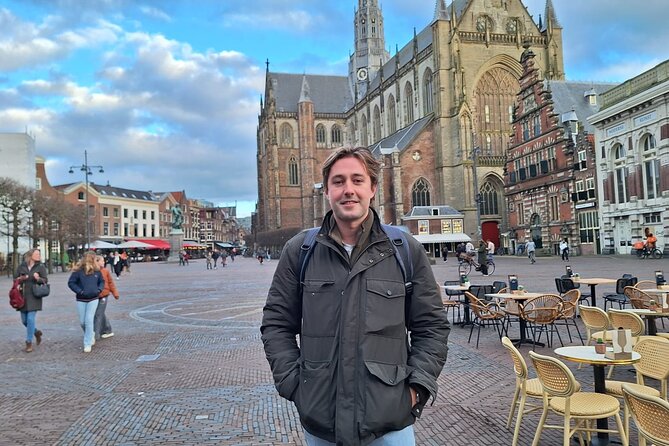
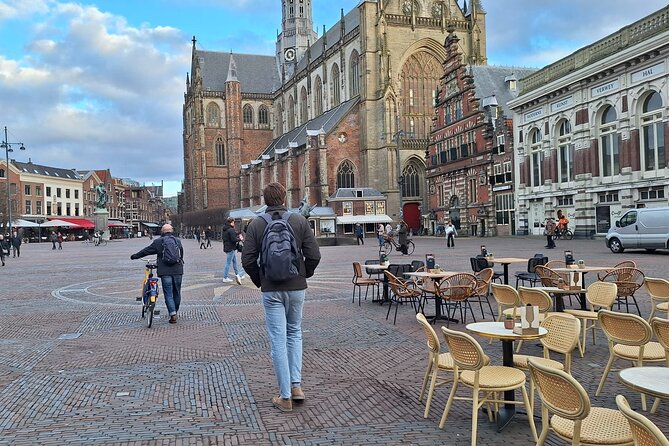
Next you walk over the Grote Markt, which the guide frames as the city’s central heartbeat for a long time. The details here are vivid. Before the Middle Ages square was paved, it was called ’t Sant, and justice was administered on ’t Sand. The guide also explains why the gallows were kept on the outskirts, aiming to deter people.
You also hear about the square as a public stage for tournaments and markets. In the 13th and 14th centuries, the space was even larger than it is today because there was no building on the south side, which you can still picture as you stand there.
This stop works because it is not just about a pretty plaza. It helps you see why the buildings around it feel like they belong together. The guide keeps pointing your attention to how the square’s role as a meeting and decision space shaped the city’s identity.
A small consideration: if you already know Haarlem well, you might find parts of the square familiar. But the medieval justice and the way the square’s size changed are the kind of notes that make a second look worth it.
St. Bavo Church and the Haarlemse noon moment
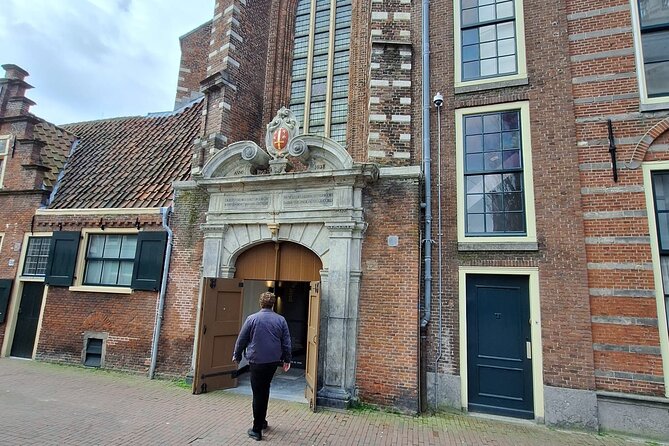
Then you reach the St. Bavo Church area, where the Grote Kerk dominates the Grote Markt view. The guide sets the church story in layers. A smaller church had stood here but suffered damage during a city fire, and then the larger Grote or St. Bavo was built.
You learn the church layout is cruciform, meaning a cross-shaped plan. Construction began in 1390, starting with the choir around an older Romanesque church, then moving into the transept and later the nave. The tower adds another date point: an oak structure covered with lead, added in 1520.
One of the tour’s standout stories is the Haarlemse noon on May 19, 1578. The guide describes a delayed iconoclastic event during a Catholic sacrament procession, when Geuzen soldiers stormed the church. The aftermath is clear: the soldiers killed the priest and destroyed everything, and afterward the church came under the Reformed community.
Even if you are not chasing religious history, you will probably remember this. It is one of those turning-point episodes that helps explain why European cities often feel like time is stacked rather than flowing in a straight line.
Inside, you get references to the world-famous Müller organ, plus graves connected to local figures, including painter Frans Hals, painter Pieter Saendam, and linen merchant Pieter Teyler van der Hulst. The guide’s way of connecting those names to where you stand makes it feel less like a list and more like a map of Haarlem’s influence.
Tip: if you are into art, quietly note the Hals connection here. You’ll hear more about him shortly in the walking route.
Botermarkt’s skeleton discovery, and why Cornelis matters
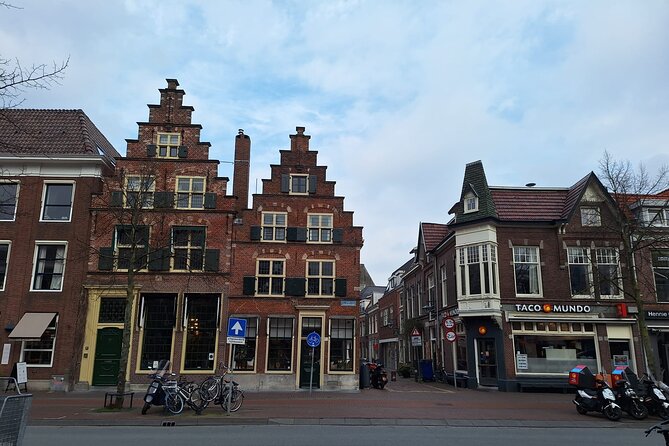
At the Botermarkt, the tour shifts into archaeology and human stories. In 2012, while underground waste containers were being installed, skeletons from the Middle Ages were discovered. The guide explains that the remains came from an old cemetery connected to the medieval St. Gangolf’s Chapel.
What I like here is the guide does not treat it like a spooky headline. Instead, you learn how reconstruction can help bring someone back into focus using forensic science, archaeology, anatomy, and even sculptural art. The story includes the selection process too: for reconstruction, a skeleton with a skull was chosen from a 35-year-old man with a remarkable face.
Since the name was unknown, the guide shares how Cornelis was chosen as a name because it was common in Haarlem in the 15th and 16th centuries. That one detail hits differently once you hear the rest. It turns a discovered skeleton into a plausible person, someone with a name that would have sounded normal in town life.
If you prefer lighter stops, this can feel heavy for a moment, but it is handled with a clear focus on what the evidence suggests and what can be respectfully inferred.
More Private Tours in Haarlem
- Private Haarlem Canal Cruise with Captain (Electric Boat)
★ 5.0 · 71 reviews - Haarlem: Self-Drive Private Electric Boat Rental
★ 4.7 · 59 reviews - Haarlem: Personalized Private tour Highlights & History
★ 4.9 · 13 reviews - Haarlem Private Food Walking Tour with 8 Tastings
★ 5.0 · 12 reviews
Jopen barrels and Haarlem’s beer-making past
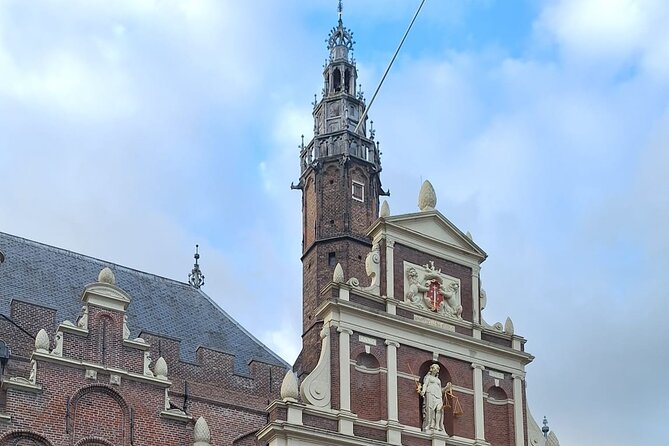
Then the tour moves to beer history, and yes, this is one of those Haarlem themes that keeps showing up. The guide frames Haarlem as one of the Netherlands’ larger beer brewing cities for centuries. Beer brewing dates back to medieval times, with breweries clustered along the Spaarne River and Bakenessergracht.
The explanation is practical: water mattered for production, and water transport helped move heavy barrels. The guide gives the key detail that those barrels were called Jopen, with a capacity of 112 liters.
I like how this stop ties culture to logistics. It is easy to remember “beer barrels,” but you also remember why the river shaped the whole city. You understand how a craft turned into an industry, and how industry needed transportation.
One note: the stop is more of an interpretive walk-through than a long tasting or brewery visit. If you want beer samples, you’ll still have to do that separately, but the history will make those future sips more meaningful.
Frans Hals landmarks nearby and what his style was really doing
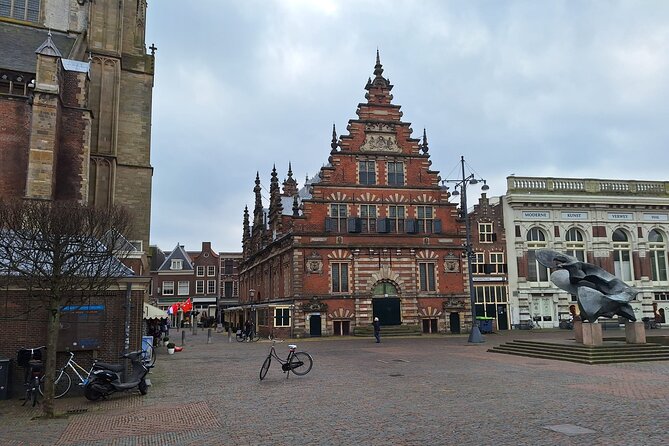
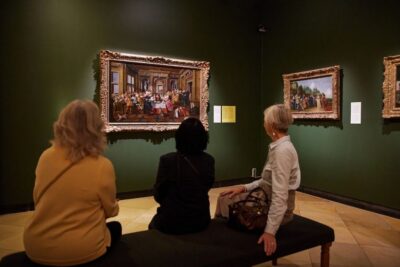
Near the end, you pass by the Frans Hals Museum. Even though you are not spending a full museum session there, the guide gives you enough background to make the area feel purposeful.
You learn Frans Hals was born in Antwerp around 1582 or 1583, the son of a linen merchant. The guide shares that the family moved to Haarlem around 1586. Hals trained as a pupil of Carel van Mander until 1603 and then became a member of the Saint Luke’s Guild.
You also get the career rhythm: in 1616, he painted his first civic guard pieces. In 1639, he made his last civic guard pieces, which the guide frames as the pinnacle of his output, especially for facial variety, shining uniforms, and nuanced colors.
The story continues into changing taste. In the 18th century, Hals fell out of favor. Then Impressionists in the 19th century rediscovered him, attracted to his so-called rough style. The guide explains what to look for: independent, sweeping, loose brushwork, plus intimate and enigmatic drama that captures subtle human emotions.
This is where the walk feels like more than a stroll. You start to see Hals not just as a name, but as a painter with a specific approach that people later forgot and then re-understood.
If art matters to you, this final context helps you connect the dots on your own after the tour. Even if you do not enter the museum today, you leave with a better reason to return later.
Price and value for a private group up to 14
The tour price is $361.74 per group, up to 14 people. That structure is common for private walking tours, and it changes the math.
If you are traveling with only one other person, you will feel the cost. But if you have a small group, or you are happy sharing the cost with friends and family, the per-person value drops quickly because the guide cost is shared across the group.
I think the value is strongest when you want guided context, not just photos. The stops cover architecture, archaeology, and local industry, and the guide’s job is to connect them into a story you can remember. That kind of synthesis is exactly what you pay for in a private format.
One more factor: the tour is often booked about 42 days in advance on average. That is not a guarantee of availability, but it is a signal the timing can fill up, especially in busy weeks.
Who should book this Haarlem private walk
This works best for you if:
- You want an efficient introduction to Haarlem’s center in a short time.
- You like stories that connect people to places, such as how railways shaped Haarlem after 1850 or how a church’s past reflects major events.
- You care about art, especially if you want a practical primer on Frans Hals and why his painting techniques matter.
It might be less ideal if you want a long museum visit, lots of free time to roam without a route, or a super relaxed sightseeing pace with minimal talking.
The good news is that it is flexible in the sense that a private guide can usually tailor your questions mid-walk. If you show up curious, you will get more out of it.
Smart tips to make your 1 hour 40 minutes count
Keep your expectations realistic. This tour is built around short stop-and-story moments, so you will not have time to linger for extended reading. I recommend you come with one or two interests: church history, art, archaeology, or industrial Haarlem. Then ask your guide to point out what you should notice at each stop.
Also, plan to move through the center comfortably. The experience starts and ends at the Grote Markt, and it is meant to be taken on foot. Bring shoes you can rely on for a steady walk.
Since the tour is offered in English and uses a mobile ticket, you can travel light and focus on the landmarks. If you have a need such as service animals, the experience allows them, and it is near public transportation.
Finally, if you are deciding on timing, consider booking earlier rather than later. With the typical advance booking pattern, grabbing a slot that matches your trip flow will save stress.
Should you book this private historical Haarlem tour?
I would book it if you want a high-efficiency way to understand Haarlem beyond postcards. The mix of the station revival story, the Grote Markt public-life details, the St. Bavo moment of Haarlemse noon, the Botermarkt skeleton reconstruction story, and the Jopen beer-barrel history gives you multiple angles on the same city.
If you are price-sensitive as a solo traveler, wait for a good fit such as joining friends or arranging your schedule around a smaller shared group cost. If you travel in a group where the per-person cost can drop, this becomes a very solid deal for a guide-led walkthrough that actually teaches you how Haarlem works.
FAQ
How long is the private walking tour of historical Haarlem?
The tour lasts about 1 hour 40 minutes.
Where does the tour start and end?
It starts at the Grote Markt, 2011 Haarlem, Netherlands, and it ends back at the meeting point.
Is this tour private?
Yes, it is private. Only your group participates.
Is the tour offered in English?
Yes, it is offered in English.
Can I get pickup from my hotel?
Pickup is available if you stay in the city center.
Is a mobile ticket provided?
Yes, a mobile ticket is offered.
How many people can be in a group?
The group size is up to 14 people.
What is the cancellation policy?
You can cancel for a full refund up to 24 hours before the experience start time, and cancellation is free up to that point.
Golden Age Corners
- Amsterdam Food and Cultural Tour with Tastings★ 5.0 · 4,315 reviews
- Rotterdam: Kinderdijk UNESCO World Heritage Entry Ticket★ 4.6 · 1,477 reviews
- The Hague: Hop-on Hop-off Heritage Tram Tour★ 4.5 · 1,311 reviews
- Amsterdam: Historic City Centre Canal Cruise★ 4.3 · 659 reviews
Gables on Foot
- Cultural and Historical Audio guided walking tour Tour of Haarlem★ 3.5 · 13 reviews
- 90 minutes Self-Guided Walking tour with puzzles in Haarlem★ 4.0 · 12 reviews
- Haarlem Self-Guided Taste, Culture & History Walk★ 5.0 · 7 reviews
- Haarlem Walking Tour. Unknown and Surprising★ 5.0 · 4 reviews
Latest to arrive along the quays of Haarlem



Haarlem Tours & Experiences, compared.

Sightseeing Canal Cruise through the City Center
Read our review →

Haarlem Open-Boat Canal Cruise with Live Guide (Electric Boat)
Read our review →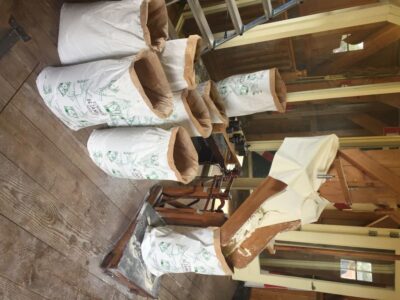

Frans Hals Museum Entrance Ticket with Audio Guide
Read our review →Browse the lists this tour appears in